
Creamy Gochujang Pasta recipe, a wonderful fusion of European and Asian cuisines that promises to bring a burst of flavour to your dinner table! With just a handful of ingredients and minimal effort, this quick and easy dish comes together in 15-20 minutes, making it perfect for busy weeknights.
The star of the show is the Gochujang paste, a staple in Korean cooking known for its rich, umami flavour. Elevate your dining experience with a dish that marries the best of both worlds!

Jump to:
- Why You Will Love This Gochujang Pasta Recipe
- But What Is Gochujang?
- Ingredients and Substitutes
- Variations: What Pairs Well With Gochujang?
- Method: How To Make Ultimate Gochujang Pasta?
- Recipe Video
- What To Serve Gochujang Pasta With?
- Recipe FAQs
- Storage & Reheating
- More Unconventional Pasta Recipes
- Creamy Gochujang Pasta
As an Amazon Associate I earn from qualifying purchases, at no extra cost for you! Thank you!
Why You Will Love This Gochujang Pasta Recipe
- Just a handful of ingredients and minimal effort but the depth of flavor is unreal!
- It's a quick meal that comes together within 15-20 minutes, making it ideal for a busy weeknight!
- An easy recipe that even beginners can make.
- This Gochujang Pasta represents a perfect balance between European and Asian cuisines!
- Who doesn't like a creamy sauce with a bit of a kick and a beautiful red hue with their pasta?

But What Is Gochujang?
Gochujang paste is a staple in Korean cooking, renowned for its rich, umami flavour and versatile use in various Korean dishes. This fermented Korean chilli paste undergoes a meticulous production process, typically involving the fermentation of red chilli peppers, glutinous rice, soybeans, and salt. The glutinous rice converts into sugars during the fermentation process, contributing to gochujang's distinctive hint of sweetness.

The resulting paste boasts a complex and savoury profile, making it a crucial ingredient in dishes like bibimbap, tteokbokki, and bokkeumbap (our favourite Korean recipe!). To buy gochujang, explore local Asian markets or Asian grocery stores, where an array of brands and variations are usually available. You can also buy Gochujang Paste online.
What Else Can I Use Gochujang Paste For?
Loving Korean flavors? Make Gochujang the star of the show once again with the recipes below:


Ingredients and Substitutes
A few pantry staples, lovely tenderstem broccoli and 15 minutes of your time! It doesn't get much simpler. Here's what you'll need:
- pasta: we used spaghetti, but you are welcome to choose any pasta shape you want.
- tenderstem broccoli: can be substituted with other veggies. We discuss what goes well with Gochujang pasta sauce in the next section.
- oil: we used olive oil, but if you want more Asian flavours, use sesame oil (not toasted sesame oil as it may overpower other flavours).
- garlic cloves: fresh minced garlic adds the best flavour to the sauce but if you've run out, use garlic powder.
- onion: we used a small brown onion, but red onions and shallots will work well too.
- gochujang paste: adjust the quantity of gochujang based on your spice preference. You can replace half of the amount of gochujang with concentrated tomato paste if you want this pasta dish less spicy.
- cream: heavy cream or single cream will work well in this recipe. You may replace it with a dairy-free alternative like oat or cashew cream or even full-fat coconut milk.
- parmesan cheese: optional.

Find the quantities and a full recipe in the printable recipe card at the bottom of the post.
Variations: What Pairs Well With Gochujang?
- Add more veggies: bell peppers, baby spinach, mange tout and asparagus work very well in this recipe.
- Add your favorite protein: we tried it with crispy tofu, chicken breast and stir-fried prawns - all were equally delicious.
- Switch up the pasta: use different pasta shapes, and try the recipe with whole-wheat pasta or even udon noodles.
- Get creative with garnishes: instead of parmesan cheese, try topping this Korean pasta dish with dried chilli peppers (red pepper flakes) and green onions, or simply scatter some toasted sesame seeds on top.
Method: How To Make Ultimate Gochujang Pasta?
Before you begin, do all the prep work. Weight out the pasta, finely chop the onion and garlic, and slice the tenderstem broccoli into thin strings, as shown in the photo below.

Step 1: Cook Pasta Al Dente
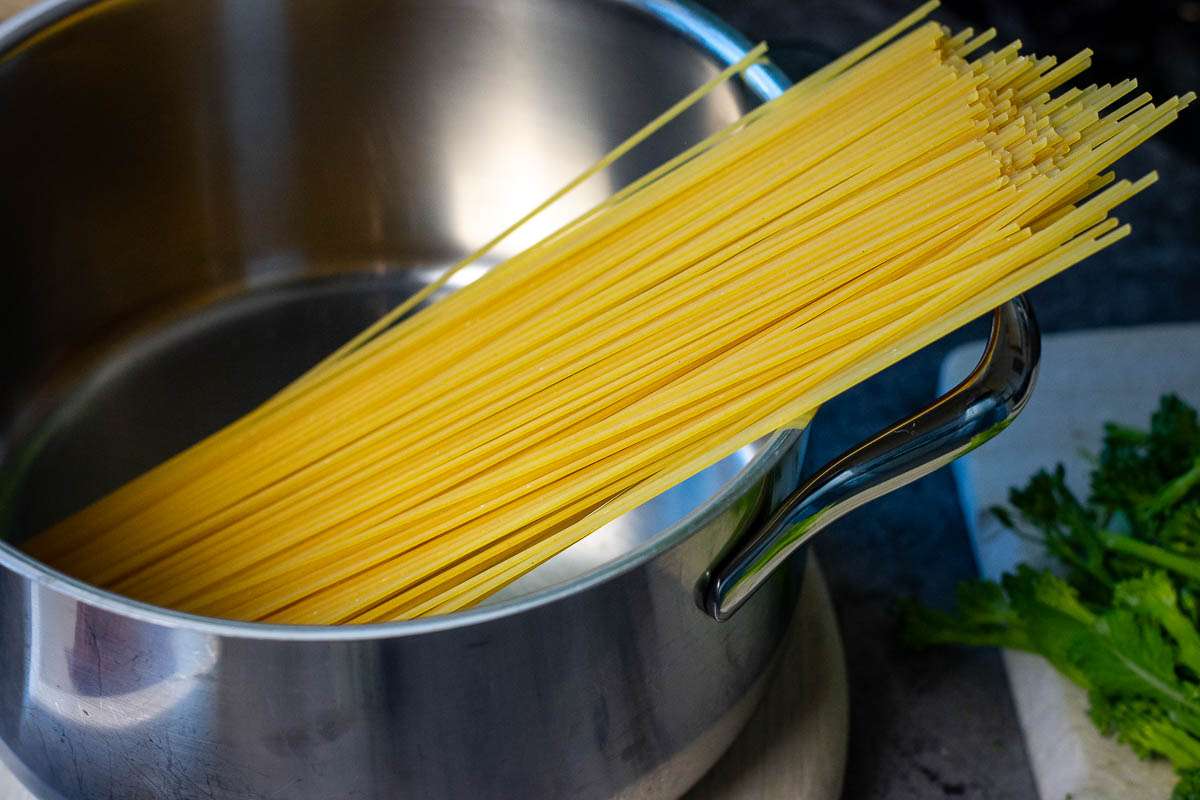
Cook your pasta in salted hot water in a large pot following the package instructions. Make sure to keep pasta al dente. When your pasta is almost cooked (about 2 minutes away), add the thinly sliced tenderstem broccoli to the same pot.
Whilst the pasta cooks, you will need to take out about 100ml of starchy water (so don't drain your pasta before reserving some of that water).
Step 2: Make Gochujang Pasta Sauce
Whilst your pasta cooks, heat oil in a large frying pan. Add the finely chopped onion and garlic and fry on low-medium heat for 5 minutes, until softened. Turn the hob down to low heat and add a tablespoon of gochujang.
Stir well, then add about 100 ml of reserved pasta water and stir again to loosen and ensure no lumps of gochujang remain. Let it bubble and reduce for 2 minutes.
Taste and season with black pepper and kosher salt, if required.
Pour in the cream and stir to make a creamy gochujang sauce.


Step 3: Put It All Together
Add the cooked pasta and broccoli to the sauce and toss for a minute over low heat to coat. Serve with grated parmesan cheese on top.

Recipe Video
What To Serve Gochujang Pasta With?
Spicy, rich and creamy, Gochujang Pasta goes well with a bunch of green vegetable sides, including Korean Cucumber Salad, Courgette Ribbon Salad or even Italian Green Bean Salad. A slice of crusty sourdough bread would not go amiss either and can be used to mop up any leftover Gochujang Pasta Sauce at the bottom of the bowl. Alternatively, serve it with Korean Cream Cheese bread - a popular street food in Korea!


Recipe FAQs
What Type of Pasta To Use In This Recipe?
Whilst you may choose any pasta shape you love to eat, we prefer Gochujang Pasta sauce with long noodle-type pasta, like spaghetti, linguine or tagliatelle. We find that the sauce is quite rich and pasta shapes with lots of nooks and crannies hold too much of the sauce.
Does Gochujang Need To Be Refrigerated?
Yes, this Korean fermented chilli paste needs to be kept in the fridge after opening and should typically be consumed within 1-2 months.
Why Is My Gochujang Pasta Sauce Lumpy?
To ensure creamy pasta sauce, use Gochujang paste at room temperature and make sure to stir it well before adding the pasta and cream. This spicy Korean paste is thick and glutinous and has a tendency to stay in clumps, but it is nothing that a bit of vigorous stirring cannot solve.
Why Does The Sauce Not Stick to The Pasta?
The sauce sticks to your pasta, when it has a starchy coating. If you are rinsing your pasta before cooking, it will remove the starchy coating and your sauce will slip off. Another reason could be adding oil to your pasta before you coat it in the Gochujang sauce. We only recommend adding oil, if you cooked your pasta too early and don't want the noodles to stick to each other.
Storage & Reheating
If you have leftover Gochujang Pasta, transfer it into an airtight container and let it cool down to room temperature before storing it in the fridge for up to 2 days. You may also freeze this pasta for up to 2 months.
To reheat, spoon the pasta into a large skillet with a little bit of water and warm over low heat until warmed through. To ensure saucy gochujang noodles, you may want to add extra cream or a knob of butter at the end.
NOTE: As with any pasta dishes, reheated pasta will no longer be al dente, so we strongly recommend serving Gochujang Pasta freshly made.
More Unconventional Pasta Recipes
Bored of Italian classics like Pasta Napoletana or Spaghetti Arrabiatta? Dive into the world of exciting and unusual pasta dishes:


Creamy Gochujang Pasta
Ingredients
- 200 g (7.05 oz) pasta we used spaghetti
- 100 g (3.53 oz) tenderstem broccoli sliced lengthways into thin strings
- 1 tablespoon oil
- 1 small brown onion very finely chopped
- 1 garlic clove minced or finely chopped
- 1.5 tablespoon Gochujang paste
- 60 ml (0.25 cups) single or double heavy cream
- 2 tablespoon parmesan finely grated (optional)
Instructions
- Cook your pasta in salted water in a large pot following the package instructions. Make sure to keep pasta al dente.
- When your pasta is almost cooked (about 2 minutes away), add the thinly sliced tenderstem broccoli to the same pot. Reserve about 100ml of starchy water.
- Whilst your pasta cooks, heat oil in a large frying pan. Add the finely chopped onion and garlic and fry on low-medium heat for 5 minutes, until softened. Reduce the heat to low and add a tablespoon of gochujang. Stir well, then add about 100 ml of reserved pasta water and stir again to loosen and ensure no lumps of gochujang remain. Let it gently bubble and reduce for 2 minutes.
- Pour in the cream and stir to make a creamy gochujang sauce.
- Add the cooked pasta and broccoli to the sauce and toss for a minute over low heat to coat. Serve with grated parmesan cheese on top.
Video
Nutrition


Leave a Reply