
Making your own sourdough starter sounds far more mysterious than it actually is. At its simplest, it is just flour and water mixed together, then fed regularly until wild yeast and friendly bacteria move in and start doing useful things.
Romantic? Slightly. Scientific? Also yes. Complicated? Not really. Requires patience? ABSOLUTELY!

Jump to:
- What Is A Sourdough Starter?
- What You'll Need
- How Long Does It Take To Make A Sourdough Starter?
- How To Make A Sourdough Starter
- How To Know If Your Starter Is Ready To Use
- When Will My Starter Reach Its Full Potential?
- What To Do With Sourdough Discard
- Beginner Starter Tips
- Troubleshooting A New Sourdough Starter
- Sourdough Starter FAQ
- Christmas Sourdough ebook
As an Amazon Associate I earn from qualifying purchases, at no extra cost for you! Thank you!
This beginner sourdough starter method uses strong white bread flour, which is easy to find, reliable and a good choice if you want a simple starter for everyday sourdough bread.
What Is A Sourdough Starter?
A sourdough starter is a live mixture of flour and water that is used to make sourdough bread rise.
As it ferments, wild yeast and bacteria develop in the jar. The yeast helps create bubbles and rise, while the bacteria add flavour and that lovely sourdough tang.
Once your starter is strong and active, you can use it in sourdough bread recipes, focaccia, pizza dough, enriched doughs and all sorts of sourdough bakes.
What You'll Need
You do not need anything fancy to make a sourdough starter. Very reassuring, because sourdough equipment can escalate quickly if left unsupervised.
You will need:
- Strong white bread flour
- Water
- A clean glass jar
- A loose-fitting lid
- A digital kitchen scale
- A spoon or spatula
- A rubber band or marker pen
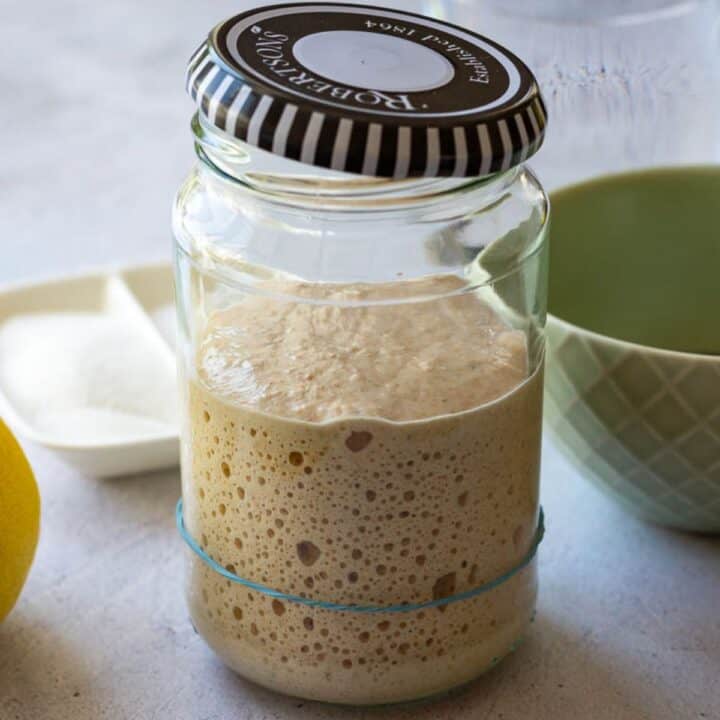
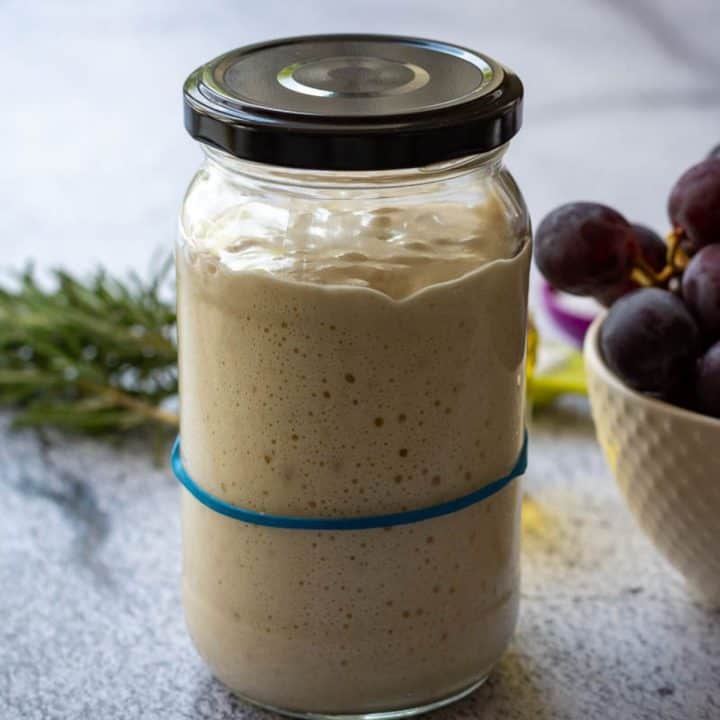
I recommend using a glass jar because you can see the bubbles and rise clearly. A rubber band around the jar helps you mark the starter level after feeding, so you can see whether it has doubled.
For water, use room temperature water. If your tap water smells strongly of chlorine, use filtered water or leave tap water out for a while before using it.

How Long Does It Take To Make A Sourdough Starter?
A sourdough starter usually takes about 7-14 days to become active enough to bake with, but some starters take longer.
The exact timing depends on:
- The temperature of your kitchen
- The flour you use
- The water you use
- How often you feed it
- How consistently it rises and falls
- How much wild yeast is naturally present in your flour and environment
A warm kitchen will usually speed things up. A cold kitchen can slow everything down. Your starter is not broken; it is just chilly and being dramatic.
Strong white bread flour works well, but wholemeal flour or rye flour can make a starter more active because they contain more nutrients. If your starter is very slow after several days, you can replace a little of the white flour with wholemeal or rye flour for a few feeds to give it a boost. You can also build a rye sourdough starter from scratch!

How To Make A Sourdough Starter
This method starts small, so you do not waste huge amounts of flour.
Day 1
Mix together:
- 25g strong white bread flour
- 25g water
Stir well until no dry flour remains. Scrape down the sides of the jar, cover loosely with a lid and leave at room temperature for 24 hours.
The mixture should look like thick batter. It may not do much on the first day, and that is completely normal. Try not to stare at it every 12 minutes. It does not help. I have tested this extensively.
Day 2
You may see a few bubbles, or you may see absolutely nothing. Both are fine.
Add:
- 25g strong white bread flour
- 25g water
Stir well, cover loosely and leave at room temperature for another 24 hours.
Day 3
By now, your starter may look bubbly, smell slightly fruity, yeasty or a bit strange, and possibly rise a little.
Remove and discard about half of the starter, then feed what is left with:
- 25g strong white bread flour
- 25g water
Stir well, mark the level with a rubber band and leave loosely covered at room temperature.
From now on, discarding before feeding helps keep the starter manageable and stops you ending up with enough starter to grout the kitchen.
Days 4-7
Repeat the same process once a day:
- Remove and discard about half of the starter.
- Feed with 25g strong white bread flour and 25g water.
- Stir well.
- Mark the level.
- Leave loosely covered at room temperature.
During these days, your starter may become very bubbly and active, then suddenly go quiet. This is normal.
Many new starters have a big burst of early activity, then slow down while the right balance of yeast and bacteria develops. Do not panic. Keep feeding it.
If your starter smells unpleasant, cheesy, very acidic or like nail varnish remover, it is usually hungry. Discard, feed, and keep going. If you see mould, pink or orange streaks, throw it away and start again.
Days 7-14
Keep feeding the starter once a day until it rises predictably.
At this stage, you are looking for a starter that:
- Bubbles after feeding
- Rises and falls in the jar
- Smells pleasantly yeasty, fruity or mildly tangy
- Doubles in size after feeding
- Can do this reliably, not just once when it felt like showing off
- From day 7-9, you can keep discard separately in the fridge to use in discard recipes)
If it is rising slowly, you can move it somewhere warmer. If it peaks and collapses very quickly, it may be hungry and need feeding more often.
Once your starter is doubling reliably within around 4-6 hours after feeding, it is usually ready to try in a loaf.


How To Know If Your Starter Is Ready To Use
Your starter is ready to bake with when it is active, bubbly and reliably rising after feeding.
The best signs are:
- It doubles in size after feeding
- It has plenty of bubbles throughout
- It smells pleasantly sour, yeasty or fruity
- It rises and falls predictably
- It has done this for at least a few feeds in a row
The float test can be useful, but I would not rely on it completely. To try it, drop a small spoonful of starter into a glass of water. If it floats, it is full of gas and may be ready.
But starter can sink even when it is active, especially if it is runny, made with heavier flour, stirred down or past its peak. So use the float test as one clue, not the final judge and jury.
A better test is consistency. If your starter doubles after feeding several times in a row, it is much more trustworthy than one random float test.
When Will My Starter Reach Its Full Potential?
Your starter may be ready to bake with after 1-2 weeks, but it will keep getting stronger and more reliable over time.
A young starter can make bread, but it may produce slower fermentation, milder flavour and less impressive oven spring at first. As it matures, it usually becomes more predictable, more resilient and better at raising dough.
I would expect a starter to keep improving over the first month or two.
So if your first loaf is not perfect, do not immediately blame yourself, your house, the moon or the concept of sourdough as a whole. A young starter is still building strength.
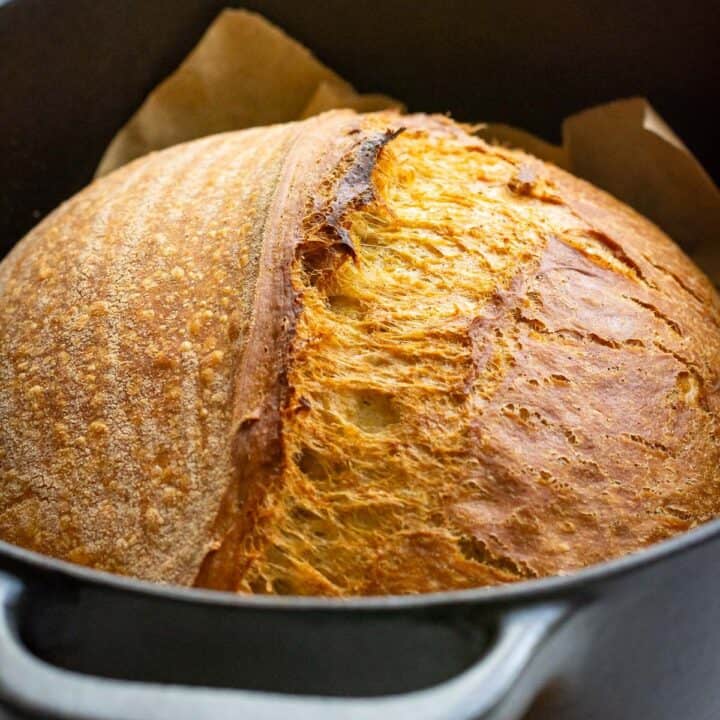
Start with an easy recipe, like everyday sourdough bread or sourdough bread without a Dutch oven, and let your starter mature as you bake.

What To Do With Sourdough Discard
Sourdough discard is the portion of starter you remove before feeding.
When your starter is brand new, especially in the first few days, I usually discard it rather than bake with it. It may not smell great yet, and the balance of yeast and bacteria is still developing.
Once your starter smells pleasantly tangy and is a little more established (for me it's typically day 7-9), you can save the discard and use it in sourdough discard recipes.
Sourdough discard is brilliant in:
- Pancakes
- Waffles
- Crackers
- Muffins
- Cookies
- Cakes
- Flatbreads
- Quick breads
- Granola
- Scones
Discard is not usually strong enough to raise bread on its own, but it adds flavour and reduces waste. Which means you get a starter and snacks.
- Jalapeño Cheddar Sourdough Discard Cornbread
- Flaky Cinnamon Apple Sourdough Scones (With Discard)
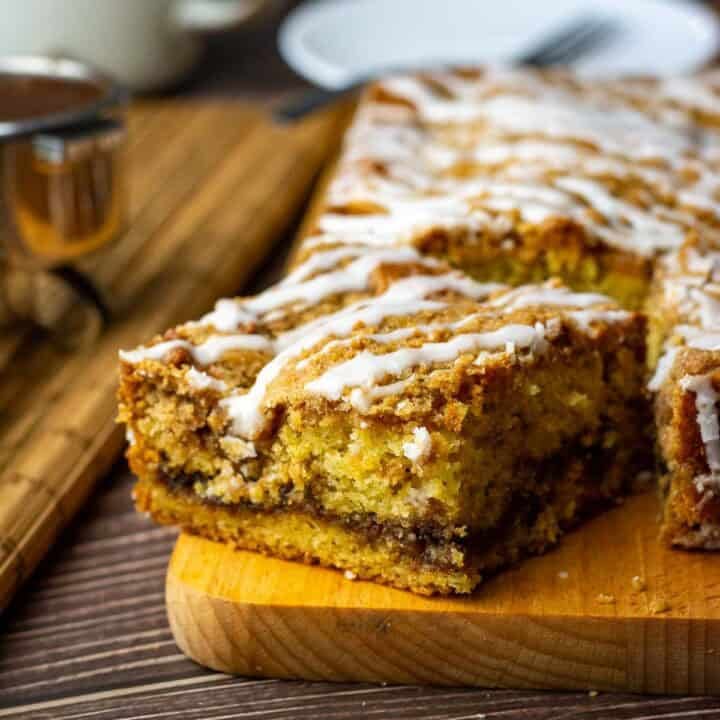
- Sourdough Coffee Cake (With Sourdough Discard)
- Flaky Maple Pecan Sourdough Scones (with Maple Candied Pecans)
- Sourdough London Fog Cookies (Earl Grey & Lavender)
- Sourdough Banana Bread Cookies with Walnuts and Chocolate Chips
- Chewy Sourdough Apple Cookies with Brown Butter
- Stovetop Sourdough Apple Upside Down Cake (No Oven Needed)







Beginner Starter Tips
Keep It Somewhere Warm, But Not Hot
Room temperature is usually fine, but your starter will be slower in a cold kitchen. A warm spot around 22-26°C is ideal. Avoid direct heat, sunny windowsills or anywhere too hot.
Use A Scale
Weighing flour and water gives you much more consistent results than using cups. Sourdough already has opinions. Do not add volume measurements to the chaos.
Keep The Jar Loosely Covered
Your starter needs to be covered, but not sealed tightly. A loose lid keeps dust out while allowing gases to escape.
Watch The Starter, Not Just The Clock
The daily feeding schedule is a guide. As your starter becomes more active, it may need feeding sooner, especially if it rises and collapses quickly. I actually don't feed my established sourdough starter every day - you can learn more about how to feed sourdough starter here!
Do Not Give Up Too Early
Some starters take longer than others. If there is no mould and it does not look spoiled, keep going. Slow is not the same as failed.

Troubleshooting A New Sourdough Starter
My Starter Is Not Bubbling
It may just need more time. Keep feeding it daily and make sure it is not sitting somewhere too cold.
If nothing happens after several days, try adding a small amount of wholemeal or rye flour for a few feeds.
My Starter Rose Quickly Then Stopped
This is very common. New starters often have an early burst of activity, then go quiet before becoming active again.
Keep discarding and feeding. It has not died; it is just going through its awkward teenage phase.
My Starter Smells Like Acetone
It is probably hungry. Discard and feed it. If it keeps smelling very sharp, try feeding it more often or using a slightly higher feeding ratio.
My Starter Has Liquid On Top
That liquid is often called hooch, and it usually means the starter is hungry. Pour it off or stir it in, then feed the starter.
My Starter Has Mould
Throw it away and start again. Mould, pink streaks or orange streaks are not worth risking.
Sourdough Starter FAQ
Yes, but I prefer strong white bread flour for beginners because it usually gives the starter more structure and strength. Plain flour can work, but it may make a looser starter and can be slower or less predictable.
Yes. You can feed a white flour starter with rye flour. Your starter may need a few feeds to adjust, but rye often makes starters more active.
Not unless you keep it at room temperature. Once your starter is strong and mature, you can keep it in the fridge and feed it less often. When you want to bake, take it out and give it one or more feeds until it is active again.
I would not recommend it for bread. If it is not doubling reliably, it may not be strong enough to raise a loaf well. Use patience here. Annoying, but useful.
It may be too cold, underfed, made with a slower flour, or simply not mature enough yet. Keep feeding it and look for consistent doubling, not just bubbles.
I prefer not to use discard from the first few days. Once the starter smells pleasant and is becoming more balanced, you can start saving discard for recipes.
A healthy starter can smell yeasty, fruity, tangy, slightly sour or a little like yoghurt. If it smells very harsh, rotten, mouldy or truly unpleasant, something may be wrong.
What To Bake Once Your Starter Is Ready
Once your starter is doubling reliably, start with a beginner-friendly loaf.
A simple sourdough bread recipe is much better than jumping straight into high-hydration doughs, complicated inclusions or anything that requires you to behave like a professional baker before breakfast.
Try a lower-hydration beginner loaf, sourdough bread without a Dutch oven, or everyday sourdough bread first. Build confidence, learn how your starter behaves, and then move on to more adventurous bakes.
That is the best way to start sourdough: one jar, one flour, one loaf at a time.

Christmas Sourdough ebook
Celebrate the holiday season with a unique twist this year with our 24 Christmas Sourdough recipes! Discover the magic of using active sourdough starter, sourdough discard, and leftover baked sourdough bread to create a memorable and flavoursome Christmas feast.


Clare greber says
Thanks for tips, very well explained. Im starting a new one, (looking good so far on day 4 ) I think I let mine get too big ,so in proportion the feeding if flour water wasnt enough . Must use more discard recipes.! Will let you know how it goes
Ieva says
Glad I could help 🙂
WH Leong says
To make sourdough starter, do u used special flour like rye which others mentioned using it.
Pls advise
Ieva says
No, I just used white wheat flour, and it worked well. Other types of flour can help the process along, but as long as you are patient with your starter, it will become active and bubbly! 🙂