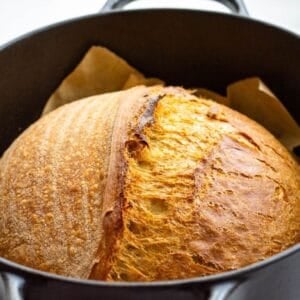
Pumpkin Spice Latte Sourdough Bread
A milky, warmly spiced Pumpkin Latte Sourdough Bread built on real pumpkin purée and a proper pumpkin pie spice blend, with a shot of real espresso so it actually tastes like the drink and not just pumpkin pie.
Equipment
- Bench Scraper
- Banneton Basket
- Razor Blade or Bread Lame
- Espresso machine (or moka pot), for pulling the shot
Ingredients
- 130 g milk
- 2 teaspoon ground cinnamon
- ½ teaspoon ground nutmeg
- ½ teaspoon ground ginger
- ¼ teaspoon ground cloves
- 500 g strong white bread flour 12%+ protein
- 10 g fine sea salt
- 160 g active sourdough starter 100% hydration
- 100 g pumpkin purée 100% pumpkin, not pumpkin pie filling
- 60 g espresso coffee about 1 double shot, cooled completely
- 100 g water
- 50 g honey
- 1 teaspoon vanilla bean paste optional
- 30 g unsalted butter very soft
Instructions
DAY 1
Feed sourdough starter
- First thing in the morning, feed your sourdough starter in a ratio of 1 part starter : 1 part water : 1 part flour, for example 70g starter, 70g water, 70g flour. Scoop into a clean jar and leave in a warm spot (21–27°C), semi-covered, for 4–5 hours, until active and at least doubled.
Steep the flavours
- Heat the milk in a small pan with the cinnamon, nutmeg, ginger and cloves until steaming but not boiling. Take off the heat and let it sit for 10 minutes so the spices bloom into the milk,
- Pull a double shot of espresso (60g) and pour it into the spice and milk mixture. Then stir in the water, honey, vanilla and pumpkin puree and set it aside to cool completely to room temperature. Don't add it warm, hot liquid meeting your starter will knock the fermentation about.
Mix the dough
- Once your starter is active, bubbly and at least doubled, combine the flour and salt in a bowl of a stand mixer fitted with a dough hook attachment. Add the cooled spiced milk liquid and starter. Mix with the dough hook on medium-low for 5–7 minutes, until you have a cohesive dough with no dry flour remaining.
- Add the soft butter bit by bit, mixing for a further 6–8 minutes until fully incorporated and the dough looks smooth again.
Coil folds and bulk fermentation
- Scoop the dough into a large bowl, cover with a damp tea towel or plastic wrap, and leave in a warm place (21–27°C) for 30 minutes. With cold wet hands, perform the first set of coil folds: lift the dough from the sides and tuck it under itself, rotate the bowl a quarter turn, and repeat. Cover and rest 30 minutes, then repeat for 4 sets total. Stretch and folds work just as well if you prefer them, go a little gentler than usual, the pumpkin purée keeps this dough softer than a plain loaf.
- Once the folds are done, leave the covered dough undisturbed for 3–4 hours. Bulk is finished when the dough looks puffy, has visible bubbles at the surface, and has increased by around 50–75% in volume. Go by how it looks rather than the clock. This is an enriched dough and will go much slower than a plain sourdough.
Shape and cold ferment
- Turn the dough out onto a lightly floured surface, smooth side down. Fold the four corners into the centre, then flip over. Using a bench scraper at a shallow angle, push the dough while your free hand tucks it under itself, building tension, until it holds its shape and doesn't spread.
- Place the shaped dough smooth-side down into a well-floured banneton (rice flour is best for lining). Pinch the seam at the top to keep the shape tight.
- Cover and refrigerate the banneton for 12–36 hours.
Day 2
- Place the Dutch oven into the oven from cold, then preheat to 230°C (445°F).
Score and bake
- Once the oven is fully up to temperature, take the dough straight from the fridge, don't let it come to room temperature, cold dough scores more cleanly. Invert gently onto a large piece of parchment paper. Using a bread lame or razor blade, score firmly at a 30–45° angle, about 1cm deep (more on what contributes to a prominent sourdough ear HERE).
- Carefully remove the hot Dutch oven and take off the lid. Lift the dough in using the edges of the parchment paper, keeping the score open as you lower it in. Replace the lid and bake for 45-50 minutes.
- Remove the lid and bake for a further 5–10 minutes. This dough colours faster than a plain sourdough thanks to the honey, milk and pumpkin, so start watching it from around the 10-minute mark once the lid's off. Drop the oven to 200°C for the remaining time if it's browning too quickly. You can bake it covered for the full length if the crust is caramelised, but do expect it to take a little while longer than a standard loaf.
- Lift the loaf out using the parchment paper and place on a wire rack. Slide the paper out from underneath and leave to cool completely before slicing.
Video
Notes
Shot size varies by machine. Weigh it if you can rather than going by a button setting, you want close to 60g to keep the hydration on target.
Canned pumpkin purée varies in moisture between brands. If the dough feels notably slacker than a standard bread once mixed, hold back 10–15g of the water next time.
Nutrition
Calories: 2441kcalCarbohydrates: 458gProtein: 70gFat: 34gSaturated Fat: 17gPolyunsaturated Fat: 5gMonounsaturated Fat: 7gTrans Fat: 1gCholesterol: 68mgSodium: 3967mgPotassium: 1065mgFiber: 19gSugar: 56gVitamin A: 16602IUVitamin C: 5mgCalcium: 336mgIron: 7mg
Tried this recipe?Let us know how it was!