
Every sourdough recipe says the same thing: lid on for the first half, lid off to finish. Follow enough recipes and you stop questioning it. But what actually happens if you don't take the lid off? Is baking sourdough with the lid on the whole time a mistake, or is there a real case for it?
Jump to:
As an Amazon Associate I earn from qualifying purchases, at no extra cost for you! Thank you!
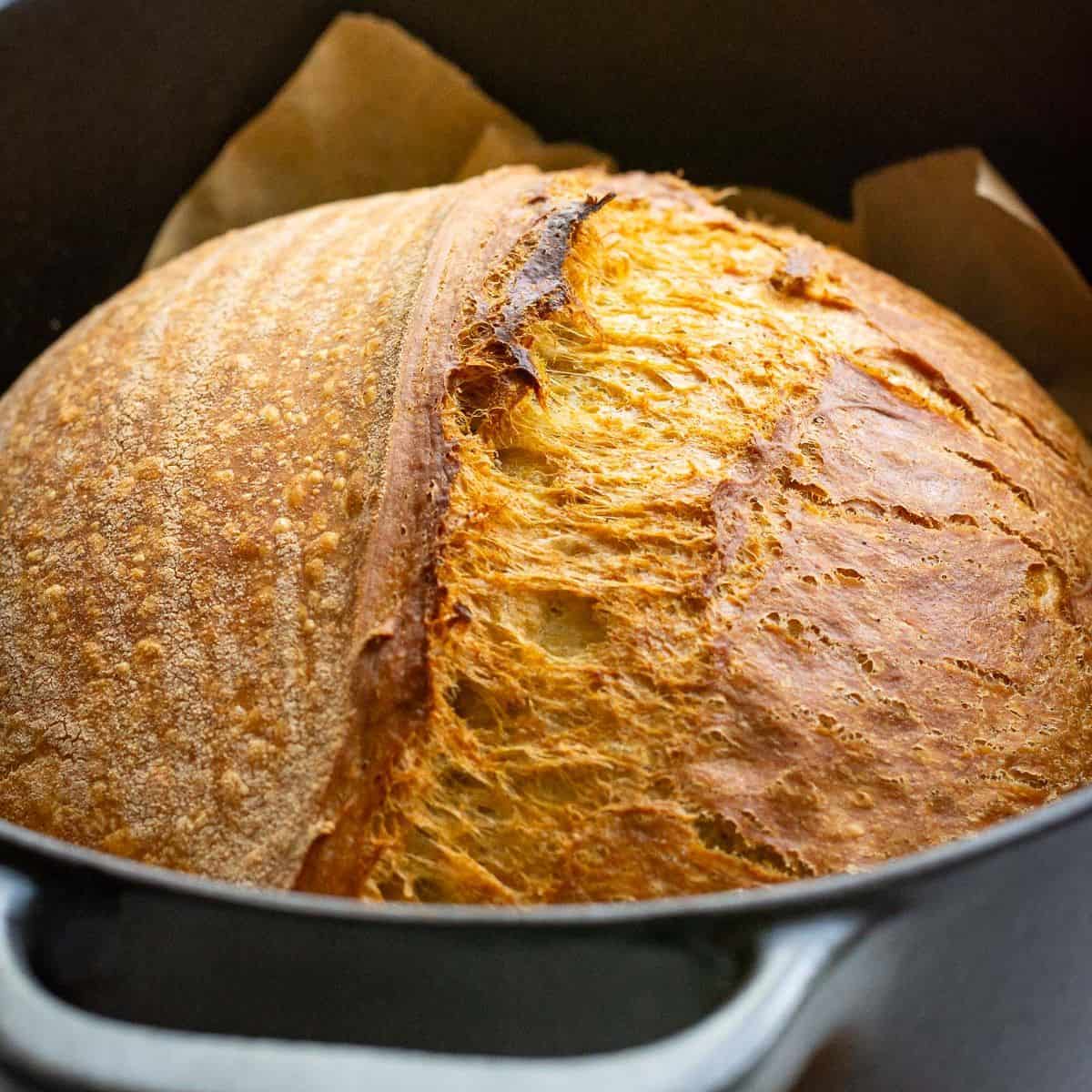
Short answer: it's not a mistake. It's a trade. You give up a crackly, deeply browned crust in exchange for something softer and paler. For plenty of loaves, that's not a downside, it's exactly what you wanted.
What the lid is actually doing
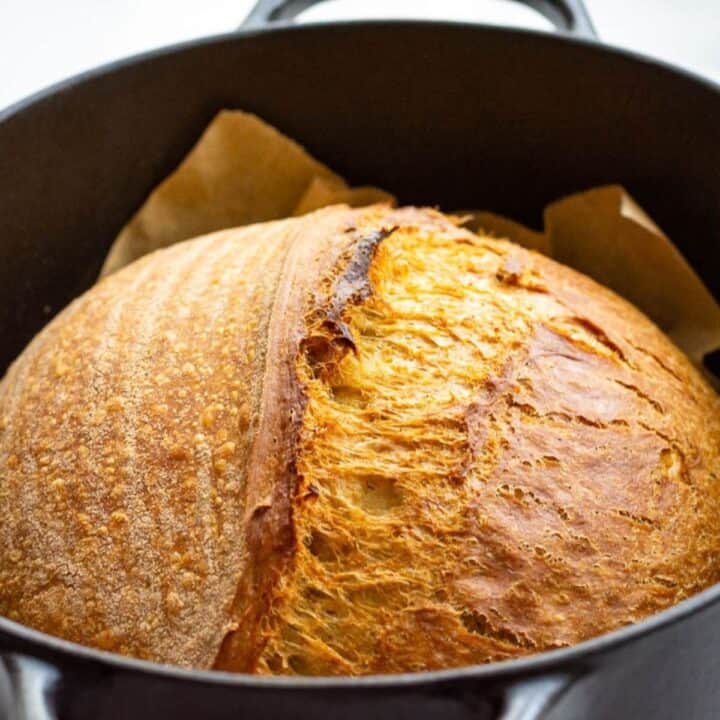
When a wet, cold loaf goes into a screaming hot Dutch oven, the dough itself throws off steam, and the lid traps it. That trapped moisture does three jobs at once:
- It keeps the dough's surface soft and stretchy so the loaf can keep expanding
- It lets your score open cleanly into a proper ear instead of the crust setting too fast and cracking wherever it fancies, and
- It gelatinises the starch on the surface, which is where that glossy, blistered look comes from.
None of that requires the lid to stay on forever. It's doing its job in the first stretch of the bake, while the loaf is still expanding.
What taking it off does
Once the loaf has finished most of its oven spring, the job changes. You now want moisture to leave the crust, not stay put, because a drier surface can climb past 100°C and start browning properly.
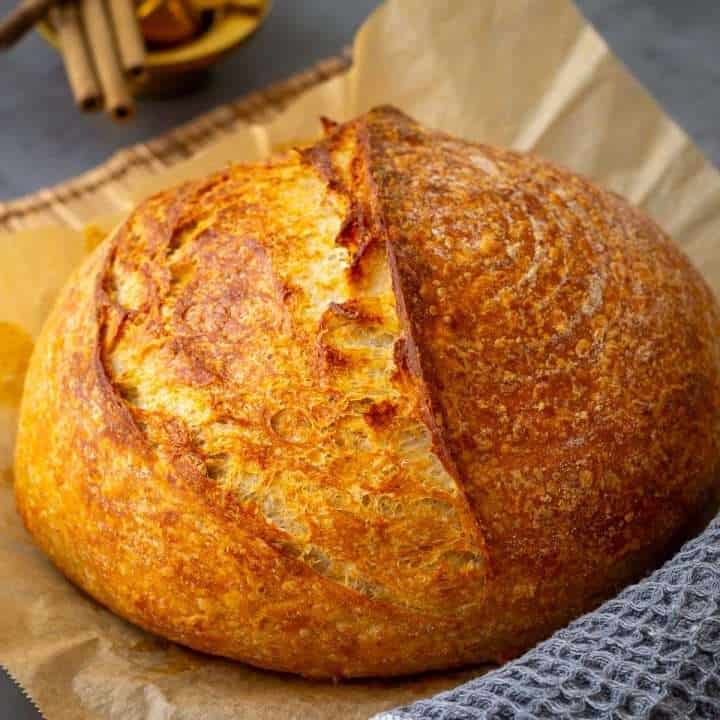
That's when the Maillard reaction kicks in and you get the deep colour, the crackle, the shatter when you cut into it. Lid off swaps a humid environment for a dry one, and a dry environment is what makes a crust crisp.
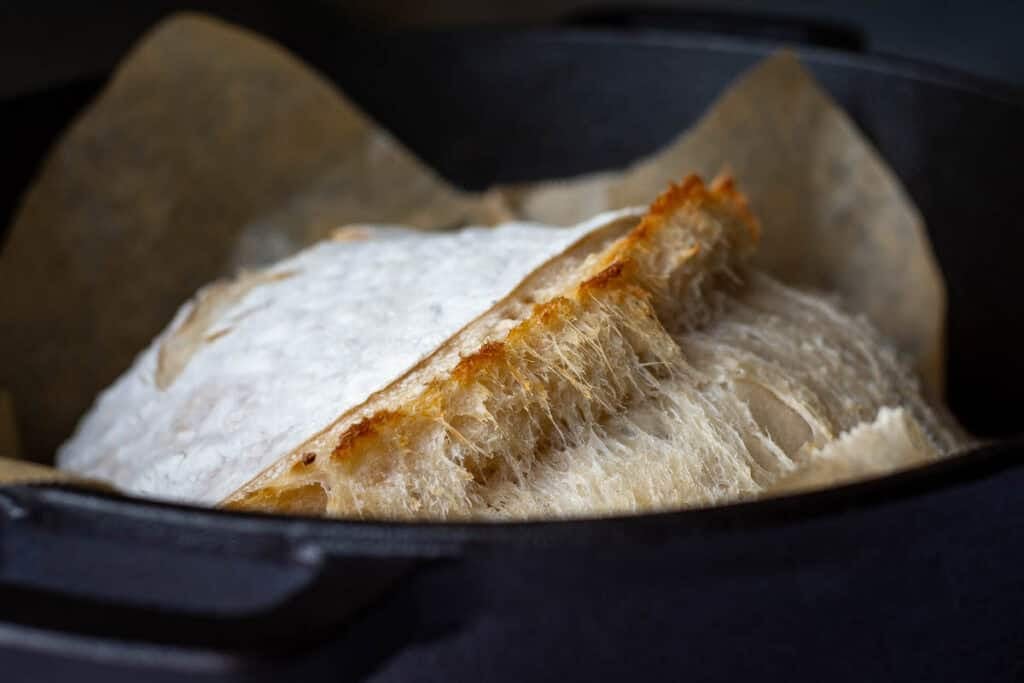
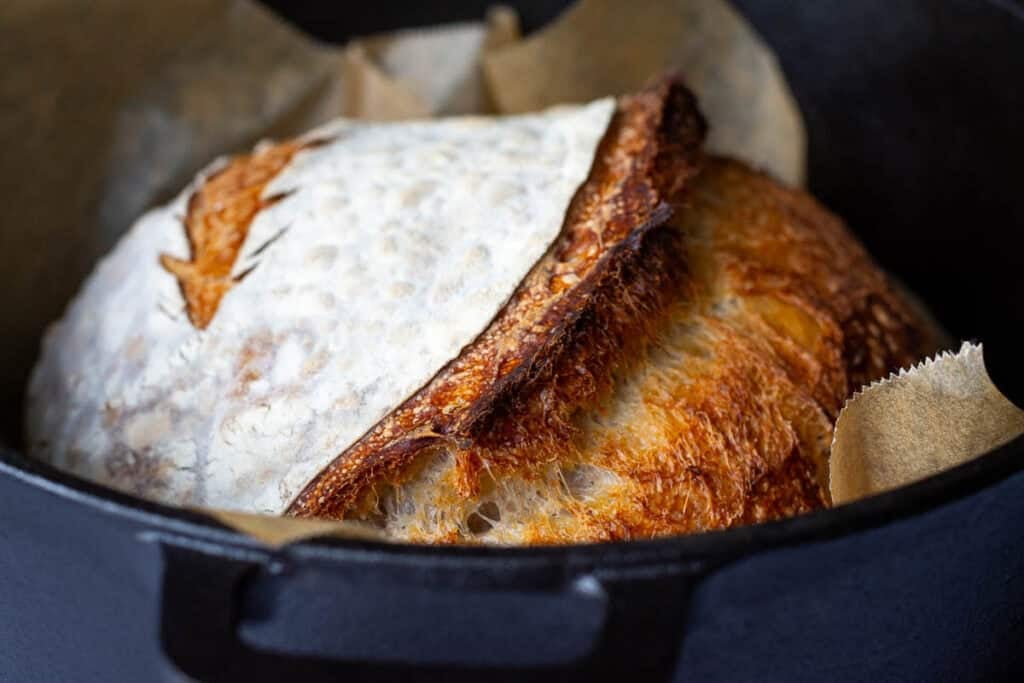
So the standard method (roughly the first half covered, the second half open) isn't arbitrary. It's steam while the loaf needs it, then dry heat for everything after.
When keeping the lid on the whole bake is the better call
You want a genuinely soft crust. Sandwich loaves, bread for kids, anyone who doesn't fancy sourdough as a dental hazard: this is the easiest way to get there without changing your recipe. Learn more on How To Make Sourdough Crust Softer?

Your dough is enriched. Milk, butter, egg, honey or sugar all brown faster and harder than a lean dough. Leave the lid on for the whole bake or a lot longer than you normally would, and you get more say over how dark the crust gets before the crumb's even finished cooking. For example, we often use the lidded method to bake our Pumpkin Spice Latte Sourdough Bread and London Fog Sourdough Bread (both have lots of milk replacing water, hence overbrowning very quickly).
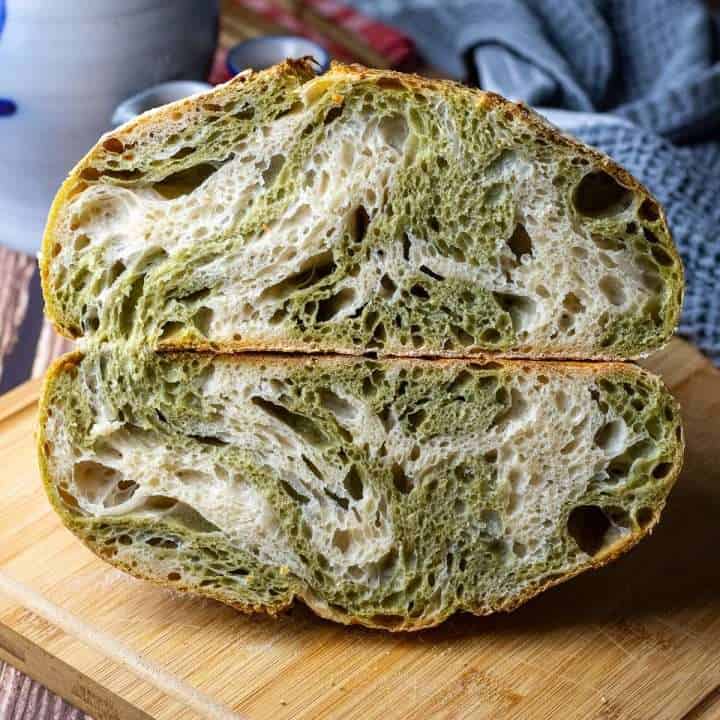
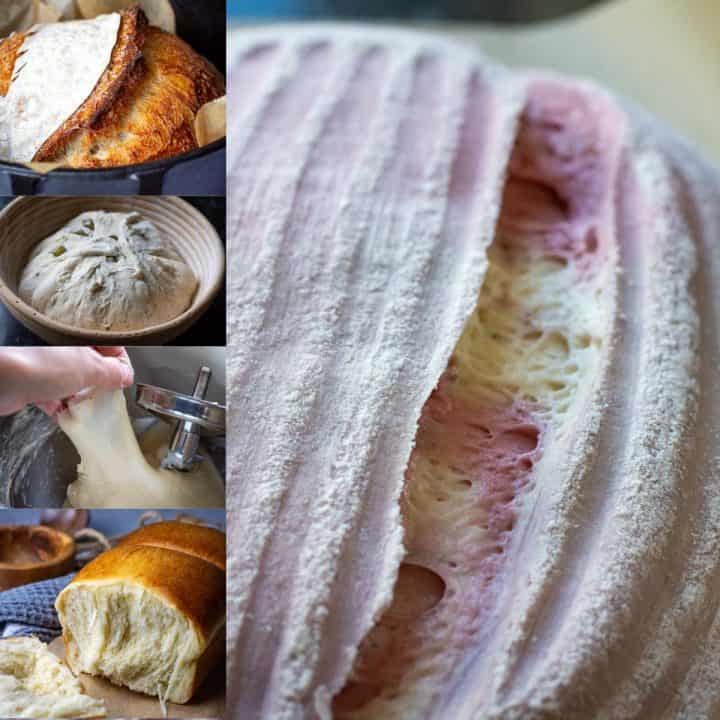
You've coloured the dough. Dragonfruit powder, spirulina, butterfly pea, anything you've added specifically to see, gets muted or lost under a deeply browned crust. A paler bake lets it actually show on the crust.


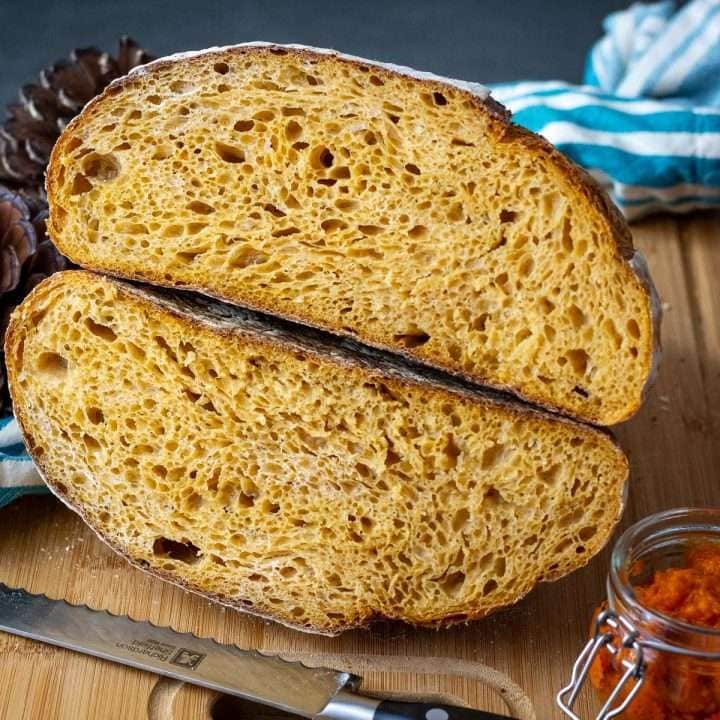
You've got mix-ins that scorch. Dried fruit, chocolate chips, anything sugary sitting near the score line burns fast under direct, dry heat. The lid shields it. Explore my sourdough bread recipes with inclusions.
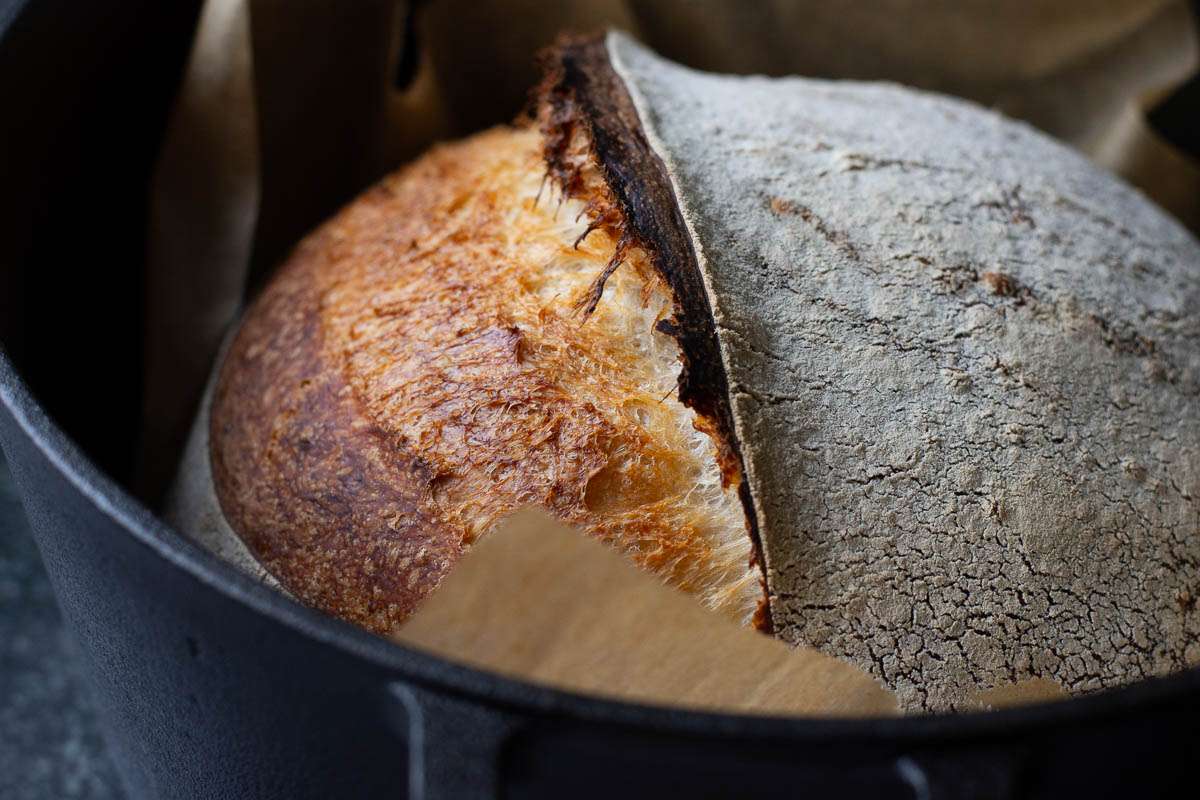
Your top is browning faster than your middle is cooking. The lid works as a heat shield here as much as a steam trap, useful if your oven runs hot on top or your Dutch oven is dark cast iron.
Does it take longer to bake?
Not necessarily, and this is where people overcomplicate it. The crumb still gets heat whether the lid's on or off, so it doesn't automatically take longer to cook through.
What takes longer is getting a dark, crisp crust, because you're deliberately slowing that part down. If your goal was a soft, pale loaf and it hits temperature at 50 minutes fully covered, you're done. You haven't done anything wrong just because it looks lighter than the loaf on the front of a sourdough cookbook.
High hydration vs low hydration dough
A wetter dough has more moisture to give off, so it tolerates (or even benefits from) a longer covered stretch before you'd normally uncover it.
That's different from saying wet dough should stay covered the whole time. A drier, lower-hydration dough, especially an enriched or sandwich-style one, is actually where full-cover baking suits best, because you're not fighting the dough's own moisture to try and dry the crust anyway.
Lid on vs lid off at a glance
| CHARACTERISTIC | Lid on | Lid off |
|---|---|---|
| Steam | High | Low |
| Oven spring | Excellent | Limited once crust sets |
| Crust drying | Slow | Fast |
| Browning | Slow | Fast |
| Crispness | Lower | Higher |
| Crust thickness | Generally softer | Generally firmer |
| Moisture retention | Higher | Lower |
| Top heat exposure | Lower | Higher |
| Risk of pale loaf | Higher | Lower |
| Risk of very hard crust | Lower | Higher |
If you're after that classic artisan boule with the loud crackle and the deep mahogany crust, stick with the conventional two-stage bake. If you're after something softer, gentler on the colour, or protecting ingredients that don't cope well with direct heat, a fully covered bake is a legitimate tool, not a shortcut you got wrong.
If you're baking an enriched dough regularly, it's worth reading how that dough behaves generally in your enriched sourdough / sourdough brioche-style breads before you start adjusting bake times on top of it.
LOVE BAKING SOURDOUGH WITH ME?
You can now add Somebody Feed Seb as a preferred source on Google. It only takes a tick box, and tells Google you'd like to see more of my recipes when relevant.
FAQS
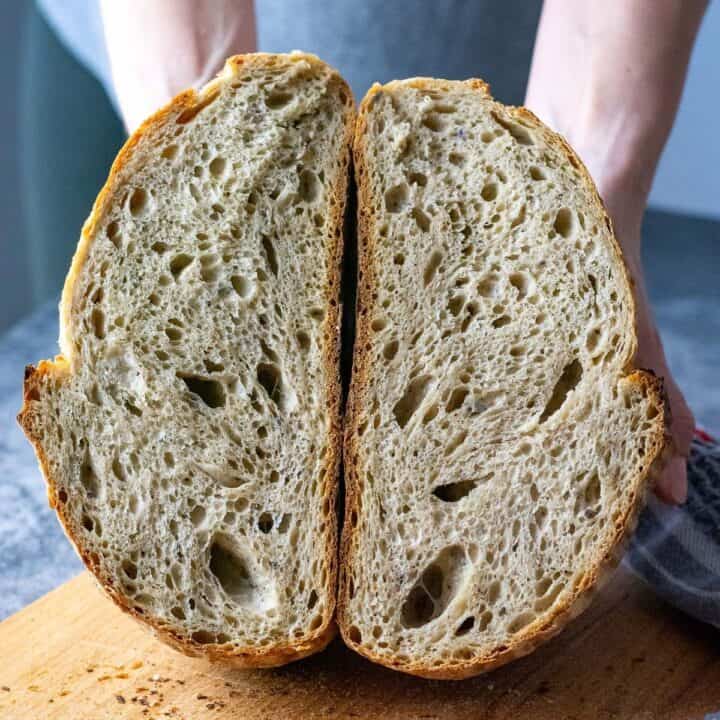
No, not if it's reached the right internal temperature (around 96-99°C for a lean loaf). The lid affects the crust, not whether the crumb cooks through. Check with a thermometer rather than judging by crust colour if you're baking fully covered.
It works in any tight-lidded, oven-safe pot, enamelled cast iron, a clay baker, a combo cooker. What matters is that the lid seals well enough to trap steam. A loose-fitting lid won't give you the same result.
You can do it with either. It suits enriched and sandwich-style loaves best because that's usually the crust you want anyway. On a lean, high-hydration artisan dough, you'll get a fully baked loaf, just a paler, softer one than the classic version.
Usually a dark cast-iron interior, an oven running hotter than the dial says, or ingredients (honey, milk, sugar) that brown fast regardless of steam. Try dropping the oven temperature slightly rather than assuming the lid isn't doing its job.
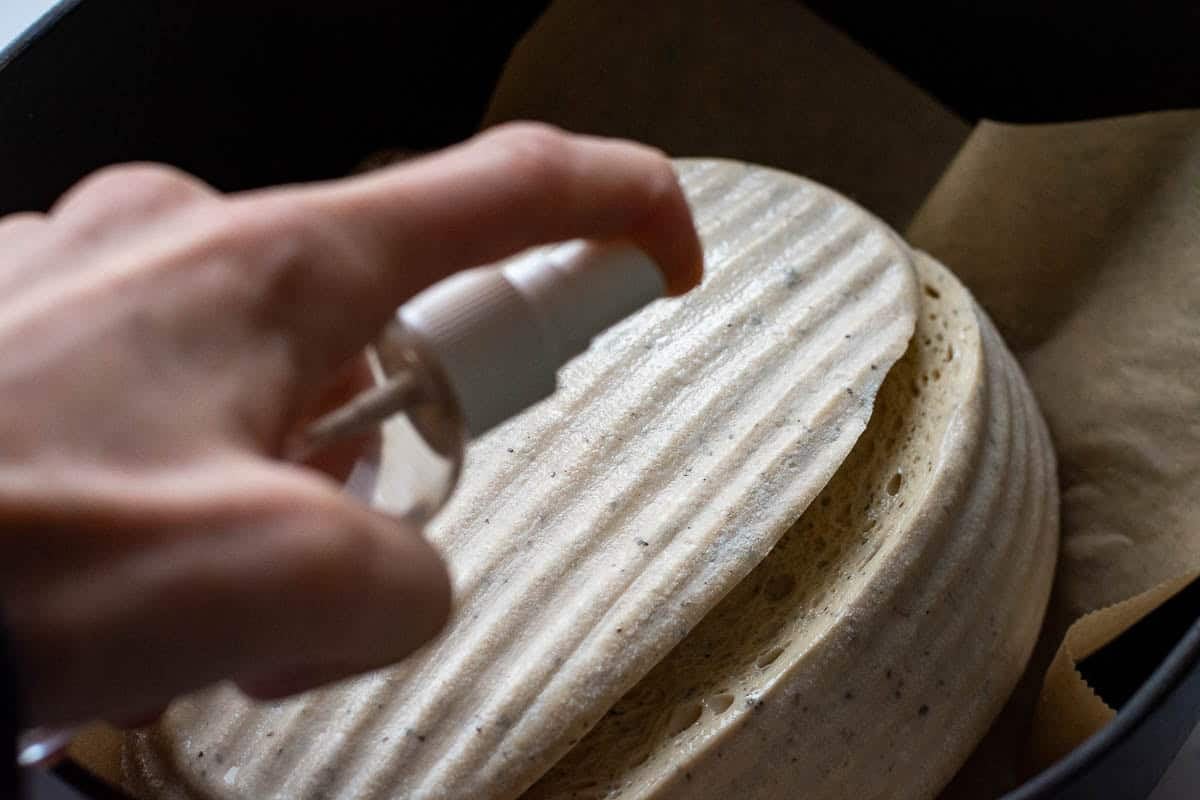
No, the sufficiently hydrated dough already produces enough steam once the lid traps it. But I do find that spritzing the surface of the dough with water helps create blisters on the crust, if that's what you're into (I know, I am).


Leave a Reply