
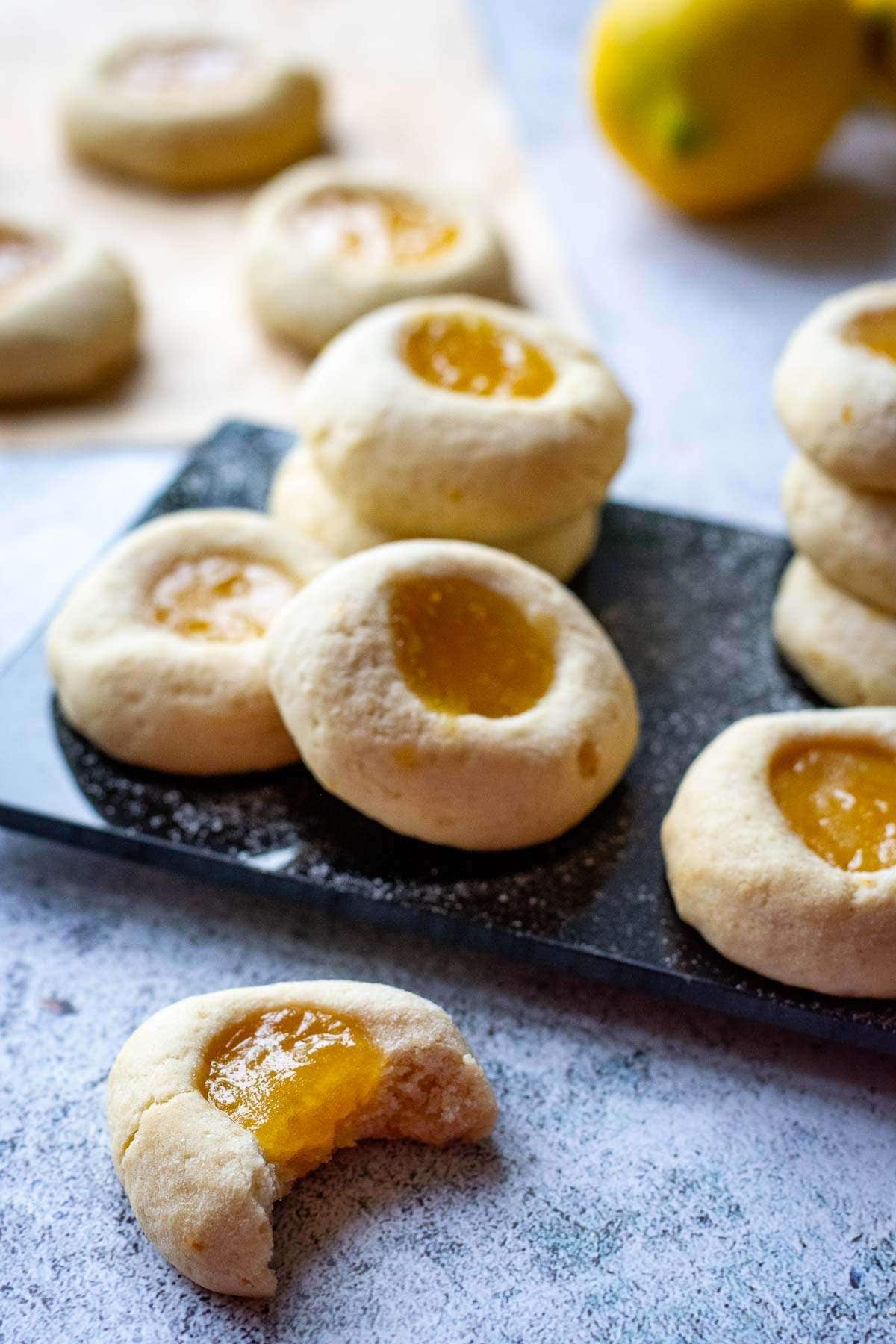
Lemon Thumbprint Cookies with Lemon Curd are a zingy treat that's easy to whip up in your kitchen. With a buttery cookie base and a tangy lemon filling, they're a perfect balance of sweet and tart flavours. You can opt for store-bought lemon curd or make your own-it's all about what's convenient for you. These cookies are utterly buttery and delicious, making them a crowd-pleaser for any occasion.

Jump to:
As an Amazon Associate I earn from qualifying purchases, at no extra cost for you! Thank you!
The Story Of Thumbprint Cookies
Thumbprint cookies, also known as Hallongrotta in Sweden, have roots tracing back to the early 20th century. Originating from Sweden, they're named for the thumbprint-like indentation made in the centre. These cookies gained popularity for their simplicity and versatility in fillings.
Today, they're enjoyed worldwide, with variations like this lemon curd cookie recipe, offering a tangy twist to this classic treat.
Recipe Highlights
- A buttery thumbprint cookie is universally accepted as delicious, right? But have you tried them with tangy lemon curd before?
- These are super easy cookies, suitable for beginners or to bake with children!
- We double (or even triple) the lemon flavour in these lemon cookies: lemon zest, lemon extract (or juice) and lemon curd are used!!!
- Super easy to add your own twist: use some culinary lavender or fresh thyme in the dough, or switch lemon curd for blood orange or lime curd!
- Sourdough baker? Try our Sourdough Lemon Curd Thumbprint Cookies or Sourdough Discard Thumbprint Cookies With Jam.
Ingredients and Substitutes
A handful of simple ingredients that you will probably already have in your kitchen, here's what you'll need:
- lemon zest: we use zest from one large lemon for 20 lemon curd cookies.
- caster sugar: or white granulated sugar.
- a pinch of salt.
- unsalted butter: softened, as you will really struggle to beat cold butter into a soft and fluffy mixture that forms the base of the cookie dough.
- egg: use a large egg at room temperature.
- lemon extract or lemon juice. Both options are great: we found that thumbprints made with lemon juice are tangier, but the ones with lemon extract smell amazing!
- plain flour: also known as all-purpose flour.
- lemon curd: we used store-bought lemon curd on this occasion, but here's a great recipe for tangy homemade lemon curd.
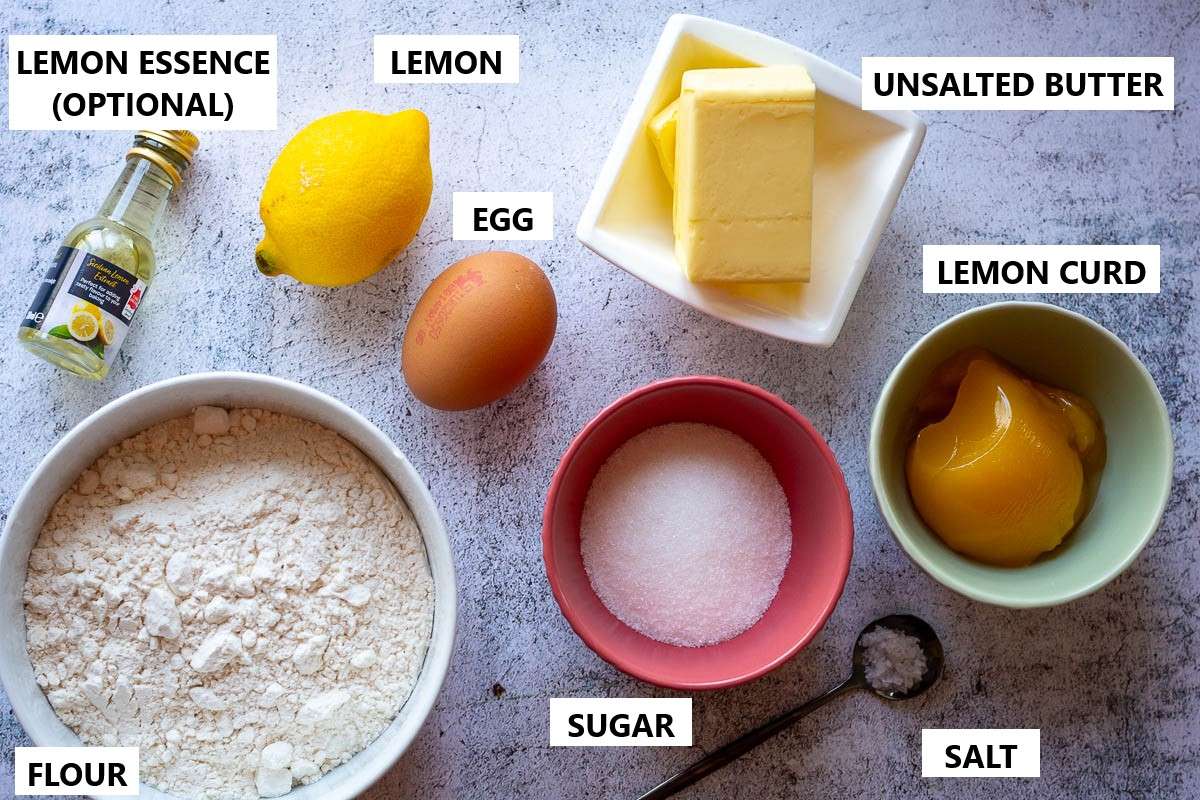
Find the quantities, full instructions and nutritional information in the recipe card at the bottom of the post.
VARIATION: Lemon Thumbprint Cookies With Egg Yolks Only! If you want, you can use a large egg yolk and add about 2 tablespoon of fresh lemon juice to the cookie dough. This will make melt-in-the-mouth delicious and rich lemon thumbprint cookies, but keep in mind that they will be more prone to spreading in the oven, so we recommend chilling the dough for longer and chilling the shaped cookies again just before baking.
Step-By-Step Method
You are 4 simple steps away from buttery lemon curd cookies! Let's get baking!
Step 1: Make Cookie Dough
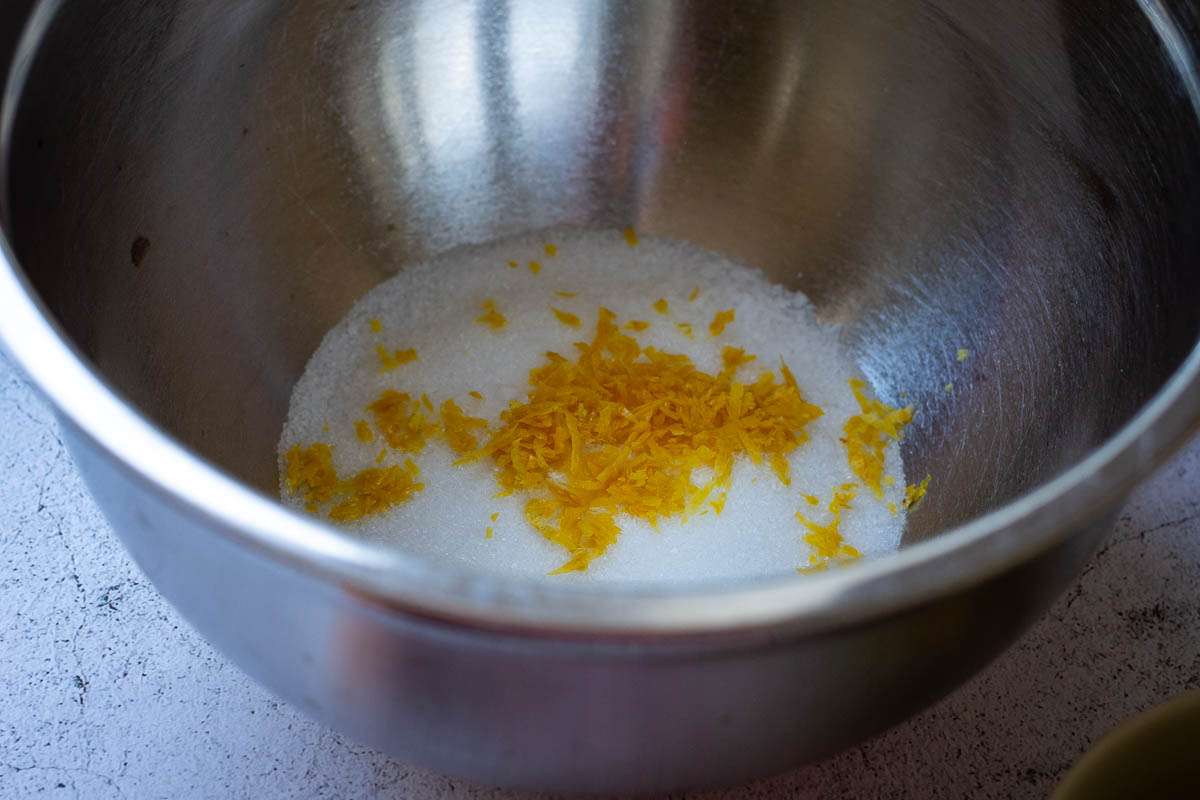
In a large bowl, rub the zest of a lemon into the sugar and salt with your fingertips to release lemon oil.
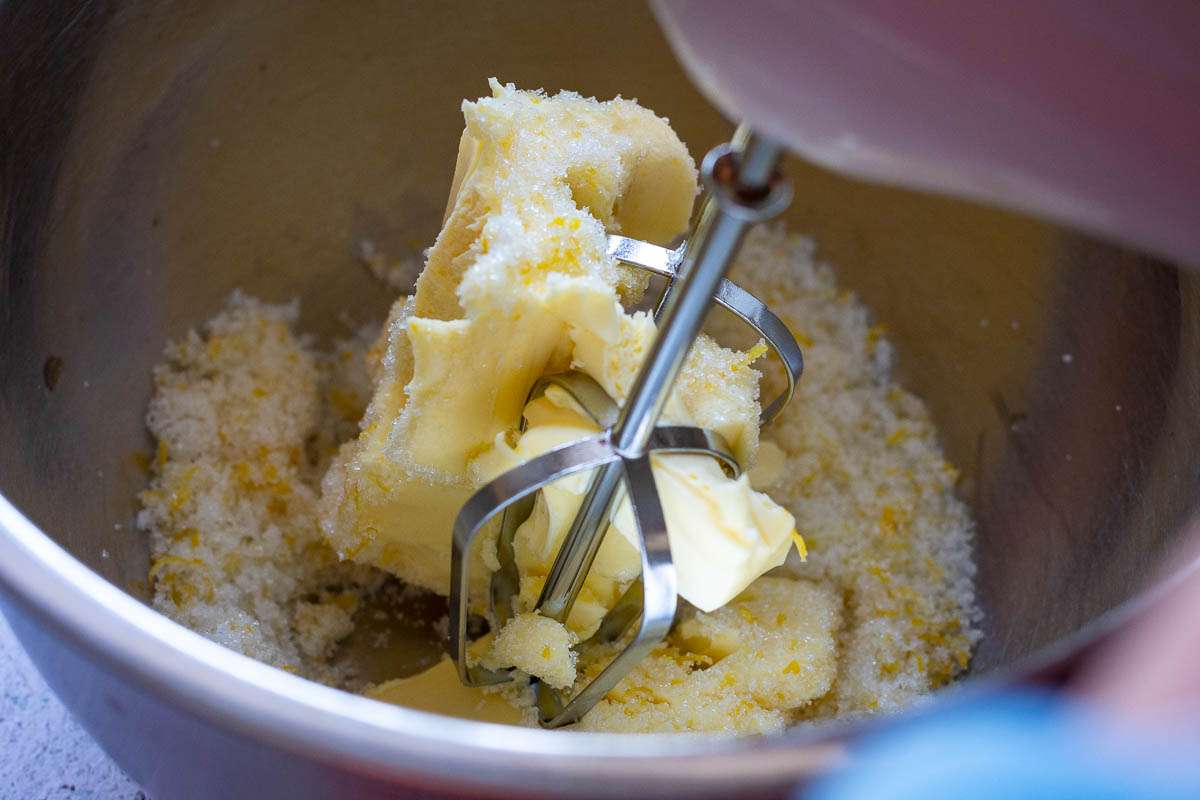
Add the softened butter and beat until light and fluffy using a handheld electric mixer on medium-high speed.
Add an egg and heat again until well incorporated, making sure to scrape the sides of the bowl once or twice.
Mix in lemon extract (or juice), if using.
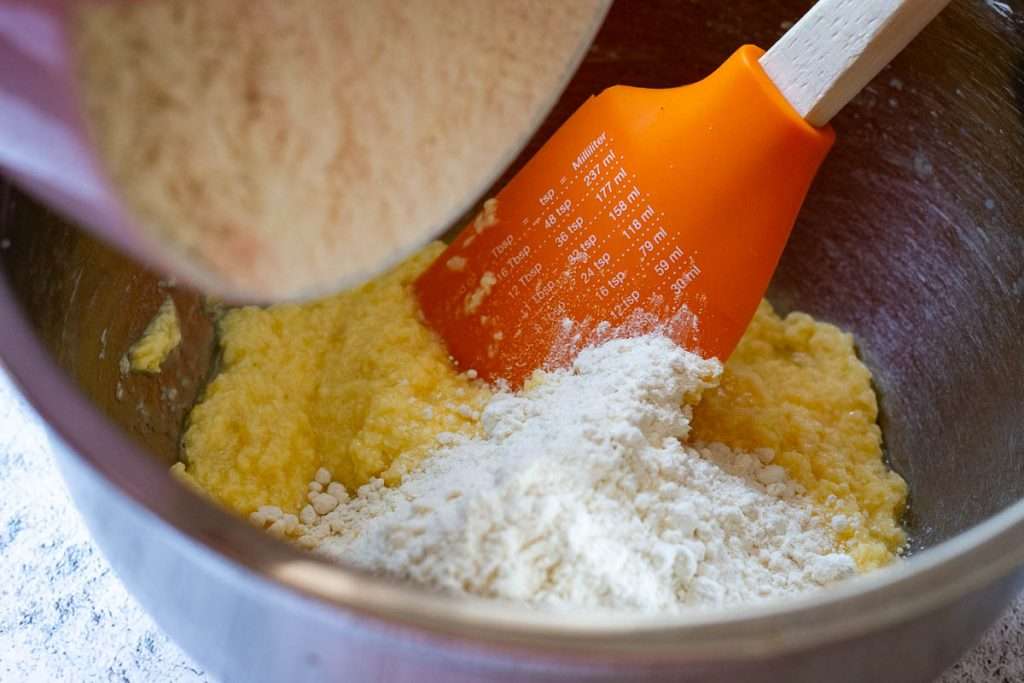
Add the flour, and fold it in gently, until rough dough forms.
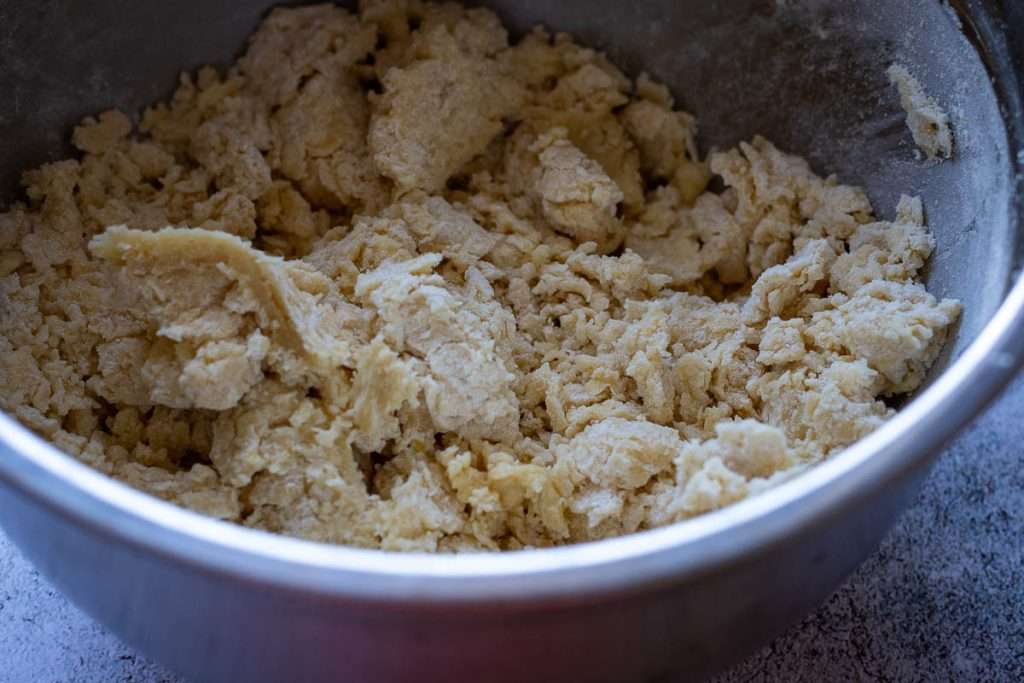
Knead the dough gently, just enough to bring it into a ball.
Step 2: Chilling is Important
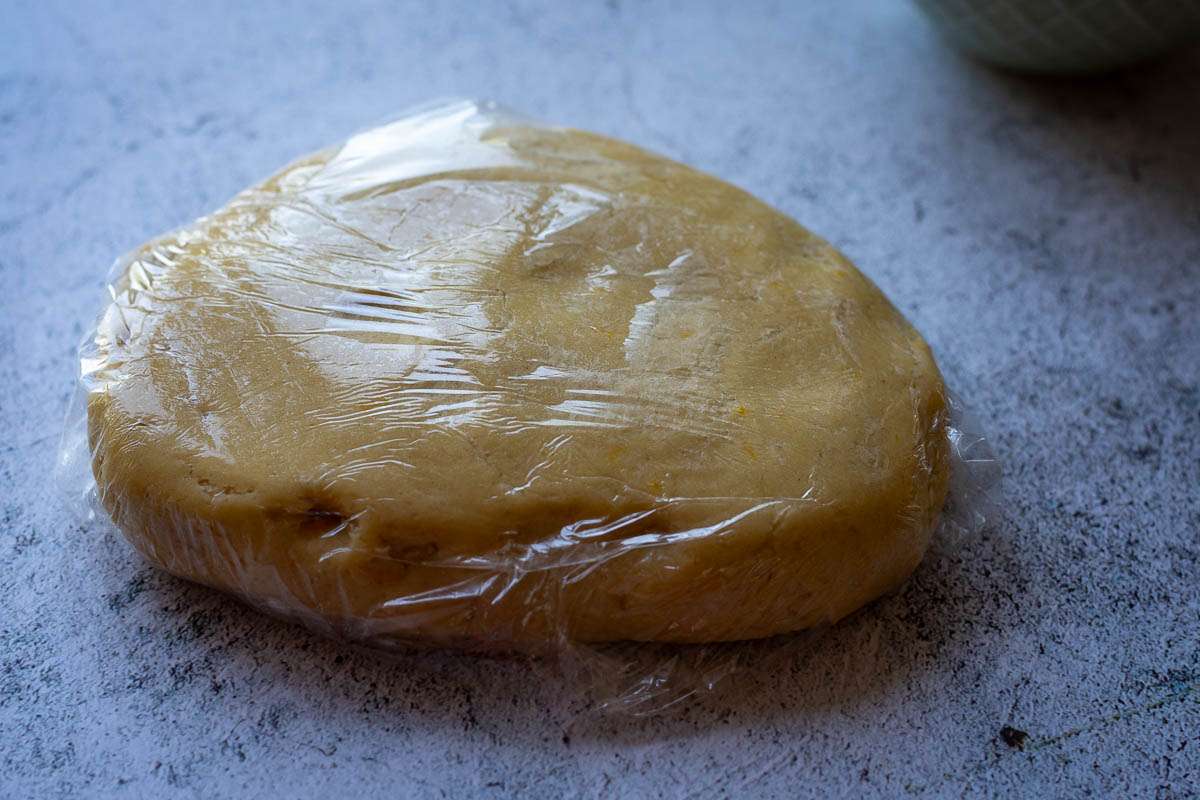
Flatten the dough, wrap it in cling film (plastic wrap) and place it in the fridge for an hour. This will prevent the cookies from spreading too much in the oven. If you skip chilling, you will end up with flat cookies with lemon curd leaking all over the place.
Step 3: Shape & Fill
Preheat the oven to 180°C Fan. Line a large cookie sheet with parchment paper.
Once chilled, form 20-22 small cookie dough balls and arrange them onto a prepared baking sheet.
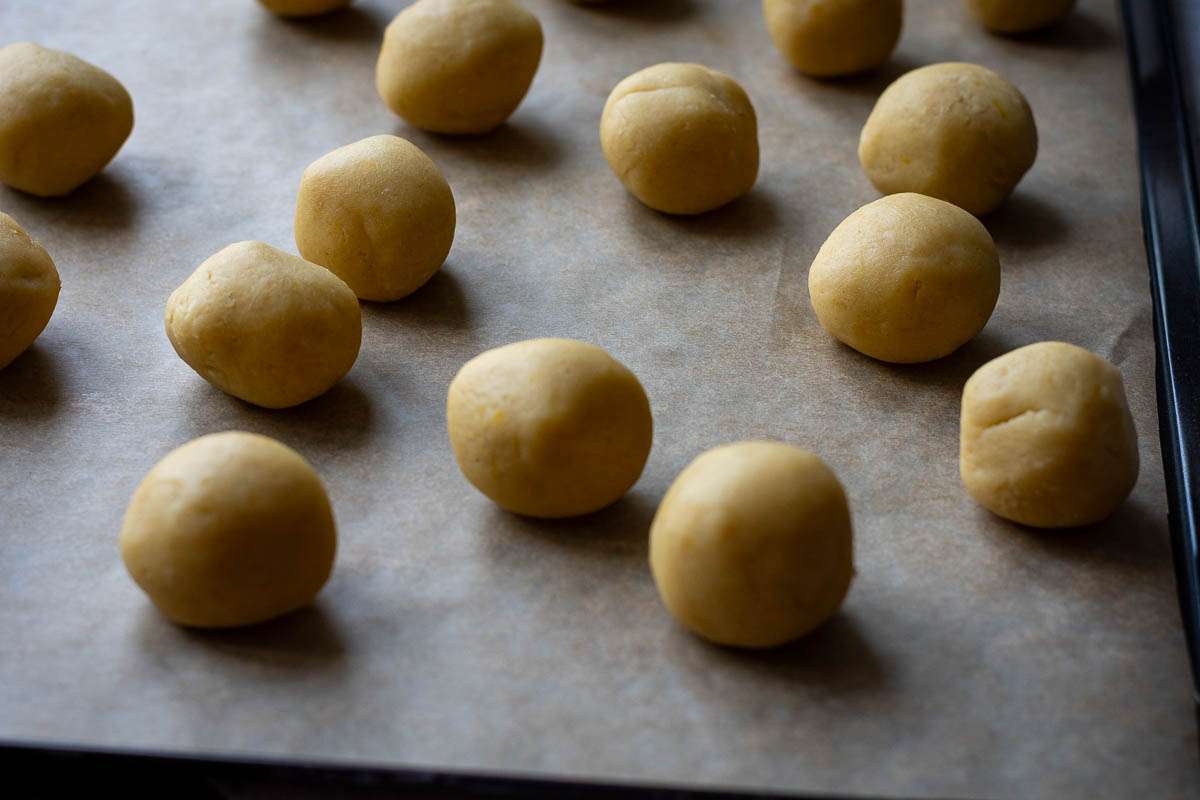
TIP: Weigh your chilled dough, and divide the weight by 20, then drop each dough ball onto the kitchen scale to check they're approximately the same weight.
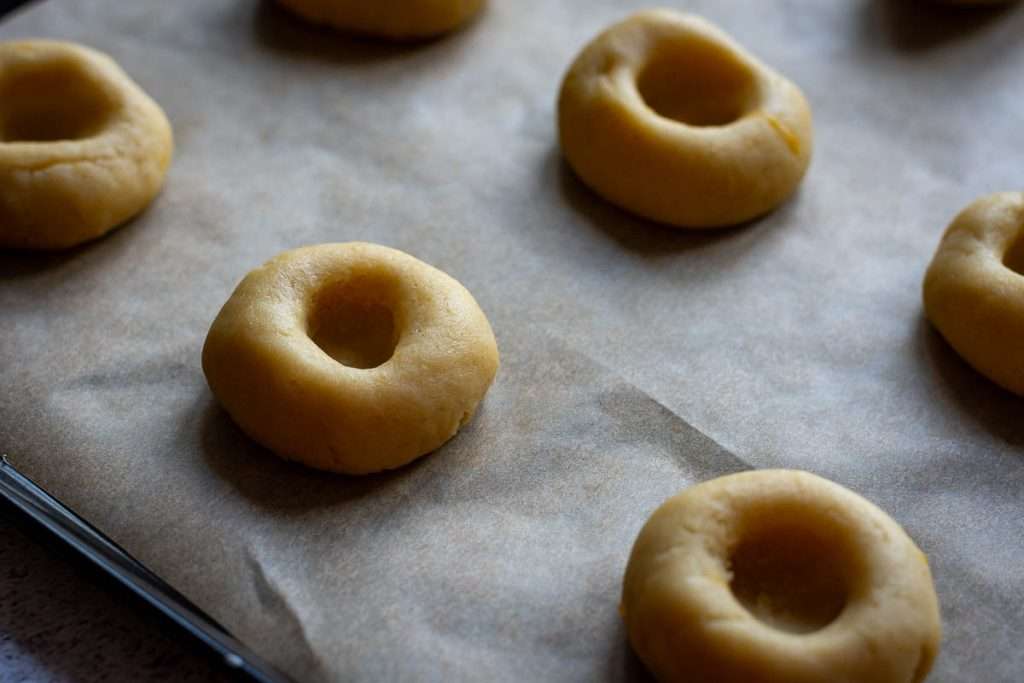
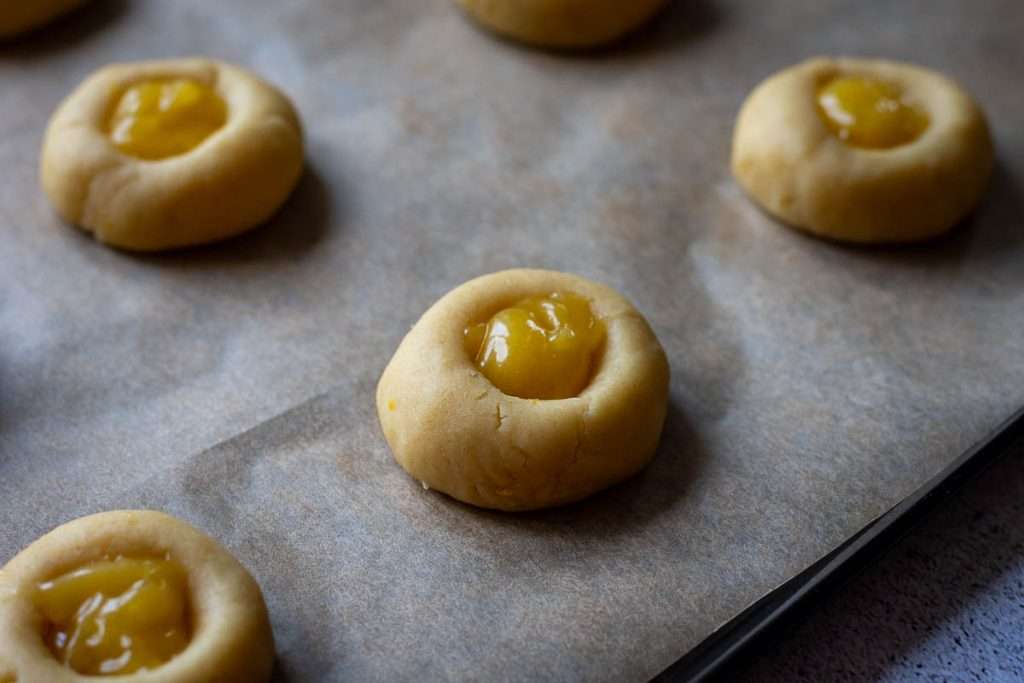
Make a dent into the center of each cookie ball with your thumb (or the back of a spoon) and add half a teaspoon of lemon curd into each dent (don't fill it to the brim or it will leak out over the edges).

Step 4: Bake & Cool
Bake cookies in the preheated oven for 10-12 minutes until the bottoms are golden brown. Let the lemon thumbprint cookies cool down completely on the baking tray.
Serve dusted with a little powdered sugar.

Troubleshooting
Thumbprint cookies may spread excessively if the dough is too warm or if there's too much fat in the recipe. Ensure your dough is properly chilled before baking, and make sure you weigh the ingredients rather than using cups and spoons for best results. Additionally, using higher protein flour can help maintain the shape of the cookies during baking, so avoid cake flour.
They may fall apart and become crumbly if the dough lacks sufficient moisture or if it's overmixed, leading to a dry texture. They may also be overbaked.
You may have overfilled them, or your cookies spread too much (reasons above), with lemon curd spreading alongside.
You can do it both ways. Since our lemon curd thumbprint cookies bake within 10-12 minutes, the curd doesn't have enough time to boil over, so they are filled before baking. However, if you want to make large cookies that will require longer baking, you may consider filling them once baked. Press down the middles again when the cookies are hot straight out of the oven and immediately pipe or spoon lemon curd into them, so that the warmth helps the filling spread evenly into the wells.

Storage & Making Ahead
The cookie dough can be made up to 2 days in advance. Keep it tightly wrapped in cling film in the fridge until you are ready to bake. You can also freeze the cookie dough balls. Once you're ready to bake, thaw them at room temperature for about 30-60 minutes (until they are just soft enough to bake a dent in the centre) and continue as per the recipe.
Once baked, store these little beauties in a single layer or multiple layers separated with a sheet of parchment paper in an airtight container in a dark cupboard away from direct sunlight.
Can Baked Lemon Thumbprints Be Frozen? Whilst they would be safe to eat after thawing, they are not great! So if you want a truly delicious cookie, eat them freshly made!
Lemon Lovers, Here're Some More Lemon Desserts
If you love lemon treats, you are in the like-minded crowd here! From 5-ingredient lemon bars to Italian Lemon Ricotta Pie and 3-ingredient lemon posset brulee, we have lemon recipes to last you weeks!


More Cookie Recipes To Try Next



Lemon Thumbprint Cookies With Lemon Curd
Ingredients
- zest of 1 lemon
- 60 g (½ cups) caster sugar or white granulated sugar
- ¼ teaspoon salt
- 110 g (3.88 oz) unsalted butter softened
- 1 egg large
- 1 teaspoon lemon extract optional
- 240 g (2 cups) plain flour all-purpose flour
- 100 g (½ cups) lemon curd
Instructions
- In a large mixing bowl, rub the zest of a lemon into the sugar and salt with your fingertips to release lemon oil.
- Add the softened butter and beat until light and fluffy using an electric handheld mixer.
- Add an egg and heat again until well incorporated, making sure to scrape the sides of the bowl once or twice.
- Mix in lemon extract, if using.
- Add the flour, and fold it in gently, until rough dough forms. Knead the dough gently, just enought obring it into a ball.
- Flatten the dough and wrap it in cling film (plastic wrap) and place it in the fridge for an hour.
- Preheat the oven to 180 C Fan. Line a large baking sheet with parchment paper.
- Once chilled, form 20-22 small balls and arrange them onto a prepared baking sheet.
- Make a dent into each cookie ball with your thumb and add a small amount of lemon curd into each dent (don't fill it to the brim or it will leak out over the edges).
- Bake in the preheated oven for 10-11 minutes. Let the lemon thumprint cookies cool down completely on the baking tray.
- Serve dusted with a little icing sugar.
Nutrition



Leave a Reply