
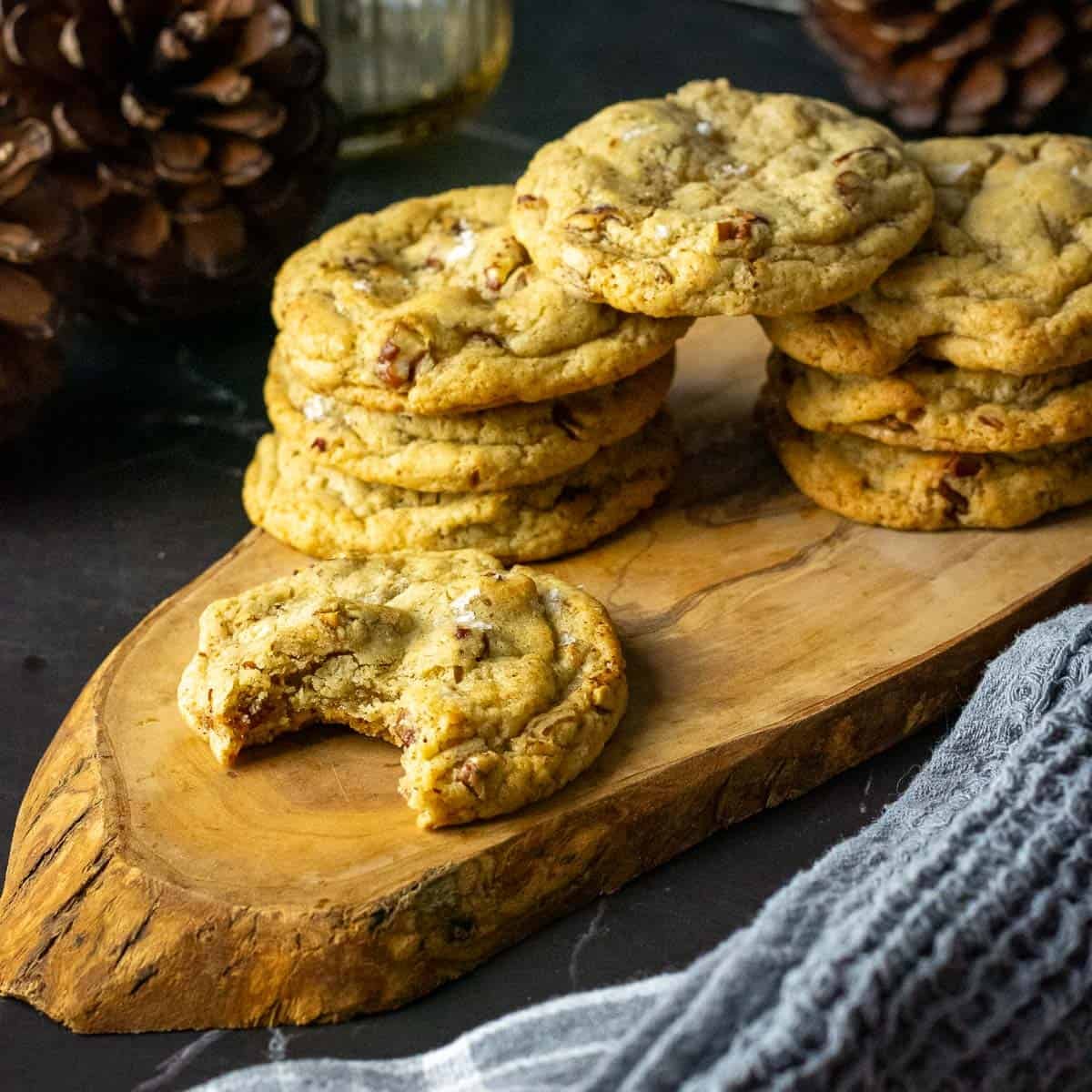
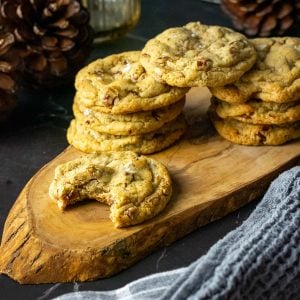
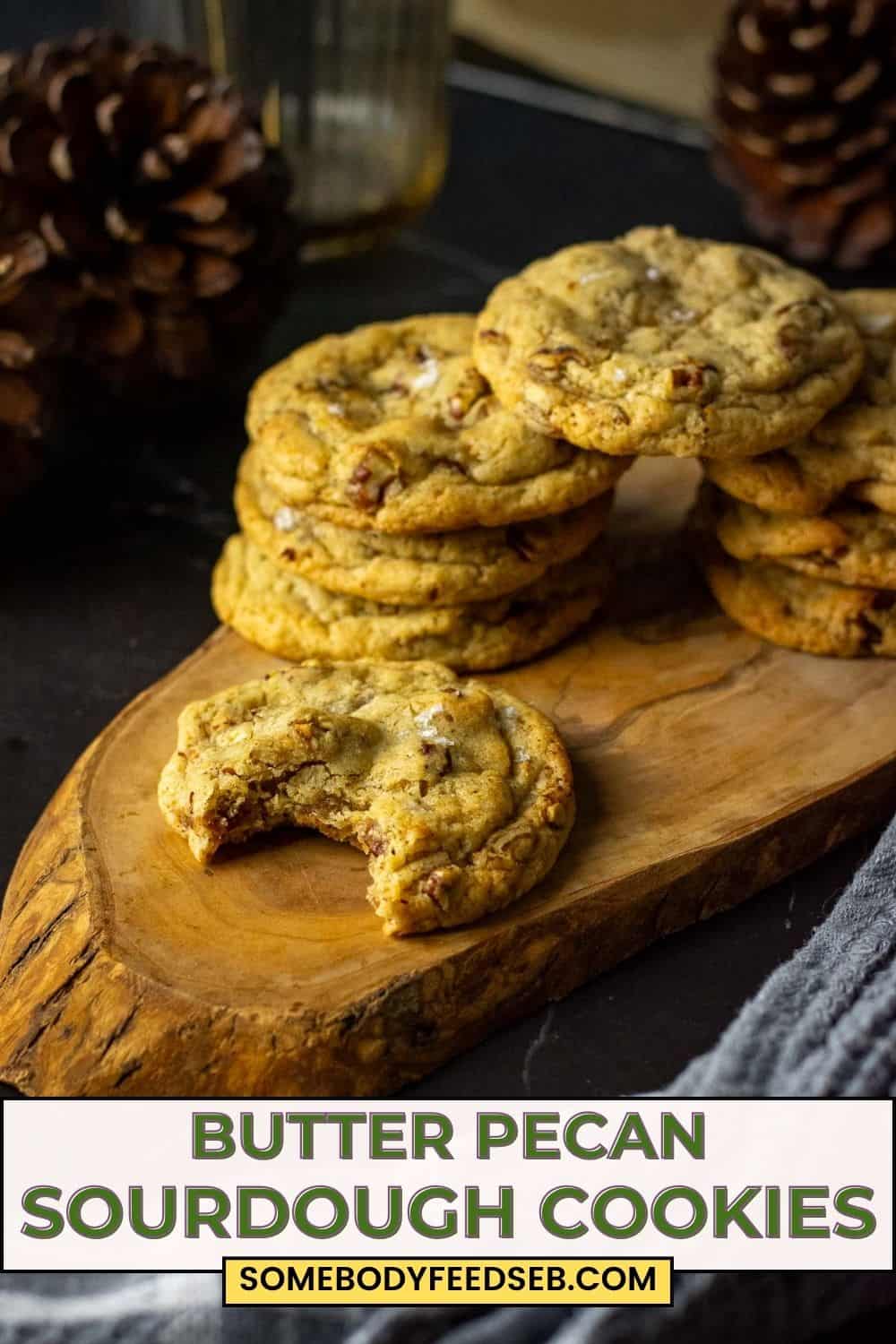
These sourdough butter pecan cookies solve a problem most discard cookies don't admit to having: they either spread thin and greasy, or bake up strangely cakey, because nobody accounts for the fact that discard is roughly half water. Browned butter and toasted pecans do the flavour work here, while a yolk-only egg and a proper chill hold the dough's structure together. The result is a properly chewy sourdough cookie with a crisp edge and a crackled, crinkled top, dialled in over enough batches that the troubleshooting below covers every way it can go wrong.
Jump to:
As an Amazon Associate I earn from qualifying purchases, at no extra cost for you! Thank you!

Recipe Highlights
TASTE: browned butter, toasted pecan, a warm edge of cinnamon
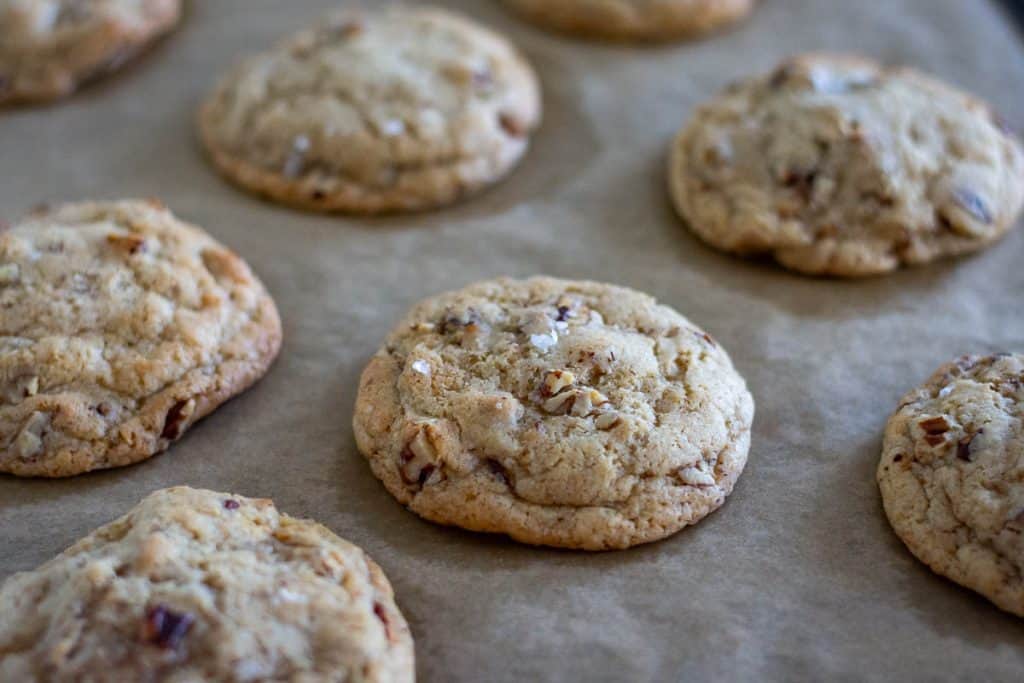
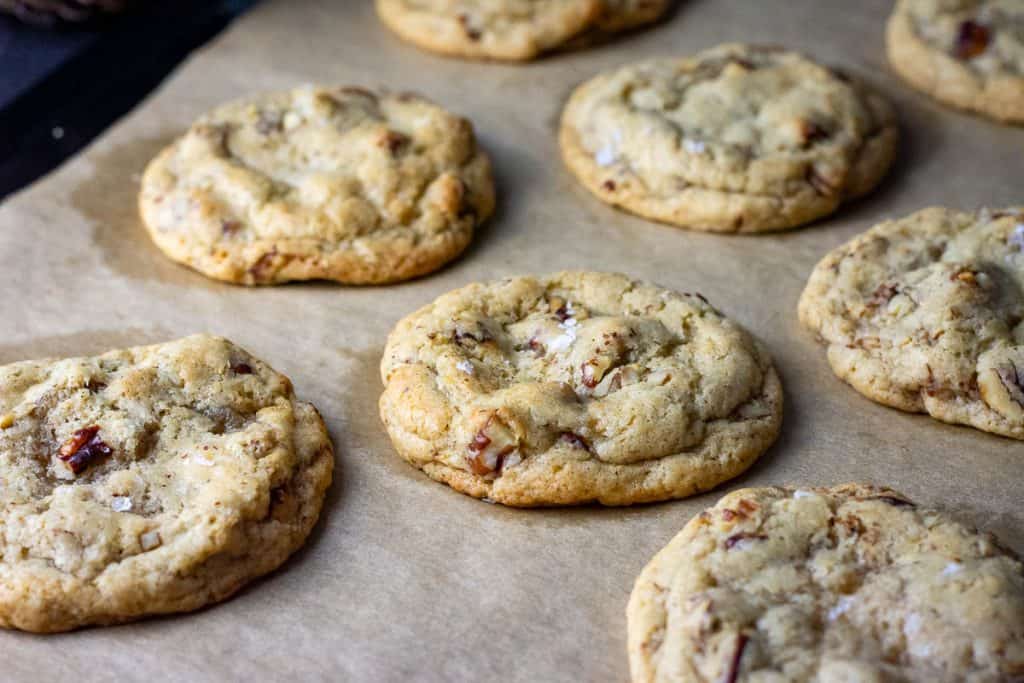
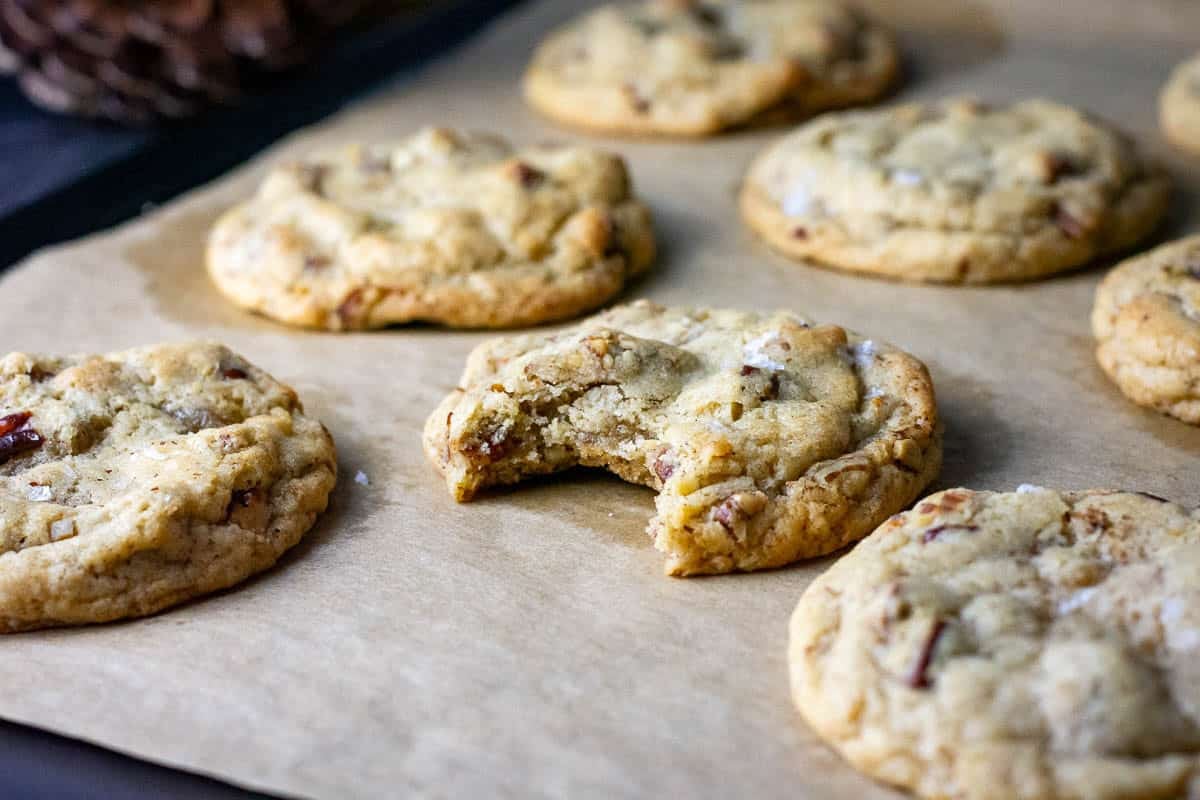
TEXTURE: chewy centre, crisp edge, crackly crinkled top
TOP TIP: yolk-only and browned butter aren't flavour choices, they're correcting for the discard's water content
BEST FOR: the autumn/fall baking stretch through to the Christmas cookie tin
SEB'S RATING: nine out of ten, docked a point because there's no chocolate chips in these

MOISTURE PROBLEM FROM SOURDOUGH DISCARD
Sourdough discard is roughly half water. If you're using a 100% hydration starter, that's equal parts flour and water by weight, and all of that water goes straight into your dough.
Using only the egg yolk instead of a whole egg removes one of the wettest ingredients in a normal cookie dough, which claws back some of the room the discard has already taken up.
Butter itself is about 16 to 18% water, and browning it isn't just for flavour. It cooks off a small portion of that moisture before it ever reaches the bowl. Between the yolk-only egg and the browned butter, you're actively correcting for the extra moisture discard brings, which is why this dough behaves like a normal chewy cookie instead of spreading thin or baking up cakey.
Ingredient Notes
- Sourdough discard (100% hydration): unfed, straight from the jar is fine.
- Egg yolk only: don't sub in a whole egg. The white is mostly water and undoes the correction this recipe is built around.
- Pecans toasted in butter, not dry: toasting them in butter rather than a dry pan gives a rounder, nuttier flavour, using the same logic as browning the main batch of butter, fat carries flavour better than dry heat alone.
- Brown sugar weighted over white: more brown sugar than granulated gives the deep, toffee-ish butter pecan flavour and keeps the crumb chewy rather than crisp.
- Cinnamon: just a quarter teaspoon, there to round out the browned butter rather than announce itself.
- Flaky salt: optional, but it cuts the sweetness and makes the pecan flavour taste sharper.
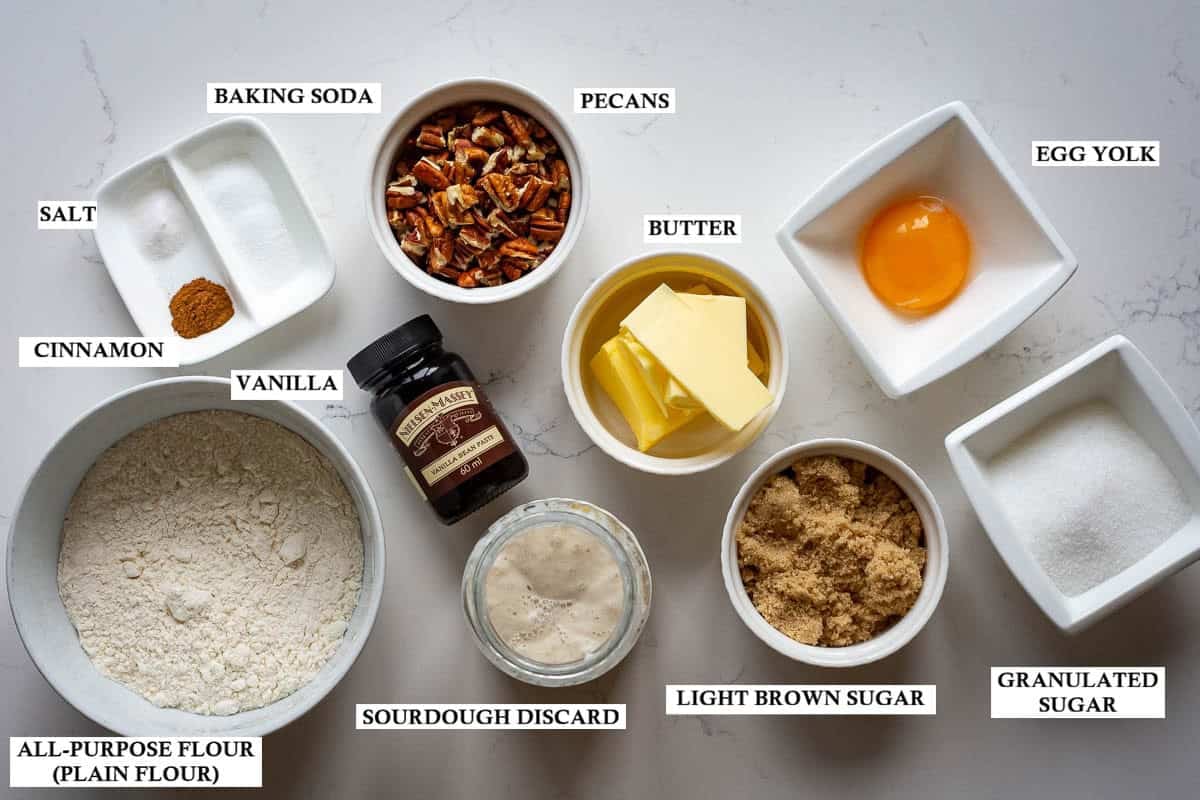
Find the full ingredient quantities and instructions in the recipe card below.
Step-by-Step Method
Toast the pecans
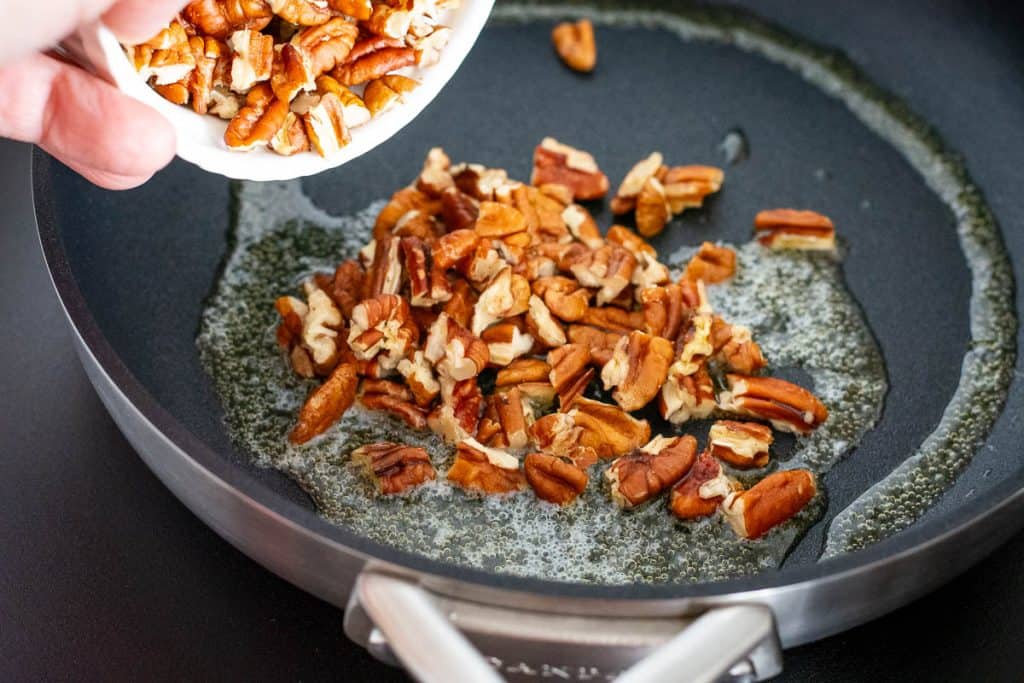
1. Melt 10g butter in a small pan over medium heat, add the chopped pecans and toast for 3 to 4 minutes, stirring, until fragrant and a shade darker.
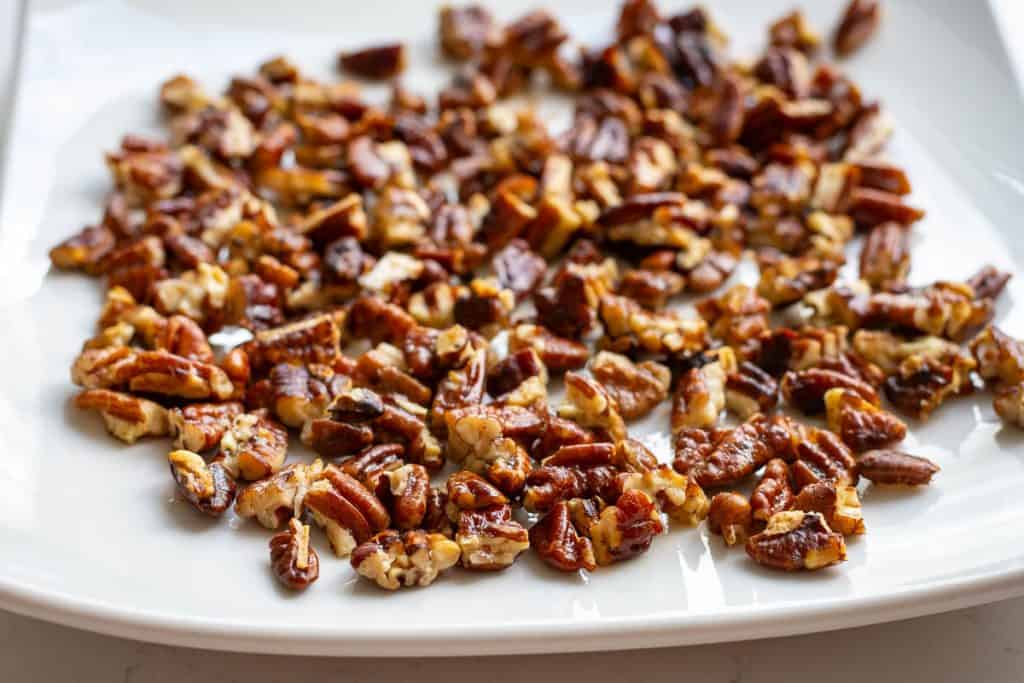
2. Tip onto a plate to cool completely; warm pecans will melt into the dough and turn it greasy.
MAKE COOKIE DOUGH
1. Melt the remaining 75g butter in the same pan over medium heat. It will foam, then smell nutty and turn golden with flecks of brown at the bottom. Take it off the heat as soon as that happens and let it cool slightly before using.
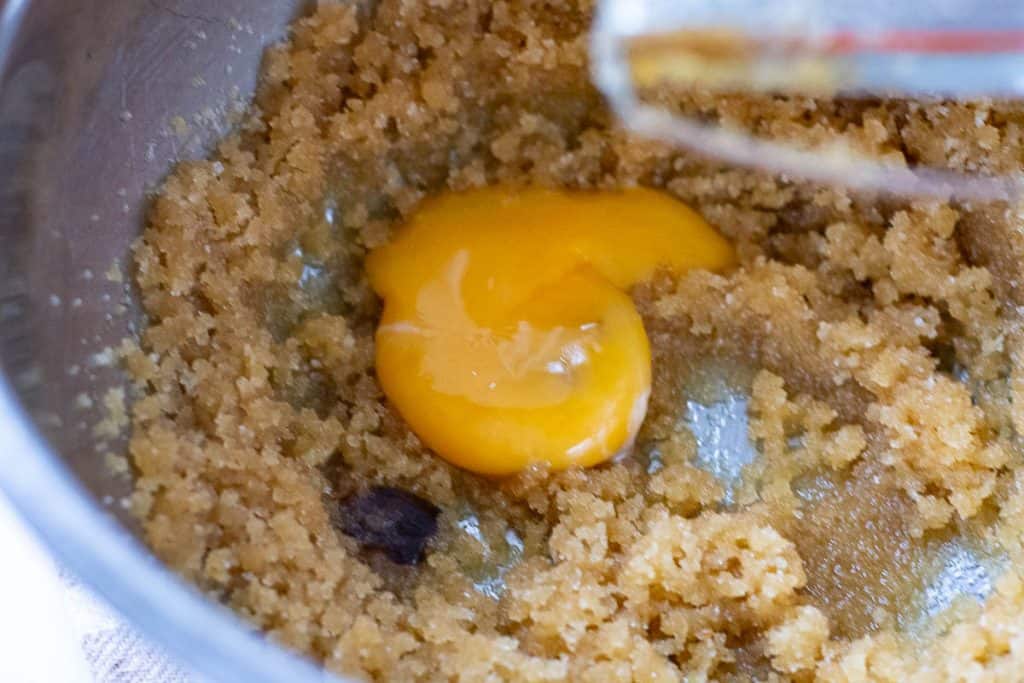
2. Whisk the granulated and brown sugars together, then pour in the browned butter and beat for 2 minutes. The sugar will be grainy but hydrated.
3. Add the egg yolk and vanilla and beat for another 2 minutes.
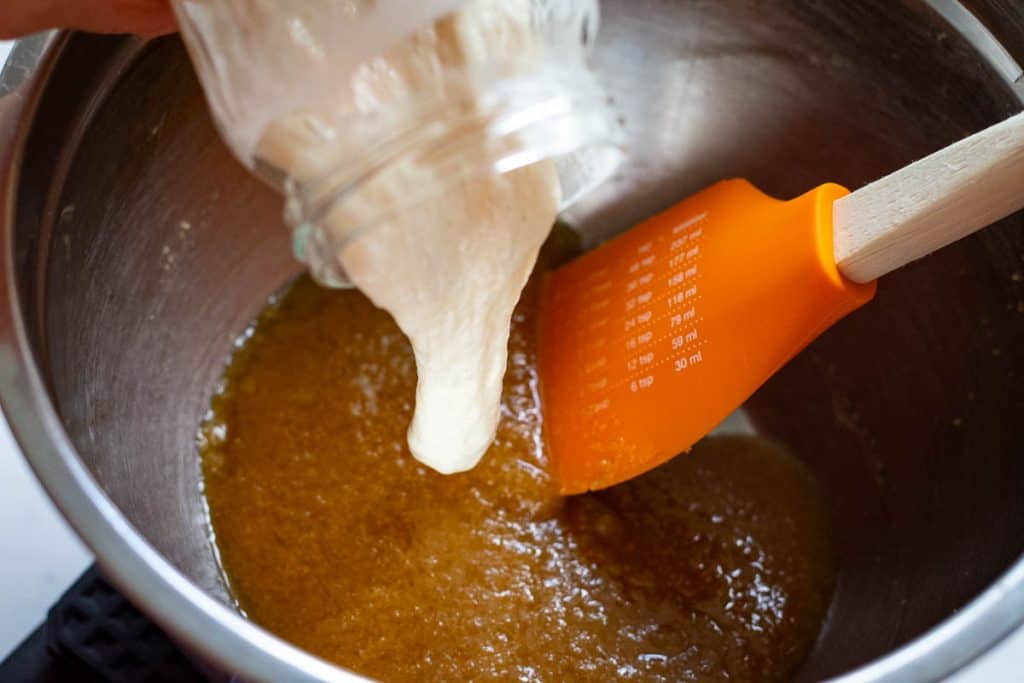
4. Stir in the sourdough discard by hand with a balloon whisk, not the mixer, so you don't develop the gluten.
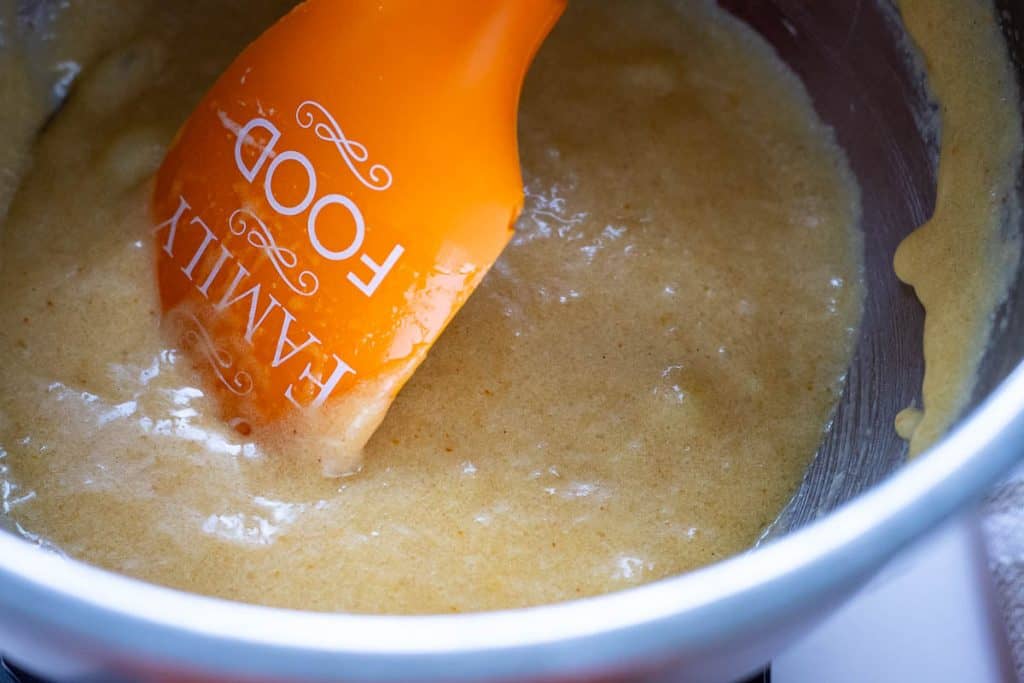
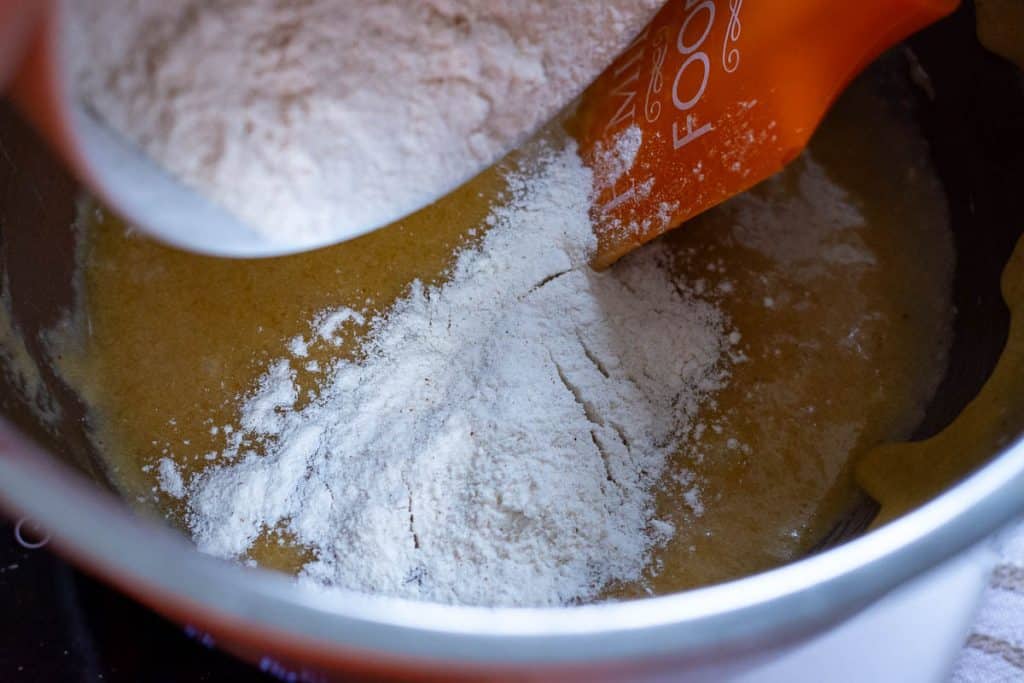
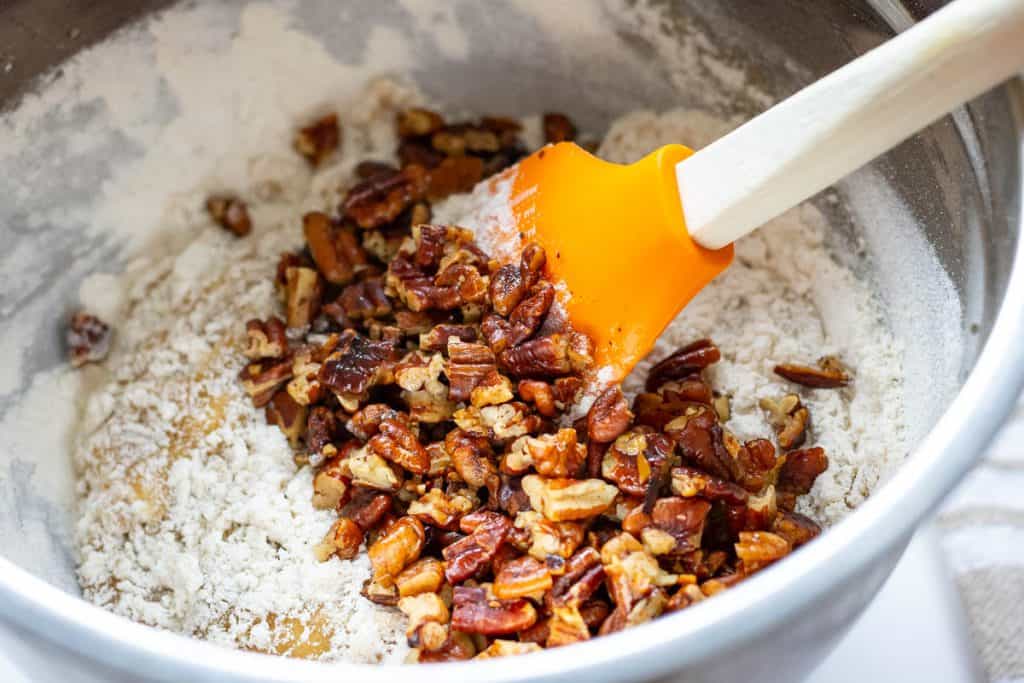
5. In a separate bowl, whisk the flour, baking soda, cinnamon and salt, then fold this into the wet mixture until just combined.
6. Fold in the cooled pecans, saving a few pieces to press on top later.
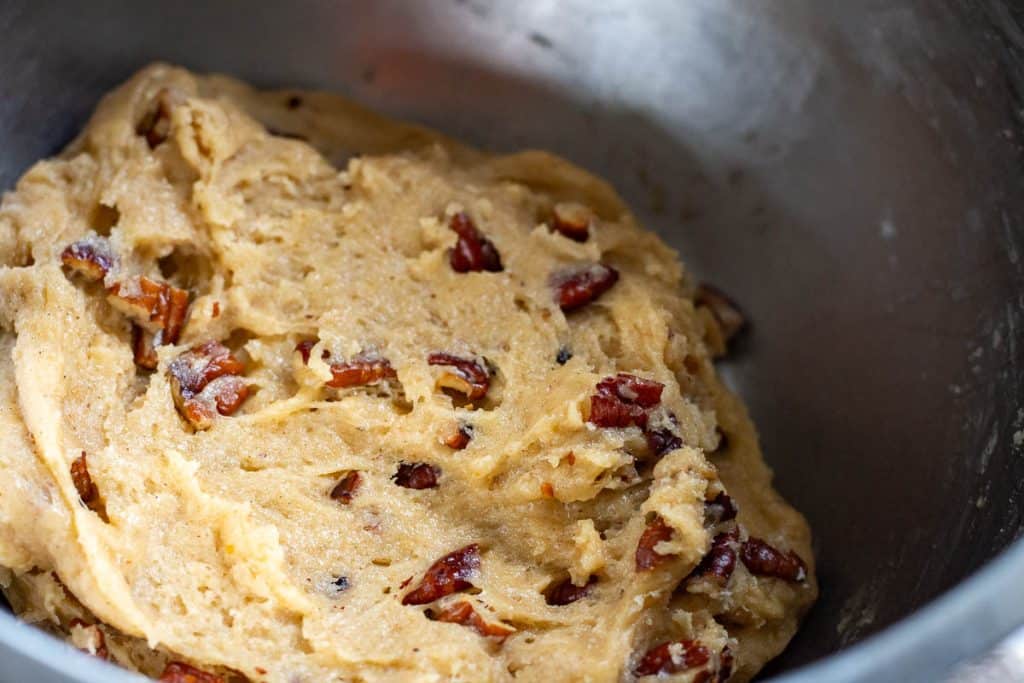
7. Cover and chill for at least 4 hours. This isn't optional: an unchilled dough will spread before the structure has a chance to set.
Shape, bake and finish
1. Preheat the oven to 180°C/350°F and line a large baking sheet with parchment.
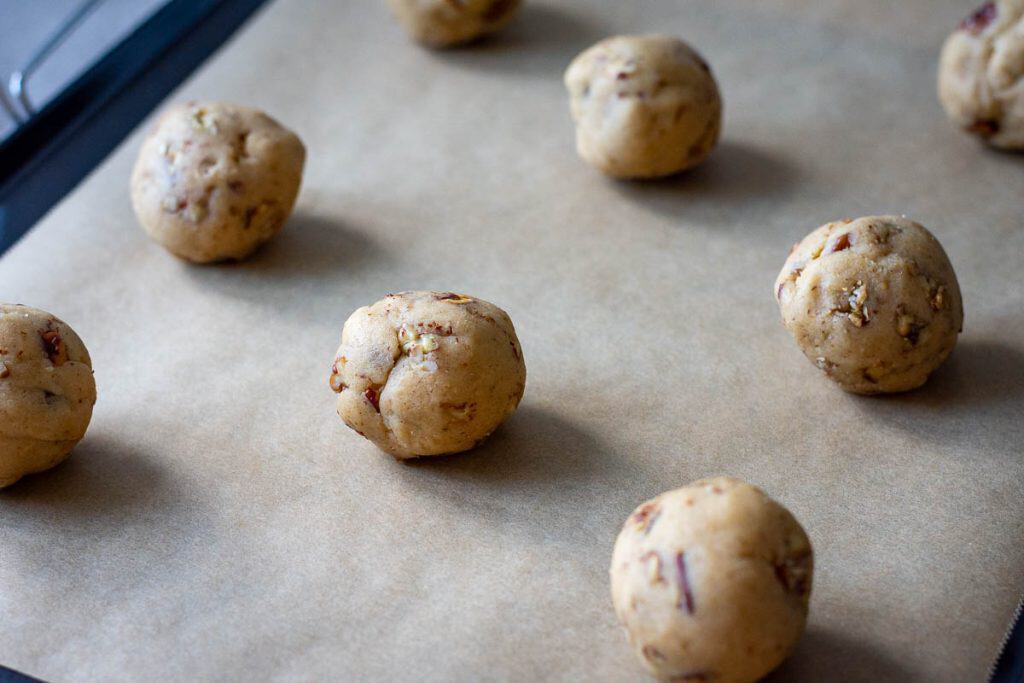
2. Weigh the dough and divide into 8 balls of around 65g each, spaced well apart, with a reserved pecan pressed on top of each.
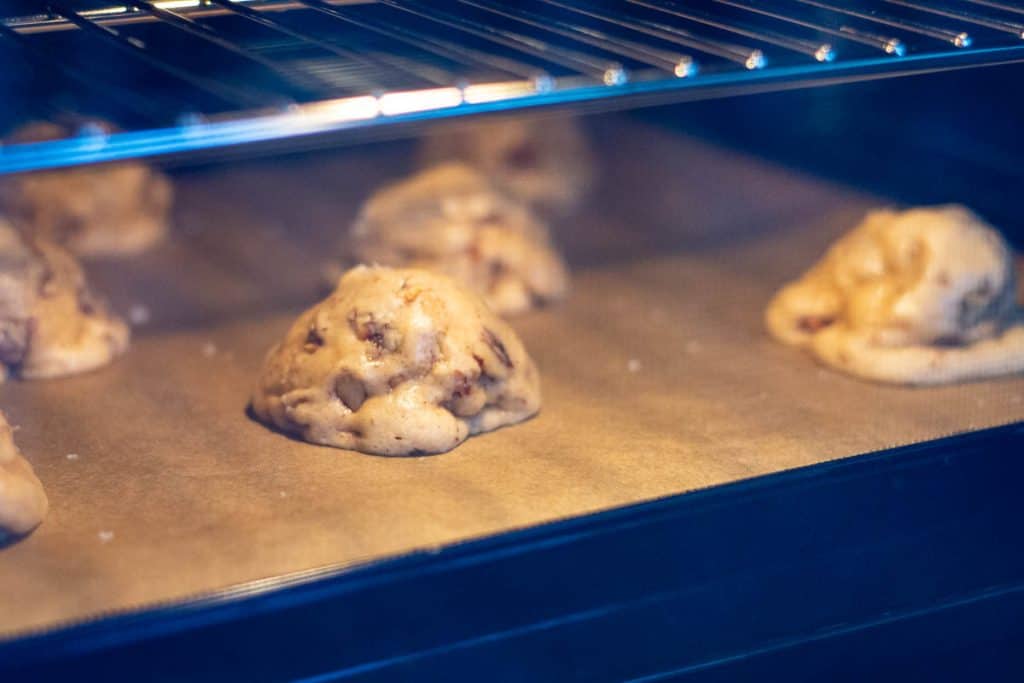
3. Bake for 13 to 15 minutes. The edges should be golden and set, the centres still soft and slightly underbaked looking, they'll firm up as they cool.
4. As soon as the tray comes out of the oven, drop it from about 20cm onto a worktop lined with a couple of layers of kitchen towel. This releases the trapped steam inside the cookie and is what gives the crackled, crinkled top rather than a smooth dome.
5. Cool on the tray for 10 minutes, sprinkle with flaky salt if using, then move to a wire rack.
Tips for Getting These Right
🧊 If the dough feels too soft to scoop after chilling, it hasn't had long enough. Give it another 30 minutes in the fridge rather than working with it too soon, a genuinely cold dough holds its shape much better in the oven.
📏 If your cookies spread more than expected, it's almost always one of two things in my testing: under-chilling, or a starter that's especially wet (possibly overly acidic with hooch on top - avoid that).
👀 Judge doneness by the edges, not the clock. Every oven runs slightly differently, and these are meant to look a little underdone in the centre when they come out. Golden, set edges are the real signal.
🥜 Chopped pecans distribute more evenly than halves, but if you want a more rustic look, press a few halves on top before baking rather than folding them all through the dough.
Recipe FAQs
Yes. The flavour will be milder and slightly less tangy, since active starter hasn't developed the same sourness as discard, but the moisture content is roughly the same either way, so no other changes are needed.
Yes, for at least 4 hours, and it isn't a step to skip. A cold dough holds its shape as it bakes, while a warm one spreads before the structure sets, giving you thin, greasy cookies instead of chewy ones.
Yes. Scoop into balls, freeze solid on a tray, then transfer to a bag for up to 3 months. Bake straight from frozen, adding ~2 minutes to the bake time.
It releases the steam trapped inside the cookie the moment it comes out of the oven, which collapses the domed top into the crackled, crinkled surface these cookies are known for. It needs to happen straight away, while the cookies are still soft enough to fall rather than crack apart.
Chopped pecans distribute more evenly through the dough, but halves work well pressed on top before baking for a more rustic look. Using only halves folded through the dough can make the cookies harder to shape and bake evenly.
Storage
Baked cookies keep at room temperature in an airtight container for up to 4 days.
For longer storage, freeze the raw dough balls on a tray until solid, then transfer to a bag, they'll keep for up to 3 months and can be baked from frozen, adding 2 minutes to the bake time.
Baked cookies also freeze well for up to 2 months, thaw at room temperature or warm through in a low oven for a few minutes to bring back the crackled top.
More Sourdough Cookies to Try
If browned butter and toasted pecans are your kind of thing, my Sourdough Turtle Cookies pile pecans, caramel and chocolate chips into one cookie, because sometimes more really is more. For something simpler, the Chocolate Chipless Sourdough Cookies use the same yolk-only, browned-butter method without the nuts, and the Sourdough Oat and Raisin Cookies go the other direction entirely if you're after something less rich.



LOVE BAKING SOURDOUGH WITH ME?
You can now add Somebody Feed Seb as a preferred source on Google. It only takes a tick box, and tells Google you'd like to see more of my recipes when relevant.
Chewy Sourdough Butter Pecan Cookies
Equipment
- Balloon Whisk
Ingredients
For the toasted pecans:
- 70 g pecans roughly chopped
- 10 g unsalted butter
For the sourdough cookie dough:
- 75 g unsalted butter browned
- 55 g granulated sugar
- 85 g light brown sugar packed
- 1 large egg yolk
- 1 teaspoon vanilla extract or vanilla bean paste
- 80 g sourdough discard 100% hydration
- 130 g all-purpose flour (plain flour)
- ¼ teaspoon baking soda (bicarbonate of soda)
- ¼ teaspoon ground cinnamon
- ¼ teaspoon salt
- flaky sea salt to finish (optional)
Instructions
- Toast the pecans: melt the 10g butter in a small pan over medium heat, add the chopped pecans and toast for 3-4 minutes, stirring, until fragrant and a shade darker. Tip onto a plate to cool completely - warm pecans will melt into the dough and turn it greasy.
- Brown the butter: melt the butter over medium heat until it foams, then turns golden and smells nutty. Cool slightly.
- Pour the granulated and brown sugars together into a large bowl. Pour the browned butter over them and beat 2 minutes with an electric mixer. The sugar will look grainy but hydrated.
- Add the egg yolk and vanilla, beat another 2 minutes.
- Stir in the sourdough discard by hand with a balloon whisk - no mixer, so you don't develop the gluten.
- In a separate bowl, whisk the flour, baking soda, cinnamon and salt. Fold into the wet mixture until just combined.
- Fold in the cooled pecans, saving a few pieces or halves to press on top.
- Cover and chill for at least 4 hours.
- Preheat the oven to 180°C/350°F and line a baking sheet with parchment. Weigh the dough and divide into 8 equal balls - around 65g each. Space them well apart and press a pecan on top of each if using.
- Bake for 13-15 minutes, until the edges are golden and the centres are still soft. As soon as they come out of the oven, drop the baking sheet from 20 cm height onto a worktop lined with a couple of layers of kitchen towel - this will depuff the cookies and create crackly tops.
- Sprinkle with flaky salt if using. Cool on the tray for 10 minutes, then transfer to a wire rack.
Nutrition


Carmen says
Made these for a bake sale and they sold out first. The brown butter and toasted pecans together are so good. Will definitely be making these again.
Ieva Greber says
Thanks, Carmen — selling out first at a bake sale is about as good as it gets! Brown butter and toasted pecans really is a winning combo, glad they'll be making a return.