
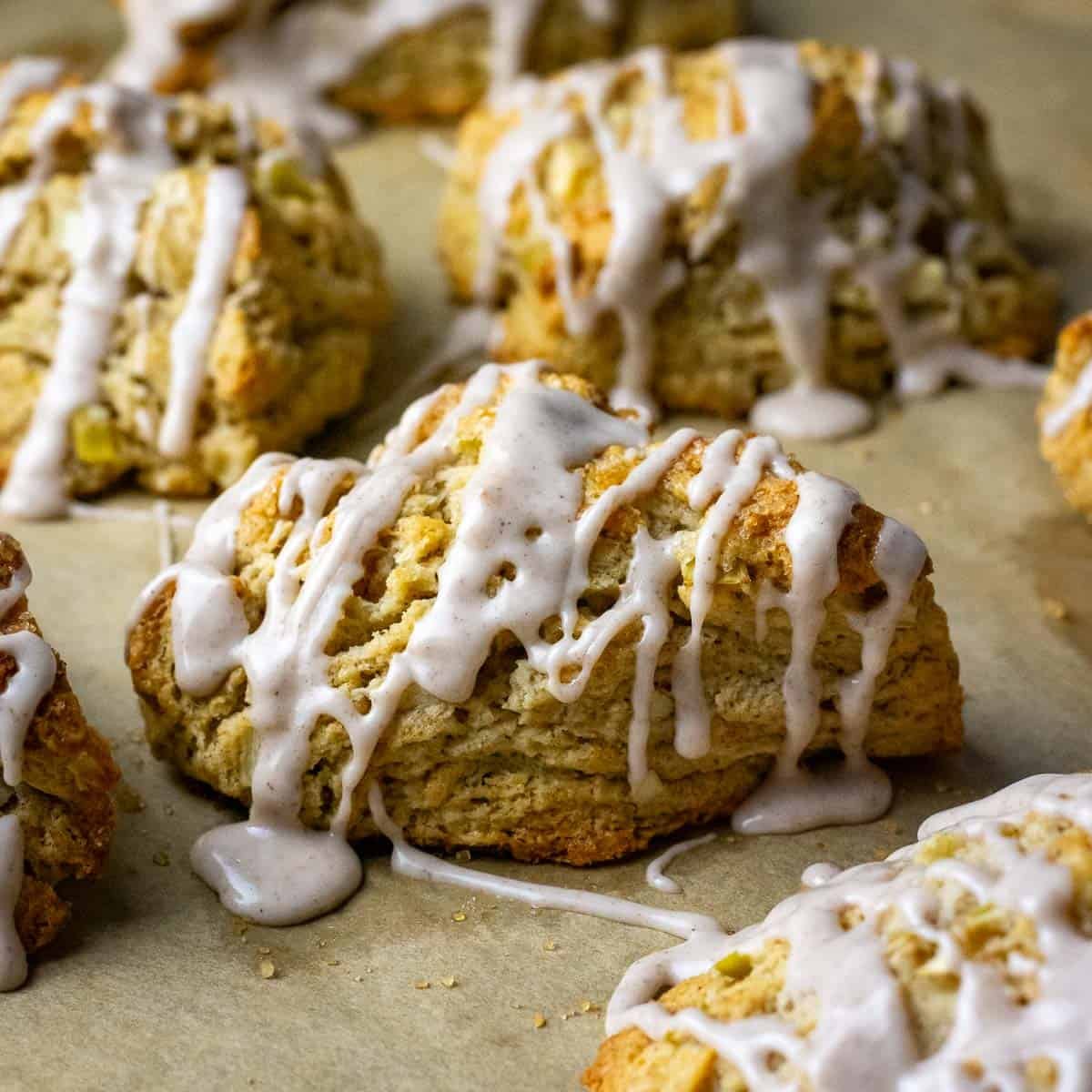
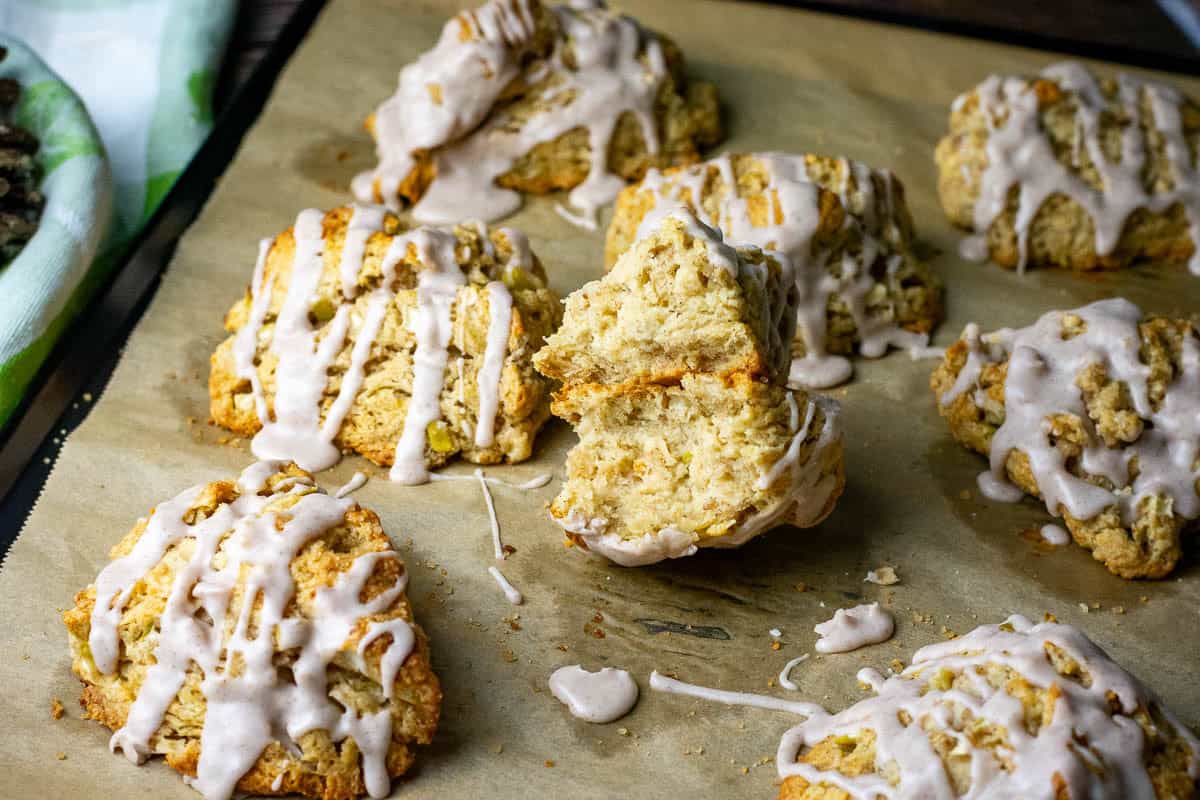
Cinnamon Apple Sourdough Scones at their best are tall, buttery and flaky, with cinnamon apple in every bite and a crunchy demerara top that shatters when you bite into it. Small cubes of fresh apple go straight into the dough (no pre-cooking), 100g of sourdough discard adds a gentle tang, and a quick optional fold gives you proper layers you can peel apart with your fingers.
Jump to:
- Recipe Highlights
- Why Sourdough Discard Works in Scones
- Ingredient Notes
- The Best Apples for Sourdough Apple Scones
- Tips for Flaky Apple Cinnamon Sourdough Scones
- Troubleshooting Apple Scones
- Serving Suggestions
- Storage and Make-Ahead
- Recipe FAQs
- Variations
- More Sourdough Scones and Apple Recipes
- Flaky Sourdough Apple Scones with Cinnamon Glaze
As an Amazon Associate I earn from qualifying purchases, at no extra cost for you! Thank you!
None of it is fiddly. It's one bowl, no mixer, and a five-minute cinnamon glaze. You can also shape the scones days ahead and bake them straight from the freezer.
Scones have become a bit of an obsession of mine lately, and I'm blaming the new oven. It has a glass door, and after years of baking blind, I can now crouch in front of it and watch the scones climb, and the layers pull apart in real time. It's better than most things on telly.
Apple earned its place in the rotation quickly. A good scone is meant to be buttery and a little on the dry side, and the apple gives you small pops of moisture against that, which is exactly the contrast you want.

Recipe Highlights
TASTE: Buttery, gently tangy, cinnamon apple in every bite
THE LAYERS: Two quick folds, with the apple tucked inside
BAKE FROM FROZEN: Shape on Friday, warm scones on Saturday or in a couple of weeks
SEB'S RATING: Refuses to choose between the cinnamon and the maple glaze, so the tray now often gets glazed half and half

Why Sourdough Discard Works in Scones
Discard isn't what makes these scones rise. The baking powder does that. What the discard brings is flavour and texture: a gentle tang that sharpens the apple and cinnamon, a more tender crumb, and better browning on the crust. Kind of like buttermilk.
Because it isn't doing any lifting, unfed discard straight from the fridge is ideal. Cold is a bonus here, as it helps keep the butter solid while you mix. Discard that's a few days old gives more tang, fresher discard gives a milder flavour, and both work. If you're new to it, my Sourdough Discard 101 guide covers the basics.
Ingredient Notes
- Sourdough discard (100% hydration). Use it cold, straight from the fridge.
- Plain flour. Standard plain/ all-purpose flour. Bread flour has more protein and makes scones chewy rather than tender.
- Frozen butter. 125g is exactly half the flour weight, and that's deliberate. It's rich enough to stand up to the moisture the apple brings, and it's what forms the flaky layers. Grate it straight from frozen.
- Light brown sugar. Kept moderate, because the apple, demerara and glaze all add sweetness too. Its caramel note suits apple better than white sugar does.
- Fresh apple. Firm eating apples, peeled and cut into 1cm cubes. Which ones work best, and why, is covered just below.
- Cinnamon. It goes in three places: the dough, the apples and the glaze. That's why the spice tastes built in rather than dusted on top. Mixed spice or apple pie spice are fine swaps.
- Milk. Treat the amount in the recipe card as a maximum, not a target. Between the discard, the egg and the apple, you may only need a tablespoon.
- Demerara sugar (turbinado). For a crunchy, sparkly top. Granulated sugar works, with less crunch.
- The glaze. Cinnamon is the classic partner for apple, so that's the one in the recipe. We love these just as much with the maple glaze from my Maple Pecan Sourdough Scones, and you'll find it in the recipe card notes.
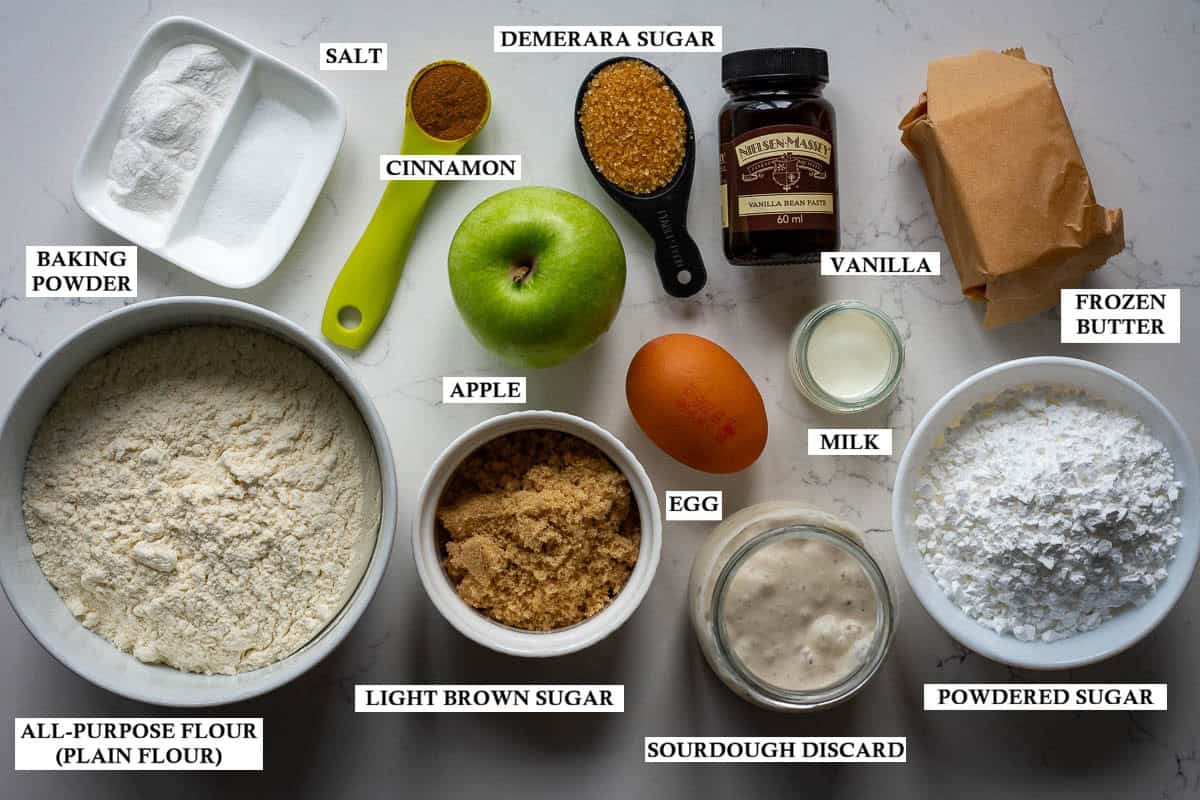
Find the full ingredient quantities and instructions in the recipe card below.
The Best Apples for Sourdough Apple Scones
The best apples for scones are firm, crisp eating apples with a bit of sharpness. They hold their shape in the oven and release their juice slowly, so the dough stays flaky rather than damp.
| Use | UK / Europe | US | Why |
|---|---|---|---|
| Best all-rounders | Braeburn, Pink Lady, Jazz | Honeycrisp, Pink Lady, Fuji | Firm, hold their cubes, good sweet-tart balance |
| For a sharper apple | Granny Smith, firm Cox | Granny Smith | Tartness cuts through the sweet glaze |
| Avoid | Bramley and other cooking apples | McIntosh, Red Delicious | Collapse into mush and leak juice into the dough |
Peel them. Skin turns into tough, chewy strips running through the layers, and peeled cubes sit more neatly inside the fold.
Keep to 1cm cubes. Small enough to tuck inside the layers and release juice gradually, big enough to stay juicy rather than disappearing. Grated apple turns the dough wet and pasty, and big chunks tear through the layers and leave damp pockets around them.
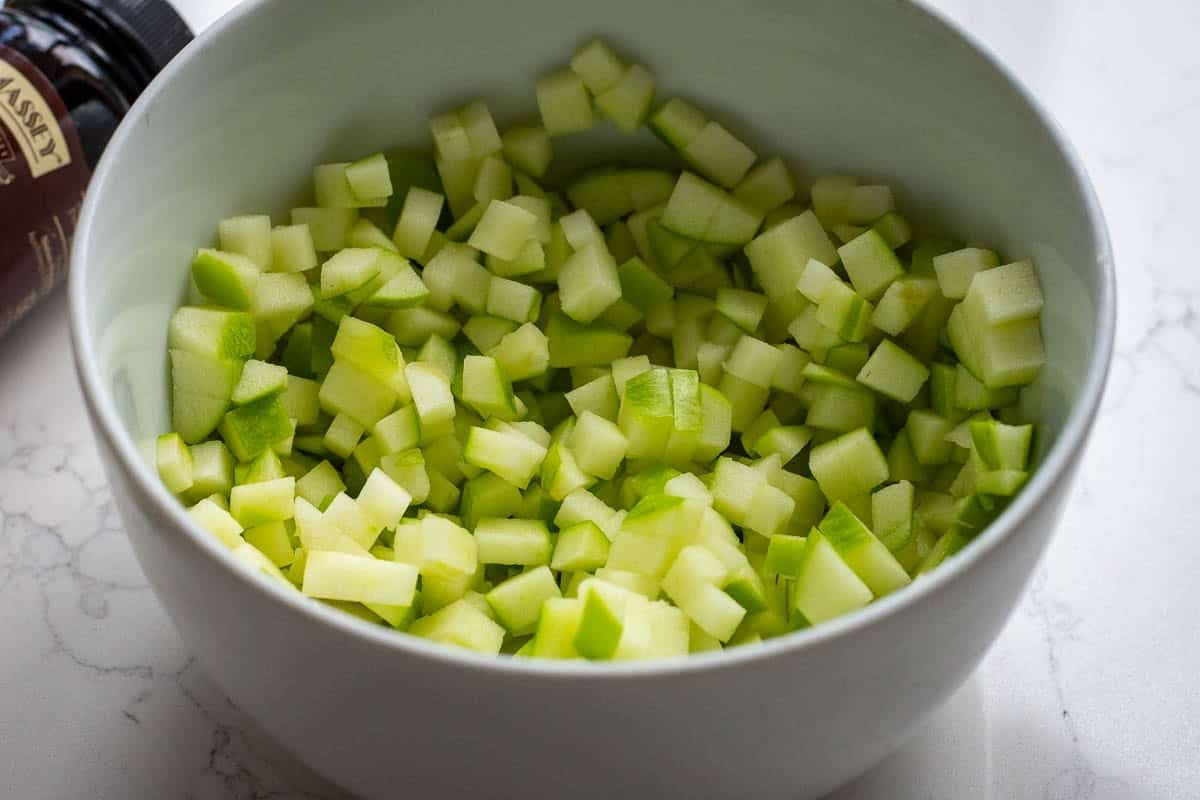
Autumn windfalls are perfect here, but so is the lonely apple that's been sitting in the fruit bowl for a week, as long as it's still firm.
Tips for Flaky Apple Cinnamon Sourdough Scones
Keep everything cold, apples included
Frozen butter is only half of it. Cold discard, a cold egg and apples chilled in the fridge after their flour toss all help the butter stay in solid pieces. On a warm day, chill the bowl of flour and grated butter for 10 minutes before adding the wet ingredients.
Stop rubbing in earlier than feels right
You want coarse, uneven crumbs with visible flakes and pea-sized pieces of butter still in there. Those pieces melt in the oven, release steam and push the dough apart into layers.
If the mix looks like fine sand, the butter has been worked in too far. You'll still get a tender scone, just not a flaky one.
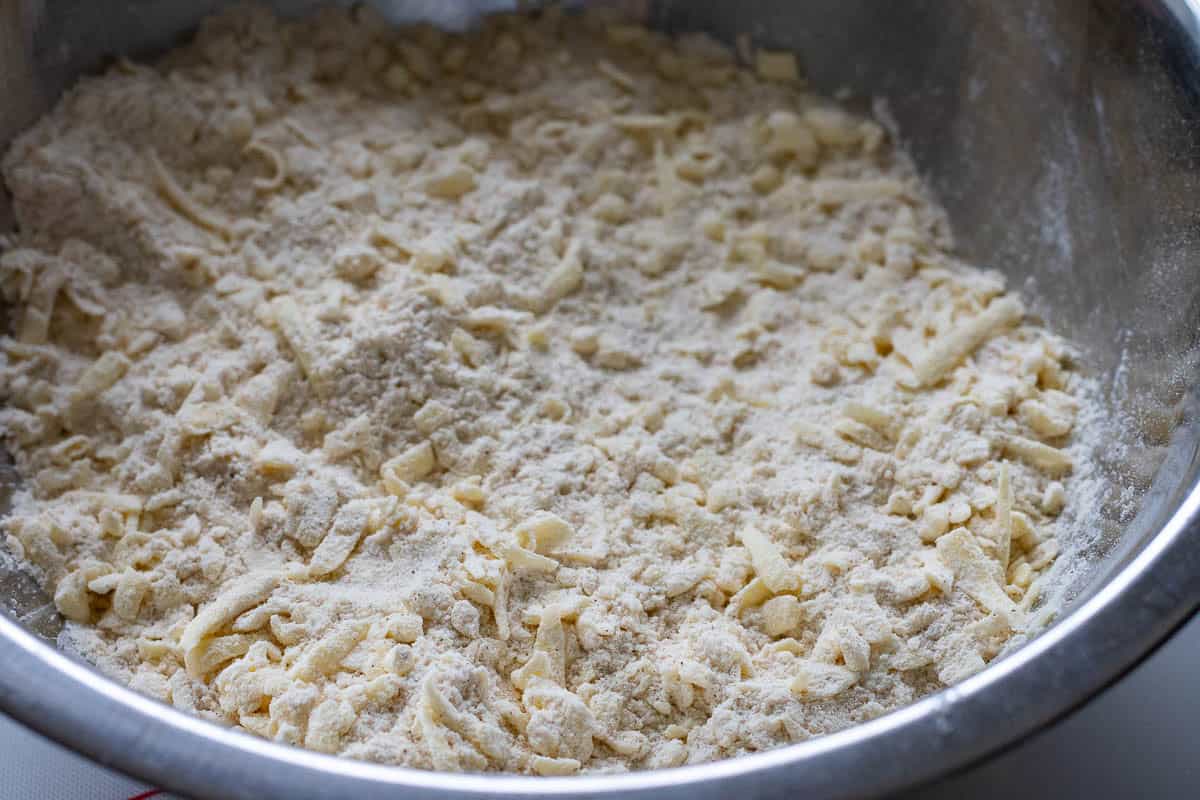
Shaggy is correct
The dough should look rough and slightly dry, with no loose flour left in the bottom of the bowl. Only add more milk if there's dry flour that won't come together. A smooth, sticky dough has been overworked, and that's where tough scones come from.
How to fold the dough with the apples in
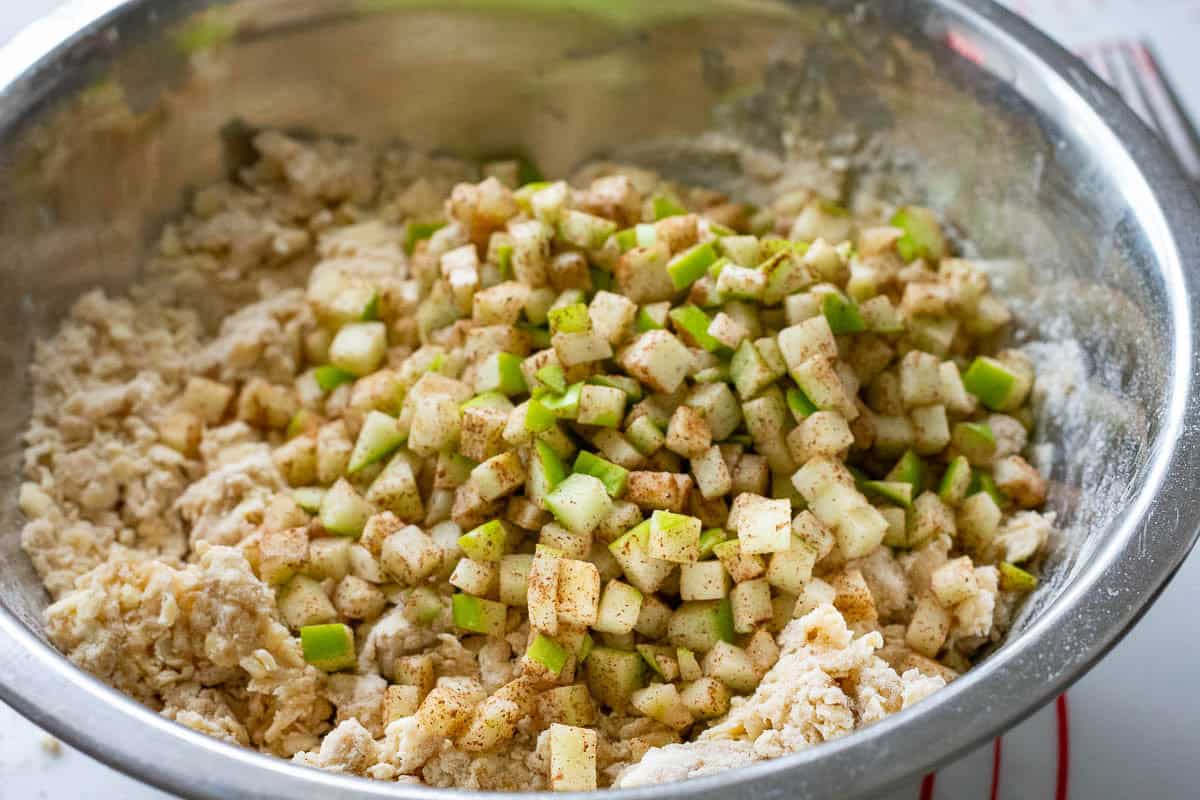
Pat the dough into a rectangle, scatter the apples over, press them in lightly, then fold it in thirds like a letter, turn and repeat once. After the second fold you should see streaks and ribbons of butter on the surface, with a few apple cubes peeking through.
Stop at two. Every extra fold breaks up more apple, and broken apple means juice and a wetter dough.
Short on patience? Skip the folding and stir the apples through in the bowl. You'll get a tender, craggy scone that's still very good, just with fewer layers to pull apart.
Pat it tall and cut straight down
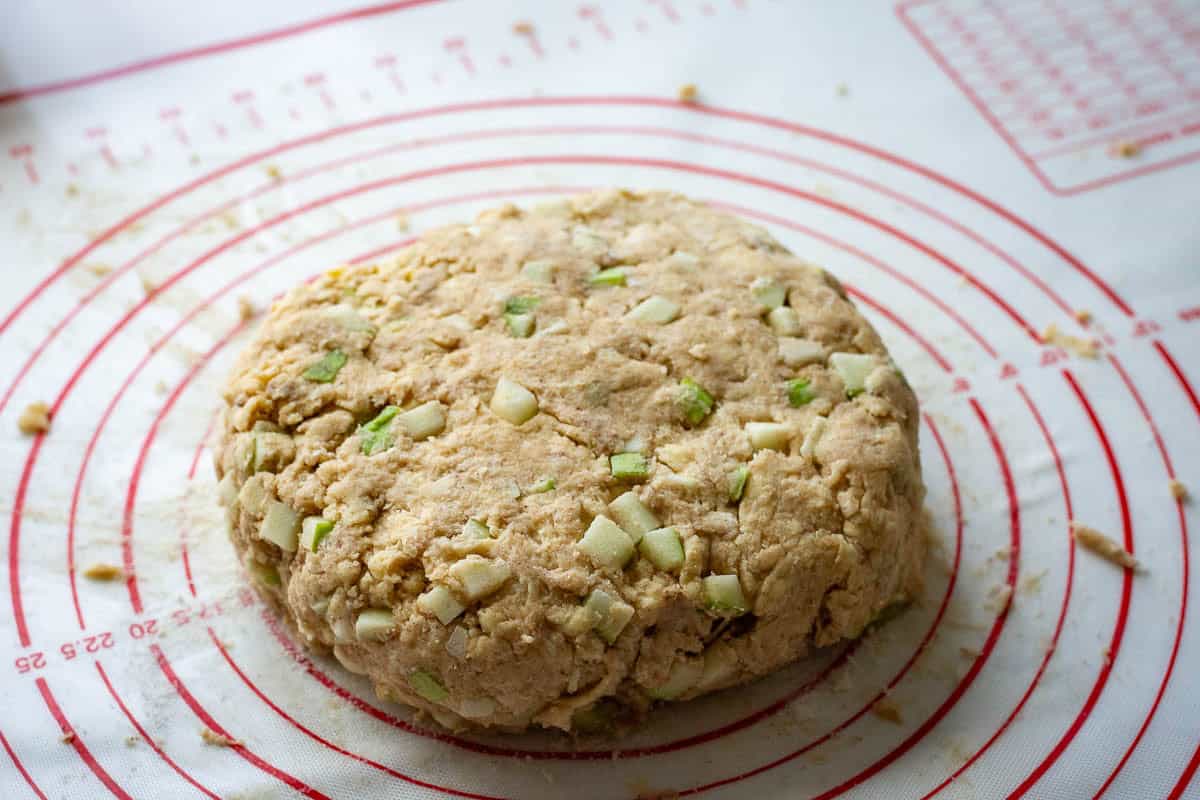
Shape the dough into a round 15cm (6 inches) across and a full 4cm (1½ inches) tall. A tall disc gives the scones room to rise upwards in layers. A thin, wide one bakes through and dries out before it's had a chance to rise. A ruler is not overkill here.
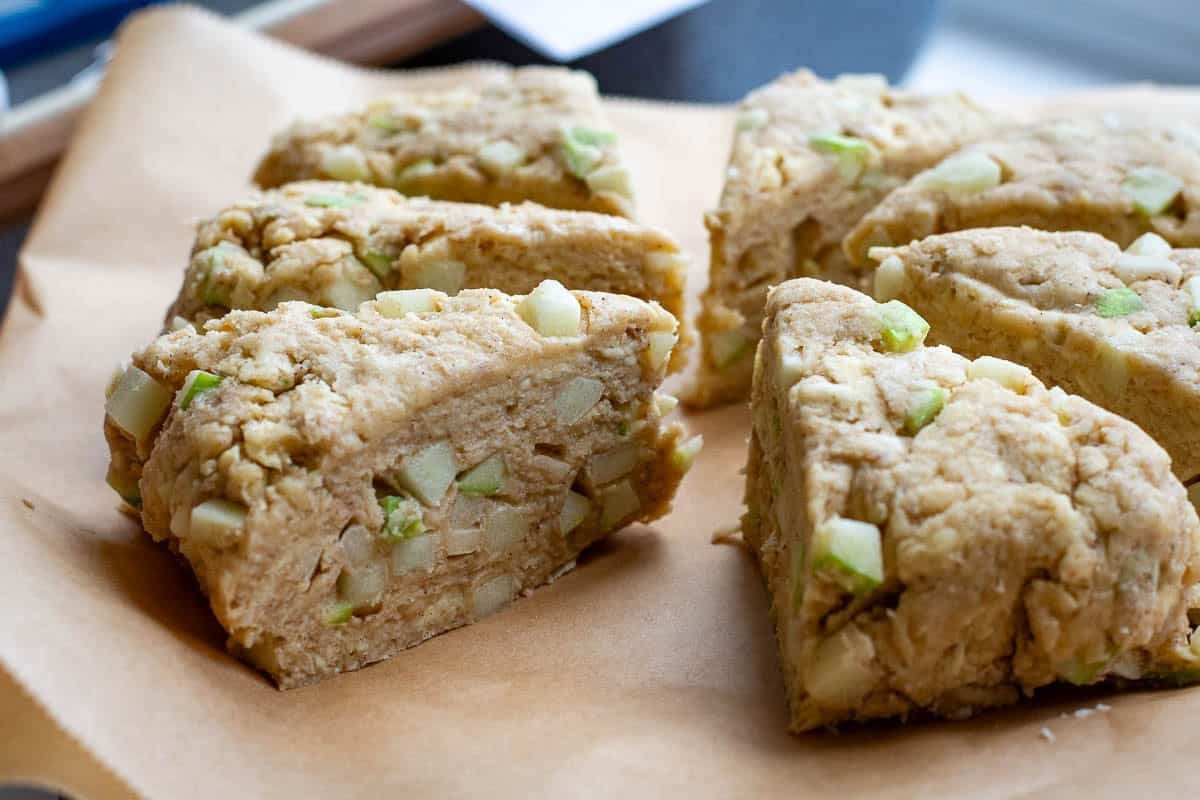
When cutting the wedges, press the bench scraper or knife straight down. Dragging it seals the edges, and sealed edges don't separate.
Freeze before baking, every time
This step matters even more with fresh apples. The apple keeps releasing juice the longer the dough sits, and 20 minutes in the freezer firms up both the butter and the apple, so the wedges hold their shape and rise tall rather than spreading. For freezing them longer, see Storage and Make-Ahead below.
How to tell they're done
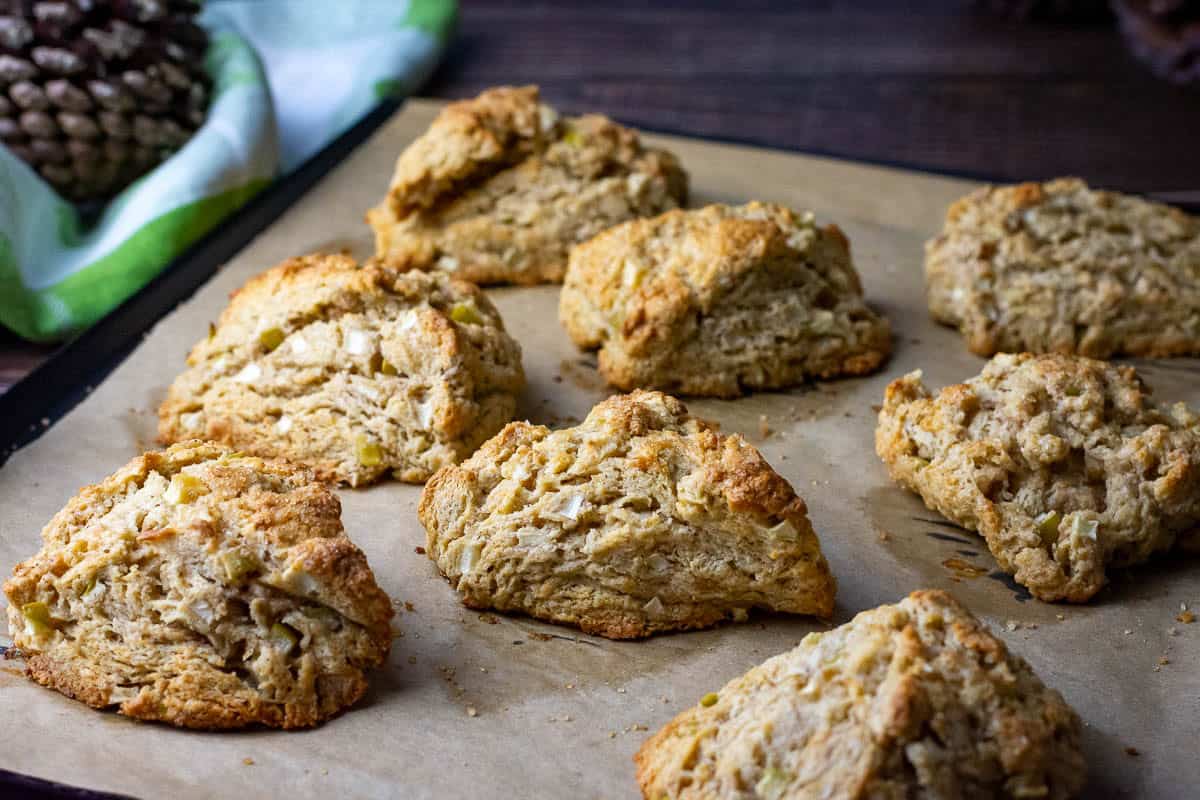
Look at the sides, not just the top. The edges and the cut faces of the wedges should be deep golden. Pale sides mean the middle, especially around the apple, is still gummy. For a precise check, a probe thermometer should read 93-96°C (200-205°F) in the centre.
Troubleshooting Apple Scones
| Problem | Likely cause | Fix next time |
|---|---|---|
| Soggy or gummy around the apple | Apple cubes too big, a soft variety, or the dough sat around warm | 1cm cubes of a firm apple, tossed in flour, and freeze before baking |
| Scones spread and went flat | Butter too warm, dough too wet, or the freeze skipped | Chill everything, hold back on the milk, never skip the 20-minute freeze |
| Dense, no layers | Butter rubbed in too far, or dough overworked | Stop at coarse crumbs with visible flakes, mix only until combined |
| Dry and crumbly | Overbaked, or too much flour added while shaping | Check at 18 minutes, use only a light dusting of flour |
| Apple on top burning | Exposed pieces caramelise in the high heat | Tuck surface apple into the dough, or loosely cover with foil for the last few minutes |
| Glaze soaked in or slid off | Scones still warm, or the glaze too thin | Cool fully, and thicken with a spoonful more icing sugar |
| Bland apple flavour | A mild, watery apple, or not enough spice | Use a sharper apple (Granny Smith, Braeburn), and don't skip the cinnamon on the apples |
Serving Suggestions
Warm, with a cup of tea or coffee, split open and buttered (yes, more butter, I don't make the rules). They're also very at home on an autumn brunch table next to a wedge of sharp cheddar, because apple and cheese is a pairing the British got right a long time ago.
Storage and Make-Ahead
Storage times and how to refresh a day-old scone are in the recipe card notes. The bit worth knowing is the weekend plan, because these bake beautifully from frozen.
Make, shape and cut the scones, then freeze them on the tray. Once they're solid, tip them into a freezer bag so they don't stick together. They'll keep like this for up to a month.
Put the oven on, brush and sugar the frozen wedges, and bake straight from frozen, adding 3-4 minutes. Mix the glaze while they cool.
That's warm, flaky scones on a Saturday with about five minutes of effort before your first coffee.
Recipe FAQs
Yes, swap it in 1:1 measuring by weight. Active starter gives a touch of extra lift and slightly less tang, but the baking powder still does the main work, so the result is very similar.
You can, but freezing the shaped scones overnight works better than chilling the dough in the fridge. In the fridge, the fresh apple keeps releasing juice into the dough and the baking powder slowly loses strength, so you get flatter, wetter scones. Freeze them instead and bake straight from frozen (the Make-Ahead section above walks you through it).
Applesauce isn't a good fit here. It adds moisture without any texture and weighs down the layers. Chopped dried apple works well, though you may need an extra splash of milk, as it doesn't bring any juice of its own.
Make sure to dice the apple finer and divide the dough into two smaller rounds and cut each into 8 wedges. Freeze as normal, then bake for roughly 10-15 minutes, until deep golden on the sides.
Yes, you can swap up to 25-30% of the plain flour for wholemeal or spelt. It gives the scones a nuttier flavour that works well with apple, with a slightly denser crumb. Going higher than that starts to cost you the flaky layers.
Variations
- Apple and cheddar. Skip the cinnamon glaze, reduce the sugar a little and fold 50-60g grated sharp cheddar through with the apple, with a little more scattered on top. Sweet, salty and very British.
- Apple and pecan or walnut. Fold a handful of toasted, chopped nuts in with the apples. Pair with the maple glaze and you're halfway to my maple pecan sourdough scones.
- Salted caramel drizzle. Swap the cinnamon glaze for salted caramel if you want these less breakfast and more pudding.
More Sourdough Scones and Apple Recipes
If apple scones have you hooked, the closest autumn sibling is my Sourdough Pumpkin Scones With Maple Glaze. For the rest of the scone rotation, there's Lemon Blueberry Sourdough Scones, Sourdough Cherry Scones With White Chocolate Chips and Raspberry White Chocolate Sourdough Scones.




Still got apples to use up? My Sourdough Apple Galette uses the same cold-butter logic in a flaky discard pastry, the Sweet Sourdough Focaccia With Apples is a lovely weekend bake, and the Sourdough Apple Cinnamon Rolls are the overnight option for a slower Sunday. For everything else, my Fall Sourdough Recipes roundup is the place to start.
LOVE BAKING SOURDOUGH WITH ME?
You can now add Somebody Feed Seb as a preferred source on Google. It only takes a tick box, and tells Google you'd like to see more of my recipes when relevant.

Flaky Sourdough Apple Scones with Cinnamon Glaze
Equipment
- Digital kitchen scale
- Box grater (for the frozen butter)
- Bench scraper or sharp knife
- Wire rack
Ingredients
For the apples:
- 150 g (1¼ cups, diced) firm eating apples, like Granny Smith (about 1 large apple), cored, cut into 1cm (½-inch) cubes
- 1 teaspoon all-purpose flour (plain flour)
- ½ teaspoon ground cinnamon
For the sourdough scones:
- 250 g (2 cups) all-purpose flour (plain flour)
- 2½ teaspoon baking powder
- ¼ teaspoon salt
- 1 teaspoon ground cinnamon
- Pinch of ground nutmeg optional
- 60 g (¼ cup + 1 tsbp) light brown sugar
- 125 g (1 stick + 1 scant tbsp) unsalted butter frozen
- 100 g sourdough discard, 100% hydration
- 1 large egg
- 1 teaspoon vanilla extract
- 1-2 tablespoon milk plus extra for brushing, or use double cream/heavy cream
- 1 tablespoon demerara sugar turbinado, for the tops
For the cinnamon glaze:
- 100 g (¾ cup + 1 tbsp) icing sugar, powdered/confectioners' sugar
- ½ teaspoon ground cinnamon
- small pinch of fine salt
- 1½-2 tablespoon milk
Instructions
Prep the apples:
- Toss the apple cubes with the 1 teaspoon flour and ½ teaspoon cinnamon in a small bowl and pop them in the fridge while you make the dough. The flour soaks up the juice the apple releases, so the dough doesn't turn sticky.
Make the dough:
- Preheat the oven to 200°C (400°F) and line a baking sheet with baking paper.
- In a large bowl, whisk together the flour, baking powder, salt, cinnamon, nutmeg (if using) and brown sugar.
- Grate the frozen butter into the dry ingredients. Rub it in with your fingertips until the mixture looks like coarse crumbs, but don't rub it all the way to sand. Leave some visibly larger flakes and pea-sized pieces of butter, these are what create steam pockets and flaky layers in the oven.
- In a separate bowl or jug, whisk the sourdough discard, egg, vanilla and 1 tablespoon of the milk together.
- Pour the wet mixture into the dry and fold together with a spatula or your hands until just combined and shaggy. Only add more milk, a splash at a time, if there's still dry flour that won't come together. The apples bring extra moisture, so err on the drier side. Stop as soon as there's no dry flour left.
Add the apples (with or without lamination):
- With lamination, for extra flaky layers: turn the dough out onto a lightly floured surface and pat into a rough rectangle about 2cm thick. Scatter the apples evenly over the surface and press them in lightly. Fold the dough into thirds, like folding a letter, then turn it 90 degrees. Pat out into a rectangle again and repeat the fold once more. A few apple pieces poking through is fine. Two folds is enough, any more and the apples start to break up and make the dough wet.
- Without lamination: fold the apples into the shaggy dough in the bowl with a few gentle turns, then bring it together on a lightly floured surface. The scones will still be tender and buttery, just with less visible layering.
Shape, freeze and bake:
- Pat the dough into a round about 15cm across and a full 4cm tall. Tuck any escaped apple pieces back into the sides.
- Cut into 8 wedges using a bench scraper or sharp knife, pressing straight down rather than dragging the blade, which seals the cut edges and blunts the rise. Space the wedges out on the baking sheet.
- Freeze the shaped, cut scones, uncovered, on the tray for 20 minutes before baking. This re-firms the butter so it stays in solid pieces until the oven heat hits it, which is what gives you a tall rise and flaky layers. (You can also freeze them at this stage for up to a month and bake straight from frozen, adding 3-4 extra minutes to the bake.)
- Brush the tops with milk or double cream and sprinkle over the demerara sugar.
- Bake for 18-20 minutes, until well risen and deep golden brown, especially around the edges.
- Cool on the tray for 10 minutes, then transfer to a wire rack and cool for a further 15-20 minutes before glazing, although I never get soggy bottoms by simply leaving them to cool on the baking sheet.
Glaze:
- Whisk the icing sugar, cinnamon and salt with 1½ tablespoon milk. Add the rest of the milk a few drops at a time until the glaze is thick enough to sit on the scone without running straight off, but still pourable.
- Drizzle the glaze over the cooled scones and leave for 10 minutes to set.
Notes
Nutrition

Leave a Reply