
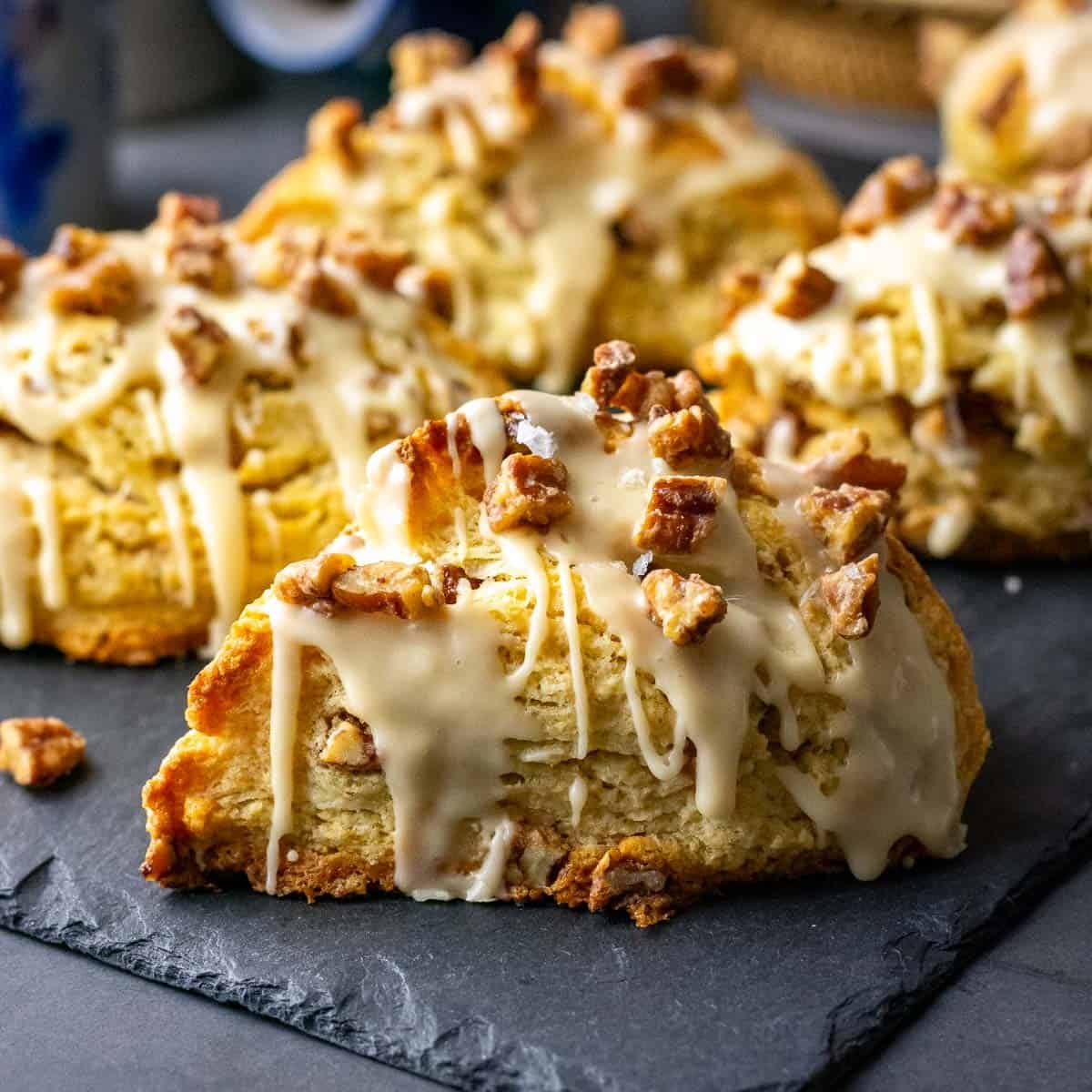
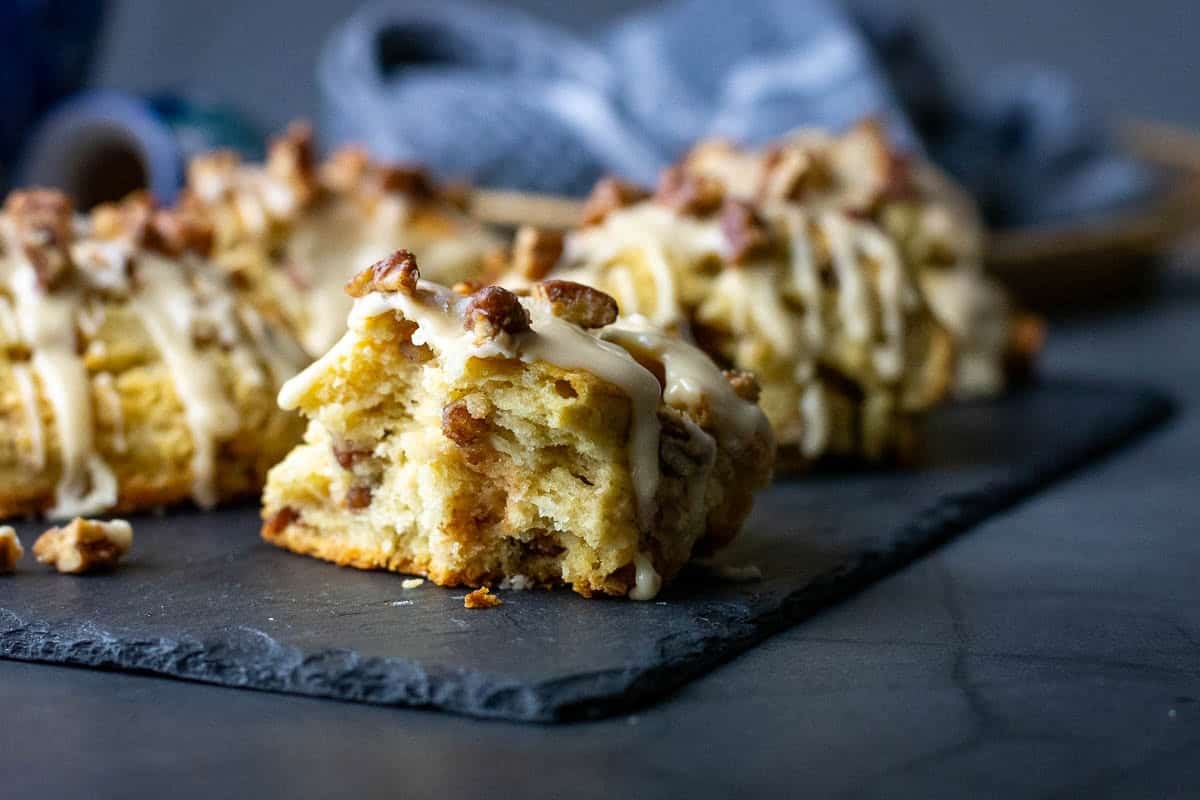
Maple pecan sourdough scones are exactly what I want once the weather turns properly cold: maple worked right through the dough instead of just drizzled on top, pockets of caramelised maple candied pecan, and a tall, flaky cut with real layers to pull apart. This version is built for that texture on purpose, with an optional lamination fold for extra height and shatter, and a method that tells you exactly what to look for at each stage.
Jump to:
As an Amazon Associate I earn from qualifying purchases, at no extra cost for you! Thank you!
My first few attempts came out flatter and drier than I wanted. The dough was too short, and the butter had gone soft by the time it hit the oven. Cutting it taller and freezing the shaped dough solid before baking fixed both problems at once, and it's been the method ever since.

Recipe Highlights
TASTE: Nutty, buttery layers with pockets of caramelised maple pecan and a salted maple glaze
CANDIED, NOT TOASTED: Maple candied pecans folded through the dough, not scattered on top
MOST IMPRESSIVE PART: The shattering layers from the optional lamination fold
SEB'S RATING: Declared his favourite scone of autumn, always asks for more glaze

Ingredient Notes
Find the full ingredient quantities and method in the recipe card below, but a few things are worth flagging first.
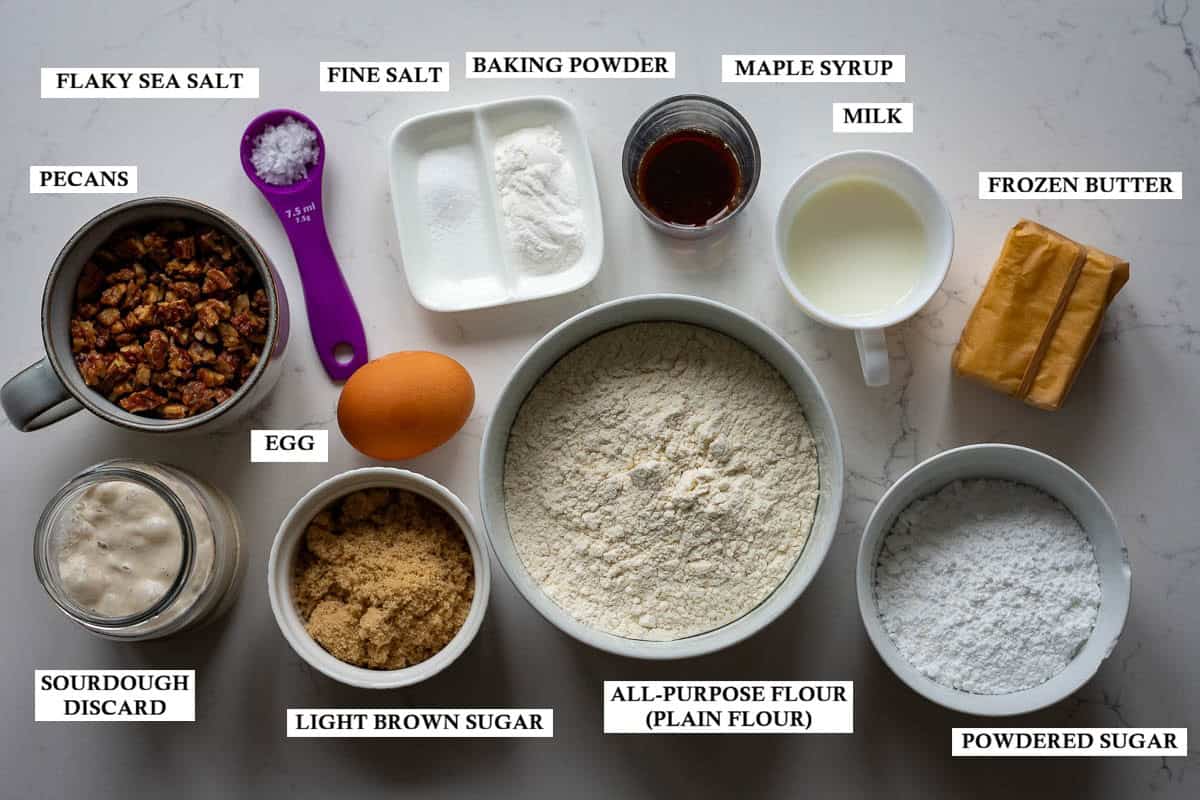
- Sourdough discard (100% hydration). Same quiet job it does in all my scone recipes, a bit of tang and tenderness, no real leavening lift. New to baking with discard? Sourdough Discard 101 covers the basics.
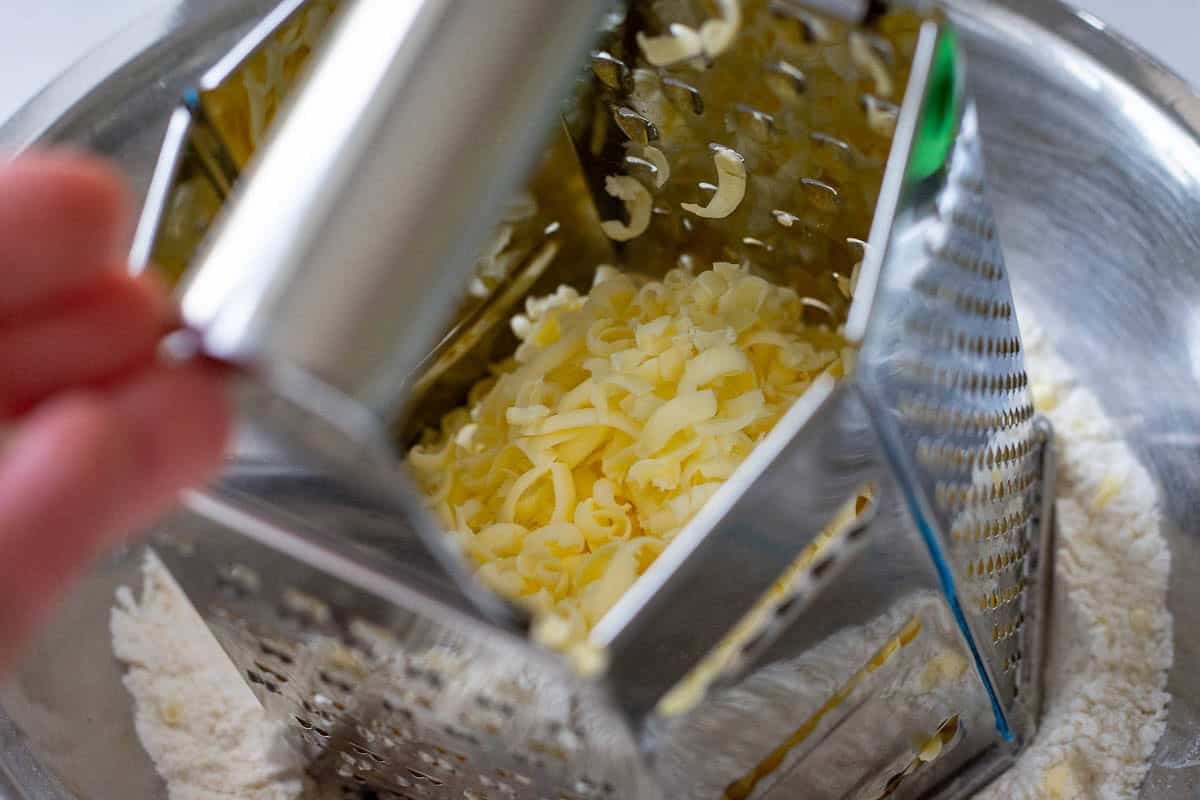
- Frozen butter. More than my standard scone base, which is what makes these richer and flakier rather than just buttery.
- Light brown sugar. Adds to the caramely flavours of maple.
- Real maple syrup. Use a properly flavoured one, not the palest, mildest grade on the shelf. Weak syrup gets lost once it's baked.
- Maple candied pecans. This is the ingredient that actually separates this recipe from most other maple pecan scones and in my opinion, MAKES IT THE BEST YOU'LL EVER HAVE. Walnuts work as a swap, candied the same way.
Have more pecans and sourdough discard? Try our Sourdough Butter Pecan Cookies next time! For a weekend bake, try our irresistible Sourdough Sticky Buns!
Tips for the Flakiest Maple Pecan Sourdough Scones
❄️ Keep the butter cold the whole way through, not just when you grate it. If your kitchen's warm, work fast, or chill the bowl of dry ingredients too before you start.
🔁 Judge the lamination fold by what you see, not a step count. You want visible streaks and ribbons of butter running through the dough. If it looks smooth and uniform, you've overworked it and folded the layers away.
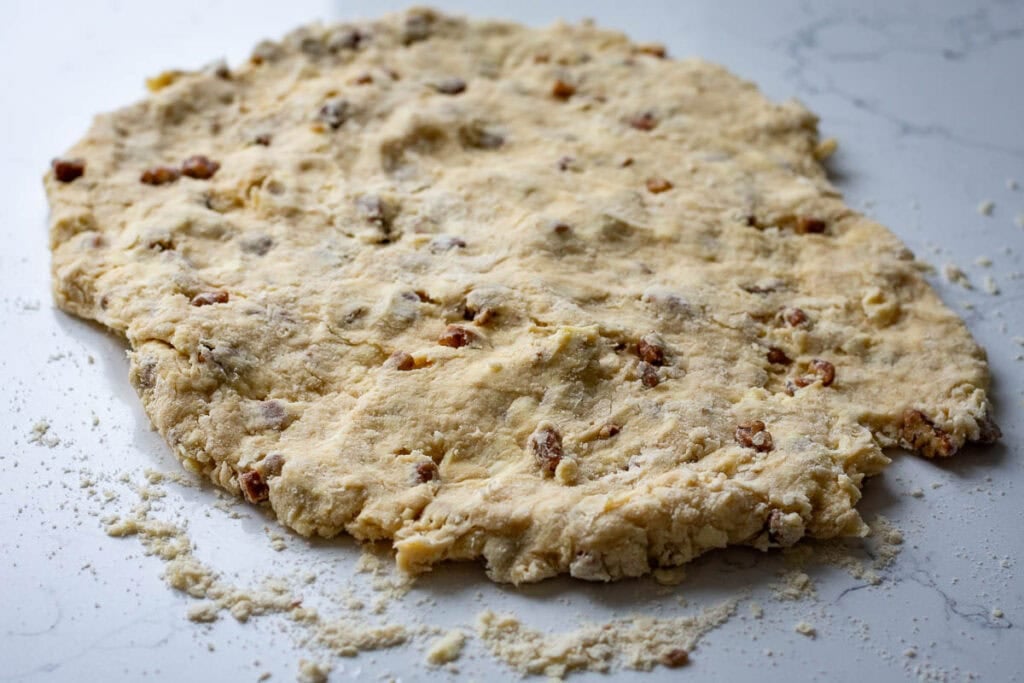
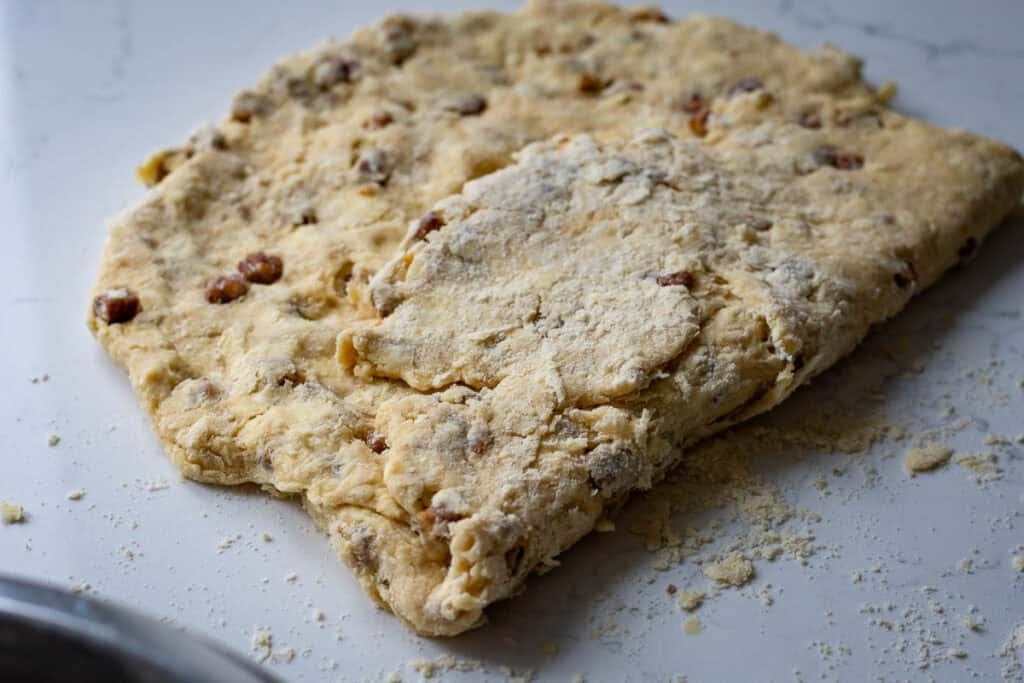
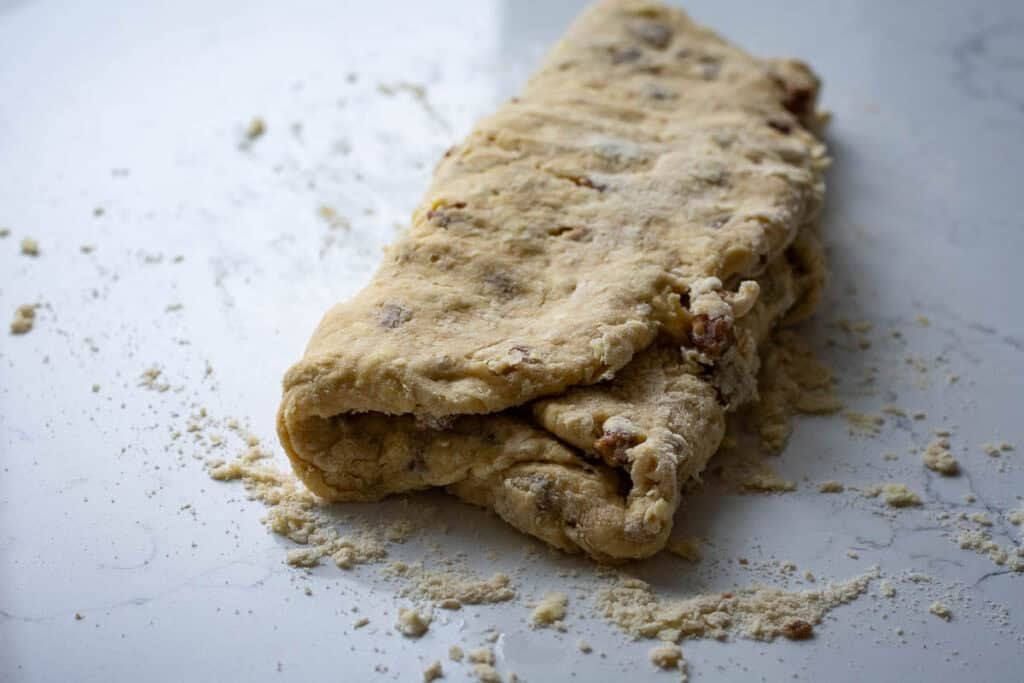
✋ Stop mixing the second there's no dry flour left. A rough, slightly shaggy dough is correct here. A smooth one means the gluten's developed too far, and the scones will be tough instead of tender.
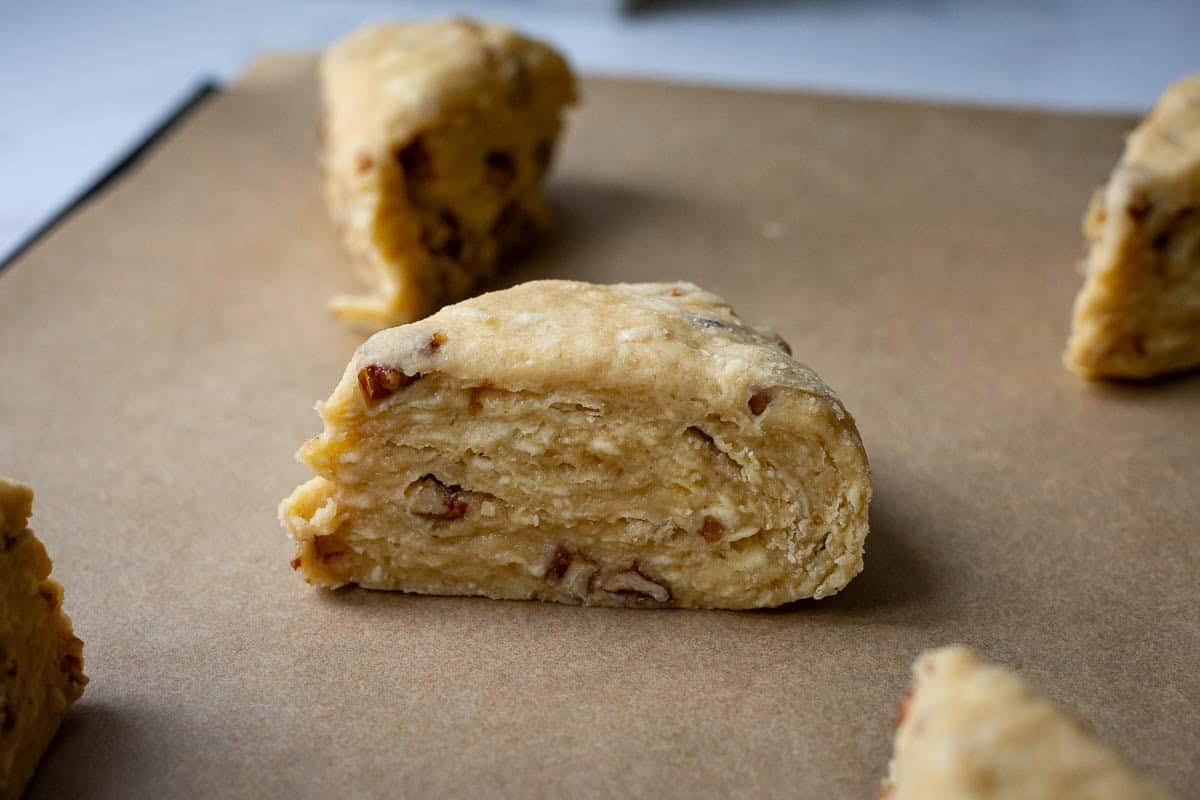
🥶 Freeze the shaped, cut dough for 20 minutes before it goes in the oven, not just the butter beforehand. This re-firms the fat so it holds its shape until the oven heat hits it, instead of melting into the flour on the counter. You can also freeze them at this stage for up to a month and bake straight from frozen, adding 3-4 minutes.

🔪 Cut the wedges by pressing straight down, not dragging the blade. Dragging seals the cut edge and blunts the rise.
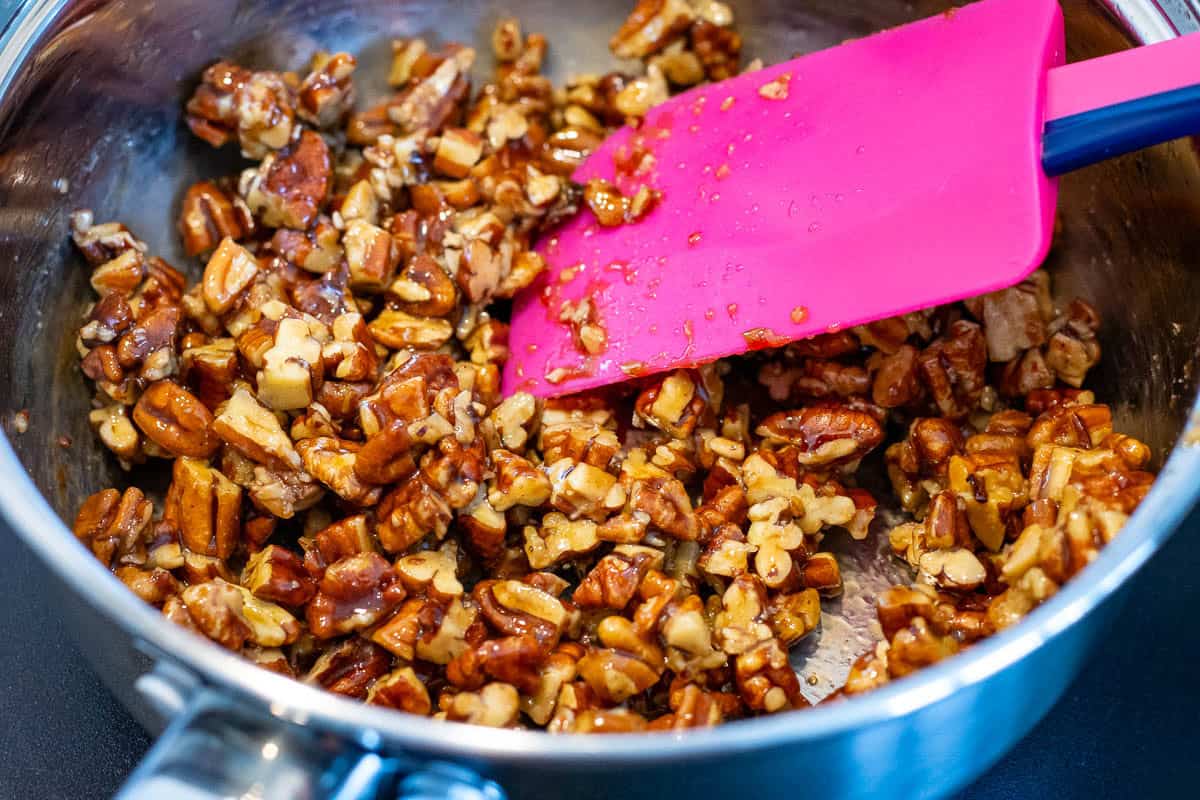
🍯 Pull the candied pecans once the syrup turns glossy and coats the nuts, not once it's hardened into brittle. They firm up fully as they cool, so a slightly soft-looking batch off the heat is exactly right.
⚠️ Three things that go wrong most often: flat, dense scones almost always mean the butter went soft before baking or the dough was overworked. Dry scones usually mean overbaking, or too much extra flour worked in while bringing the dough together. A glaze that slides straight off or soaks in means the scones weren't fully cooled first.
Serving Suggestions
Best warm, with extra butter melting into the layers, or alongside a strong coffee. Good for a lazy autumn weekend spread, when nobody's in a rush to leave the kitchen table.
Storage and Make-Ahead
Glazed scones keep in an airtight container for up to 2 days. Unglazed scones freeze well for up to 2 months, thaw and warm through before glazing.
The real make-ahead move is the freeze-before-bake step covered above under Tips, and it works for longer storage too, not just the 20-minute pre-bake firm-up. Shape and cut the dough, then freeze it for up to a month before baking straight from frozen, adding a few extra minutes to the bake.
Recipe FAQs
Yes. There's no long fermentation happening here, so active starter and discard do the same job, adding tenderness and a faint tang while the baking powder handles all the actual lift.
Up to a week, kept in an airtight container at room temperature. Once fully cooled and hardened, they hold their crunch well, so there's no reason to make them the same day as the dough.
Freeze them baked but unglazed. The glaze doesn't hold up well to freezing and thawing, it tends to go patchy and slightly weep, so glaze fresh after warming the scones through instead.
A few minutes in a low oven, around 160°C (325°F), brings back the flaky texture far better than the microwave, which turns the layers soft and a bit gummy. If it's already glazed, keep the reheat brief so the glaze doesn't melt off.
Variations
- Orange zest added to the dough alongside the maple gives it a citrus lift.
- Brown sugar bourbon glaze instead of the maple glaze, if you want it less breakfast, more dessert.
- Chocolate drizzle, instead of or alongside the maple glaze.
- Mini scones for a brunch spread.
More Sourdough Scone Recipes




LOVE BAKING SOURDOUGH WITH ME?
You can now add Somebody Feed Seb as a preferred source on Google. It only takes a tick box, and tells Google you'd like to see more of my recipes when relevant.

Flaky Maple Pecan Sourdough Scones
Equipment
- Digital kitchen scale
- Box grater (for the frozen butter)
- Small Saucepan
- Bench scraper or sharp knife
- Wire rack
Ingredients
For the maple candied pecans:
- 100 g (1 cup) pecans roughly chopped
- 2 tablespoon maple syrup
- 1 tablespoon light brown sugar
- pinch of salt
For the sourdough scones:
- 250 g (2 cups) all-purpose flour (plain flour)
- 2½ teaspoon baking powder
- ¼ teaspoon salt
- 60 g (¼ cup, packed) light brown sugar
- 115 g (1 stick (½ cup)) unsalted butter frozen
- 100 g (~½ cup) sourdough discard 100% hydration
- 1 large egg
- 2 tablespoon maple syrup
- 1-3 tablespoon milk plus extra for brushing, or use double cream
For the salted maple glaze:
- 100 g (¾ cup + 2 tbsp) powdered sugar
- 2-3 tablespoon maple syrup
- 1-2 tablespoon milk
- small pinch of fine salt to taste
- flaky sea salt to finish
Instructions
Make the maple candied pecans (can be done ahead):
- Put the chopped pecans, maple syrup, brown sugar and a pinch of salt in a small saucepan over medium heat. Cook, stirring often, for 3-4 minutes until the syrup bubbles up, thickens and coats the pecans in a sticky glaze.
- Tip onto a piece of parchment paper and spread out so the pieces aren't clumped together. Leave to cool completely and harden, about 15 minutes. Once hard, roughly chop again if needed. Set aside about a quarter of the pecans (the nicest-looking pieces) to press on top of the scones later.
Make the dough:
- Preheat the oven to 200°C (400°F) and line a baking sheet with parchment.
- In a large bowl, whisk together the flour, baking powder, salt and brown sugar.
- Grate the frozen butter into the dry ingredients. Rub it in with your fingertips until the mixture looks like coarse crumbs, but don't rub it all the way to sand. Leave some visibly larger flakes and pea-sized pieces of butter, these are what create steam pockets and flaky layers in the oven.
- In a separate bowl or jug, whisk the sourdough discard, egg, maple syrup and 1 tablespoon of the milk together.
- Pour the wet mixture into the dry and fold together with a spatula or your hands until just combined and shaggy. Add more milk, a splash at a time, only if the dough won't come together. Stop as soon as there's no dry flour left. Overworking the dough here is the most common cause of tough, dry scones.
- Fold in three-quarters of the candied pecans, distributing them evenly without overmixing.
Optional lamination step, for extra flaky layers:
- Turn the dough out onto a lightly floured surface and pat into a rough rectangle about 2cm thick. Fold it into thirds, like folding a letter, then turn it 90 degrees. Pat out into a rectangle again and repeat the fold once or twice more. This builds thin layers of butter through the dough, which is what separates into flaky sheets as it bakes. If you'd rather skip this, just bring the dough together gently in step 6 and move straight to shaping, the scones will still be tender and buttery, just with less visible layering.
Shape, freeze and bake:
- Pat or gently roll the dough into a round about 15cm (6 inches) across and a full 4cm (1½ inches) tall. This is taller than a typical wedge-cut scone on purpose, a shorter, wider disc will give you flatter, drier scones.
- Cut into 8 wedges using a bench scraper or sharp knife, pressing straight down rather than dragging the blade, which can seal the cut edges and blunt the rise. Space the wedges out on the baking sheet and press a few pieces of the reserved candied pecans into the top of each one.
- Freeze the shaped, cut scones, uncovered, on the tray for 20 minutes before baking. This isn't a step to skip, it re-firms the butter so it stays in solid pieces until the oven heat hits it, which is what gives you a dramatic rise and flaky layers rather than a flatter, denser scone. (You can also freeze them at this stage for up to a month and bake straight from frozen, adding 3-4 extra minutes to the bake.)
- Brush the tops with milk or double cream.
- Bake for 13-15 minutes, until well risen and deep golden brown, especially around the edges.
- Cool on the tray for 10 minutes, then transfer to a wire rack and cool for a further 15-20 minutes before glazing.
Glaze:
- Whisk the icing sugar, maple syrup and milk and a small pinch of salt together, adding the milk gradually until you have a glaze that's thick enough to sit on top of the scone without running straight off, but still pourable.
- Spoon or drizzle the glaze over the cooled scones, top with the remaining candied pecans and a light pinch of flaky sea salt while the glaze is still wet, so it sticks.
Notes
Nutrition



Leave a Reply