
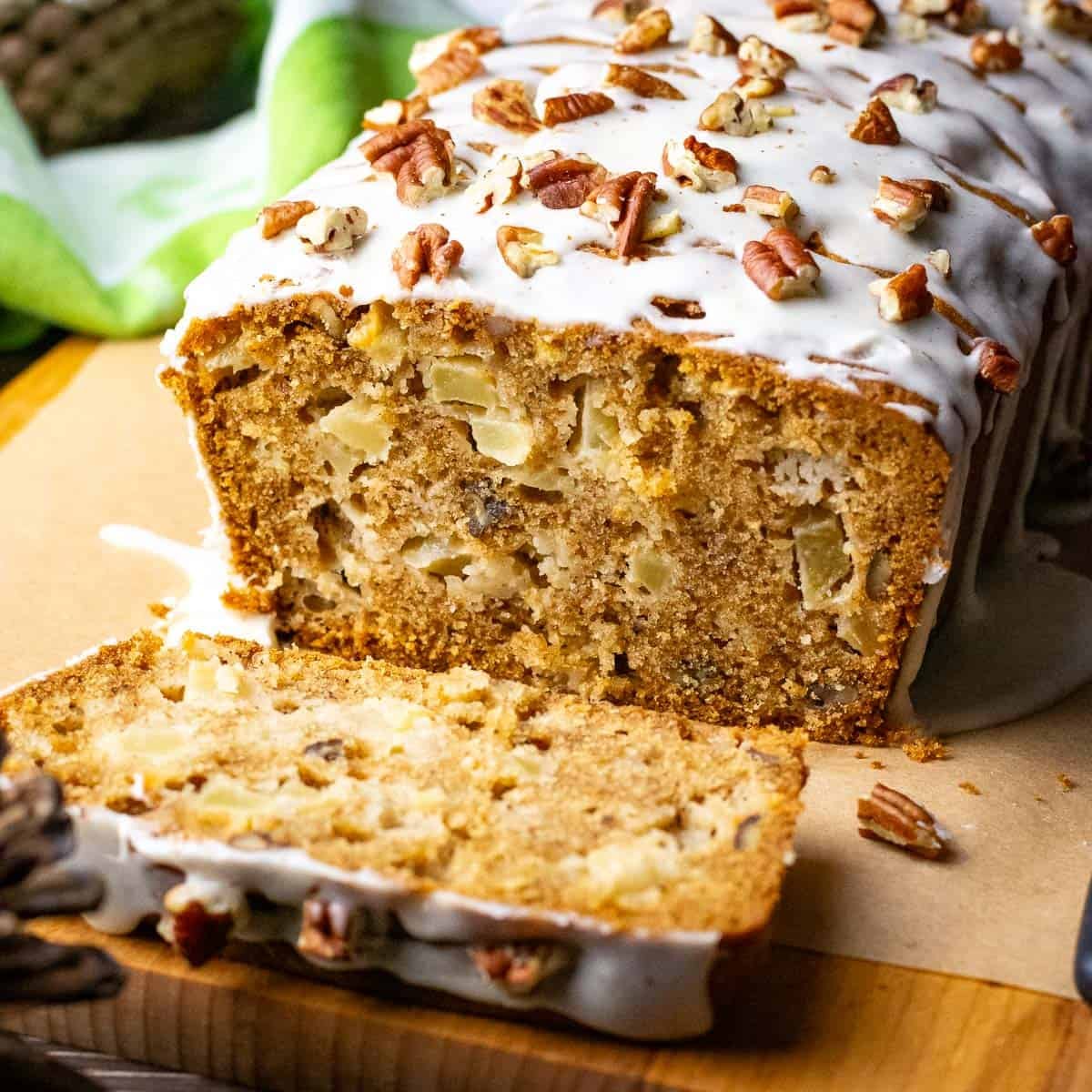
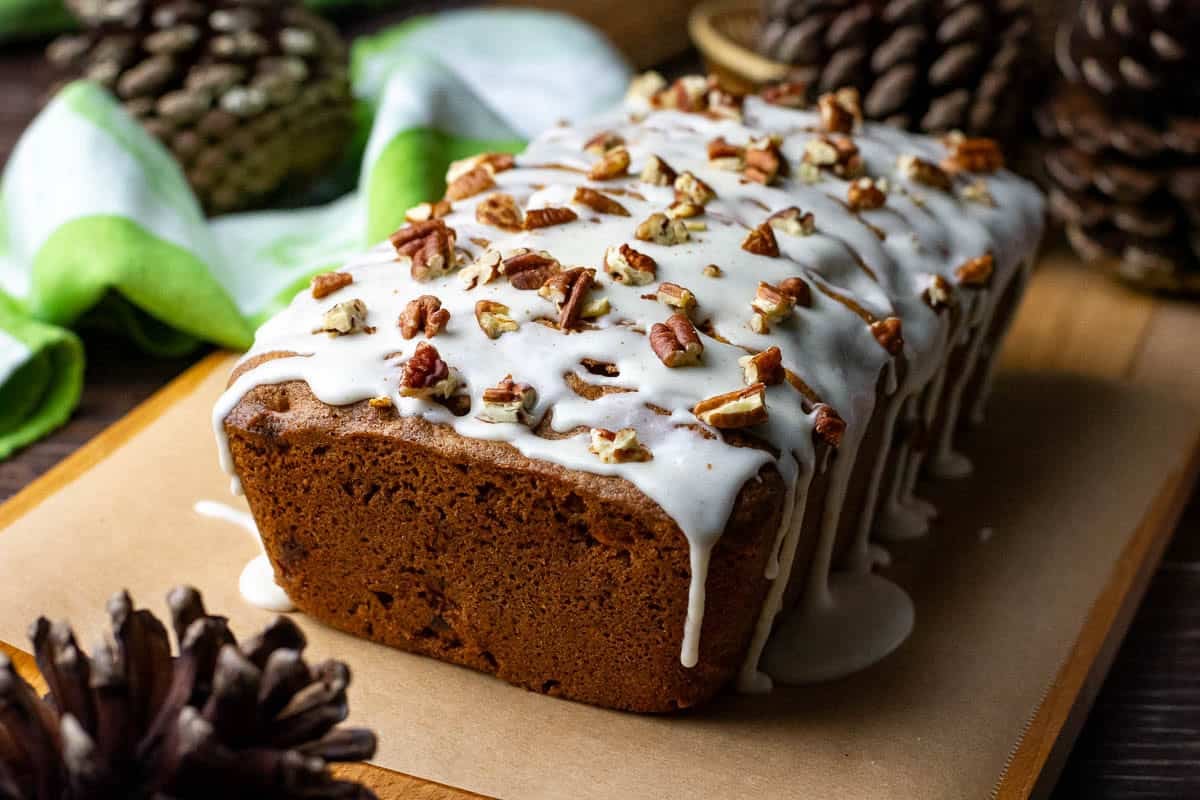
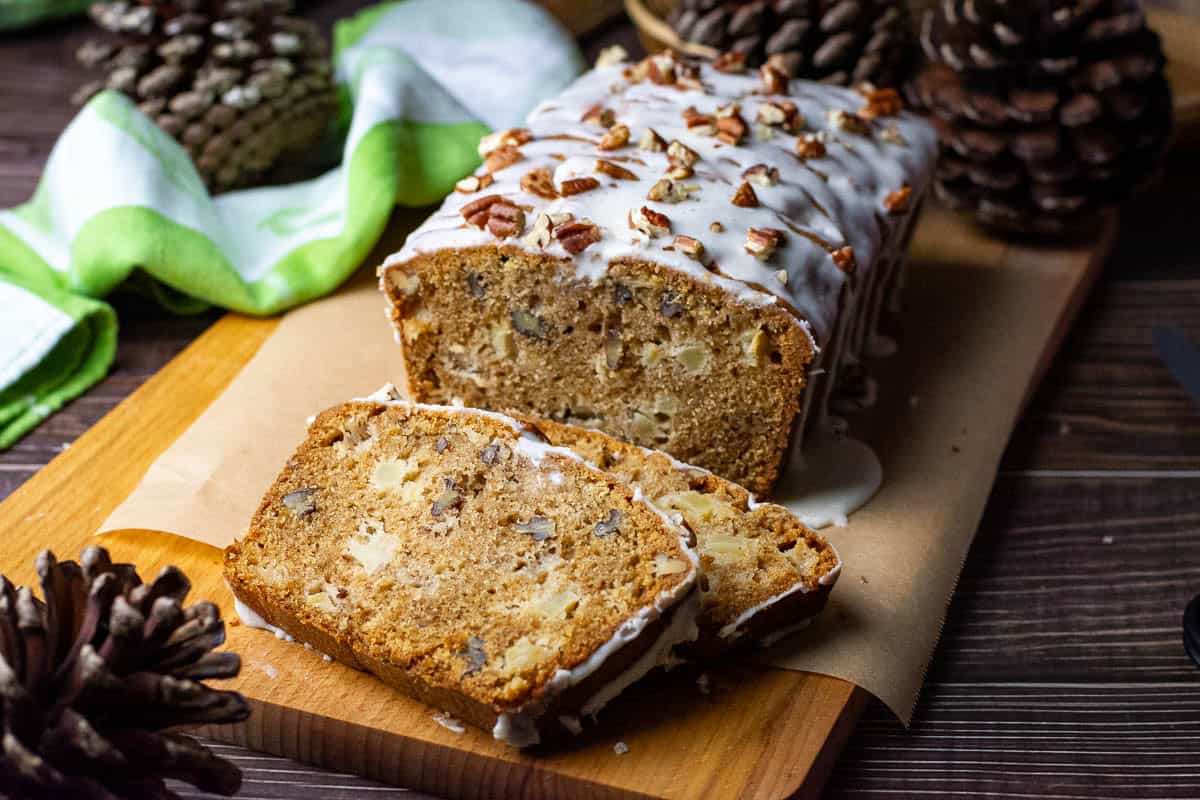
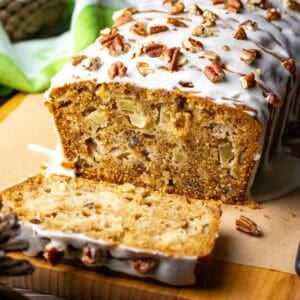
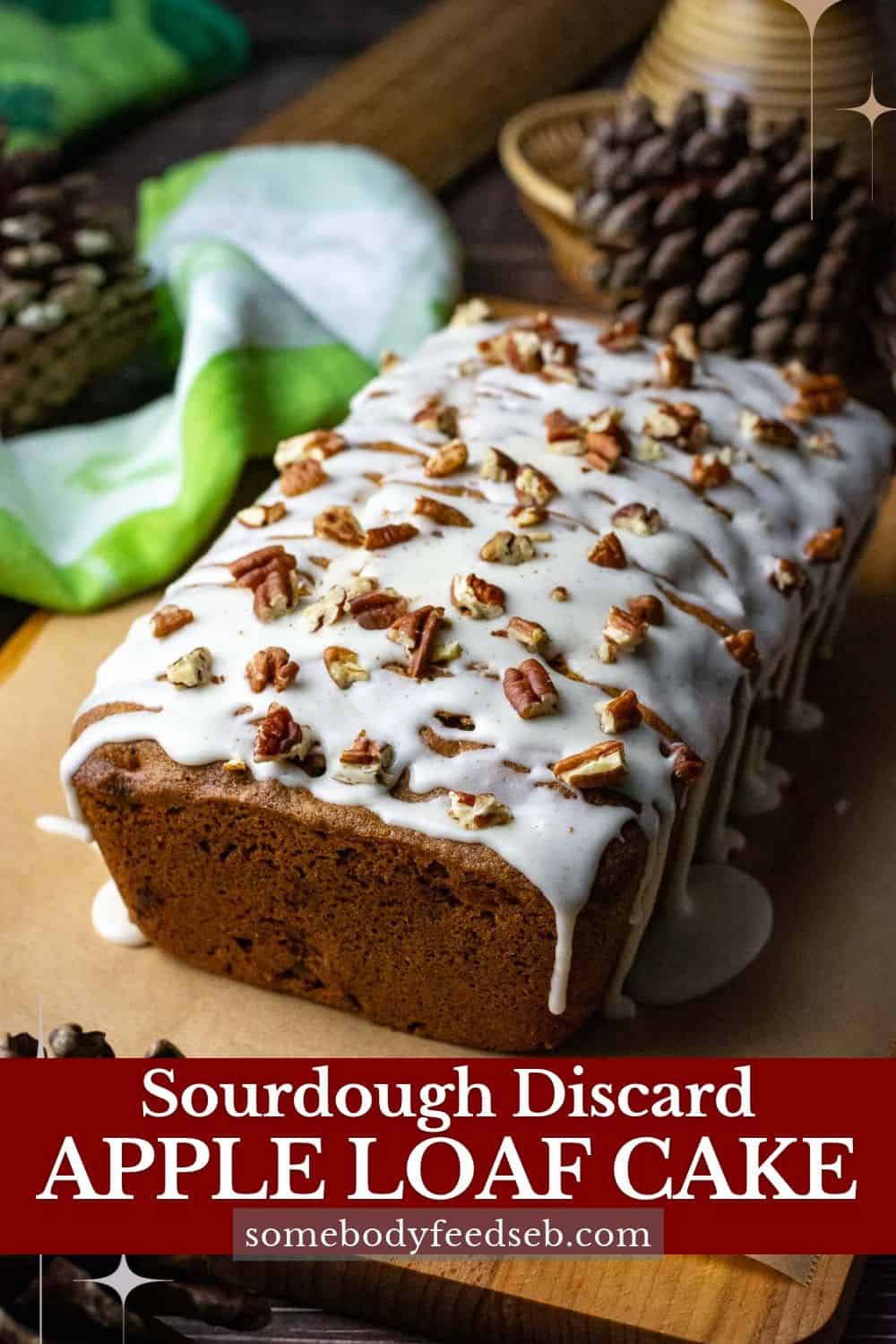
This sourdough discard apple bread is soft, moist and full of juicy pieces of tart apple, with a toasty, toffee-ish flavour from brown butter and a warm hit of cinnamon. It's finished with a salty-sweet brown butter glaze and crunchy toasted pecans, and it's still soft on day three.
Jump to:
- Recipe Highlights
- Why This Apple Bread Works
- Ingredient Notes
- How To Brown Butter (Without Burning It)
- How To Make Sourdough Apple Bread
- Troubleshooting
- Tips For Success
- Variations
- What To Serve With Sourdough Apple Bread
- How To Store And Make Ahead
- More Sourdough Apple Bakes
- Brown Butter Sourdough Apple Bread
- Recipe FAQs
As an Amazon Associate I earn from qualifying purchases, at no extra cost for you! Thank you!
It's a quick bread, so there's no rise time and no feeding your starter first. The sourdough discard goes in straight from the fridge, and the hardest part is waiting for the loaf to cool before you glaze it.
I make this every autumn, when the fruit bowl fills up with apples faster than anyone can eat them and the discard jar in my North Wales kitchen is one feed away from staging a breakout. This loaf clears both in one go.

Recipe Highlights
TASTE: Brown butter, tart apple, cinnamon
ONE PAN, TWO JOBS: Brown butter for the loaf and the glaze
STILL SOFT ON: Day three, thanks to a splash of oil
SEB'S RATING: 9/10. Asked for "the end bit with the most glaze" three days running.

Why This Apple Bread Works
- Brown butter for flavour. Browning toasts the milk solids in the butter, giving nutty, caramel notes that suit brown sugar and apple.
- Oil for softness. Oil stays liquid at room temperature, so the crumb stays soft for days. Butter alone firms up as it cools.
- Discard for tang and tenderness. Discard adds a gentle sourness that balances the sweet glaze. Baking powder and bicarbonate of soda do the rising, so there's no need to feed your starter.
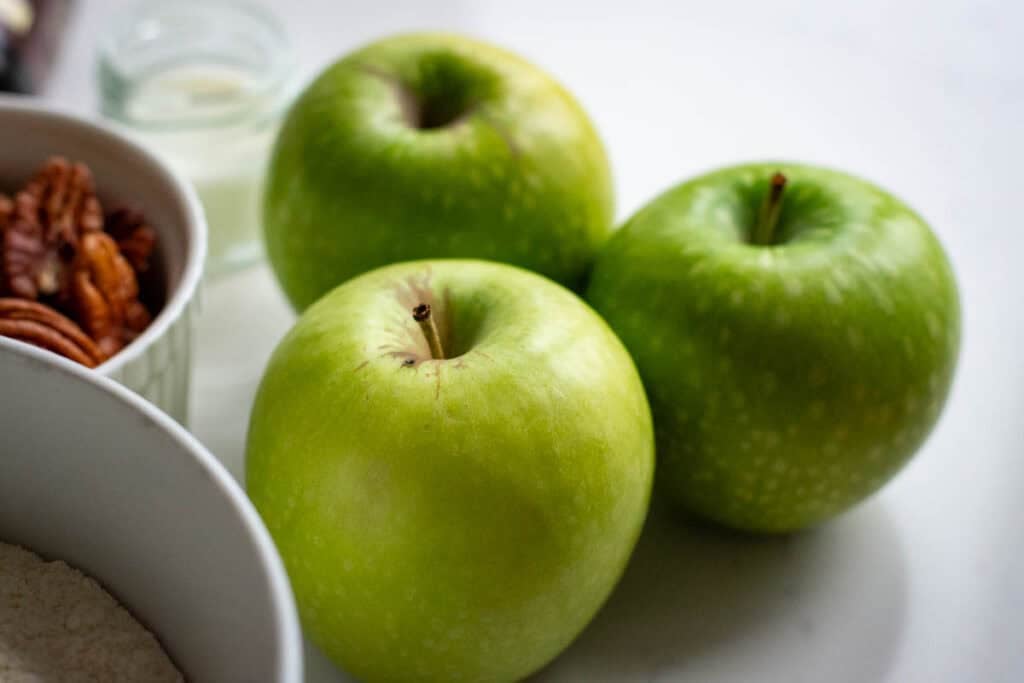
- Granny Smith for balance. Tart, firm apples keep the loaf from tasting too sweet and hold their shape in the oven.
- Just cinnamon. One spice, on purpose, so the brown butter isn't buried.
Ingredient Notes
- Sourdough discard. Unfed discard at 100% hydration (fed with equal weights of flour and water), used straight from the fridge. If you only have active starter, see the FAQ below.
- Unsalted butter. It gives you control over the salt and browns more calmly than salted butter, which foams and spits more. You'll end up with less butter than you started with once the water cooks off. That's expected.
- Neutral oil. Sunflower or vegetable. Not olive oil, which fights with the brown butter.
- Light brown sugar. Moisture and a caramel note. Dark brown works but tastes more of molasses.
- Apples. Granny Smith is my first choice. Pink Lady, Braeburn and Honeycrisp all work too. Avoid Bramleys, which collapse into fluff as they bake (brilliant in a Sourdough Apple Crumble, not here), and McIntosh if you're in the US for the same reason. Peel them, because Granny Smith skins turn chewy in a moist loaf.
- Cinnamon. The only spice. For a more spiced loaf, see the Variations.
- Pecans or walnuts. Optional. Pecans suit the brown butter best, walnuts are the classic choice with apple.
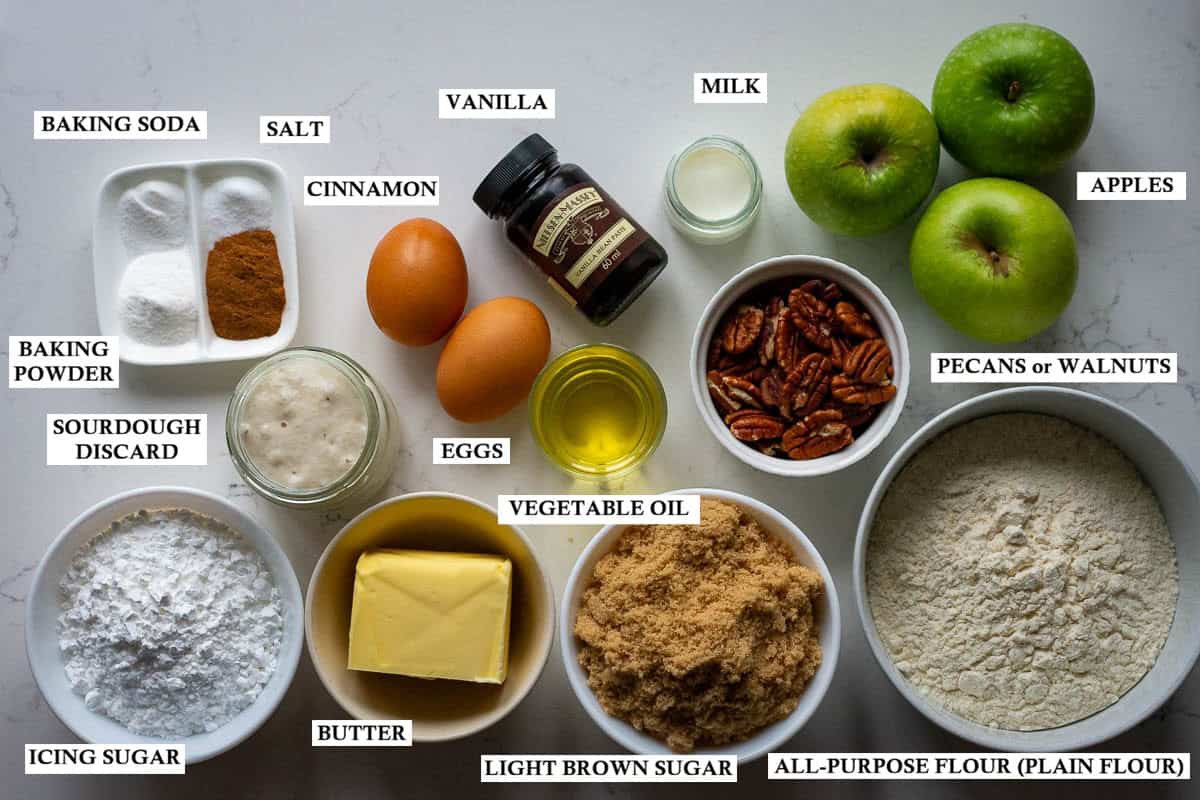
Find the full ingredient quantities and instructions in the recipe card below.
How To Brown Butter (Without Burning It)
Brown butter is butter cooked past melting until the water evaporates and the milk solids toast. It takes 5-8 minutes, and your ears are as useful as your eyes.
Use a light-coloured pan. In a dark non-stick pan, you only find out it's gone too far when you smell it.
Know the stages. Over a medium heat, the butter melts, then foams and crackles loudly as the water cooks off. Keep swirling. When the crackling goes quiet and the foam settles, watch closely. The specks on the bottom turn golden, then hazelnut brown, and it smells like toffee. That's your moment.
Brown, not burnt. Golden-brown specks and a nutty smell mean it's right. Black specks and a bitter, acrid smell mean start again. Burnt butter doesn't hide, not even under a glaze.
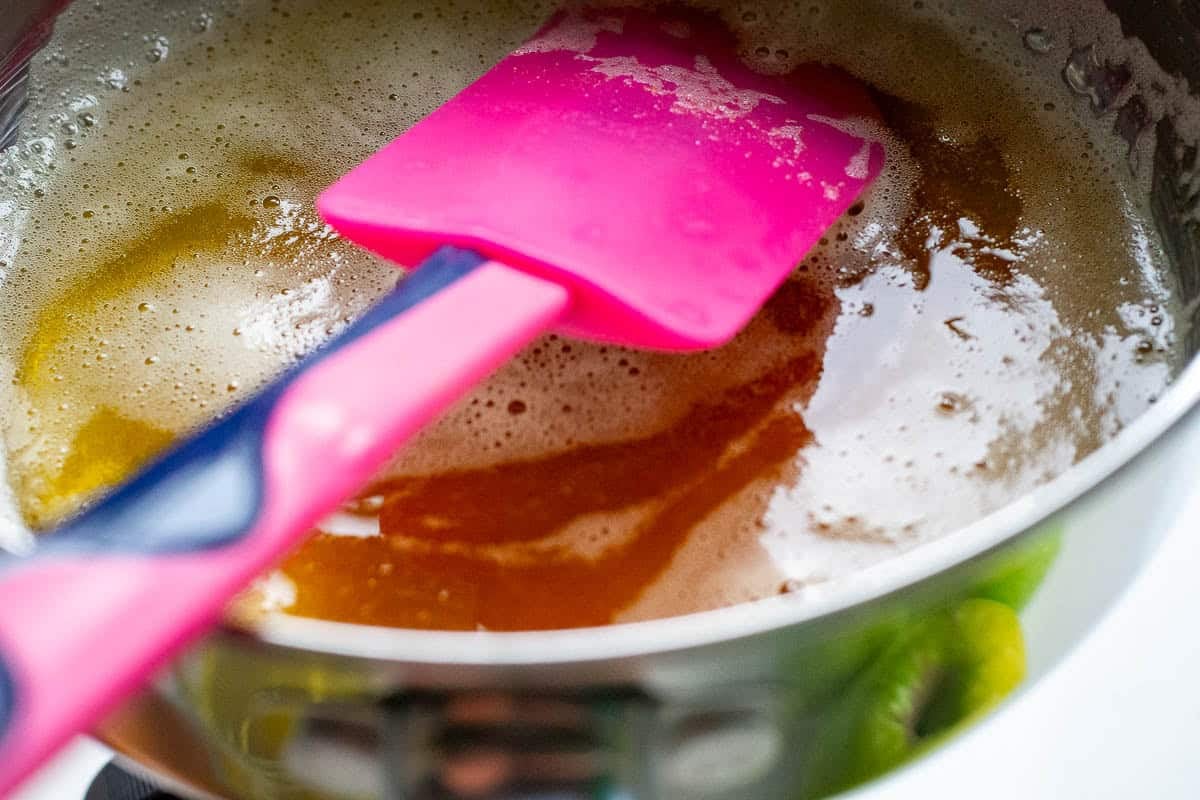
Pour it out straight away. The hot pan keeps cooking it off the heat. Pour it into a heatproof bowl and scrape in every speck, because that's where the flavour is. If you end up as hooked on brown butter as I am, my chewy Sourdough Apple Cookies use it too.
How To Make Sourdough Apple Bread
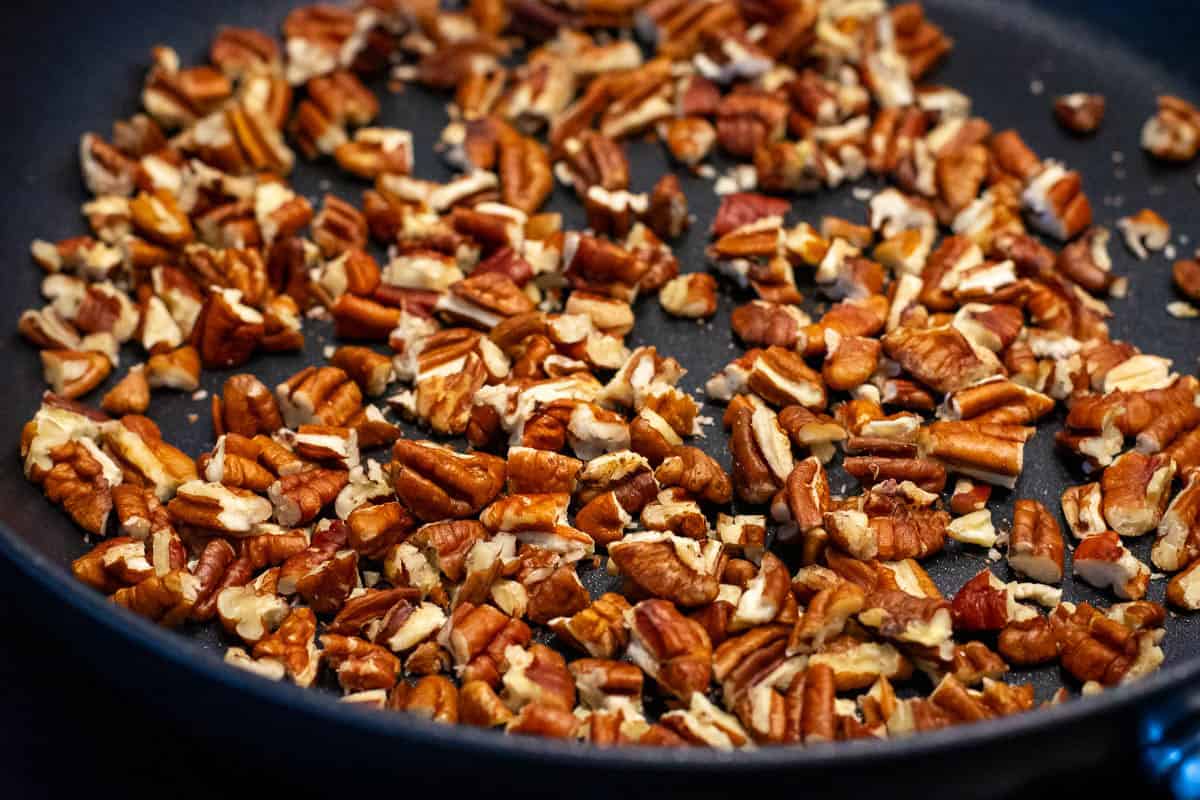
Toast the nuts, then brown the butter in the same pan. Dry-toast the nuts before the butter goes in. Nothing burns alongside the butter, and you only wash one pan. Keep a handful back for the top.
Make the glaze while the butter is still warm. Take a spoonful of brown butter out for the glaze straight away. Warm butter whisks smoothly into icing sugar and saves melting more later. Press cling film onto the surface and leave it on the side. It will thicken as it sits, which is normal.
Cool the butter with the oil and sugar. Adding the oil and sugar brings the butter's temperature down faster. It should feel warm, not hot, before the eggs go in, or you'll get little scrambled bits in the batter.
Dice and coat the apples. Aim for roughly 1cm (½-inch) pieces. Smaller ones melt away, and bigger ones sink and leave wet pockets. A light coating of flour helps them grip the batter.
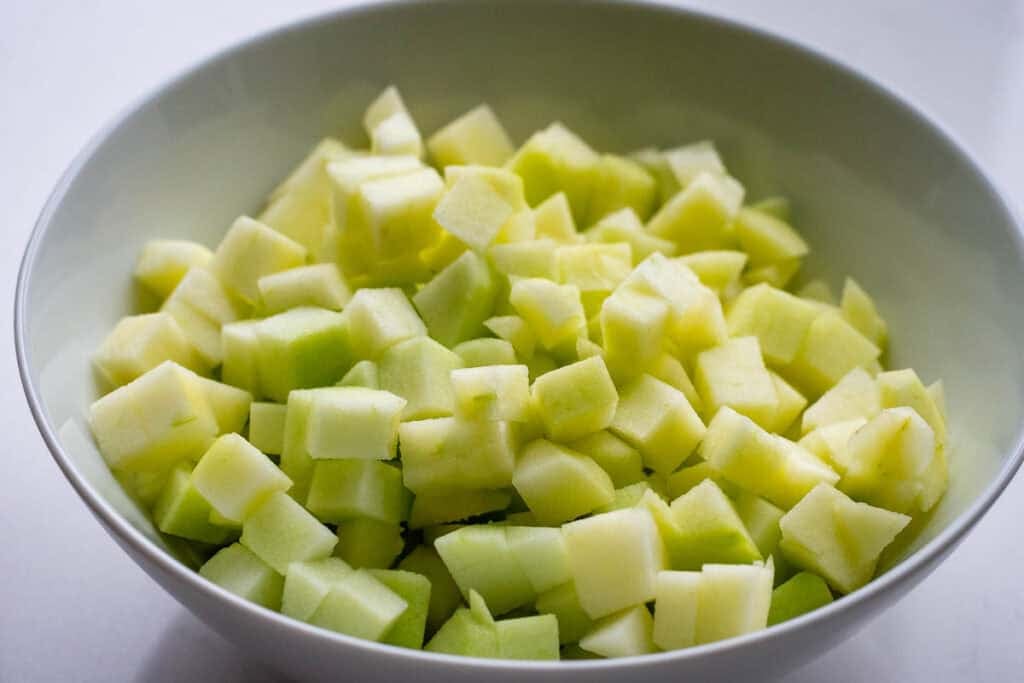
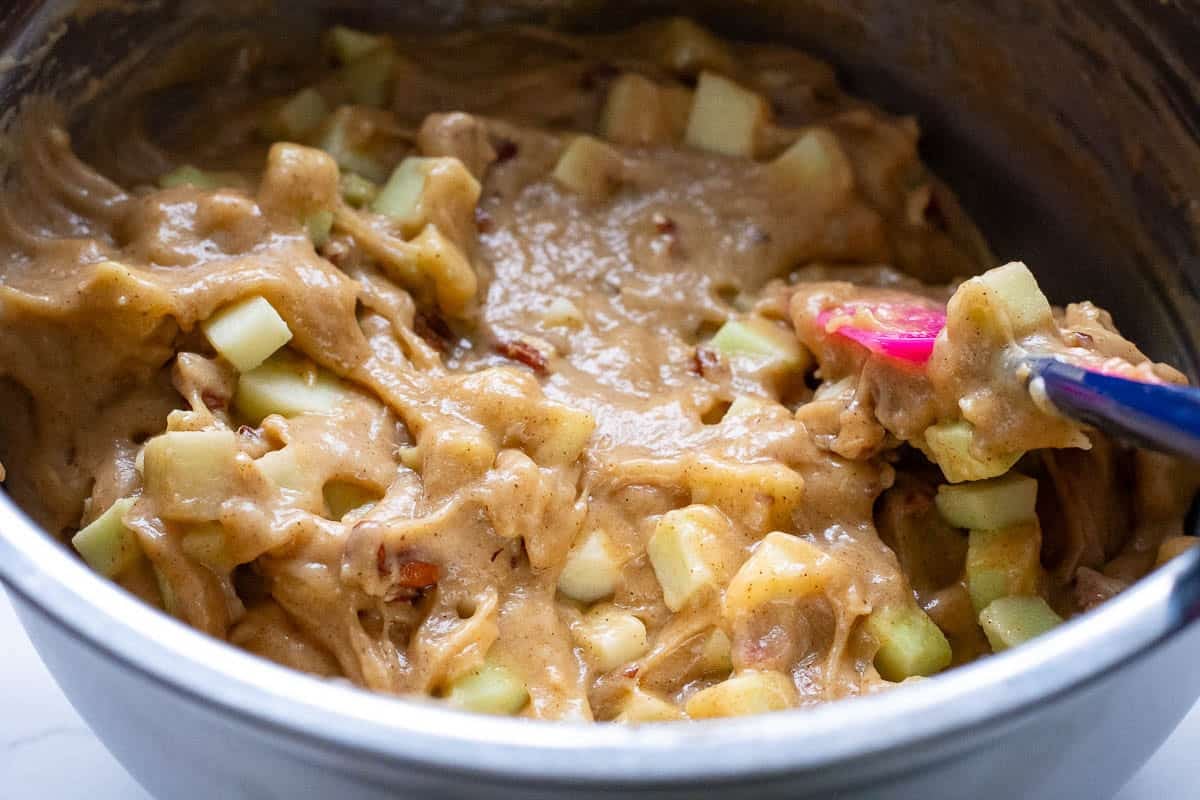
Fold, don't beat. Stop folding while you can still see a few streaks of flour, then fold in the apples and nuts to finish the job. Beating develops the gluten and gives a tough crumb with tunnels through it. The batter will be thick, and that's exactly what you want. It's what holds the apples in place while the loaf bakes.
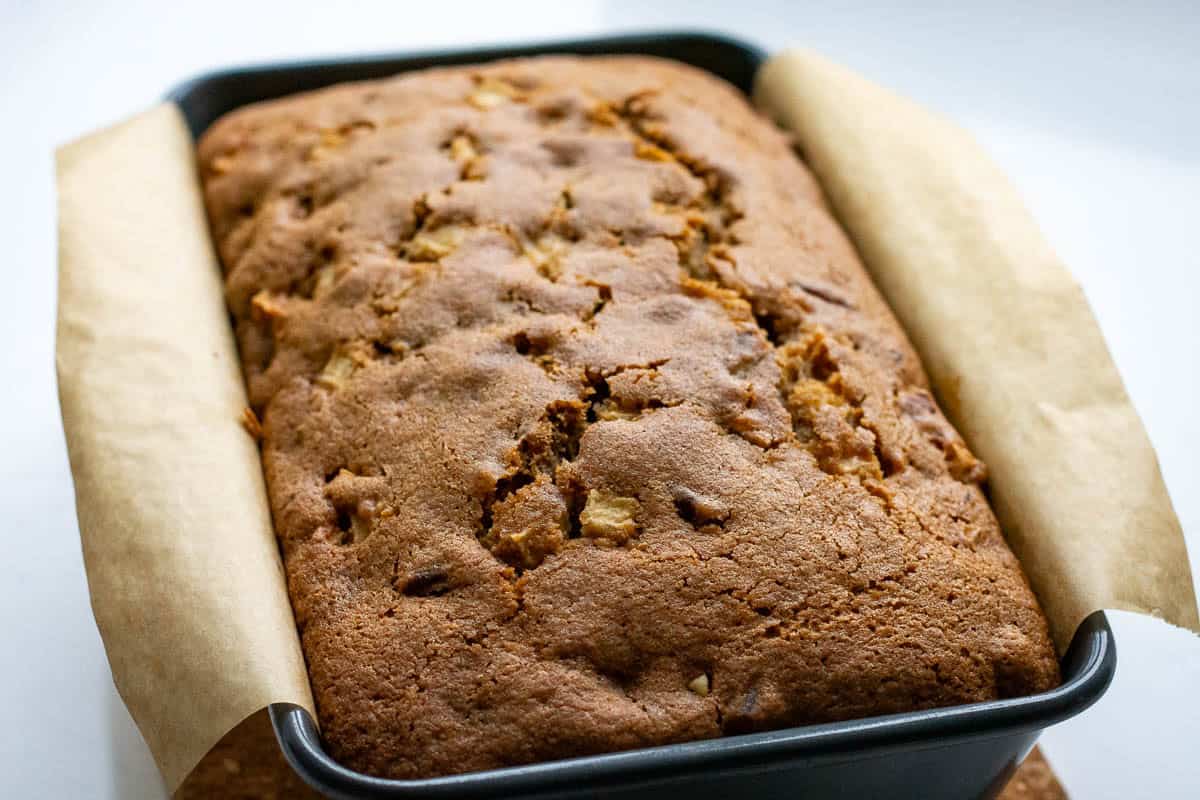
Bake and test. Check at 40 minutes. Brown sugar colours quickly, so if the top is already deep brown, lay foil loosely over it. When you test for doneness, a skewer may not be reliable. Hitting apple gives a wet skewer even when the loaf is done. With a probe thermometer, the middle should read 95-98°C (203-208°F).
Cool completely, then glaze and add the nuts. This is the step people rush. On a warm loaf, the glaze melts in and the nuts slide off. Stir the glaze and loosen it with milk, half a teaspoon at a time, until it's runny-honey thick. Spoon it over, then scatter the reserved nuts on straight away so they set into the wet glaze and stay put.
Troubleshooting
Gummy or dense middle. Usually slightly underbaked, or the apple pieces were too big and too wet. Check the internal temperature, dice to 1cm, and cool fully before slicing, as a warm slice can look gummy even when it's baked through.
The apples sank. The batter was too thin, the pieces too big, or they skipped the flour coating. Weigh the discard, stick to a 1cm dice and toss the apples in flour.
Dark top, raw middle. Your oven is probably running hot. Tent with foil earlier, check it with an oven thermometer, and drop 10°C (20°F) next time.
Dry by day two. Overbaked, or stored uncovered or in the fridge. Take it out at 95-98°C (203-208°F) and store it airtight at room temperature.
Tips For Success
🍞 Check your tin size. This recipe is written for a 23×13cm (9×5 inch) tin, which is a standard 2lb loaf tin. A narrower 21×11cm (8½×4½ inch) tin gives a taller loaf that needs an extra 5-10 minutes.
🔥 Fan ovens run faster. Use the fan temperature in the recipe card, look at the top at 35 minutes rather than 40, and start testing for doneness at the 55-minute mark.
🔪 Slice with a serrated knife. Wait until the glaze has set, then use a gentle sawing motion so the knife doesn't drag the nuts off the top.
⚖️ Weigh the discard. A cup of bubbly discard weighs far less than a cup of flat discard, and that difference is enough to change the batter.
Variations
- Apple cinnamon swirl. Spread half the batter in the tin, sprinkle with 2 tablespoon brown sugar mixed with 1 teaspoon cinnamon, then add the rest.
- More spiced. Add ½ teaspoon ground ginger and ¼ teaspoon nutmeg, or swap the cinnamon for mixed spice or apple pie spice.
- Maple glaze. Use maple syrup instead of milk in the glaze for a sweeter finish.
- Hazelnut. Swap the pecans for hazelnuts. Brown butter is called beurre noisette in French, which literally means hazelnut butter, so they were always going to get on.
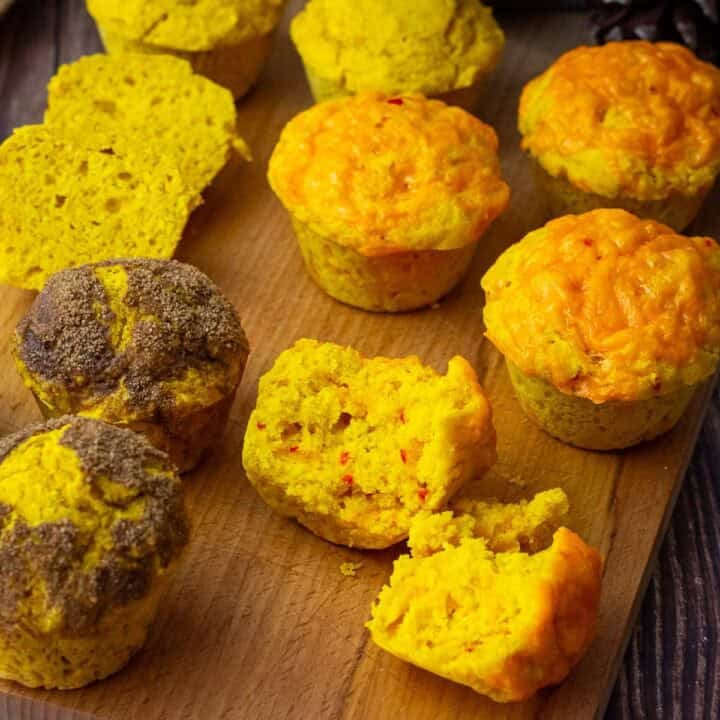
- Streusel instead of glaze. Use the crumble topping from my Sourdough Apple Muffins With Streusel Topping and scatter it over the batter before baking. Skip the glaze and the nuts on top.
- Pear. Use firm, just-ripe pears, peeled and diced the same way as the apples.
What To Serve With Sourdough Apple Bread
A thick slice with tea or coffee is hard to beat, and the unglazed ends are the best bits for toasting with salted butter.
For pudding, warm a slice and add custard or vanilla ice cream. Or do it the Yorkshire way, where Wensleydale has long been served with apple pie and fruit cake. A crumbly cheese or sharp Cheddar works just as well here.
How To Store And Make Ahead
Keep the apple bread in an airtight container at room temperature for up to 4 days. Skip the fridge, where the butter firms up and the crumb dries out faster.
To freeze, wrap unglazed slices individually and freeze for up to 3 months. Thaw at room temperature and glaze once thawed. To make ahead, bake the loaf the day before and glaze it on the day you want to serve it.
More Sourdough Apple Bakes
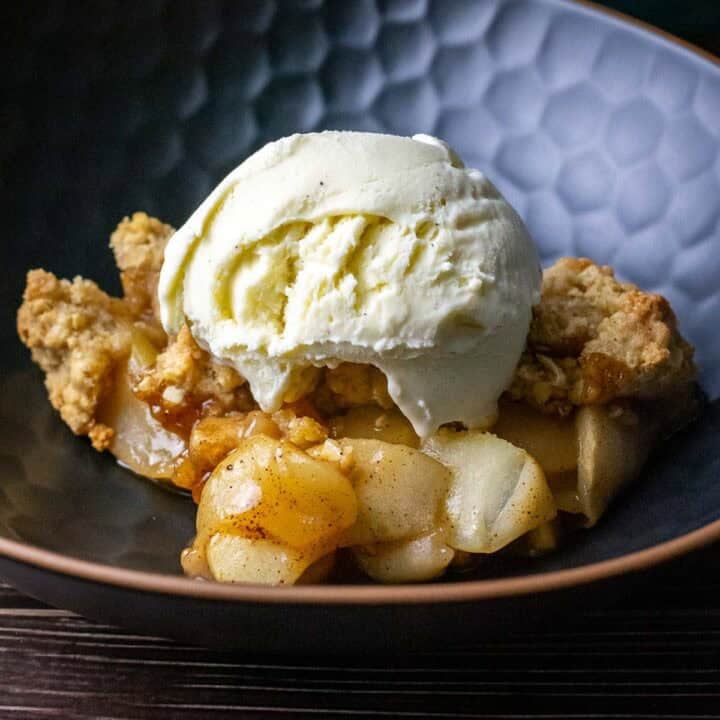
Still got apples? The Sourdough Apple Cake Recipe is the one to make for a crowd, and the Sourdough Apple Fritters and Sourdough Apple Galette (With Flaky Discard Pastry) are worth a weekend afternoon.
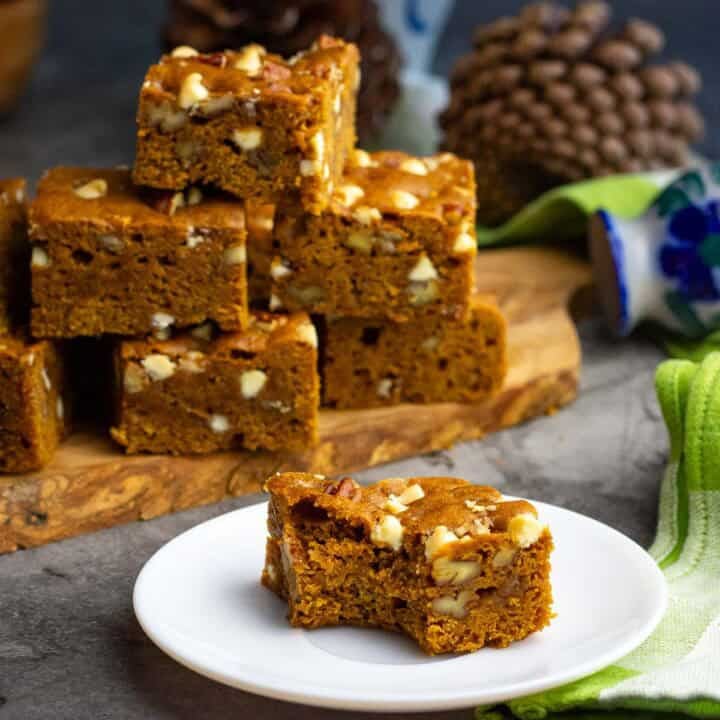
For more discard loaf cakes, try the Sourdough Courgette Loaf Cake, the Lemon Blueberry Sourdough Cake or the Sourdough Discard Raspberry White Chocolate Loaf Cake. And the rest of this season's baking lives in the Fall Sourdough Recipes We Make on Repeat Every Year.
LOVE BAKING SOURDOUGH WITH ME?
You can now add Somebody Feed Seb as a preferred source on Google. It only takes a tick box, and tells Google you'd like to see more of my recipes when relevant.
Brown Butter Sourdough Apple Bread
Equipment
- Small light-coloured saucepan
Ingredients
For the sourdough loaf
- 75 g (¾ cup) pecans or walnuts roughly chopped, optional
- 125 g (½ cup + 1 tbsp) unsalted butter
- 60 ml (¼ cup) neutral oil, like sunflower or vegetable
- 175 g (¾ cup + 1 tbsp) light brown sugar
- 2 large eggs room temperature
- 120 g (½ cup + 1 tbsp) sourdough discard 100% hydration
- 1 teaspoon vanilla extract or vanilla bean paste
- 250 g (2 cups + 1 tbsp) all-purpose flour (plain flour), plus 1 tablespoon for the apples
- 1½ teaspoon baking powder
- ½ teaspoon bicarbonate of soda baking soda
- ½ teaspoon fine salt
- 2 teaspoon ground cinnamon
- 2 medium Granny Smith apples about 300g once peeled and cored, diced
For the brown butter glaze
- 15 g (1 tablespoon) brown butter, taken from the batch above
- 90 g (¾ cup) powdered sugar
- 1½-2 tablespoon milk plus extra to loosen if needed
- pinch of fine salt
- pinch of ground cinnamon
Instructions
- Prepare. Heat the oven to 175°C (350°F). Grease the loaf tin and line it with a strip of baking paper that hangs over the long sides.
- Toast the nuts (optional). Put the pecans or walnuts in the dry saucepan over medium heat. Toast for 3-4 minutes, shaking the pan often, until they smell toasty and look a shade darker. Tip them onto a board, leave to cool slightly, then chop roughly. Set aside 25g for the topping. The rest goes in the batter.
- Brown the butter. Put the butter in the same saucepan over medium heat. It will melt, then foam and crackle as the water cooks off. Keep swirling the pan. After 5-8 minutes the crackling goes quiet, the foam settles, and the specks on the bottom turn golden brown and smell nutty, like toffee. Take it off the heat straight away and pour it into a large heatproof mixing bowl. Scrape in all the brown specks, because that's where the flavour is.
- Make the glaze now. Spoon 15g (1 tbsp) of the brown butter into a small bowl. Leave it for a minute or two, then whisk in the icing sugar, salt, cinnamon and 1½ tablespoon milk until smooth and about as thick as runny honey. Press cling film onto the surface and leave it at room temperature until the loaf is cool. Don't put it in the fridge.
- Start the batter. Pour the oil into the bowl with the rest of the brown butter. This helps it cool faster. Add the brown sugar and whisk well. Leave for 5 minutes, until the mixture feels warm rather than hot.
- Prepare the apples. While the butter cools, peel, core and dice the apples into roughly 1cm pieces. Toss them with 1 tablespoon flour. This helps stop them sinking.
- Mix the dry ingredients. In a second bowl, whisk together the flour, baking powder, bicarbonate of soda, salt and cinnamon.
- Add the eggs and discard. Whisk the eggs into the butter and sugar one at a time, then whisk in the sourdough discard and vanilla until smooth.
- Bring it together. Tip the dry ingredients into the wet and fold gently with a spatula until you can only just see a few streaks of flour. Add the apples and the nuts for the batter and fold until everything is evenly mixed and there's no dry flour left. The batter will be thick. That's what you want.
- Bake. Scrape the batter into the tin, level the top and spread the apple pieces evenly rather than leaving a pile in the middle. Bake for 55-70 minutes. After about 40 minutes, check the colour. If the top is browning quickly, cover it loosely with foil. The loaf is done when a skewer pushed into the centre comes out clean or with a few moist crumbs, or when the middle reads 95-98°C (203-208°F). If the skewer hits a piece of apple it will come out wet, so try another spot.
- Cool. Leave the loaf in the tin for 15-20 minutes, then lift it out using the paper and cool it completely on a wire rack, about 1½-2 hours. On a warm loaf the glaze melts and the nuts slide off.
- Glaze. Take the cling film off the glaze and give it a good stir. It will have thickened as the butter cooled, which is normal. Loosen it with milk, ½ teaspoon at a time, until it's back to runny-honey thickness. Spoon it along the top of the loaf and let it drip down the sides. Scatter over the reserved nuts straight away and press them in lightly. Leave for 20-30 minutes to set before slicing.
Notes
Nutrition
Recipe FAQs
Yes, use the same weight of active starter at 100% hydration. The baking powder and bicarbonate of soda do the rising, so the starter doesn't need to be at its peak. Active starter gives a slightly lighter crumb and a little less tang than discard that's been sitting in the fridge.
Discard kept in the fridge is fine to use for up to about 2 weeks. If there's a layer of grey liquid on top (called hooch), pour it off before weighing. Older discard tastes more sour, which you'll notice a little in the loaf, but the brown sugar and glaze keep it well in balance.
Yes. For all butter, brown 190g (¾ cup + 1 tbsp) butter, take 15g out for the glaze and use the rest in place of the brown butter and oil. You'll get more flavour, but the loaf will be firmer and drier by day two or three. For all oil, use 160ml (⅔ cup) oil and melt 15g (1 tbsp) butter separately for the glaze. That gives the softest crumb, but you lose the nutty, toffee-like flavour that makes this loaf.
Yes. Divide the batter between 12 lined muffin cups and bake at 190°C (170°C fan) / 375°F for about 20-25 minutes, until a skewer comes out clean from between the apple pieces. Glaze once they're completely cool. If you'd rather have a muffin with a crunchy streusel top, my Sourdough Apple Muffins With Streusel Topping are made for exactly that.
Yes. Reduce the salt in the loaf to a pinch and leave the salt out of the glaze altogether. Everything else in the recipe stays the same.
You can cut the brown sugar by about 25g without affecting the texture much. Go further and the crumb gets drier and less tender, because the sugar is holding moisture as well as sweetening. The glaze adds sweetness back on top, so the finished slice still tastes balanced.
Leave a Reply