
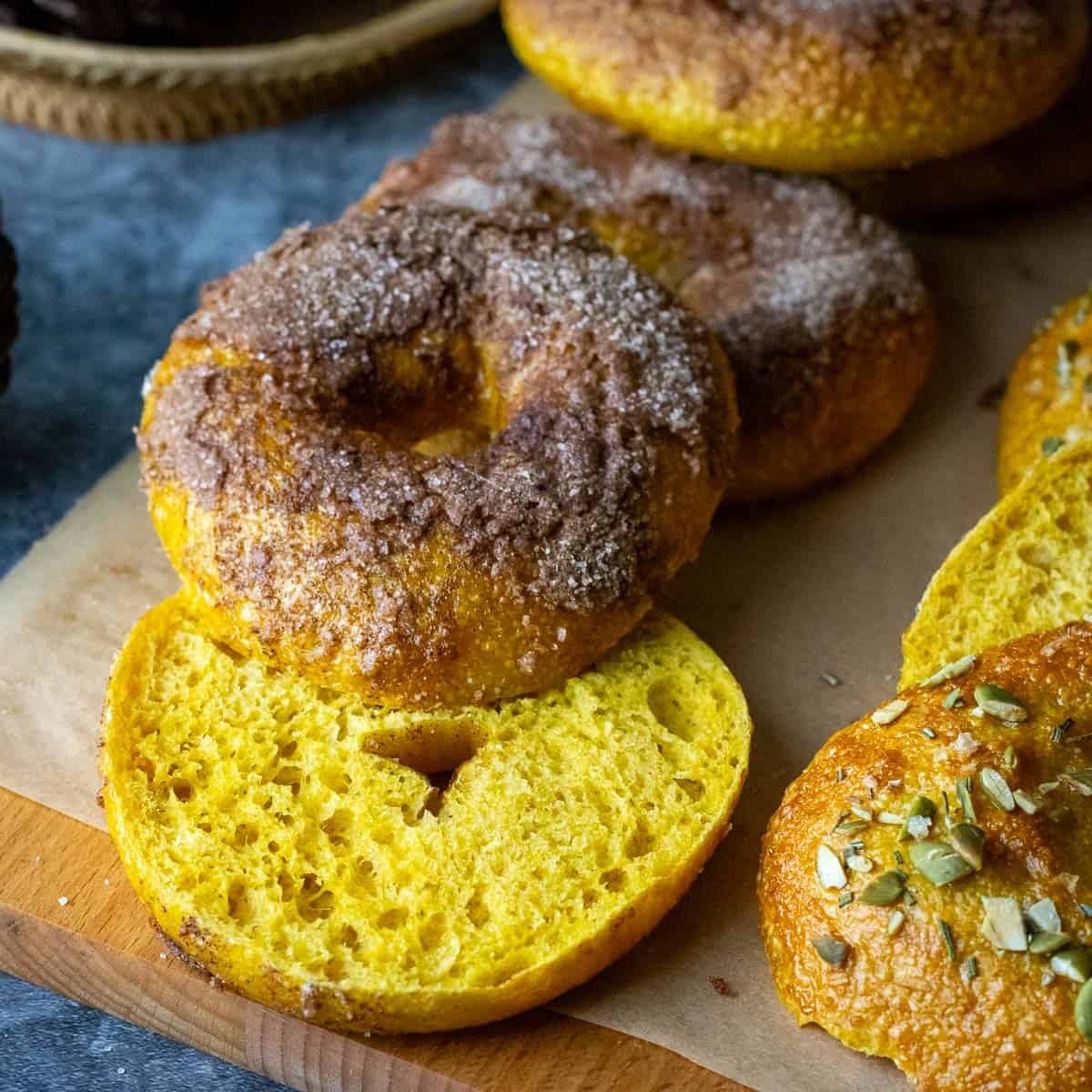
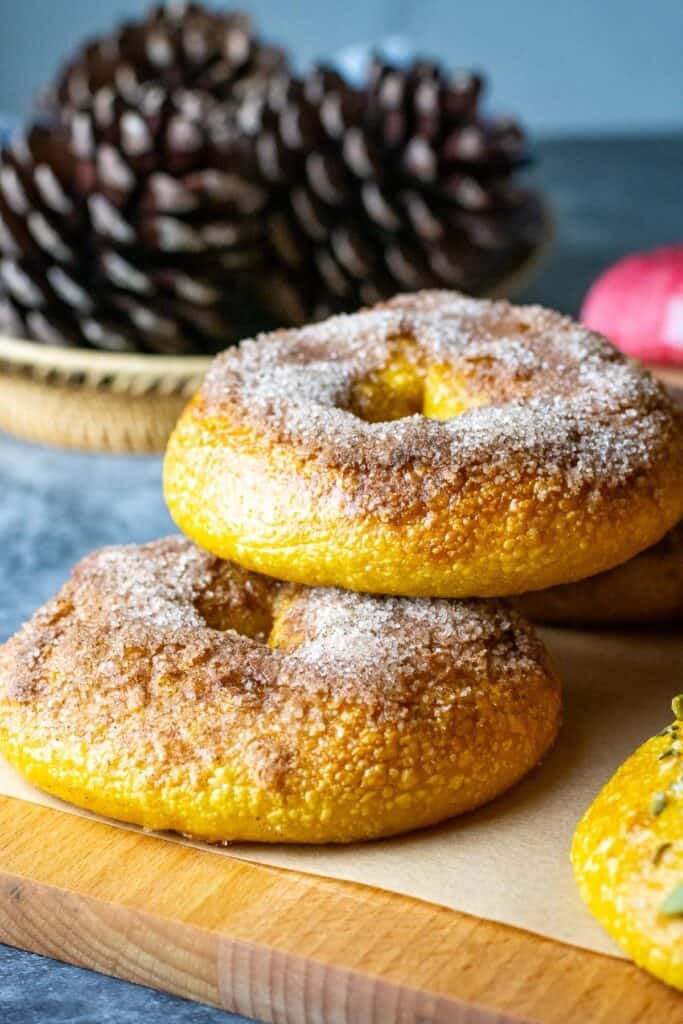
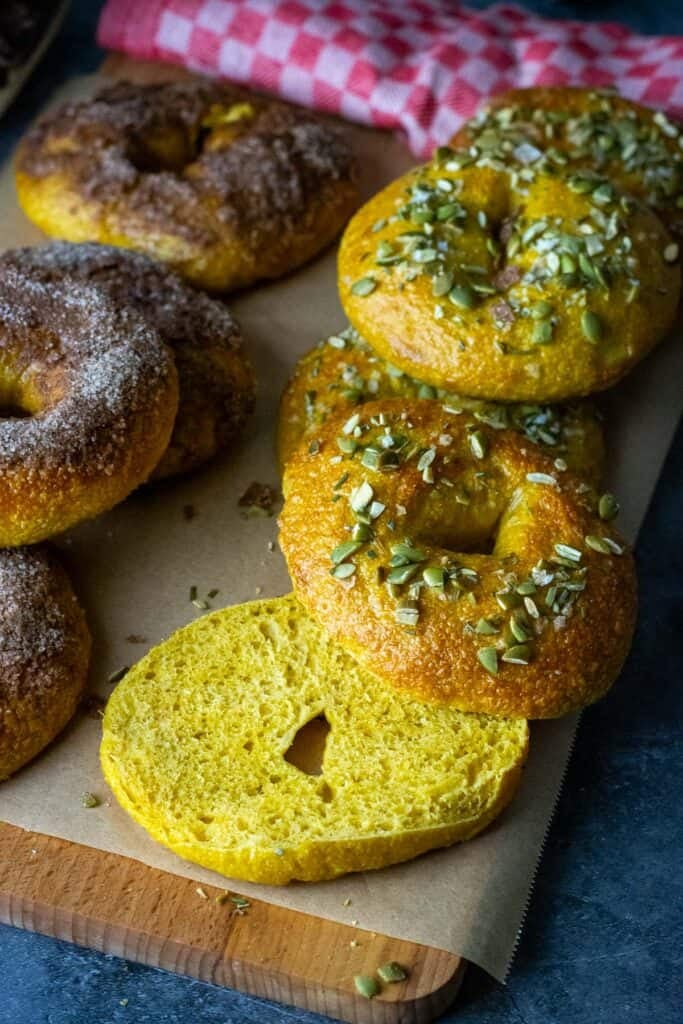
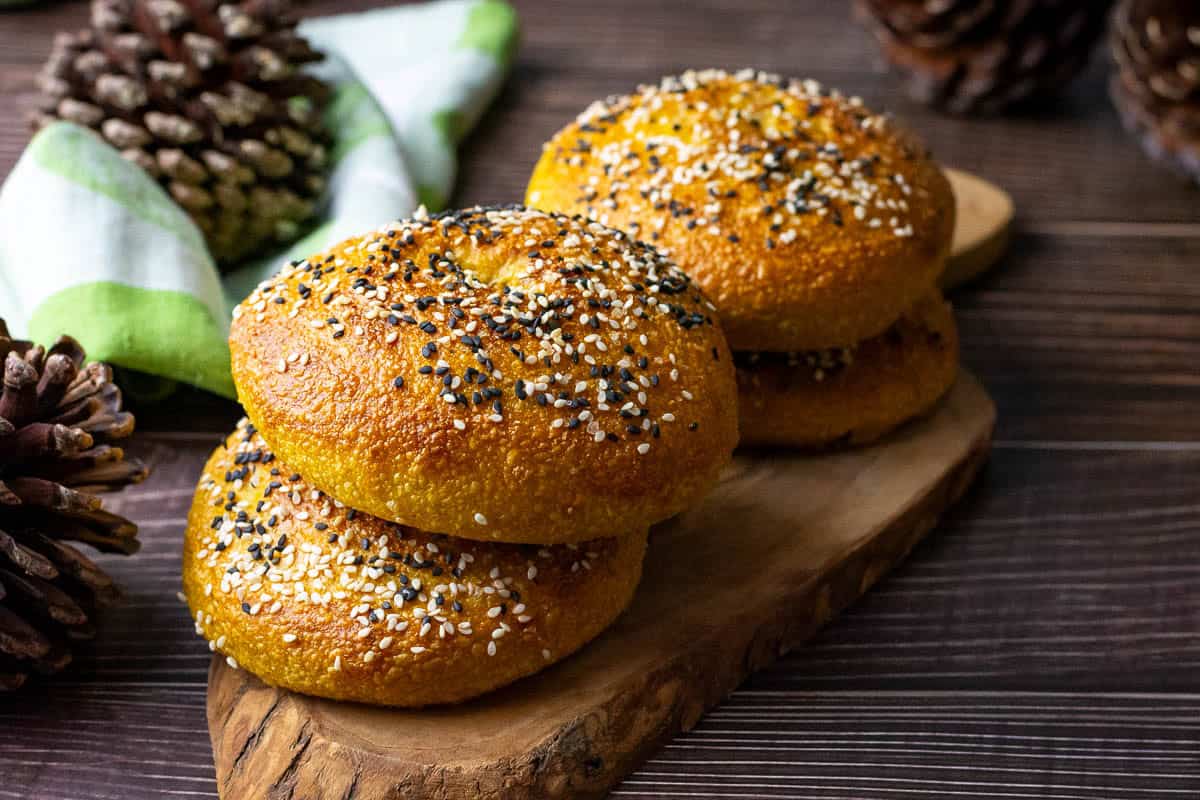
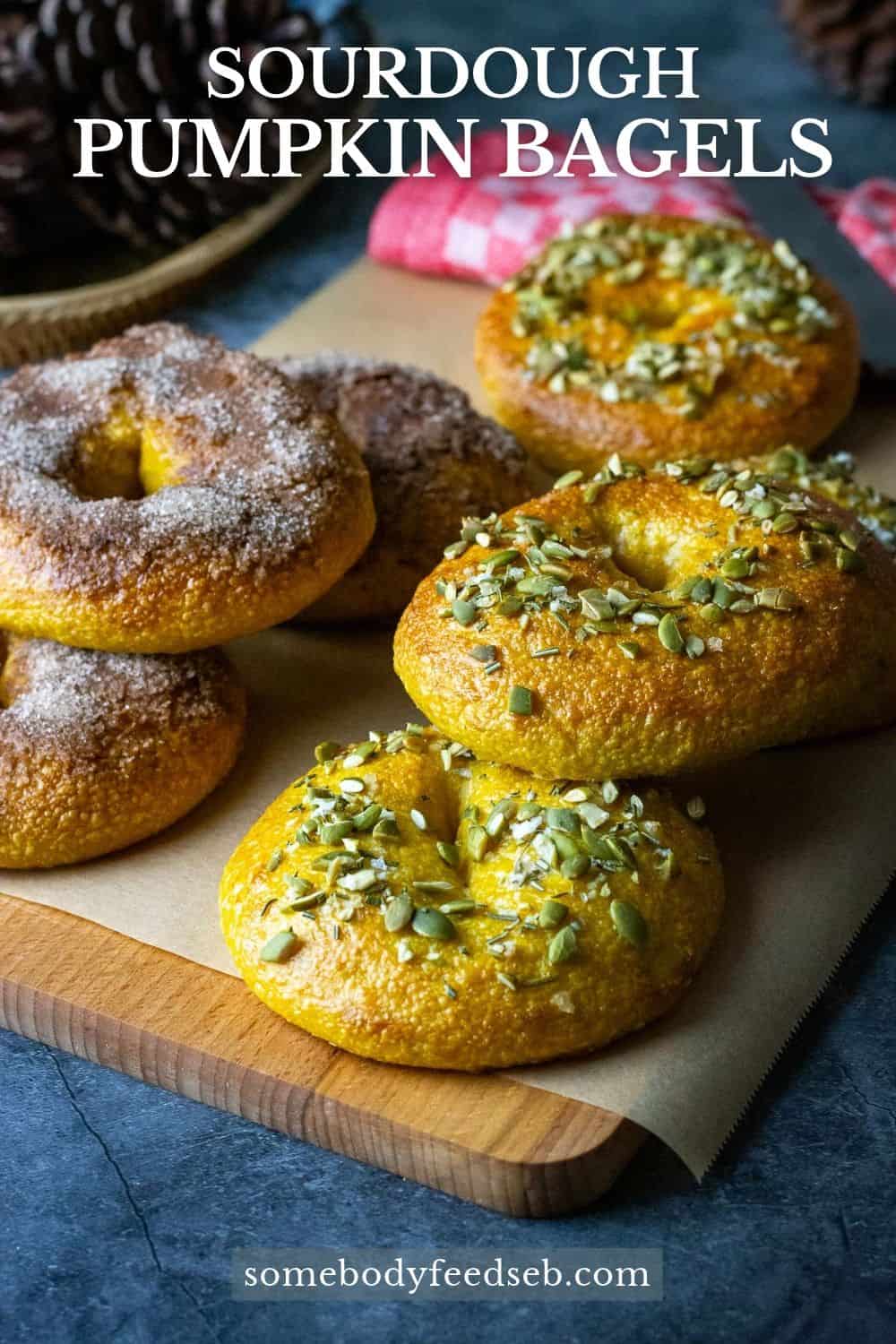
These sourdough pumpkin bagels are dense and properly chewy, with a faint sweetness from real pumpkin puree worked straight into the dough and that soft apricot colour that makes them look like autumn before you've even added a topping. This batch makes six generous bagels, so you're not still defrosting bagel number eleven in February. And it splits straight down the middle: half finished with a spiced maple cinnamon sugar, half with rosemary, sea salt and toasted pumpkin seeds.
Jump to:
As an Amazon Associate I earn from qualifying purchases, at no extra cost for you! Thank you!
I built this one because I wanted a proper savoury bagel to go with eggs on a Saturday morning, but also wanted a sweet one for coffee, and I wasn't about to make two separate doughs for that. You mix the dough in the evening, let it ferment overnight, then shape and bake in the morning. One dough, many flavour directions, sorted by lunchtime on day two.
Here's exactly how it comes together, plus what's actually happening in that dough, which is worth knowing before you start.

Recipe Highlights
TASTE: faintly sweet, autumn-spiced, proper chew
ONE DOUGH, TWO DIRECTIONS: sweet maple cinnamon and savoury rosemary sea salt from a single batch
BUILT FOR SMALL HOUSEHOLDS: six to eight bagels, no dozen going stale on the side
SEB'S RATING: Declared the savoury ones "the good ones".

Why This Dough Works
Bagel dough should feel stiffer than any sourdough loaf: firm, only just tacky, more clay than air pockets. Low hydration is what gives bagels their dense, chewy crumb, so resist adding extra water just because it feels tight.
Pumpkin puree adds moisture, that soft apricot colour, and a background sweetness that suits both toppings. Tinned brands vary in moisture, which is why the water here is a starting point, not a fixed number (more on adjusting that below).
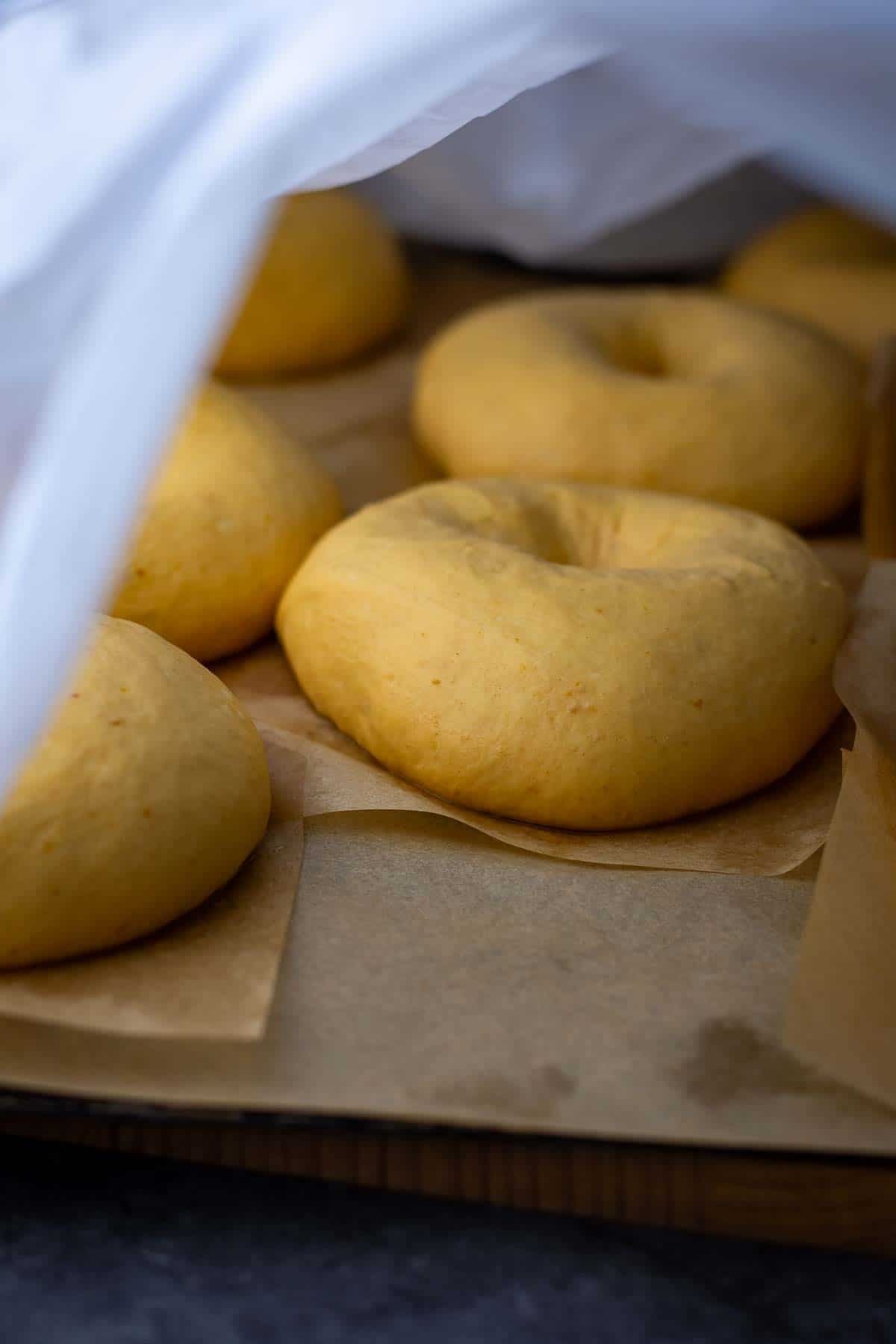
The timing does two jobs. A long, unhurried bulk ferment overnight builds a rounder, gently tangy flavour than a same-day rise ever will. Then a short chill in the fridge after the second rise firms up the shaped bagels so they hold their ring in the water instead of spreading. Don't skip the chill, and don't leave the shaped bagels to rise overnight either. This is a stiff, low-hydration dough, and a long second rise is how you end up with bagels that sag and wrinkle in the pot.
Then the boil. Bicarbonate of soda (baking soda) raises the pH at the dough's surface, giving bagels their shiny, chewy crust instead of a soft bread crust. Thirty seconds a side is enough, and it's the step that makes this taste like a bagel, not a dense bread roll.
Bagel Baking Schedule
The clock times below are a sample, so shift the whole thing earlier or later to suit your day. What matters is the gaps between the steps.
Day 1
- 3:30pm: feed your starter
- 8:30pm: mix and knead the dough
- 9:15pm: cover the bowl and leave it at room temperature overnight, for 8 to 10 hours
Day 2
- 7:00am: check the dough, then divide and shape (about 30 minutes)
- 7:30am: second rise at room temperature, 22-23°C (72-73°F), for 1½ to 2½ hours. Start checking at 9:00am.
- 9:00 to 10:00am: once they're ready, cover the tray and chill in the fridge for 1 to 2 hours
- About 30 minutes before the chill ends: heat the oven and the water, and mix the toppings
- 10:00am to 12:00pm: boil, top and bake, about 45 minutes in total, starting as soon as the chill is up
- Cool for 15 minutes before slicing
Depending on how long your second rise and chill take, the bagels come out of the oven somewhere between about 10:45am and 12:45pm.
Ingredient Notes
- Strong white bread flour: protein matters more here than in a wetter sourdough loaf, since it's what gives the dough enough structure to hold a stiff, low-hydration shape and stand up to boiling without collapsing. Plain flour will give you a softer, less chewy result.
- Pumpkin puree: use plain, unsweetened puree, not pumpkin pie filling, which already has sugar and spice added and will throw off both the flavour and the sourdough's hydration.
- Active sourdough starter: you need 100g, and it needs to be properly active, bubbly and roughly doubled, not just fed a couple of hours ago. Feed it in the afternoon, 4 to 6 hours before you plan to mix. With only 100g doing all the work, a sluggish starter is one of the most common reasons dough underproofs.
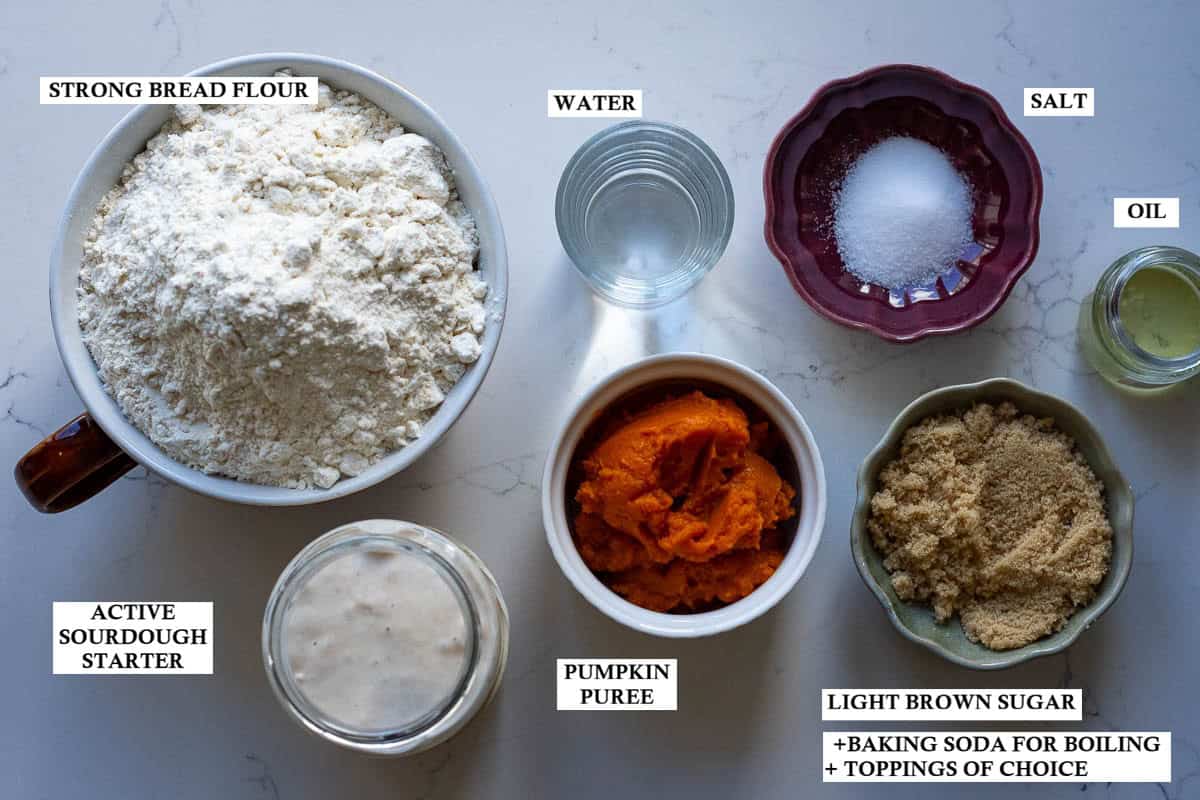
Find the full ingredient quantities and instructions in the recipe card below.
Troubleshooting Your Sourdough Pumpkin Bagels
🔍 Dense or gummy in the middle? This usually comes down to one of three things: the dough didn't get a proper bulk rise before you shaped it, the second rise was cut short, or the bagels were sliced into before they'd properly cooled. Look for a genuine 60-70% increase in size during bulk fermentation, not just "it looks a bit puffier." Judge the second rise by feel (see below) rather than by the clock.
And give bagels a full 15 minutes on a wire rack before you cut one open. The crumb is still setting as it cools, and slicing too early traps steam and makes it gummy.
💥 Bagels splitting or cracking in the water? This usually means the bagels weren't proofed enough before boiling, or the water was at too hard a boil. An aggressive, violent boil shocks the dough and can tear the surface. Keep it at a steady boil rather than a rolling one, and make sure the shaped bagels get their full second rise so they've got some give in them before they go into the pot.
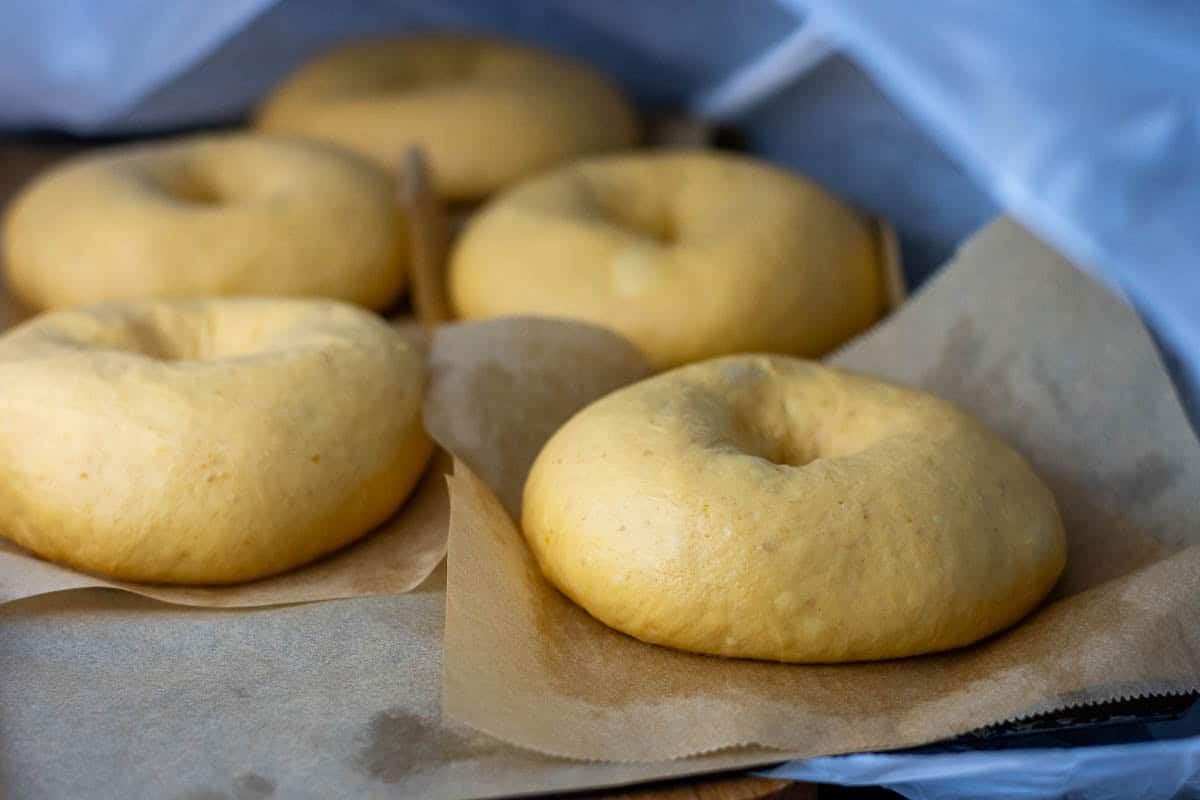
⏱️ How to tell the second rise is done. Don't wait for the bagels to double, because they shouldn't. You're looking for puffy and soft, with the hole smaller but still clearly open. Press a floured finger gently into one: the dent should fill back in slowly and only partly. If it springs straight back, give them longer. If the dent stays put, or the surface looks wrinkled and the bagel feels fragile, they've gone too far, so get them into the fridge straight away.
For a second opinion, drop one into a bowl of room-temperature water. If it floats or hovers just under the surface within a few seconds, you're there. Pat it dry and put it back on its square of parchment. Start checking at 1½ hours, then every 15 minutes.
🫧 How to tell your starter is actually ready, not just bubbly: bubbly is a start, but the real test is whether it's roughly doubled in size and holds a dome on top rather than sinking in the middle. To learn more, head to How To Know When Sourdough Starter Is Ready And At Its Peak.

🎃 Pumpkin puree moisture varies a lot by brand. If your dough still won't come together after 5-7 minutes of mixing, add water a teaspoon at a time. If it feels sticky rather than tacky, you've likely got a wetter puree and could use a spoonful more flour. Judge this one by feel rather than the number on the page.
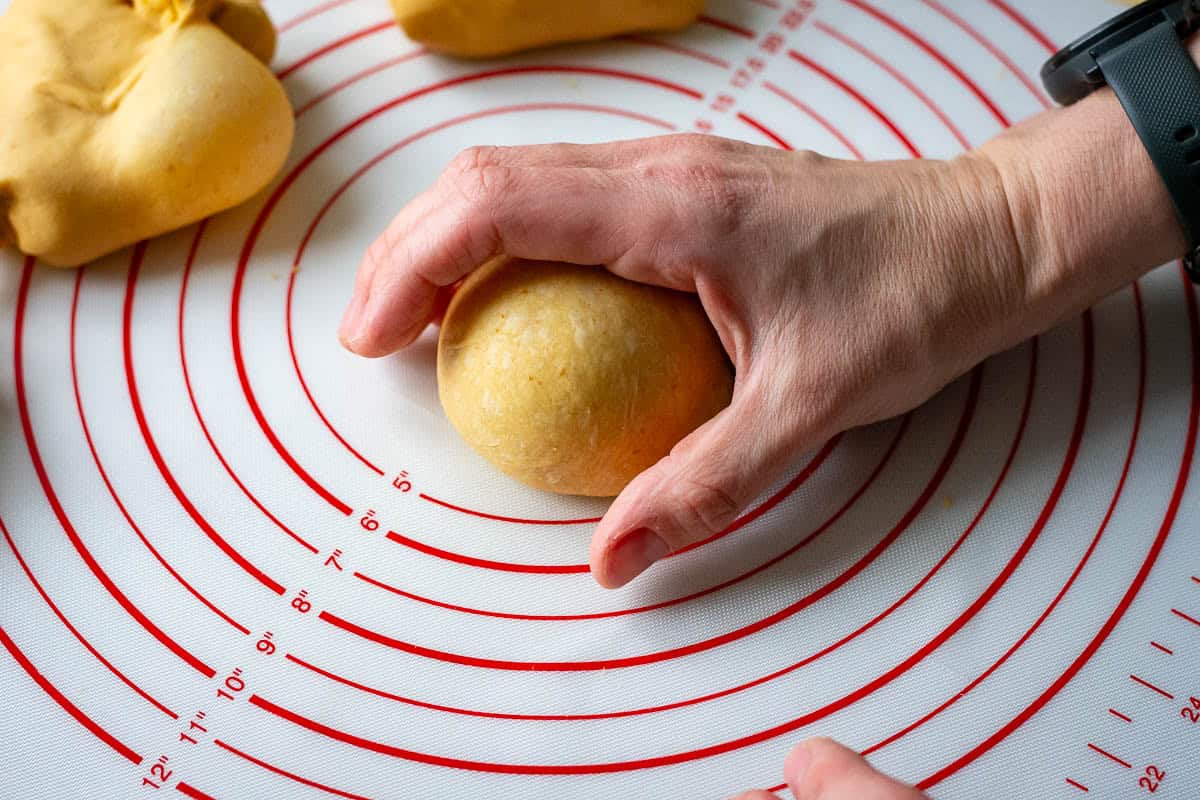
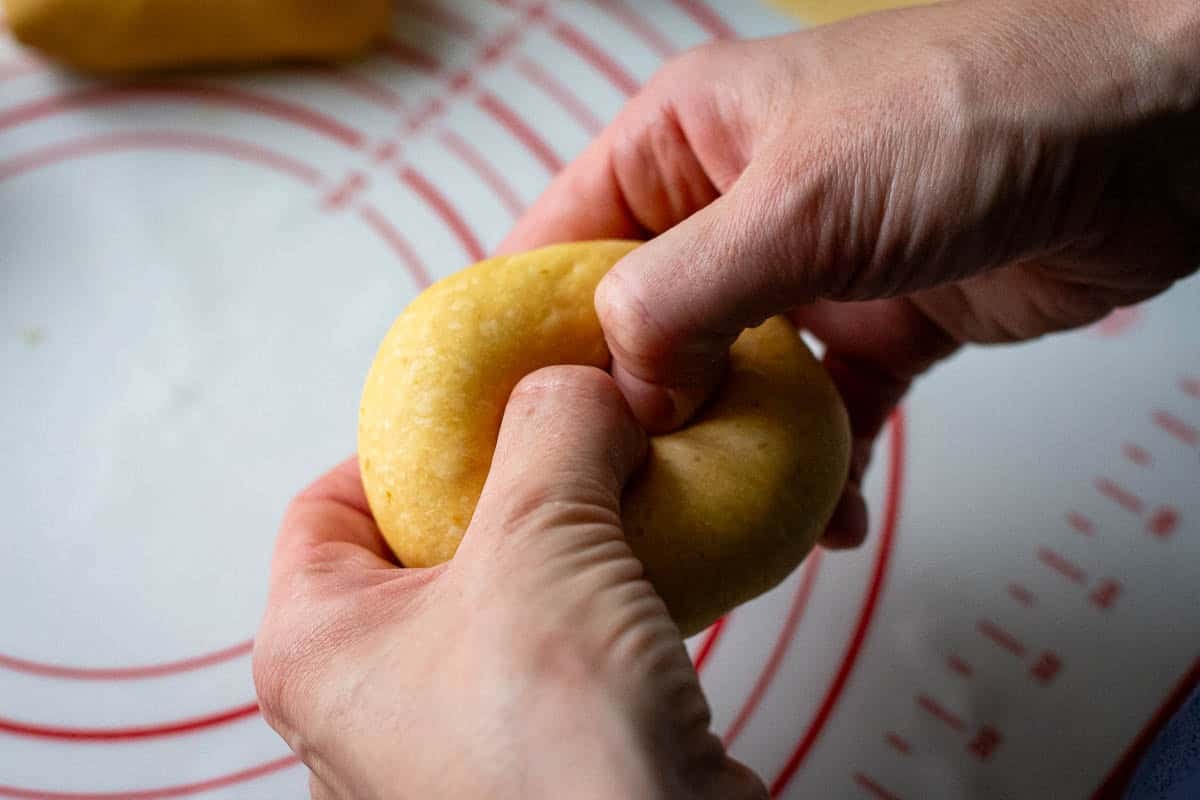
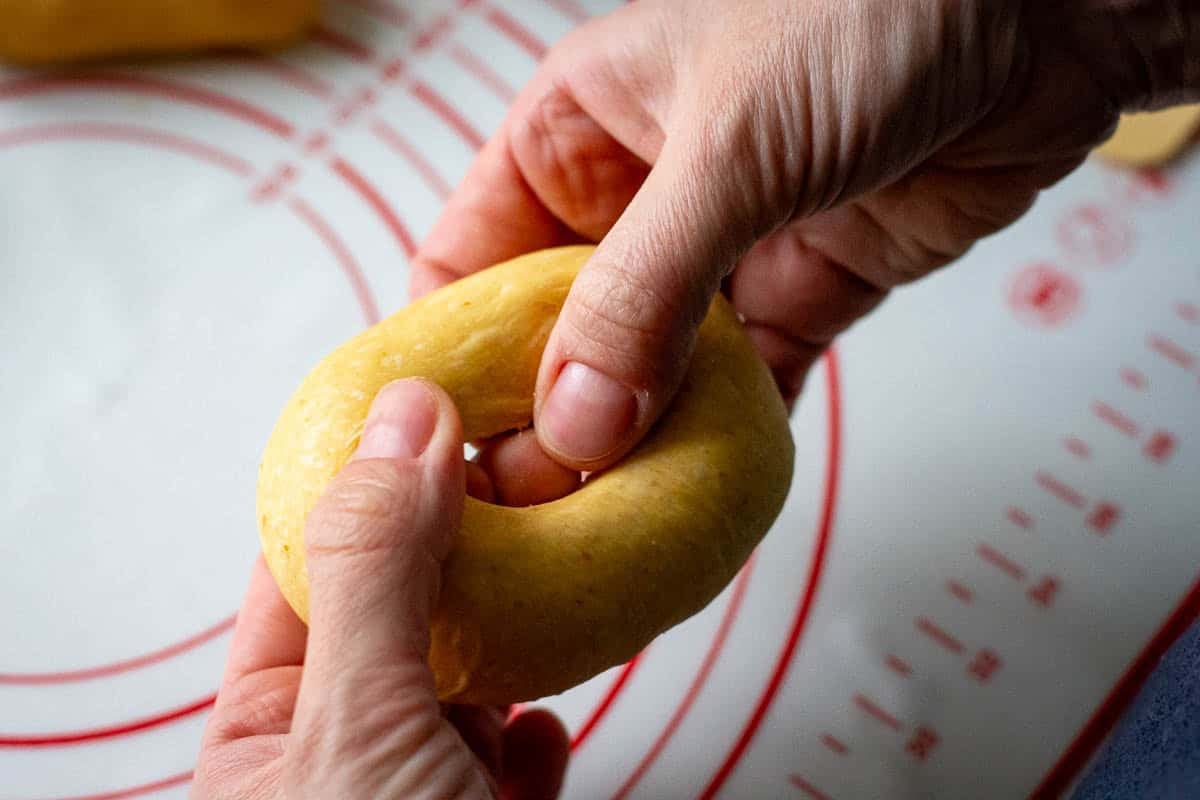
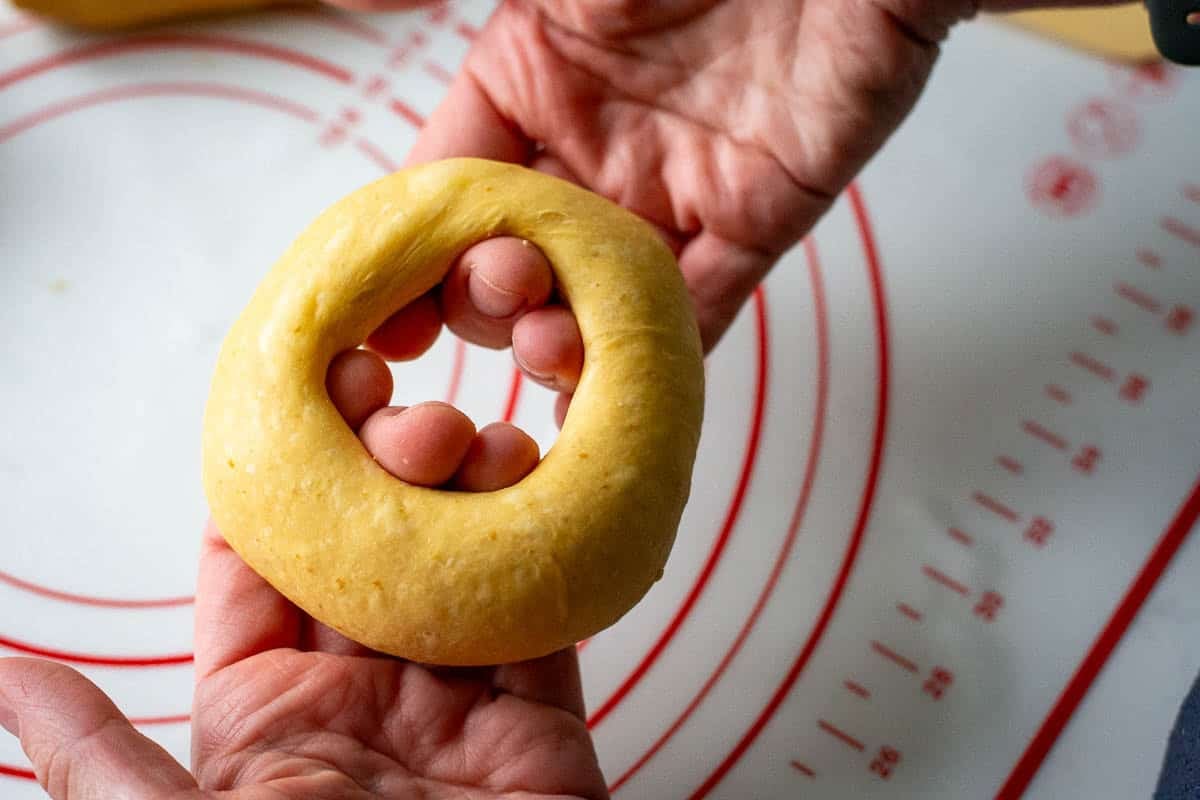
⭕ Keep the hole from disappearing. Stretch it wider than you think you need, to about 5cm. It will shrink back during both proofing and boiling. If it still closes up, you can widen it again gently with your finger just before the dough goes into the pot.
🌡️ Kitchen temperature shifts your timings, not your steps. In a warm kitchen the dough can reach a 60-70% rise closer to 8 hours; in a cooler one it can take the full 10. The second rise moves the same way: nearer 1½ hours at 23°C (73°F) or above, nearer 2½ hours at 21°C (70°F) or below. Go by how the dough looks and feels rather than the clock.
Topping Variations
The maple cinnamon and rosemary sea salt toppings in the recipe card are the two I'd make on repeat, but the same dough carries other flavours just as well if you want to keep the sweet-and-savoury split going, or fancy a change once pumpkin season winds down.
Sweet:
- Brown butter maple glaze, brushed on once the bagels are properly cool
- Chai-spiced sugar in place of the cinnamon mix, for something a bit more layered
- Honey walnut cream cheese swirl, added after baking rather than before
- Orange and pumpkin spice sugar, with a little orange zest rubbed into the sugar first
Savoury:
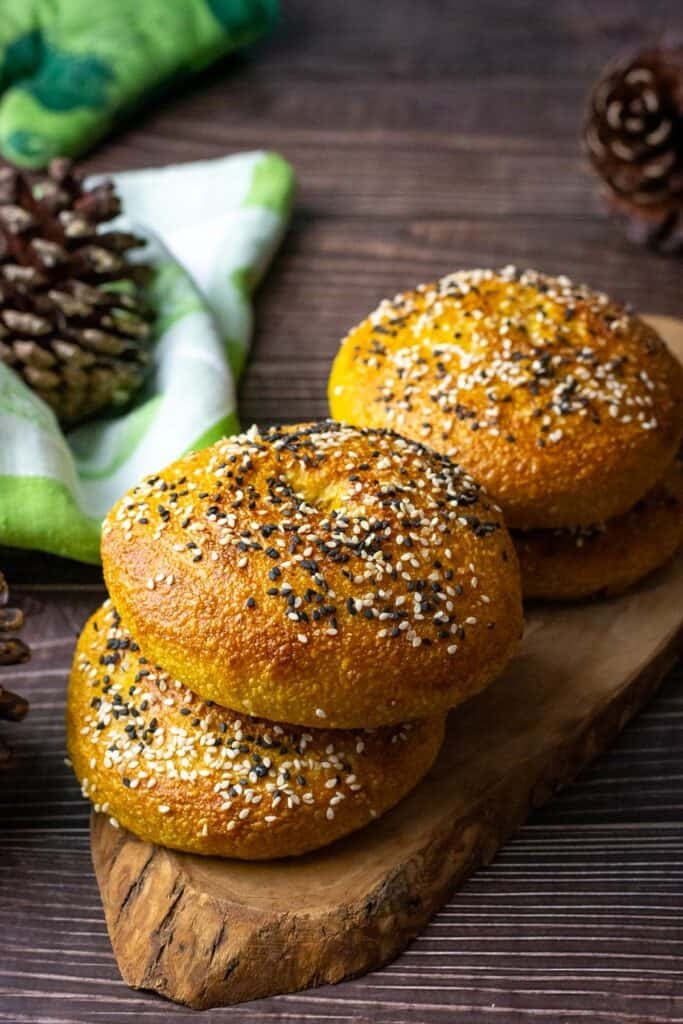
- Classic everything bagel seasoning
- Smoked paprika and cheddar
- Za'atar, which works particularly well here; my Sourdough Za'atar Focaccia uses the same blend if you want to see it in action elsewhere
- Garlic and herb
- Caramelised onion and thyme
Recipe FAQs
No, not for this recipe. Bagel dough needs the lift from an active starter to get a proper rise during bulk fermentation, and discard doesn't have enough live yeast activity to raise a stiff, low-hydration dough like this one. Save your discard for something like sourdough pumpkin scones instead, which don't rely on a big rise.
Yes. Roast it cut-side down until completely soft, scoop out the flesh and mash or blend until smooth, then leave it in a sieve or blot it with kitchen paper until it's as thick as tinned puree. Weigh it after roasting and draining, not before, because the 130g in the recipe is finished, drained puree. Roasted butternut squash works the same way.
Almost always one of two things: the dough didn't get a full bulk rise (look for a 60-70% increase in size, not just a bit of puffiness), or the bagels were sliced too soon after baking. Give them a full 15 minutes to cool on a wire rack before cutting in, since the crumb is still setting as they cool.
This is usually down to underproofed dough or water that's at too hard a boil. Keep the water at a steady boil rather than a violent one, and make sure the shaped bagels get their full proofing time before they go into the pot.
This recipe is already sized down from the dozen-plus most bagel recipes make, at six to eight. You can halve the ingredients for fewer still, though bulk fermentation and proofing times stay roughly the same, since they're driven by the dough's activity rather than the batch size.
No, you can do this by hand. It'll take a bit more effort since it's a firmer dough than a typical sourdough loaf, closer to 12-15 minutes of hand kneading.
No. Boiling is what gives bagels their characteristic chewy crust rather than a soft bread crust; it's not an optional finishing touch. The bicarbonate of soda in the water raises the pH at the surface of the dough, and that's the whole difference between a bagel and a very dense bread roll.
Serving Suggestions
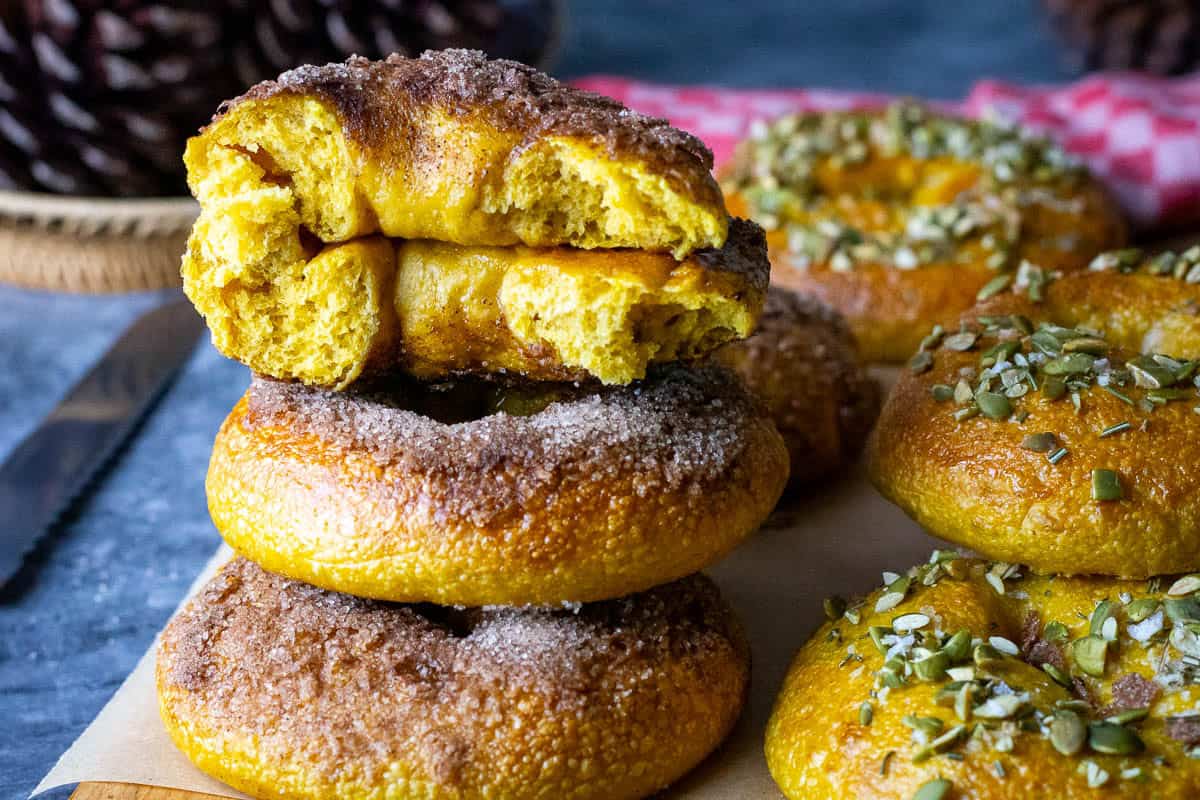
The maple ones are good with plain cream cheese and a drizzle of honey, or simply toasted with salted butter if you want it straightforward. Split one for a sweet breakfast sandwich with sliced banana or a smear of nut butter.
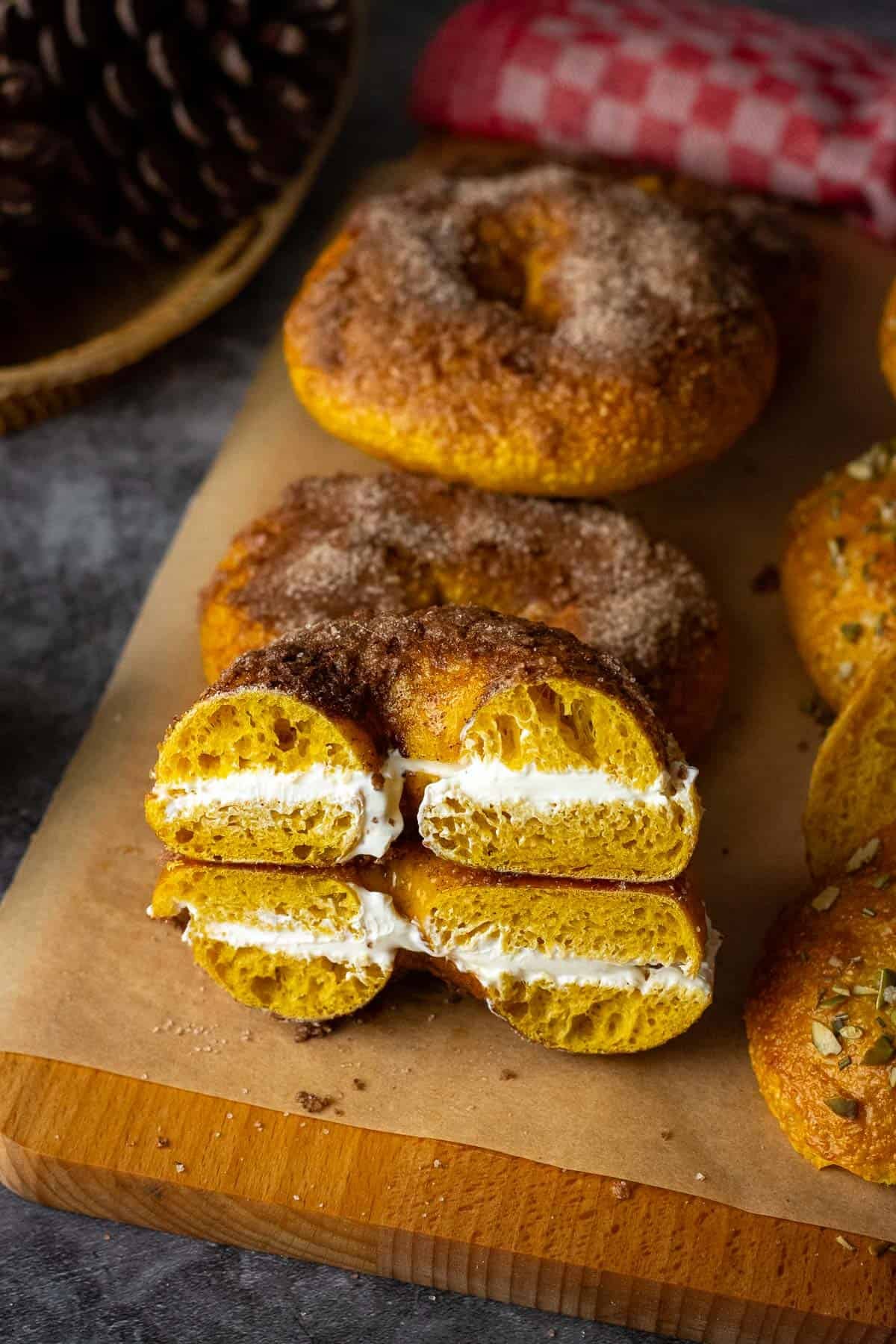
The rosemary and pumpkin seed ones lean savoury enough to hold a proper deli-style sandwich, or sit alongside soft-boiled eggs for breakfast. They're also a good base for a proper egg bagel; my Breakfast Egg Bagel With Avocado and Poached Egg Bagel With Asparagus And Pistou recipes both work well with this dough in place of a plain bagel.
Storage
These are best the day they're made. Or the day after. Keep them in an airtight container or bag at room temperature for up to two days.
To freeze, wrap the fully cooled, sliced bagels individually and freeze for up to two months, then toast straight from frozen; no need to defrost first. If you're making a batch ahead for a specific occasion and want a wet topping like the cream cheese swirl, freeze the bagels plain and add that after toasting instead of before freezing.
More Pumpkin Sourdough Recipes
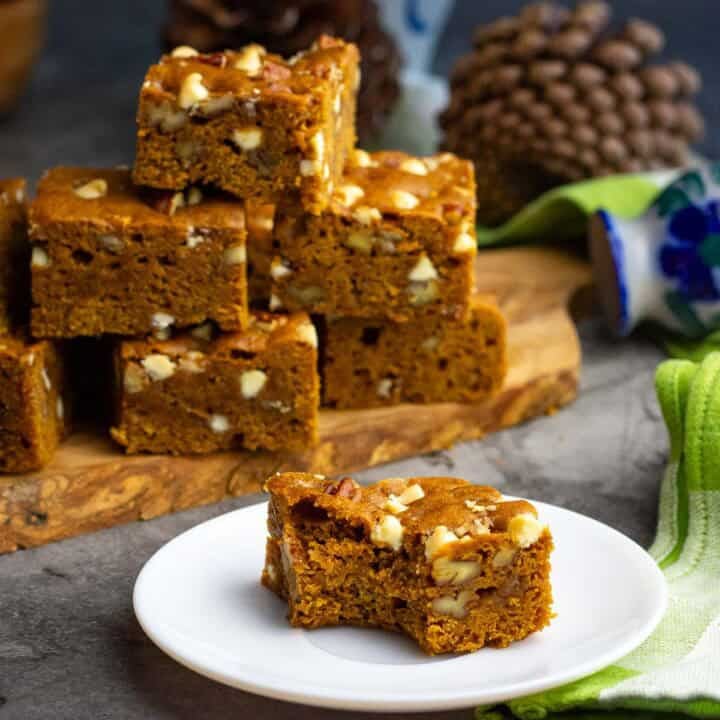
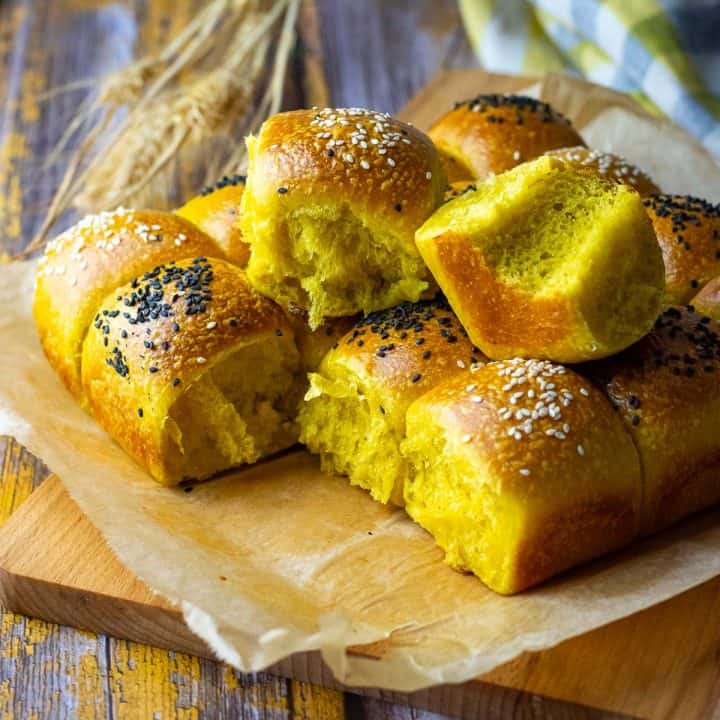
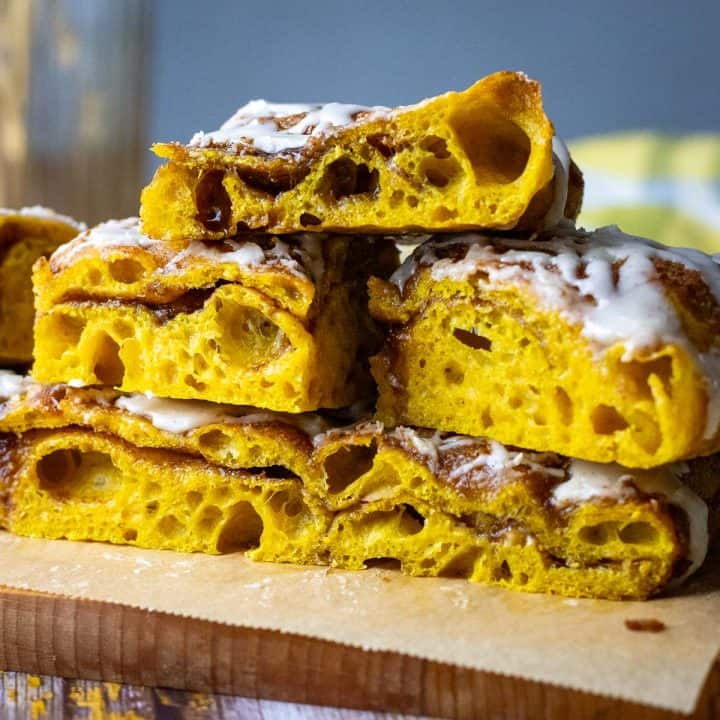
If pumpkin in sourdough has become a bit of an autumn habit for you (it has for me), there's more where this came from. My Sourdough Pumpkin Cinnamon Rolls With Cream Cheese Frosting use the same puree in a sweeter, more indulgent direction, and the Sourdough Pumpkin Scones With Maple Glaze are worth a go if you want something quicker with no overnight wait built in.
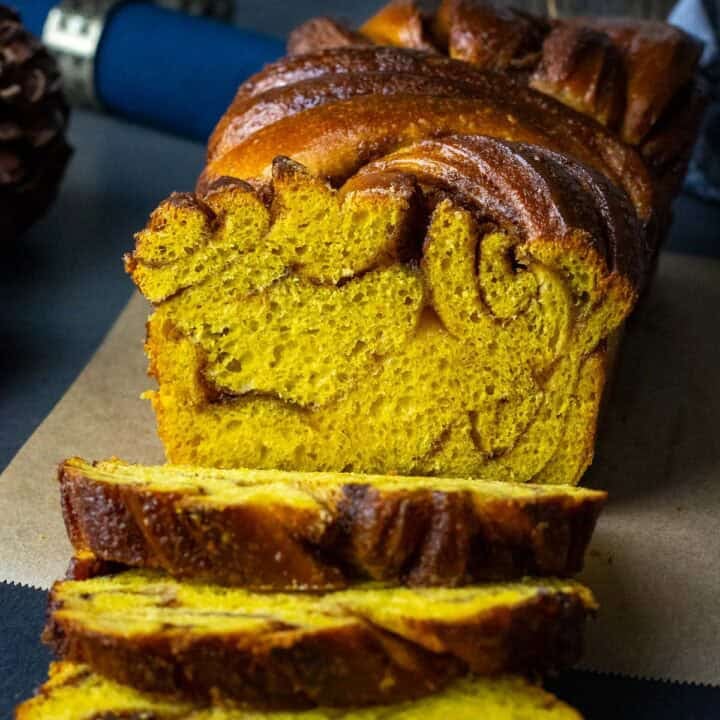
For a savoury option, my Sourdough Pretzel Bites use the same bicarbonate of soda boil in miniature. For more ways to use an active starter beyond a loaf, my Active Sourdough Starter Recipes hub has the full list.
LOVE BAKING SOURDOUGH WITH ME?
You can now add Somebody Feed Seb as a preferred source on Google. It only takes a tick box, and tells Google you'd like to see more of my recipes when relevant.

Sourdough Pumpkin Bagels (Sweet and Savoury Options)
Equipment
- Stand mixer fitted with dough hook (or knead by hand)
- Wide, deep pot for boiling
- Slotted Spoon
- Baking Trays
Ingredients
For the dough:
- 100 g active sourdough starter 100% hydration
- 450 g strong white bread flour plus extra for dusting
- 130 g pumpkin puree unsweetened, canned or homemade, well drained, see Notes
- 90 g cold water plus a splash more if needed
- 30 g soft light brown sugar
- 9 g (1½ tsp) fine sea salt
- 15 g (1 tbsp) neutral oil or melted butter
For the boil:
- 2 litres/ quarts water
- 1 tablespoon baking soda (bicarbonate of soda)
- 2 tablespoon soft light brown sugar or honey, or barley malt syrup
For the maple cinnamon sugar topping (enough for 3-4 bagels):
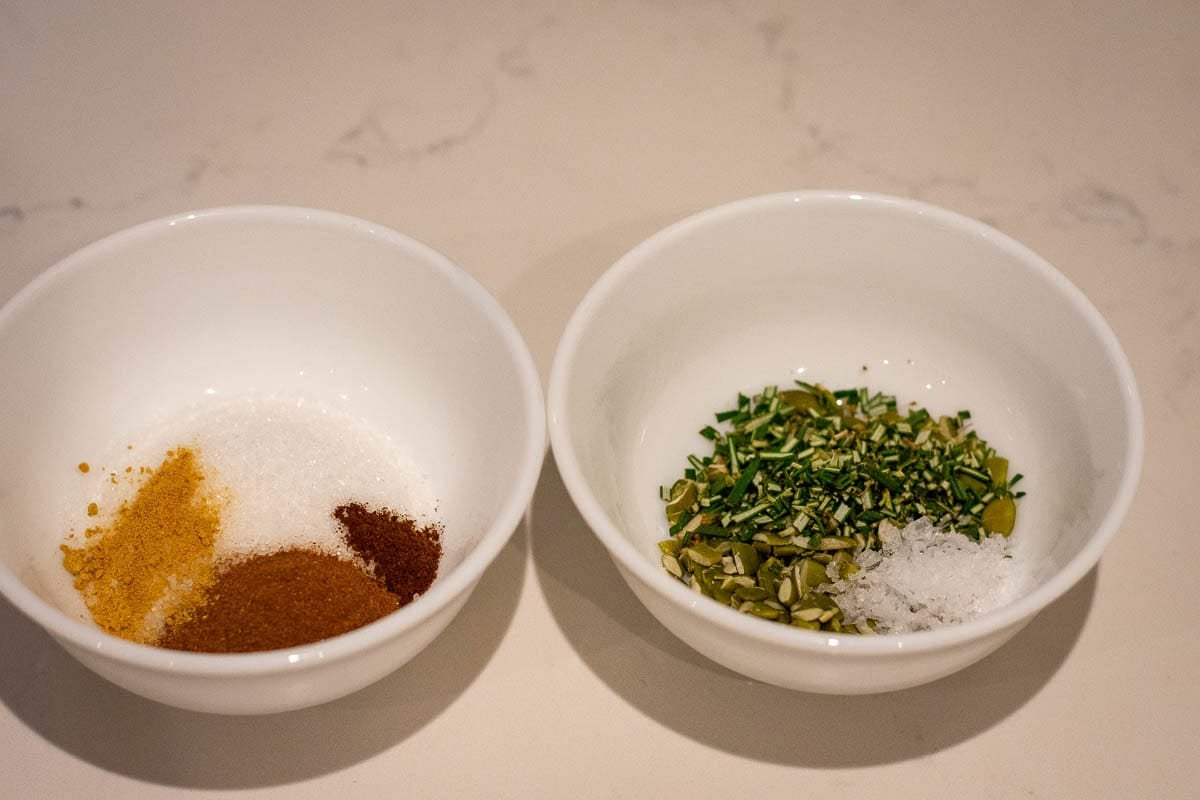
- 40 g granulated sugar
- 1½ teaspoon ground cinnamon
- ¼ teaspoon ground ginger
- small pinch ground cloves or nutmeg
- 1-2 tablespoon maple syrup for brushing
For the rosemary, sea salt and pumpkin seed topping (3-4 bagels):
- 1 small egg beaten
- 2 tablespoon pumpkin seeds pepitas, roughly chopped
- 1 teaspoon finely chopped fresh rosemary
- ½ teaspoon flaky sea salt
Instructions
DAY 1 (afternoon):
- Feed your sourdough starter in the afternoon, 4 to 6 hours before you plan to mix, so it's active, bubbly and roughly doubled.
- If your pumpkin puree looks watery, blot it with kitchen paper first. Canned brands vary a lot in moisture, and a wet puree will throw the dough off.
Mix The Dough:
- In the bowl of a stand mixer, combine the flour, brown sugar and salt. Add the starter, pumpkin puree, oil and 90g of the water. Mix on low speed for 5-7 minutes until it comes together.
- This will feel like a much stiffer dough than most sourdough recipes, and that's correct. Bagels are a low-hydration dough by design, it's what gives you the dense, chewy crumb rather than an open, holey one. It should be firm and only just tacky, not sticky. Add the reserved splash of water only if it genuinely won't come together.
- Knead on medium speed for 8-10 minutes until smooth and dense. It won't stretch as dramatically as a windowpane test on a wetter dough, but a small piece should stretch thin enough to see light through before tearing.
Bulk Fermentation:
- Put the dough in a lightly oiled bowl, cover it and leave it at room temperature for 8-10 hours, or until it has increased by about 60-70%. Mark the starting level with a rubber band or a piece of tape on the bowl so you can see the rise. It's a stiff dough and it takes a while, so don't expect it to look billowy. Don't put the dough in the fridge. The chill comes after shaping.
DAY 2:
Shaping:
- Divide the dough into 6 x 137 g or 8 x 10³g pieces. Shape each into a smooth, tight ball, then push a floured finger or thumb through the centre and gently stretch the hole to about 5 cm across. It will shrink back as the dough proofs and boils, so go a bit bigger than you think you need.
- Or use the rope method, if you prefer it: roll each portion into a 20 cm rope, wrap it around your hand with the ends overlapping by a few centimetres, then roll the seam against the counter to seal it closed.
Second Rise:
- Place the shaped bagels on a parchment-lined, lightly oiled tray. TIP: place each bagel on a separate square of parchment paper, so you can pick each one up individually later.
- Cover loosely and leave them at room temperature, 22-23°C (72-73°F), for 1½ to 2½ hours. They're ready when they look puffy and feel soft, and a floured finger pressed into one leaves a dent that fills back in slowly. They won't double. Start checking at 1½ hours, then every 15 minutes.
Chill:
- Cover the tray (a large reusable bag or lightly oiled cling film works) and put it in the fridge, at about 4°C (39°F), for 1-2 hours. This firms the bagels up so they hold their shape in the water and lift out of it cleanly.
Prepare Toppings:
- Mix the sugar and spices in a small bowl for the sweet topping. Mix the pumpkin seeds, rosemary and sea salt for the savoury topping.
Boiling:
- Preheat the oven 220°C (425°F). Line one or two baking trays with parchment.
- Bring the 2 litres of water to a rolling boil in a wide pot. Stir in the bicarbonate of soda and the brown sugar or malt syrup, it will fizz up, that's normal.
- Working in batches of 2-3 so you don't crowd the pot, boil the bagels for 30 seconds per side (up to 45 seconds a side if you want an even chewier crust). Lift out with a slotted spoon, let the excess water drain off, then place back on the lined tray.
Topping:
- Top the bagels while they're still tacky from boiling, this is what makes the topping stick without needing an extra egg wash step on the sweet ones.
- Sweet: brush the warm maple syrup over 3 bagels, then sprinkle the sugar mixture on generously and pat it in.
- Savoury: brush 3 bagels with the beaten egg, then scatter over the pepitas, rosemary and flaky salt, pressing gently so they hold on.
Baking:
- Bake for 15-16 minutes if you have 8 smaller ones, or 18-21 minutes if you have 6 larger ones, until deeply golden and the base sounds hollow when tapped. The sweet ones tend to colour a touch faster because of the sugar, so check them from the 15-minute mark and tent loosely with foil if they're getting ahead.
- Cool on a wire rack for at least 15 minutes before slicing, cut into them too soon and you'll get a gummy crumb instead of a chewy one.
Notes
Nutrition
Leave a Reply