
A stiff sourdough starter is a starter with far less water than your usual jar, so it feels like a ball of dough rather than a batter. Here on Somebody Feed Seb I only make one when a recipe needs it, usually an enriched dough that is already wet with milk and eggs. Below you'll find the exact ratios for converting a 100% hydration starter, a chart so you don't need a calculator, and how to swap it into recipes that call for a liquid starter.

Jump to:
As an Amazon Associate I earn from qualifying purchases, at no extra cost for you! Thank you!
Short Answers
- What it is: a starter at roughly 50 to 80% hydration, made by feeding your normal starter more flour than water
- Time: 4 to 8 hours at 22 to 27°C
- Best for: brioche, panettone, hot cross buns and other enriched doughs
- Good to know: the maths trips most people up because your starter already contains flour and water. The chart below does that sum for you.
What Is A Stiff Sourdough Starter?
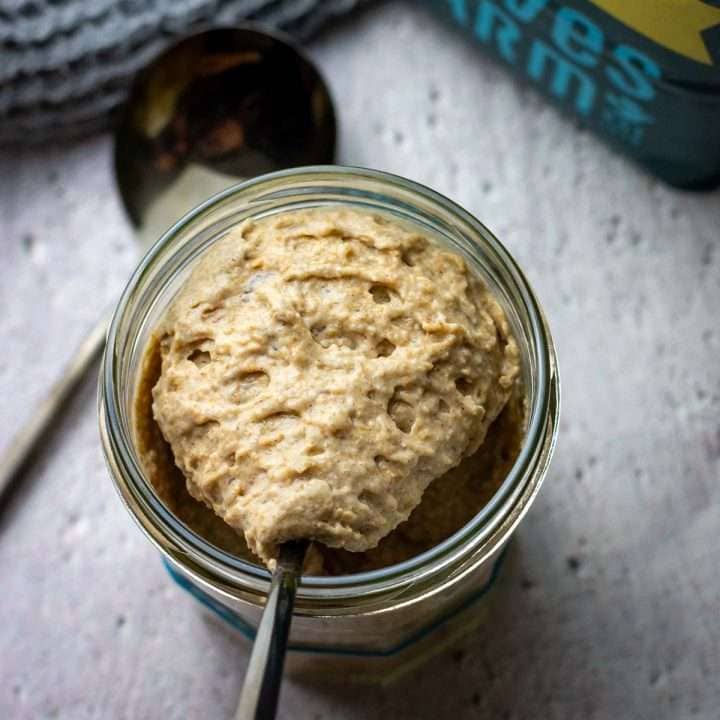
A stiff sourdough starter is a sourdough starter with a hydration below 100%, which gives it a dough-like texture you knead and shape rather than stir. Hydration is the weight of water divided by the weight of flour, so 100 g flour with 60 g water is 60% hydration. A regular starter fed equal weights of flour and water sits at 100%.
| Stiff starter | Liquid (100%) starter | |
|---|---|---|
| Hydration | 50 to 80% | 100% |
| Texture | Dough-like, kneadable | Pourable or thick batter |
| Rise | Slower | Faster |
| Added to dough | Broken up and kneaded in | Stirred in |
Technically anything below 100% counts as stiff. Most recipes use 80% or 60%, and some Italian ones go as low as 50%. Some bakers draw the line at 65% and below. The traditional Italian versions are called lievito madre or pasta madre.

Why Use a Stiff Sourdough Starter?
- Sourdough flavour without extra water. Lower hydration means the starter adds less liquid, which matters in doughs like brioche and cinnamon rolls that already contain milk or eggs.
- It suits a busy schedule. The slower rise works well for overnight bakes, and a stiff starter kept as stiff needs feeding less often.
- Easier to autolyse. Because the starter brings less water, you can put more water into the initial flour and water mix.
- More control over timing. Slower fermentation gives you a longer window, including cold proofing.
There are trade-offs. Your dough may need extra water to make up for what the starter isn't adding, and the tighter structure can give a denser crumb if sourdough hydration is not adjusted.
Stiff Sourdough Starter Ratio and Conversion Chart
To make a stiff starter, feed 50 g of 100% hydration starter with 100 g flour and the water in the chart below. For a 60% stiff starter that is 50 g water, which is a 1:2:1 feed by weight (starter : flour : water).
| Target hydration | Starter (100%) | Flour to add | Water to add | Total made |
|---|---|---|---|---|
| 80% | 50 g | 100 g | 75 g | 225 g |
| 70% | 50 g | 100 g | 62.5 g | 212.5 g |
| 60% | 50 g | 100 g | 50 g | 200 g |
| 50% | 50 g | 100 g | 37.5 g | 187.5 g |
The step people miss is counting the flour and water already inside your starter. Fifty grams of 100% starter is 25 g flour and 25 g water. The formula is:
Hydration % = (water in starter + water added) ÷ (flour in starter + flour added) × 100
For the 60% row: (25 + 50) ÷ (25 + 100) × 100 = 60%.
To make a different amount, scale every number in the row by the same amount. This only works when you start from a 100% hydration starter.
If you do keep a stiff starter at 50%, a 1:2:1 feed by weight holds it there. For example, 30 g stiff starter, 60 g flour and 30 g water.

How to Make a Stiff Sourdough Starter
Ingredients note: strong white bread flour or plain flour both work. Wholemeal and rye add flavour but absorb water differently, so your dough may feel drier or wetter than the chart suggests.
1. Weigh it out. Choose your hydration from the chart and weigh the starter, flour and water in grams.
2. Mix. Combine everything by hand, or on low speed in a stand mixer with a dough hook. You don't need to develop gluten.
3. Knead if mixing by hand. Use the heel of your hand until there are no dry pockets of flour left. It should come together as a dough, not a batter.


4. Shape and cover. Form a ball and put it in a clean wide-mouth jar or bowl. Cover loosely, with a damp cloth if your kitchen is dry.
5. Leave it to rise. Keep it at 22 to 27°C for 4 to 8 hours. A stiff starter rises more slowly than a liquid one, so give it the full time.


How to Tell When a Stiff Starter Is Ready
A stiff starter is ready when it has roughly doubled, is full of air pockets, smells pleasantly sour and is domed or just starting to cave in at the top. Don't rely on the float test. A stiff starter is dense and may not float even when it is ready.

How to Use a Stiff Sourdough Starter in Recipes
Break the starter into small pieces and knead it thoroughly into the dough. You can soften it in the recipe's water first, but skip that step if the recipe has an autolyse.
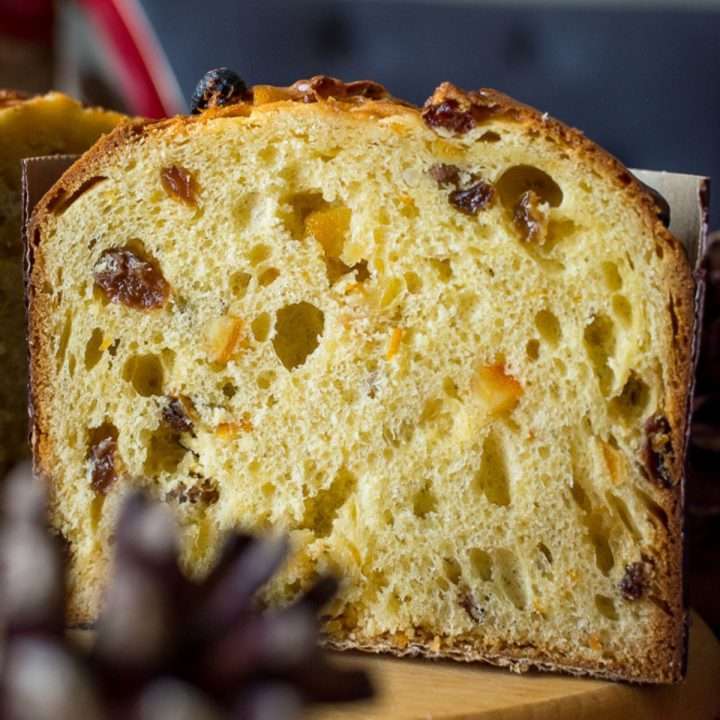
It's at home in enriched bakes such as Sourdough Brioche, Sourdough Panettone, Sourdough Hot Cross Buns and Sourdough Pane di Pasqua. Because it holds less water, you may need to add a little to the final dough, and the sourdough hydration guide helps you adjust.



A stiff starter is an excellent choice for recipes where dough structure and slower fermentation are key to flavour and texture development.
Swapping a stiff starter into a liquid starter recipe
A recipe that calls for 100 g of liquid starter contains 50 g flour and 50 g water. To keep both totals the same, use this:
| Your stiff starter | Use instead of 100 g liquid starter |
|---|---|
| 50% hydration | 75 g stiff starter + 25 g extra water |
| 60% hydration | 80 g stiff starter + 20 g extra water |
| 70% hydration | 85 g stiff starter + 15 g extra water |
| 80% hydration | 90 g stiff starter + 10 g extra water |
For a different amount, scale both numbers in proportion.
Storing and Feeding a Stiff Starter
I don't keep a stiff starter going. I make one from my regular starter when a recipe asks for it. If you want to keep one:
- Room temperature: if you bake every day or two, feed it every 24 hours at your chosen hydration.
- Fridge: store it in an airtight container and feed it weekly. Before baking, bring it to room temperature and feed it a couple of times to wake it up.

Tips
- ⚖️ Weigh everything. Flour and water measured in cups don't weigh the same, so the hydration maths falls apart.
- 🧮 Count the water in your starter. It is the most common conversion mistake. If your dough feels wrong, check this first.
- ⏱️ Give it the full time. Stiff starters rise more slowly than liquid ones, so judge by the look of it, not the clock.
- 🌡️ Mind the temperature. A cool kitchen pushes you towards the 8 hour end. Here are some ideas for keeping your starter warm.
- 🥣 Keep kneading. If dry flour pockets remain, you haven't finished mixing.
LOVE BAKING SOURDOUGH WITH ME?
You can now add Somebody Feed Seb as a preferred source on Google. It only takes a tick box, and tells Google you'd like to see more of my recipes when relevant.
Frequently Asked Questions
Not exactly. Lievito madre, also called pasta madre, is the traditional Italian version of a stiff starter, typically at around 50% hydration. Any starter below 100% hydration can be called stiff.
Not necessarily. Lower hydration nudges a starter towards acetic acid, the sharper, more vinegary acid, but how sour your bake tastes depends far more on how long and how warm you ferment, how ripe the starter is and how much wholemeal is in the mix. Used at its peak, a stiff starter usually gives a mild, rounded flavour, which suits enriched doughs. Let it go past its peak, or ferment for a long time in the cool, and it can taste tangier.
Yes, but adjust the water. For every 100 g of liquid starter, use 75 g of 50% stiff starter plus 25 g water, or 80 g of 60% stiff starter plus 20 g water. See the swap chart above for 70% and 80%.
Yes. Start with flour and less water, then feed it regularly until it becomes active. It may take longer than a liquid starter to get going.
More Sourdough Starter HELP
For sourdough bakers looking to dive deeper into the world of starters, explore more articles that cover everything from maintaining a stiff sourdough starter to mastering different types of sourdough techniques and understanding what condensation in a sourdough starter jar means.


Leave a Reply