
Your starter is bubbly but hasn't doubled. Or it's doubled but smells sharper than you'd like. Or the bubbles have gone small overnight for no reason you can find, and three different websites are telling you three different things about what that means. Learning how to tell if your sourdough starter is healthy isn't really about memorising one test. It's about reading all signals together- bubbles, smell and rise- and knowing what to do when they don't agree with each other.
Jump to:
As an Amazon Associate I earn from qualifying purchases, at no extra cost for you! Thank you!
I've kept a starter alive for years, and it took longer than I'd like to admit to stop chasing a single "healthy and ready to bake with" sign and start reading the whole jar instead. Once you know what each signal means on its own, and what it means in combination, you stop needing anyone else's chart. You trust what's in front of you.
And if you haven't got a starter going yet, How to Make a Sourdough Starter from Scratch will get you to this point first.
The Quick Read
BUBBLES: tell you fermentation is happening, not how far along it is
SMELL: tells you whether that fermentation is still balanced
RISE: tells you how much gas your starter has actually produced, which is the closest thing to a real verdict (but not the full picture)
THE VERDICT: no single signal is the whole story. Read all three before you decide to bake, wait, or feed again
Why three signals beat one
Most advice picks one test and treats it as gospel. The float test, or "has it doubled", or "does it smell right." The trouble is that bubbles, smell and rise are measuring three different things, and a starter can be doing well on one and lagging on another at the exact same moment.
- Bubbles are visible proof that yeast and bacteria are producing carbon dioxide.
- Smell tells you which organic acids are building up as they work, and in what balance.
- Rise is the practical result of all that gas either produced by both the wild yeast and the bacteria.
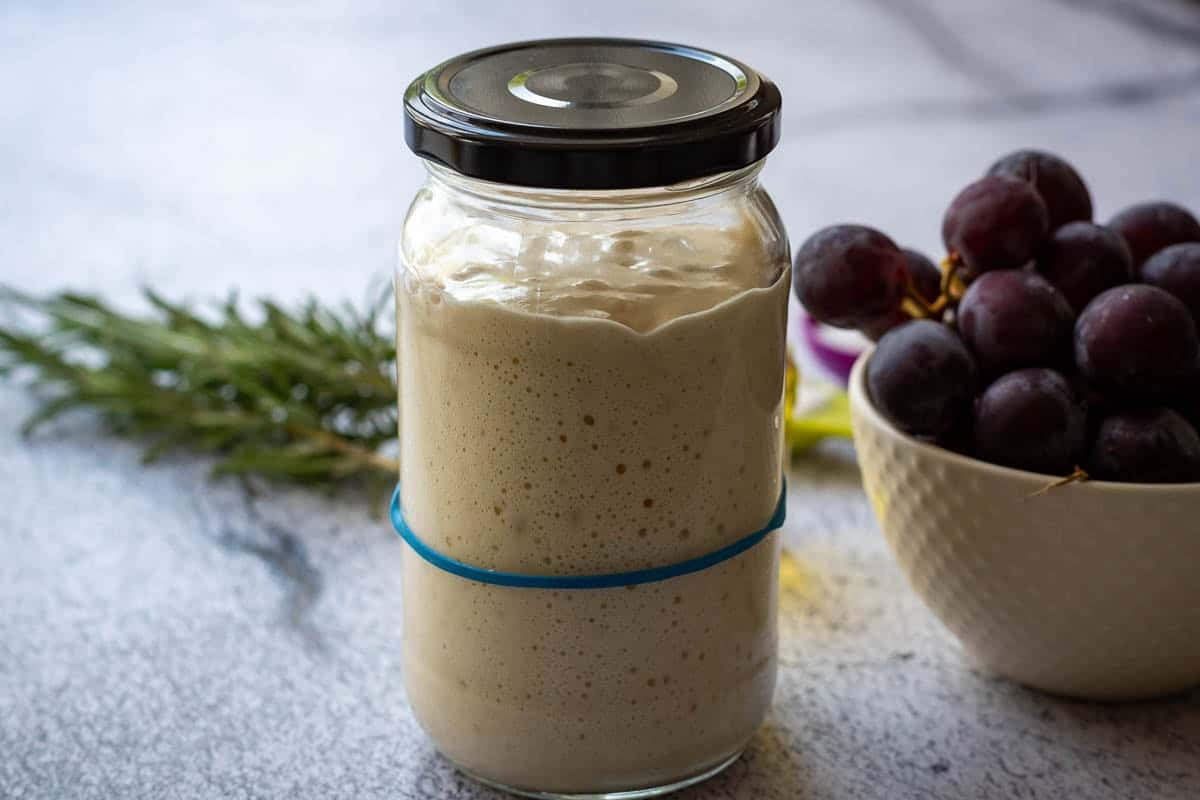
Your flour, your hydration, and your kitchen temperature all shift how each of these three signals looks and behaves, which is exactly why one universal number never quite fits every starter. Reading them together, rather than picking a favourite, is what actually tells you what's going on.
What bubbles are actually telling you
Bubbles are the easiest signal to obsess over because you can see them constantly, which is also why they're the easiest one to misread.
Big bubbles vs small bubbles, what's normal
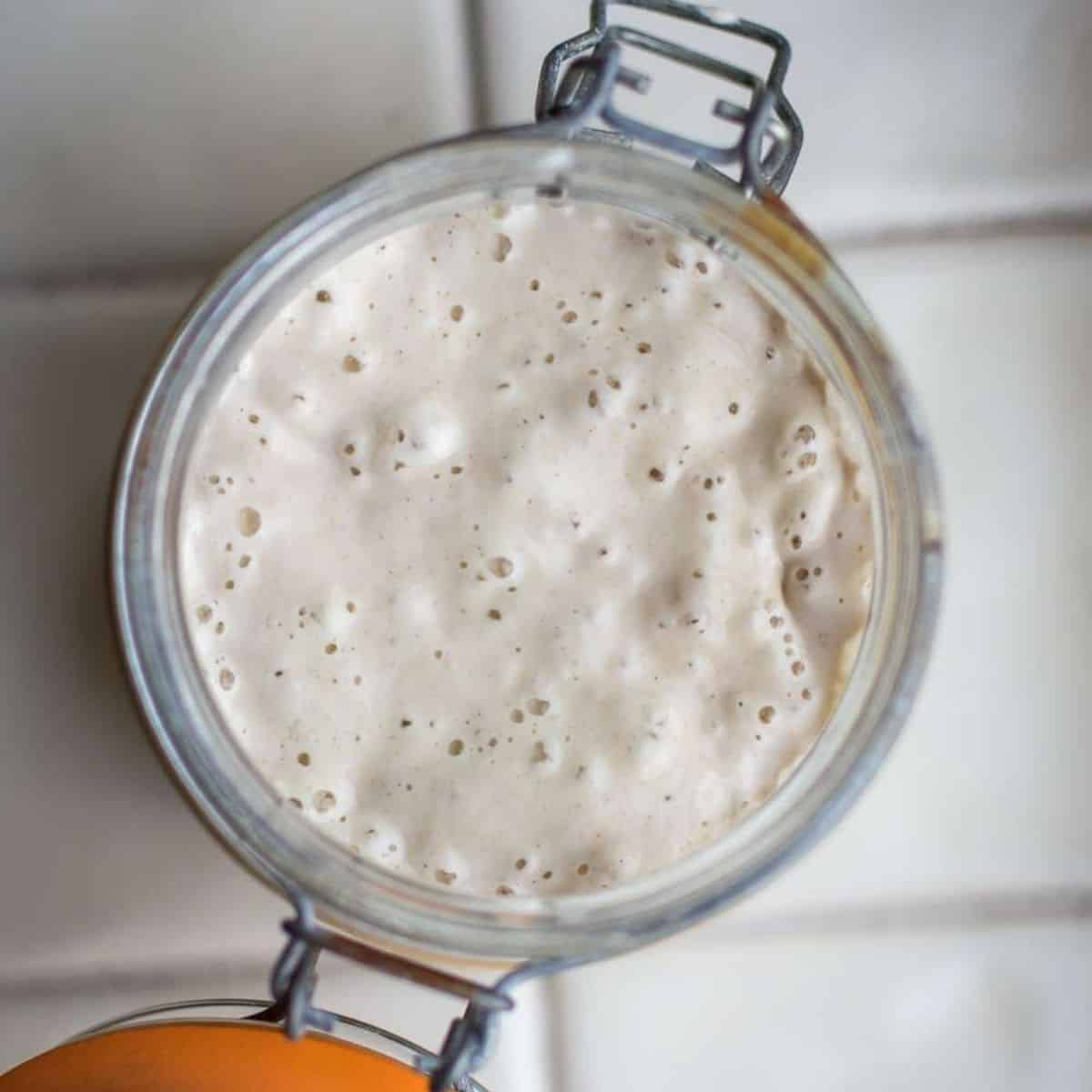
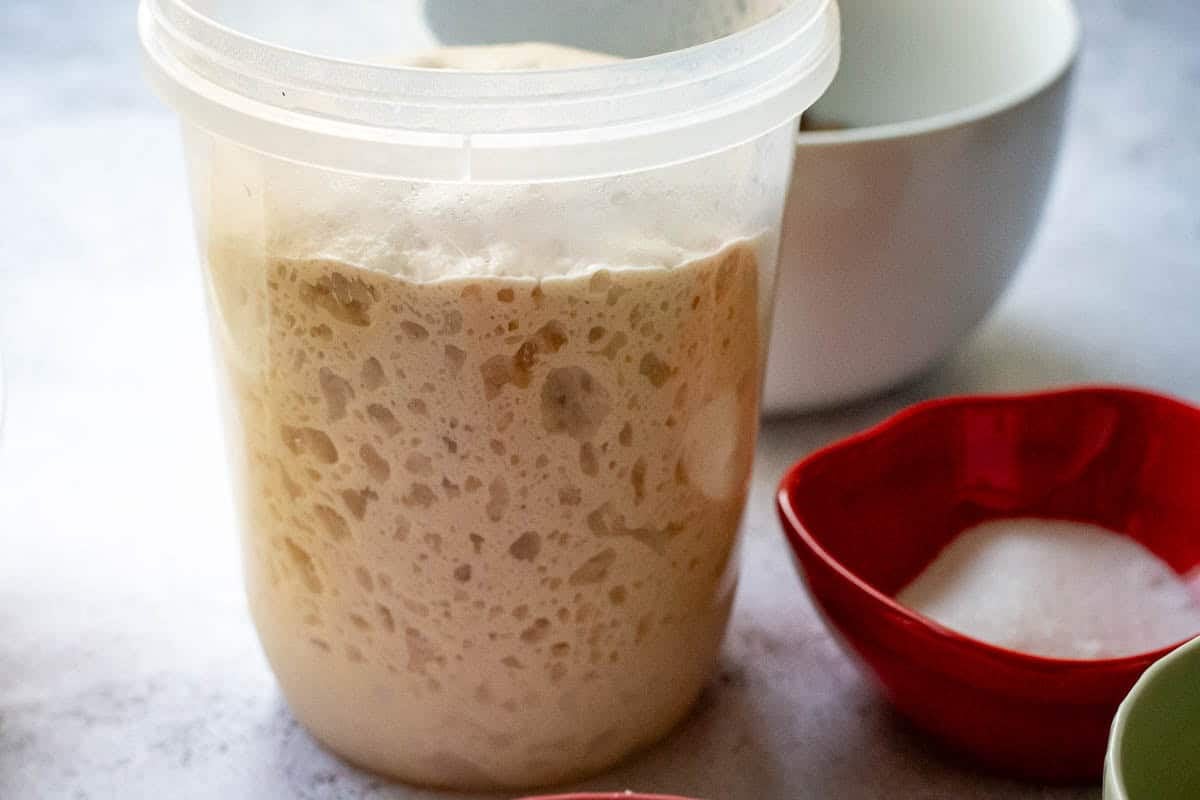
A starter with big, uneven bubbles and a honeycomb pattern through the middle is showing strong gluten-like structure trapping gas efficiently.
A starter with a fine, tight scatter of small bubbles isn't automatically weaker. It's often just fed flour with less extensibility, holding gas in smaller pockets instead.
Size alone isn't the health indicator people assume it is. If your bubbles have gone noticeably smaller than they used to be, Why Are The Bubbles So Small In My Sourdough Starter? walks through the specific causes.

Bubbly but not rising, what that combination means
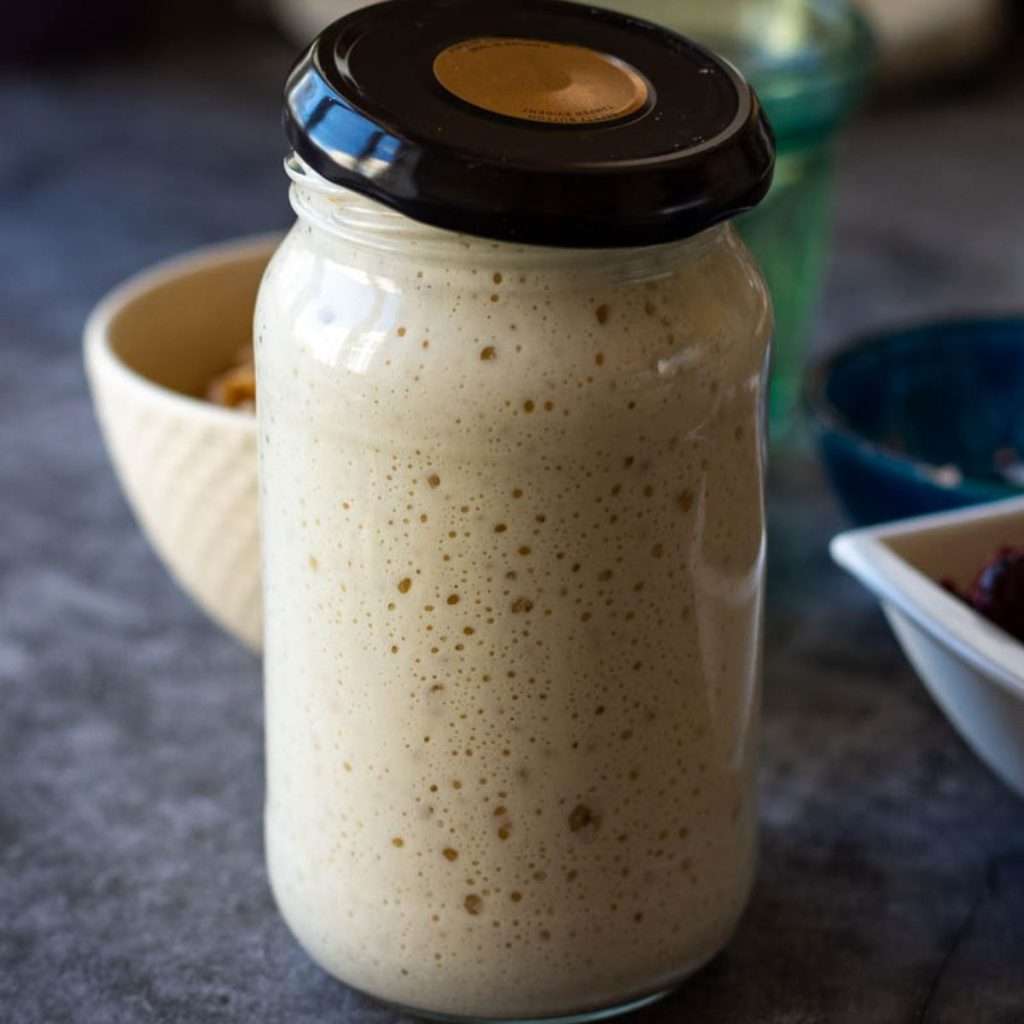
This is the combination that confuses beginners most. Lots of visible activity, but the overall volume barely moves. It usually means gas is being produced but the starter's structure isn't strong enough yet to hold it and rise as a whole, often because it's overdue a feed, too cool, or just not yet mature enough to build real strength.
This very often the case in the first 2-3 months of creating a new sourdough starter, or the first couple of feeds after your starter has been neglected for a while.
What smell is actually telling you
Smell is the signal people trust least, mostly because nobody explains what the different smells actually correspond to.
Tangy and yeasty, acetone, or genuinely off
A pleasantly tangy, slightly yeasty smell, somewhere between yoghurt and fresh bread dough, is exactly what you want. That's lactic acid doing its job.
A sharper, more vinegary edge means acetic acid is building up, usually because the starter has gone a bit longer between feeds or is fermenting in a cooler spot than usual, not a crisis. A smell closer to acetone or nail varnish remover means your starter is genuinely hungry and producing alcohol as a byproduct. It needs feeding, not worrying about.
The only smell that actually means start again is a smell that's gone properly unpleasant alongside visible pink, orange or fuzzy patches. That's mould, and no amount of extra feeds fixes it.
For the full breakdown of what's normal versus what isn't, What Should Sourdough Starter Smell Like? goes into more depth.
What rise (and fall) is actually telling you
Rise is the closest thing to an objective measurement you'll get, but only if you know what you're actually looking at.
What doubling should actually look like in the jar
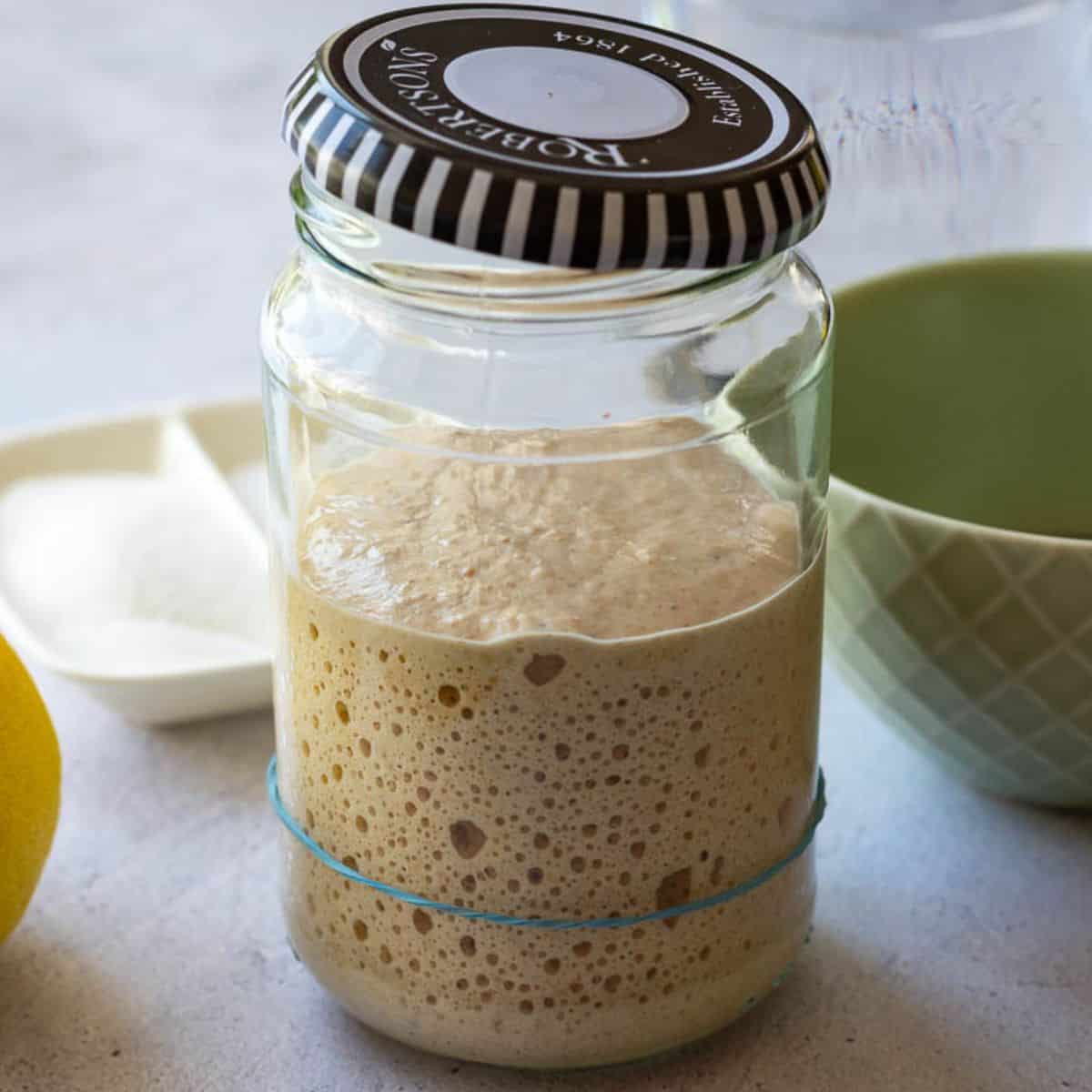
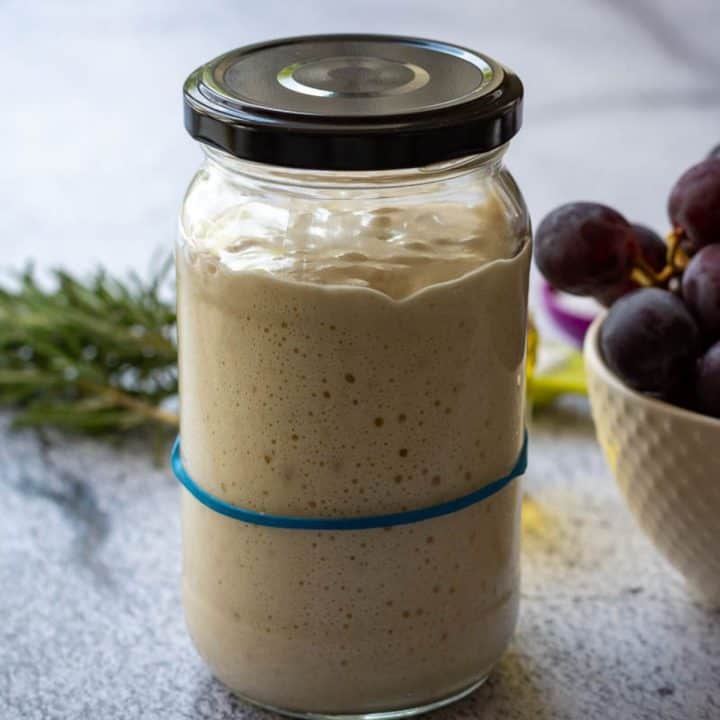
A starter at peak should have a domed, slightly convex top and visible honeycombing along the sides of the jar, not just "more than it was."
A wetter, higher-hydration starter tends to spread rather than dome, which can look like underperformance when it isn't. If your starter always seems flatter than the photos you've seen online, that's very likely a hydration difference or the water absorption capacity of the flour you fed your sourdough starter. Two quick fixes:
- Weigh your starter, water and flour instead of using cups and spoons.
- Choose flour that absorbs water well - it can be as simple as choosing flour with higher protein content.
It's worth reading Runny Sourdough Starter: What It Means & How To Fix It, before you change anything. A rubber band or marker line on the jar is genuinely more reliable than eyeballing it, especially early on.
If your starter isn't doubling within four hours
Four hours is a benchmark, not a rule, and it assumes a specific temperature and feeding ratio that your kitchen may not match. A cooler room can easily double that timeframe without anything being wrong.
Check Sourdough Starter Not Doubling Within 4 Hours? for the specific causes worth ruling out, and How To Know When Sourdough Starter Is Ready And At Its Peak for how to actually catch peak instead of guessing at a fixed time.

When the signals don't agree
Here's what to do when your three signals are pulling in different directions.
Bubbly, but not doubled. Gas is there, structure isn't holding it yet. Feed again and give it more time before you bake with it. The gas is likely the byproduct produced by bacteria, not wild yeast.
Doubled, but smelling sharp or sour. It's past peak and moving on or overly acidic. It needs more regular feeding, more nutritious flour or slightly higher flour-to-water ratio.
Small bubbles, but a strong, confident rise. This is fine. It usually comes down to flour type, not a weak starter. Bake with confidence.
A big domed rise that's already started to collapse. You've missed the window. If it just started deflating, bake with it. If it collapsed significantly, feed it again rather than baking with a starter that's already deflating, since a fallen starter has less lifting power left to give your dough.
My FREE Sourdough Starter Troubleshooting Guide walks through more of these combinations so you've got something to check against.

Does the float test actually help?
A bit, but it's had more credit than it deserves. Dropping a spoonful of starter into water and watching whether it floats is a rough physical demonstration that gas has been trapped inside it, nothing more precise than that.
A starter can float and still be past its best.
A stiffer or wholegrain starter can sink and still be perfectly ready to use, simply because it's denser to begin with.
Treat it as a fun beginner's demonstration that gas is present, not a verdict. Bubbles, smell and rise together will tell you far more than one spoonful in a glass of water ever will.
A few things that throw the signals off, and aren't a problem
A cold kitchen slows everything down across the board. It needs more time, not more flour, and a warmer spot helps far more than a stronger feed. How To Keep Sourdough Starter Warm During Winter covers practical ways to keep timings consistent through the colder months.

Flour type changes both smell and bubble pattern. Rye and other wholegrain flours ferment faster and smell noticeably more pungent than a starter fed on white bread flour. That's the flour doing what it does, not a starter behaving badly. Rye Sourdough Starter: How To Make It From Scratch has more on how rye specifically changes what you'll see.

Your feeding ratio matters more than most people realise. A very generous feed dilutes the starter and slows its rise right down, while feeding more often than it actually needs, out of nerves rather than necessity, can have a similar effect. How To Feed Sourdough Starter and Can You Overfeed Your Sourdough Starter? both cover this in more detail.
Day-to-day variation is genuinely normal, not a symptom. A couple of degrees difference in your kitchen, a slightly different batch of flour, even how recently you fed it before checking, all shift timing a little. A starter that's faster on a Tuesday and slower on a Friday isn't malfunctioning. It's responding to its environment, the same way any living culture does.
A dark liquid on top is hooch, and it simply means your starter is hungry, not dying. Hooch on Sourdough Starter: Why It Forms & How to Fix It explains why it happens if you want the full picture.

Condensation on the inside of the jar lid is a separate, entirely harmless thing, and Condensation In Sourdough Starter Jar: Is It Bad? will put your mind at rest if that's what's been worrying you.
LOVE BAKING SOURDOUGH WITH ME?
You can now add Somebody Feed Seb as a preferred source on Google. It only takes a tick box, and tells Google you'd like to see more of my recipes when relevant.
Not sure where to start if all of this feels like a lot at once? My FREE Sourdough Starter Troubleshooting Guide takes these same three signals and puts them in one place you can check against, so you're not relearning it from scratch every time your starter does something new. It's free, and it's exactly what I wish I'd had when I started.


Leave a Reply