
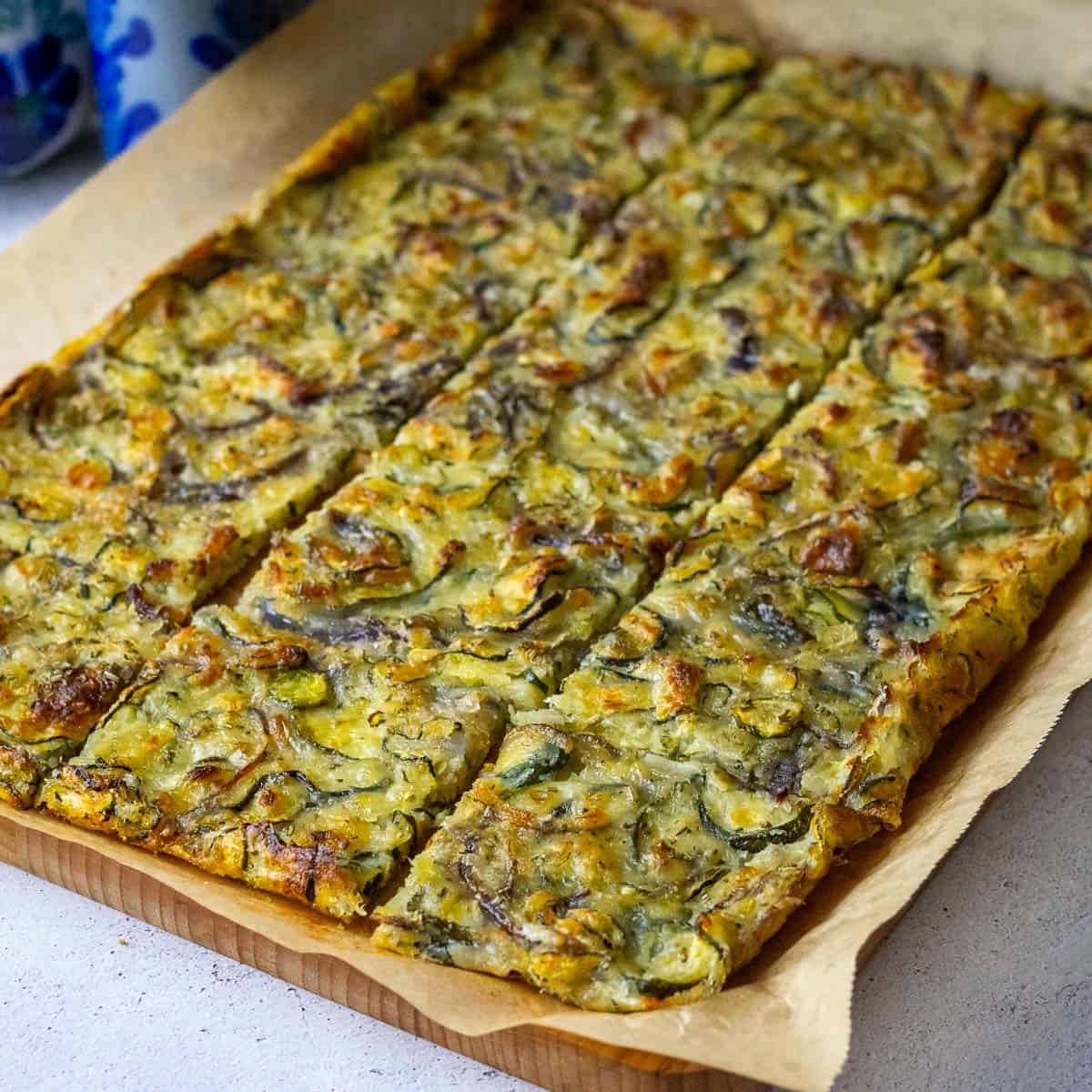
There's a point every summer where the courgette pile stops being charming and starts being a genuine problem. This courgette (zucchini) scarpaccia is where that glut meets the jar of sourdough discard you've been meaning to use, and both problems get solved in one tray.
Jump to:
As an Amazon Associate I earn from qualifying purchases, at no extra cost for you! Thank you!
It's a thin, savoury Tuscan tart, not a bread and not quite a fritter, pressed flat and baked until the top turns deep gold and properly crisp. The one thing almost nobody explains properly is that a soggy middle is entirely avoidable. Drain the courgette properly and this comes out crisp every time.

Recipe Highlights
TASTE: Savoury, herby, with a tang from the discard running through it
NO WASTE: 100g discard and a full courgette glut, gone in one tray
NATURALLY VEGAN: No eggs, no dairy, no compromise on crunch

What Is Scarpaccia?
Scarpaccia roughly translates to "old shoe" in Italian, which tells you everything about its farmhouse origins. It's a genuinely authentic Tuscan dish, though not the kind that turns up on a restaurant tasting menu. Historically, this was poor man's food: a way to deal with whatever courgette a garden or allotment had produced far too much of, pressed thin and baked because there wasn't much else in the larder either.
It's not flashy, and it's not the dish people rave about online. It's just a properly good, no-nonsense way to get through a courgette glut, which is exactly why it's earned a place in this kitchen.
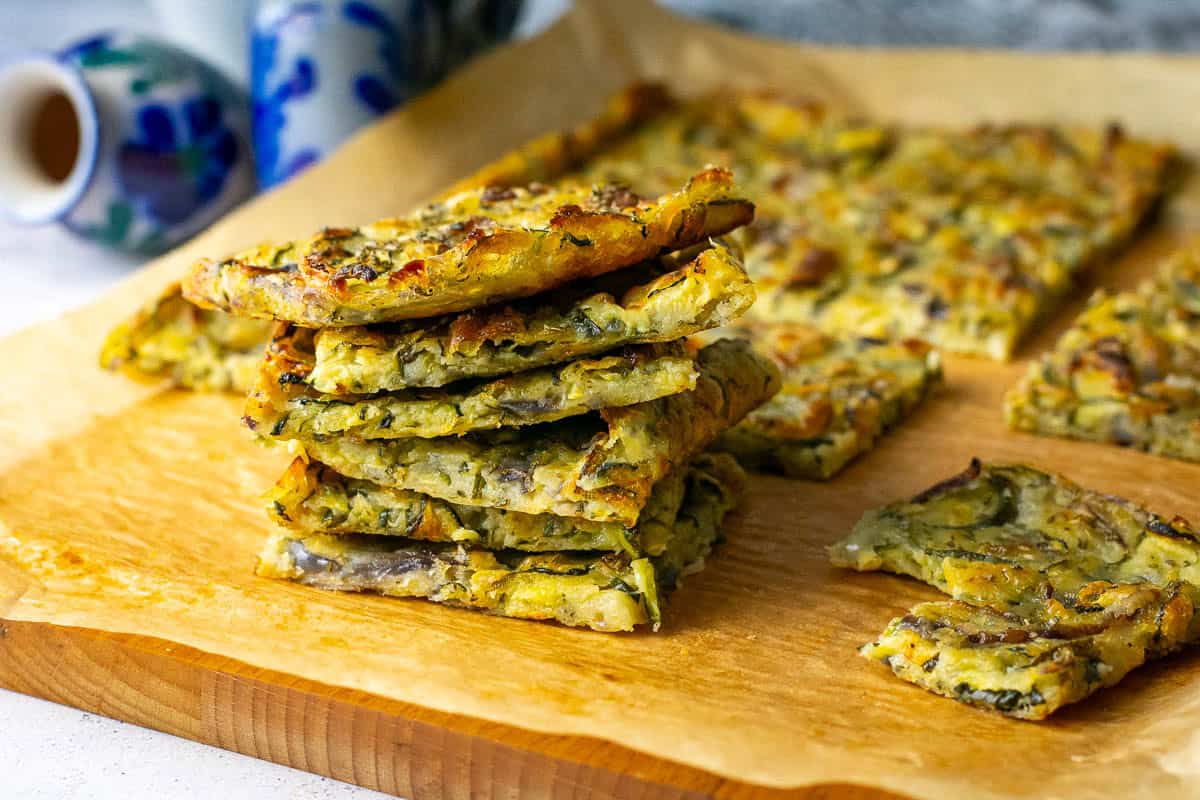
If you already make my Sourdough Courgette Fritters, think of scarpaccia as the oven version. Same courgette-and-discard pairing, no standing over a frying pan.
Why Sourdough Discard Works Here
Sourdough discard is just flour and water that have already been mixed together, which means it does two jobs at once in this batter. It thickens the mixture the way extra flour would, and it adds a tang that plain courgette and cornmeal don't have on their own.
Unfed discard keeps that tang mild. Discard that's sat a few days in the fridge pushes it further, into a proper background sourness rather than a faint one. If you're new to keeping a jar of it around, my Sourdough Discard 101 covers how it changes over time and what else to do with it.
Ingredient Notes
- Courgette (Zucchini): go for firm, small-to-medium courgette rather than a giant, marrow-sized one. Overgrown courgette holds more water and more seeds, both of which work against the drain-and-press step doing its job properly.
- Sourdough starter: fed or unfed both work here, as long as it's 100% hydration (equal parts flour and water by weight), which is what the quantities below are built around. Older discard gives more tang.
- Cornmeal or polenta: either works. Fine cornmeal or polenta gives a smoother crumb under the crisp top, coarse polenta gives more texture. Both are fine, it's a preference call.
- The oil split: most goes into the batter, a little gets drizzled over the top just before baking. Brushing it on top doesn't work at that stage, the batter's too loose, so it gets drizzled instead.
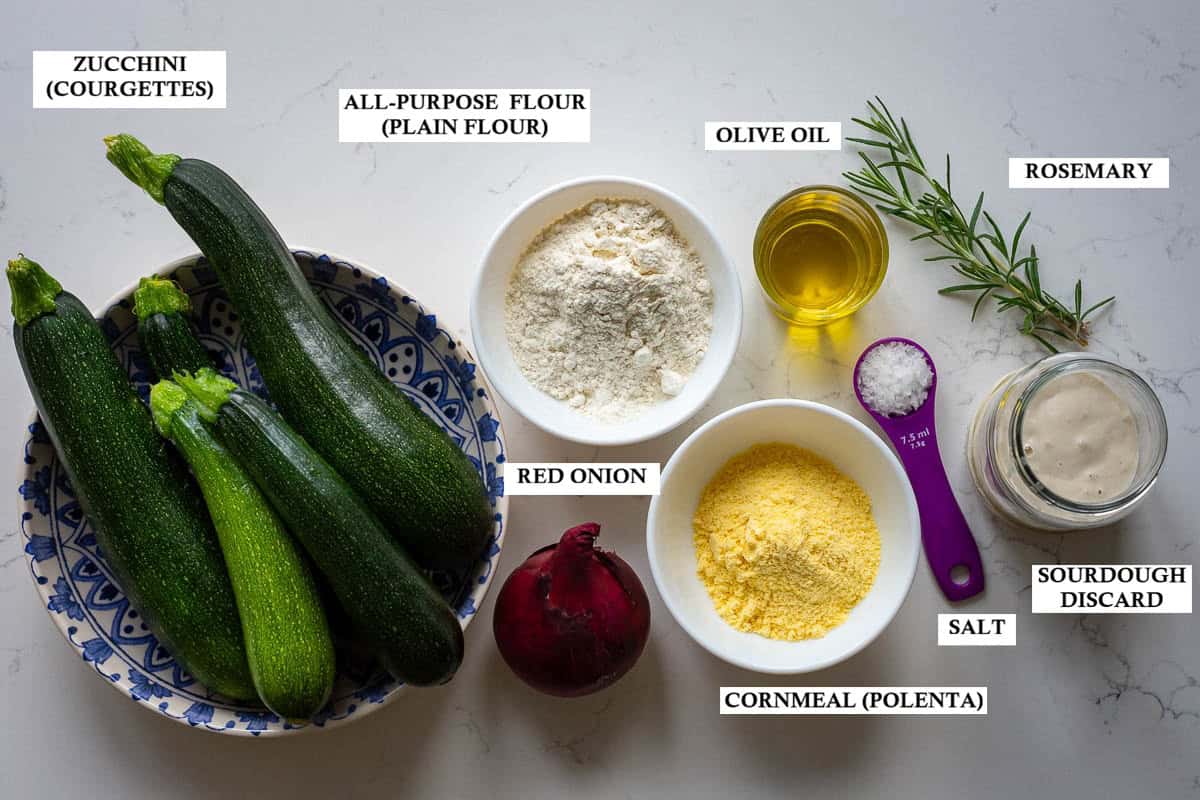
Find the full ingredient quantities and instructions in the recipe card below.
Tips for Crispy, Not Soggy, Scarpaccia
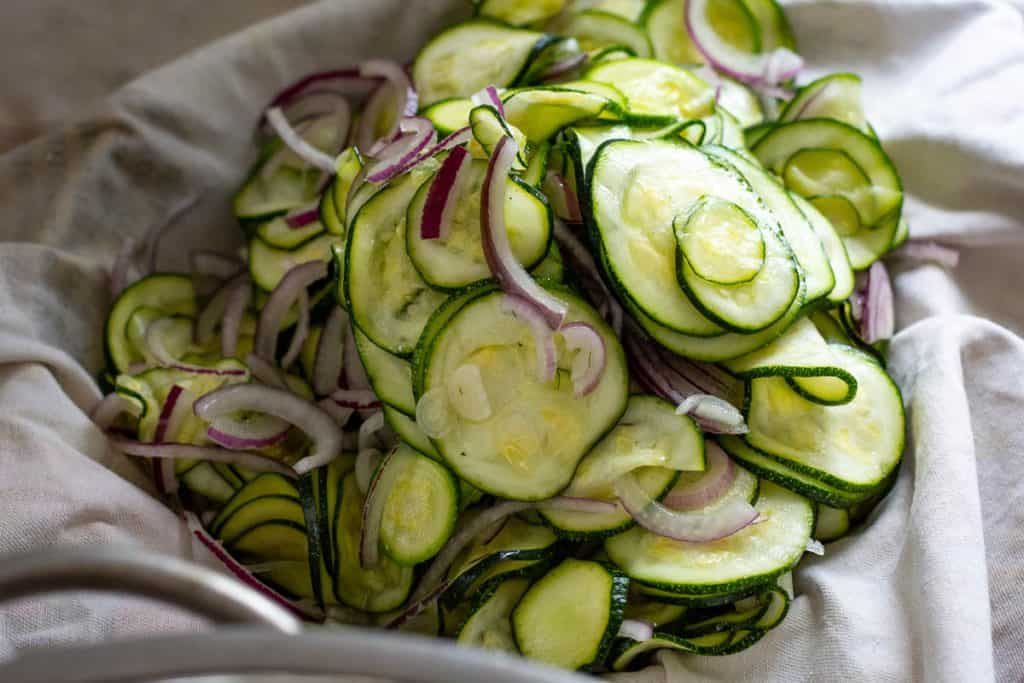
💧 Squeeze harder than feels reasonable. Once you think you've got all the liquid out, wring the tea towel again. There's almost always another tablespoon hiding in there, and that's the tablespoon that decides crisp versus soggy.
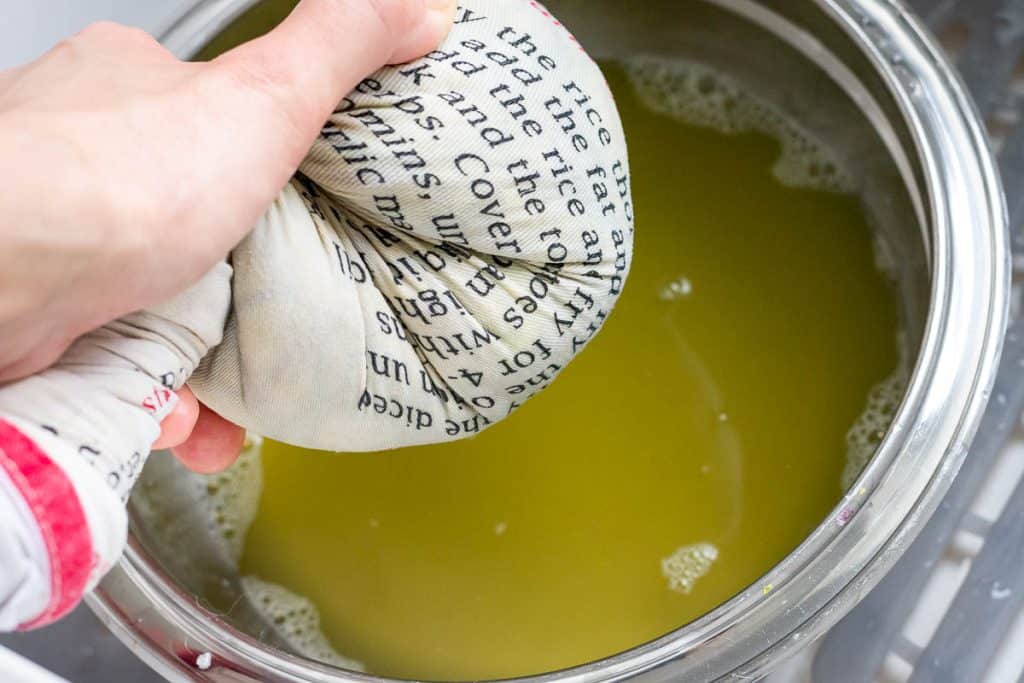
👀 Wait for deep gold, not just set. A scarpaccia that looks pale and just-cooked will taste undercooked too. Give it the full bake time and look for genuinely deep golden colour across the whole top, not just the edges.
🔪 Let it rest before cutting. Thirty minutes out of the oven isn't optional. Cut into it hot and the structure hasn't firmed up yet, so the slices fall apart instead of holding their shape.
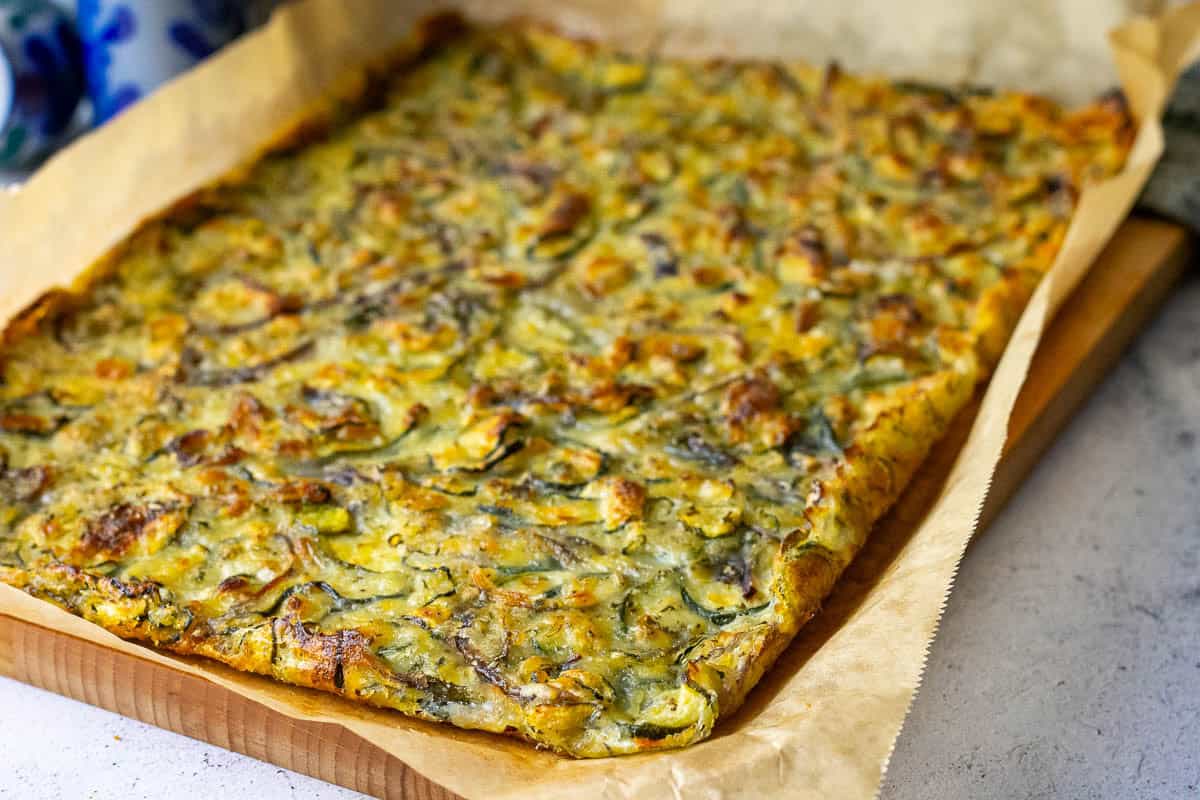
🫒 Don't skip the top drizzle of oil. It's what gets that final layer properly crisp rather than just dry.
Recipe FAQs
Yes. Active starter will work in the same quantity by weight as the discard, and the batter will behave the same way since the rise here comes from the batter setting in the oven, not from fermentation. The main difference is flavour: active starter that's been recently fed tends to taste milder than discard that's had a few days to sour.
Almost always an under-drained courgette. Courgette is mostly water, and if it isn't properly salted, weighted and squeezed dry before going into the batter, that water has nowhere to go but into the tart as it bakes. Give the courgette the full hour under weight, and squeeze harder than feels necessary once you think you're done.
Yes, a gluten-free plain flour blend swaps in cup for cup without changing the method or the timings. The batter is thin and loose to start with, so it isn't relying on gluten development the way a bread would.
It works well as a starter or light lunch with a simple green salad, alongside cured meats and cheese on a sharing board, or cut into smaller squares as a snack with drinks. It's substantial enough to hold its own without much else on the plate.
Serving Suggestions
We've taken to serving this instead of sourdough Yorkshire puddings alongside a summer roast chicken, and it earns its place. It's substantial enough to do the same job on the plate, but it's cool, herby and light in a way that suits a roast in warm weather far better than a stodgy pudding does. It's a proper summer fix for an otherwise wintery meal.
Cut into smaller squares, it also works well on a sharing board with cured meats and cheese, or as a starter with a simple green salad.
Storage and Reheating
Keeps in the fridge for up to a week, stored in an airtight container.
Reheat in an air fryer, dry frying pan or under the grill for a few minutes to bring the crisp top back. The microwave works in a pinch, but it goes soft and a bit sad, worth avoiding if you can wait the extra few minutes.
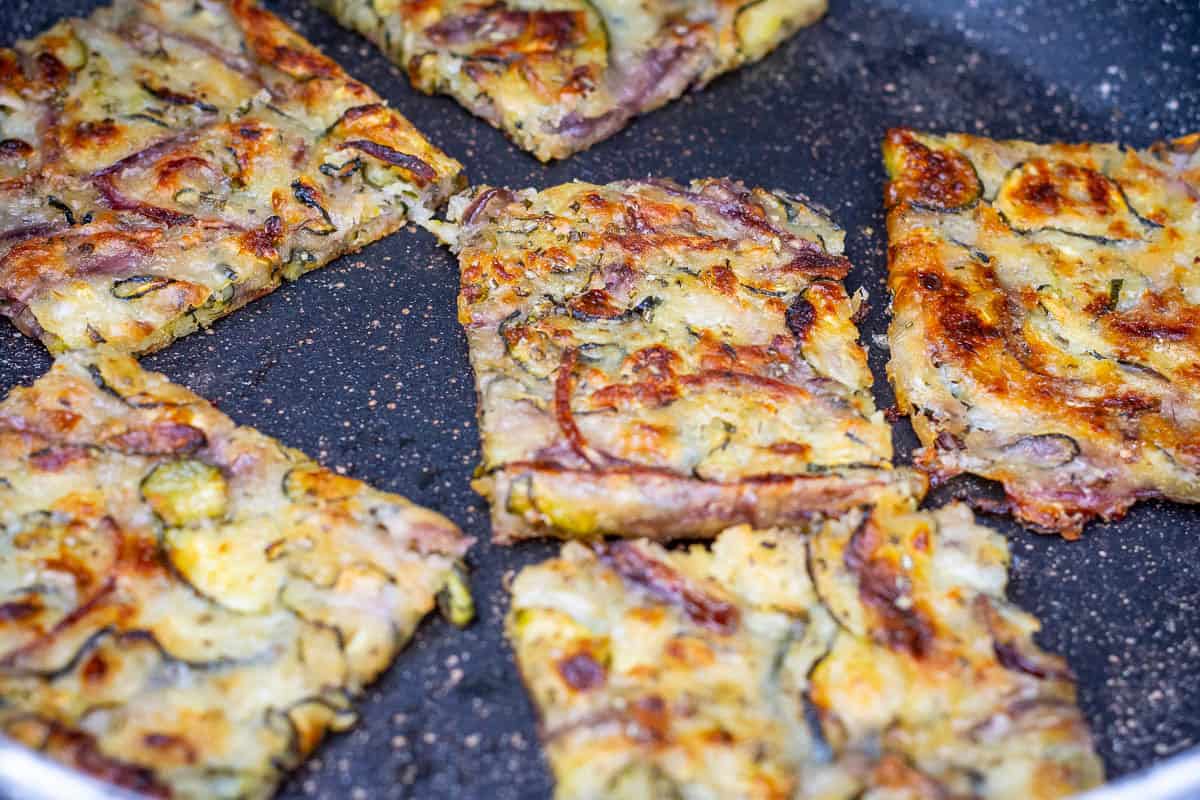
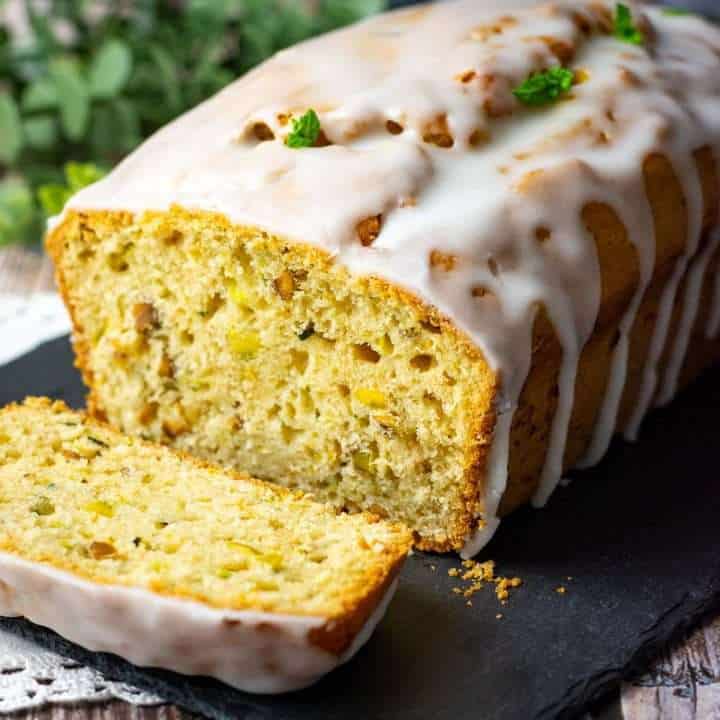
More Sourdough recipes With Courgettes (Zucchini)



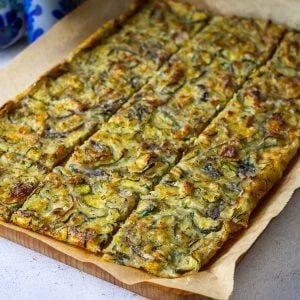
Sourdough Courgette (Zucchini) Scarpaccia
Equipment
- Large Collander
- Clean Kitchen Towel or Cheesecloth
- 35 x 25 cm (14 x 10 inch) baking tray/ sheet ideally with a rim
Ingredients
- 800 g (1.75 lb) courgette (zucchini) very thinly sliced
- 1 red onion approx. 120g, very finely sliced
- 100 g (~½ cup) active or unfed sourdough discard 100% hydration
- 70 g (~½ cup) plain flour (all-purpose flour)
- 40 g (¼ cup) fine cornmeal or polenta plus extra for sprinkling
- 40 ml (3 tablespoon) olive oil divided (30ml for the batter, 10ml for the tray and top)
- 160-170 ml (⅔ cup) drained courgette liquid from step 1
- 1½ tablespoon fresh rosemary finely chopped
- ¾ teaspoon flaky sea salt plus a little extra for sprinkling
Instructions
- Salt and drain the veg. Very finely slice the courgette and onion (a mandoline makes this much faster than a knife). Toss with salt, tip into a colander set over a bowl, and weigh down with something heavy. Leave for 1-2 hours. Squeeze out as much extra liquid as you can in a clean tea towel - it's what stops the tart being soggy in the middle. Reserve the drained liquid.
- Heat the oven. 200°C / 425°F. Line a 35 x 25 cm (14 x 10 inch) tray with parchment paper.
- Make the batter. In a bowl, whisk the sourdough discard with the 170ml drained courgette liquid and 30ml of the olive oil until smooth. Add the flour and cornmeal and mix to a loose, pourable batter - think thick pancake batter, not dough.
- Fold everything together. Add the drained courgette, onion, and half the rosemary to the batter. Mix until everything is coated.
- Prepare the tray. Brush the lined baking tray with a little of the remaining olive oil, then sprinkle over some polenta.
- Spread it thin. Tip the mixture onto the tray and press it down firmly and evenly with a spatula, or lay a sheet of baking paper on top and press with your hands. You want it thin.
- Finish and bake. Drizzle the last of the olive oil over the top (it's too loose to brush at this stage), then scatter over the remaining rosemary and the sea salt. Bake for 35-40 minutes, until deep golden and crisp on top and at the edges.
- Cool before cutting. Leave to cool for 30 minutes before slicing into squares. It cuts much more cleanly once it's had that rest. Serve at room temperature.
Nutrition

Leave a Reply