
If you've made my cheddar and spring onion sourdough courgette muffins, think of this as their more grown-up cousin. Same discard, same grated courgette, an entirely different mood: black olives, sun-dried tomato and parmesan instead of cheddar and spring onion, sliced thick enough to actually sit on a plate. This savoury sourdough courgette loaf (or Sourdough Zucchini Bread) is built to stay moist right through the centre so every slice pulls its weight.

Jump to:
As an Amazon Associate I earn from qualifying purchases, at no extra cost for you! Thank you!

Recipe Highlights
TASTE: Tangy, briny and herby, with a parmesan crust worth fighting over
SERVE WITH: A bowl of summer soup, a cheeseboard, or nothing at all
WHAT'S SPECIAL: Sourdough discard doing Mediterranean flavours instead of sugar and spice
SEB'S RATING: Ate more bread than the main dish it was accompanying

If you've only ever used sourdough discard in sweet bakes, this is where it gets to do something braver, playing off brine and salt instead of sugar.
Why Sourdough Discard Works So Well Against Olives and Sun-Dried Tomato
Discard's tang does the same job here as it does against buttermilk in the muffins: it adds a background sourness that makes richer flavours taste balanced rather than heavy. Against olives and sun-dried tomato, both already sharp and concentrated, that tang reads as depth instead of competing with them.
If you're new to keeping discard around, my Sourdough Discard 101 covers how it changes over time and when to best use it in quick sourdough bakes.
Ingredient Notes
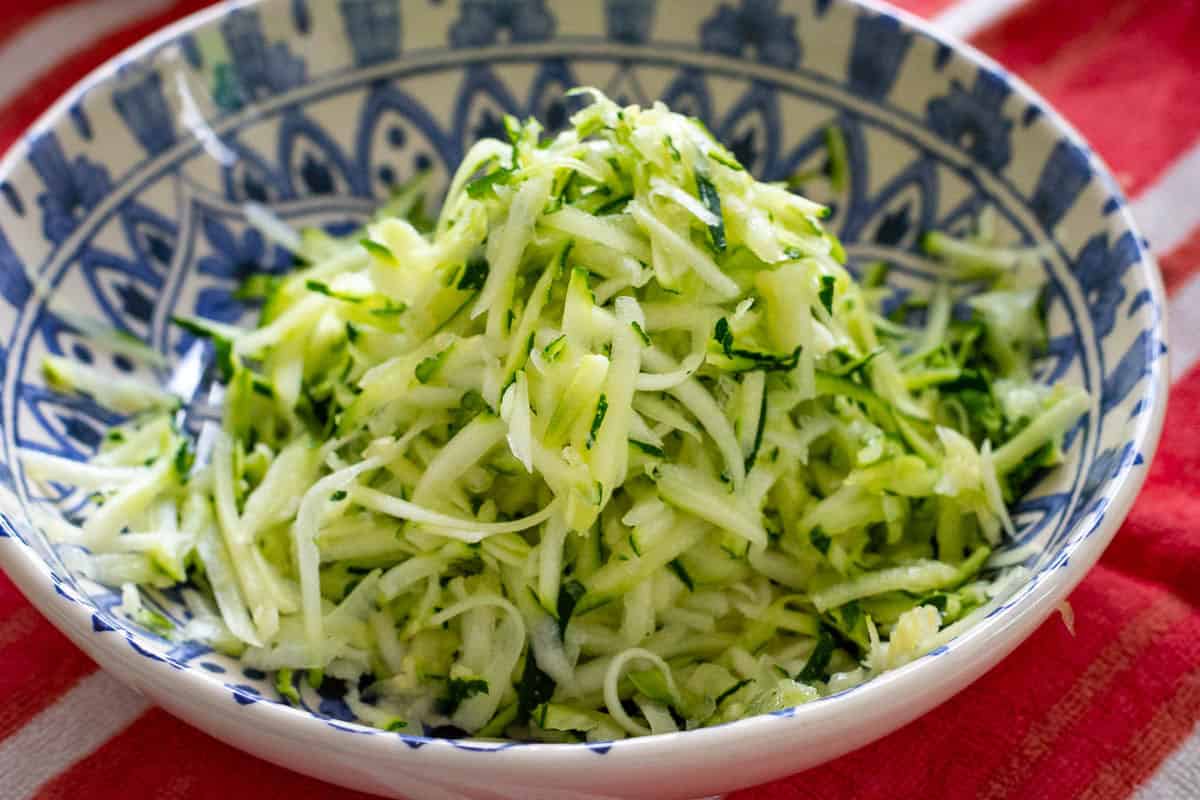
- Courgette: press it, don't wring it, same rule as the sourdough courgette muffins this loaf grew out of. A firm press on kitchen paper removes the unpredictable surface water without stripping out the moisture the recipe is counting on.
- Parmesan: parmesan is a drier cheese, around 30% moisture against cheddar's 36%, so the batter carries a little more oil to make up for it. Swap back to cheddar if you'd rather, but the bake timing and moisture levels below are built around parmesan.
- Olives and sun-dried tomatoes: pat both dry before folding through. Leftover brine or oil on the surface makes the crumb greasy rather than moist, which is the difference between a clean slice and a soggy one.
- Garlic and oregano: the backbone that keeps this reading as Mediterranean rather than just "cheese and vegetable loaf."
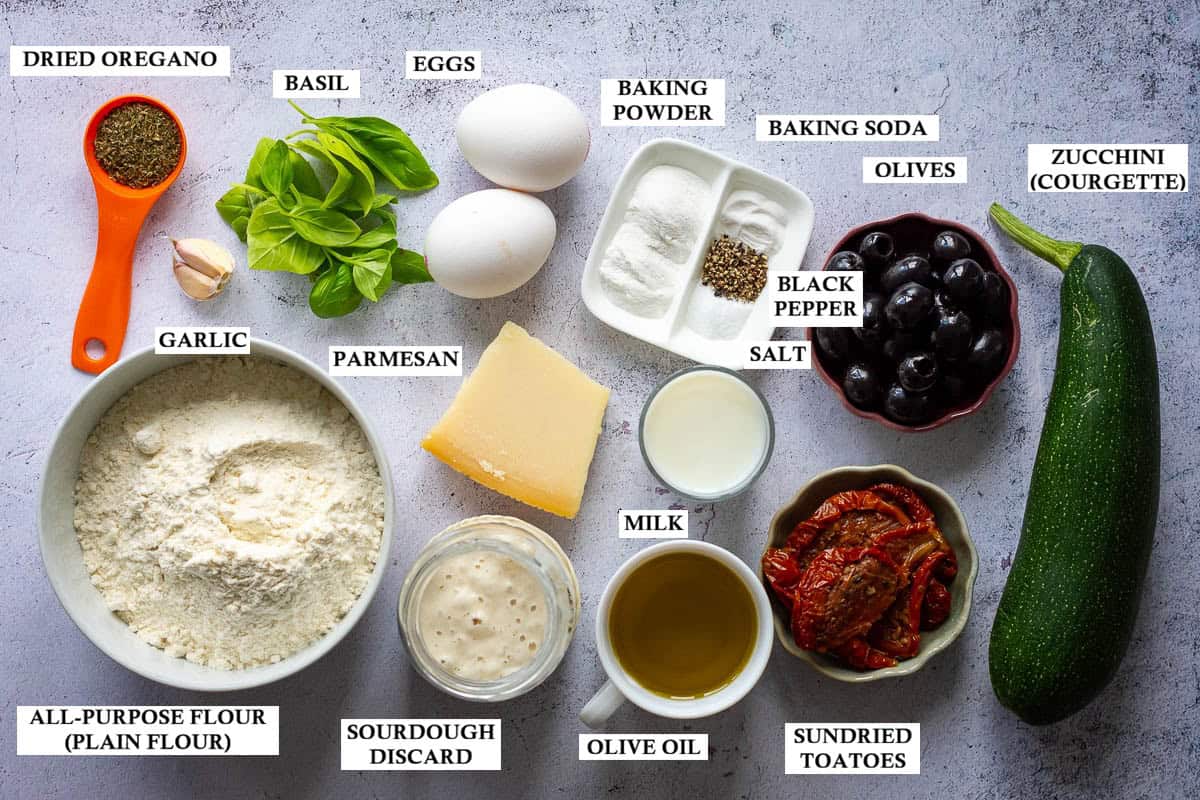
Find the full ingredient quantities and instructions in the recipe card below.
REcipe Tips
🔥 Bake it in two stages. Start hot at 200°C (400°F) for 15 minutes to set the crust and get a rise going, then drop to 175°C (350°F) for the remaining 45-50 minutes. A loaf has far less crust-to-crumb ratio than a muffin, so this savoury sourdough courgette loaf needs longer, gentler heat to cook through without drying out at the edges.
🫒 Tent with foil once the top is deep golden. Usually around the 30-35 minute mark. Skipping this step is the most common reason a loaf like this overbakes at the edges while the dense centre is still catching up.
💧 Manage the moisture, don't fight it. Courgette, oil from the sun-dried tomatoes, and brine from the olives all add water. Press the courgette rather than wringing it, and pat the olives and tomatoes dry before folding them through.
🔪 Skewer the centre, not the edges. The middle sits furthest from the heat, so a skewer near the crust can come out clean before the centre is actually done.
Recipe FAQs
Yes, feta can replace up to half the parmesan for a tangier, creamier crumb. Swapping it out entirely will make the loaf softer and slightly wetter, since feta carries more moisture than parmesan, so keep at least half the parmesan in for structure and that crisp top.
Almost always underbaking, made worse by the batter's moisture. Courgette, oil from the sun-dried tomatoes and brine from the olives all add water, so this loaf takes longer to set through the centre than a plain quick bread. Always test with a skewer in the middle, not near the edges, and give it another 5 to 10 minutes if it comes out wet.
Not directly. Sun-dried tomatoes are concentrated and low in surface water once drained, which is part of how the moisture balance in this recipe works. Fresh tomatoes would add too much liquid and too little flavour for the swap to work without other changes to the recipe.
Yes, this recipe started life as muffins before it became a loaf. Divide the batter between a 12-hole muffin tin and bake at 200°C (400°F) for 20 to 24 minutes, checking the centre with a skewer. You won't need the two-stage bake or foil tent, since muffins have far more crust exposed to the oven and cook through more evenly. For more information on baking savoury sourdough zucchini muffins, have a look at our Courgette, Cheddar and Spring Onion Sourdough Muffins recipe.
Discard gives a tangier result that stands up better to the olives and sun-dried tomato. But either will rise the same way, since baking powder and bicarbonate of soda do the lifting here, not the sourdough starter.
Serving Suggestions
This is a loaf built for a table, not a lunchbox. Slice it thick next to a bowl of tomato or minestrone soup, or add it to a cheeseboard alongside the olives and parmesan already inside it.
It also holds its own on a ploughman's-style spread, with extra olives, a hard cheese and something pickled doing the rest of the work.

Storage & Make-Ahead
Keep it in an airtight container at room temperature for 2 days, or in the fridge for up to 5. Freeze whole or sliced for up to 2 months, wrapped well.
To reheat, use the oven rather than the microwave: a few minutes at 160°C brings the parmesan crust back to crisp instead of leaving it soft. I find a low toaster works too!
More Sourdough Courgette Recipes
If this is your first savoury sourdough loaf, the Courgette, Cheddar and Spring Onion Sourdough Muffins is the recipe it grew out of. For another Mediterranean zucchini bake, try our Sourdough Scarpaccia! For the sweet version of this same courgette-and-discard pairing, there's the Sourdough Courgette Loaf Cake, and for more Mediterranean, feta-leaning flavours, the Courgette Ribbon Sourdough Galette With Whipped Feta is worth a look. More recipes below:


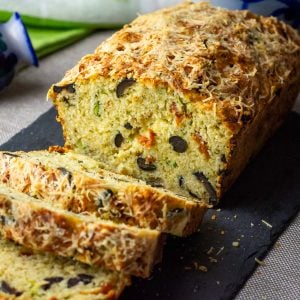
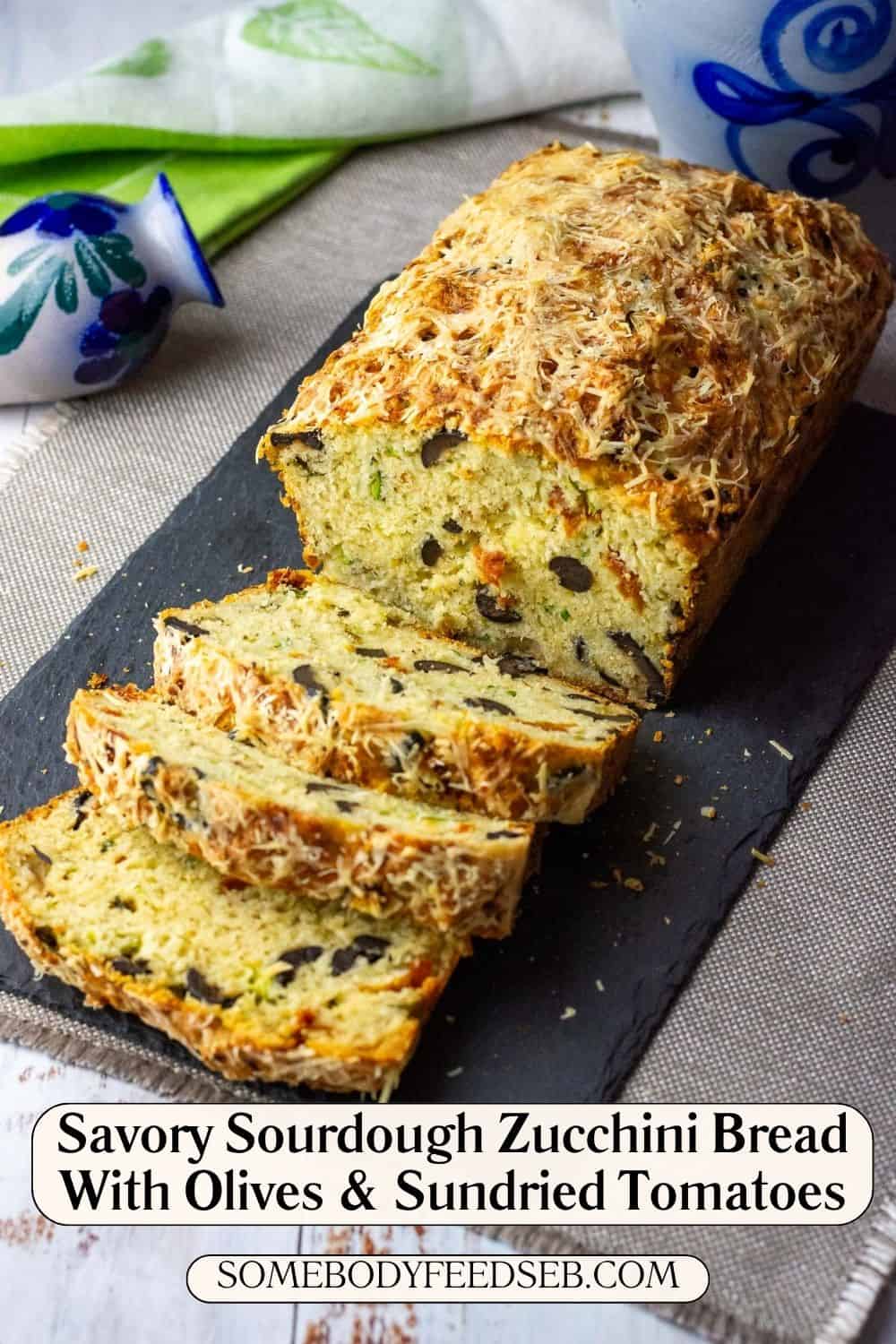
Mediterranean Sourdough Courgette Loaf (Olives, Sun-Dried Tomato & Parmesan)
Equipment
- Box grater
- Mixing bowls, jug
Ingredients
- 300 g (2½ cups) plain flour (all-purpose flour)
- 2½ teaspoon baking powder
- ½ teaspoon bicarbonate of soda (baking soda)
- ½ teaspoon fine salt see note
- ½ teaspoon coarsely cracked black pepper
- 1 teaspoon dried oregano or mixed fried herbs
- 2 cloves garlic finely grated
- 100 g (~½ cup) sourdough discard, 100% hydration, unfed
- 2 large eggs lightly beaten
- 80 g (⅓ cup) milk
- 90 g (6 tablespoon) extra virgin olive oil, plus extra for greasing
- 180 g (6.5 oz) courgette (zucchini), coarsely grated and pressed (not wrung)
- 100 g (1 cup) parmesan, finely grated, divided
- 80 g (½ cup) pitted black or kalamata olives, roughly chopped and patted dry
- 60 g (¼ cup) sun-dried tomatoes in oil, drained and chopped, 1 tablespoon of the oil reserved
- small handful fresh basil torn (about 10g), plus extra to serve
Instructions
- Preheat the oven to 200°C (400°F). Grease the loaf pan and line with a parchment sling, leaving overhang on the long sides. This batter has enough sticky bits (olives, cheese, tomato) that lifting a bare tin risks tearing the crust.
- Whisk the flour, baking powder, bicarbonate of soda, salt, pepper, oregano and garlic together in a large bowl.
- In a jug, whisk the sourdough discard, eggs, milk, olive oil and the reserved tablespoon of sun-dried tomato oil until smooth.
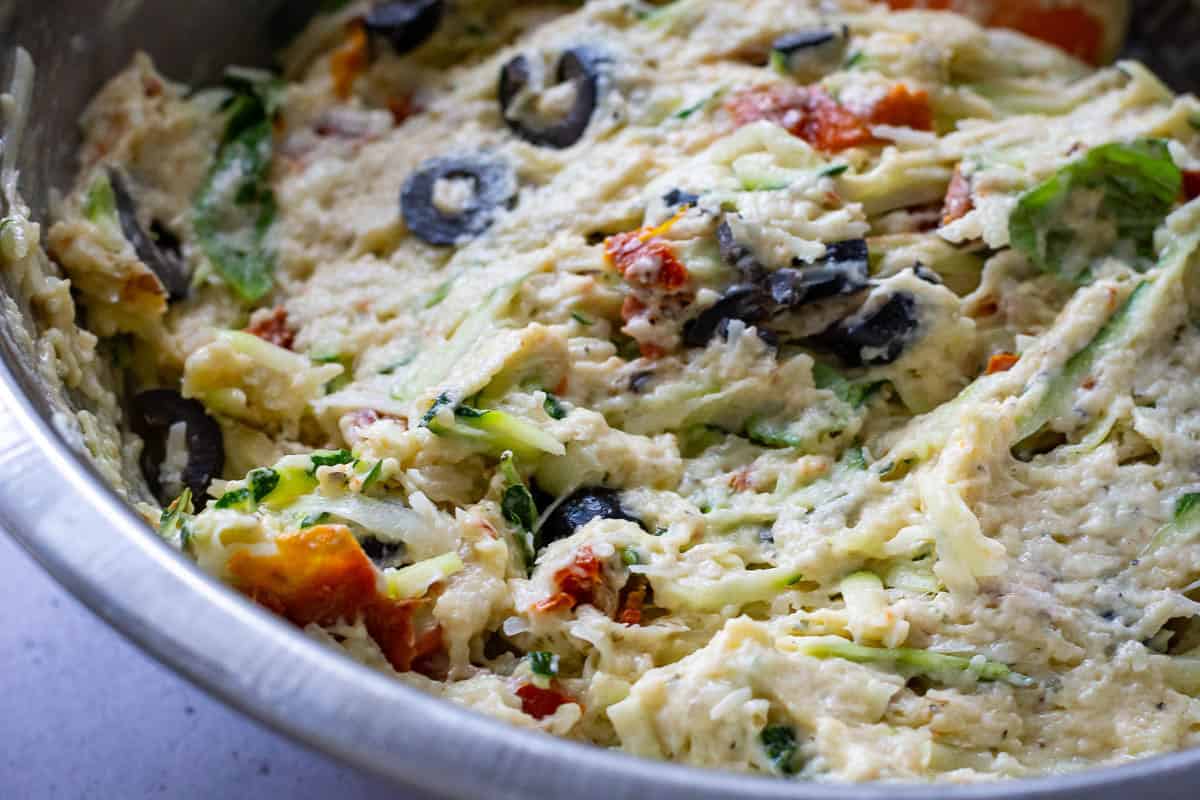
- Pour the wet mixture into the dry and fold with a spatula until just combined. A few flour streaks are fine. Don't overmix, or the loaf turns tough rather than tender.
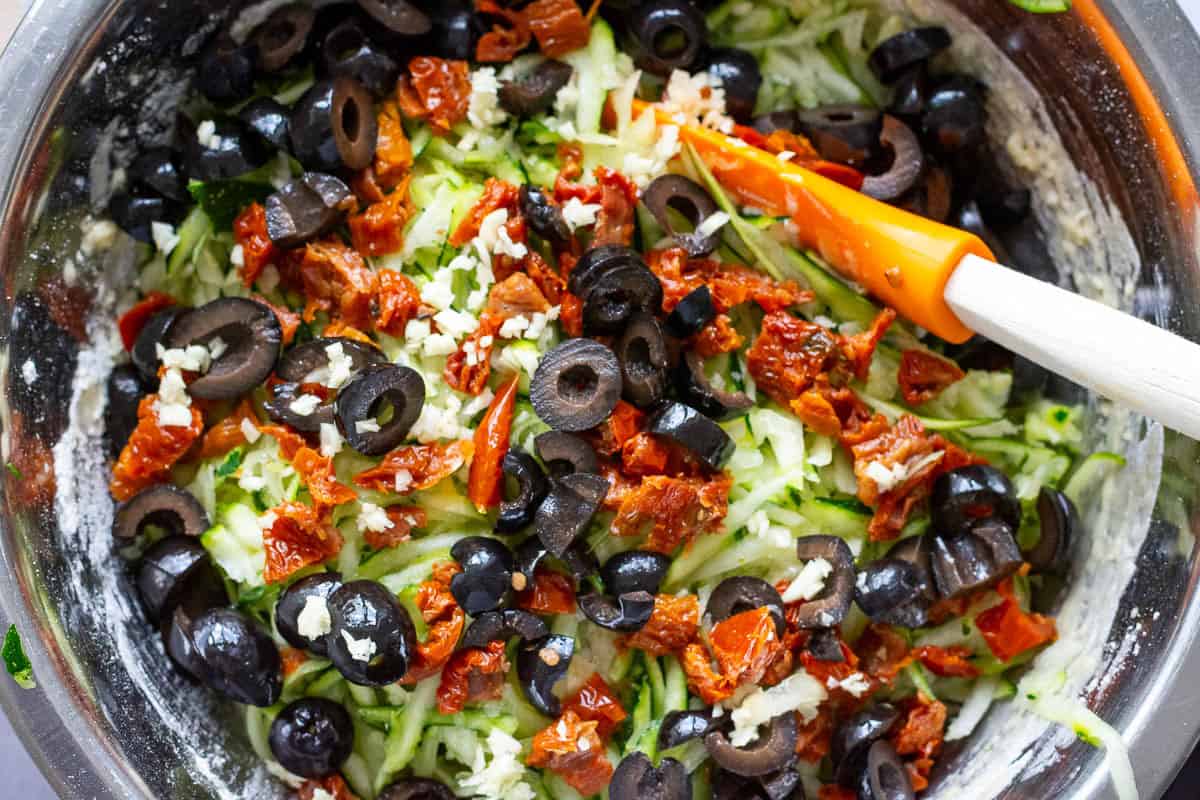
- Spread the grated courgette over a few sheets of kitchen paper and press firmly to remove the surface water, without wringing it bone dry. Fold the courgette, 80g of the parmesan, the olives, sun-dried tomatoes and basil through the batter, keeping 20g parmesan back for the top.
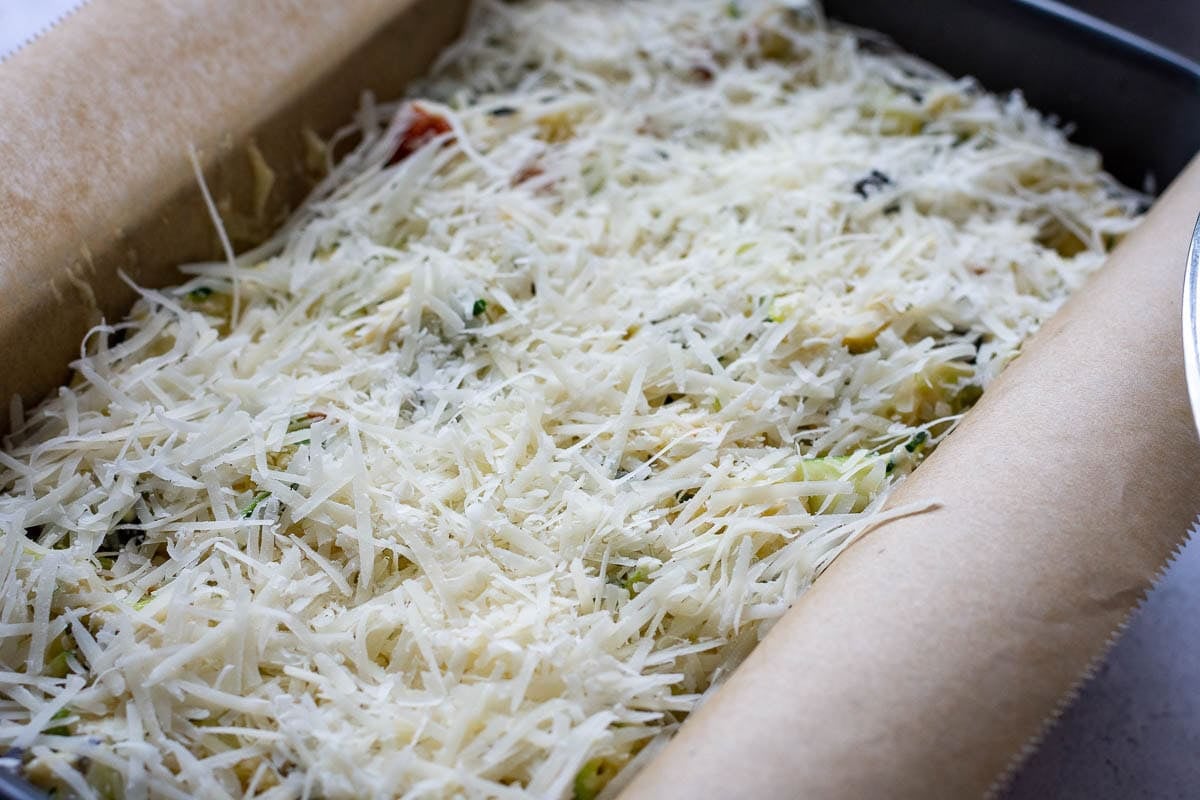
- Scrape the batter into the prepared tin and level the top. Scatter the reserved parmesan over the surface, plus a few extra olive halves if you like the look.
- Bake for 15 minutes at 200°C (400°F), then lower the oven to 175°C (350°F) and bake for a further 45-50 minutes. Tent loosely with foil once the top is deep golden, usually around the 30-35 minute mark, so the crust doesn't overcook before the dense centre is done.
- Check doneness with a skewer in the centre of the loaf, not just near the edges. A clean skewer from the middle is the only signal worth trusting on a batter this dense.
- Cool in the tin for 15 minutes, then lift out using the parchment sling onto a wire rack. Let it cool at least 30-40 minutes before slicing for the cleanest cut, though it's fine to serve slightly warm if you can't wait that long.
Notes
Nutrition



Leave a Reply