
If you bake sourdough regularly, you've probably asked yourself at least once: can I freeze sourdough bread without ruining it? Good news - freezing sourdough bread is not only possible, but it's one of the best ways to preserve fresh bread without waste. Whether you're baking around a busy schedule, feeding a small household, or simply making more bread than you can eat in a few days, freezing sourdough is a great option that keeps flavour, texture, and structure surprisingly intact.

This guide walks you through how to freeze sourdough bread properly, when to do it, and how to refresh it so it tastes like a fresh loaf again - all in simple steps that work for beginner bakers and seasoned sourdough lovers alike.
Jump to:
- Freezing Sourdough: The Best Way to Preserve Freshness
- When To Freeze Sourdough Bread
- How to Freeze Sourdough Bread: 2 Reliable Methods
- How Long Will Sourdough Bread Keep in the Freezer?
- How to Thaw & Refresh a Whole Sourdough Loaf
- How to Defrost Sourdough Slices
- FAQs
- Recipes Using Baked Sourdough Bread
- Christmas Sourdough ebook
- Other Sourdough Resources
- Final Thoughts
As an Amazon Associate I earn from qualifying purchases, at no extra cost for you! Thank you!
Freezing Sourdough: The Best Way to Preserve Freshness
Thanks to lactic acid bacteria and wild yeast, sourdough bread naturally keeps longer than store-bought bread. That acidity slows mould growth and helps preserve the inside of the bread. But even the best homemade sourdough bread has a limit - especially once it's sliced.
Freezing sourdough bread is the best method for long-term storage if you want best quality and best flavour weeks or even months later.
- Locks in freshness at its peak
- Prevents food waste, especially if you bake much bread at once
- Perfect for small households who don't get through an entire loaf quickly
- Ideal for busy lives - toast a slice straight from frozen
- Great for future use, from French Toast to bread crumbs
Sourdough bread freezes beautifully when done right - much better than most commercial yeast loaves.
HOW DO COLD TEMPERATURES PRESERVE BREAD? Freezing works by slowing everything down.
At freezer temperatures, microbial activity from wild yeast and bacteria nearly stops, which prevents spoilage. At the same time, water inside the loaf forms ice crystals, reducing movement and helping preserve the structure of the bread.
If sourdough is wrapped well (with little air and no excess moisture), those ice crystals stay small and don't damage the crumb. That's why right techniques matter - poor wrapping leads to freezer burn, dry bread, and loss of flavour.
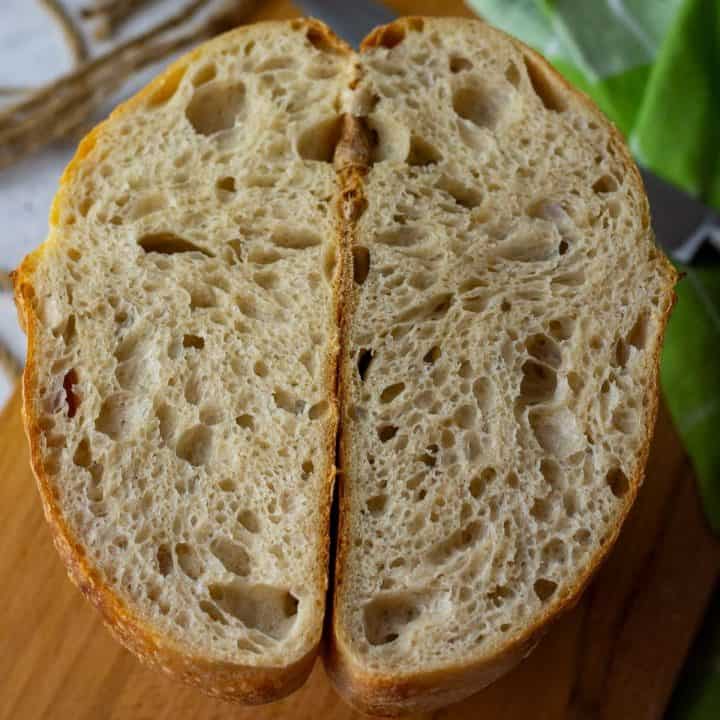
When thawed and refreshed properly, a frozen sourdough loaf retains a crisp crust, a soft, well-structured crumb and much of its original depth of flavour.
When To Freeze Sourdough Bread
The best time to freeze sourdough bread is when it's at its absolute best.
The golden rule: Freeze it once it has fully cooled to room temperature, ideally on the same day it was baked.
Freezing fresh sourdough bread preserves its peak quality. Freezing stale bread will only give you stale bread later.
That said - slightly older loaves still have a place:
- Turn them into sourdough bread crumbs
- Use for sourdough croutons
- Or stash them for sourdough stuffing

How to Freeze Sourdough Bread: 2 Reliable Methods
There are two different ways to freeze sourdough bread and extend its shelf life. The best option depends on how you plan to use it later.
Method 1: Freezing a Whole Loaf of Sourdough
This is the best option if you want to serve a whole loaf of bread later - for guests, weekends, or special occasions.
Steps:
- Let the entire loaf cool completely to room temperature
- Wrap tightly in plastic wrap, beeswax wrap, or aluminum foil
- Add a second layer - a freezer-safe bag or ziplock bag
- Press out as much air as possible (excess air causes freezer burn)
- Freeze for up to 3 months for best results


For extra protection, use a couple of layers of plastic wrap or place the loaf in a freezer-safe container.
To thaw:
Leave the whole sourdough loaf at room temperature overnight, still wrapped.
Method 2: Freezing Individual Slices (My Favourite Method)
If you want maximum convenience in your busy life, freezing slices of bread is hands-down the best way.
Steps:
- Cool the loaf completely
- Slice evenly
- Place slices into a freezer bag or ziploc bags
- Remove as much air as possible
- Freeze flat
This method lets you grab one slice of bread at a time, perfect for busy mornings.

Optional tip:
If slices stick together, place a small piece of parchment paper between them - or flash-freeze on a baking tray for 10 minutes first.
How Long Will Sourdough Bread Keep in the Freezer?
- Whole sourdough loaf: best within 3 months
- Sliced sourdough (for toasting): up to 6 months
Technically, frozen sourdough stays safe longer - but flavour and texture are best within those timeframes.
Does Freezing Affect Sourdough Bread?
Yes - slightly. But when done correctly, the impact is minimal.
Possible changes include:
- slightly drier crumb
- muted flavour if frozen too long
Proper wrapping, removing much air, and refreshing after thawing all help maintain best quality.
Sourdough bread freezes far better than most store-bought bread thanks to its fermentation process.

How to Thaw & Refresh a Whole Sourdough Loaf
Refreshing is what brings frozen sourdough back to life.
Steps:
- Thaw the loaf of sourdough bread fully at room temperature
- Preheat oven to 180°C fan (360°F)
- Unwrap the loaf
- Lightly spray the crust with a little cold water
- Bake for 5-6 minutes to restore that crispy crust.
The water evaporates, restoring that crisp crust without drying the inside of the bread.

How to Defrost Sourdough Slices
This is where freezing slices really shines.
- Toast straight from frozen in a toaster or toaster oven on a busy morning
- For very thick slices, thaw for 30 minutes at room temperature first
- Or use the defrost setting
You'll get golden brown toast with a crisp edge and soft centre - perfect for sandwiches.
FAQs
Not recommended. Each freeze-thaw cycle damages structure and dries the crumb.
They were likely sliced before fully cooling. Use parchment paper or flash freeze next time.
Recipes Using Baked Sourdough Bread
Looking for great recipes to use leftover sourdough bread? Even if your bread isn't at its peak freshness, you can use it to make delicious things below:
- Crispy Sourdough Croutons
- Sourdough French Toast (recipe in our Christmas Sourdough eBook)
- Welsh Rarebit (Welsh Cheese on Toast)

Christmas Sourdough ebook
Celebrate the holiday season with a unique twist this year with our 24 Christmas Sourdough recipes! Discover the magic of using active sourdough starter, sourdough discard, and leftover baked sourdough bread to create a memorable and flavoursome Christmas feast.
Other Sourdough Resources
- How To Revive Frozen Sourdough Starter?
- My Everyday Sourdough Bread (Step-By-Step Recipe)
- Beginner's Guide to Sourdough Autolyse: What, How & Why?
- Coil Folds For Sourdough Bread

Final Thoughts
Freezing sourdough bread isn't a compromise - it's a fantastic way to fit sourdough into real life. Whether you're baking your first loaf of bread or managing a weekly baking schedule, freezing gives you flexibility without sacrificing flavour.
Once you get into the habit, you'll wonder how you ever lived without a freezer full of sourdough slices. 💛



Leave a Reply