
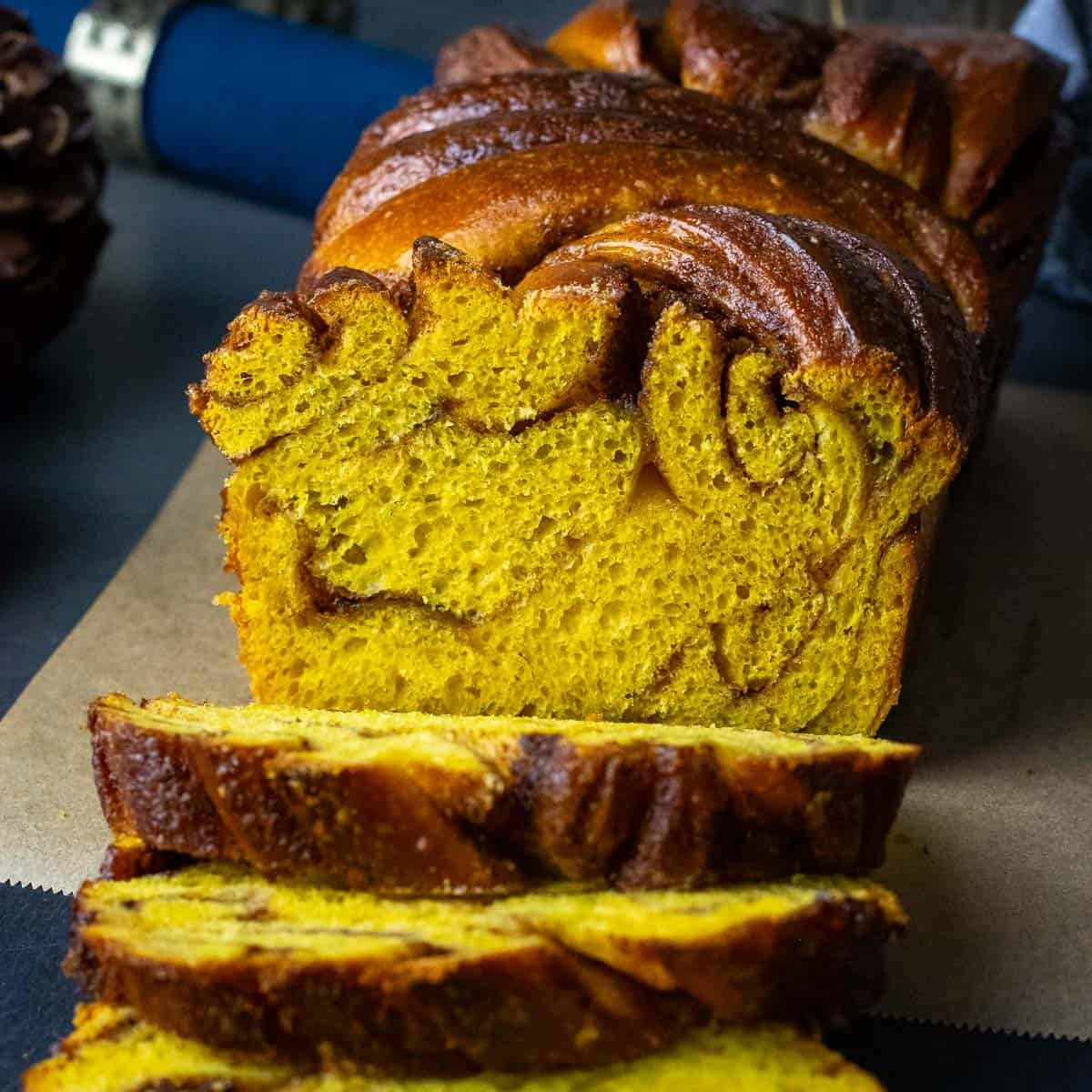
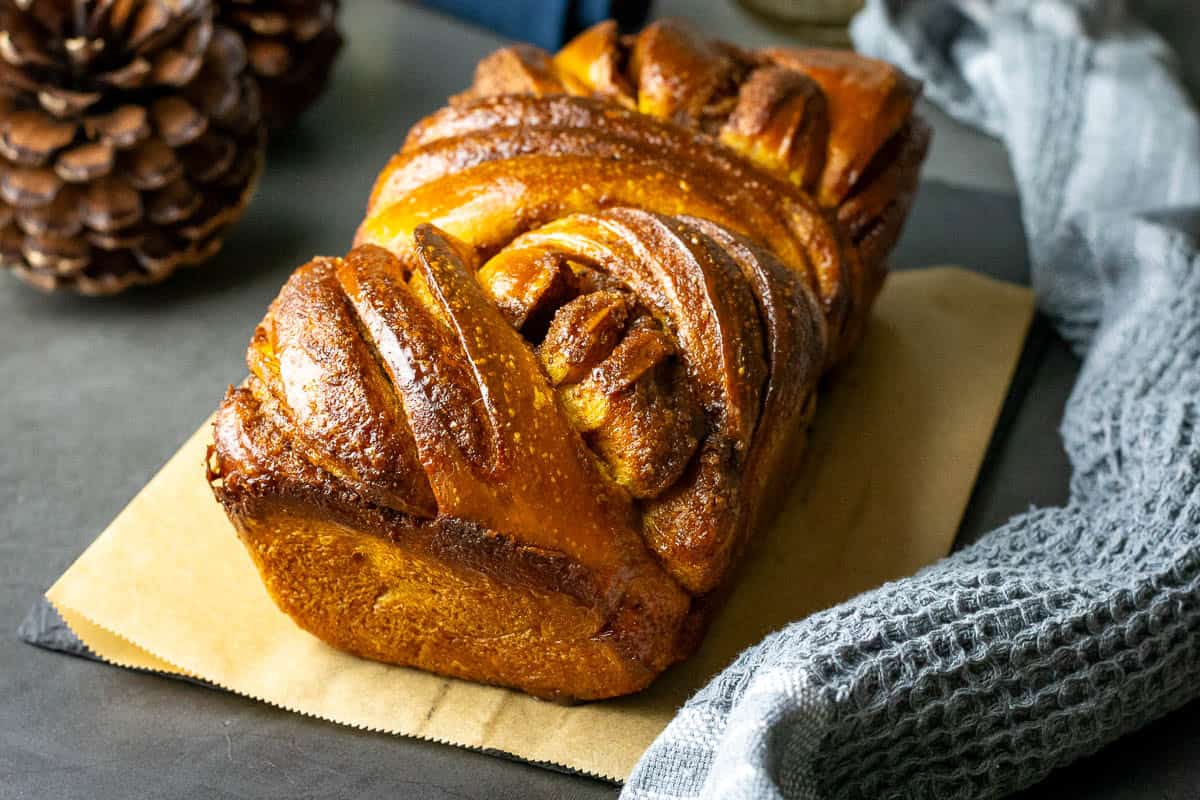
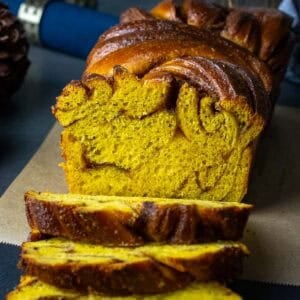
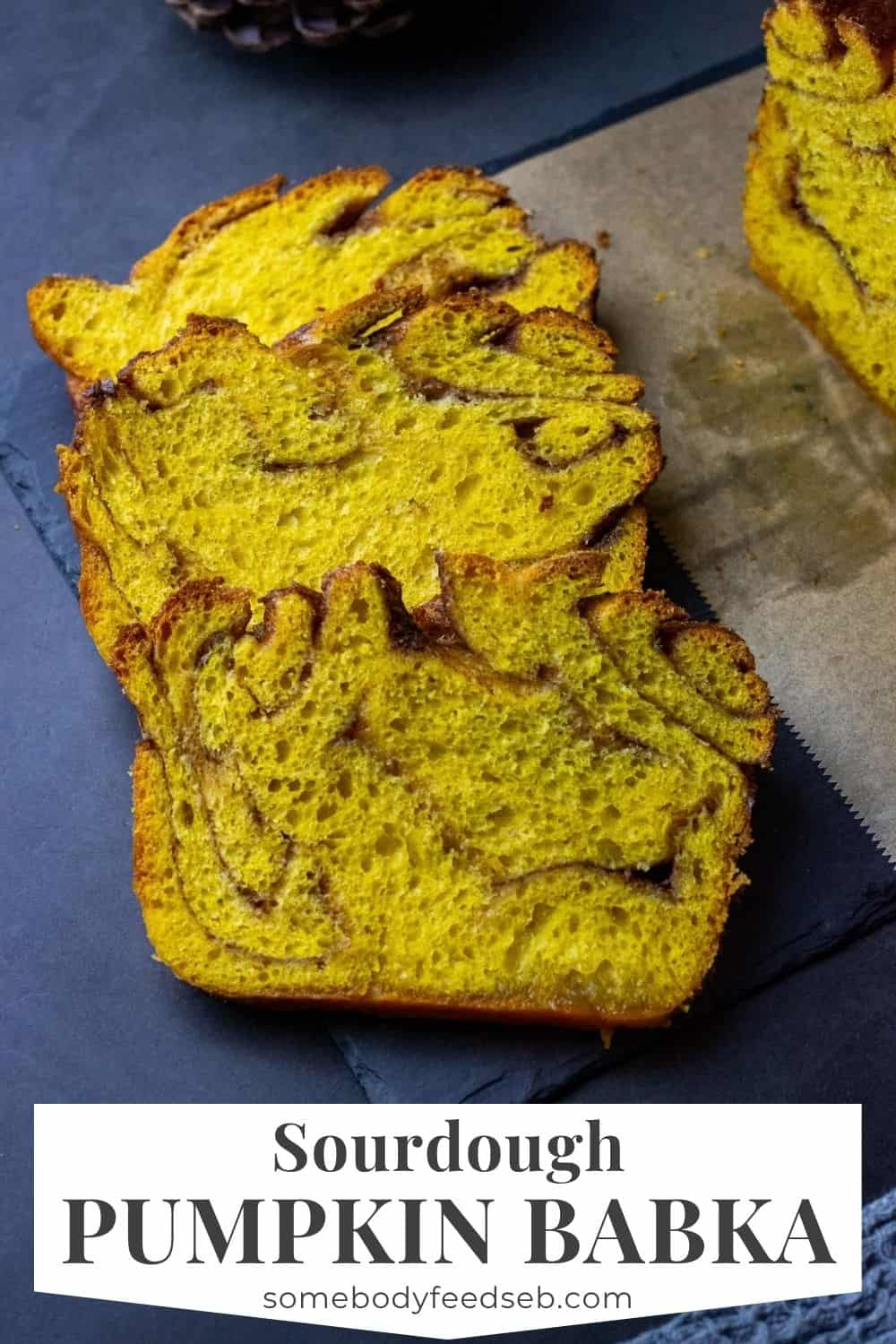
Sourdough pumpkin babka is what you make when you want cinnamon roll flavour but would rather slice a loaf than fight over the middle roll. It is a soft, golden sourdough dough twisted around a spiced brown sugar and butter swirl, baked in a standard 9x5 inch (23x13cm) loaf pan and brushed with syrup while it is still hot.
Jump to:
As an Amazon Associate I earn from qualifying purchases, at no extra cost for you! Thank you!
The dough is the one from my Sourdough Pumpkin Cinnamon Rolls With Cream Cheese Frosting, scaled down to fit a loaf pan, so if you have made those you already know how it behaves: soft, slightly tacky and far more forgiving to shape than the finished loaf suggests.

Recipe Highlights
TASTE: Warm cinnamon and brown sugar in a soft, tender pumpkin crumb.
WHAT'S SPECIAL: A proper spiced swirl in every slice, from the same dough as my pumpkin cinnamon rolls.
THE IMPRESSIVE BIT: It looks like it came from a bakery, but the shaping is one cut and one twist.
EFFORT: Two days, but most of that is the dough resting. Hands-on time is roughly 45 minutes.
SEB'S RATING: Not his thing. So it's all mine!

Why Sourdough Pumpkin Babka Works
Pumpkin purée does two jobs here. It adds moisture, which keeps the crumb soft and tender, and it adds a little natural sweetness and a warm golden colour. The sourdough starter raises the dough slowly, which suits a dough enriched with butter, egg and milk.
The overnight rest in the fridge is what makes babka manageable. Cold dough is firm enough to roll thin, hold a buttery filling and cut cleanly. Warm enriched dough smears, sticks and squashes the swirl flat. The result tastes like a pumpkin cinnamon roll, but it slices like bread.
Ingredient Notes
- Strong bread flour: Look for 12% protein or higher. Plain flour gives a slacker dough that spreads instead of holding the twist.
- Pumpkin purée: Use plain 100% pumpkin, not pie filling, which is already sweetened and spiced and will throw off the balance. Brands vary in water content, so if yours has liquid sitting on top, drain it off before weighing. For homemade pumpkin purée: You need 75g of cooked, mashed pumpkin or butternut squash. Roasting works better than steaming or boiling because it does not add water. Roughly 120g of raw, peeled and deseeded flesh roasts down to about 75g, but varieties differ, so weigh after mashing and let it cool.
- Light brown sugar: The molasses keeps the filling a soft paste. Dark muscovado gives a deeper, more toffee-like swirl.
- Cinnamon and pumpkin pie spice: These go in the filling, not the dough, because cinnamon slows gluten development and can hold back the rise. No pumpkin pie spice? Use extra cinnamon plus a pinch each of ground ginger and nutmeg.
- Butter: Softened for the dough (a fingertip should leave a dent without sinking in greasily). Melted, then cooled, for the filling.
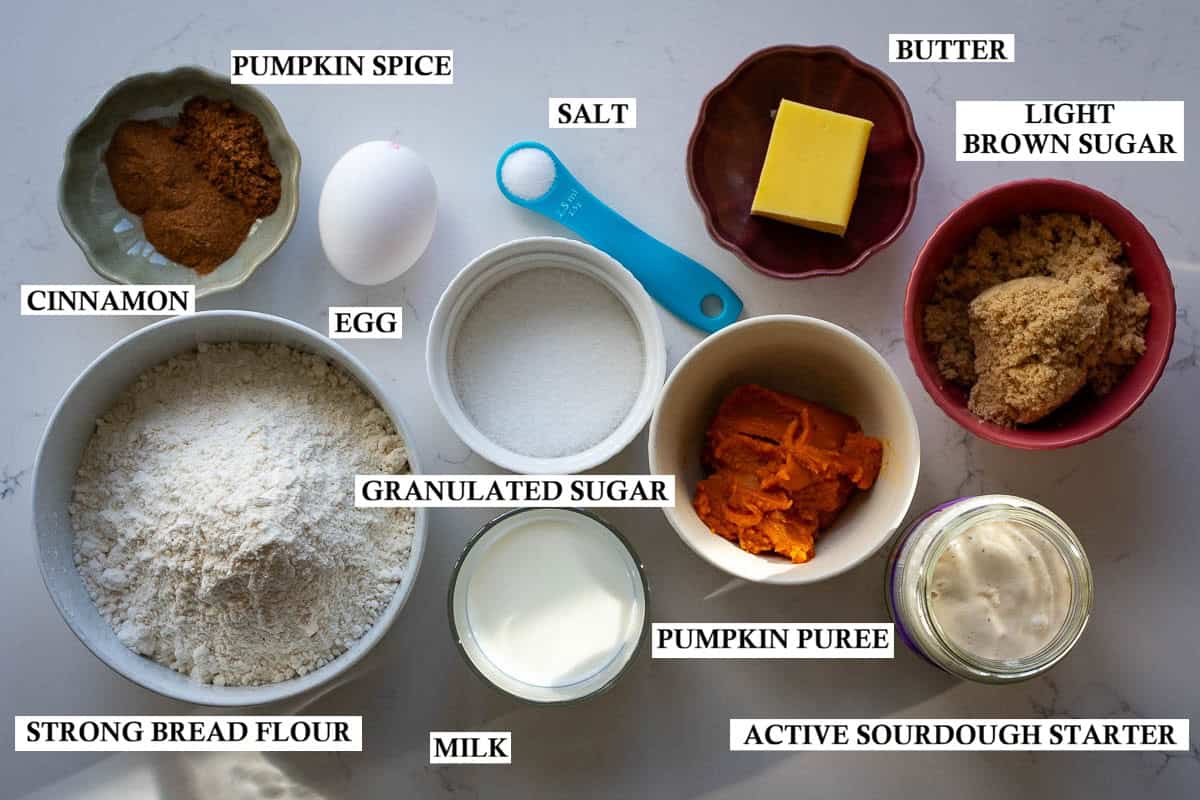
Find the full ingredient quantities and instructions in the recipe card below.
Step-By-Step Method
Day 1
1. Feed your starter. Mix 40g starter, 40g flour and 40g water (1:1:1) and leave it somewhere warm for 4 to 5 hours, until at least doubled, domed and smelling faintly sweet rather than sharp. That makes 120g, and you need 115g.
2. Mix the dough. In the bowl of a stand mixer fitted with a dough hook, combine the flour, sugar and salt. Add the starter, pumpkin purée, milk and egg, and mix on low for 4 to 5 minutes until no dry flour is left. It will look shaggy and rather wet. That is normal.
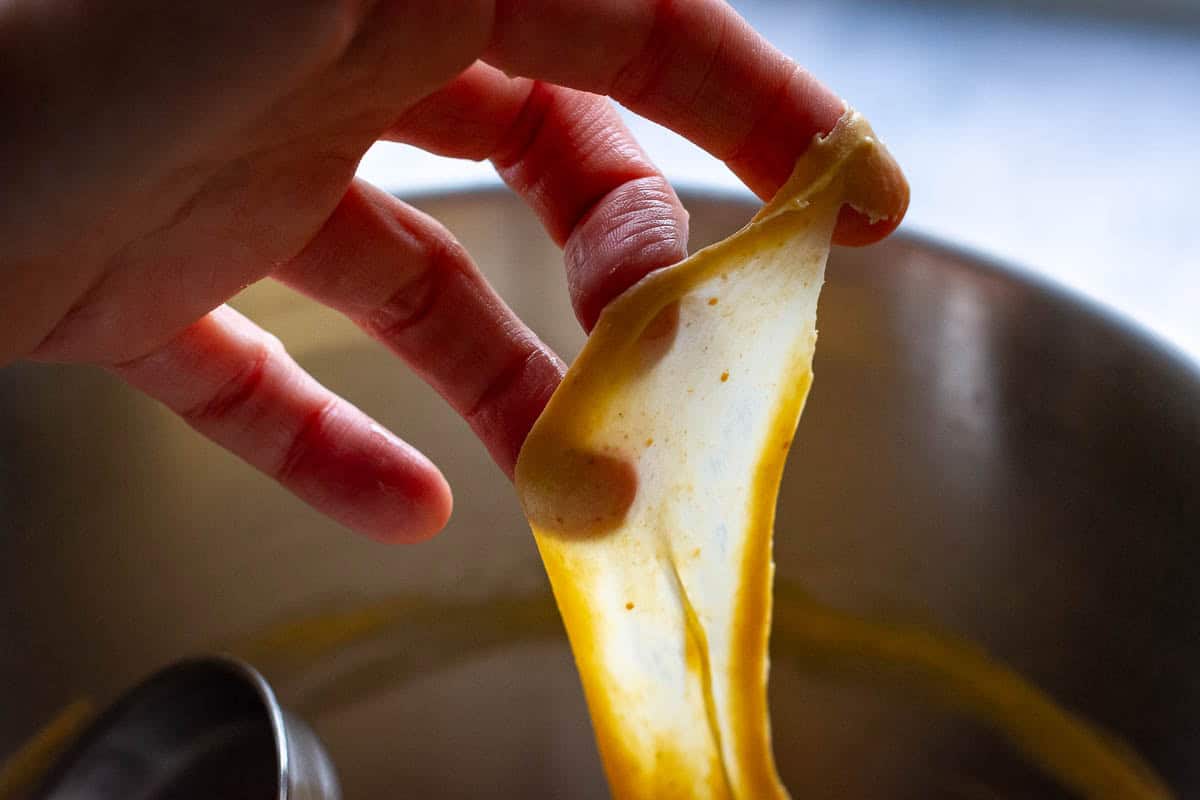
3. Add the butter. With the mixer running, add the softened butter a piece at a time, waiting for each to disappear. Turn the speed up to medium and mix for about 10 minutes, until the dough is soft, elastic and slightly shiny. Check with the windowpane test: a small piece should stretch thin enough to see light through without tearing.
4. Bulk ferment. Shape the dough into a ball, place it in an oiled bowl and cover. Leave it for 4 to 6 hours at 24-26°C (75-79°F), until nearly doubled, with a domed top, bubbles at the edges and a wobble when you nudge the bowl. In a cooler kitchen, expect a longer bulk fermentation.
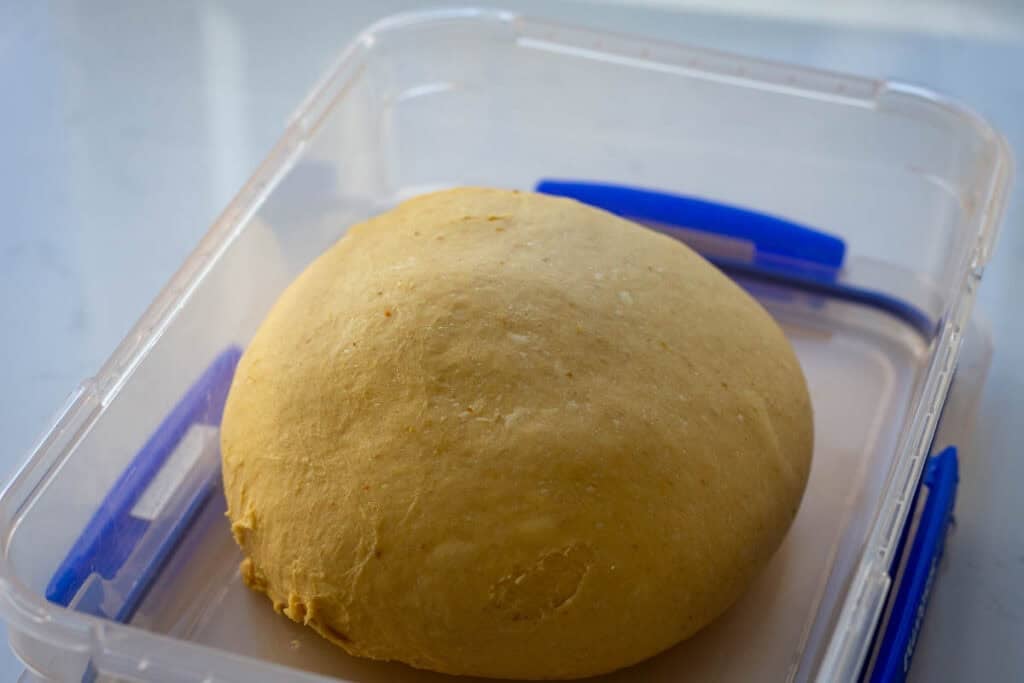
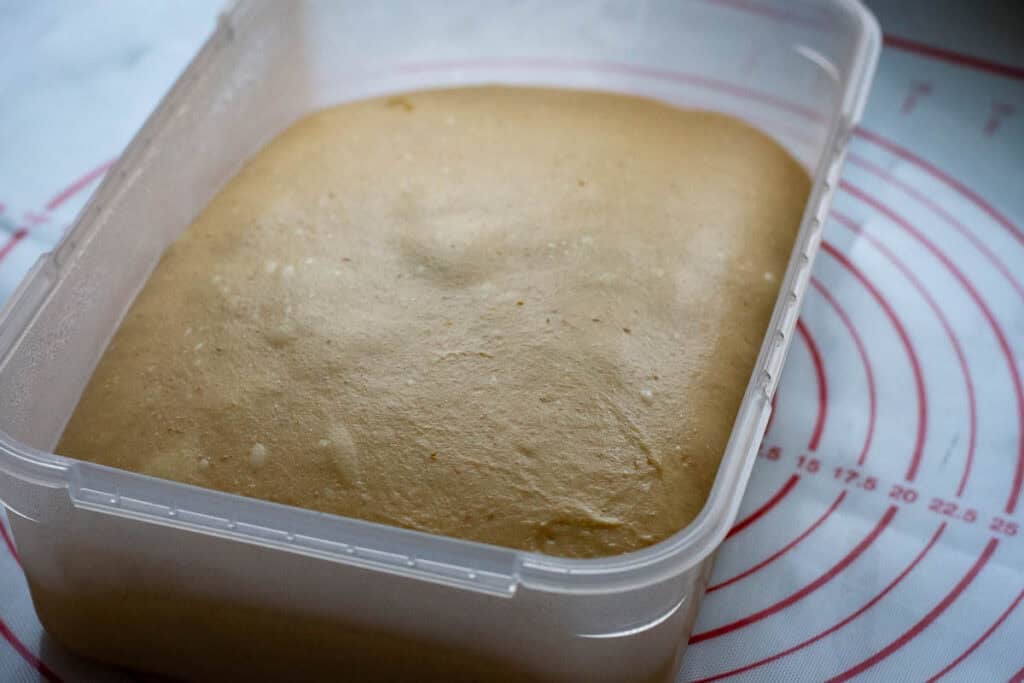
5. Cold ferment. Move the covered bowl to the fridge for 8 to 16 hours.
Day 2
1. Make the filling. Stir the sugar, cinnamon and pumpkin pie spice together. Melt the butter, let it cool until warm rather than hot, then mix it in. Leave it until it is a thick, spreadable paste. If the butter separates and looks oily, stir in 1 teaspoon of plain flour.
2. Line the pan. Line the loaf pan with parchment, leaving an overhang on the two long sides.
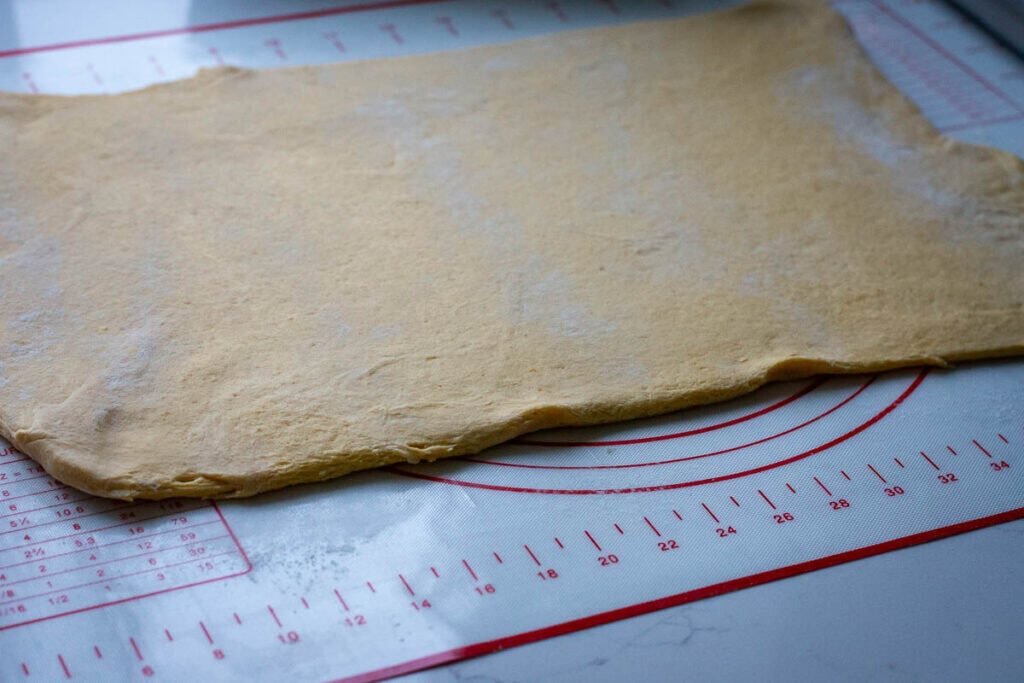
3. Roll out. Turn the cold dough onto a lightly floured surface. It will feel firm and smooth. Roll it into a 20x40cm (8x16 inch) rectangle with a short side facing you. Brush off any loose flour so it does not block the filling.
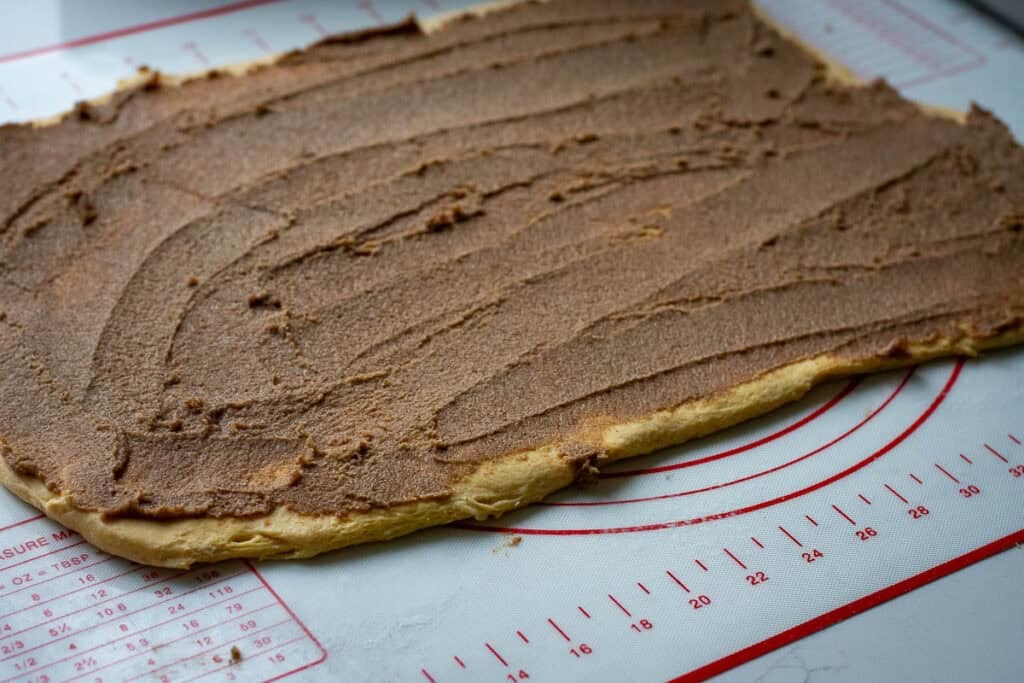
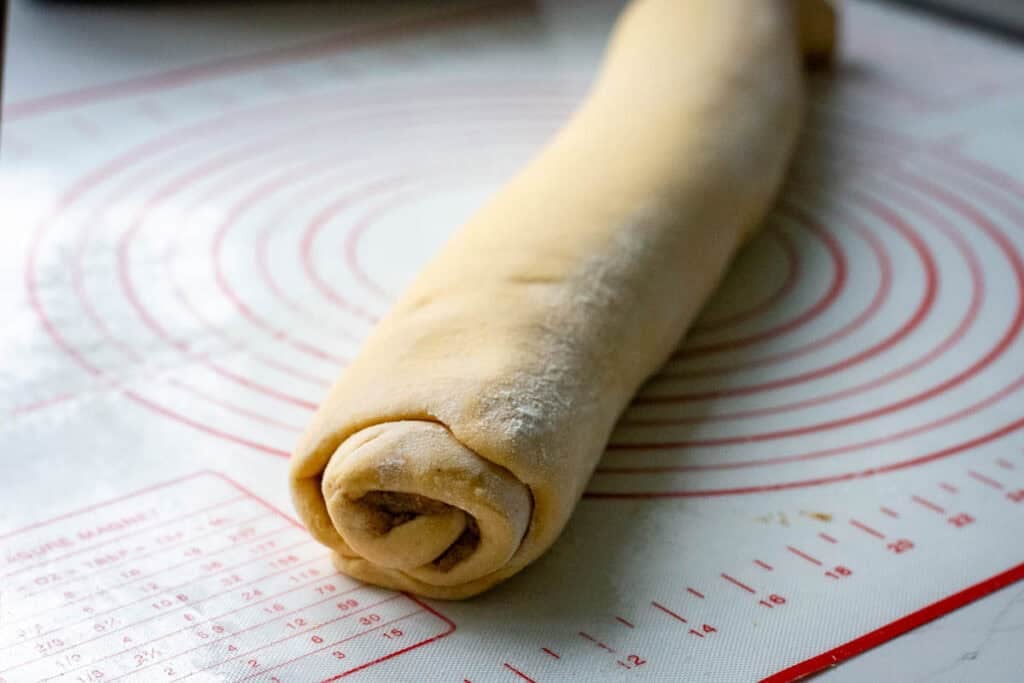
4. Fill and roll. Spread the filling right to the edges. Starting at the short side, roll the dough up tightly into a log about 20cm (8 inches) long and set it seam side down. Roll firmly. A loose roll leaves gaps in the swirl.
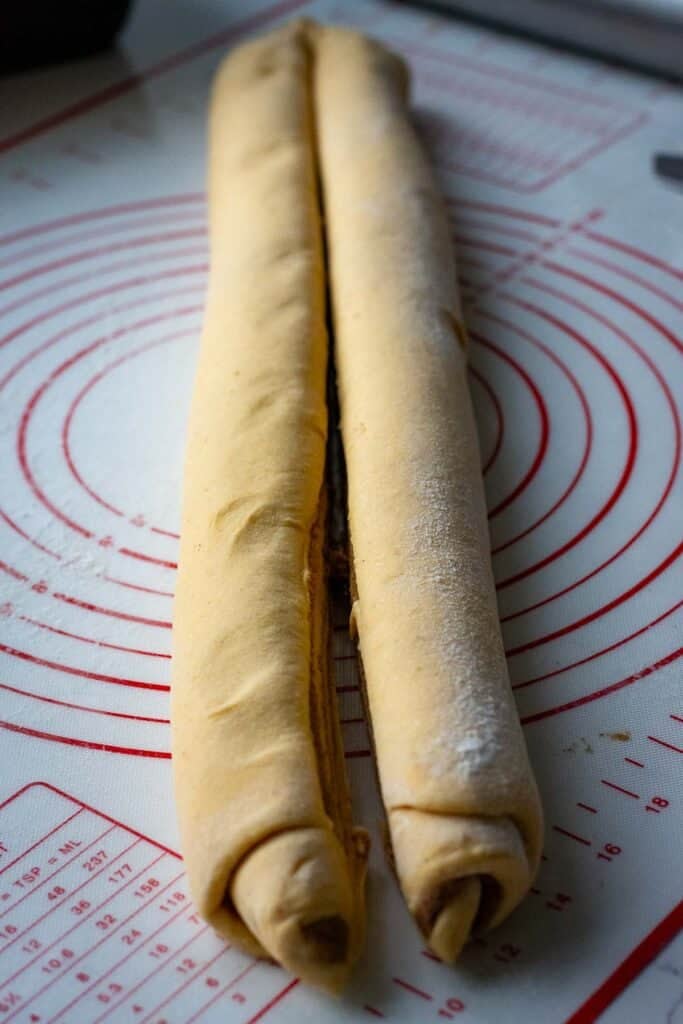
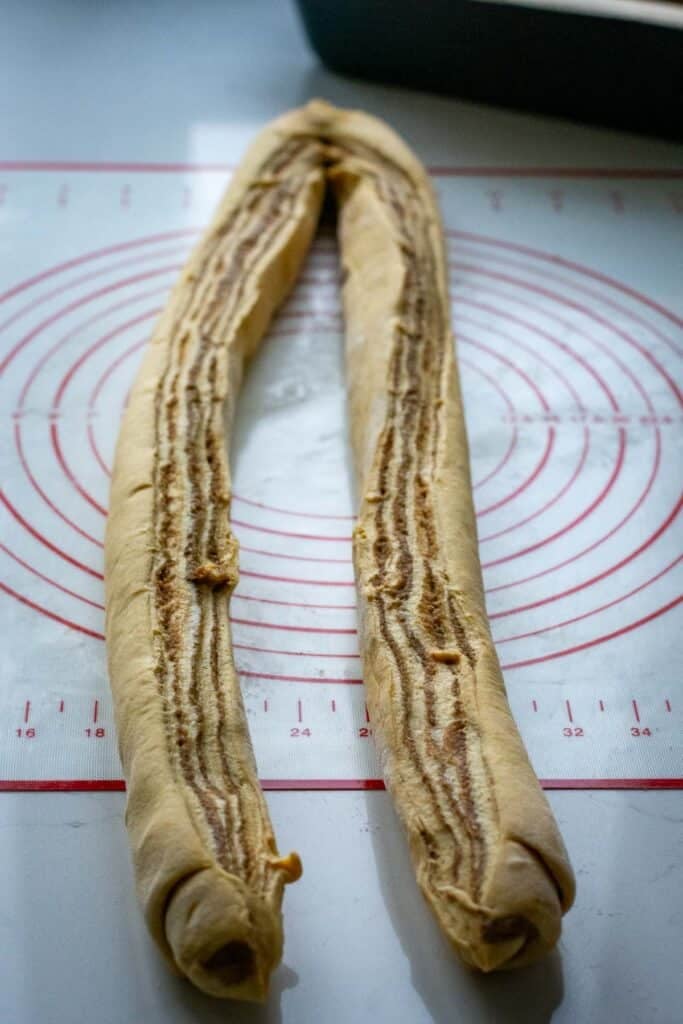
5. Cut and twist. Using a sharp knife, cut the log in half lengthwise so both halves show the spiral. Lay the two strands side by side with the cut sides up, pinch them together at one end, then cross one strand over the other, keeping the cut sides facing up as much as you can. Pinch the other end closed. It is the same cut and twist as my Sourdough Chocolate Babka. You can see it shown in the VIDEO in the recipe card at the bottom of the post.
6. Into the pan. Lift the twist into the pan and tuck the ends under. It will look too small for the pan. It will fill out.
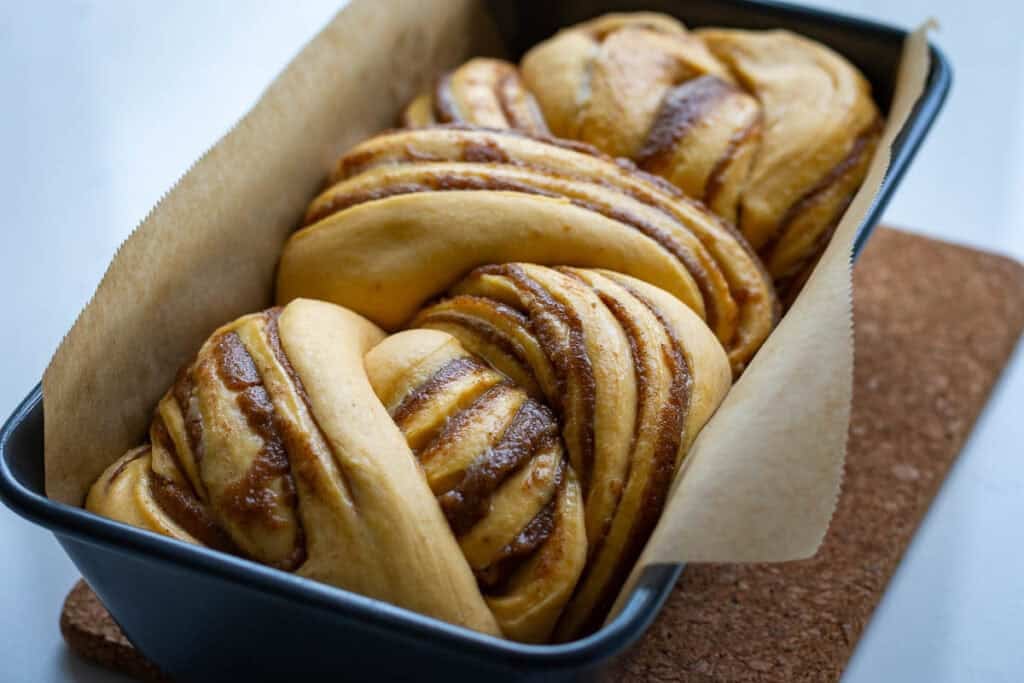
7. Second proof. Cover with oiled cling film and leave at 22-25°C (72-77°F) for 3 to 5 hours, until puffy and sitting 1-2cm (about ½-¾ inch) below the rim. A gently poked dent should spring back slowly. Heat your oven during the last 20 minutes.
8. Bake. Bake on the middle shelf at 180°C fan (355°F), or 200°C (400°F) without a fan, for 40 to 50 minutes, until deep golden brown and 93°C (200°F) in the centre.
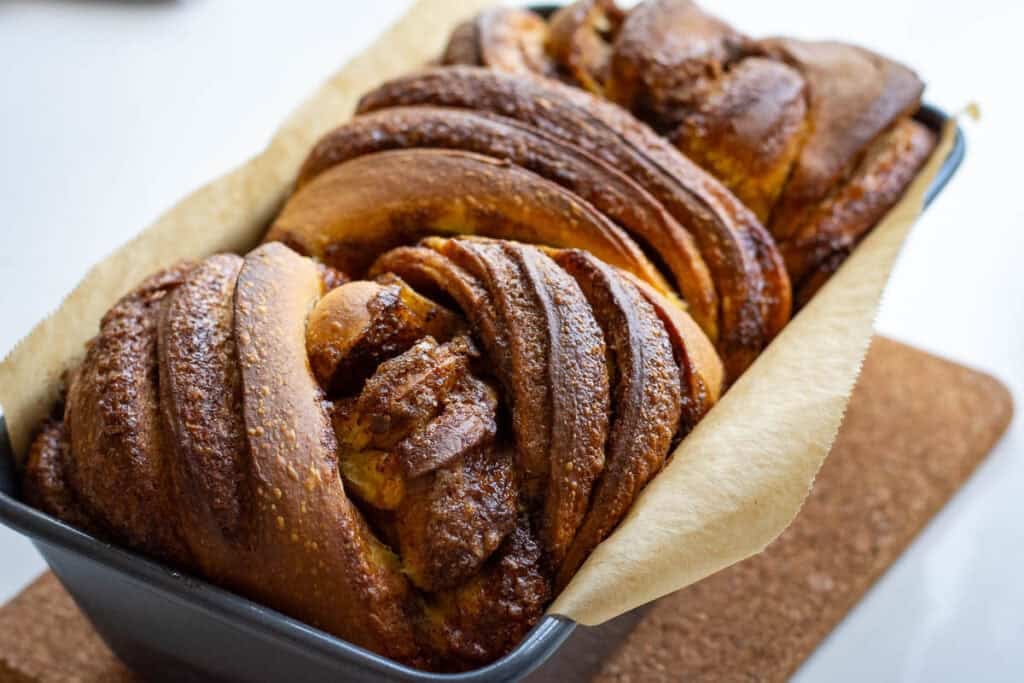
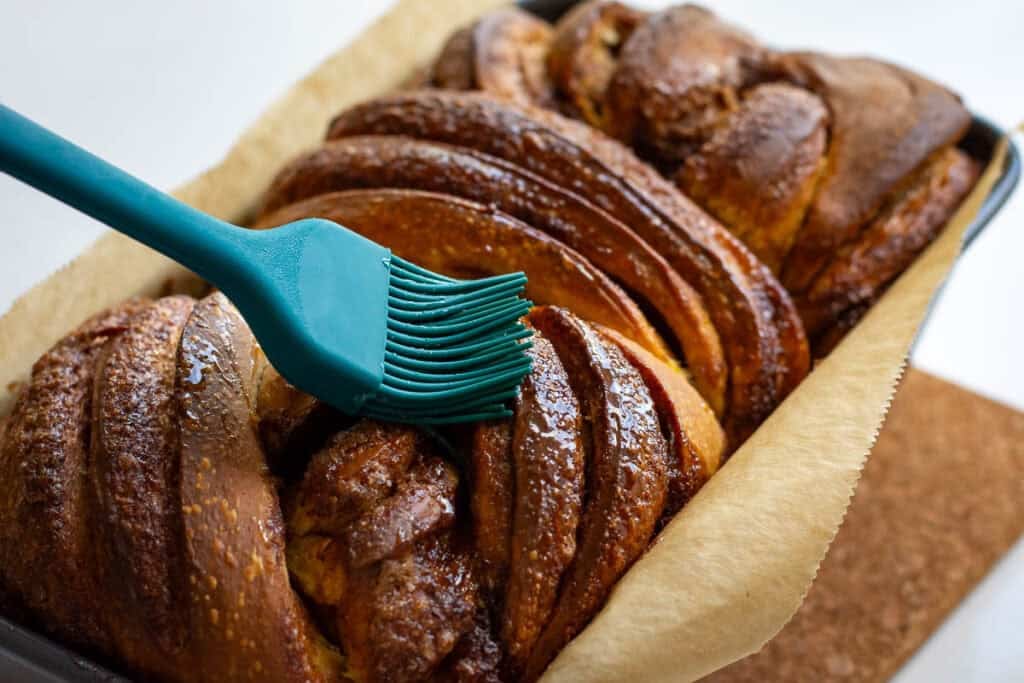
9. Glaze. While the babka bakes, warm 30g sugar and 40g water in a small pan until the sugar dissolves, about a minute. Brush it over the babka the moment it leaves the oven so it soaks in.
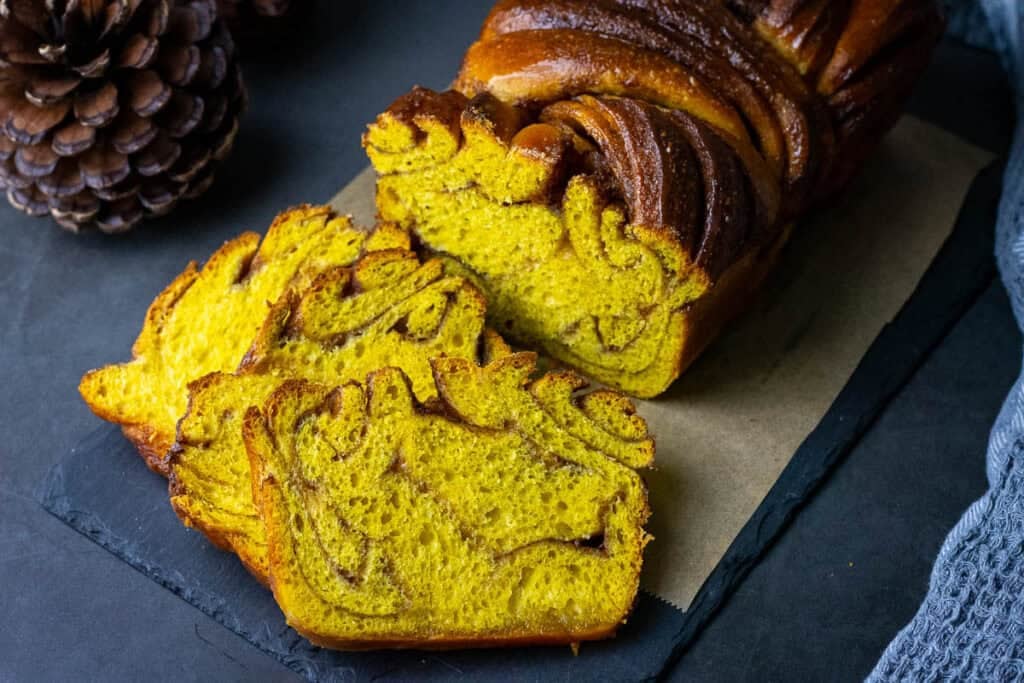
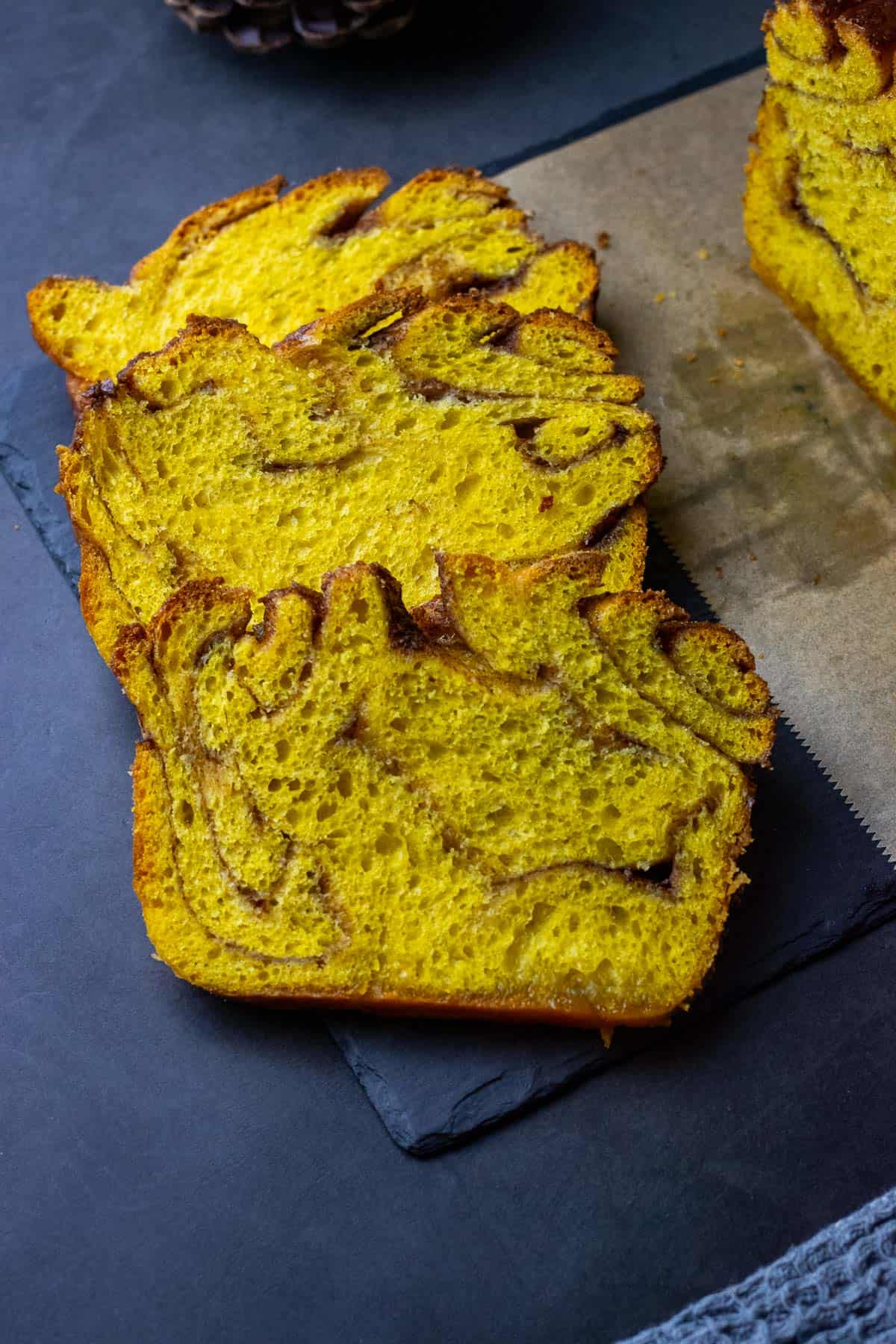
10. Cool. Leave it in the pan for 20 to 30 minutes, then lift it out by the parchment onto a wire rack. Give it another hour before slicing if you want clean swirls.
Tips For Best Results
- 💧 Resist adding flour. The dough is tackier than a plain loaf dough while mixing, then firms up in the fridge. Extra flour makes the crumb dry and stiff, so use it only to dust the worktop.
- 🥣 Get the filling consistency right. Too warm and it melts into the dough and leaks. Too cold and it tears the dough as you spread it. Aim for a soft, spreadable paste.
- 🔪 Chill a soft log. If the rolled log feels squashy, give it 15 minutes in the freezer before cutting. Firm layers slice cleanly instead of smearing.
- 👀 Judge the proof by eye, not the clock. A babka rises less dramatically than a rolls dough. Wait for it to plump up to just below the rim, but do not wait for it to double, or it may collapse in the oven and blur the swirl.
- 🔥 Tent with foil if it browns fast. Pumpkin and brown sugar colour quickly. If the top is dark before the 30-minute mark, cover it loosely with foil so the middle can finish.
- 📄 Line the pan even if it is non-stick. Sugar that leaks out welds itself to metal, and parchment lets you lift the loaf out in one piece.
Serving Suggestions
- Slice it warm with salted butter, once it has cooled enough to hold together.
- Toast day-old slices and spread with butter for a crisp edge and a soft middle.
- Serve with strong coffee or chai, which suits the ginger and cinnamon.
- Turn thick slices into French toast or bread and butter pudding.
Storage
Keep the babka in an airtight container at room temperature for up to 2 days, or wrap it well and freeze slices for up to 2 months. Thaw at room temperature and warm in a low oven or toaster. If you add a cream cheese drizzle, add it just before serving and keep any leftover drizzled slices in the fridge.
Recipe FAQs
No. This dough relies on an active, peaked starter for its rise, and a dough this rich will not lift on discard alone. You would end up with a dense, tight loaf.
You can, but I would not. Warm, buttery dough is sticky and soft, so the filling smears into the dough instead of forming clear layers, and the cut is messy. The overnight rest is what makes this dough easy to handle (and adds heaps of flavour), so I would keep it.
It is possible, but this is a soft, enriched dough that needs about 10 minutes of mixing to develop properly, and working in butter by hand is slow and messy. A stand mixer makes it far easier.
Yes. Sprinkle 40g of finely chopped toasted pecans or dark chocolate over the filling before rolling. For a drizzle in the style of my pumpkin cinnamon rolls, beat 25g soft butter with 50g cream cheese, then mix in 50g icing sugar and 1 to 2 tablespoons of milk until pourable. Add it once the babka is cool, and skip the sugar syrup glaze if you do.
The usual causes are a starter that had not fully peaked, a cold kitchen that left the dough underproofed, or a filling so thick it weighed down the layers. Check that the starter has doubled before mixing and that the loaf looks visibly plumper before baking.
More Autumn Sourdough Recipes
If you like this loaf, try my Sourdough Babka With Cinnamon for a plain cinnamon version, or my Pumpkin Sourdough Bread when you want a simpler, less sweet and crustier loaf. For more soft, buttery loaves, see my Soft Crust Sourdough Bread Recipes, and for everything else seasonal, browse the Fall Sourdough Recipes.
LOVE BAKING SOURDOUGH WITH ME?
You can now add Somebody Feed Seb as a preferred source on Google. It only takes a tick box, and tells Google you'd like to see more of my recipes when relevant.
Sourdough Pumpkin Babka
Equipment
- Stand Mixer fitted with a dough hook attachment
Ingredients
- 115 g active sourdough starter 100% hydration
- 330 g strong bread flour 12%+ protein
- 40 g granulated sugar
- ½ teaspoon salt about 3g
- 75 g pumpkin purée
- 100 g milk
- 1 medium egg about 45g
- 40 g unsalted butter softened
Spiced Sugar Butter Filling
- 100 g light brown sugar
- 80 g unsalted butter melted and cooled
- 2 teaspoons ground cinnamon
- 2 teaspoons pumpkin pie spice
- 1 teaspoon all-purpose flour (plain flour) only if the butter separates
Sugar Syrup Glaze
- 30 g granulated sugar
- 40 g water
Instructions
Day 1
- First thing in the morning, feed your sourdough starter. Leave in a warm spot for 4-5 hours until at least doubled.
- In a stand mixer, combine the flour, sugar and salt. Add the starter, pumpkin purée, milk and egg. Mix on low for 4-5 minutes until no dry flour remains.
- With the mixer running, add the butter a piece at a time. Mix on medium for about 10 minutes until soft, elastic and slightly shiny. It should pass the windowpane test.
- Shape into a ball, place in an oiled bowl and cover. Bulk ferment for 4-6 hours at 24-26°C (75-79°F) until nearly doubled.
- Refrigerate, covered, for 8-16 hours.
Day 2
- Mix the sugar, cinnamon and pumpkin pie spice. Stir in the cooled melted butter and leave until it is a thick, spreadable paste. Add 1 teaspoon flour if it separates.
- Line the loaf pan with parchment, leaving an overhang on the long sides.
- Roll the cold dough on a lightly floured surface into a 20x40cm (8x16 inch) rectangle. Brush off excess flour.
- Spread the filling to the edges. Roll up tightly from a short side into a 20cm (8 inch) log, seam side down. If it feels soft, chill for 15 minutes in the freezer.
- Cut the log in half lengthwise. Lay the halves side by side with the cut sides up, pinch one end together, twist the strands over each other and pinch the other end.
- Lift into the pan, tucking the ends under. Cover with oiled cling film.
- Proof for 3-5 hours at 22-25°C (72-77°F) until puffy and 1-2cm (about ½-¾ inch) below the rim.
- Bake on the middle shelf at 200°C (400°F), for 40-50 minutes until deep golden and 93°C (200°F) in the centre. Tent with foil if it browns before 30 minutes.
- Warm the sugar and water until dissolved and brush over the babka straight from the oven.
- Cool in the pan for 20-30 minutes, then lift out onto a wire rack. Wait at least an hour before slicing.
Video
Nutrition
Leave a Reply