
If you've got a soft spot for bakery-style treats, these sweet sourdough rolls are about to become a firm favourite. These Sourdough Belgian Buns are soft, fluffy, swirled with lemon curd and studded with juicy raisins, then finished with icing and that iconic cherry on top. I'll walk you through everything - from mixing and bulk fermentation to shaping and baking - so you can make them confidently at home.

Jump to:
As an Amazon Associate I earn from qualifying purchases, at no extra cost for you! Thank you!
When I first arrived in the UK, Belgian buns were the thing I couldn't resist. They came in a little box of two… and let's just say, there was never a "save one for later" situation. Sweet, sticky, citrusy - they tick every box. And this sourdough version? It's like a cross between a fluffy iced bun and a sourdough pain aux raisin, without the fuss of laminated pastry.
What Are Belgian Buns?
Belgian buns are actually a British bake, despite the name. No one seems entirely sure where the "Belgian" part comes from, but what matters is what's inside - a soft, butter, milk and egg-enriched rich dough, rolled up Swiss roll-style with lemon curd and raisins, then iced and topped with a glacé cherry.
They sit somewhere between a cinnamon roll (sometimes known as Chelsea buns in the UK), but with a citrusy twist that makes them feel lighter (even if they're not, let's be honest).

The sourdough version takes things up a notch. The slow fermentation from natural yeasts adds depth of flavour and gives you beautifully fluffy buns with a subtle tang that balances the sweetness perfectly.
Ingredient Notes
- Bread flour. Use strong bread flour for structure. It helps create that soft but slightly chewy texture typical of enriched dough.
- Milk. Warm whole milk adds richness. Make sure it's just above room temperature, not hot.
- Unsalted butter. Adds softness and flavour. Always use softened butter for easy incorporation.
- Sugar. Provides sweetness and supports fermentation.
- Egg. Enriches the dough and helps with structure.
- Active sourdough starter. A bubbly active sourdough starter is essential for a good rise.
- Salt. Balances sweetness and enhances flavour.
- Lemon curd. The star of the show - bright, tangy and slightly sweet.
- Raisins or sultanas. Add texture and natural sweetness. You can soak them in warm water for a softer bite.
- Egg wash. Gives a golden finish.
- Icing sugar + lemon juice or water. Creates that classic thick icing.
- Glacé cherries. The finishing touch - slightly retro, completely essential.

Find the ingredient quantities, detailed instructions and nutritional information in the recipe card at the bottom of the post.
Step-By-Step Method
Feed Sourdough Starter
1. Feed your sourdough starter and leave it in a warm spot until doubled and bubbly. If you're having trouble, head to our article - Sourdough Starter Not Doubling Within 4 Hours or download our FREE Sourdough Starter Troubleshooting Guide below.
Mix The Dough
1. In a small saucepan, gently heat milk and butter until melted. Let it cool to lukewarm.
2. In the bowl of a stand mixer, combine flour, sugar and salt. Add the warm milk mixture, egg and starter.
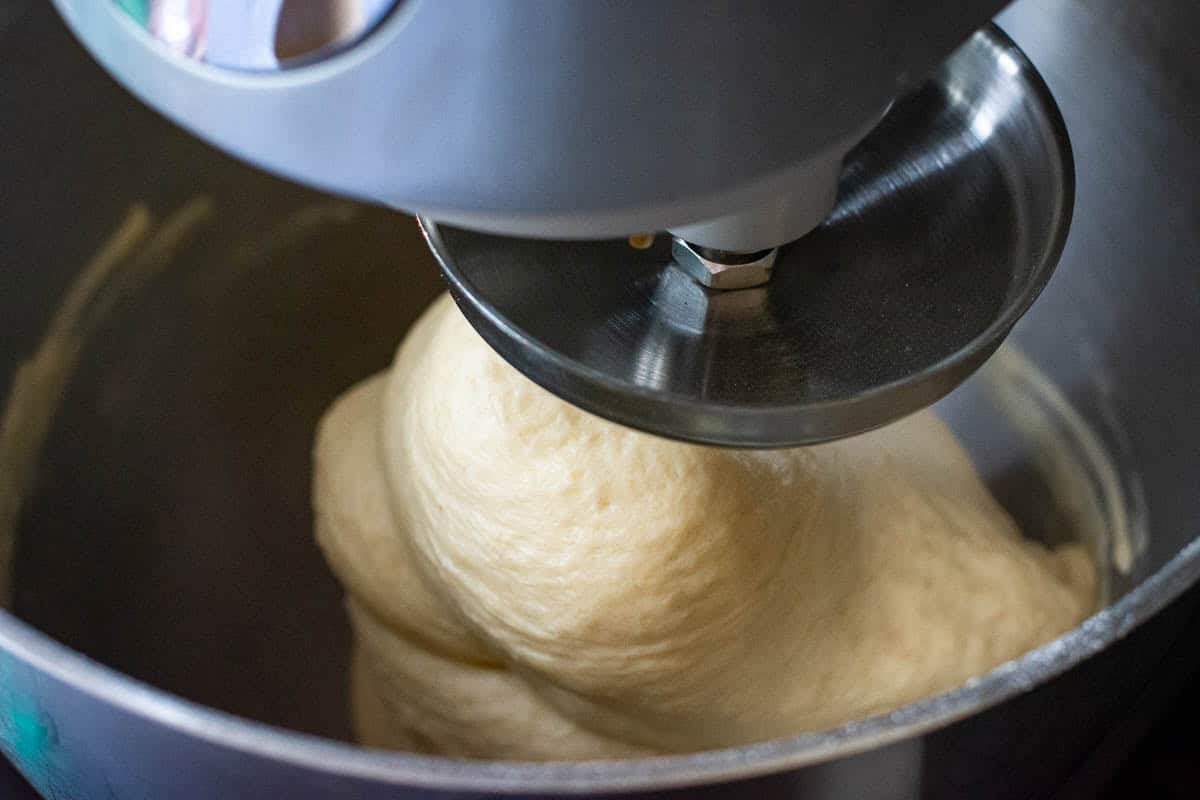
3. Using a dough hook attachment, mix on medium speed for 12-15 minutes until the dough is smooth and elastic.
Pro Tip: Don't rush this stage - passing the windowpane test is key for soft, structured buns.

Bulk Fermentation and Cold Proof
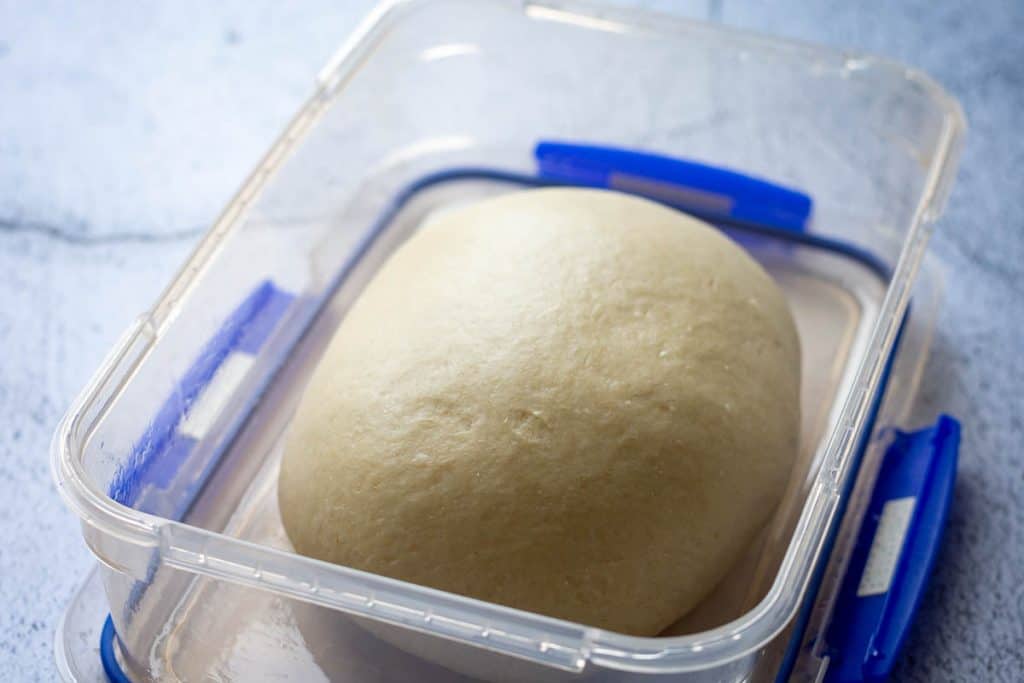
1. Shape the dough into a dough ball and place into a lightly greased large bowl.
2. Cover with plastic wrap and let the dough rise in a warm spot for 5-6 hours until nearly doubled. If your kitchen is very cold, they will need a longer rise.
3. Transfer to the fridge overnight.
Filling and Shaping
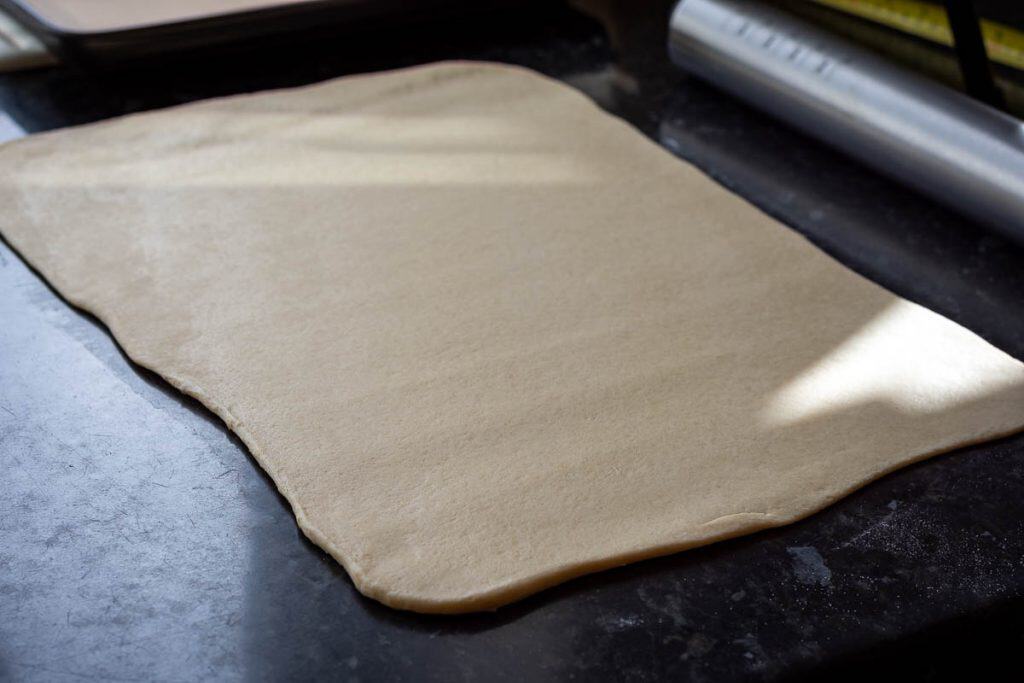
1. The next day, roll the chilled dough on a lightly floured work surface into a rectangle (approx. 30 × 45 cm/ 12x18 inches).
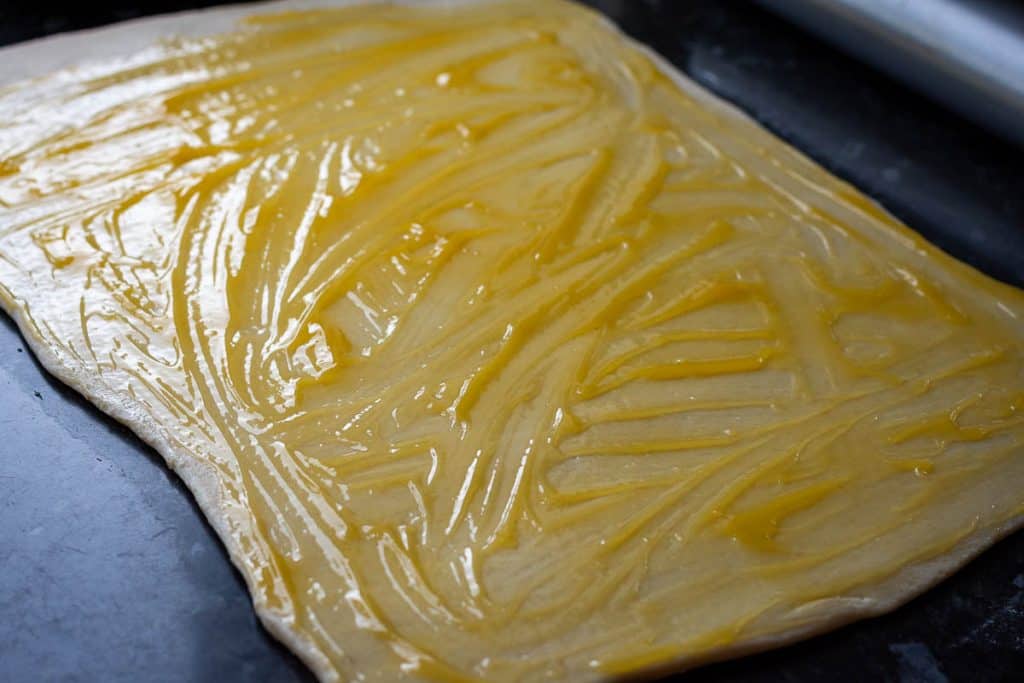
2. Spread lemon curd evenly and scatter raisins.
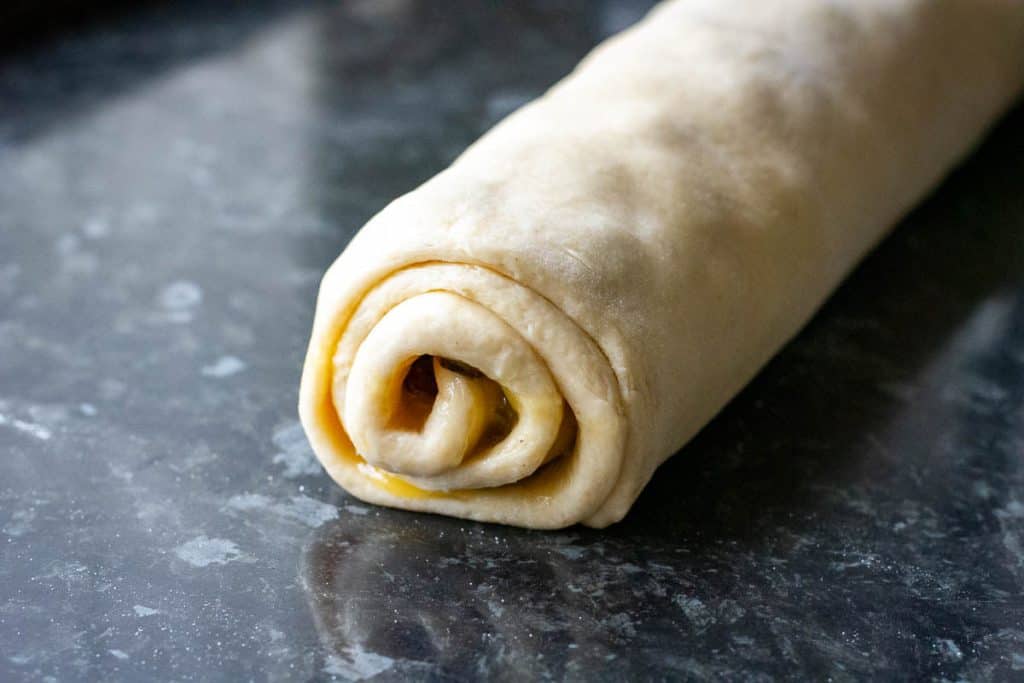
3. Roll tightly like a Swiss roll.
4. Slice into equal pieces using a sharp knife or bench scraper.
5. Place on a tray lined with parchment paper.



Second Rise
1. Cover and leave for the second rise in a warm place for 3-4 hours until puffed up by about 60-75%. They are unlikely to double in size.
Baking
1. Brush with egg wash using a pastry brush.
2. Bake at 190°C (375°F) until golden brown (15-18 minutes).
3. Cool slightly, then transfer to a wire rack.

Icing
1. Mix icing sugar with lemon juice or water to a thick consistency.
2. Spread over cooled buns and top each with a glacé cherry.


Recipe Tips For Best Results
- Windowpane test matters. It ensures structure and helps achieve soft, fluffy buns.
- Skip stretch & folds. This is a rich dough, not a typical sourdough bread. Kneading in a stand mixer develops enough gluten, which is indicated by the windowpane test.
- Work with cold dough. Don't let it come to room temperature before shaping - it's easier to handle when chilled.
- Watch the bake. These buns can brown quickly. If needed, cover loosely with foil.
- Cherry timing matters. Add the cherry straight after icing so it sticks properly.

Storage
Store your Sourdough Belgian Buns in an airtight container at room temperature for up to 3 days.
For longer storage:
- Freeze baked buns (without the icing)
- Defrost at room temperature
- Add fresh icing before serving
More Sourdough Buns Recipes
If you enjoyed these Sweet Sourdough Rolls, there are plenty more sourdough recipes to bake next time - from sourdough hot cross buns to soft sourdough pumpkin dinner rolls and beyond.




Sourdough Belgian Buns (Classic Iced British Rolls)
Equipment
- 1-2 Large Baking Sheets, ideally with high rims
Ingredients
- 370 g strong white flour with at least 12% protein content
- 75 g granulated sugar
- 1 teaspoon salt
- 110 g milk
- 50 g unsalted butter
- 1 egg large, lightly beated
- 160 g active sourdough starter 100% hydration
For The Filling
- 140 g (5 tbsp) lemon curd
- 150 g raisins or sultanas
For Egg Wash
- 1 egg beaten
For The Icing
- 250 g powdered sugar + 3 tablespoon water or lemon juice
- 12 glacé cherries a.k.a. candied cherries
Instructions
DAY 1:
Feed Sourdough Starter
- First thing in the morning, feed your sourdough starter. I typically build a levan by feeding 70g of my starter in a ratio of 1 part starter:1 part water:1 part flour. This simply means that I mix 70g of starter with 70g water and 70g flour. Scoop the mixture into a clean jar, and leave it in a warm spot (ideally, 21-27°C), semi-covered for 4 hours. Your starter should at least double in volume in this time. If it doesn't, it may need a couple of good feeds before it's fit for purpose.
- I use 160g of active starter for baking and feed the remaining 50g before storing it for the future.
Mix The Dough
- In a small saucepan, heat milk and butter, just until the butter melts. Leave it to cool down (it should be just warmer than room temperature).
- Mix the flour, granulated sugar and salt in a bowl of a stand mixer.
- Make a well in the centre and pour in the milk and butter mixture, beaten egg and active sourdough starter. Run the mixer, fitted with a dough hook attachment until the dough is soft and elastic and passes windowpane test (you can stretch it so thin you can see through it without the dough tearing). It typically takes 12-15 minutes on medium speed.
Bulk Fermentation and Cold Proof
- Scoop the dough onto a lightly floured work surface and shape it into a ball. Transfer it into a lightly greased bowl (or any other bulk fermentation container), cover and leave it in a warm spot to bulk ferment for 5-6 hours, or until the dough just about doubles in volume.
- Once the dough finishes its bulk fermentation, place it in the fridge overnight.
DAY 2:
Filling and Shaping
- Line a large rimmed baking tray (you may need two of them depending on the size) with parchment paper.
- Lightly flour your work surface, then roll the dough into a 30 x 45 cm (12 x 18 inches) rectangle.
- Spread the lemon curd evenly over the surface and scatter over the raisins.
- Starting from the shorter side, roll the dough up tightly into a log, Swiss roll-style.
- Slice into 12 equal pieces using a sharp knife. Brush a little egg wash onto the loose edge and press to seal, so the rolls hold their shape.
Second Rise
- Place the buns on the prepared baking tray, leaving space between them, then cover and let them prove for about 3-4 hours, or until they puff up by 60-75%.
Baking
- Heat the oven to 190°C (375°F). Using a pastry brush, gently apply a little egg wash on the top of the buns.
- Bake for 15-18 minutes. Leave the buns to firm up on the baking sheet for 10 minutes, then transfer them onto a wire rack to cool down completely.
Icing
- Mix the powdered sugar with water (or lemon juice). The icing needs to be rather thick. Spread it on top of each Sourdough Belgian Bun and place a cherry in the centre of each. allow the icing to set and enjoy!
Video
Nutrition



Bess says
Wow!!! These Belgian buns are scrumptious!!! I used dried cherries instead of raisins and ate way more of these than I should have!!! Thankfully, they freeze well!
Ieva Greber says
They must be soooo good with dried cherries! I am the same - I can't control myself around sweet treats! 😀
Florence says
I wish I had found this recipe sooner. This is my favorite treat to eat with my morning coffee.
Ieva Greber says
Thank you, Florence! Morning coffee and an iced bun sound like a great way to start the day! 🙂
Elaine says
These buns remind me a little of Danish pastries which have long been a weakness of mine. However, I think the sourdough gives the bun a richer flavor! A new favorite for us!
Ieva Greber says
Oh yes, I know what you mean! And they are so much easier not having to laminate butter in the dough too!
Claudia says
Made these for a lazy Sunday morning and they disappeared instantly. The icing on top is so good and the sourdough gives them a nice little tang. Even better the next day with coffee.
Swathi says
Sourdough Belgian buns are delicious and easy to put together. I enjoyed making it.
Ieva Greber says
Thanks, Swathi — glad these came together easily and you enjoyed the process. Belgian buns are such a satisfying one to make!