
Watching the rise of your starter can feel like waiting for a kettle to boil-sometimes, it just won't hurry up. If you've got a sourdough starter that is not doubling within 4 hours, don't panic. From temperature to feeding habits, a few key factors could be slowing things down (or making it collapse too soon)-let's figure out what's going on.

Jump to:
Sourdough Starter Rising, But Not Doubling
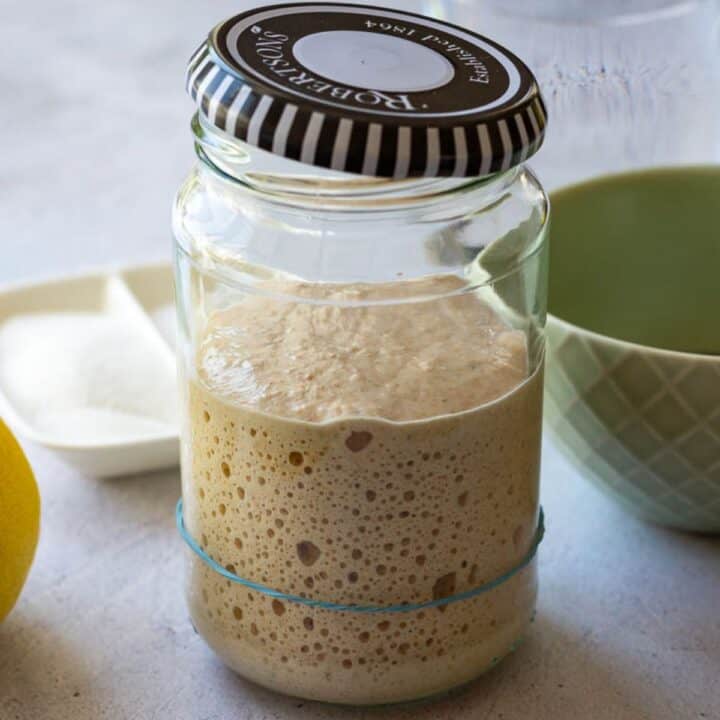
Sometimes, your starter will rise very slowly, not reaching its peak within 4 hours. Let's explore why this may be the case:
Your Starter Is Still Young
If you've just started your starter (pun intended), it's completely normal for it to be sluggish. For the first 7-14 days, your little yeast and bacteria colonies are just getting settled. They need time to grow and strengthen before they can give you that dramatic rise.
The only solution? Keep feeding your sourdough starter daily and be patient. It will get there!
Temperature - It Matters More Than You Think
Your sourdough starter is a living thing, and like most of us, it prefers a cosy environment.
- If your room temperature is below 22°C (72°F), your starter will take longer to rise.
- The sweet spot is around 24-26°C (75-79°F) for a happy, bubbly active sourdough starter within 4 hours.
- If it's too warm-above 27-28°C (81-82°F)-your starter will still rise but might collapse faster.
If You Think Temperature Is The Issue
If your kitchen is cold, especially during the colder months of the year, head straight to our article about how to keep sourdough starter warm in winter months.
Here are a few suggestions to help our starter along:
✔ Place your jar in a warm spot-near a radiator (but not on it), in an airing cupboard, or on top of an appliance like a coffee maker on standby mode.
✔ Use an Instant Pot on the yogurt setting or sit your jar in a bowl of warm water (change the water as it cools).
✔ Feed it slightly warm water (around 30°C / 86°F) to give it a boost.
✔ If you store your starter in the fridge between feeds, take it out 30-60 minutes before feeding to let it warm up a bit.
Note that drastic temperatures are likely to create condensation in a sourdough starter jar.

Feeding Frequency - Maybe Your Starter Is Just Hungry?
If you don't bake sourdough bread frequently and keep your sourdough starter unfed (at room temperature or in the fridge) for a few days, it may become very hungry.
Some starters are bottomless pits, while others are happy with a little less food. If yours isn't doubling:
- If you keep your starter at room temperature, try feeding it twice a day instead of once-but only after it peaks (don't overfeed sourdough starter).
- If your starter has been sitting in the fridge for more than 4 days, it might need a few extra feeds to bounce back.
- A long period without food leads to higher acidity, which weakens the yeast and slows the rise.

Flour Type - Not All Flours Are Equal
The flour you feed your starter makes a big difference. A few key things to know:
✔ Use unbleached, unbromated flour. Chemicals can mess with fermentation.
✔ Avoid cake flour-it's too low in gluten and won't give your starter enough structure. Some types of all-purpose flour actually have protein content as low as 9%, so read the label carefully, and avoid any flour with lower than 10-11% protein.
✔ If you're just starting out, stick with the flour you began with until you learn how your starter behaves.
✔ Switching flours? Give your starter a week to adjust, especially if moving to a type of flour with fewer enzymes and nutrients.
✔ Feeding your sourdough starter some whole wheat flour or rye flour will give it extra nutrients - it's a great way to give it extra oomph!
✔ Stoneground flours tend to create super active, bubbly starters due to higher ash content in flour - mine sometimes triples in four hours!

Water - Is Your Tap Water Sabotaging Your Starter?
If your tap water is heavily chlorinated, it could be slowing things down. Our tap water is great, but if you suspect it's an issue in the area where you live:
- Use filtered water (but not distilled-your starter needs the minerals!).
- Let tap water sit for 12-24 hours before using it to let the chlorine dissipate.
Dry Environment
A dry environment can be a sneaky culprit behind your sourdough starter not doubling. Since we only partially cover the jar, dry air can cause the surface to form a crust, weighing it down and stopping it from rising properly.
To fix this, try covering your starter with a clean, damp cloth or fully covering the jar with a lid-just don't screw it on tight, or you'll trap in too much pressure.
Sourdough Starter Deflates Before It Doubles
If your sourdough starter is rising but collapsing before it even doubles, don't worry-this is a common issue! It usually comes down to one of these factors:
It's Fermenting Too Fast
Warm temperatures speed things up - If your kitchen is above 26°C (78°F), your starter might peak too quickly and collapse before doubling.
👉 Solution: Keep it in a slightly cooler spot or feed it with a lower hydration (less water), but remember to adjust the hydration if the recipe calls for 100% hydration starter.
It's Too Runny
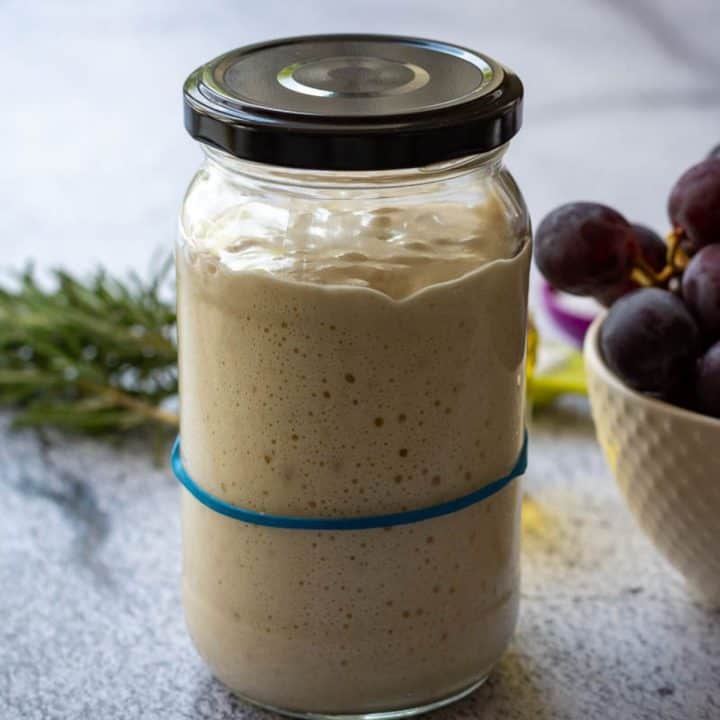
If your starter is runny and thin, it won't hold structure, and bubbles escape before it fully rises. There are numerous reasons why sourdough starter is runny: it may be hungry and acidic, it may not have enough structure due to lack of protein in the flour it is fed (learn more about small bubbles in sourdough starter), or you may not be using kitchen scales for feeding your starter.
Learn all about how to fix a runny sourdough starter HERE.

It Needs More Food
If your starter is burning through food too fast, it will rise quickly and then deflate.
👉 Solution: Feed it a higher ratio (e.g., 1:2:2 instead of 1:1:1) to give it more nutrients to work with. Note, that it will likely take longer than 4 hours to double, but it should not deflate as quickly.
If you are not feeding your starter frequently, and your starter smells like alcohol and even starts forming clear liquid on top (known as sourdough hooch), it is a clear sign that your sourdough starter is very hungry, and needs to be fed more often.
Learn more about sourdough hooch and what sourdough starter should smell like! And if you want to learn the essential sourdough terms, head to our sourdough glossary for beginners!

Weak Gluten Structure
If you're using low-protein flour (like cake flour, or even plain (all-purpose) flour), your starter may struggle to hold gas.
👉 Solution: Feed with strong bread flour with at least 12% protein.
***
A healthy starter should rise gradually and hold its peak for a few hours before deflating. If yours is collapsing too soon, tweak the temperature, hydration, feeding ratio, or flour to slow things down and build more structure!
Extra Tip To Give Your Starter More Oomph
Oh, and here's a little tip-give your starter a breath of fresh air!
While it doesn't need oxygen to survive, it definitely enjoys it. Try stirring it vigorously between feedings and giving it a really good mix when you do feed it. This helps distribute the wild yeast and bacteria evenly, leading to a stronger, more consistent rise in your bread. Small habit, big difference!

More Sourdough Starter Tips
Get our FREE Sourdough Starter Troubleshooting Guide that addresses the 20 most common problems.
For more, head to Reading Your Sourdough Starter: What Bubbles, Smell and Rise Actually Tell You.
Final Thoughts
If your starter isn't doubling in 4 hours, don't stress. As long as it eventually rises and doesn't collapse too quickly, it's still doing its job. The key is patience, consistency, and small adjustments. Keep feeding it, keep an eye on the temperature, and soon enough, you'll have a strong, happy starter ready to leaven all the sourdough your heart desires!
- Baking Sourdough With the Lid On the Whole Time (Why It Works)
- Reading Your Sourdough Starter: What Bubbles, Smell and Rise Actually Tell You
- Best Flour For Sourdough Beginners: Starter Feeding & Bread
- How To Know When Sourdough Starter Is Ready And At Its Peak
- Sourdough Glossary For Beginners
- Sourdough Equipment For Beginners: The Tools I Actually Use
- Flour for Sourdough Baking: How to Choose The Right Type
- Why Bake Sourdough? A Great Hobby To Start In The New Year







Leave a Reply