
If you're looking for a delicious homemade bread recipe with a bit of flair, this Sourdough Fougasse is just what you need. A beautiful, leaf-shaped traditional French bread, fougasse has a chewy interior and crisp crust, perfect for tearing and sharing. Whether you're a sourdough enthusiast or just love experimenting with new loaves, this recipe is sure to impress!

Jump to:
As an Amazon Associate I earn from qualifying purchases, at no extra cost for you! Thank you!
But First, What Exactly Is Fougasse?
French Fougasse is a type of flat bread that hails from the Provence region of southern France. Traditionally, it was baked in the embers of a wood-fired oven, and its distinctive leaf-like pattern (that is sometimes said to represent an ear of wheat) wasn't just for show-it helped the bread bake more evenly.
While traditional fougasse bread is known for its iconic oval shape, some regional variations are made in more of a rectangular shape, round shape or even a rough triangle.
In Provençal culture, fougasse is often enjoyed as a savoury treat, topped with herbs, olives, or cheese, and it's perfect for sharing at gatherings or as part of a rustic meal.

Fancy an autumnal twist? Try our Pumpkin Sourdough Fougasse next! And for more French classics, have a look at Sourdough Pain De Campagne and Sourdough Baguettes.
Things To Know Before You Start
Before diving into making Sourdough Fougasse, here are a few key things to keep in mind:
- This is a high-hydration dough (much like Italian Focaccia), which means it will be wet and sticky. For beginners, this might feel tricky, but don't worry-fougasse is actually one of the best first breads to try with this type of dough since it's a flatbread and doesn't need much oven spring.
- Unlike loaves that require shaping into a ball, you only need to stretch it out thinly on an oiled baking sheet.
- This recipe uses no commercial yeast, so you'll need a strong and active sourdough starter to help the dough rise.
- One more good idea: baking with steam. A hot oven with steam helps the bread puff up and develop a nice crust, so don't skip this step!

Ingredient Notes
Here's everything you'll need to make this Sourdough Fougasse:
- strong white flour: bread flour with at least 12% protein content. Whilst untraditional, you may replace up to 15% of white wheat flour with whole wheat flour.
- water: we use slightly warm water to give the fermentation process a head start.
- active sourdough starter: 100% hydration starter.
- extra virgin olive oil.
- salt.
- Herbs de Provence: maybe replaced with mixed dried herbs, oregano or even finely chopped fresh rosemary.

Find the ingredient quantities, detailed instructions and nutritional information in the recipe card at the bottom of the post.
Step-By-Step Method
Much like many sourdough recipes, this Sourdough Fougasse is made over two days. On day 1, we make the dough and bulk ferment. The next day we shape, proof again and bake!
DAY 1
Step 1: Sourdough Starter
First thing in the morning, feed your starter and leave it in a warm spot to at least double in volume within 4 hours, or so. You will need 100g of active sourdough starter for this fougasse recipe.
If your sourdough starter isn't doubling within 4 hours, give it a couple of regular feeds (12-14 hours apart) before baking with it. This will ensure strong wild yeast colonies and lower acidity of the starter.
Step 2: Fermentolyse
Once your starter is at least doubled in volume, add the flour, bubbly sourdough starter, and water in the bowl of a stand mixer fitted with a dough hook attachment. Mix just enough to make a rough dough. Cover the bowl with a damp cloth (like a tea towel) and leave the sourdough to fermentolyse for 30-60 minutes.

Step 3: Coil Folds and Bulk Fermentation
Add the salt and olive oil, and run the mixer for approximately 10 minutes on medium speed. Your sourdough should look elastic and slightly shiny, although it will be quite wet and sticky.

Scoop the dough into a shallow, lightly greased bowl. Cover with a damp towel or cling film (plastic wrap).
For the next 2 hours, every 30 minutes, perform a set of coil folds (see video below). After the third set, you should start seeing large blisters forming on top of the dough.
After 4 sets of folds, let the fougasse dough rest in a warm spot for 3-4 hours, until almost doubled in size.


Place the dough in the fridge to finish proofing overnight (or up to 48 hours).
DAY 2
Step 4: Shaping Sourdough Fougasse
The next morning, line a large baking sheet with a large piece of parchment paper and brush it with a thin layer of oil. Take your sourdough out of the fridge and scoop it out onto the baking sheet.


Using wet hands, stretch it out into a rectangle (the dough should be no thicker than 1.5 cm). If it shrinks back, leave it for 10 minutes, and then stretch it out again.
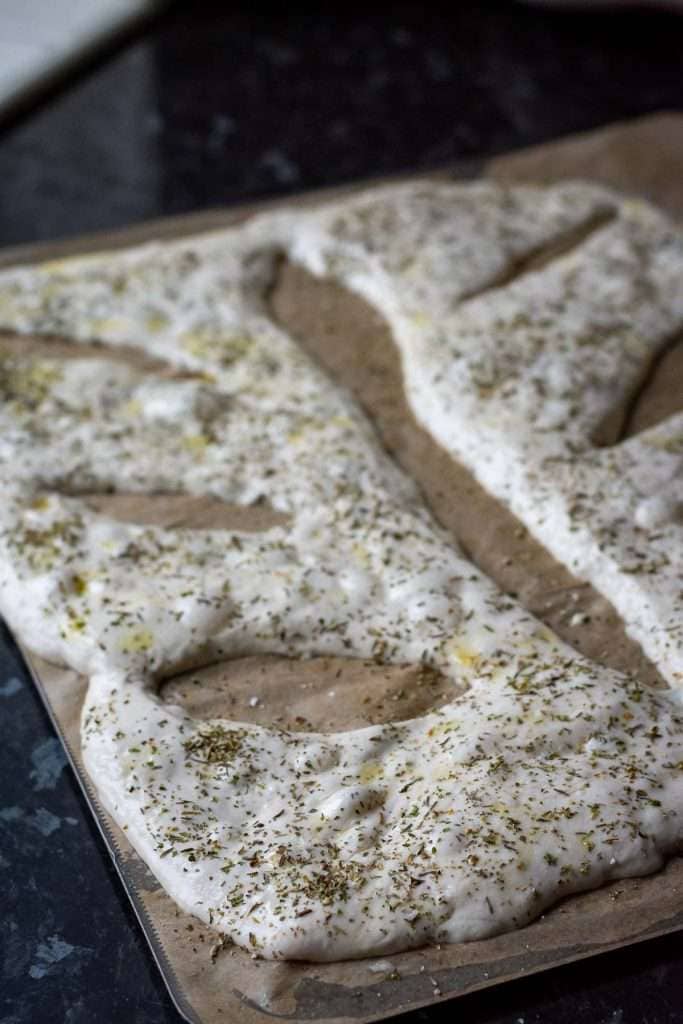
Using oiled scissors, a sharp knife or a pizza wheel, cut down the middle keeping both ends intact. Make 3 diagonal cuts on each side of the middle cut (see photos below). Using oiled fingers, stretch the cuts wider, so they don't close up when proofing or baking.


Step 5: Final Proof
Cover the shaped fougasse loosely with an oiled sheet of cling film and leave it to proof in a warm place for 1-2 hours, until risen by about 50%.
Step 6: Baking
In the meantime, preheat the oven to 220°C Fan. Place a small ovenproof dish with water at the bottom of the oven to create steam. It will make sure you have crusty fougasse.
Remove the cling film from the dough, brush the surface of the dough with olive oil, sprinkle it with herbs de Provence and sea salt flakes and bake in the centre of the oven for 15-18 minutes until golden brown.
Leave the bread on the tray for 5 minutes, then transfer it onto a wire rack to cool down to room temperature.

It is best enjoyed on the day that it is baked!
Serving Suggestions
Sourdough Fougasse pairs beautifully with all kinds of hearty dishes and dips. This French flatbread is perfect alongside soups and stews-try it with Roasted Butternut Squash and Red Pepper Soup or Vegan Creamy Cauliflower Soup. It also shines when served with heartier meals like Cuban Beef Stew or a Three Bean Chilli.


If you're a fan of dipping, the best thing is tearing off a piece of crusty fougasse and dunking it into Lebanese Hummus or a vibrant Beetroot Dip. For a truly indulgent experience, serve it with Baked Camembert-and don't forget to add some kalamata olives for an extra Mediterranean twist!
Recipe FAQs
Absolutely! If you don't have a stand mixer, you can still make Sourdough Fougasse by hand. Use a large bowl to mix the dough and knead it on your work surface. A bench scraper or dough scraper will be helpful when working with this wet dough. Be patient with the kneading process-it'll come together with a bit of practice!
Yes, you can use all-purpose flour, but keep in mind that the texture may be slightly different. Bread flour gives the fougasse a chewier, more structured crumb, while all-purpose flour will result in softer bread. Both are delicious, so it comes down to personal preference!
The traditional shape of French Fougasse bread is flat and leaf-like, with characteristic slashes that resemble a tree or leaf. It's not just about aesthetics; these cuts also allow the bread to bake more evenly and give it its signature crispiness!

Mix It Up: Turn Your Sourdough into a Flavour Adventure.
More Sourdough Bread From Around The World
What's the next sourdough recipe you're going to make? Try our new recipe for Sourdough Focaccia With Potatoes and Rosemary. Then let's travel around the world, shall we?


Sourdough Fougasse
Equipment
- Kitchen Scissors
Ingredients
- 270 g strong bread flour
- 190 ml water
- 100 g active sourdough starter 100% hydration
- 1 tablespoon olive oil
- 5 g salt
Topping
- 1 tablespoon olive oil
- 1 tablespoon Herbs de Provence
- ½ teaspoon sea salt flakes
Instructions
DAY 1
- Once your starter is at least doubled in volume, mix the flour, sourdough starter and water in the bowl of a stand mixer to a rough dough. Cover the bowl with a tea towel and leave the dough to fermentolyse for 30-60 minutes.
- Add the salt and olive oil, and run the mixer for approximately 10 minutes on medium speed. Your sourdough should look elastic and slightly shiny, although it will be quite wet and sticky.
- Scoop the dough into a shallow, lightly greased bowl. Cover with a damp towel or cling film.
- For the next 2 hours, every 30 minutes, perform a set of coil folds (see video below).
- After 4 sets of folds, leave the fougasse dough undisturbed in a warm spot for 3-4 hours, until almost doubled in size.
- Place the dough in the fridge to finish proofing overnight (or up to 48 hours).
DAY 2
- The next morning, line a large baking sheet with parchment paper and brush it with a thin layer of oil. Take your sourdough out of the fridge and scoop it out onto the baking sheet.
- Using your hands, stretch it out into a rectangle (the dough should be no thicker than 1.5 cm). If it shrinks back, leave it for 10 minutes, and then stretch it out again.
- Using oiled scissors or a sharp knife, cut down the middle keeping both ends intact. Make 3 diagonal cuts on each side of the middle cut (see photos in the text above). Using oiled fingers, stretch the cuts wider, so they don't close up when proofing or baking.
- Cover the shaped fougasse loosely with an oiled sheet of cling film and leave it to proof in a warm spot for 1-2 hours, until risen by about 50%.
- In the meantime, preheat the oven to 220°C Fan. Place a small ovenproof dish with water at the bottom of the oven to create steam. It will make sure you have crusty fougasse.
- Remove the cling film from the dough, brush the top with olive oil, sprinkle it with herbs de Provence and sea salt flakes and bake in the centre of the oven for 15-18 minutes.
- Leave the bread on the tray for 5 minutes, then transfer it onto a wire rack to cool completely.
Video
Nutrition



Leave a Reply