
Ever opened your sourdough starter jar and wondered if nail polish remover snuck in overnight? A healthy sourdough starter can smell like all sorts of different things - from tangy yoghurt to acetone aromas - and most of the time, it's totally normal. So, what should sourdough starter smell like? It's all about recognising the natural shifts in the balance of yeast and bacteria doing their thing.

Jump to:
As an Amazon Associate I earn from qualifying purchases, at no extra cost for you! Thank you!
What Causes Sourdough Starter To Smell?
The aroma of a sourdough starter is shaped by the activity of wild yeast and lactic acid bacteria, both naturally present in flour and your environment. When you mix flour and water to begin your sourdough journey, these microbes kick off a fermentation process that produces acids, alcohol, and carbon dioxide gases - key contributors to both rise and smell.
As the sourdough culture develops, lactic acid bacteria generate lactic acid (mild, yoghurt-like aroma), while acetic acid (more vinegar-like) forms in cooler conditions, contributing tothe signature sourdough tang.
The wild yeast not only helps the starter rise but also produces esters and alcohol, which add fruity or wine-like notes.
Smell also depends on temperature and hydration: wetter starters tend to be milder and fruitier; stiff starters smell sharper.

What is more, sourdough starter kept in warmer temperatures often has a stronger pungent aroma.
A new starter (especially in the first week) might not smell much more than just flour and water. But with time, the balance of good bacteria and yeast will grow, changing the smell noticeably as the starter rises and matures.
What Sourdough Starter Should Smell Like?
A healthy starter can surprise even experienced bakers with its complex, sometimes funky aroma. But in most cases, that's a good thing. A strong sour smell is completely normal and expected, especially just before a feeding. It's a sign that your starter is mature, full of microbial life, but hungry and ready to be fed.
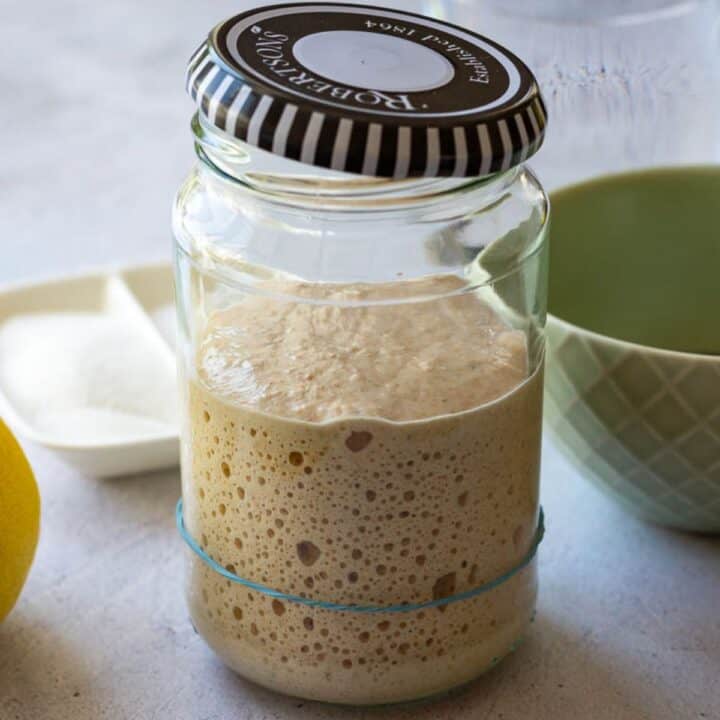
A well-fed active starter often carries a pleasantly tangy or mildly sweet smell. Think yoghurt, green apples, or even a hint of beer. In contrast, sourdough discard (the portion you remove before feeding) tends to smell more acidic or vinegary, as it's past its peak activity and has built up more lactic and acetic acids over time.

Sometimes, you might catch a whiff of nail polish remover or paint thinner - alarming at first, but usually nothing to worry about. These sharp chemical smells often appear in a neglected starter or one that's gone a little too long without a feed.
It's simply a sign that the yeast and bacteria are stressed and producing excess alcohols and esters. A couple of feeds will usually bring it right back into balance.
You might also see a clear or dark liquid (hooch) sitting on top. Again, this just means your starter is hungry, not spoiled. Learn more about what to do with sourdough hooch.

How The Type Of Flour Changes The Smell
The aroma of your sourdough starter can vary quite a bit depending on the different flour you use to feed it. Each flour brings its own personality to the fermentation party, affecting both the microbes involved and the smells they produce.
- Whole Wheat Flour: A whole wheat starter often smells nuttier, earthier, and a little more intense. That's because whole grain flour contains more of the grain's outer layers, which offer extra nutrients for yeast and bacteria, leading to a more robust fermentation and deeper aroma.
- Rye Flour: A rye starter can have the most distinctive scent: slightly sweet, tangy, and malty. Rye flour ferments quickly and encourages the growth of lactic acid bacteria, giving the starter a rich, complex smell, even in cooler temperatures.

- White Bread Flour: Starters fed with white wheat flours, like white bread flour, tend to smell milder and cleaner. These flours have fewer nutrients than whole grain varieties, so the fermentation is usually a bit slower, and the aroma is more subtle and yeasty.
Note that using different flour types isn't just about the smell. It also influences flavour, texture and rise.
Mix It Up: Turn Your Sourdough into a Flavour Adventure.
When To Be Concerned?
While sourdough starters can have a wide range of strong aromas, there are some sourdough starter smells that signal it's time to hit pause. If your starter starts giving off unpleasant smells like rotten eggs, dirty socks, or anything aggressively putrid, that's a red flag.
These odours may indicate the presence of unwanted bacteria or even harmful bacteria that have outcompeted the good guys. This can happen if a starter is contaminated or stored in poor conditions.
In these cases, it's safer to discard the starter and begin fresh. Trust your nose - if the smell makes you recoil, it's probably not something you want in your sourdough loaves.
Tips To Keep Your Starter Smelling Right
- Stick to regular feedings to keep your starter healthy and smelling fresh - consistency is key for the best results.
- Always use a clean jar to avoid unwanted residue or buildup.
- If you're stepping away or won't be sticking to a feeding cycle, don't leave your jar at room temperature - pop the lid on and store it in the fridge to slow fermentation safely.
- Don't panic if your fresh starter smells odd during the early stages - it often smells like flour and water. That's normal. Just keep feeding!
- A strong sour or acidic smell between feedings can simply mean your starter is hungry. Regular feeds will balance this out. Learn more about how to feed a sourdough starter.
- If your tap water is highly chlorinated, use filtered or bottled (but never distilled) water to feed your sourdough starter.
Keeping things clean, fed, and predictable is the best way to enjoy a happy, sweet-sour smelling starter for years to come!
Final Sniff (Conclusion)
Trust your nose-a healthy starter should smell sour (more or less, depending on how hungry your sourdough starter is), but never rancid! For more, head to Reading Your Sourdough Starter: What Bubbles, Smell and Rise Actually Tell You.


Leave a Reply