
Going on the sourdough journey, we find ourselves whisked into a world where time, temperature, and intuition blend to create the perfect loaf. Today, we're diving deep into a question that puzzles many: When is Sourdough Ready To Bake? When Has It Finished It's Final Proof? Understanding the answer is not just about getting it right the first time but refining a skill that transforms good bread into great.

Jump to:
As an Amazon Associate I earn from qualifying purchases, at no extra cost for you! Thank you!
Proofing vs Bulk Fermentation
First, let's clear the air between two often-confused terms: bulk fermentation and proofing. The bulk fermentation stage is the initial period of time where our main dough, full of wild yeast and good bacteria, rises and develops its structure and flavour.
The bulk fermentation period is sometimes referred to as the first rise.

The final proof, or second rise, comes after shaping the dough and is crucial for that final push before the dough meets the oven's heat.

The Basics of Final Proof
During the final proof, the fermentation process continues, albeit at a slower pace if you're employing a cold-proof. The wild yeast and good bacteria in your sourdough starter remain active, consuming the sugars present in the flour. This metabolic activity produces carbon dioxide and alcohol, contributing to the dough's rise and flavour development.
Flavoured Sourdough: How, When and What Mix-Ins To Add To Your Sourdough?
Discover a variety of mix-ins and learn how they affect hydration and bulk fermentation, master the art of substituting water with coffee and tea, and explore a plethora of creative mix-in ideas. Plus, get 2 exclusive bonuses that will inspire you to create the most flavoursome and unique sourdough!

Moreover, organic acids such as lactic and acetic acids are formed, enhancing the sourdough's characteristic tang and improving the dough's gluten structure.
The science behind why this matters is rooted in the delicate balance of gases, gluten development, and enzymatic activity.
As the dough rises, the gluten strands stretch, trapping the carbon dioxide produced by the yeast. This not only gives the dough volume but also contributes to its final texture. A well-proofed dough will have developed enough gluten structure to support the loaf's shape and ensure an open, airy crumb.

And proper final proof will contribute to achieving those sought-after sourdough "ears". Download our FREE Guide to Sourodugh Ears below:
However, it's not just about the rise. The enzymatic activity during this stage is crucial for flavour development and crust formation. Enzymes in the flour break down starches into simpler sugars, which not only feed the yeast but also contribute to the Maillard reaction during baking-responsible for the golden, flavorful crust on your loaf.

Why Proper Final Proof Matters?
The final proof is the last step before your sourdough journey transitions from the kitchen counter to the hot oven. Get this right, and you're rewarded with a loaf boasting a crackly crust, airy texture, and complex flavours thanks to the fermentation process.
Achieving the perfect balance during the final proof is essential for several reasons:
- Volume and Structure. Proper proofing ensures that the dough achieves optimal volume and structure. It allows the gluten network to expand without overstretching, providing the dough with the necessary strength to hold up the loaf's shape during the oven spring.
- Texture and Crumb. A well-proofed loaf will exhibit a tender, chewy crumb with a distribution of air pockets, creating the sought-after airy texture.
- Flavour Development. The longer fermentation times associated with sourdough and its final proof contribute to the development of a complex flavour profile. The acids produced during fermentation give sourdough its distinctive tang, while also breaking down the flour's proteins to release more amino acids, enhancing the bread's overall flavor.
- Crust Characteristics. The final proof impacts the crust's characteristics. Proper fermentation ensures sufficient sugars are available for caramelization and the Maillard reaction, leading to a crackly crust with a rich colour and robust flavour.
Room Temperature Final Proof (Ambient Proof)
Proofing your dough at room temperature, we're essentially giving our lovingly shaped dough a cosy spot on the kitchen counter, letting it bask in a warm environment before baking. This is all about timing and conditions-it's a delicate balance that considers the personality of your dough (think: the type of flour, how thirsty it was, and the amount of sourdough starter that kicked off the party) and the warmth of its surroundings.

In short, if you are using ambient proof for a final rise, you can expect:
- Milder Sourness. A warm, quick proof allows the bread to develop a little bit more of the tanginess, but not nearly as much as proofing it overnight in the fridge.
- Grain Galore. This method really lets the grain take the stage, spotlighting its natural flavours. You'll get a loaf that has a more prominent flavour profile.
- Scoring Shenanigans. Warm dough can be a bit complicated when it comes to scoring. It's softer and more delicate, so handling it can be a bit more, let's say, challenging. But with a steady hand and a sharp blade, you'll navigate this like a pro.
So, how long do we let our dough proof at room temperature? Whilst recipes differ, we're typically looking at a cosy 2-3 hours for a simple sourdough (like sourdough ciabatta or sourdough focaccia) and 3-5 hours for heavily enriched sourdough (like sourdough brioche or sourdough croissants).

Cold Proof (Retarding Bread Dough)
Now, let's chat about the enchanting process of cold proofing, or as some like to call it, retarding. Your beautifully shaped dough gets tucked into the fridge (or a specialized dough retarder if you're fancy) for a long, chilly slumber-usually overnight.

This is my preferred method for sourodugh bread loaves. Why, you ask? Well, for starters, it fits like a dream into the rhythm of home baking. But the real magic? It's all about the tangy sourdough flavour.
A long, cold final proof adds flavour complexity to your loaf that'll have you swooning at the first bite. The flavours you'll discover after it's spent a night in the fridge are deep, nuanced, and utterly captivating - that is if you enjoy that sour signature hint of sourdough bread.
- Sourness Levels Up. If you're after that classic tangy kick, a night in the fridge is your dough's best friend.
- Scoring Ease. Cold dough holds its shape like a dream, making it the perfect canvas for your scoring. Plus, there's something oh-so-satisfying about slicing into that firm, cold dough.
- Blistering Beauty. The crust blisters are much more likely after a cold proof, giving your loaf that artisanal look and texture.

Signs Sourdough Finished Proofing At Room Temperature
There is no set rule or foolproof test that I can suggest, so you will need practice and baker's intuition to determine when your sourdough is ready to hit the oven.
Instincts and Educated Guess
Understanding when your sourdough is properly primed for the oven requires a blend of instincts and educated guesses. Consider the whole grain percentage, the preferment's potency, and the ambient conditions.
- High whole grain percentages in your dough mean more nutrients and enzymes kicking into gear, speeding up the fermentation process. These grains are thirsty, absorbing more water and often demanding a shorter final proof to avoid over-fermentation. The more whole grains used in your dough, the shorter the final proof at room temperature (whole grain flours can benefit from a longer cold proof though).
- A lively starter that's low in acidity can accelerate the final proof, its active yeast and bacteria eager to feast on the dough's sugars. The amount of starter, as well as the strength and maturity of it, will affect the timing of your final proof. If you used a lot of active sourdough starter in the dough - the final proof may take less time and may be ready to bake quicker.
- Warmer temperatures can significantly shorten the final proof, as yeast thrives in cosy conditions, leading to a quicker rise. Conversely, a cooler kitchen acts as a gentle pause, slowing the fermentation process and extending the final proof's duration.

Christmas Sourdough ebook
Celebrate the holiday season with a unique twist this year with our 24 Christmas Sourdough recipes! Discover the magic of using active sourdough starter, sourdough discard, and leftover baked sourdough bread to create a memorable and flavoursome Christmas feast.
Visual Cues and Volume of The Dough
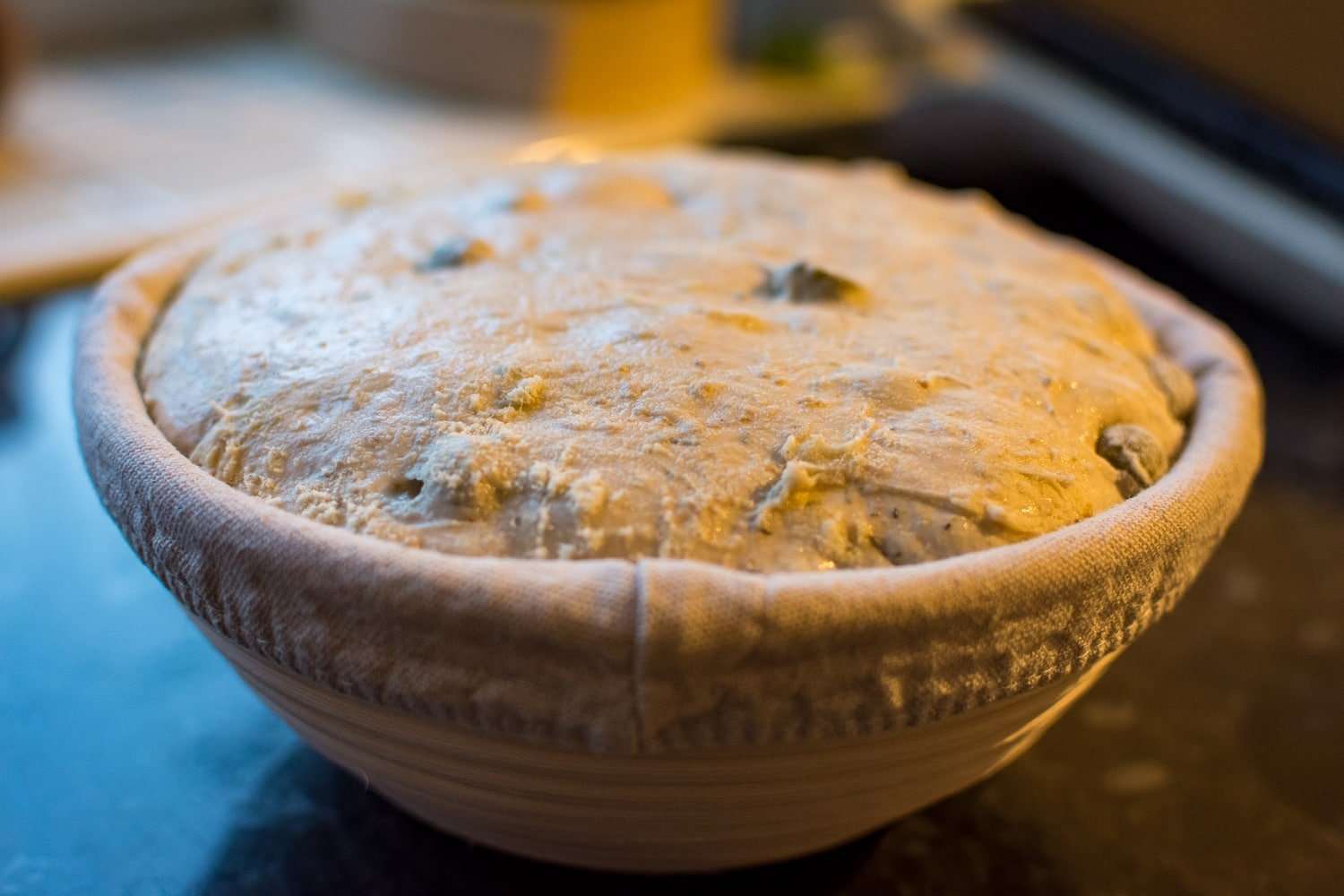
Does it need to double in size? Not always. Artisan sourdough bread may not show as dramatic a rise as commercial yeast loaves, and the rise may depend on the type of flour used as well as the overall formula of the dough. Instead, look for a noticeable increase and a dome-shaped profile on top of the loaf.
Of, course, most of the sourdough recipes that are proofed at room temperature are not shaped into a dough ball, so you may not be able to see the dome. They typically take the shape of tear-and-share bread, sourdough garlic bread, cinnamon rolls, sourdough garlic knots or burger buns. In this case, we recommend a poke test.


Poke Test
The poke test is typically a reliable method to gauge readiness. Gently press a floured finger into the top of the dough. If it springs back slowly, leaving a tiny indentation, it signals the perfect balance between rise and resilience, indicating it's time for the oven.
If the dough springs back immediately, carry on with the proofing - the dough needs longer. When the dough hardly springs back at all - it is likely over proofed.
When Is Sourdough Ready To Bake After Cold Proof?
Experimentation and Approximate Timings
Each sourdough loaf is a unique experiment. Cold proofing durations can vary widely, with anywhere from 8 to 72 hours being common. The exact timing depends on your recipe, dough temperature, and the flour used. As a rule of thumb:
- If you are adding protein or fat to your sourodugh, like milk and butter, it is a good idea to cold proof your dough for longer.
- Adding sugar to your dough gives the yeast more food to enjoy, so the final proof will typically take less time.
- Higher-hydration sourdough will typically need shorter final proof.
- Using a high percentage of whole wheat flour benefits from longer proof at cold temperature, allowing the grain flavour to develop further.
Why Poke Test Won't Work?
Cold dough doesn't respond the same way to the poke test due to its firmness. Instead, rely on visual cues and your experience to judge if the loaf has benefited enough from the cold storage.
Signs Your Sourdough Is Overproofed
Overproofed dough often leads to a lacklustre oven spring and dense texture.
- The dough is very loose and lacks structure.
- When poked, the indentation doesn't spring back at all, indicating the gluten has been weakened (if it is proofed at room temperature).
- The sourdough may have a noticeable alcohol smell, a sign of too much fermentation.
Frequently Asked Questions
- What's the best temperature to proof sourdough? Aim for a cozy spot around 75°F (24°C) for room temperature proofing. For cold proofs, your fridge should be set just below 40°F (4°C).
- Can I speed up the proofing stage? Yes, but with caution. Placing your dough in a slightly warmer spot can expedite the process, though watch closely to avoid overproofing.
- How does hydration affect proofing times? Higher hydration doughs tend to proof faster due to their looser structure, which allows gases to move more freely.
- Is it better to overproof or underproof sourdough? Neither is ideal, but underproofed sourdough often offers a margin for correction with a more vigorous oven spring. Overproofed dough, once past a certain point, can't be saved.

Understanding when your sourdough is ready to bake is an art honed over time, blending science, intuition, and a touch of patience. Remember, every loaf is a lesson, bringing you closer to mastering the delicate balance of proofing process. With each bake, you'll find yourself more attuned to the subtle cues of readiness, ensuring your homemade sourdough bread is not just baked, but perfectly so. Keep experimenting, keep learning, and let the journey of sourdough baking continue to inspire and challenge you in the best way possible.

Anél-Mari says
Thank you for this amazing post! I haven't even given the hydration and type of flour a thought regarding proofing times!
Ieva Greber says
Hi! Thank you so much for the comment - so glad you found the article helpful 🙂