
Today, we'll try to tempt you to try our hearty and delicious bread with this Seeded Sourdough Bread recipe. Don't be intimidated by sourdough - we're keeping it simple and fun. With a blend of wholesome flours and a medley of seeds, this recipe promises a flavoursome loaf with a satisfying texture. Follow along as we guide you through each step, from mixing to baking, ensuring your homemade bread journey is nothing short of delightful!

Jump to:
As an Amazon Associate I earn from qualifying purchases, at no extra cost for you! Thank you!
Easy Seeded Sourdough
Yes, sure, sourdough bread takes a while to make, but this recipe is really quite simple. We do not autolyse the sourdough, nor do we push the boundaries with the hydration of the dough.
What is more, you can adapt the recipe by experimenting with various different types of flours and changing the flavour profile further by using a variety of edible seeds!

Looking for a plain sourdough loaf with a chewy crust and open sourdough "ear"? Head to My Everyday Sourdough Bread recipe.
Ingredients and Substitutes
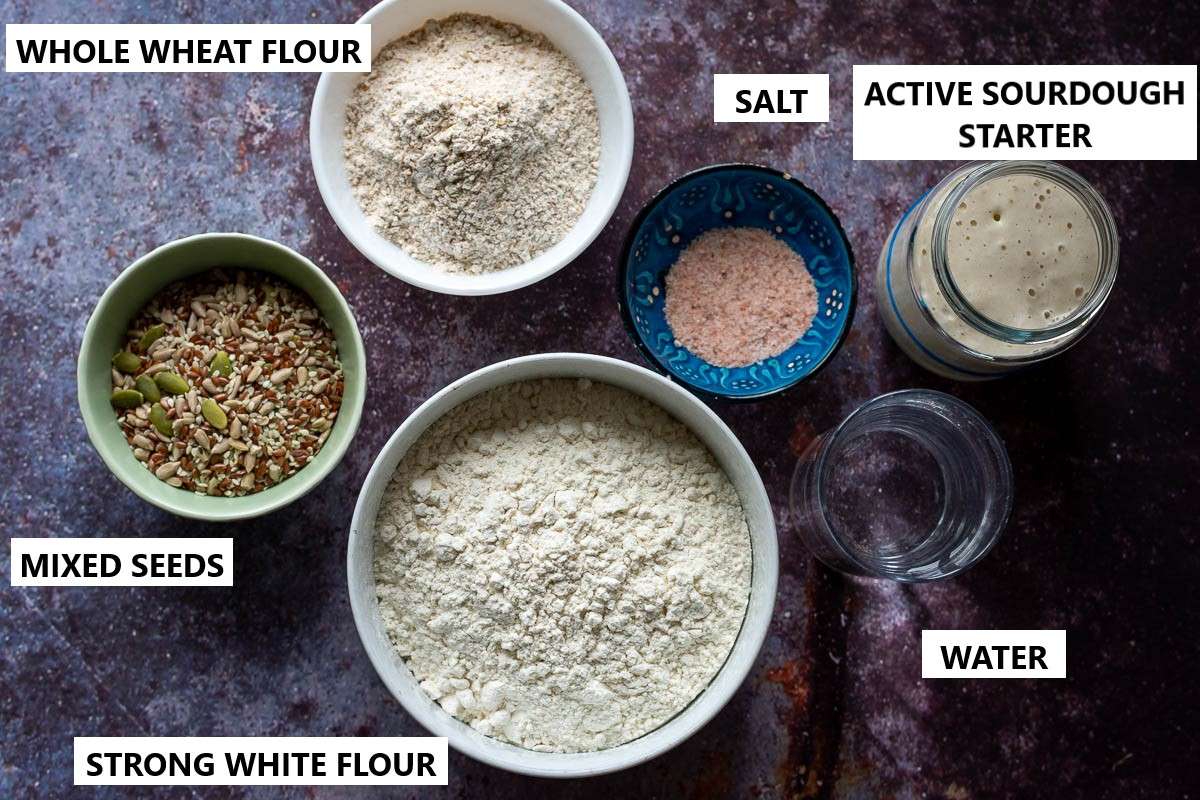
- mixed seeds: we used a mixture of sunflower seeds, pumpkin seeds and linseeds, but you can also add other kinds of seeds like chia seeds, hemp seeds, flax seeds, poppy seeds and white sesame seeds. Try adding some fennel seeds if you're feeling adventurous!
- strong white bread flour: with a gluten content of at least 12.5%.
- whole wheat flour: can be replaced with rye or spelt flour, or more white flour. Alternatively, try our Spelt Sourdough Bread with seeds mixed-in.
- salt.
- active sourdough starter: 100% hydration.
- luke warm water.
TOP TIP: For an extra nutty flavuor of your seeded whole wheat sourdough bread, toast the seeds in a dry pan for a few minutes. Make sure to cool them down completely before adding them to the dough!
Step-By-Step Method
Step 1: Sourdough Starter
You will need a 100% hydration starter for this recipe. This simply means that your sourdough starter is fed equal parts of water and flour. Feed your starter first thing in the morning and leave it in a warm spot until it at least doubles in volume (it should take no more than 4 hours if fed in a 1:1:1 ratio).
Step 2: Make The Dough
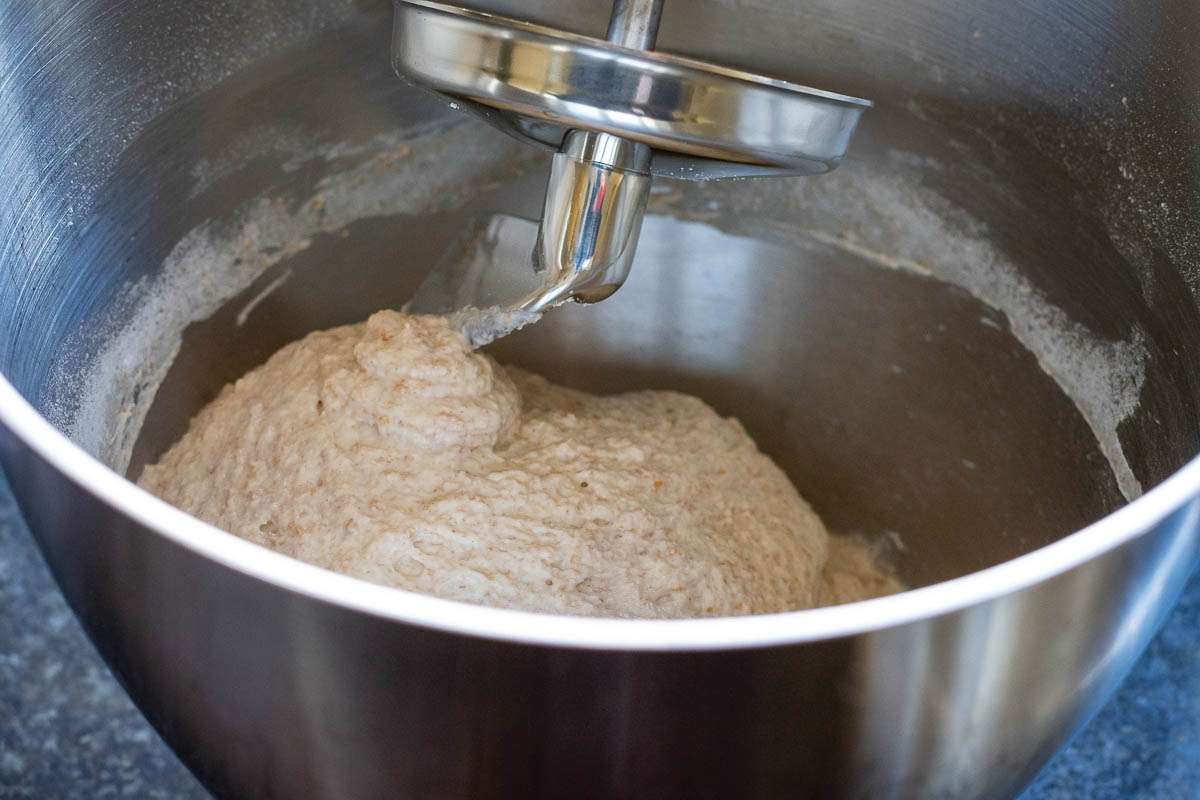
In a bowl of your stand mixer, combine strong white flour, whole wheat flour and salt. Add the active sourdough starter and water. In a stand mixer, fitted with a dough hook attachment, mix everything into a cohesive dough (about 5-7 minutes on medium speed).
Step 3: Folds and Adding Seeds
Scoop the dough into a clean large bowl, cover with a damp tea towel or plastic wrap and leave in a warm spot for 30 minutes.
After 30 minutes, with your wet hands, coil fold the dough (see video below), cover and leave the dough to rest for another 30 minutes.
Scatter half of the seed mixture on top of the dough, then stretch and fold the four corners of the dough into the centre. Turn the dough over and scatter the remaining seeds, stretching and folding the dough over.
Turn the dough upside down again, cover and let the dough rest for 30 minutes in a warm place.
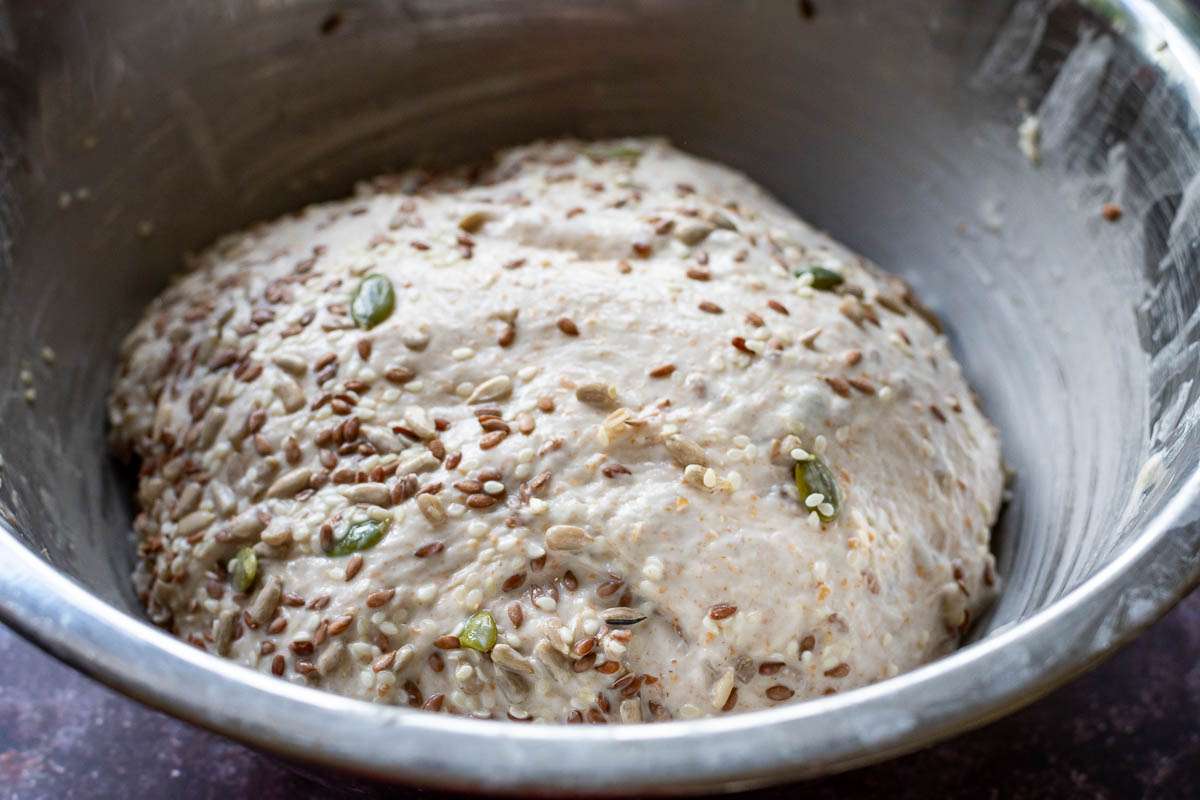
After that perform two more sets of coil folds at 30-minute intervals (video below).
Once all 4 folds have been completed, let the dough rise for 2-3 hours undisturbed for the dough to finish its bulk fermentation.
Flavoured Sourdough: How, When and What Mix-Ins To Add To Your Sourdough?
Discover a variety of mix-ins and learn how they affect hydration and bulk fermentation, master the art of substituting water with coffee and tea, and explore a plethora of creative mix-in ideas. Plus, get 2 exclusive bonuses that will inspire you to create the most flavoursome and unique sourdough!

Step 4: Shaping and Cold Proof
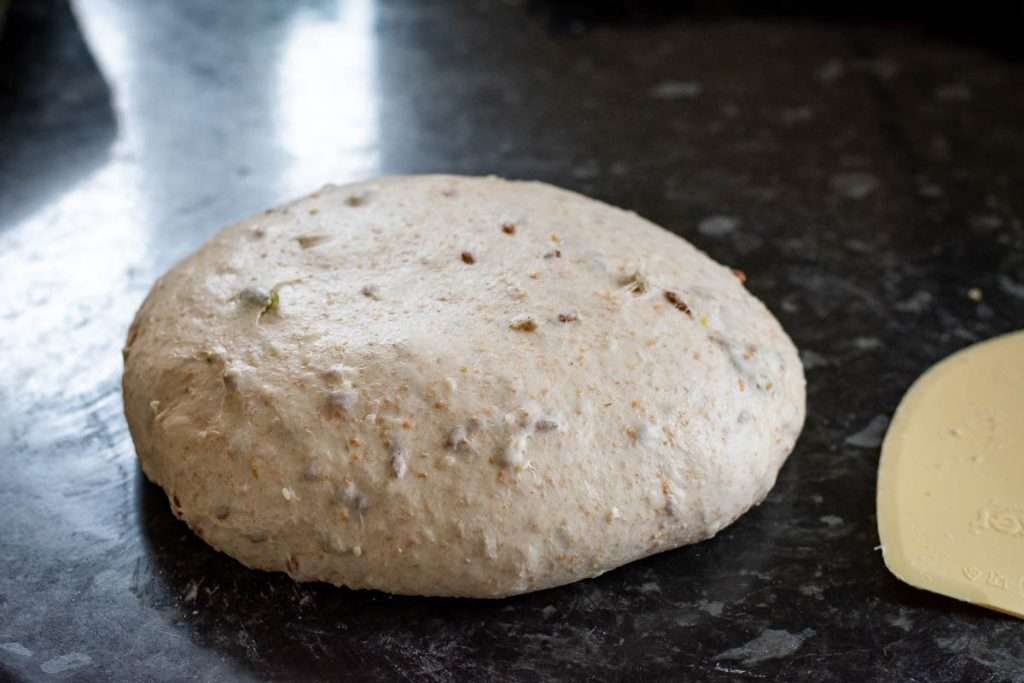
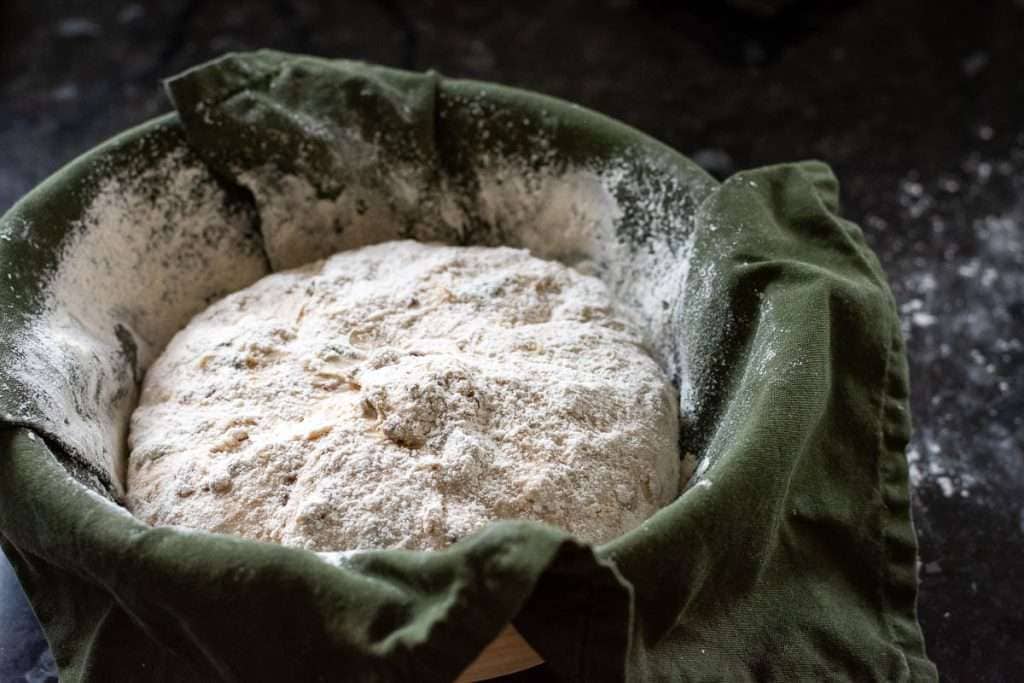
Scoop the seeded dough out of the bowl and shape it into a tight ball on a lightly floured surface. Place it into a generously floured banneton basket, cover well (we place the basket in a plastic bag) and place it in the fridge for its cold final proof overnight (or up to 48 hours).
Don't have a banneton basket? No problem! Head to our article about Proofing Basket Alternatives to find a substitute in your kitchen!
Step 5: Baking
The next day, in the morning, preheat the oven to 230° C (Fan). Place the Dutch oven in the oven to preheat at the same time.
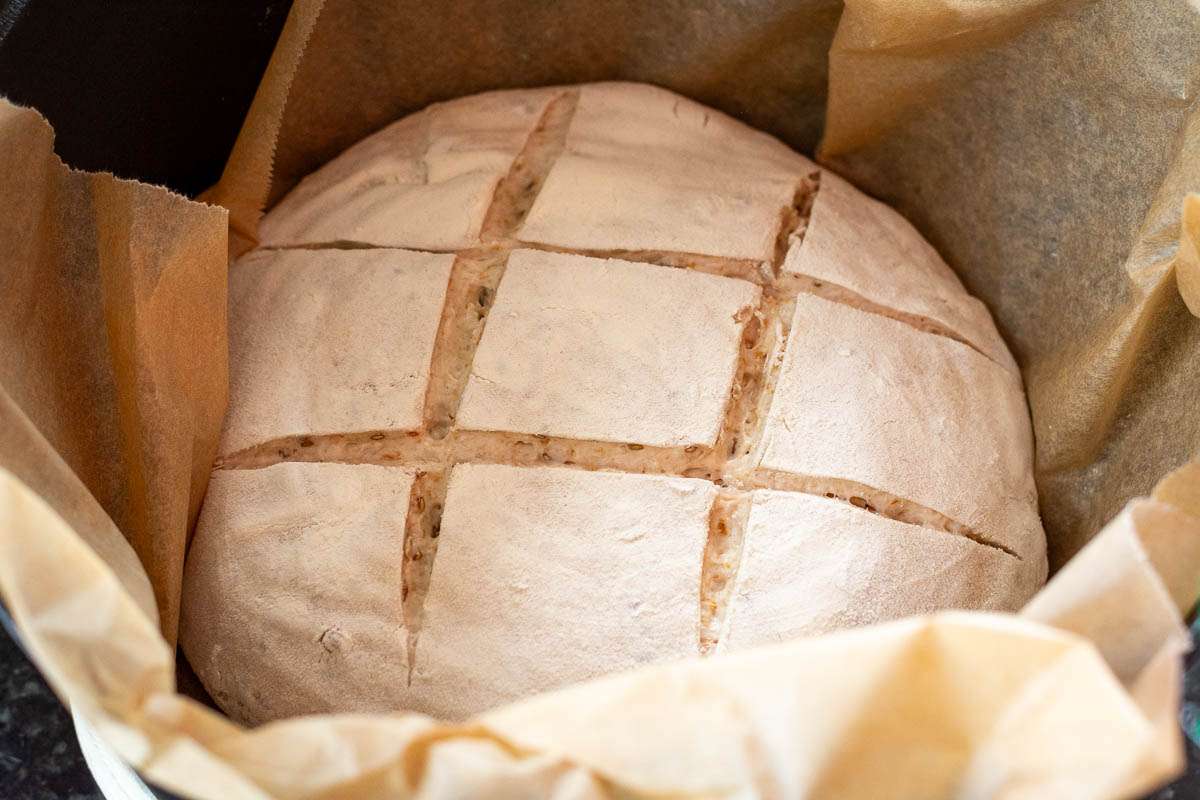
Take the dough out of the fridge and carefully invert it on a large sheet of baking parchment. Using a dough scorer or a sharp knife, score the top of the loaf and, lifting the corners of the parchment paper, place it into the preheated Dutch oven. Cover it with a lid and place it in the oven for 25 minutes.
After 25 minutes, take the lid off and carry on baking for another 20-25 minutes.
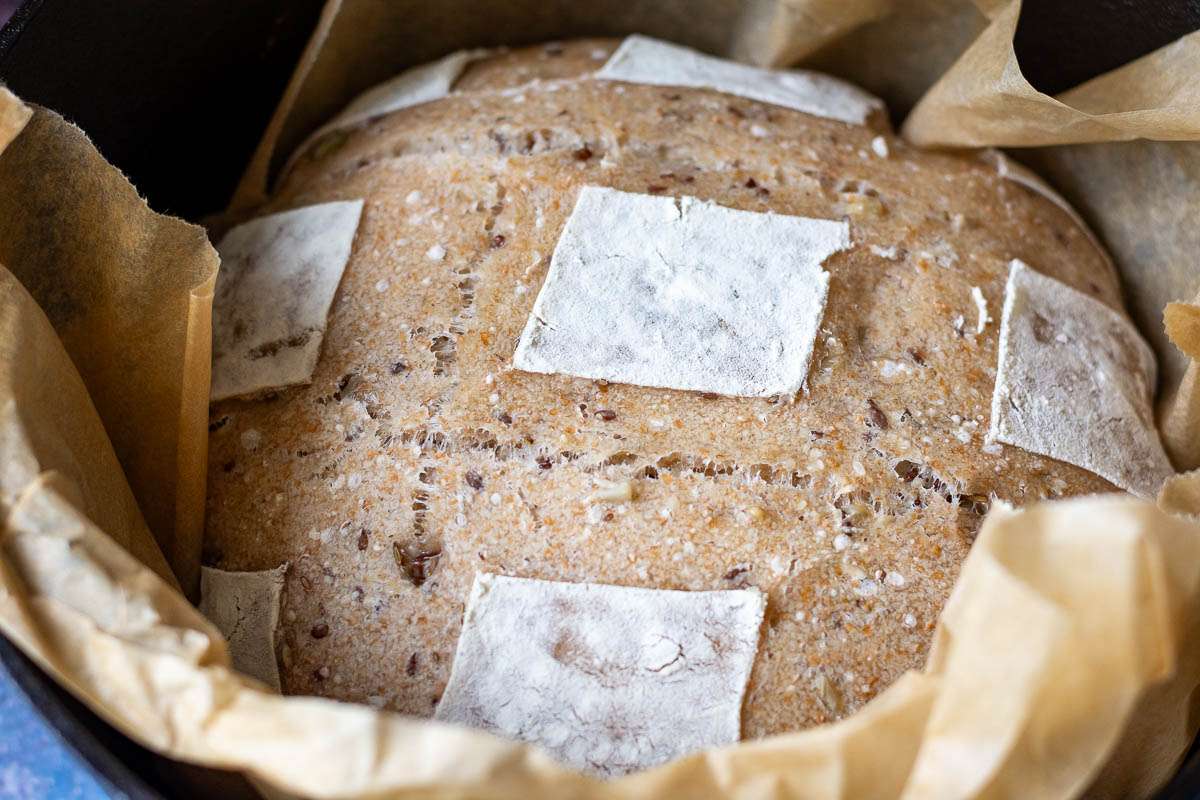
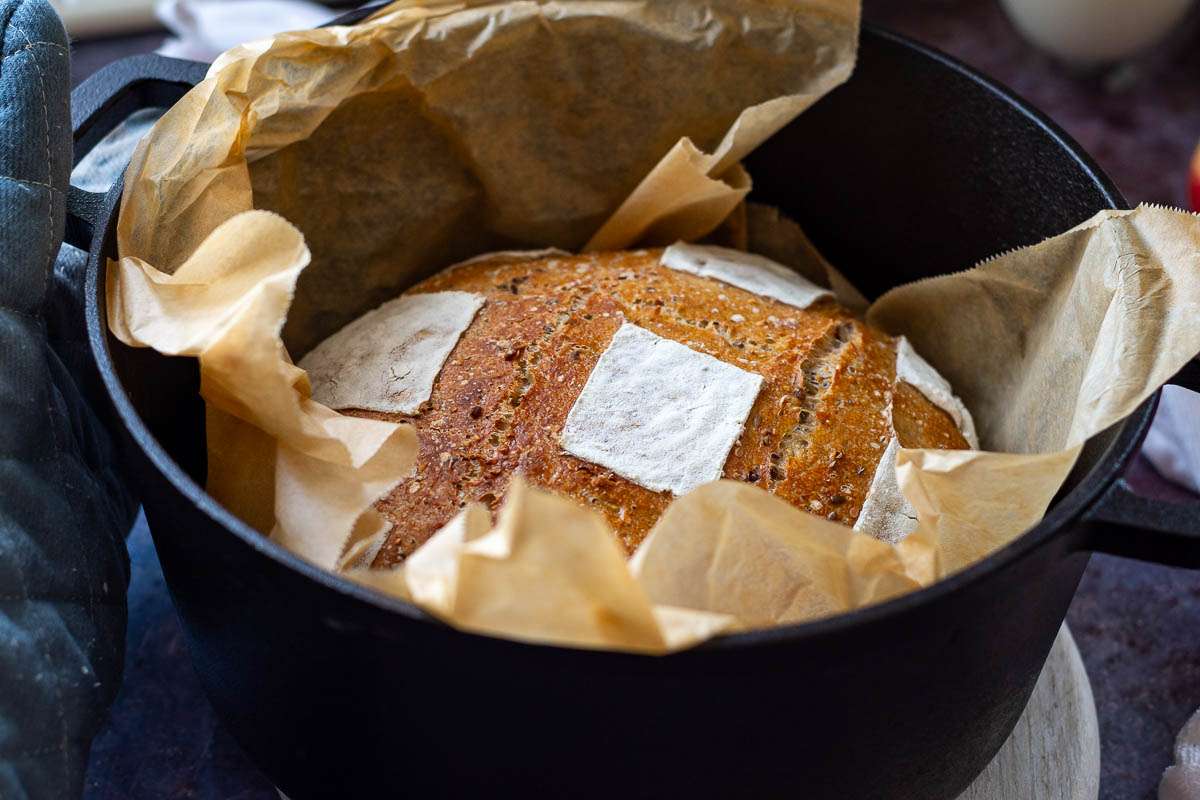
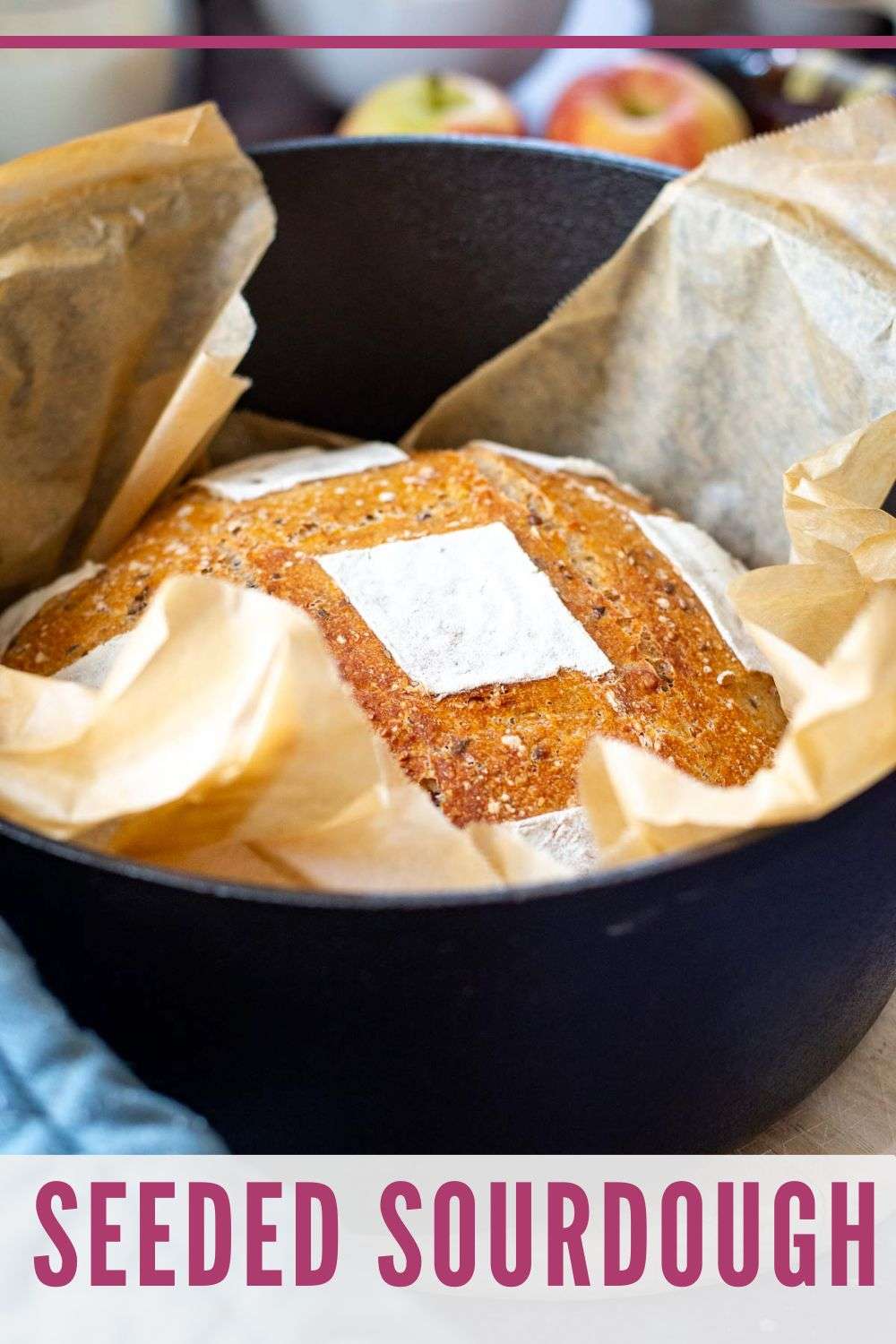
Once baked, the bread should be deep golden brown and sound hollow when tapped on the bottom.
Remove the bread from the Dutch oven and place it on a wire rack to cool down to room temperature before slicing.
Baker's Schedule
Day 1:
8:00 AM Feed sourdough starter
12:00 PM Make the dough
12:30 PM 1st Set of Coil Folds
1:00 PM Add the seeds and stretch and fold the dough to incorporate them
1:30 PM 3rd set of folds
2:00 PM 4th set of folds, then leave undisturbed for 2-3 hours
5:00 PM Shape and cold proof
Day 2:
8:00 AM Preheat the oven, score and bake
Learn more about my sourdough timeline in the dedicated article about Sourdough Baking Schedule.
Kitchen Tools Used
- Stand Mixer with a Dough Hook Attachment
- Large bowl
- Baking Parchment Paper
- Dutch Oven
- Dough Scorer or a very sharp thin-bladed knife
- Wire rack
Serving Suggestions
This seeded sourdough loaf makes the best avocado toast! Trust me, the seeds give it a lovely texture that contrasts well with smooth avocado.
Serve it with soups, stews or salads. Alternatively, toast slices of bread and dip them into Baked Camembert or simply olive oil and balsamic vinegar!


Storage
Sourdough bread can be stored at room temperature for 2 days, or frozen for longer-term storage. You can freeze a whole loaf of bread or individual slices for convenience. Make sure to protect your seeded sourdough bread from freezer burn by wrapping it in plastic wrap and placing it in a freezer-safe bag.
For more information, head to our dedicated articles about how to store sourdough bread and how to freeze sourdough.

Recipe FAQs
Yes, however, to ensure proper oven spring you will need to create a humid environment for the bread to bake in. Preheat the oven and a dark baking sheet, cast iron skillet or a baking stone. At the same time as the oven is preheating, place an ovenproof dish filled with water to heat up and create steam. Then place the scored dough onto the preheated tray and bake at 230° C Fan for approximately 35 minutes. For more information, head to our Sourdough Bread Recipe Without Dutch Oven, and follow the same method.
It depends on the kind of seeds you are using. If you use larger seeds or hard seeds that will be difficult to bite into, you can soak the seeds, but we personally don't find it necessary and enjoy a little bit more texture in this seeded bread recipe. 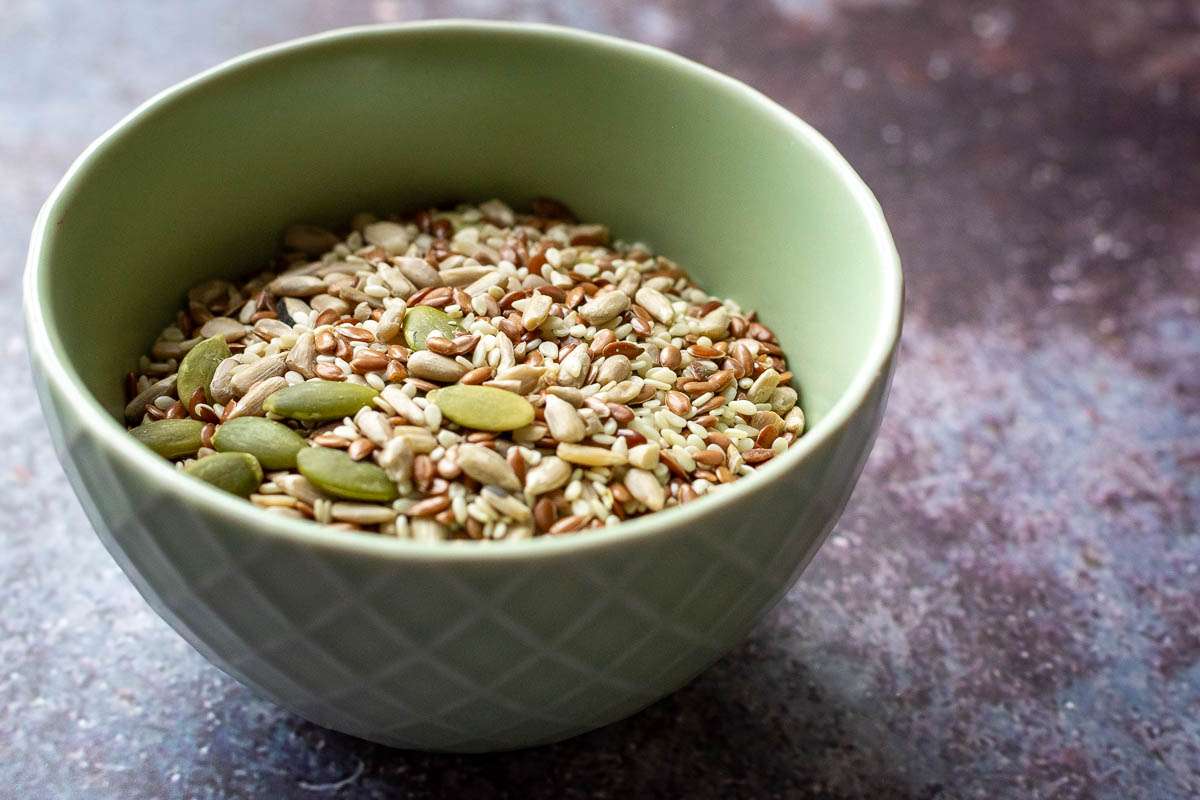
There are three main reasons for gummy sourdough. 1. Overproofed dough. 2. The bread being sliced before it's cooled down, or 3. Overhydration of the dough.
This seeded sourdough bread recipe offers potential health benefits due to its omega-3 fatty acids from seeds and whole wheat flour. The fermentation process may enhance digestibility and nutrient absorption. Additionally, whole wheat breads typically have higher fiber content, promoting gut health and aiding digestion. Overall, while "healthy" is subjective, this recipe provides nutrients and dietary elements associated with wellness.
More Sourdough Recipes To Love
What is your favourite sourdough recipe to date? Ours must be Cranberry and Walnut Sourdough Bread and our Sourdough Croissants! For more delicious sourdough recipes, have a look at some ideas below:



Rustic Seeded Sourdough Bread Recipe
Ingredients
- 80 g (0.57 cups) mixed seeds sunflower, pumpkin, linseeds
- 300 g (2.4 cups) strong bread flour
- 100 g (0.83 cups) whole wheat flour
- 8 g (1½ teaspoon) salt
- 160 g (0.64 cups) active sourdough starter 100% hydration
- 250 ml (1.06 cups) water
Instructions
- In a bowl of your stand mixer, combine strong white flour, whole wheat flour and salt. Add the active sourdough starter and water. In a stand mixer, fitted with a dough hook attachment, mix everything into a cohesive dough (about 5-7 minutes on medium speed).
- Scoop the dough into a large clean bowl, cover and leave in a warm spot for 30 minutes.
- After 30 minutes, coil fold the dough (see video below), cover and leave the dough to rest for another 30 minutes.
- Scatter half of the seeds on top fo the dough, then stretch and fold the four corners of the dough into the centre. Turn the dough over and scatter the remaining seeds, stretching and folding the dough over. Turn the dough upside down again, cover and leave it to rest for 30 minutes.
- After that perform two more coil folds at 30-minute intervals (video below)
- Once all 4 folds have been completed, leave the covered bowl for 2-3 hours undisturbed.
- Scoop the seeded dough out of the bowl and shape it into a tight ball. Place it into a generously floured banneton basket, cover well and place it in the fridge to cold proof overnight (or up to 48 hours).
- In the morning, preheat the oven to 230° C (Fan). Place the Dutch oven in the oven to preheat at the same time.
- Take the dough out of the fridge and carefully invert it on a large sheet of baking parchment. Score the top of the dough and, lifting the corners of the parchment paper, place it into the preheated Dutch oven. Cover it with a lid and place it in the oven for 25 minutes.
- After 25 minutes, take the lid off and carry on baking for another 20-25 minutes.
- Once baked, remove the bread from the Dutch oven and place it on a wire rack to cool down before slicing.
Video
Nutrition


Leave a Reply