
Most plum focaccia recipes are cake wearing a bread disguise: honey, cinnamon, barely a savoury note in sight. This Plum and Gorgonzola Sourdough Focaccia isn't that. Victoria plums caramelise in the dimples, gorgonzola goes in twice for proper salty depth, and if you've got a plum glut with nowhere savoury to put it, this is where it goes.

Jump to:
As an Amazon Associate I earn from qualifying purchases, at no extra cost for you! Thank you!
Victoria plums are having their moment right now, and if you've got a glut sitting on the counter (or a neighbour trying to offload theirs), this is a far better use for them than yet another crumble.

Recipe Highlights
TASTE: Sweet plum, salty gorgonzola, no apologies
TOPPING TRICK: Cheese goes in twice, before and after baking
BEST FOR: Cheeseboards, showing off, using up a plum glut
SEB'S RATING: Two squares gone before it cooled, immediate lobbying for weekly rotation

Why This Plum and Gorgonzola Sourdough Focaccia Works
Sweet stone fruit against salty, funky blue cheese is not a new idea. Fig and gorgonzola have been doing it for years.
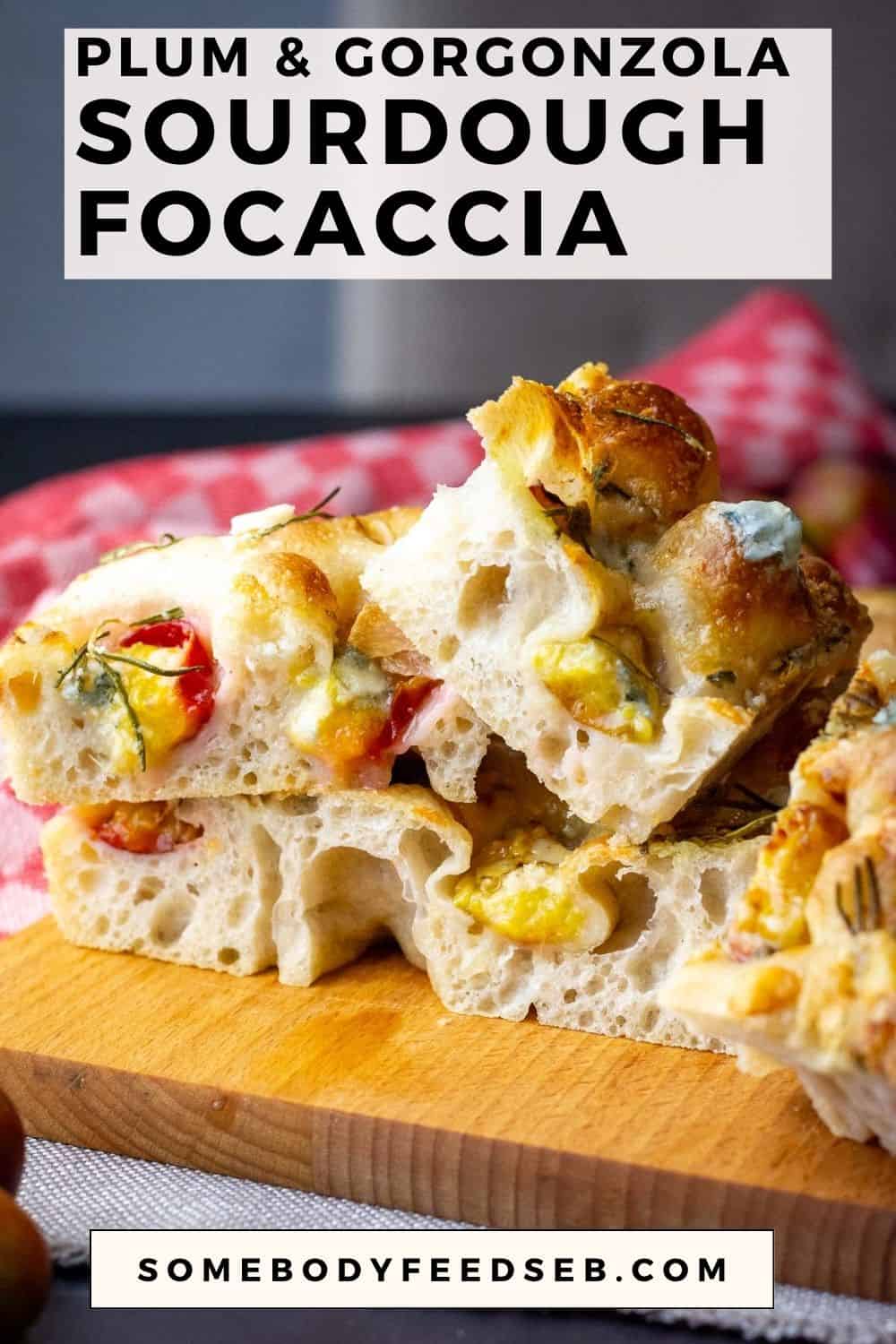
Two things make this one work. The plums go in as wedges, not halves, so they caramelise at the edges instead of collapsing into a puddle of juice. And the gorgonzola goes in twice: two-thirds before baking, so it melts into the crumb and gives a deep, savoury base note, and the rest scattered on straight out of the oven, so you also get fresh, creamy pockets that haven't dried out in the heat.
Ingredient Notes
This isn't a long list, but a few choices matter more than others.
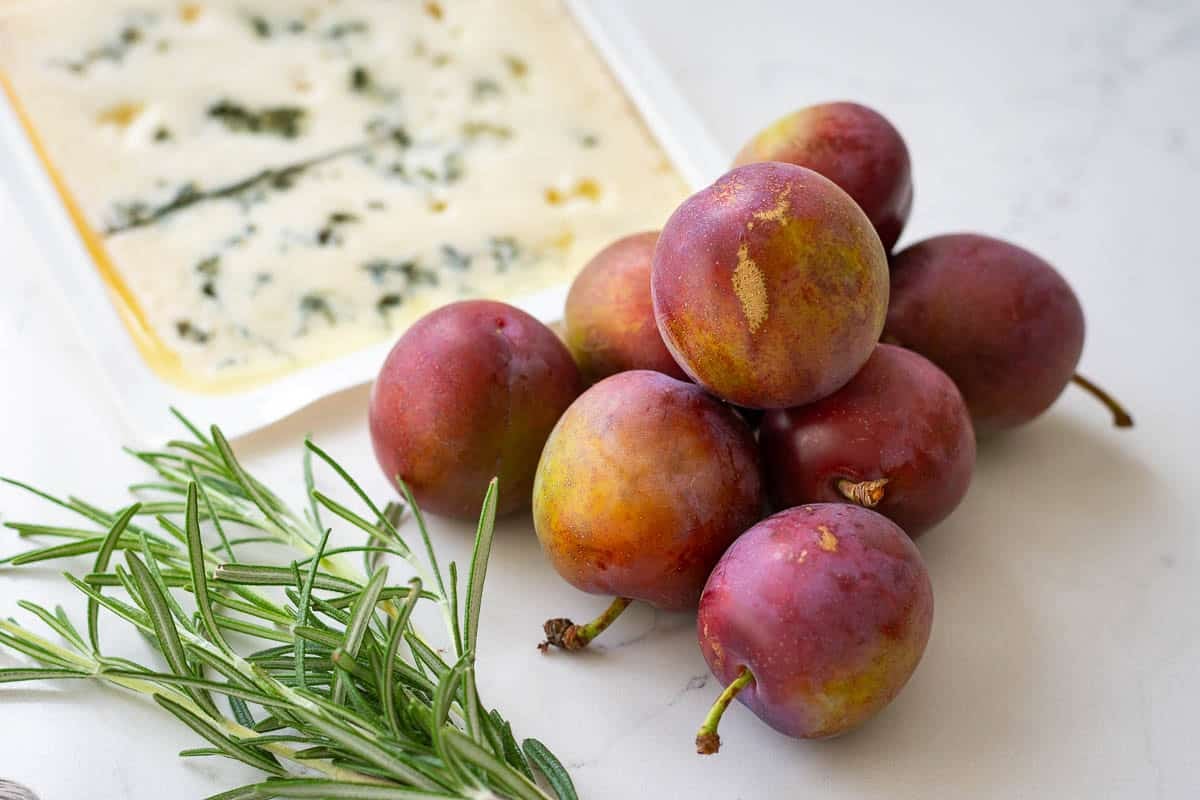
- Victoria plums. Look for fruit that gives slightly under gentle pressure but isn't soft. Underripe plums won't caramelise properly and will taste sharp against the cheese. Overripe ones turn to mush in the oven and leak too much juice into the dough.
- Gorgonzola. Piccante (the firmer, sharper version) holds its structure better through the bake than dolce, which is softer and can melt into more of a sauce. Either works, but piccante is the one to reach for if you want visible pockets of cheese rather than a uniform melt.
- The dough. This is the same high-hydration sourdough focaccia base I use across the site, built on an active starter, a fermentolyse rest, and a series of coil folds rather than kneading. If you haven't made it before, my Rosemary Sourdough Focaccia walks through the dough itself in full.
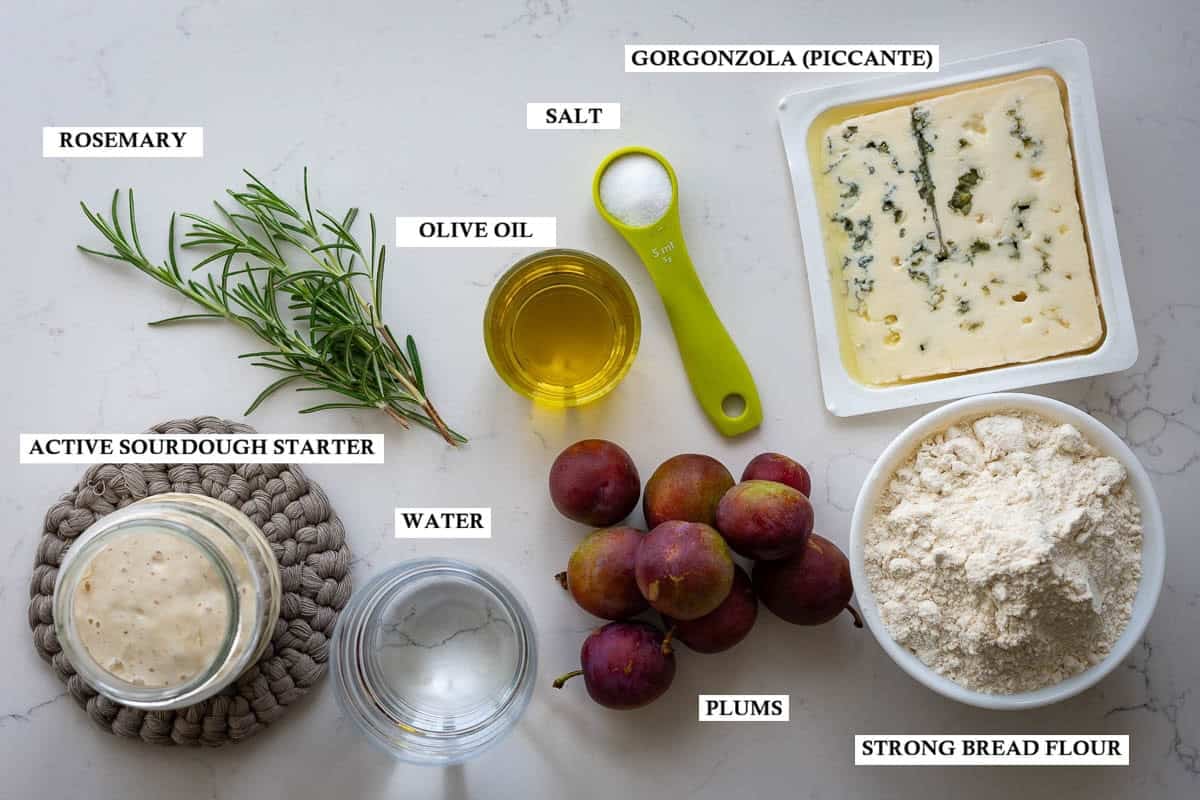
Find the full ingredient quantities and instructions in the recipe card below.
How to Make Plum and Gorgonzola Sourdough Focaccia
Day 1
Feed your starter first thing in the morning and let it double in a warm spot. If you're having trouble, head to our article about why sourdough starter isn't doubling within 4 hours or download our FREE Sourdough Starter Troubleshooting Guide below.
FERMENTOLYSE and MIXING THE dough
1. Once your sourdough starter reaches its peak, combine it with the flour and water in a stand mixer and mix briefly, just until the flour is hydrated, then leave it to rest for an hour. This is a fermentolyse (Sourdough Autolyse wehere were starter is added to the mix), a version of autolyse where the starter goes in alongside the flour and water rather than after.
2. After the rest, work the salt and olive oil in by hand rather than in the mixer, the dough will split if you try to add oil at speed.

3. Once it's incorporated, mix on medium for 10 to 12 minutes until smooth and elastic. It should still feel wet, but it will start gathering around the dough hook.
Coil Folds, Bulk Fermentation and Cold Proof
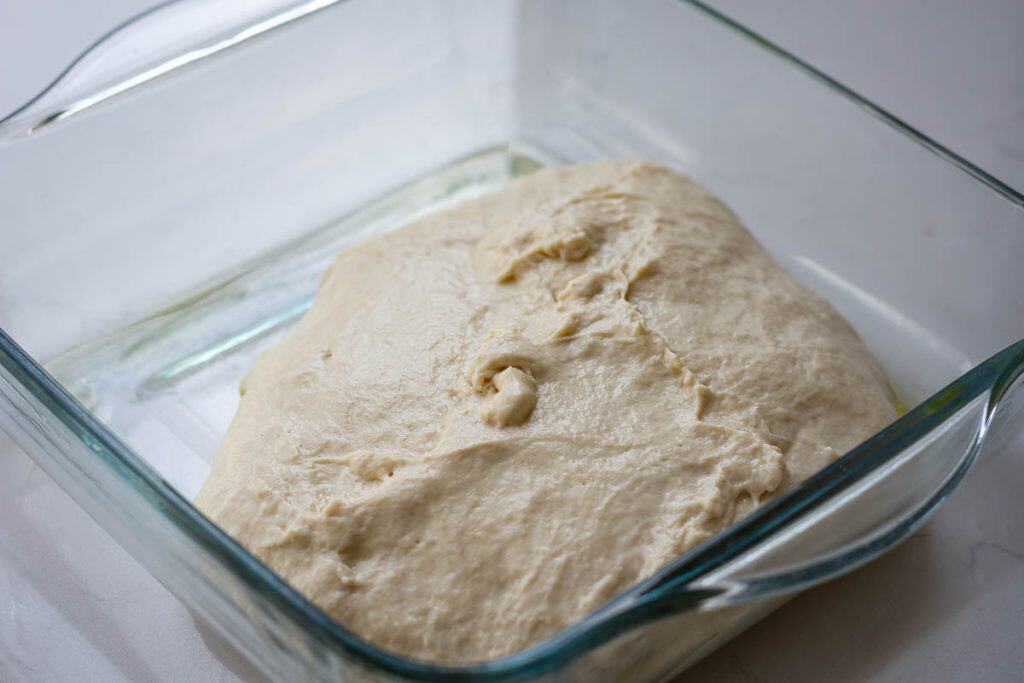
1. Over the next three hours, give the dough six sets of coil folds at 30-minute intervals, using wet hands so nothing sticks. Let it finish bulk fermentation undisturbed afterwards (it typically takes 2-3 hours depending on starter strength and kitchen temperature).
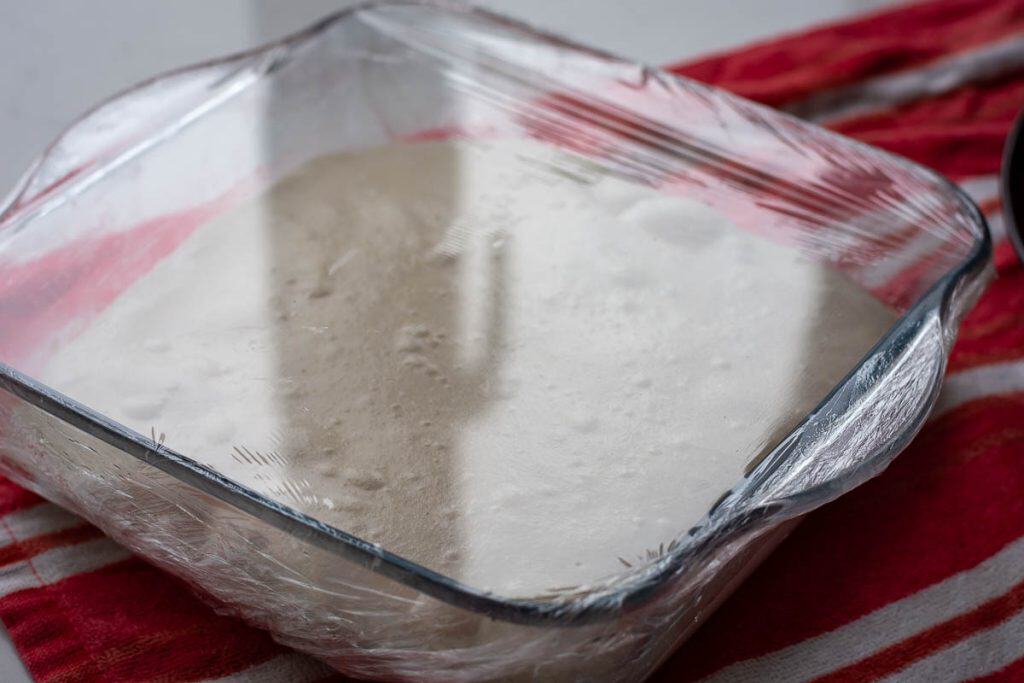
2. Cover the container well and move it to the fridge for 8 to 24 hours.
Day 2
Line a 23cm (9-inch) square tray with parchment paper or generously grease it with olive oil.
Second Rise
1. Carefully transfer the dough into the prepared baking tray without deflating it, stretching it into the corners.
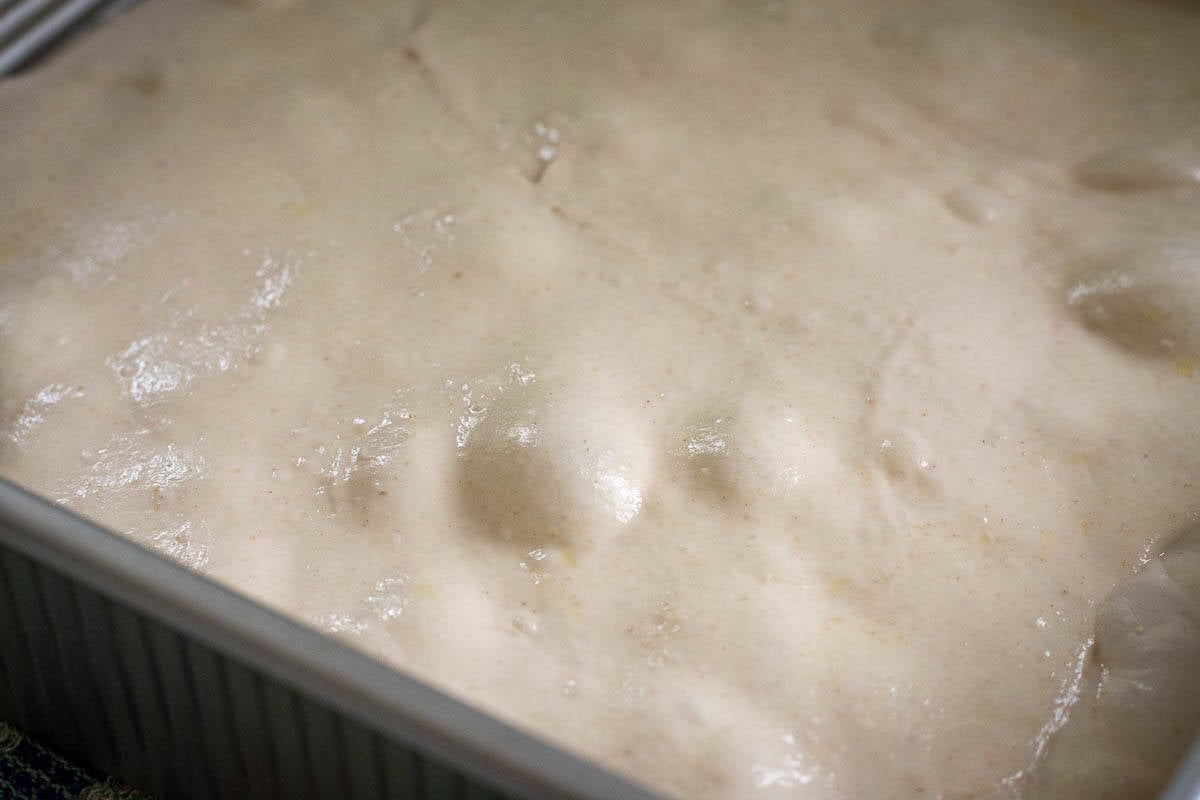
2. Leave it to proof for one to two hours, until it's puffed and visibly blistered across the surface.
Topping and BAKING
1. Preheat the oven to 200°C (400°F).
2. Halve each plum along its seam, remove the stone, then cut each half into two or three wedges of around 2cm. You're after quarters, not halves, more on why below.
3. Oil the surface, then dimple deeply with oiled fingers, right down to the base of the tray.
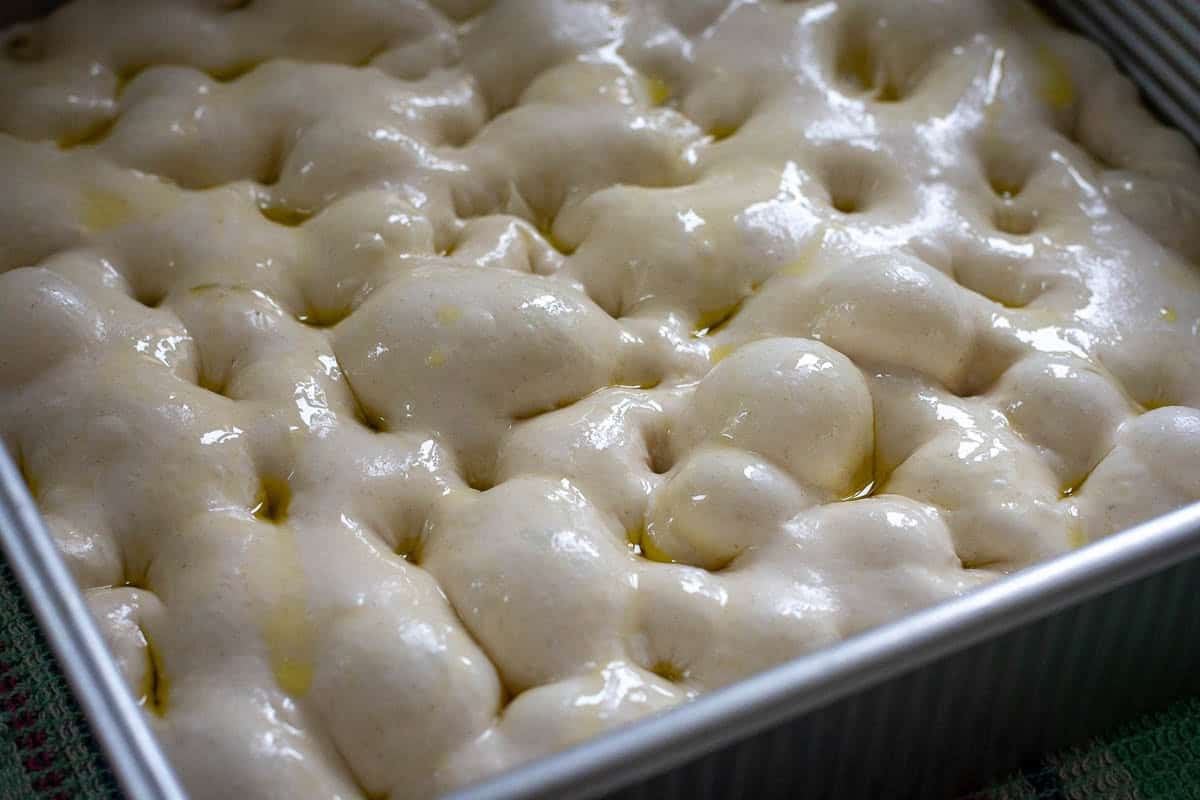
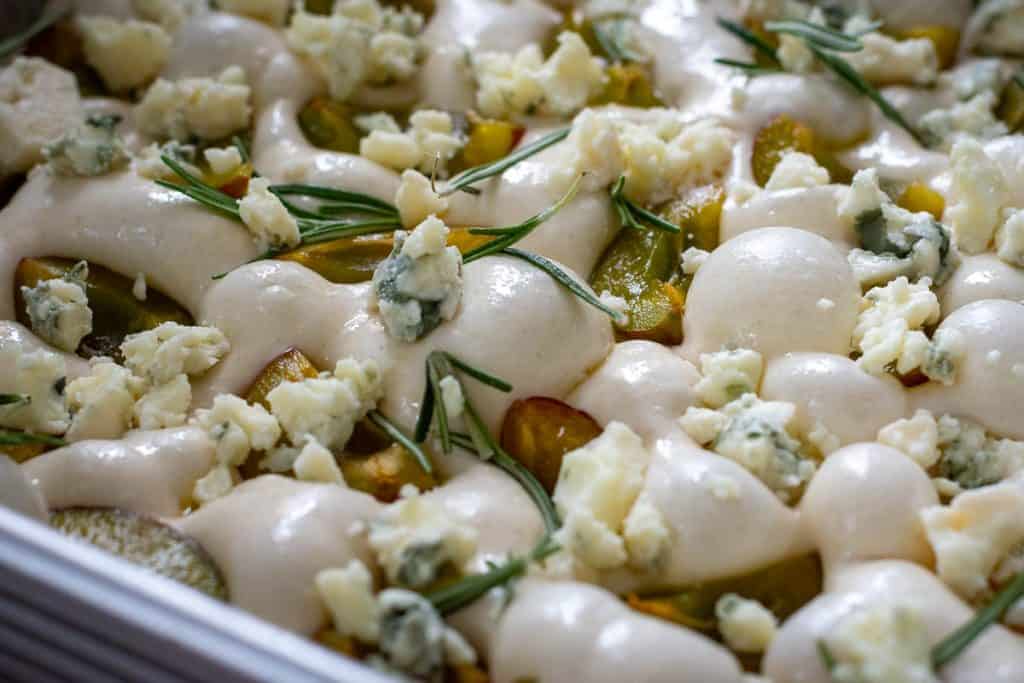
4. Nestle the plum wedges cut-side up into the dimples, pressing gently so they're anchored rather than resting on top.
5. Scatter two-thirds of the gorgonzola into the gaps, along with the thyme, a light pinch of flaky salt and a good crack of pepper.
6. Bake for 22 to 25 minutes, until deep golden with caramelised plum edges and lightly golden cheese.
7. Scatter the remaining gorgonzola over the moment it comes out of the oven, so it melts into soft pockets from residual heat rather than baking hard.
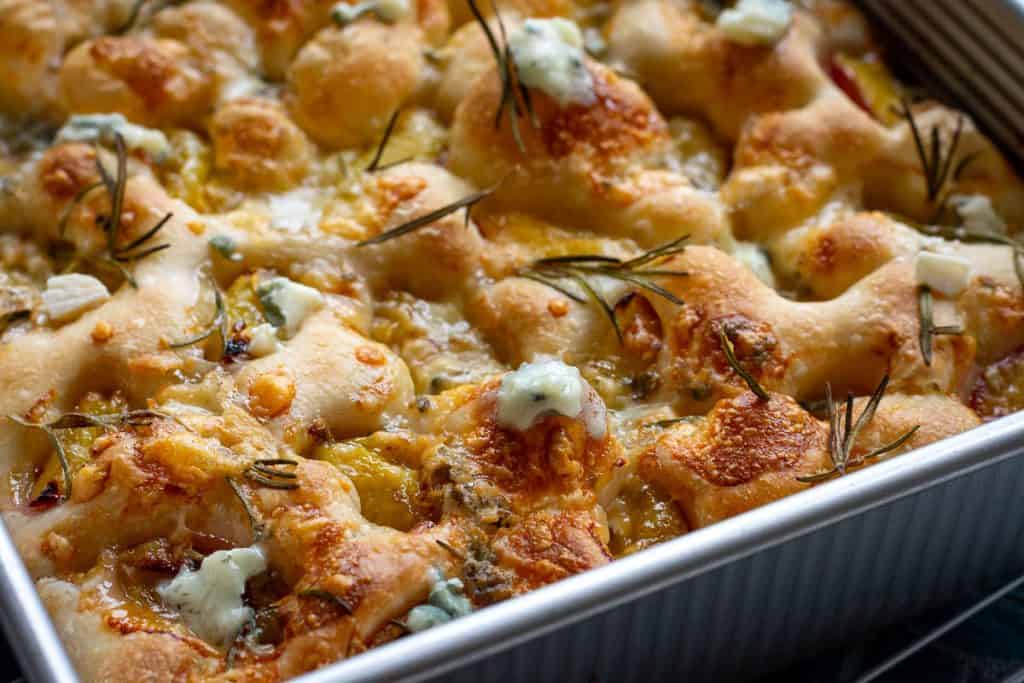
8. Drizzle with honey if you're using it, then let it cool for at least 15 to 20 minutes before slicing.
Getting the Topping Right
Quarters, not halves. A halved Victoria plum is too bulky. It sinks unevenly and pools juice under the skin, which sogs out the crumb underneath. Wedges expose more cut flesh to the heat, so they caramelise properly instead of steaming, and they sit securely in the dimples without rolling around.
Press in, don't lay on top. Nestle each wedge cut-side up so it's partly bedded into the dough, the same logic as my cherry tomato focaccia. Fruit that's anchored roasts and caramelises. Fruit that's just resting on the surface steams, slides, and falls off the second you slice it.
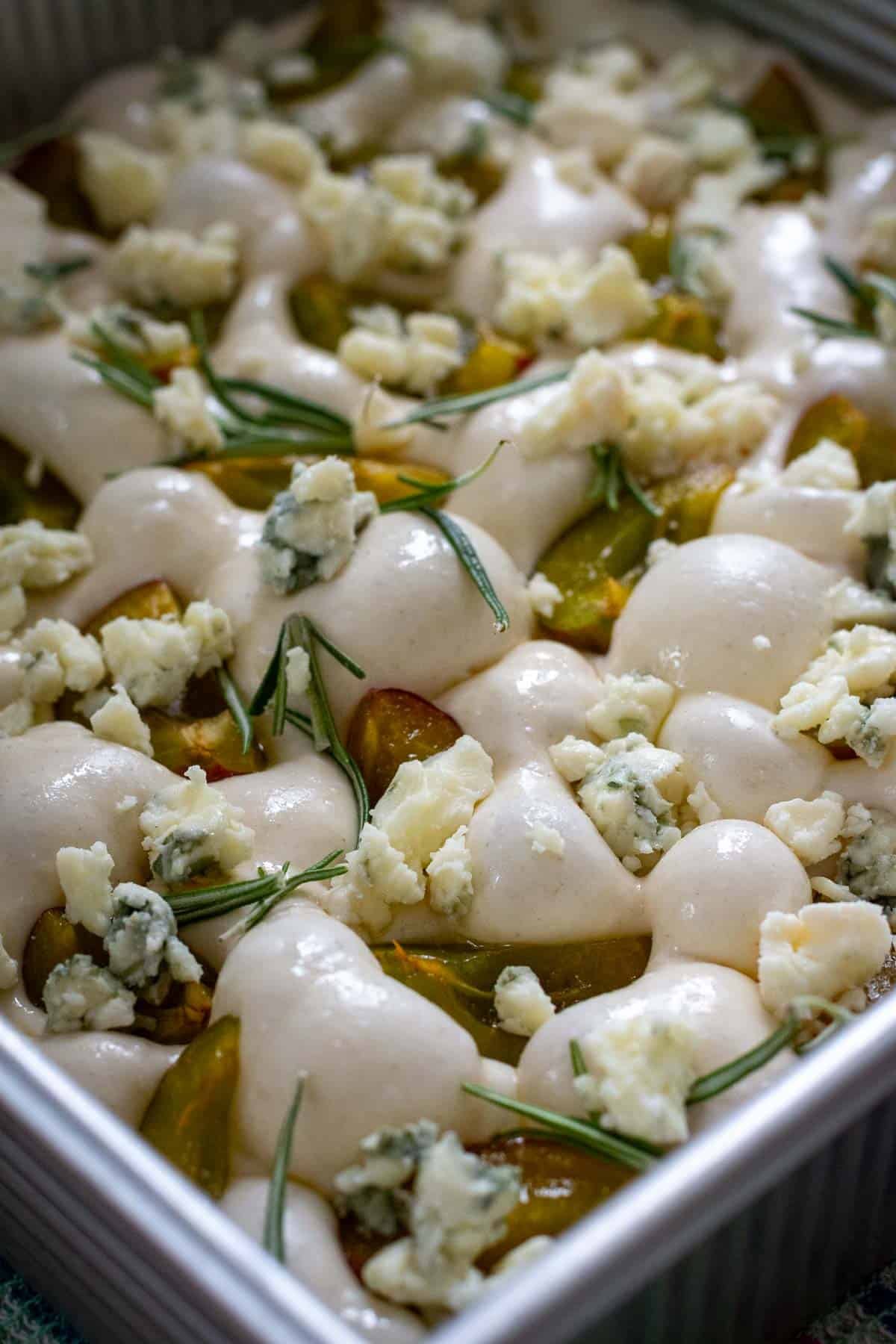
Cheese in two stages, always. Gorgonzola added raw and left in the oven for the full bake time dries out into brittle, slightly bitter bits, which is not what you want from an expensive blue cheese. Holding back a third and adding it after baking gives you fresh, creamy pockets alongside the melted layer, so you get both textures in the same bite.
Don't overload with cheese. Enough for real presence in every square, without the dough turning greasy or the blue cheese steamrolling the plum.
Substitutions and Variations
- Cheese swap. We tested it and love it with Roquefort too. A milder blue cheese works if gorgonzola's too much for you, or swap it for goat's cheese or feta for a different, slightly tangier direction.
- No fresh plums. Use another stone fruit like nectarine or apricot. Grapes work well too - follow the advice in our Sourdough Focaccia With Grapes and Rosemary recipe.
- Add crunch. A scatter of walnuts or pecans alongside the cheese echoes the pear-and-gorgonzola pairing this is distantly related to.
- Want it sweeter? The honey drizzle at the end is already optional for exactly this reason. Add it if you want a touch of sweetness against the savoury base.
Serving Suggestions
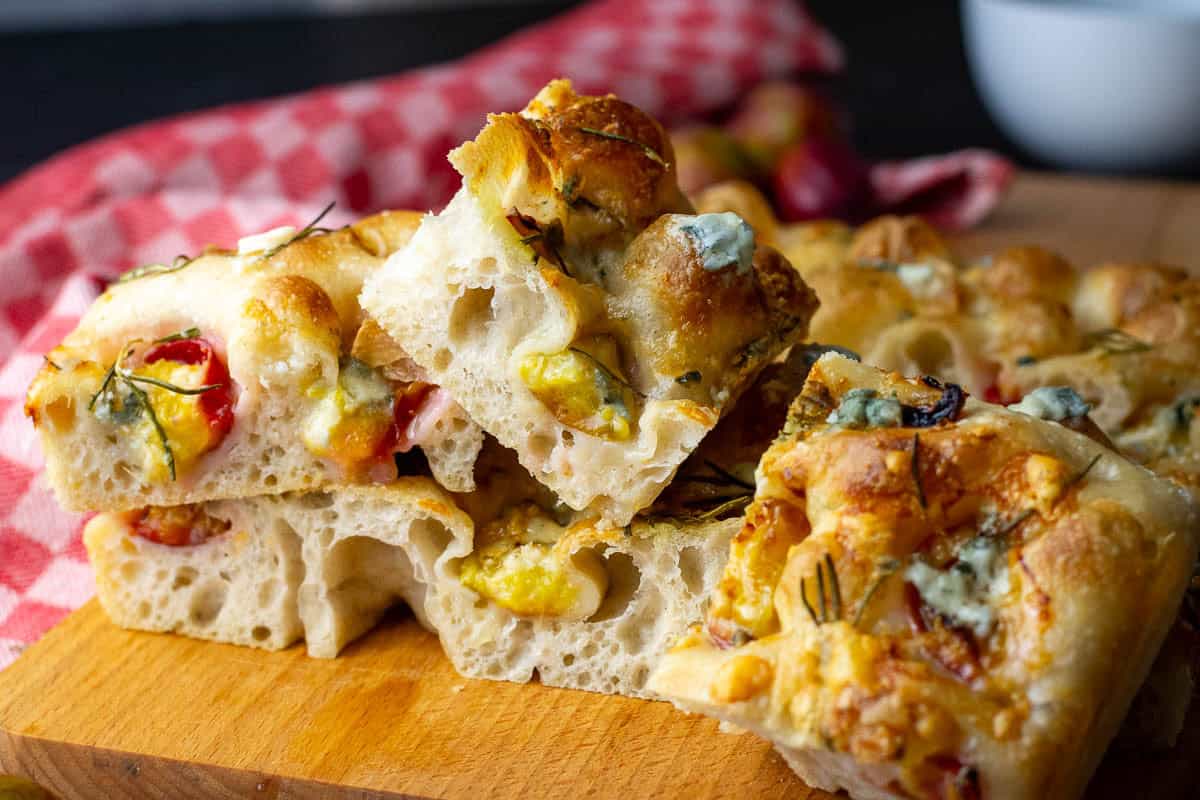
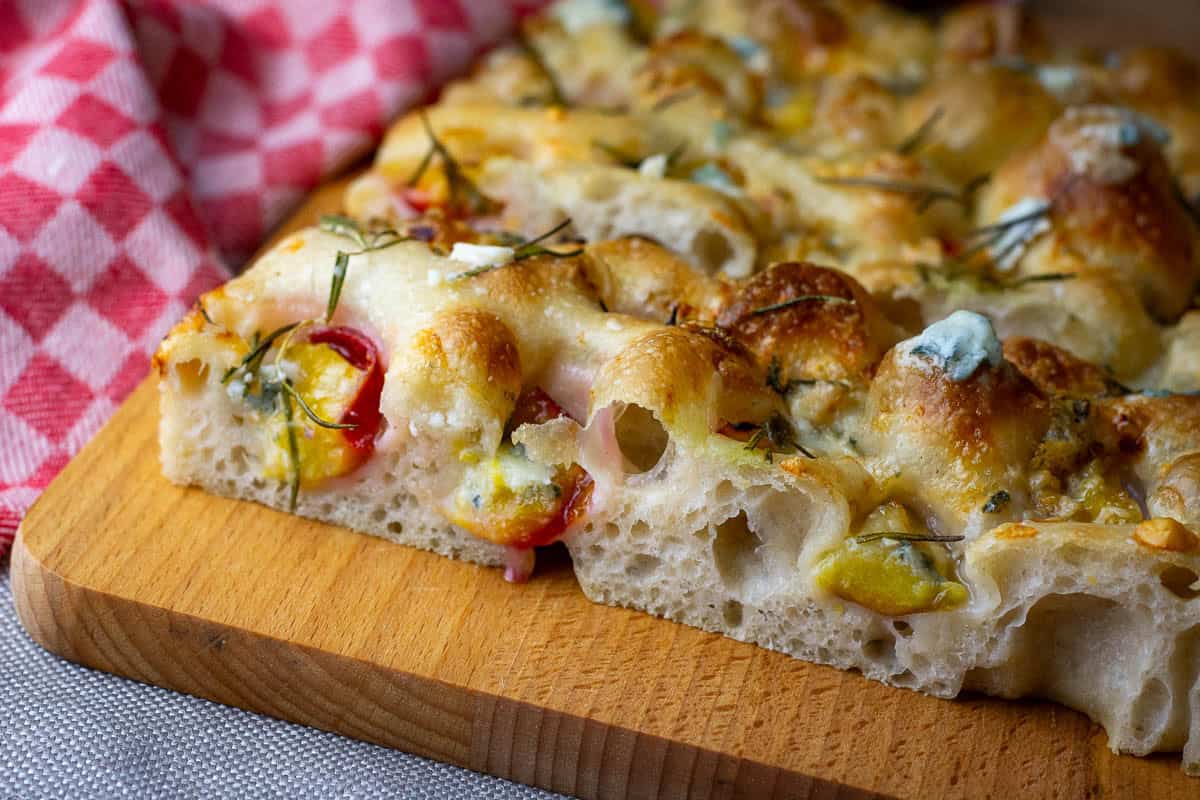
This earns a spot on a cheeseboard, next to cured meats, or alongside a bitter leaf salad (rocket (arugula), radicchio or chicory all hold their own against the gorgonzola). It's best the day it's baked, slightly warm rather than hot.
Storage and Make-Ahead
At room temperature, keep it in an airtight container for up to two days, though the plums soften further overnight, so it's genuinely best the day it's made.
Freezing isn't recommended here, fresh plum texture doesn't hold up well after thawing.
To reheat, warm briefly in a hot oven for 5 to 6 minutes, which re-crisps the base and melts the cheese back through.
More Sourdough Focaccia Recipes
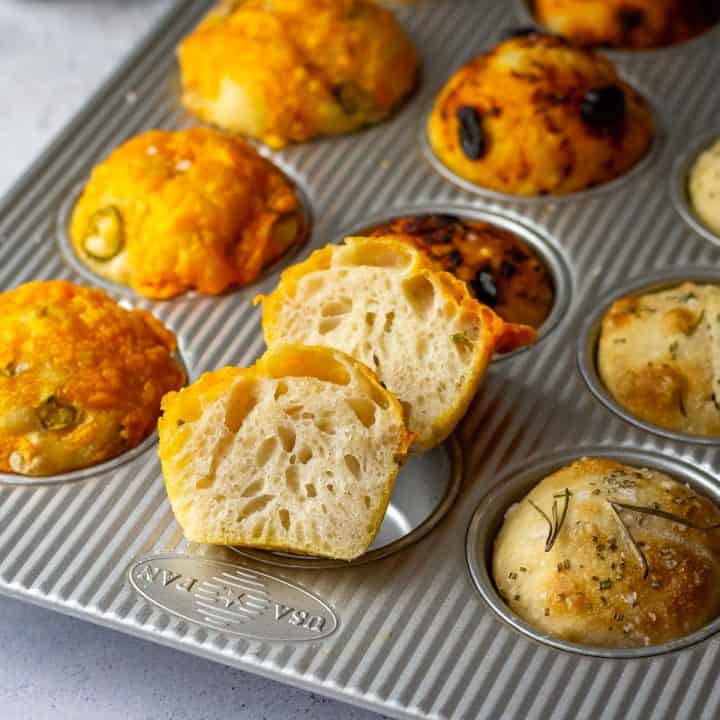
If this has got you thinking about what else you could put in the dimples, my 12+ Sourdough Focaccia Bread Recipes rounds up the full collection.
For another fruit-and-savoury pairing, try the Sourdough Focaccia With Grapes and Rosemary and the Sourdough Focaccia With Feta and Lemon if you want another savoury-leaning cheese and fruit combination. More Sourdough Focaccia recipes below:


LOVE BAKING SOURDOUGH WITH ME?
You can now add Somebody Feed Seb as a preferred source on Google. It only takes a tick box, and tells Google you'd like to see more of my recipes when relevant.
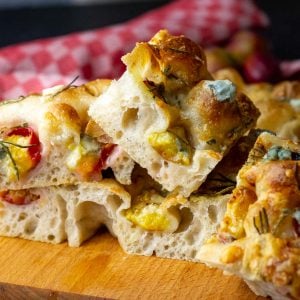
Plum and Gorgonzola Sourdough Focaccia
Equipment
- Stand Mixer fitted with a dough hook attachment
- Baking Tray (9x9in/ 23x23cm) ideally, high-rimmed
Ingredients
Sourdough Focaccia Dough
- 260 g strong bread flour, at least 12% protein
- 190 ml water
- 110 g active sourdough starter, 100% hydration
- 5 g salt
- 25 ml olive oil
Toppings
- 200 g plums we used Victoria plums, ripe but firm
- 100 g gorgonzola piccante crumbled, divided
- 3 springs fresh rosemary leaves picked
- drizzle of olive oil
- a small pinch of flaky sea salt go easy - gorgonzola is salty
- freshly cracked black pepper
- 1 tablespoon clear honey optional, to finish
Instructions
DAY 1
- First thing in the morning, feed your sourdough starter and leave it in a warm spot to at least double in volume.
Fermentolyse And Mixing The Dough
- In the bowl of a stand mixer, combine flour, water and active sourdough starter. Mix on low speed for a few minutes until the flour is hydrated. Cover with a damp tea towel and leave to fermentolyse for an hour.
- After an hour, scatter the salt on top of the dough. Drizzle over the olive oil and, using your hands, squish the salt and oil into the dough until evenly distributed. Don't run the mixer to do this - the dough will split.
- Once incorporated, mix on medium speed for 10-12 minutes until smooth and elastic. It will be wet but should gather around the dough hook.
Coil Folds, Bulk Fermentation, Cold Proof
- Scoop the dough into a lightly oiled bowl. Cover and leave in a warm spot (21-24°C) for 30 minutes.
- Over the next 3 hours, at 30-minute intervals, perform a set of coil folds with wet hands.
- After all 6 sets are done, cover and let the dough finish bulk fermentation undisturbed for 1.5-3 hours, depending on your kitchen's temperature.
- Place the dough in the fridge for 8-24 hours, or overnight.
DAY 2
- Line your 23cm (9-inch) square tray with parchment or grease it generously with olive oil.
Second Rise
- Carefully transfer the dough into the tray, trying not to deflate it, and stretch it into the corners.
- Cover and leave in a warm spot to proof for 1-2 hours, until puffed up with noticeable blisters across the surface.
Prepare The Topping
- Halve each plum along its natural seam and twist to remove the stone. Cut each half into 2-3 wedges (roughly 2cm), depending on size.
- Crumble up the blue cheese into small pieces.
Topping and Baking
- Preheat the oven to 200°C (400°F).
- Drizzle olive oil over the surface of the dough. Oil your fingers and dimple deeply, pressing right down to the base of the tray.
- Nestle the plum wedges into the dimples, skin-side down so the cut flesh faces up, pressing gently so each piece is anchored rather than just resting on top.
- Scatter two-thirds of the gorgonzola (about 65g) into the gaps between the plums, along with the rosemary leaves. Add a light pinch of flaky salt and a good crack of black pepper.
- Bake for 22-25 minutes, until deep golden, the plum edges are caramelised, and the cheese is melted and lightly golden in spots.
- Remove from the oven and immediately scatter over the remaining gorgonzola so it melts into soft pockets from the residual heat rather than baking hard. Drizzle with honey if using.
- Cool for at least 15-20 minutes before slicing. Best eaten slightly warm or at room temperature, the day it's baked.
Nutrition
Amy Dong says
I made this for a gathering, and it disappeared so quickly. I'll definitely be baking this unique focaccia again!
Ieva Greber says
Thanks, Amy — "disappeared quickly" is the best kind of feedback! Gorgonzola and plum is such an unexpected combo but glad it won everyone over.
Alyssa says
The sweet plums and salty gorgonzola are such a good combination. I love how the fruit caramelizes into the focaccia and balances the richness of the cheese.
Ieva Greber says
Thanks, Alyssa — that caramelised fruit against the gorgonzola's richness is exactly the balance I was chasing. Glad the sweet-salty combo won you over!
Sally says
This was such a delicious combination! Will definitely make again!
Ieva Greber says
Thanks, Sally! Plum and gorgonzola is the kind of pairing that sounds like a gamble and then quietly wins everyone over. Glad it earned a rerun, and I hope the second batch lasts longer than the first.