
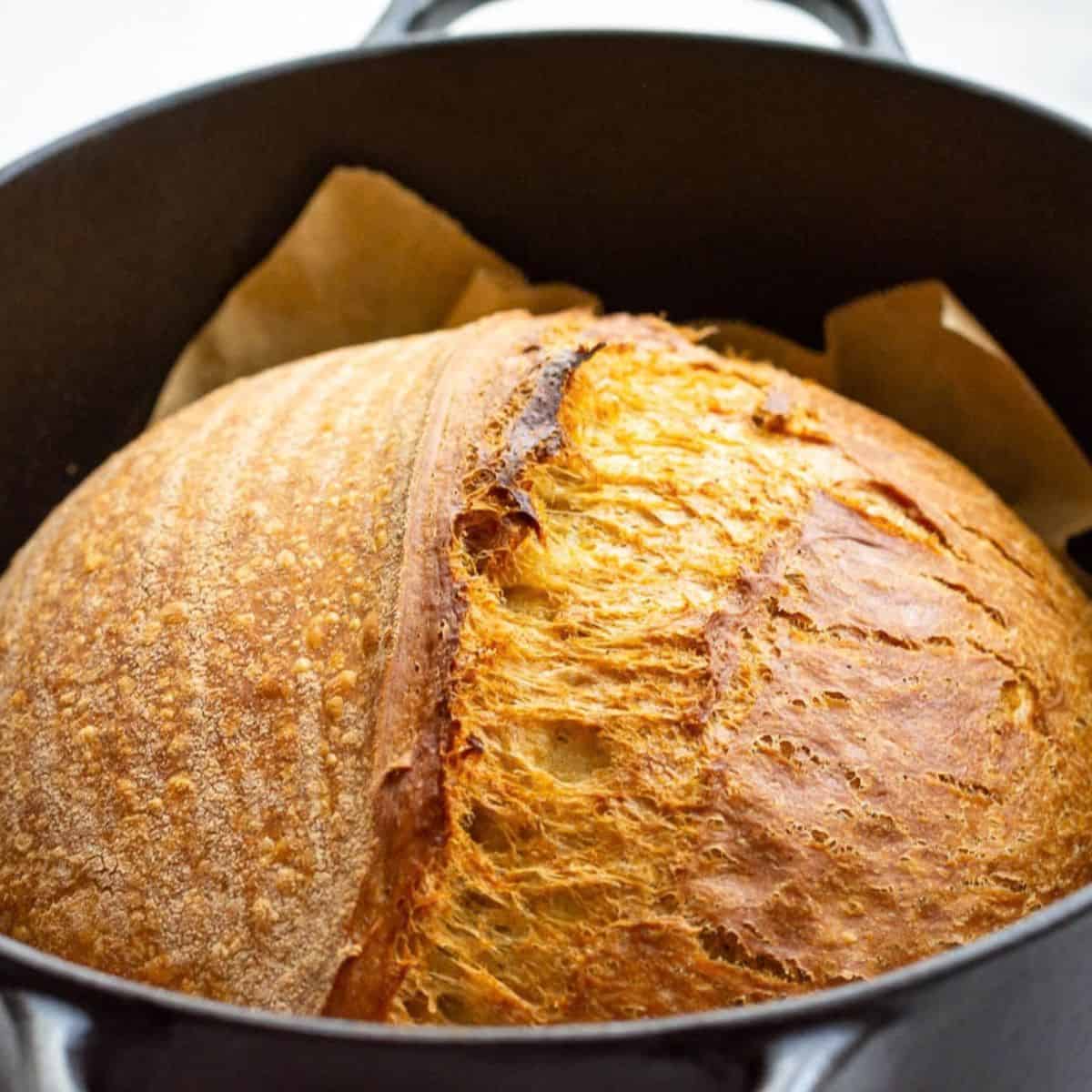
If you've made a loaf here before, this one will feel completely familiar at the bench. It just tastes like nothing else you've baked. This Pumpkin Spice Latte Sourdough Bread takes the flavours of the drink everyone has an opinion about and turns them into a proper, crusty Dutch oven loaf, with real pumpkin, a bloomed spice mix and an actual shot of espresso.
Jump to:
As an Amazon Associate I earn from qualifying purchases, at no extra cost for you! Thank you!
Here's an (un)popular opinion to start with: a pumpkin spice latte doesn't even make my top five Starbucks order. Give me those same flavours baked into a loaf, though, and this has quietly become my number one bread of autumn (see more autumn/ fall sourdough recipes, if you're keen in the season's flavours).
I genuinely think the spice, pumpkin and coffee work harder here than they ever do in the cup. Baked into a loaf, real pumpkin purée and real espresso finally get to pull their weight, which is exactly what this recipe is built around.

Recipe Highlights
TASTE: Warm spice and coffee bitterness against a tender, milky crumb
REAL ESPRESSO: An actual shot from the machine, not a spoon of instant powder
HYDRATION: 74%, enough for a lovely crumb, still easy to shape
SEB'S RATING: Said it's better than a coffee drink by a mile

Ingredient Notes
Full quantities are in the recipe card below, but a few ingredients are worth a word first.
- Pumpkin purée: use a tin labelled 100% pumpkin or pumpkin purée, never pumpkin pie filling. Pie filling already has sugar, spice and sometimes condensed milk mixed in, which will throw off both the flavour and the hydration.
- Whole milk: builds the tender crumb this loaf needs and gives the spices something to bloom into. A lighter milk will work but the crumb will be a little less soft.
- Real espresso, not instant powder: a proper shot from the machine gives genuine coffee bitterness rather than a flat, one-note hit. If you don't have a machine, a strong moka pot shot or very strong brewed coffee both work.
- Individual spices: cinnamon, nutmeg, ginger and cloves measured out separately give you more control over the blend than a pre-made pumpkin pie spice. If that's what you've got, swap in roughly 3½ teaspoons of it in place of the four spices below.
- Honey: adds sweetness, a deeper crust colour, and keeps the crumb moist for longer once baked.
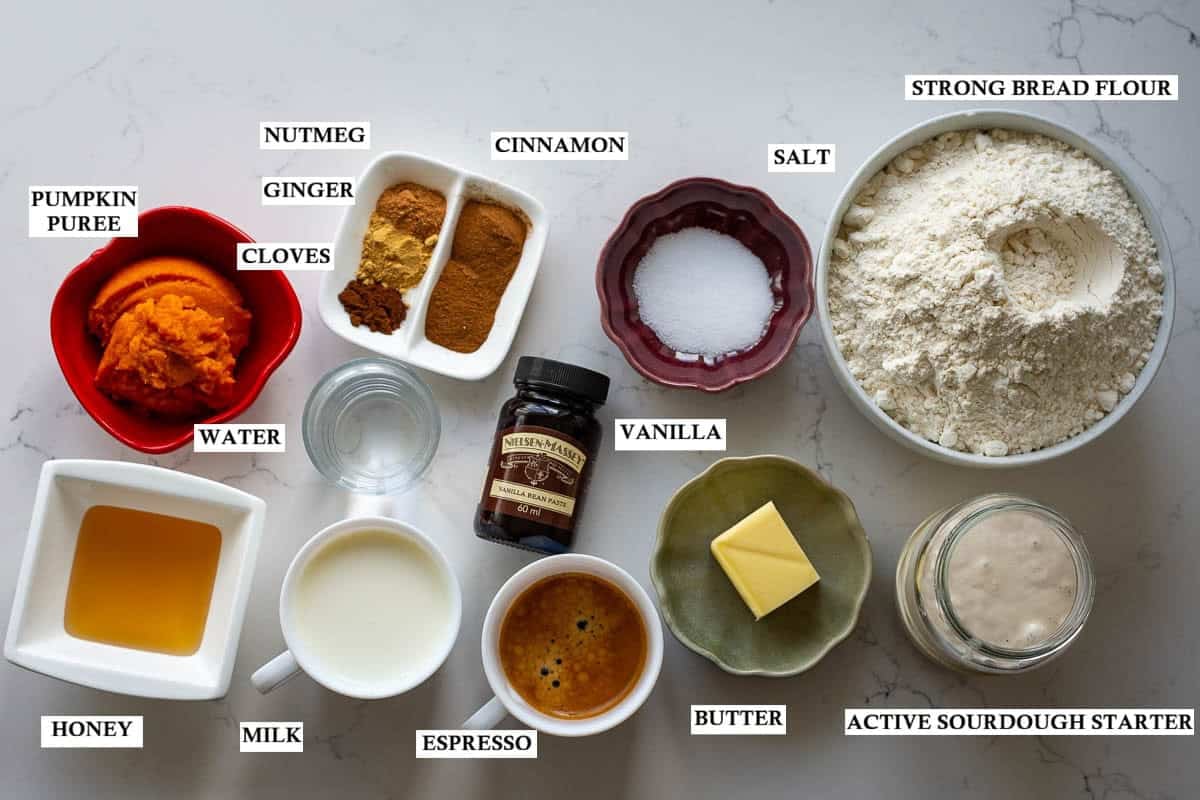
Find the full ingredient quantities and instructions in the recipe card below.
How mix-ins Actually Change The sourdough
DAIRY: Milk and butter coat the gluten strands in fat. That's why this dough feels softer and less springy to mix than a lean loaf, and why the finished crumb stays tender rather than chewy.
The trade-off is that fat gets in the way of gluten forming properly. This dough needs a longer mix than a plain loaf, and bulk fermentation runs a little slower than a lean 65% hydration dough. That's expected, not a sign anything's gone wrong.
Milk also means the crust browns faster under heat. It's why the bake step below watches the crust from the 10-minute mark rather than trusting a fixed time. We often bake this sourdough with the lid on for the full bake.
HONEY: Honey pulls in the opposite direction. It's sugar the yeast can use straight away, unlike the starches in flour, which need breaking down first. That can actually speed up early activity even while the butter is slowing gluten development down, which is exactly why this dough is judged by how it looks rather than by the clock.
SPICES: Cinnamon does have a real effect on fermentation. Mixed through the whole dough at the level used here, around 1.4% of the total flour weight, especially paired with caffeine, it slows fermentation slightly, so expect a long, slow rise.
COFFEE: Coffee's acidity is mild and the amount of caffeine is low enough that it doesn't meaningfully affect this dough as such, so the espresso isn't the thing to watch here, temperature is.
If you want to go further into how different mix-ins behave in sourdough generally, my Flavoured Sourdough Mix-Ins eBook covers the broader principles.
Mix It Up: Turn Your Sourdough into a Flavour Adventure.
STEP-BY-STEP METHOD
This is a two-day bake, like most of my sourdough recipes. Full quantities and timings are in the recipe card.
Day 1
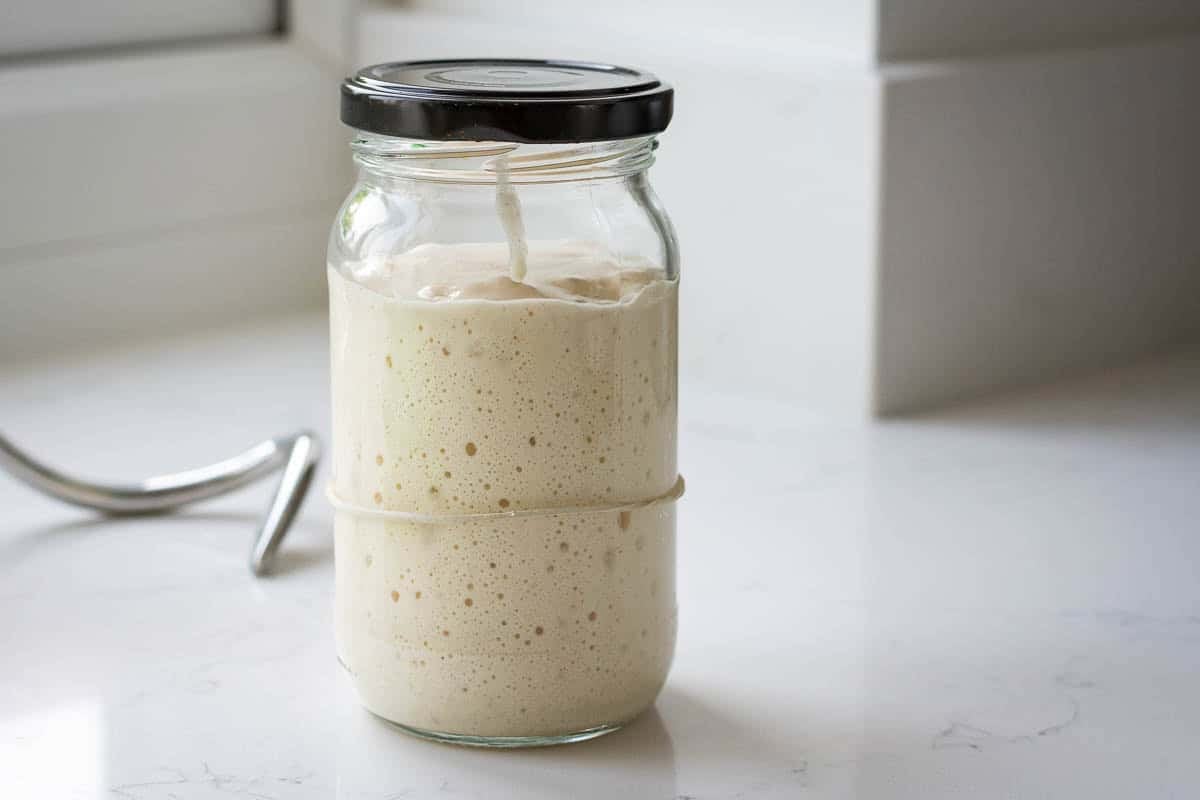
1. Feed your starter around 4 to 5 hours before mixing, until active, bubbly and at least doubled. My How To Feed Sourdough Starter guide covers ratios and timing if yours needs building up. If you're having trouble, download our FREE Sourdough Starter Troubleshooting Guide below.
2. Warm the milk with the cinnamon, nutmeg, ginger and cloves until steaming, then take off the heat and let it sit for 10 minutes.
3. Pull a double shot of espresso and pour it into the milk. Then stir in the water, pumpkin puree, honey and vanilla until combined. Cool the mixture completely before it goes anywhere near your starter, warm liquid meeting active starter knocks the fermentation about.
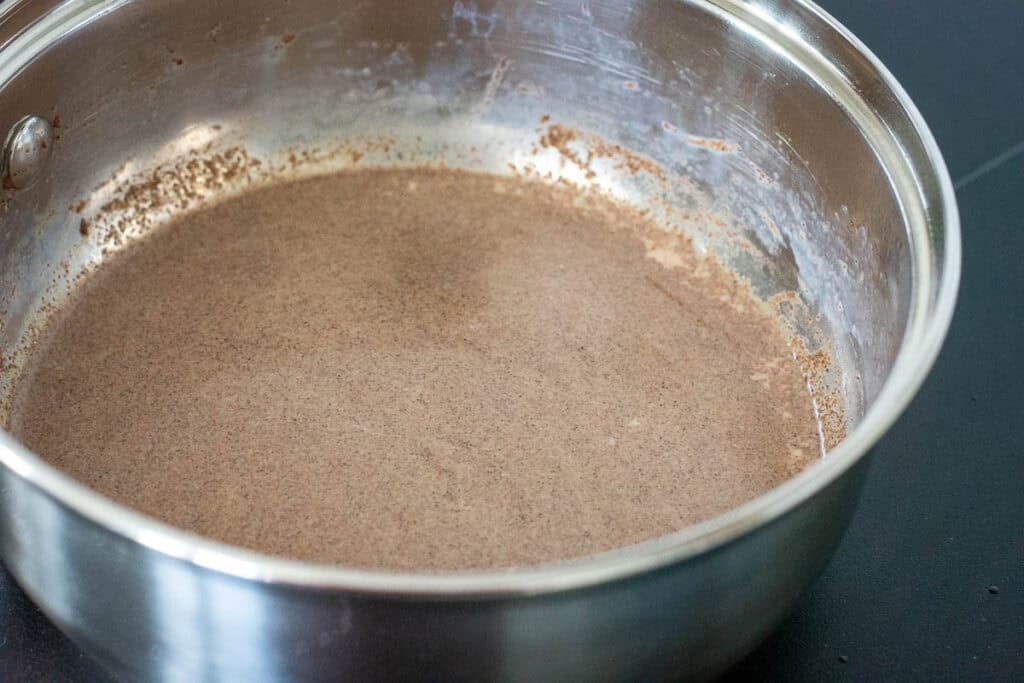
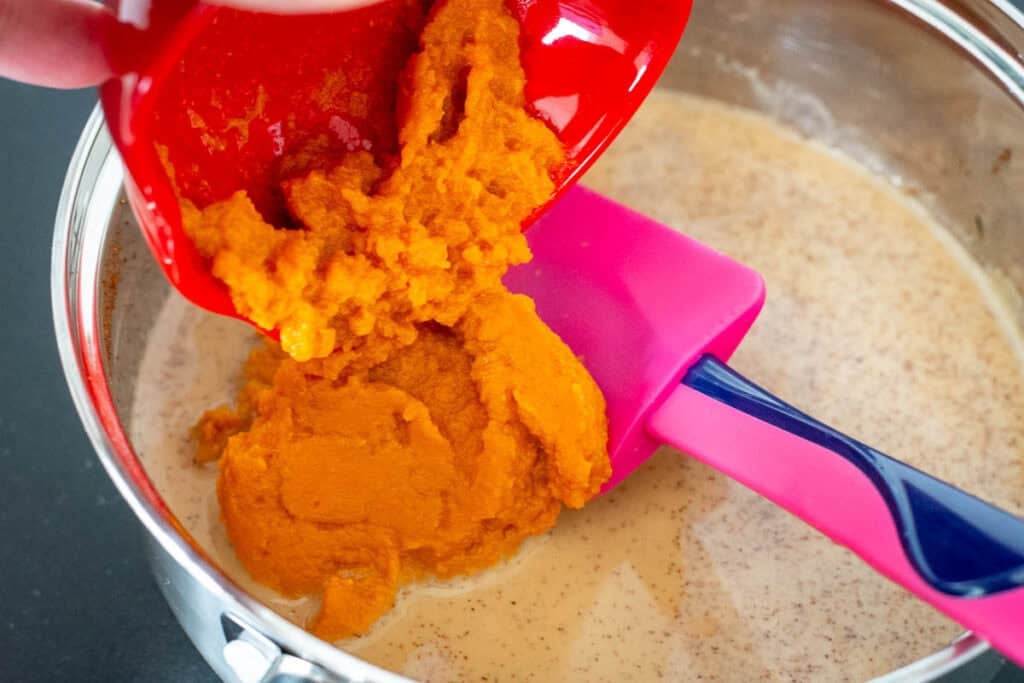
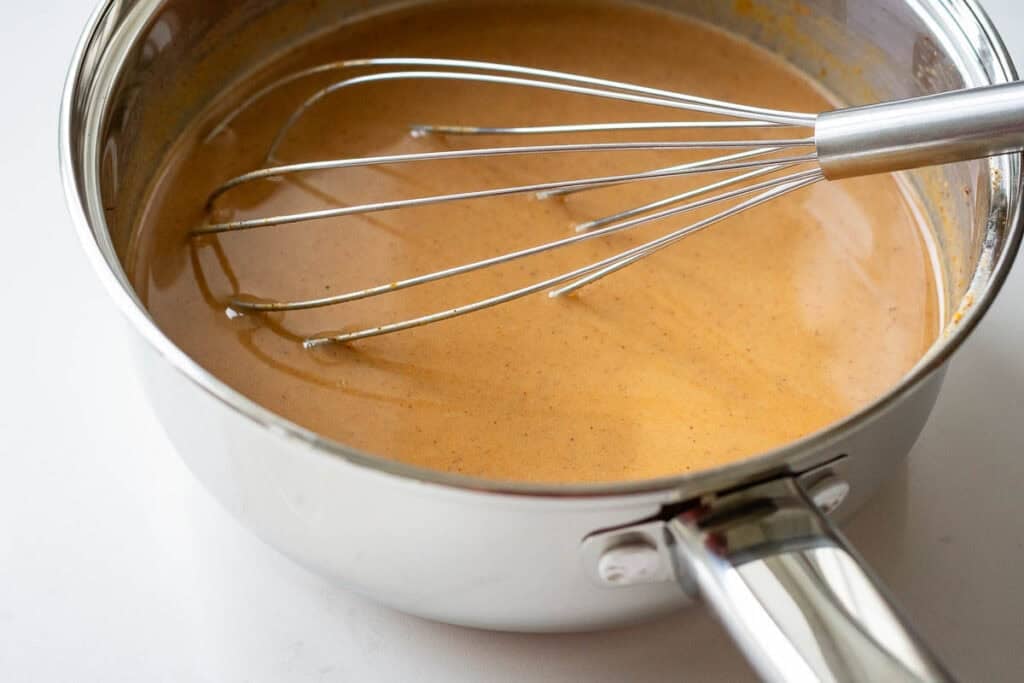
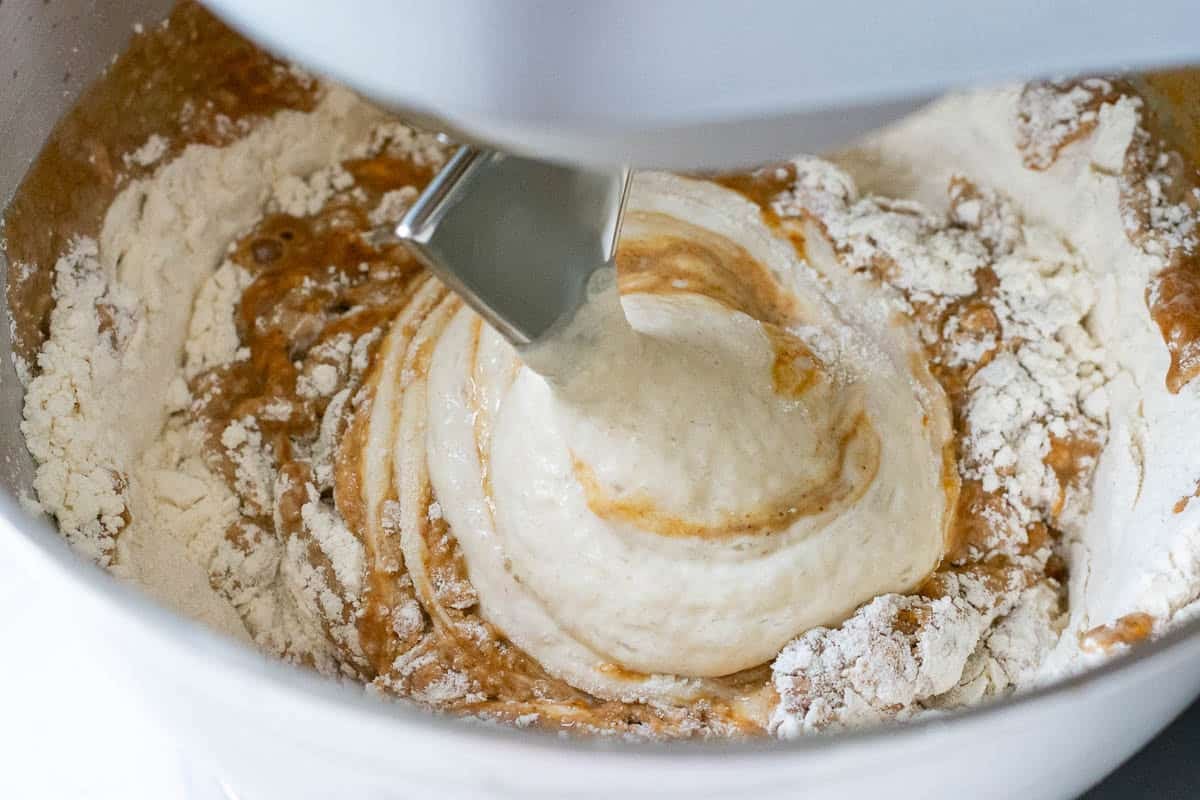
4. Mix the flour and salt in a bowl of a stand mixer. Add the cooked milk mixture and starter and run the mixer fitted with a dough hook attachment until you have a smooth, cohesive dough, then bit by bit work in the soft butter until fully incorporated. This takes longer than a lean dough, expect closer to 12 to 15 minutes total.
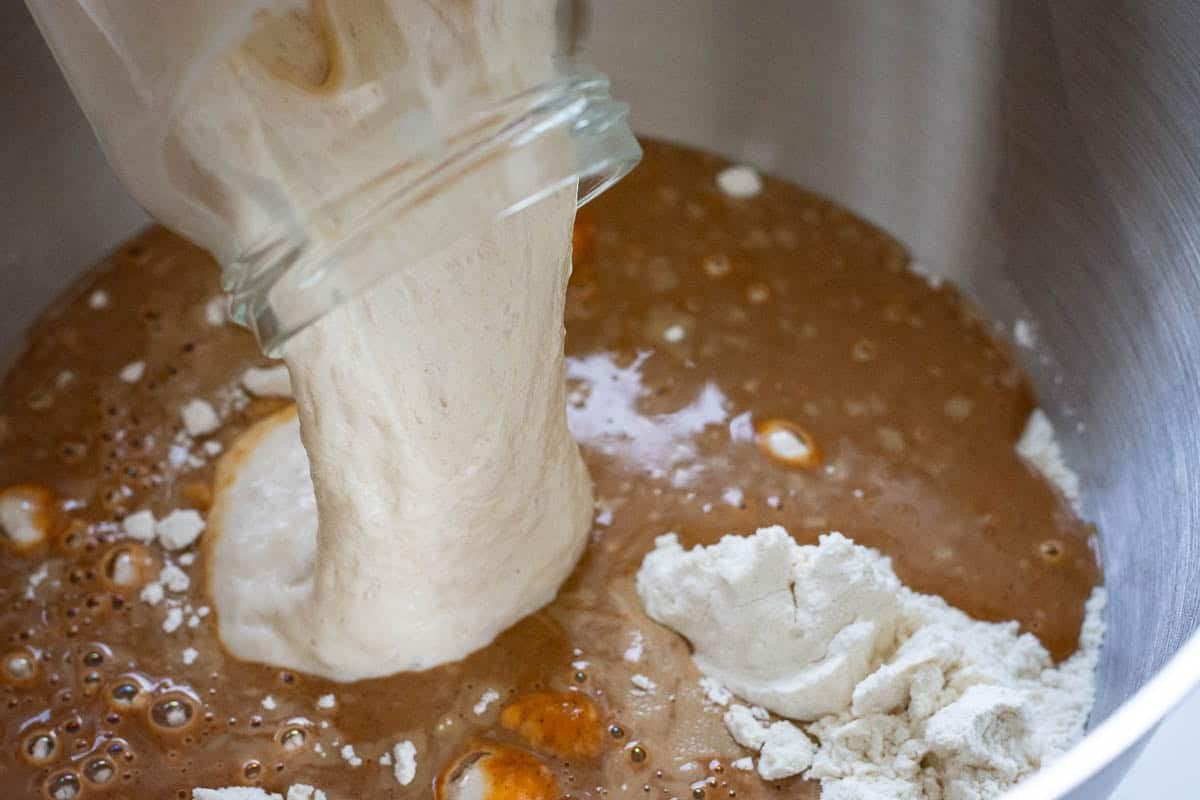
5. Rest 30 minutes, then start your coil folds, one every 30 minutes for 4 sets. If your dough isn't relaxing much in between folds, give it 45 minutes in between.
6. Leave to bulk ferment for a further 3 to 4 hours (it will likely be slower than your plain sourdough loaf). You're looking for puffy, visibly bubbled, risen by 50 to 75%, not a number on the clock.
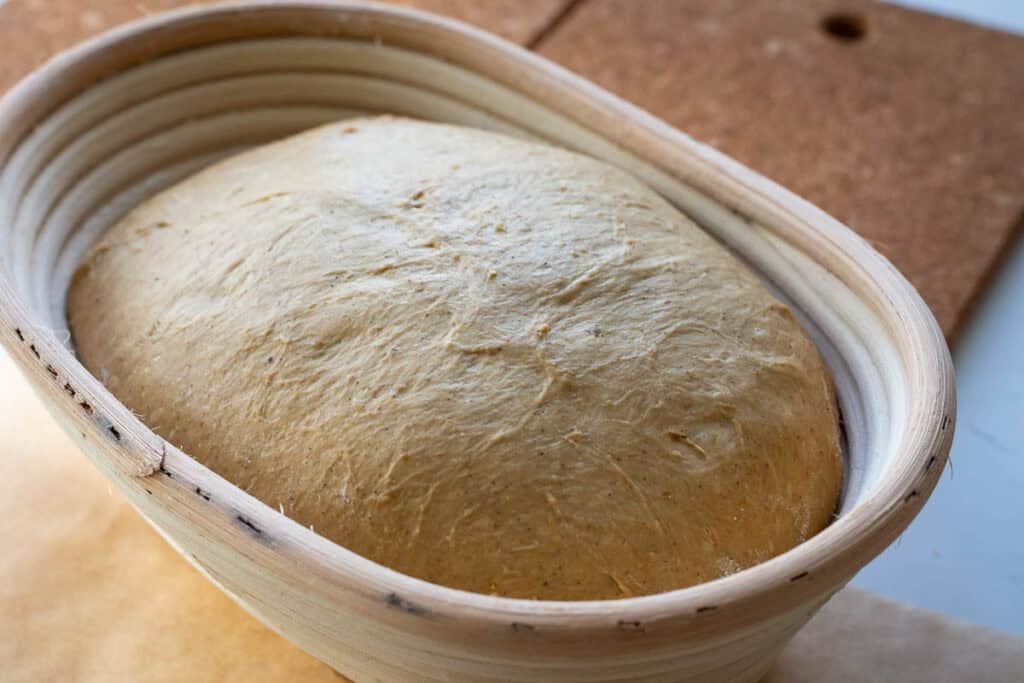
7. Shape into a tight boule, place seam-side up in a well-floured banneton, and refrigerate for 12 to 36 hours.
Day 2
1. Preheat your Dutch oven to 240°C (460°F).
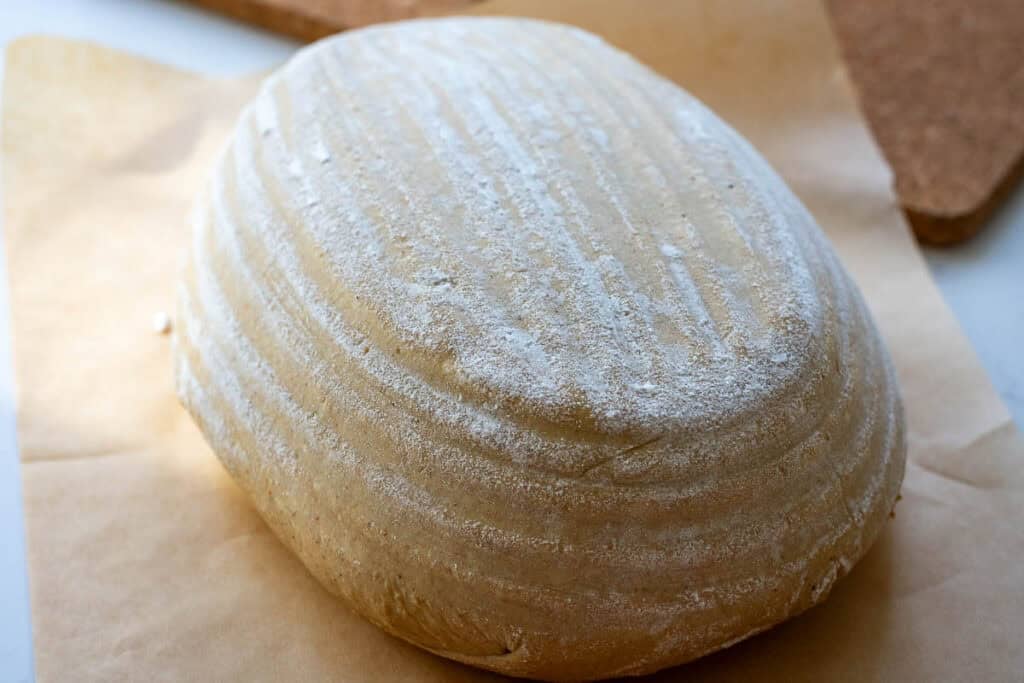
2. Score the dough straight from the fridge, cold dough scores far more cleanly than dough left to warm up.
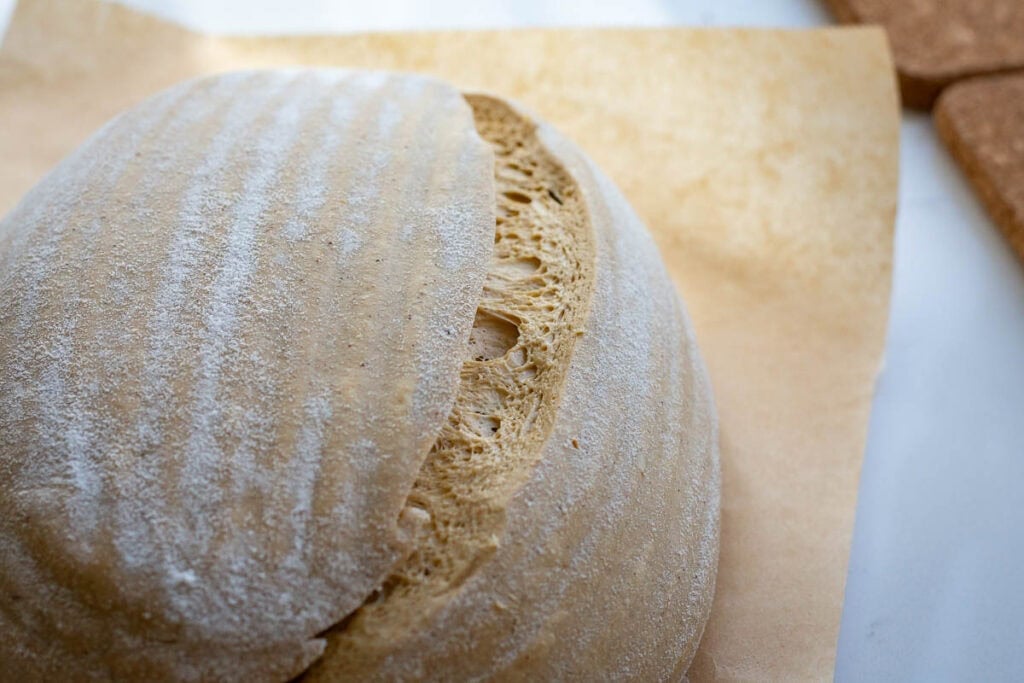
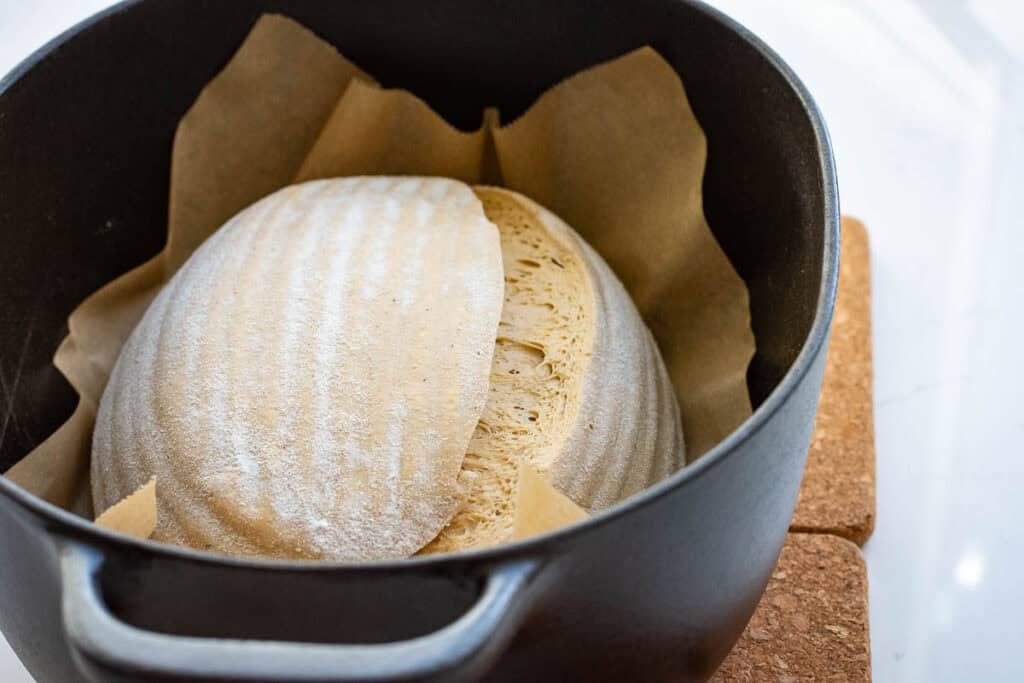
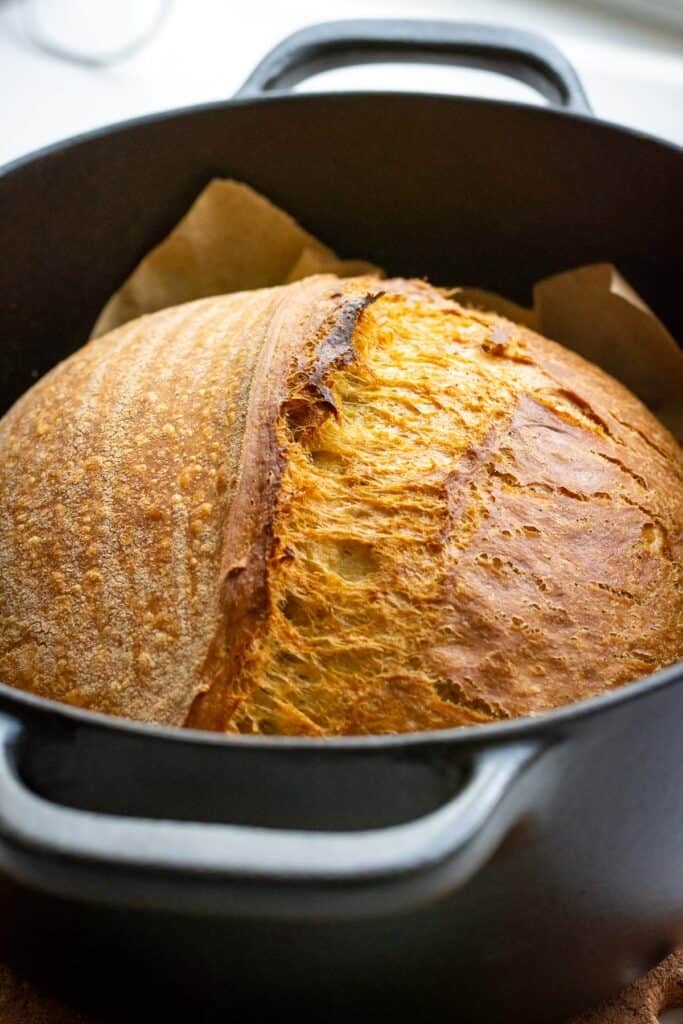
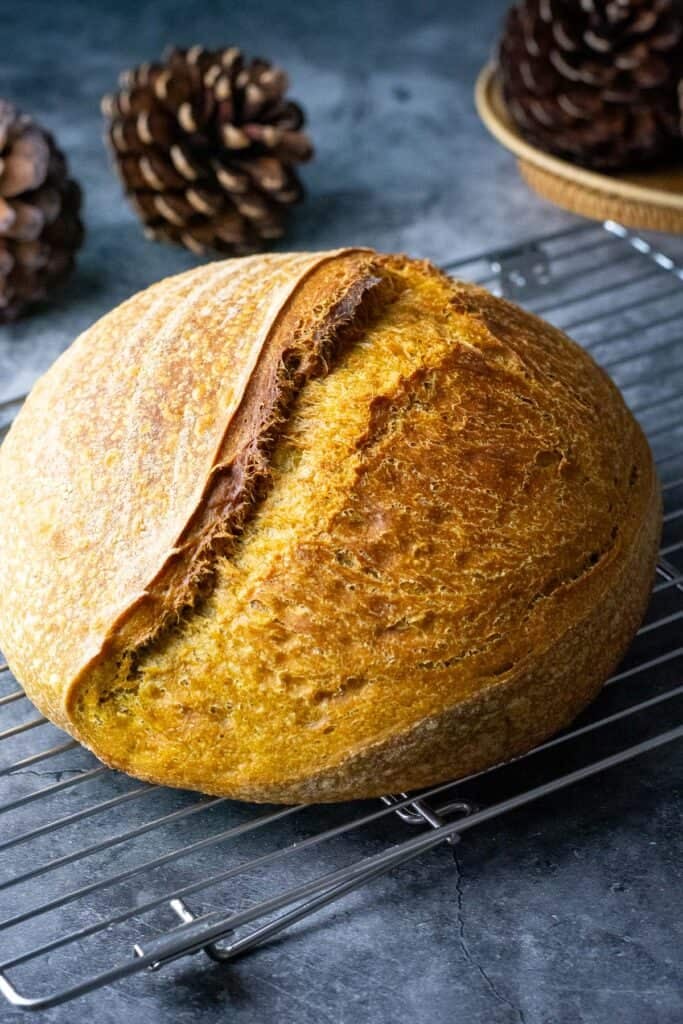
3. Bake covered for 50 minutes, then uncovered for 5-10 more, depending on how dark your crust got. You may even bake this sourdough covered for a full bake. Watch the crust, the honey and milk mean this colours faster than a plain loaf. Drop to 180°C (360° F) if it's browning too quickly. But expect this sourdough bread to take longer to bake than a plain loaf.
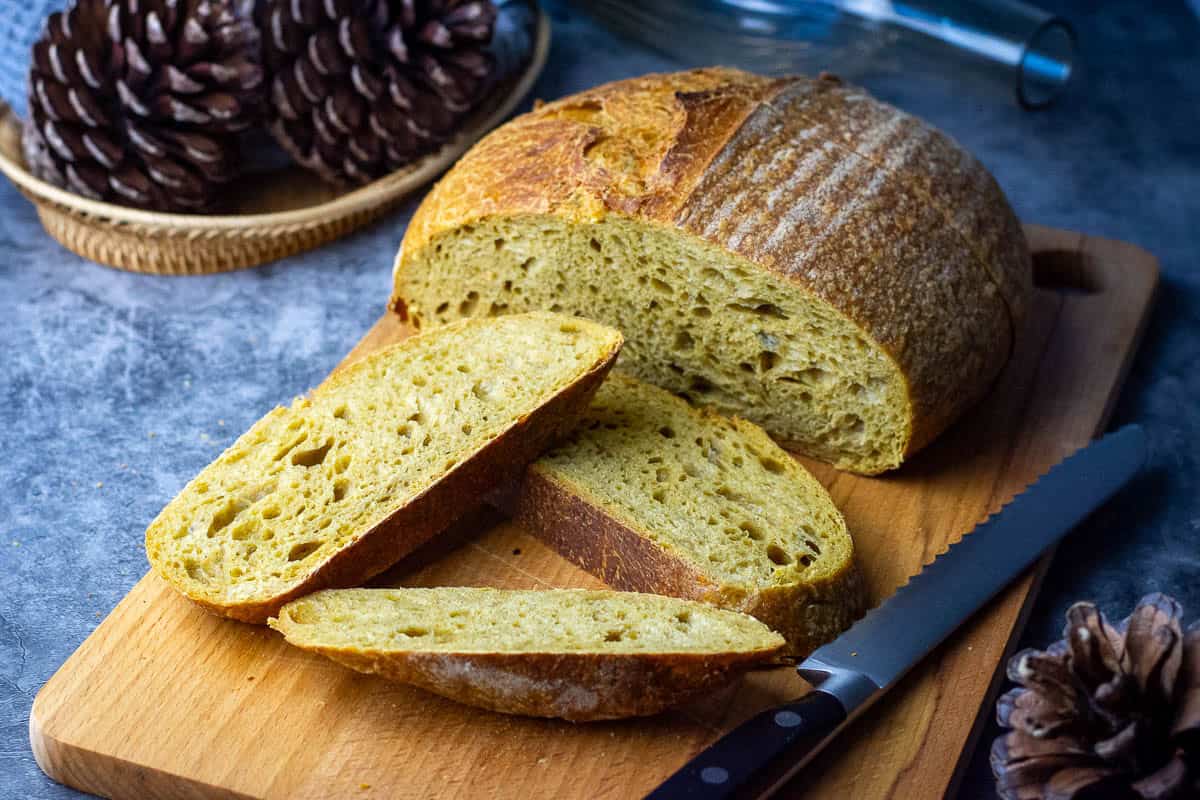
5. Cool completely on a wire rack before slicing, at least an hour. Cutting in early loses you the crumb structure you've spent two days building.
RECIPE TIPS
☕ Weigh your espresso shot rather than trusting the machine's button. Shot size varies a fair bit between machines, and you want close to 60g to keep the hydration where it should be.
🎃 Check your pumpkin purée's moisture if the dough feels unusually slack. Brands vary. If this happens, hold back 10 to 15g of water next time you bake it.
🌡️ Cool the spiced milk and espresso properly before mixing. Warm liquid meeting your starter is the actual risk here, not the coffee or the spice.
🔍 Go by look, not the clock, during bulk fermentation. The butter slows things down while the honey speeds them up, so the usual timings don't always apply cleanly to enriched dough.
❄️ Give it the full cooling time before slicing. The milk and butter mean the crumb needs longer to properly set than a lean loaf does.
Recipe FAQs
The quantities used in this recipe do not have a detrimental effect on the bread, as long as the espresso and spiced milk have both cooled to room temperature before they meet your starter. But do expect the fermentation to happen a lot slower.
No, and it's worth being strict about this. Pumpkin pie filling already contains sugar, spice and sometimes condensed milk, which throws off both the flavour balance and the hydration calculation this recipe is built on. Look for a tin labelled 100% pumpkin or pumpkin purée.
Yes. A strong stovetop moka pot shot works just as well, or use 60g of very strong brewed coffee if that's what you have. Just make sure whatever you use is properly cooled before it goes into the dough.
This usually comes down to your pumpkin purée. Moisture content varies noticeably between brands, and a wetter tin will give you a slacker dough even at the exact same weight. If this happens, hold back 10 to 15g of the water the next time you bake it.
Oat milk is the best swap, it has a similar richness to whole milk and blooms the spices just as well. Avoid anything sweetened or vanilla-flavoured, since it competes with the pumpkin spice rather than supporting it.
Yes. Swap in around 3½ teaspoons of pumpkin pie spice in place of the cinnamon, nutmeg, ginger and cloves listed. The individual spices give you slightly more control over the blend, but a good pre-made mix will get you very close.
Mix It Up: Turn Your Sourdough into a Flavour Adventure.
What to Serve Pumpkin Spice Latte Sourdough Bread With
The obvious pairings work because they work:
- Toasted with salted butter, the honey and spice do the rest.
- Alongside an actual coffee, ideally not another pumpkin spice latte, this loaf makes a fairly strong case for itself as the better version.
- Spread with cream cheese for something closer to a proper autumn breakfast.
Storage
Keep the cooled loaf wrapped in a bread bag or tea towel at room temperature for 2 to 3 days. It freezes well too, either whole or pre-sliced, so you can toast straight from frozen when you want a slice without committing to the whole loaf. Learn more by visiting How To Store Sourdough Bread? Best Ways To Keep It Fresh.
More Flavoured Sourdough Bread Recipes
If you're building out a wider "flavoured drink into bread" collection like I have, this one sits nicely alongside my Coffee and Date Sourdough Bread and London Fog Sourdough Bread. Have a look at more sourdough bread recipes with inclusions below:


LOVE BAKING SOURDOUGH WITH ME?
You can now add Somebody Feed Seb as a preferred source on Google. It only takes a tick box, and tells Google you'd like to see more of my recipes when relevant.

Pumpkin Spice Latte Sourdough Bread
Equipment
- Bench Scraper
- Banneton Basket
- Razor Blade or Bread Lame
- Espresso machine (or moka pot), for pulling the shot
Ingredients
- 130 g milk
- 2 teaspoon ground cinnamon
- ½ teaspoon ground nutmeg
- ½ teaspoon ground ginger
- ¼ teaspoon ground cloves
- 500 g strong white bread flour 12%+ protein
- 10 g fine sea salt
- 160 g active sourdough starter 100% hydration
- 100 g pumpkin purée 100% pumpkin, not pumpkin pie filling
- 60 g espresso coffee about 1 double shot, cooled completely
- 100 g water
- 50 g honey
- 1 teaspoon vanilla bean paste optional
- 30 g unsalted butter very soft
Instructions
DAY 1
Feed sourdough starter
- First thing in the morning, feed your sourdough starter in a ratio of 1 part starter : 1 part water : 1 part flour, for example 70g starter, 70g water, 70g flour. Scoop into a clean jar and leave in a warm spot (21-27°C), semi-covered, for 4-5 hours, until active and at least doubled.
Steep the flavours
- Heat the milk in a small pan with the cinnamon, nutmeg, ginger and cloves until steaming but not boiling. Take off the heat and let it sit for 10 minutes so the spices bloom into the milk,
- Pull a double shot of espresso (60g) and pour it into the spice and milk mixture. Then stir in the water, honey, vanilla and pumpkin puree and set it aside to cool completely to room temperature. Don't add it warm, hot liquid meeting your starter will knock the fermentation about.
Mix the dough
- Once your starter is active, bubbly and at least doubled, combine the flour and salt in a bowl of a stand mixer fitted with a dough hook attachment. Add the cooled spiced milk liquid and starter. Mix with the dough hook on medium-low for 5-7 minutes, until you have a cohesive dough with no dry flour remaining.
- Add the soft butter bit by bit, mixing for a further 6-8 minutes until fully incorporated and the dough looks smooth again.
Coil folds and bulk fermentation
- Scoop the dough into a large bowl, cover with a damp tea towel or plastic wrap, and leave in a warm place (21-27°C) for 30 minutes. With cold wet hands, perform the first set of coil folds: lift the dough from the sides and tuck it under itself, rotate the bowl a quarter turn, and repeat. Cover and rest 30 minutes, then repeat for 4 sets total. Stretch and folds work just as well if you prefer them, go a little gentler than usual, the pumpkin purée keeps this dough softer than a plain loaf.
- Once the folds are done, leave the covered dough undisturbed for 3-4 hours. Bulk is finished when the dough looks puffy, has visible bubbles at the surface, and has increased by around 50-75% in volume. Go by how it looks rather than the clock. This is an enriched dough and will go much slower than a plain sourdough.
Shape and cold ferment
- Turn the dough out onto a lightly floured surface, smooth side down. Fold the four corners into the centre, then flip over. Using a bench scraper at a shallow angle, push the dough while your free hand tucks it under itself, building tension, until it holds its shape and doesn't spread.
- Place the shaped dough smooth-side down into a well-floured banneton (rice flour is best for lining). Pinch the seam at the top to keep the shape tight.
- Cover and refrigerate the banneton for 12-36 hours.
Day 2
- Place the Dutch oven into the oven from cold, then preheat to 230°C (445°F).
Score and bake
- Once the oven is fully up to temperature, take the dough straight from the fridge, don't let it come to room temperature, cold dough scores more cleanly. Invert gently onto a large piece of parchment paper. Using a bread lame or razor blade, score firmly at a 30-45° angle, about 1cm deep (more on what contributes to a prominent sourdough ear HERE).
- Carefully remove the hot Dutch oven and take off the lid. Lift the dough in using the edges of the parchment paper, keeping the score open as you lower it in. Replace the lid and bake for 45-50 minutes.
- Remove the lid and bake for a further 5-10 minutes. This dough colours faster than a plain sourdough thanks to the honey, milk and pumpkin, so start watching it from around the 10-minute mark once the lid's off. Drop the oven to 200°C for the remaining time if it's browning too quickly. You can bake it covered for the full length if the crust is caramelised, but do expect it to take a little while longer than a standard loaf.
- Lift the loaf out using the parchment paper and place on a wire rack. Slide the paper out from underneath and leave to cool completely before slicing.
Video
Notes
Nutrition



Leave a Reply