
Few breads feel as generous and forgiving as Rosemary Sourdough Focaccia. With its golden brown crust, soft centre, crispy edges, and the unmistakable aroma of fresh rosemary and olive oil, this rustic Italian flatbread is one of the most rewarding ways to bake with your own sourdough starter. It's a simple sourdough focaccia that looks impressive, tastes deeply savoury, and doesn't demand perfection - just patience and a little trust in the process.

Jump to:
As an Amazon Associate I earn from qualifying purchases, at no extra cost for you! Thank you!
If you're baking sourdough for the first time or looking for a low-stress bake with consistently great results, this rosemary sourdough focaccia recipe is a brilliant place to start. Plus, it gets you used to handling a high-hydration dough before you bake your first high-hydration sourdough bread!
Ingredient Notes
This recipe relies on a short list of good-quality ingredients. Each one plays an important role in the final texture and flavour.
- Strong bread flour (at least 12% protein). High protein content helps the dough develop strength during bulk fermentation and creates that airy texture that focaccia is known for. Purpose flour will work in a pinch, but the crumb will be tighter. You can replace up to 10-15% of the flour with wholemeal flour for a nuttier flavour, but expect a slightly denser crumb and more water absorption.
- Water (warm, not hot). Warm water helps kickstart fermentation, especially if your kitchen runs cool. Measure accurately using a kitchen scale for best results.
- Active sourdough starter. Your starter should be bubbly, elastic, and recently fed. If you're unsure, a quick float test can help, but visible activity matters more.
- Fine sea salt (for the dough). Salt strengthens gluten and controls fermentation. Don't skip it.
- Extra virgin olive oil. This adds richness, protects the crumb, and creates those crisp, almost fried edges at the bottom of the pan. Use a high-quality oil - you'll taste it.
- Fresh rosemary. Fresh rosemary gives a far better flavour than dried. Finely chop most of it to press into the dough, then reserve a few whole leaves for the top of the dough.
- Flaky or coarse sea salt (for topping). Adds texture and bursts of salinity that balance the olive oil beautifully.

Find ingredient quantities, detailed instructions and nutritional information in the recipe card at the bottom of the post.
Variations and Additions
Once you're comfortable with the main dough, rosemary sourdough focaccia becomes a versatile canvas.
- Garlic focaccia. Press whole, lightly crushed garlic cloves or slices of fresh garlic into the top of the dough just before baking. Push them deep so they don't burn.
- Cheese focaccia. Scatter cubes of mozzarella, taleggio, or gruyère over the surface and dimple them in. Avoid finely grated cheese, which melts too fast and can scorch.
- Tomato and rosemary. Halved cherry tomatoes work beautifully. Press them cut-side up into the dough so they roast rather than leak moisture into the crumb. Simply follow our Cherry Tomato Sourdough Focaccia recipe.
- Garlic butter finish. Brush the focaccia with garlic butter as soon as it comes out of the oven for extra depth of flavour. We use this in our Garlic Butter Sourdough Focaccia recipe.
- Tuscan Harvest Focaccia. Unexpected, bold and absolutely delicious - our Sourdough Focaccia With Grapes and Rosemary, based on Schiacciata con l'uva.
Each of these additions works well with the high-hydration dough and doesn't interfere with the rise.
Fancy more than one flavour in one bake? Try our Sourdough Focaccia Muffins - you can top each one individually!
Important Tips For the Best Sourdough Focaccia
Making great focaccia is equal parts technique and patience. After many test bakes, these are the details that consistently make the biggest difference.
- Start with fermentolyse. Combine flour, warm water, and active sourdough starter first, before adding salt or olive oil. Letting the main dough rest for about an hour allows gluten development to begin naturally and makes the dough easier to handle later.
- Add olive oil by hand. After the dough rest, squish the olive oil and salt in using wet fingers. If you add oil too early or mix it straight in at speed, the dough can split and lose structure.

- Expect a sticky dough. This is a high-hydration dough. It will feel rough at first and very sticky, but a series of folds during bulk fermentation transform it into something smooth and elastic.
- Use coil folds, not kneading. Every 30 minutes during bulk fermentation, lift and fold the dough over itself with wet fingers. This strengthens gluten without knocking out air and gives the focaccia its airy texture. You can watch coil folding video at the bottom of the recipe card.
- Watch the dough, not the clock. Bulk fermentation time depends on the temperature of your kitchen. Look for a 50-60% rise, visible bubbles, and a soft, jiggly dough rather than focusing strictly on hours.


- Cold proof for flavour. An overnight rest in the fridge improves depth of flavour and makes the dough easier to stretch the next day. Cold dough is far more cooperative.
- Second rise matters. Once transferred to the prepared pan, the dough needs time to relax and puff up again. The surface should look blistered and airy before baking.

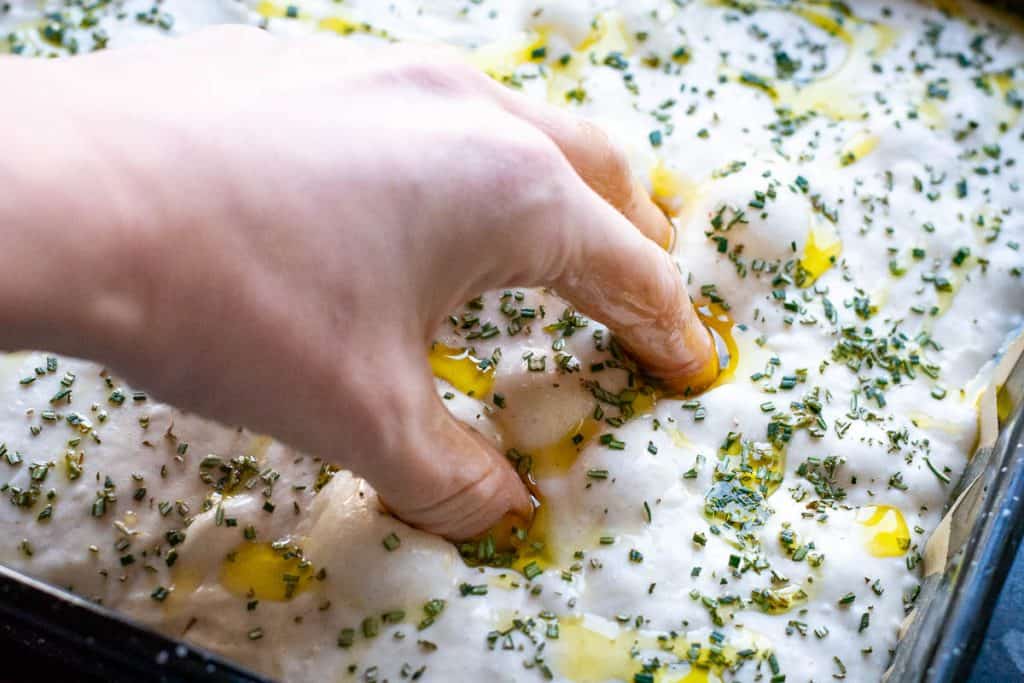
- Dimple deeply. Use wet fingers and press right down to the bottom of the pan. This anchors the rosemary, prevents burning, and creates the classic focaccia look.
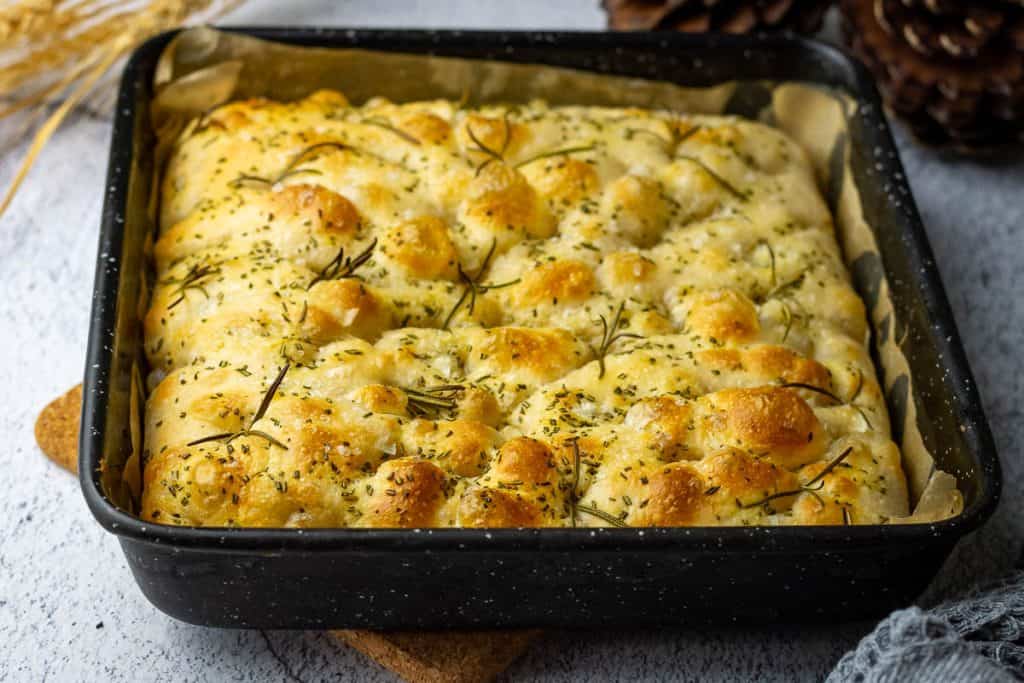
- Bake until properly golden. A pale focaccia is underbaked. You want a deep golden brown top, crisp sides of the pan, and a soft centre that springs back gently. Cool the bread on a wire rack for at least 20 minutes before slicing so the crumb can set.

Serving Suggestions
Rosemary sourdough focaccia is endlessly adaptable. Serve it:
- Alongside soups, stews, and slow-cooked beans
- Cut crosswise and used as sandwich bread
- Toasted lightly the next day and topped with olive oil and flaky sea salt
- As part of a cheese board with olives and roasted vegetables
- Split and filled with roasted squash, ricotta, or grilled mushrooms for a more creative take

Storage
At room temperature: Store the focaccia wrapped in a tea towel or in an airtight container for up to 2 days.
Freezing: Slice once completely cool, wrap tightly, and freeze for up to 2 months.
Reheating: Warm in a hot oven for 5-8 minutes straight from frozen, or toast slices lightly. Avoid microwaving, which softens the crust.
More Sourdough Focaccia Recipes
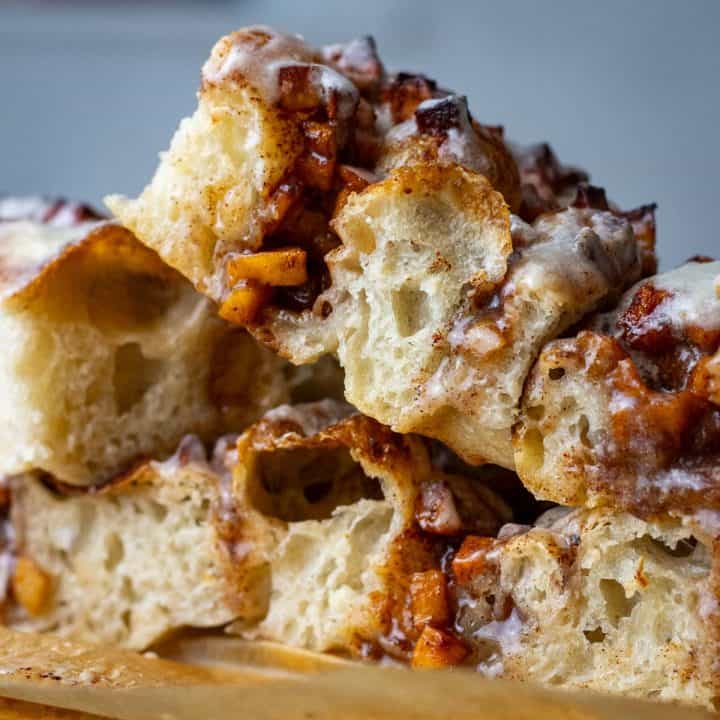
If you enjoyed this bake, explore more sourdough focaccia recipes using the same main dough with different toppings and flavour profiles - it's one of the most flexible sourdough styles you can master.



Simple Rosemary Sourdough Focaccia
Ingredients
Sourdough Focaccia Dough
- 260 g strong bread flour with at least 12% protein content
- 190 ml water
- 110 g active sourdough starter 100% hydration
- 5 g salt
- 25 ml olive oil
Topping
- 3-4 rosemary sprigs leaves stripped, stalks discarded
- a drizzle of olive oil
- a generous pinch of flaky sea salt
Instructions
DAY 1
- First thing in the morning, feed your sourdough starter and leave it in a warm spot to at least double in volume. We typically feed our starter in a ratio of 1 part starter: 1 part water: 1 part flour, and it doubles (or even triples) within 4 hours.
Fermentolyse and Mixing The Dough
- In the bowl of a stand mixer, combine flour, water and active sourdough starter. Mix the dough in a stand mixer fitted with a dough hook attachment for a few minutes on low speed, until the flour is hydrated. Cover the bowl with a damp tea towel and leave the dough to fermentolyse (a type of sourdough autolyse where sourdough starter is added too) for an hour.
- After an hour, scatter the salt on top of the dough. Drizzle the olive oil all over, and using your hands, squish the salt and oil into the dough, aiming to distribute it evenly.TIP: Don't be tempted to just mix the oil in by running the stand mixer - the dough will split, separated by oil layers.
- Once incorporated, run your mixer on medium speed for 10-12 minutes, until you have a very smooth and elastic dough. It will be wet, but should start gathering around the dough hook attachment.
Coil Folds, Bulk Fermentation, Cold Proof
- Scoop the dough into a lightly oiled bowl (we like to use a heavy shallow dish - it helps with coil folds later). Cover the dough with a damp tea towel or cling film (plastic wrap) and leave it in a warm spot (around 21-24°C) for 30 minutes.
- Over the next 3 hours, at 30-minute intervals, perform a set of coil folds, using wet hands.
- After all 6 sets of coil folds are completed, cover the dough and let it finish its bulk fermentation undisturbed for 1.5-3 hours, depending on the temperature of your kitchen.
- Place the dough in the refrigerator for 8-24 hours (or simply overnight).
DAY 2
- The next day, line a baking tray (approx 24x24cm) with parchment paper.
Second Rise
- Take the dough out of the fridge and very carefully transfer it into the prepared baking tray, trying not to deflate it too much. Stretch it out into the corners of the baking dish.
- Cover it again and leave it in a warm spot to proof for another 1-2 hours. It will increase in volume, puff up and have very noticeable blisters across the surface.
Topping and Baking
- Preheat the oven to 200°C (400°F).
- Finely chop ⅔ of the rosemary leaves, keep the rest whole for decorating.
- Drizzle olive oil all over the surface of your sourdough focaccia. Then scatter the finely chopped rosemary all over.
- Oil your fingers and dimple the dough, pressing deep down to the base of the pan squishing the rosemary into the dough. Finally, arrange the remaining leaves on top of the focaccia and sprinkle the sea salt all over.
- Bake the focaccia for 20-25 minutes. Cool it for at least 20 minutes before slicing. Best enjoyed slightly warm or at room temperature on the day it is baked.
Video
Nutrition

Stella says
Loved this foccacia. This was my first time trying it with sourdough and it worked really well.
Ieva Greber says
So glad! And thank you for giving our recipe a go! 🙂
Ann says
We did the garlic butter finish. So.Dang.Good. 🙂
Ieva Greber says
Yum!
Carmella says
So soft and full of those air bubbles I love. I added cheese and it was SO good! Craving it and can't wait to make it again
Ieva Greber says
Thank you - I can imagine cheesy rosemary focaccia tasted superb! 🙂
Christi says
I tried this last weekend and I think making focaccia is now my newest obsession. It was so much easier than I thought!
Stephanie Whitehill says
Delicious! This focaccia is definitely going in the regular rotation.
Ieva Greber says
So happy to hear that! There’s no better compliment than making it into the regular rotation 😄 Thank you so much for trying the recipe and taking the time to leave a comment!