
Golden, airy Sourdough Focaccia With Grapes and Rosemary brings together sweet, jammy fruit and savoury olive oil in the most irresistible way. This sourdough grape focaccia has a crisp crust, soft interior and bursts of sweet grapes tucked into every dimple. It's one of those bakes that feels a little bit special, yet comes together with simple ingredients and a bit of patience.

Jump to:
As an Amazon Associate I earn from qualifying purchases, at no extra cost for you! Thank you!
And if you enjoy that sweet and savoury contrast, this really is the perfect combination. I've always been firmly in the pineapple-on-pizza camp, so a bake like this ticks every box for me. This, and also our new obsession - Plum and Gorgonzola Sourdough Focaccia!

Recipe Highlights
TASTE: Sweet, jammy grapes against savoury olive oil and rosemary
INSPIRED BY: Schiacciata con l'uva, a Tuscan harvest bread
SEB'S RATING: Fully on board. Grapes on bread, who knew
PAIRS WELL WITH: Blue cheese, rocket, a decent glass of red

Sourdough Focaccia Inspired By Schiacciata Con L'Uva
This sourdough focaccia recipe is inspired by Schiacciata con l'uva, a traditional Tuscan flatbread made during grape harvest season. It's typically made with wine grapes like Concord grapes or other small, sweet varieties, layered into a thinner dough and baked until juicy and caramelised.
The contrast of sweet grapes, olive oil and a little sea salt creates a beautiful flavour that's both simple and memorable. It's one of those traditional recipes that shows how a few good ingredients can go a very long way.
My sourdough version takes that idea and leans into focaccia instead. It's slightly thicker than the traditional version, more like sourdough focaccia bread, which means you get that fluffy focaccia texture with a crispy crust and soft centre.


There's also a practical reason for this. I love slicing it crossways the next day and turning it into sandwich bread. It's absolutely brilliant filled with something punchy like blue cheese (one word, BASAJO!) and a handful of rocket. Sweet grapes, savoury cheese, peppery greens. It's the kind of lunch you look forward to.
Loving food from Tuscany? Try our Sourdough Discard Scarpaccia next!
Ingredient Notes
- Bread flour. Use strong bread flour (around 12 percent protein) for the best structure. It helps the focaccia dough develop strength and gives you that airy crumb. All-purpose flour can work, but the texture will be softer and the dough trickier to handle. You will also need to reduce hydration slightly.
- Active sourdough starter. Your sourdough starter should be active, bubbly and ready to go. A strong starter is key for a good dough rise and proper bulk fermentation.
- Water. Use lukewarm or room temperature water to help kickstart fermentation. This is a high hydration dough, so expect a wetter dough that feels slightly sticky at first.
- Olive oil. Use a good quality extra virgin olive oil for the best flavour. It adds richness and helps create that signature crispy crust.
- Sugar and salt. A small amount of sugar in the dough balances flavour, while salt strengthens the gluten and enhances everything else. You'll also use a little sugar on the grapes to help them caramelise.
- Grapes. Fresh grapes are key. Traditionally, Concord grapes or wine grapes are used, but we prefer seedless red grapes or black grapes for ease. Smaller grapes work best as they roast more evenly.
- Rosemary. Fresh rosemary adds a lovely savoury note that balances the sweetness of the grapes.
- Flaky sea salt. A pinch on top finishes everything beautifully.

You'll find full quantities and step-by-step instructions in the recipe card.
Tips For Great Sourdough Focaccia
Making good focaccia is all about understanding the dough and giving it time.
- Start with fermentolyse. Mix flour, warm water and active starter first, then let the dough rest. This helps gluten develop naturally and makes the dough easier to work with.
- Add olive oil by hand. After the dough rest, squish in the olive oil and salt using wet hands. Mixing oil in too early can cause the dough to split.

- Expect a very sticky wet dough. This is a high hydration dough. It may feel rough at first, but after a few fold sessions it becomes smooth and elastic.
- Use coil folds instead of kneading. During bulk fermentation, use wet hands to gently lift and fold the dough. This builds structure without knocking out air.

- Watch the dough, not the clock. The dough rise depends on the temperature of your kitchen. Look for visible bubbles and a soft, jiggly texture rather than focusing strictly on time.


- Cold proof for flavour. An overnight cold proof improves flavour and makes the dough easier to handle the next day.
- Second rise matters. Once transferred to your oiled pan or baking tray, let the dough relax and puff up again. The surface should look airy and slightly blistered.

- TOP TIP: Use a baking tray with high rims, that way you can cover the tray with a damp tea towel or plastic wrap without it touching the top of the focaccia. We love our USA Pan. You can even use a large cake pan for this grape and rosemary focaccia recipe.
- Dimple deeply. Press right down to the bottom of the pan. This anchors the grapes and rosemary and creates that classic focaccia look.
- Sugar on the grapes is key. Sprinkling sugar over the grapes helps them caramelise in the oven, intensifying their flavour and giving that jammy finish.


- Bake until deeply golden brown. A properly baked focaccia should have a crisp, golden crust and soft centre. Let it cool on a wire rack before slicing.
- Let it firm up. Leave the focaccia in its baking tray for 5-10 minutes before lifting it out onto a cooling rack.
Serving Suggestions
This sourdough focaccia with grapes is traditionally enjoyed on its own, often during the grape harvest season, sometimes as a simple snack.
But there are so many great ways to serve it.
Enjoy it warm with a drizzle of extra virgin olive oil, or alongside a cheese board with goat cheese or blue cheese. The sweet grapes and savoury flavour pairing works beautifully.
For something a bit different, slice it horizontally the next day and use it as sandwich bread. It's fantastic filled with gorgonzola and rocket, or even something simple like prosciutto and lettuce.
It also makes a real crowd-pleaser for gatherings or a slightly unexpected addition to a spread of sourdough recipes.
Storage
Store your focaccia at room temperature in an airtight container for up to 2 days.
Because of the fresh grapes, it doesn't keep quite as long as plain focaccia. The fruit releases moisture over time, which softens the crust.
You can freeze it, but keep in mind that grapes change texture once frozen and thawed. They become softer and release more juice, so the focaccia will be slightly more moist after defrosting.
To freeze, wrap slices well and store in a freezer-safe container. Reheat in the oven to bring back some of the crispness.

More Sourdough Focaccia Recipes
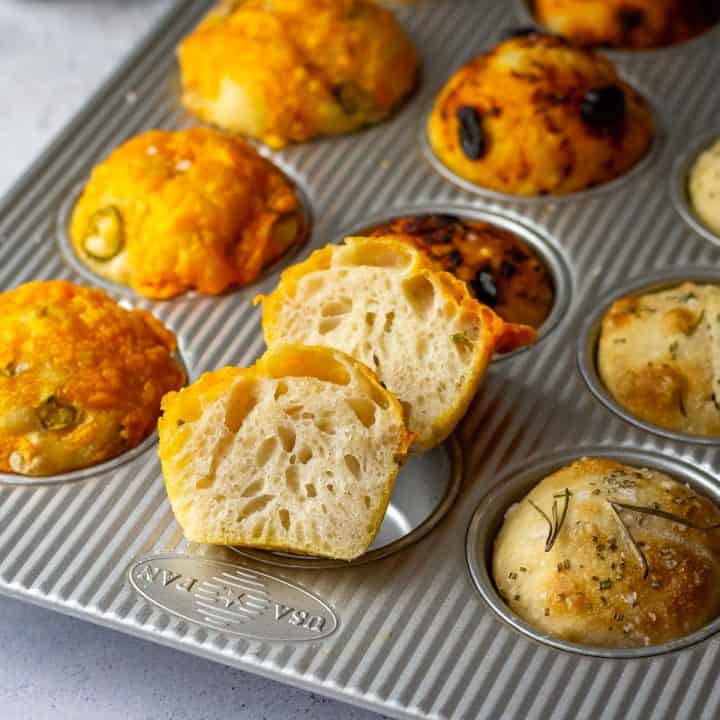
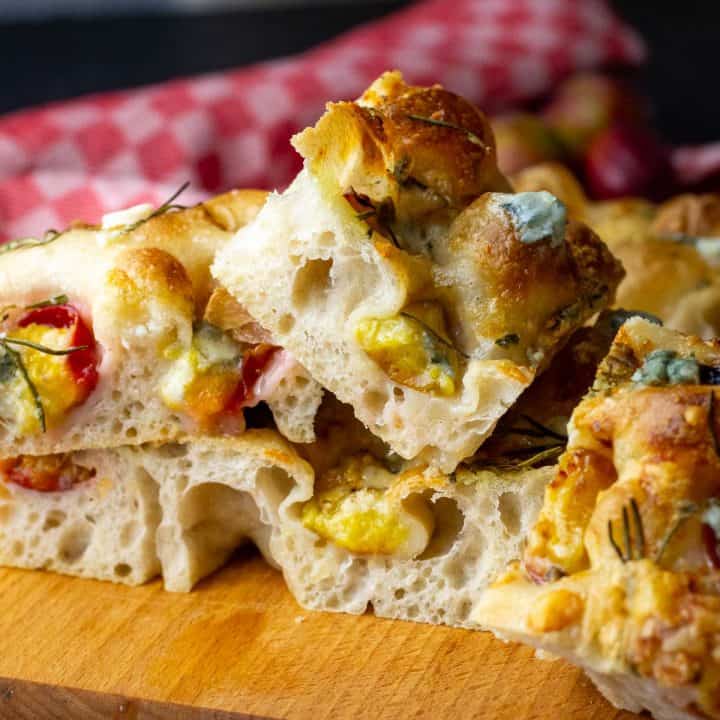
If you've fallen in love with sourdough focaccia, there are so many delicious variations to explore, from savoury classics to more creative sweet and savoury combinations.


LOVE BAKING SOURDOUGH WITH ME?
You can now add Somebody Feed Seb as a preferred source on Google. It only takes a tick box, and tells Google you'd like to see more of my recipes when relevant.

Sourdough Focaccia With Grapes and Rosemary
Ingredients
- 110 g active sourdough starter 100% hydration
- 260 g strong bread flour with at least 12% protein content
- 180 g water
- 5 g salt
- 5 g granulated sugar
- 25 ml olive oil
Topping:
- 200 g red grapes
- 3-4 rosemary sprigs leaves stripped, stalks discarded
- a drizzle of olive oil
- 1 teaspoon granulated sugar
- a pinch of flaky sea salt
Instructions
DAY 1:
- First thing in the morning, feed your sourdough starter and leave it in a warm spot to at least double in volume. We typically feed our starter in a ratio of 1 part starter: 1 part water: 1 part flour, and it doubles (or even triples) within 4 hours. If it doesn't, head to our article - My Sourdough Starter Isn't Doubling Within 4 Hours.
Fermentolyse and Mixing The Dough
- In the bowl of a stand mixer, combine flour, water, and active sourdough starter. Mix the dough in a stand mixer fitted with a dough hook attachment for a few minutes on low speed, until the flour is hydrated. Cover the bowl with a damp tea towel and leave the dough to fermentolyse (a type of sourdough autolyse where sourdough starter is added too) for an hour.
- After an hour, scatter the salt and sugar on top of the dough. Drizzle the olive oil all over, and using your hands, squish the salt and oil into the dough, aiming to distribute it evenly.
- TIP: Don't be tempted to just mix the oil in by running the stand mixer - the dough will split, separated by oil layers.
- Once incorporated, run your mixer on medium speed for 10-12 minutes, until you have a very smooth and elastic dough. It will be wet, but should start gathering around the dough hook attachment.
Coil Folds, Bulk Fermentation, Cold Retardation
- Scoop the dough into a lightly oiled bowl (we like to use a heavy shallow dish - it helps with coil folds later). Cover the dough with a damp tea towel or cling film (plastic wrap) and leave it in a warm spot for 30 minutes.
- Over the next 3 hours, at 30-minute intervals, perform a set of coil folds, using wet hands.
- After all 6 sets of coil folds are completed, cover the dough and let it finish its bulk fermentation undisturbed for 1.5-3 hours, depending on the temperature of your kitchen.
- Place the dough in the refrigerator for 8-24 hours (or simply overnight).
DAY 2:
- The next day, line a baking tray (approx 9x9 inch - 23x23cm) with parchment paper or simply brush it with olive oil if you're sure it's non-stick.
Second Rise
- Take the dough out of the fridge and very carefully transfer it into the prepared baking tray, trying not to deflate it too much. Stretch it out into the corners of the baking dish.
- Cover it again and leave it in a warm spot to proof for another 1-2 hours. It will increase in volume, puff up and have very noticeable blisters across the surface.
Topping and Baking
- Preheat the oven to 200°C (400°F).
- Finely chop ⅔ of the rosemary leaves, keep the rest whole for decorating.
- Drizzle olive oil all over the surface of your sourdough focaccia. Then scatter the finely chopped rosemary all over.
- Oil your fingers and dimple the dough, pressing deep down to the base of the pan squishing the rosemary into the dough.
- Press whole grapes into the dimples. Sprinkle a little sugar on each of the grapes. Finally, arrange the remaining leaves on top of the focaccia and sprinkle the sea salt all over.
- Bake the focaccia for 20-25 minutes. Cool it for at least 20 minutes before slicing. Best enjoyed slightly warm or at room temperature on the day it is baked.
Nutrition


Daisy says
Not only this bread is delicious but it also looks so cool! My little kid was like bread with purple stuff! He was amazed.
Ieva Greber says
Thanks, Daisy — that's brilliant, bread with purple stuff getting kid-approved is a proper win! Glad it delivered on looks as well as taste.
Libby says
What a yummy focaccia! The sweet pockets of grapes plus the rosemary made it irresistible!
Ieva Greber says
Thanks, Libby — those sweet grape pockets against the rosemary really do make it hard to stop at one slice. Glad it was irresistible!
Amy Dong says
This focaccia came out airy, golden, and full of flavor. The roasted grapes added such a wonderful sweetness to every bite!
Ieva Greber says
Thanks, Amy — airy and golden is exactly what I'm after, and those roasted grapes bring such a lovely pop of sweetness. Glad it turned out so well!
Rosa says
What a great flavor combo! Perfect for welcoming Fall.
Ieva Greber says
Thanks, Rosa — grapes and rosemary really do feel like the perfect bridge into autumn. Glad it hit the mark!