
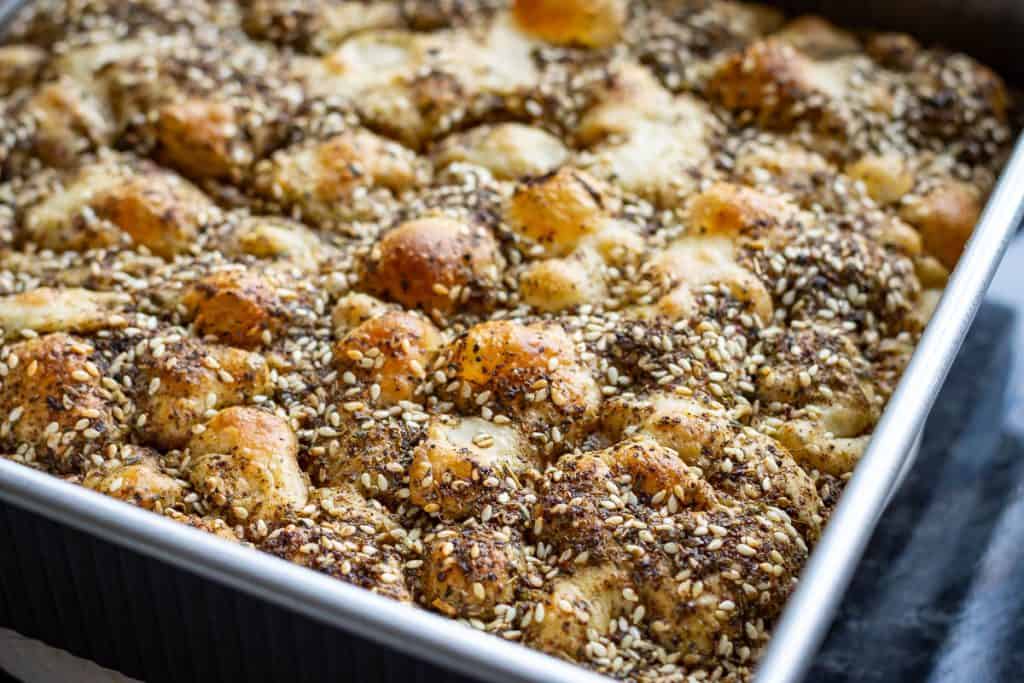
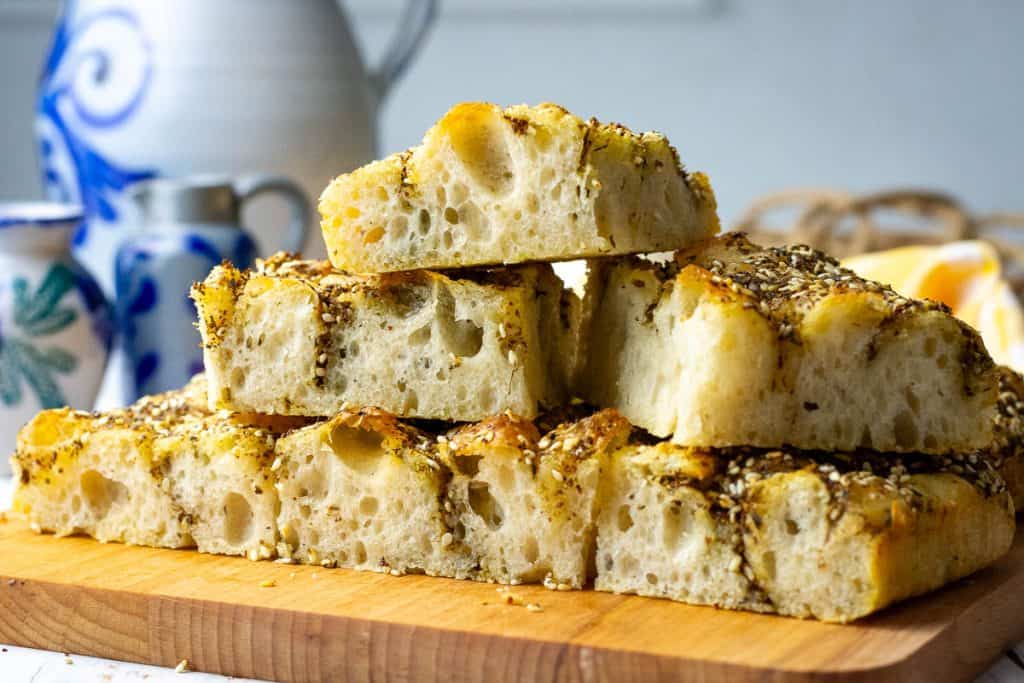
Soft, airy and soaked in fragrant olive oil, Sourdough Zaatar Focaccia is what happens when an Italian classic meets the bold flavours of the Middle East. This sourdough focaccia with zaatar combines the pillowy crumb of a high-hydration focaccia with the vibrant tang of a Middle Eastern spice blend. The result is a rich bread with crisp edges, a golden crust and a deeply savoury aroma that fills the kitchen while it bakes.

Jump to:
As an Amazon Associate I earn from qualifying purchases, at no extra cost for you! Thank you!
If you already love focaccia, this version might just become your new favourite. The tangy sourdough base and the lemony sumac notes in za'atar work together beautifully, creating a loaf that's simple, flavourful and completely irresistible.
Middle Eastern Italian Fusion
We recently came back from a holiday in the Middle East and completely fell in love with the food. One of my absolute favourites was Lebanese zaatar manakeesh, a flat bread served warm at breakfast alongside labneh, olives and vegetables. It's one of those simple dishes that somehow tastes extraordinary.
I knew immediately that za'atar bread was going to stay in my kitchen on a regular basis. I'll definitely be making a proper sourdough manakeesh soon, but I started with what I know best - focaccia.
This sourdough version of focaccia topped with za'atar turned out to be a real crowd-pleaser. The tangy sumac in the spice blend complements the sourdough beautifully, while the generous amount of olive oil makes the focaccia the perfect base.
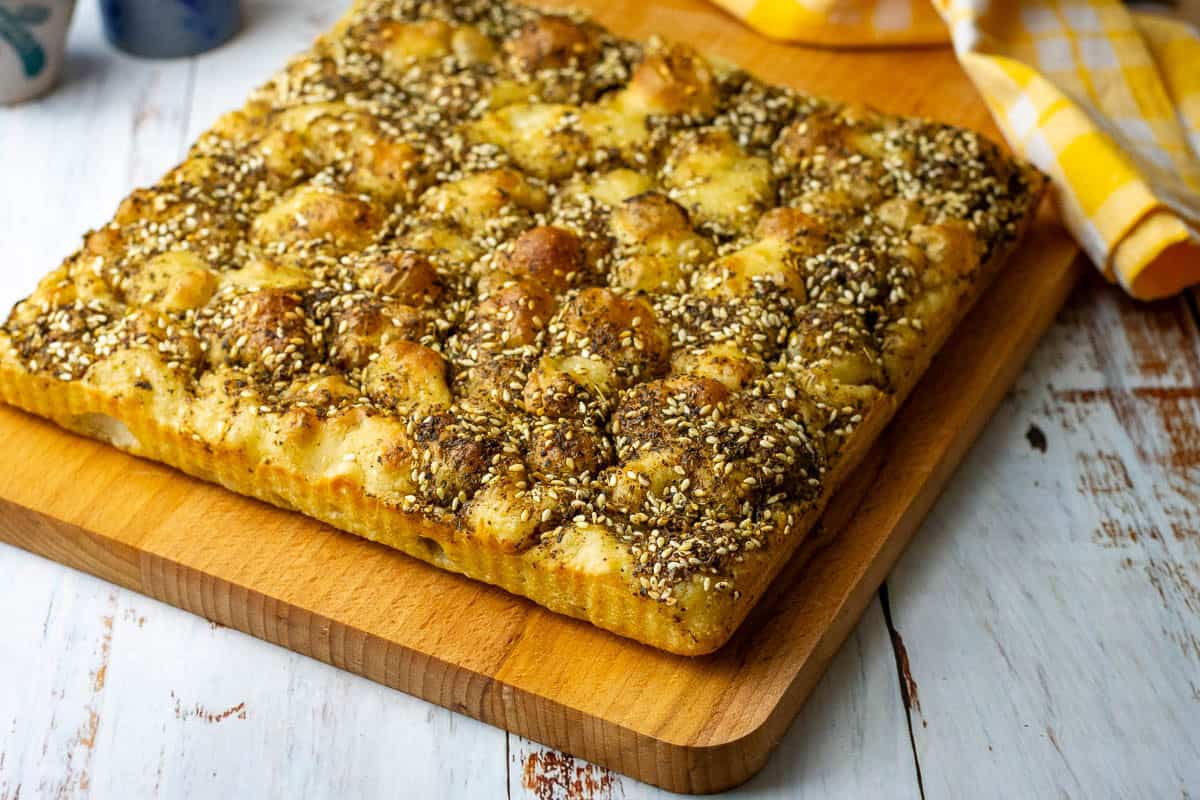
Ingredient Notes
- Strong bread flour. Bread flour with at least 12% protein gives the focaccia its structure. A high-hydration dough needs strong gluten development to hold those airy bubbles.
- Water. Use lukewarm water. The exact amount of water may vary slightly depending on your flour, but this recipe produces a very soft dough typical of focaccia.
- Active sourdough starter. Your active sourdough starter should be bubbly and recently fed. This replaces commercial yeast and provides natural fermentation.
- Salt. Salt strengthens gluten and balances the flavours.
- Olive oil. A focaccia is an oil-centric recipe, so use good quality extra virgin olive oil. It contributes flavour as well as texture.
- Za'atar topping. The za'atar mixture is simply za'atar spice blended with 3-4 tablespoons of olive oil until it becomes spreadable. Different grocery stores carry slightly different blends, but most contain thyme, sesame seed1s and tangy sumac.
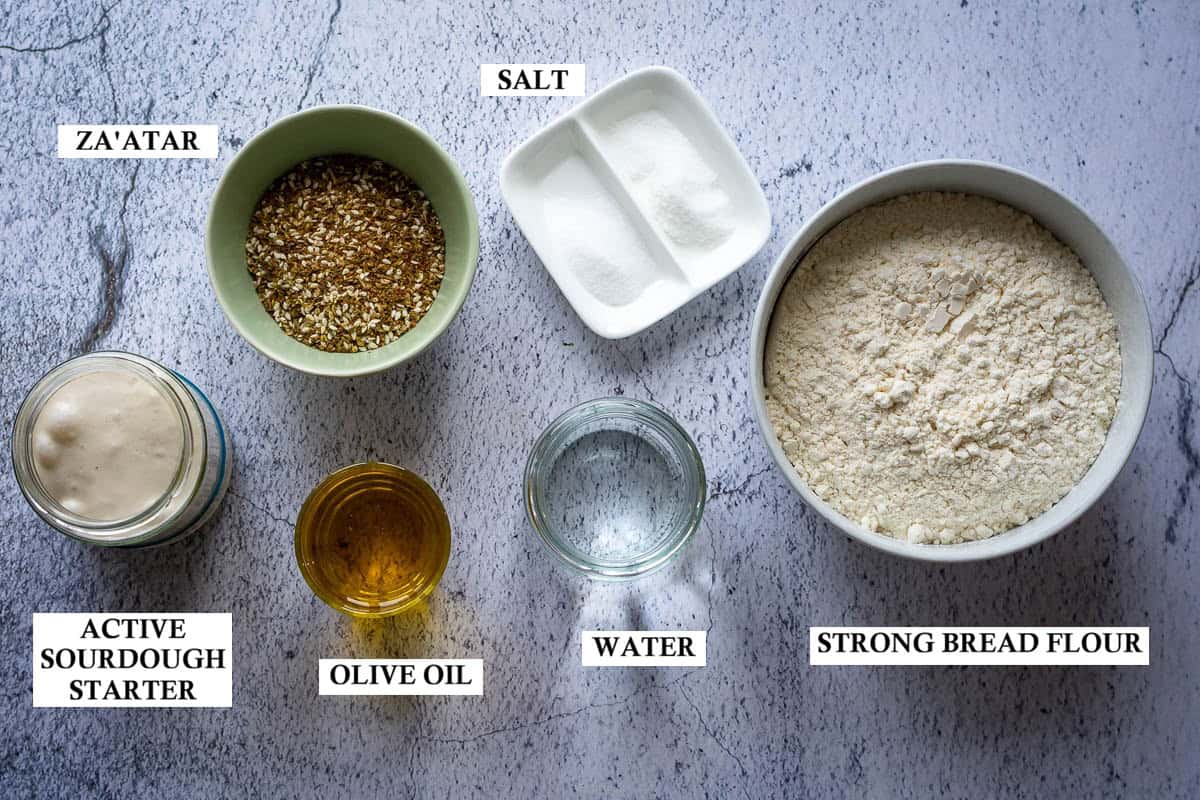
What is Za'atar?
Za'atar is a classic Middle Eastern spice blend widely used in Middle Eastern cuisine. It typically combines dried herbs, sesame seeds, sumac and salt, creating a mixture with a bright, earthy and slightly citrusy flavour.
It's traditionally mixed with olive oil to make a paste that's spread over flatbread like manakeesh or used as a dip for bread. In this za'atar focaccia bread, the tangy sumac notes bring a robust flavour that pairs perfectly with sourdough.
Step-By-Step Method
Feed your sourdough starter first thing in the morning. Once your starter is active and bubbly (and at least doubled in volume), it's time to get hands-on!
Fermentolyse and Mixing the Dough
1. In the bowl of a stand mixer, combine flour, water and active starter. Mix with a dough hook attachment until a shaggy dough forms.
2. Cover the bowl with a tea towel and allow the dough to rest for an hour. This dough rest hydrates the flour and begins gluten development.
3. After the rest, scatter salt over the dough and drizzle in olive oil. Using your hands, work the salt and oil into the dough.
4. Return the dough to the stand mixer and mix until a smooth, elastic dough forms.
Coil Folds, Bulk Fermentation and Cold Proof
1. Transfer the dough to a lightly oiled large bowl. Cover with plastic wrap or a damp towel and let the dough rise in a warm spot.
2. Every 30 minutes, perform coil folds with wet hands. This strengthens the bread dough without traditional kneading.
3. After several folds, allow the dough to complete bulk fermentation until airy and bubbly.
4. Transfer the bowl to the fridge for an overnight cold proof.


Second Rise
1. The next day, transfer the risen dough to a prepared baking tray lined with parchment paper.
2. Gently stretch the risen dough toward the edges of the pan, allowing it to take on a rectangular shape.
3. Cover and leave in a warm place for a second rise until puffy.

Topping and Baking
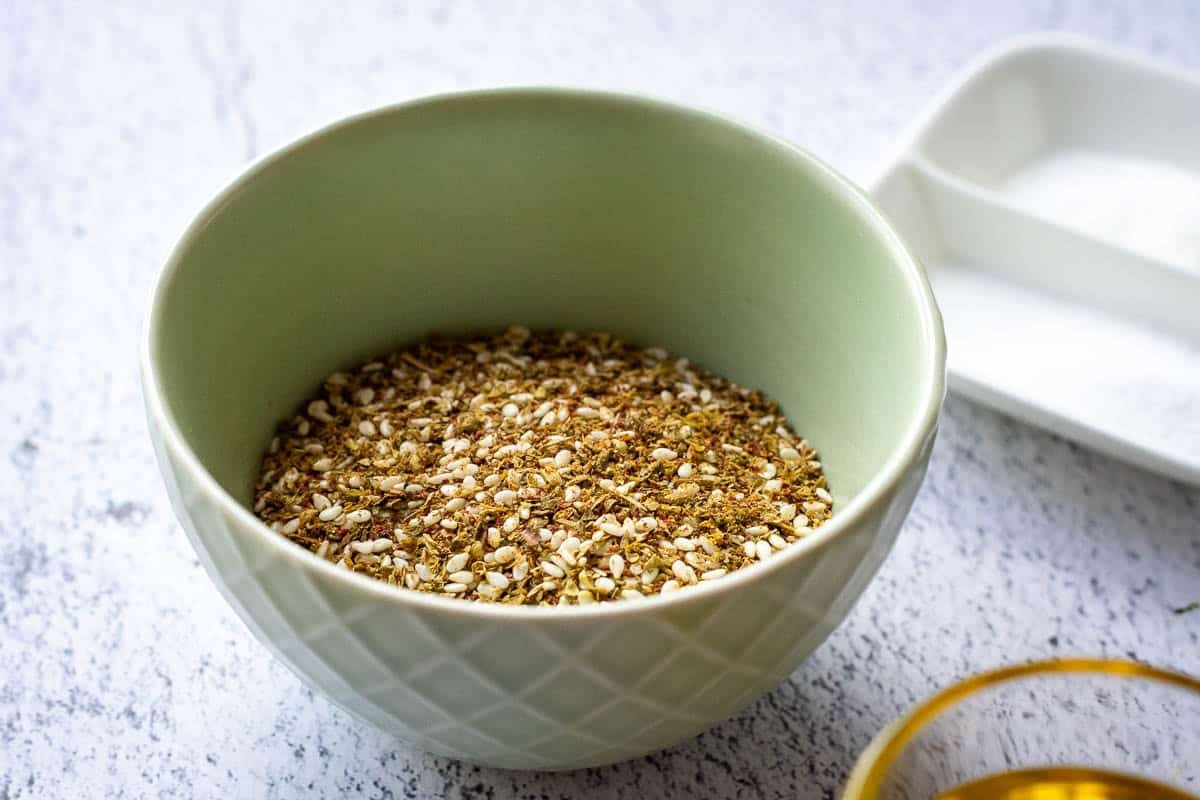
1. Mix za'atar and olive oil in a small bowl to create a loose paste.
2. Drizzle the mixture over the surface of the dough.
3. Oil your fingers and press deep dimples into the top of the dough, pushing all the way to the bottom of the pan.
4. Bake on a rimmed baking sheet until golden brown with a crispy crust and chewy focaccia crumb.
5. Allow the focaccia to cool briefly on cooling racks before slicing.
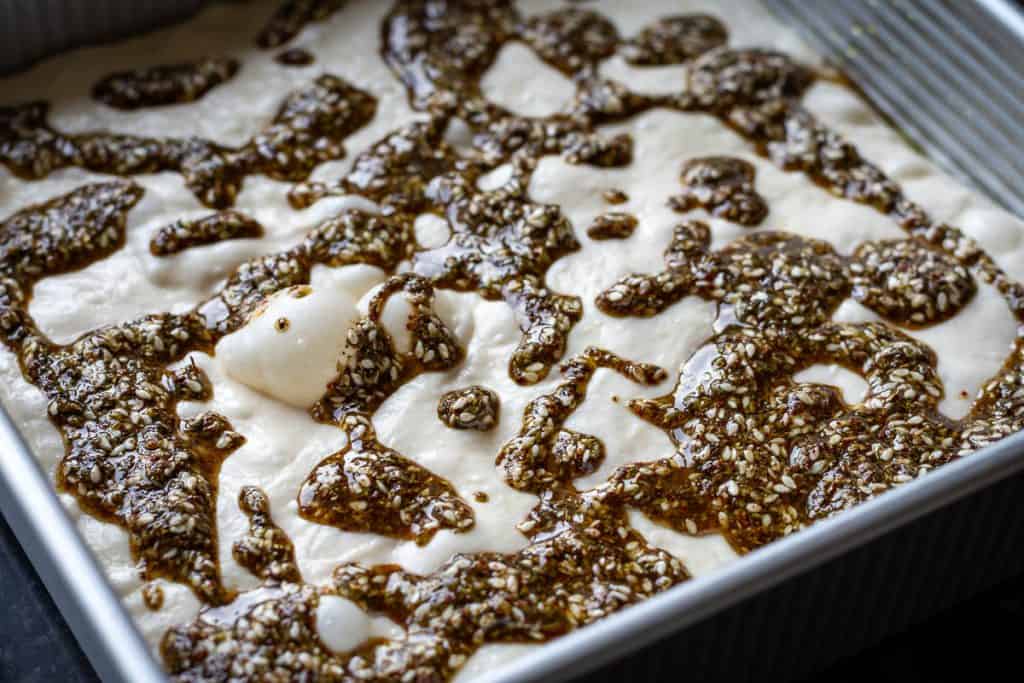
Serving Suggestions
This sourdough focaccia bread is delicious warm or at room temperature. Serve it with:
- labneh or hummus
- olives and fresh salads
- grilled vegetables
- soups or mezze spreads
It's also wonderful simply dipped in extra virgin olive oil with a pinch of flaky sea salt (we call it focaccia's best friend!). Leftover slices make excellent sandwich bread.
Storage
Store leftover focaccia at room temperature in an airtight container for up to two days.
To freeze, wrap slices tightly and freeze for up to two months. Reheat directly in a warm oven until the crust becomes crisp again.
More Sourdough Focaccia Recipes
If you enjoyed this sourdough focaccia recipe with zaatar, there are plenty more delicious sourdough focaccia variations to explore on your sourdough journey.




Sourdough Za'atar Focaccia (Overnight Recipe)
Ingredients
Sourdough Focaccia
- 260 g strong bread flour with at least 12% protein content
- 190 ml water
- 110 g active sourdough starter 100% hydration
- 5 g salt
- 25 ml olive oil
Toppings
- 30 g zaatar
- 50 g olive oil
Instructions
DAY 1
- First thing in the morning, feed your sourdough starter and leave it in a warm spot to at least double in volume. We typically feed our starter in a ratio of 1 part starter: 1 part water: 1 part flour, and it doubles (or even triples) within 4 hours.
Fermentolyse and Mixing The Dough
- In the bowl of a stand mixer, combine flour, water and active sourdough starter. Mix the dough in a stand mixer fitted with a dough hook attachment for a few minutes on low speed, until the flour is hydrated. Cover the bowl with a damp tea towel and leave the dough to fermentolyse (a type of sourdough autolyse where sourdough starter is added too) for an hour.
- After an hour, scatter the salt on top of the dough. Drizzle the olive oil all over, and using your hands, squish the salt and oil into the dough, aiming to distribute it evenly.
- TIP: Don't be tempted to just mix the oil in by running the stand mixer - the dough will split, separated by oil layers.
- Once incorporated, run your mixer on medium speed for 10-12 minutes, until you have a very smooth and elastic dough. It will be wet, but should start gathering around the dough hook attachment.
Coil Folds, Bulk Fermentation, Cold Proof
- Scoop the dough into a lightly oiled bowl (we like to use a heavy shallow dish - it helps with coil folds later). Cover the dough with a damp tea towel or cling film (plastic wrap) and leave it in a warm spot for 30 minutes.
- Over the next 3 hours, at 30-minute intervals, perform a set of coil folds, using wet hands.
- After all 6 sets of coil folds are completed, cover the dough and let it finish its bulk fermentation undisturbed for 1.5-3 hours, depending on the temperature of your kitchen.
- Place the dough in the refrigerator for 8-24 hours (or simply overnight).
DAY 2
- The next day, line a baking tray (approx 24x24cm) with parchment paper.
Second Rise
- Take the dough out of the fridge and very carefully transfer it into the prepared baking tray, trying not to deflate it too much. Stretch it out into the corners of the baking dish.
- Cover it again and leave it in a warm spot to proof for another 1-2 hours. It will increase in volume, puff up and have very noticeable blisters across the surface.
Topping and Baking
- In a small bowl, mix the zaatar and oil. Note, zaatar blends are different, but you're looking for a spreadable, not too runny consistency.
- Preheat the oven to 200°C (400°F).
- Drizzle the zaatar mixture all over the surface of the sourdough focaccia.
- Oil your fingers and dimple the topping into the dough, pressing deep down to the base of the pan.
- Bake the focaccia for 18-20 minutes. Cool it for at least 20 minutes before slicing. Best enjoyed slightly warm or at room temperature on the day it is baked.
Nutrition



Anne says
Such a delicious focaccia recipe. The flavor and the texture are amazing. Thanks for the recipe!
Ieva Greber says
Thanks, Anne — that flavour and texture combo is what za'atar focaccia is all about. Really glad it worked out for you!
Kara says
This sourdough zaatar focaccia is absolutely incredible! The combination of a soft, airy crumb with those bold, savory flavors are just so delicious.
Ieva Greber says
Thanks, Kara — soft, airy crumb with those bold za'atar flavours is exactly the balance I'm after. So glad it hit the mark!
Swathi says
This zaatar combo really works with sourdough, thanks for sharing this
Ieva Greber says
Thanks, Swathi — glad that za'atar and sourdough pairing won you over! Appreciate you giving it a go.