
A runny sourdough starter usually means too much water for the flour, a warm kitchen, or a gap between feeds that was a bit too long. The fix is normally small: weigh your feeds, thicken them slightly and keep the jar cooler. My own starter changed consistency noticeably when I switched flours, so I know how alarming a watery sourdough starter looks. This guide covers why it happens, how to thicken it, and whether you can still bake with it.

Jump to:
As an Amazon Associate I earn from qualifying purchases, at no extra cost for you! Thank you!
The short answer
Why it's runny: too much water for your flour, too much warmth, a hungry starter, or a starter that has passed its peak. Quickest fix: weigh every feed, add a little more flour (or a little less water), keep the jar below 27°C and feed it on a schedule. Can you still bake with it? Yes, if it's bubbly and rising after a feed.
Should Sourdough Starter Be Thick Or Runny?
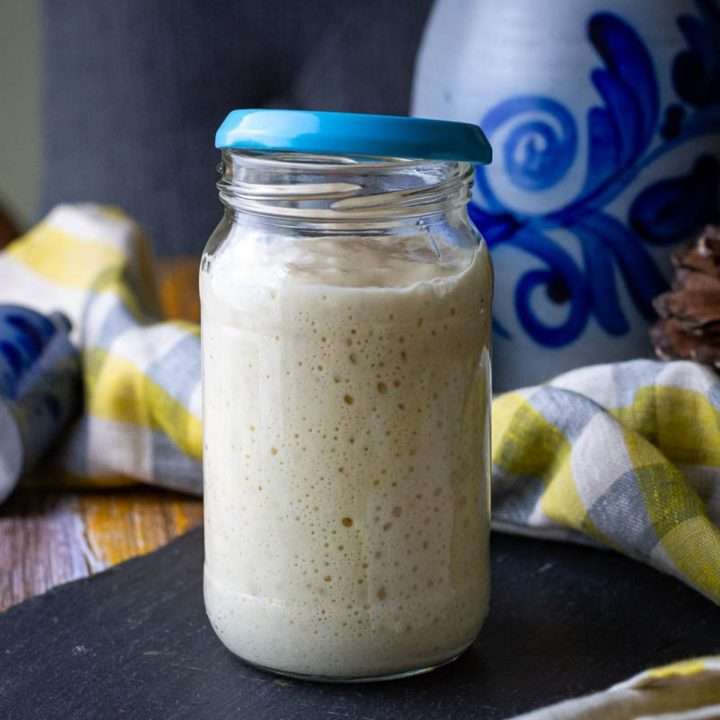
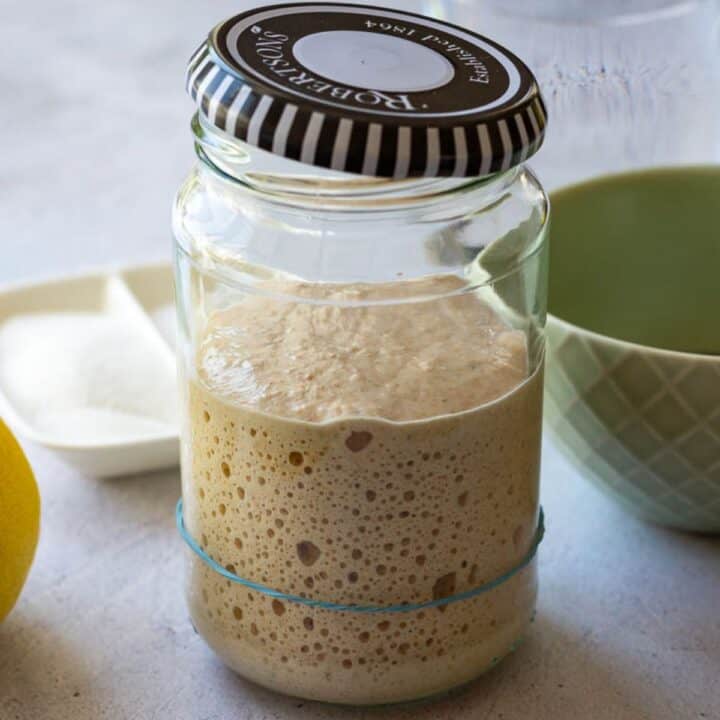
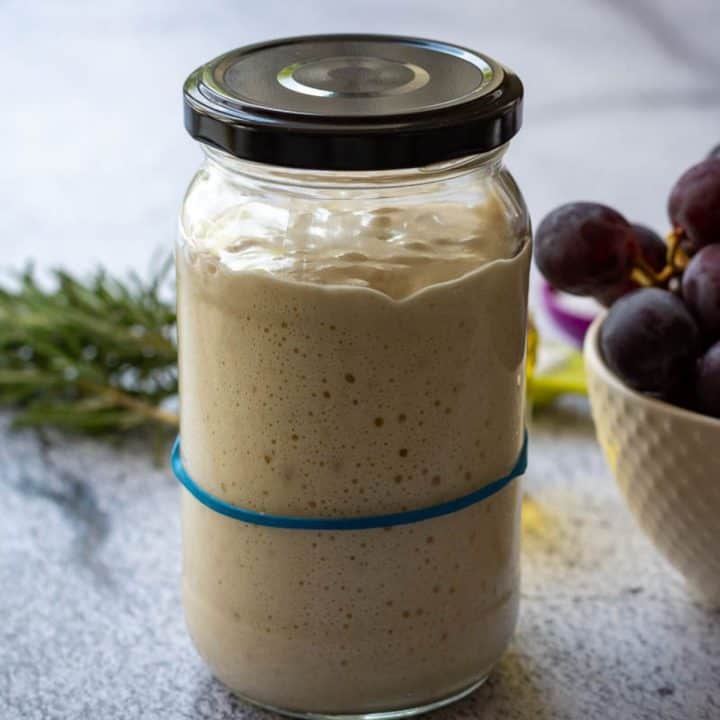
A healthy 100% hydration starter (fed equal weights of flour and water) should be thick but pourable. Think light, airy mousse or thick pancake batter. It should fall off a spoon slowly, not run off it. If yours pours like single cream, it's too runny.
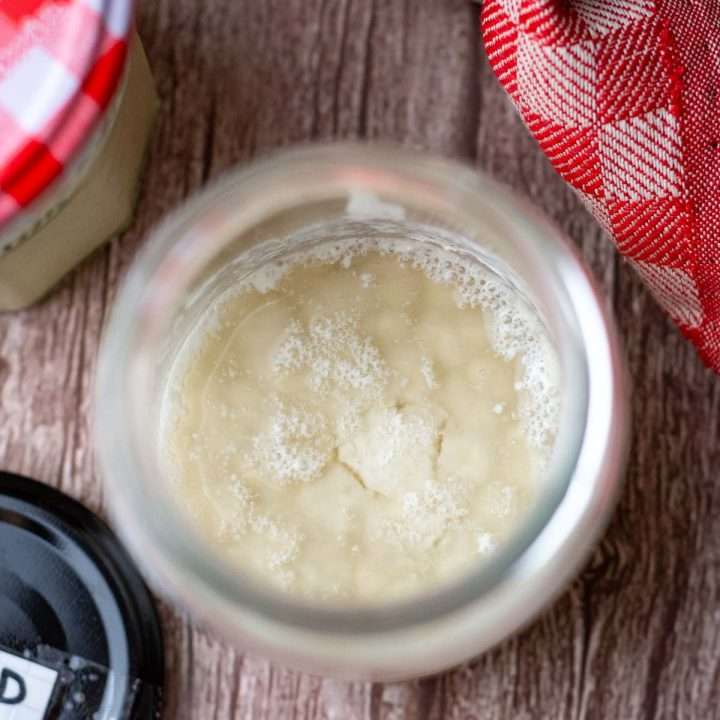
Runny, watery and liquidy all describe the same thing: a starter that's thin all the way through. That's different from hooch, the layer of grey or clear liquid that sits on top of an otherwise normal starter. Hooch is a hunger signal, and I cover it in my guide to Why Hooch Forms & How to Fix It.

Don't judge consistency at a single moment. A freshly fed starter is at its thickest, and an unfed one thins as it ferments, so check it just after feeding and again at its peak. A brand new starter is often runnier than an established one, and that usually settles as it matures.
Thicker starters also trap gas better, which is why they cling to the jar and rise taller. Wetter starters ferment faster, which is part of why they can slump quickly. If your bubbles look tiny rather than big, see why there are small bubbles in your sourdough starter.
Why Is My Sourdough Starter Runny?
Most runny starters come down to one of six causes. Work out which one is yours before you change anything, because the fix is different for each.
Too much water for your flour. At 100% hydration you feed equal weights of flour and water, but flours absorb water differently, so the same feed can look thick one month and thin the next. Measuring with cups makes it worse. The tell is a starter that looks thin straight after feeding, not only by the end of the day.
A flour that doesn't hold much water. A starter made with plain white (all-purpose) flour will be runnier than the same starter made with rye or wholemeal, which absorb a lot more water. If you've recently changed flour brand or type, start here. My rye sourdough starter guide shows how much thicker a rye starter feels.
A warm kitchen. A starter is happiest between 22 and 27°C. Above that, the yeast and bacteria burn through their food faster, and the starter thins and slumps early. The tell is a starter that's thick after feeding but thin and flat well before your next feed.
A hungry starter. When a starter runs out of food it turns watery, and you may see hooch on top within a day or two of missed feeds. A sharp smell, like nail polish remover, is another sign. If you're unsure whether your starter smells normal, check what sourdough starter should smell like.
A starter past its peak. This one gets missed. After it peaks, a starter collapses and thins as the food runs out, so one that was thick and domed a few hours ago can be runny now. The tell is a flat or dipped top, bubbles on the surface and a mark on the jar showing it rose higher earlier. Learn more about sourdough starter peak.
Tap water. Heavily chlorinated water can slow down the bacteria and yeast, which leaves a sluggish starter that doesn't rise much. It's the least likely cause, so check the others first.

Problems With A Runny Sourdough Starter
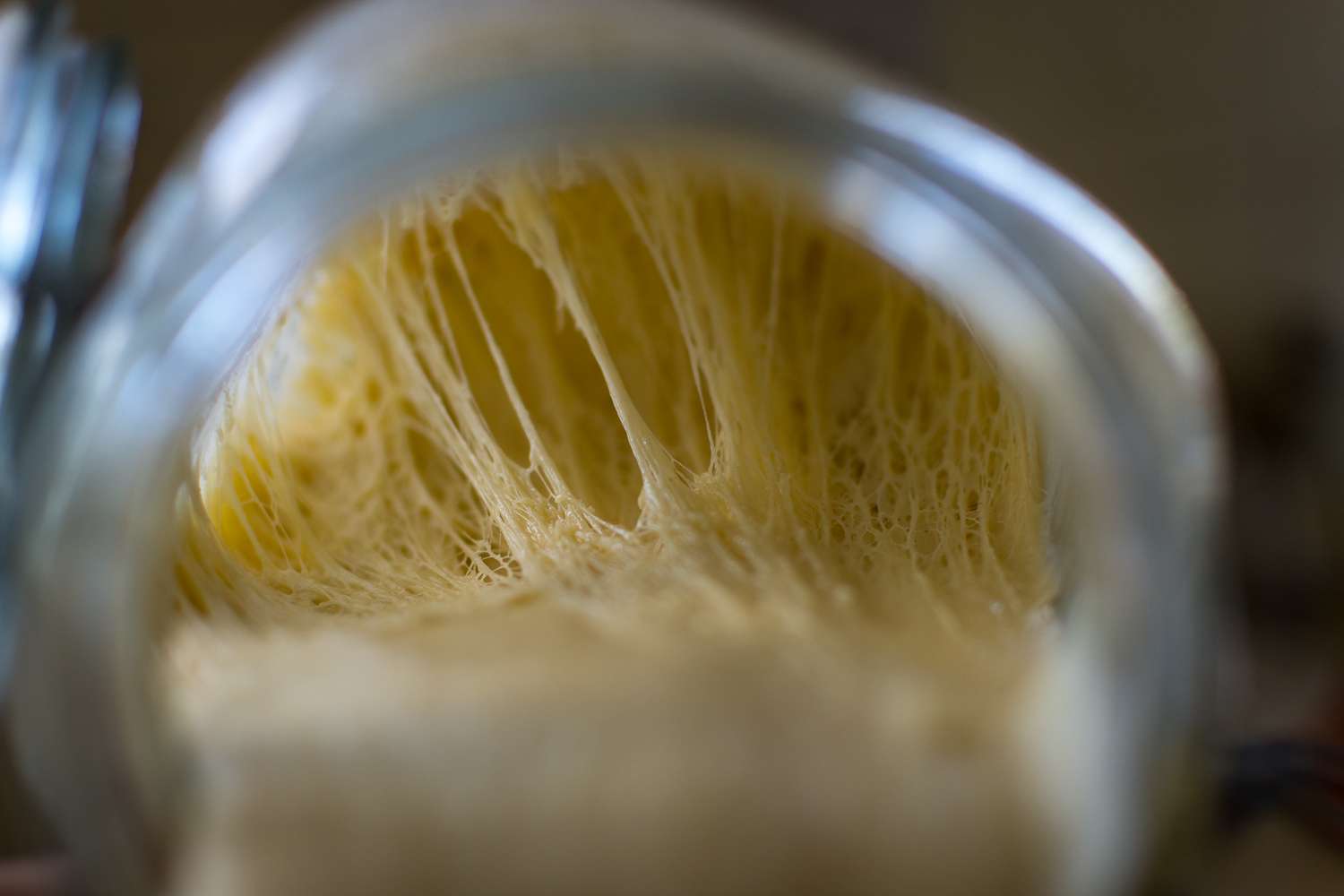
A thin starter struggles to rise as tall because it lacks the structure needed to trap gas bubbles. Without enough strength to hold those bubbles, it doesn't cling to the sides of the jar, resulting in less visible rise compared to a thicker, active sourdough starter.
However, the bigger issue with a runny sourdough starter is that it may indicate deeper problems. A watery starter could mean it's hungry or overly acidic, which leads to common problems like sticky dough that's hard to handle, difficulties with shaping loaves, and less oven spring in your final bake.
For the best results, maintaining a properly balanced starter is key to a strong, manageable dough.
How to Fix Watery Sourdough Starter?
To thicken a runny sourdough starter, give it slightly less water or slightly more flour at each feed, weigh everything, keep it below 27°C and feed it on a schedule. Start with the first fix and add the others if it's still thin after a few feeds.
1. Weigh your feeds and thicken them slightly
The standard feed for a 100% hydration starter is 1:1:1 by weight: for example, 50 g starter, 50 g water and 50 g flour. If it's still runny when you've weighed it properly, increase the flour slightly or hold back a little of the water, until the starter is thick but pourable again.
Change it in small steps. Cups can add far more water than you'd think, so a digital scale is the cheapest fix on this list.

2. Keep it cooler, or use the fridge between feeds
If your kitchen is warmer than 27°C, your starter will keep burning through its food and thinning. Keep it somewhere cooler and feed it every day. If daily feeding isn't practical, store it in the fridge between feeds. That slows the yeast and bacteria right down without hurting the starter.
If you have the opposite problem in winter, I've got tips on how to keep sourdough starter warm. Sudden temperature swings can also cause condensation in your sourdough starter jar.

3. Try Different Flour
This one is close to my heart. When I switched from generic white flour to organic stone ground flour, the consistency of my starter changed noticeably. Rye and whole wheat absorb much more water, which gives a thicker starter that holds its structure better.
You don't have to switch everything. Replacing some of your white flour with a wholegrain one is an easy way to test it. It will change the flavour of your bread, though, so expect something a little different (possibly something extraordinarily good). Give it a few feeds to settle before you judge it.

Mix It Up: Turn Your Sourdough into a Flavour Adventure.
4. Feed more regularly, and give it more food per feed
If it's thin because it's hungry, feed it every day at room temperature. If you're already doing that, try a 1:2:2 ratio: 1 part starter to 2 parts water to 2 parts flour (for example, 25 g starter, 50 g water and 50 g flour). The starter has more food to work through, so it takes longer to run out and go runny.
Wondering if more flour will overdo it? Here's whether you can overfeed a sourdough starter. My full guide to how to feed sourdough starter covers the rest.
5. Check your water
If everything else looks right, try filtered or bottled water. Avoid distilled water, because it lacks the minerals a starter likes.
How you'll know it's working
After a feed, the starter should look thick and slightly domed, bubbly through the jar, and it should cling to the sides as it rises. Give a new routine a few feeds before you judge it.
Can You Use a Runny Sourdough Starter?
Yes, if it's active. A runny starter that's bubbly, visibly rising after a feed and smells pleasantly tangy will still raise bread. If it's flat and hardly bubbles, feed it on a thicker ratio for a few days first.
What changes is your dough. A thin starter brings extra water with it, so a recipe can turn out slacker and stickier than usual, harder to shape, with weaker oven spring. A starter that's hungry or overly acidic can do the same. If you do have to bake with a runny one, hold back a little of the recipe's water and add it back only if the dough feels stiff.
LOVE BAKING SOURDOUGH WITH ME?
You can now add Somebody Feed Seb as a preferred source on Google. It only takes a tick box, and tells Google you'd like to see more of my recipes when relevant.
Faqs
Usually the feed has too much water for the flour you're using, or the flour doesn't absorb much (plain white flour is the common one). A warm kitchen also thins a starter quickly. Weigh your feeds and thicken them slightly.
That liquid is hooch, a by-product of fermentation that appears when a starter is hungry. Feed it as normal. My hooch guide covers whether to stir it in or pour it off.
Not usually. Runny is a consistency problem, not a sign of death. A starter that's bubbly and smells tangy is alive. Worry if it shows no bubbles at all after several feeds, or if you see pink or orange streaks or fuzzy mould.
Between 22 and 27°C. Above that it ferments faster and thins out sooner.
More Sourdough Starter Help
If your starter's still behaving oddly, my FREE sourdough starter troubleshooting guide covers 20 common problems. Here are more articles packed with insights, tips, and tricks to help you master your sourdough journey.



Leave a Reply