
Wondering why your active sourdough starter has small bubbles? Before we answer, first things first - bigger bubbles don't mean better sourdough bread. A starter with tiny bubbles can still make an amazing loaf! The size of the bubbles mostly depends on hydration, flour type, and feeding routine.

Jump to:
As an Amazon Associate I earn from qualifying purchases, at no extra cost for you! Thank you!
Do Bubble Sizes Matter?
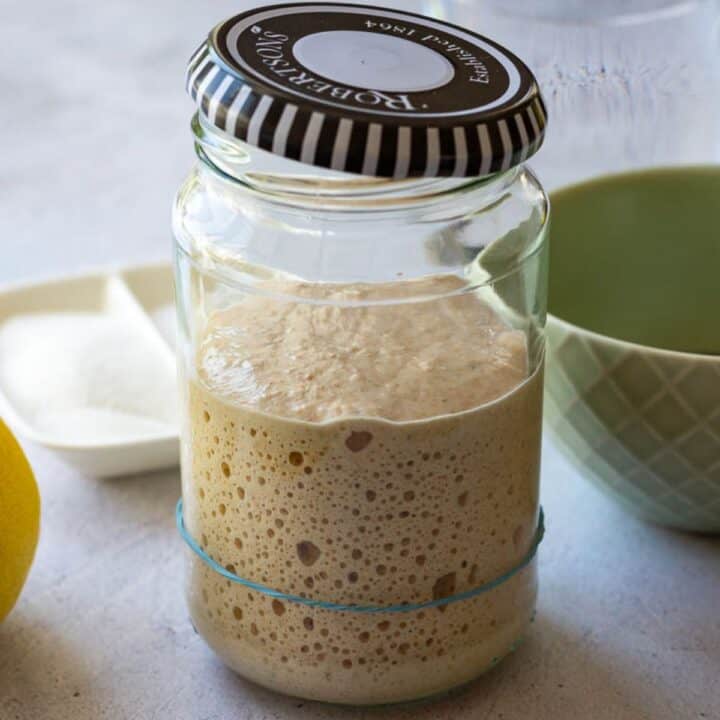
Not really! As long as your starter doubles (or even triples) after feeding, it's doing its job. The bubbles inside are what push it higher. So even if they're small, they're still working hard.
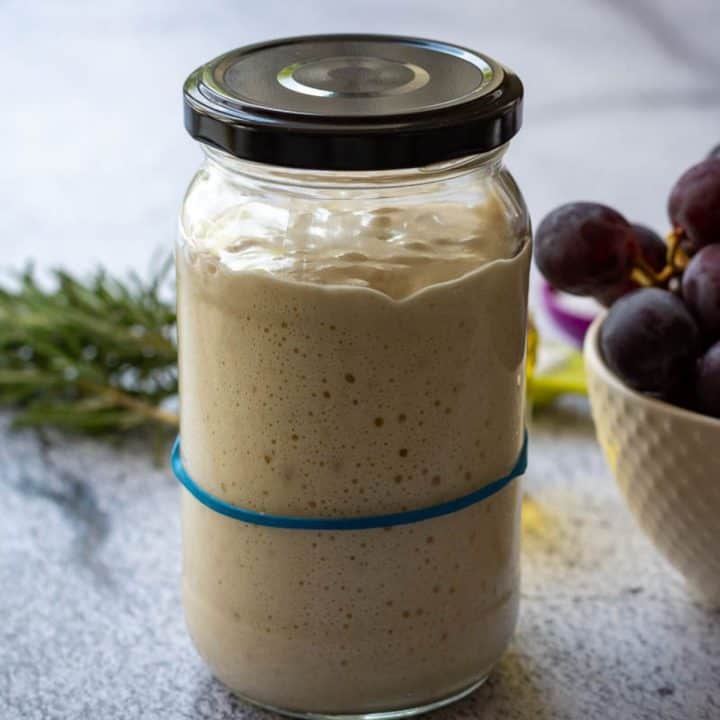
That said, a starter with bigger bubbles tends to be thicker, passes the float test (although we don't think it's the best way to test your starter), and can go longer between feeds.
A thinner starter produces smaller bubbles and falls faster after peaking. However, you can still make an amazing loaf of bread, so don't worry!
Why Does My Starter Have Tiny Bubbles?
A few things can cause smaller bubbles:
✔ High hydration. A thinner starter has a weaker gluten structure, so gas escapes quickly instead of forming big bubbles. Generally speaking, 100% hydration starter will have smaller bubbles than an 80% hydration starter, if they're both fed the same type of flour.
✔ Low-protein flour. Flours with less gluten (like all-purpose flour) don't trap gas as well.

✔ Whole grain flour. With the exception of rye, I find that sourdough starter fed with whole grain flour (like whole wheat flour) will have smaller bubbles.
✔ Feeding frequency. If your starter is not fed frequently (especially if you keep your starter at room temperature), you will end up with acidic and runny sourdough starter, which won't trap the gases well.
✔ New starter. If you're in the early stages of the sourdough starter creation process, there may not be enough activity for your homemade starter to form large bubbles.
How To Get Bigger Bubbles?
If you want that thick, mousse-like starter you see on social media, try this:
✅ Lower hydration. Feed your starter 20% less water than flour (e.g., 50 g starter, 50 g flour, 40 g water). This might mean that you may adjust the hydration of any recipes using a 100% hydration starter, though. Or you may choose to keep a stiff sourdough starter!

✅ Use high-protein flour. Bread flour (a.k.a. strong white flour) with a protein content of 12-16% helps create a stronger gluten network and, in turn, larger bubbles. Aside from sourdough strater, learn more about how protein content in flour affects sourdough.
✅ Regular feedings may increase the size of your bubbles, but only if the right flour is used.
✅ Add rye flour. In my experience, high-nutritional value in whole grain rye flour is the best way to boost the wild yeast activity in your sourdough starter and help enlarge the fermentation bubbles.

Why Does My Starter Look Like Foam?
If the bubbles on top of the starter look like dish soap bubbles, your starter is active but a bit thin. This often happens when:
- The kitchen is too warm, and the fermentation process happens too fast. This often creates lots of bubbles on the surface of your starter before it doubles. Whilst wild yeast enjoys a warm environment, anything above 27 °C (81°F) may be too much. Find a good place at around 24-26°C (75-79°F) for best results.
- Your starter is super hungry (your starter smells like acetone and is runny!).
It's totally fine - just feed it more frequently, and it'll balance out.
Free Sourdough Starter Troubleshooting Guide
Final Thoughts
There's no perfect way for your starter to look. Big bubbles, small bubbles-it's all good as long as the rise of your starter is sufficient!
Keep feeding it, tweak hydration if needed, and enjoy the process. For more, head to Reading Your Sourdough Starter: What Bubbles, Smell and Rise Actually Tell You.
- Baking Sourdough With the Lid On the Whole Time (Why It Works)
- Reading Your Sourdough Starter: What Bubbles, Smell and Rise Actually Tell You
- Best Flour For Sourdough Beginners: Starter Feeding & Bread
- How To Know When Sourdough Starter Is Ready And At Its Peak
- Sourdough Glossary For Beginners
- Sourdough Equipment For Beginners: The Tools I Actually Use
- Flour for Sourdough Baking: How to Choose The Right Type
- Why Bake Sourdough? A Great Hobby To Start In The New Year






Leave a Reply