
When it comes to sourdough baking, the protein content in flour plays a much bigger role than many home bakers realise. From dough hydration to fermentation speed and crumb structure, understanding how flour protein affects sourdough can help you bake more consistent, better-textured loaves. In this article, we'll break down what protein percentages mean, how to read flour labels, and why choosing the right flour for your sourdough makes all the difference.

Jump to:
- What Is Protein in Flour and Why Does It Matter for Sourdough?
- How to Find the Protein Content on Flour Labels?
- How Protein Content Affects Dough Hydration
- Impact on Fermentation and Dough Strength
- How It Changes the Crumb and Crust
- Are There Flavour Differences Too?
- Quick Tips for Matching Flour to Your Bake
- More Sourdough Baking Tips
As an Amazon Associate I earn from qualifying purchases, at no extra cost for you! Thank you!
What Is Protein in Flour and Why Does It Matter for Sourdough?
Protein in flour primarily refers to gluten-forming proteins, specifically gliadin and glutenin. When you add water and mix your dough, these proteins combine to form gluten, the stretchy network that traps gas produced during fermentation.
In sourdough baking, this structure is especially important because the long, slow rise puts more demand on the dough's strength and elasticity (which is also measured by flour's P/L ratio).

A higher protein content generally means stronger gluten development, which helps the dough hold its shape, rise well, and produce that sought-after open crumb.
Lower-protein flours may struggle to support long fermentation, leading to flatter loaves and a denser crumb. Understanding the protein level helps you predict how your dough will behave - and adjust your method accordingly.
How to Find the Protein Content on Flour Labels?
To find the protein content in your flour, check the nutrition label on the back of the bag. It's usually listed under the "per 100g" column as protein. In the UK and many other countries, this is expressed in grams, so if your flour says 11g of protein per 100g, that means it has 11% protein.

If it's not on the label, check the miller's website or contact them directly - many artisan or speciality mills are happy to provide this information. Do note that the number may vary slightly from batch to batch, especially with stoneground flours.
Also useful: different types of flour tend to fall within certain ranges. For example:
- Plain flour (all-purpose flour): ~9-10.5% protein
- Strong white bread flour: ~12-13.5%
- Extra strong flour (Canadian flour): ~14-15.3%
However, use this type of labelling with caution. For example, The Pantry Strong Bread Flour from ALDI UK only has 11.5% protein.

How Protein Content Affects Dough Hydration
The protein content in flour directly influences how much water the dough can absorb and hold.
Higher-protein flours (like strong bread flour at 12-13% protein) form more gluten, which gives the dough strength and elasticity-this allows you to add more water without the dough turning slack or sticky.
In contrast, lower-protein flours (like plain or softer wholemeal flours at 9-10%) can't handle as much hydration and may become overly wet or fragile if pushed too far.
If you're adjusting hydration in a sourdough recipe, always consider the flour's protein level. A flour with 13% protein might handle 75-80% hydration comfortably (like in our high-hydration sourdough bread recipe) , while a 10% protein flour may need closer to 65% for manageable handling.
Keep in mind: more water doesn't always mean better bread - hydration should match the flour's strength for the best results.
Impact on Fermentation and Dough Strength
Protein content affects not just how a dough handles, but also how it ferments. Higher-protein flours build a stronger gluten network, which holds the gases produced during fermentation more effectively. This results in better structure, a higher rise, and improved oven spring.
Lower-protein flours, on the other hand, tend to ferment faster but have weaker gluten structure, meaning they can overproof more easily and collapse if not watched closely.
They may also require shorter bulk fermentation or more gentle handling to preserve dough strength. Matching your bulk fermentation time and technique to the flour's protein level helps avoid issues like tearing or spreading during shaping and baking.

How It Changes the Crumb and Crust
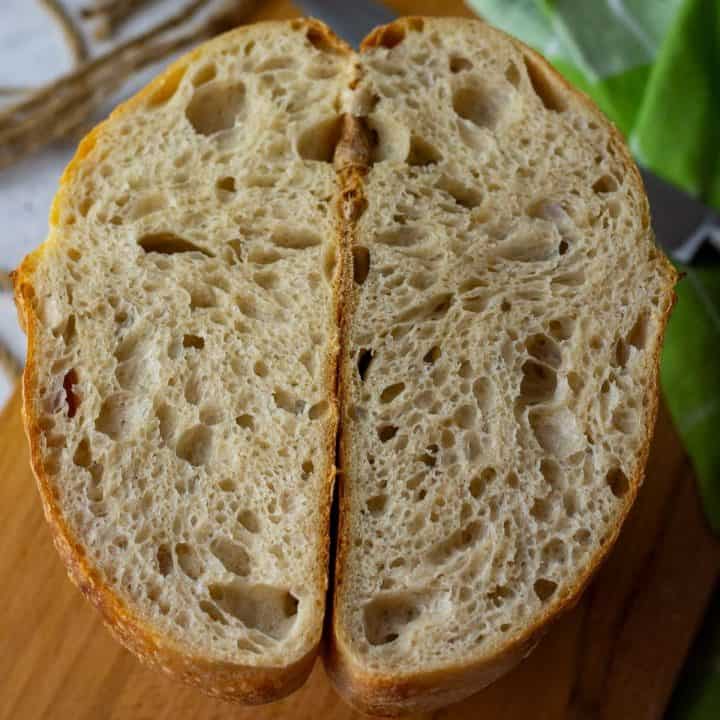
Higher-protein flours typically produce a more open, irregular crumb with larger air pockets, thanks to the strong gluten structure that traps gas more efficiently. The crust tends to be thicker and chewier, with a robust bite.
Lower-protein flours, such as plain or all-purpose flour, usually result in a finer, more even crumb and a thinner, softer crust. This can be great for certain styles of sourdough, like a sandwich loaf, but if you're after dramatic holes and a deeply blistered crust, you'll likely need flour with a higher protein percentage.

Are There Flavour Differences Too?
In general, protein content in flour doesn't directly affect the flavour of sourdough-it's more about structure and texture. A higher-protein flour will give you a chewier crumb and a sturdier crust, but it won't make the bread taste noticeably different from a lower-protein one.
That said, if you're using heritage grains or freshly milled flours, they often have slightly different protein levels and distinct flavour profiles. In these cases, the flavour comes more from the variety of wheat and how it's processed than from the protein itself. So while protein drives texture, grain choice drives taste.
Quick Tips for Matching Flour to Your Bake
High-protein flour (13% or more): Ideal for strong, elastic doughs like classic sourdough boules, batards, and high-hydration bakes. Also irreplaceable for Sourdough Panettone.
Medium strong flour (12-13%): Great all-rounder for beginners - easier to handle and still gives a decent open crumb. You can read more about choosing flour in our dedicated article about Best Flour For Sourdough Beginners: Starter Feeding & Bread.
Lower-protein flour (10-11.5%): Use for softer breads like sourdough sandwich loaves or enriched doughs like sourdough brioche, where you expect a tighter, more tender crumb. However, I typically use 12% protein flour for these, too.
Heritage or wholegrain flours (higher in ash content): Often lower in gluten strength despite similar protein numbers - best blended with strong bread flour for structure.
Check absorption rates: Higher-protein flours can take more water (you can learn about Water Absorption Capacity in Flour For Sourdough Bread) - adjust hydration slowly if swapping flours.
More Sourdough Baking Tips




Leave a Reply