
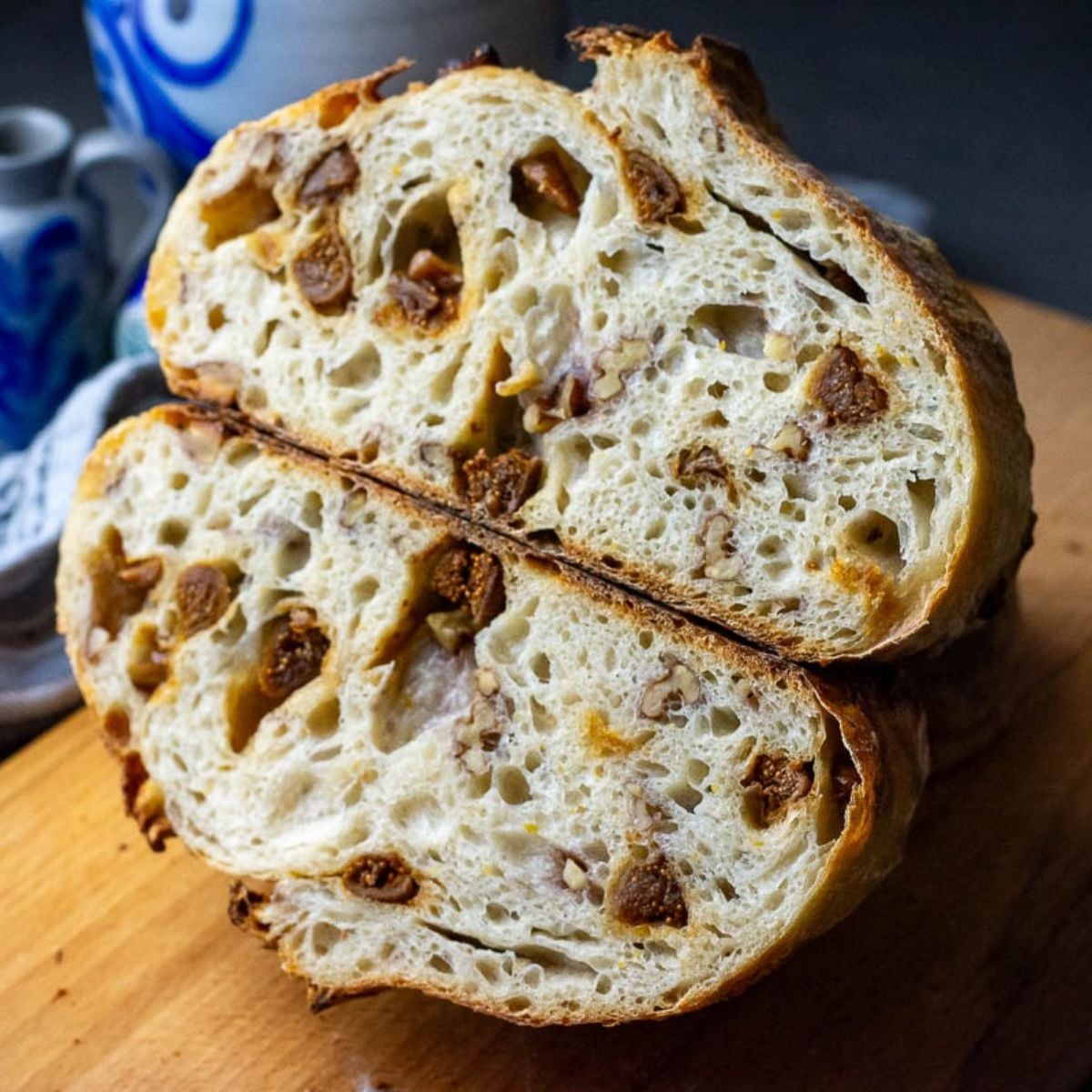
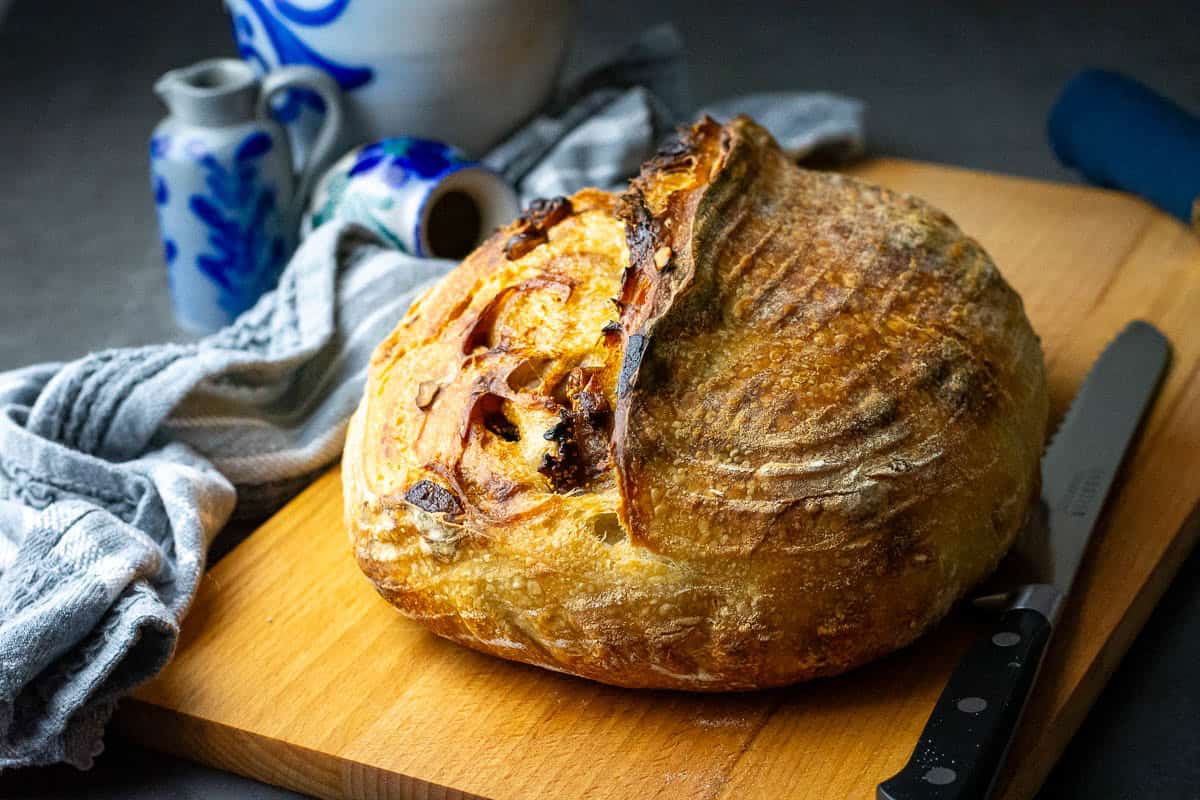
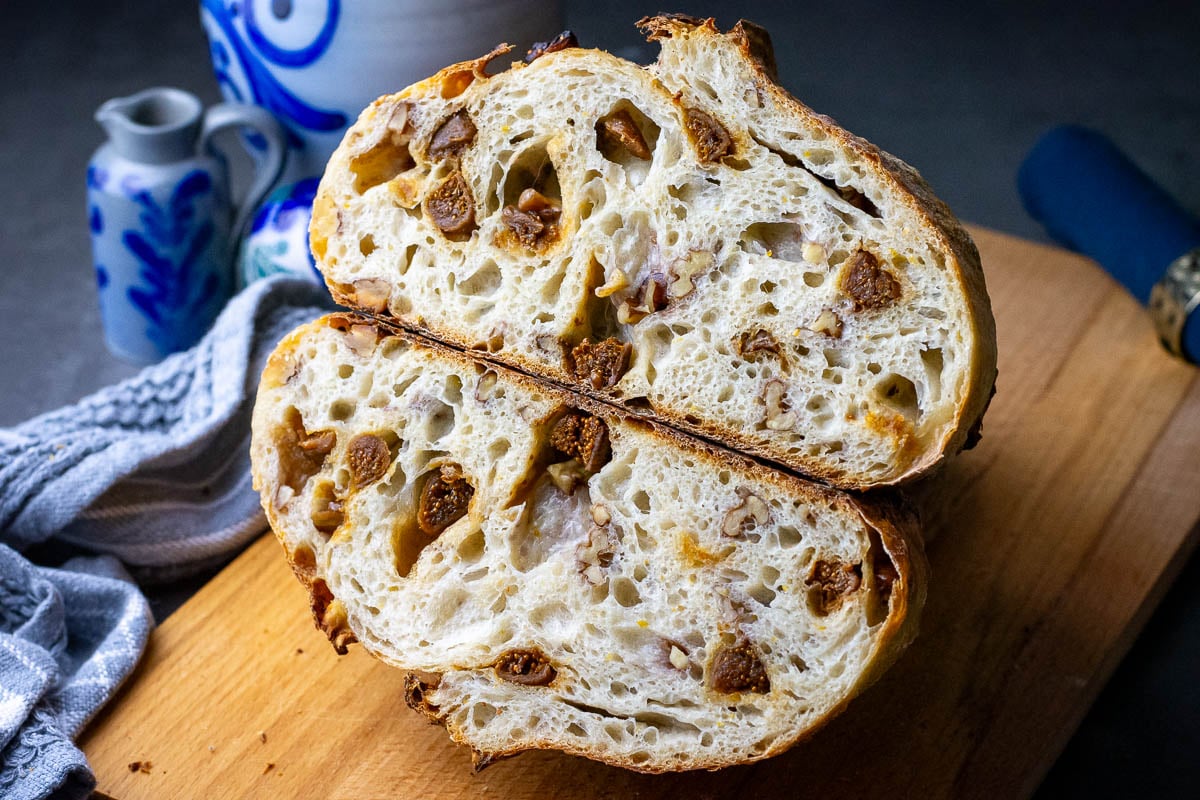
This fig and walnut sourdough bread has a chewy, crackling crust and a tangy crumb, with jammy figs and toasted walnuts spread through every slice instead of stranded in one clump. Honey and orange zest sit quietly in the background, making it a wonderful Christmas sourdough that is great both for breakfast and for festive cheeseboards.
Jump to:
- Recipe Highlights
- Why These Flavours Work Together
- Ingredient Notes
- Do You Need To Soak Dried Figs For Sourdough?
- Method
- Troubleshooting Fig and Walnut Sourdough
- How To Serve Fig and Walnut Sourdough
- Storage and Make-Ahead For Christmas
- Recipe FAQ
- Variations
- More Christmas Sourdough Recipes
- Christmas Sourdough ebook
- Fig and Walnut Sourdough Bread
As an Amazon Associate I earn from qualifying purchases, at no extra cost for you! Thank you!
It suits autumn (fall) baking, a Christmas cheese board and a plain slice of toast equally well. The figs don't need soaking either!
I first made it last Christmas, planning it as breakfast on Christmas morning. It did that job with a few different toppings, but lunch was when it really shone, sitting next to the cheese board and Fruit & Seed Sourdough Crackers.

Recipe Highlights
TASTE: Jammy fig, toasty walnut, honey, orange in the background
WHAT'S SPECIAL: Fruit and nuts rolled up inside, so nothing burns on the crust
BEST BIT: A slice next to ripe brie
SEB'S RATING: Would eat it for breakfast, lunch and as an excuse to open the cheese drawer.

Why These Flavours Work Together
Figs bring jammy sweetness and a little chew. Toasted walnuts bring an earthy, slightly bitter depth, which the honey softens.
Orange zest lifts the heaviness of the fruit and nuts, and its oils pick up the honey. That is why you crush the zest into the honey with the back of a spoon before it goes into the dough.
The sourdough tang gives all that sweetness somewhere to land, which is exactly why this loaf is so good with cheese.
Ingredient Notes
- Walnuts: Toast them in a dry pan until fragrant, then cool them completely before they go near the dough. Warm nuts soften the dough and leave greasy patches. Toasting gives a deeper, crunchier walnut that holds its own against the fig, but it won't hide a stale one. Taste one first, because a stale walnut makes the whole loaf bitter. My Walnut and Cranberry Sourdough uses untoasted walnuts, because tart cranberries suit a milder nut. Sweet figs want the toasty one.
- Orange: Use an unwaxed orange and take the zest only, with none of the white pith, which is bitter.
- Honey: Just a tablespoon, no more. It balances the walnut bitterness, but extra sugar speeds up fermentation and makes the crust brown too quickly. Clear honey mixes in most evenly.
- Starter: It needs to be active and at its peak. If you're not sure what that looks like, my guide to Sourdough Starter Peak tells you more. The fruit goes in at the end, so bulk fermentation behaves like a plain honey loaf and the usual timings apply.
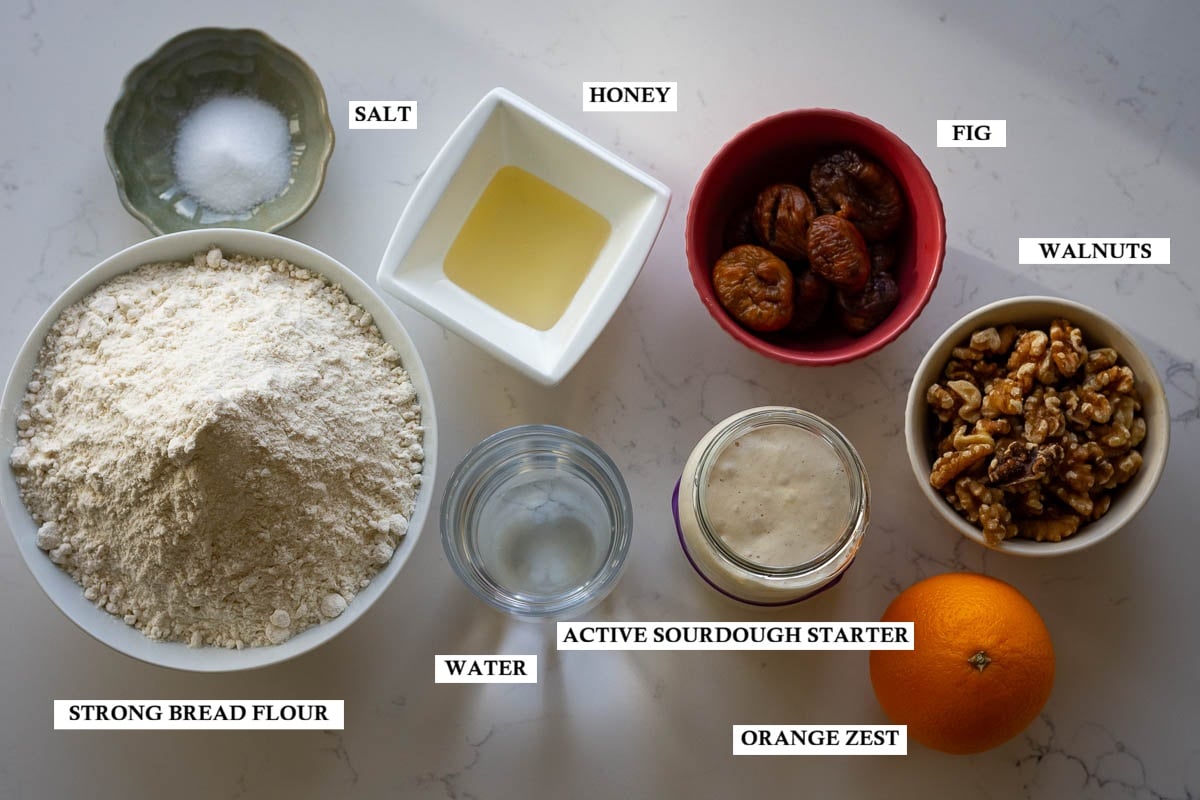
Find the full ingredient quantities and instructions in the recipe card below.
Do You Need To Soak Dried Figs For Sourdough?
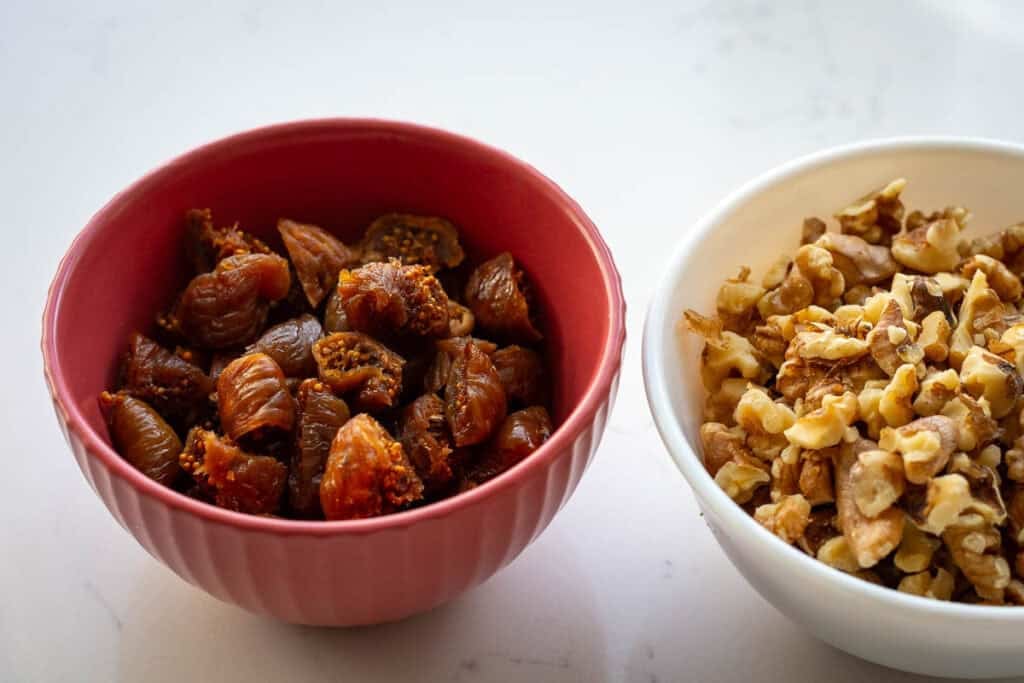
No, as long as they are soft and plump. Squeeze one. If it gives, use it as it is. If it feels leathery and doesn't give, cover the figs with just-boiled water for 10 minutes, drain them and pat them very dry.
I don't soak because soaked figs add water you can't measure, and they turn slippery and awkward to roll into the dough. Instead, the hydration is set a touch higher than a plain loaf of this size: 310-330g water, about 68-71% once you count the starter. The figs sit in the dough overnight and take some of that water up, so it balances out.
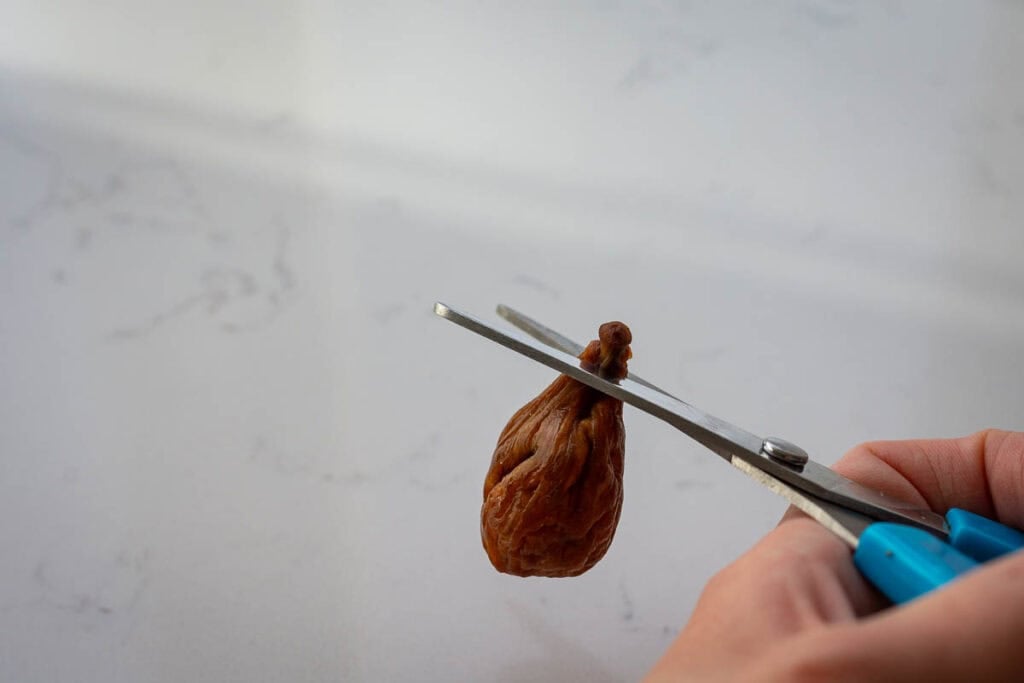
Remove the hard stem and snip the figs into roughly 1cm pieces with kitchen scissors. Bigger pieces leave gaps in the crumb, and smaller ones melt into a sticky streak.
Method
Mix, Coil Fold And Bulk
Everything except the figs and walnuts goes into the stand mixer at once: flour, water, starter, salt and the orange honey. There is no autolyse. Mix until no dry flour remains and the dough looks smooth.
Four sets of coil folds, 30 to 40 minutes apart, build the strength. If you haven't done them before, here's how to do sourdough coil folds. Then leave the dough completely alone for 3 to 4 hours.

Judge the dough, not the clock. You're looking for roughly a 75% rise, a slightly domed surface, bubbles at the sides and base, and a jiggle when you shake the bowl. Don't wait for it to double. There's more on reading these signs in my sourdough bulk fermentation guide.
Honey gives the starter a little extra to feed on. In a warm kitchen, 24°C (75°F) or above, start checking early.
When And How To Add The Figs And Walnuts
Add them at the very end of bulk fermentation, folded in as you shape.
Stretch the dough into a large rectangle, leaving a small border at the edges. Scatter over half the figs and walnuts, then fold the dough like a pamphlet, one third over and the other third on top. Scatter the rest on top, roll it up into a batard, and tuck in anything that's poking out. Pinch the ends and the seam closed. For the full technique, see my guide to Laminating Sourdough, but here we use a simpler version as we shape.
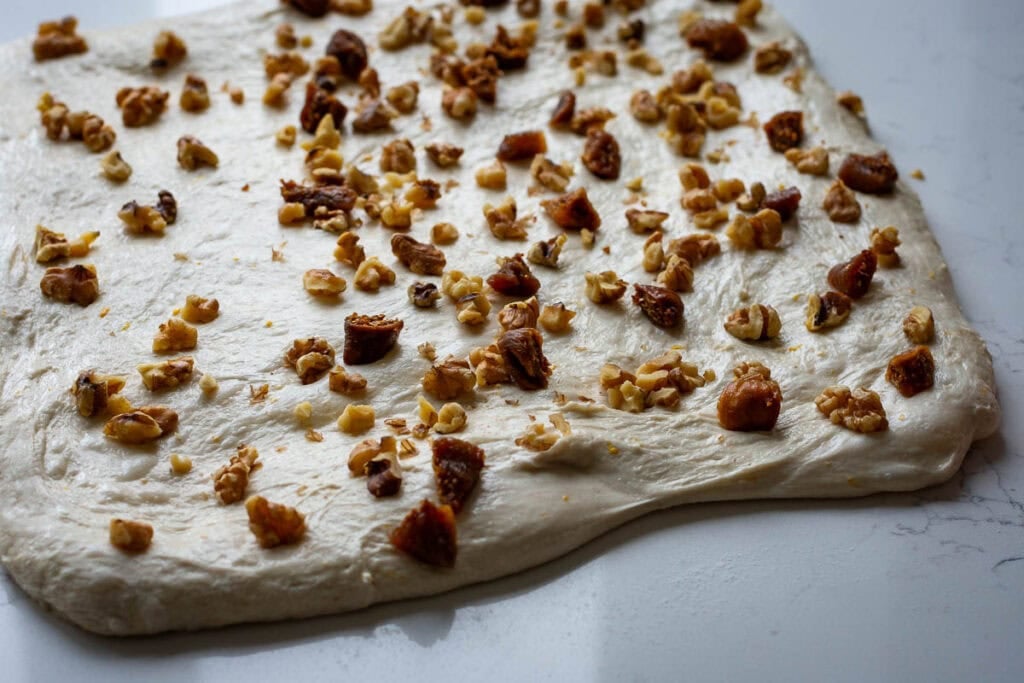
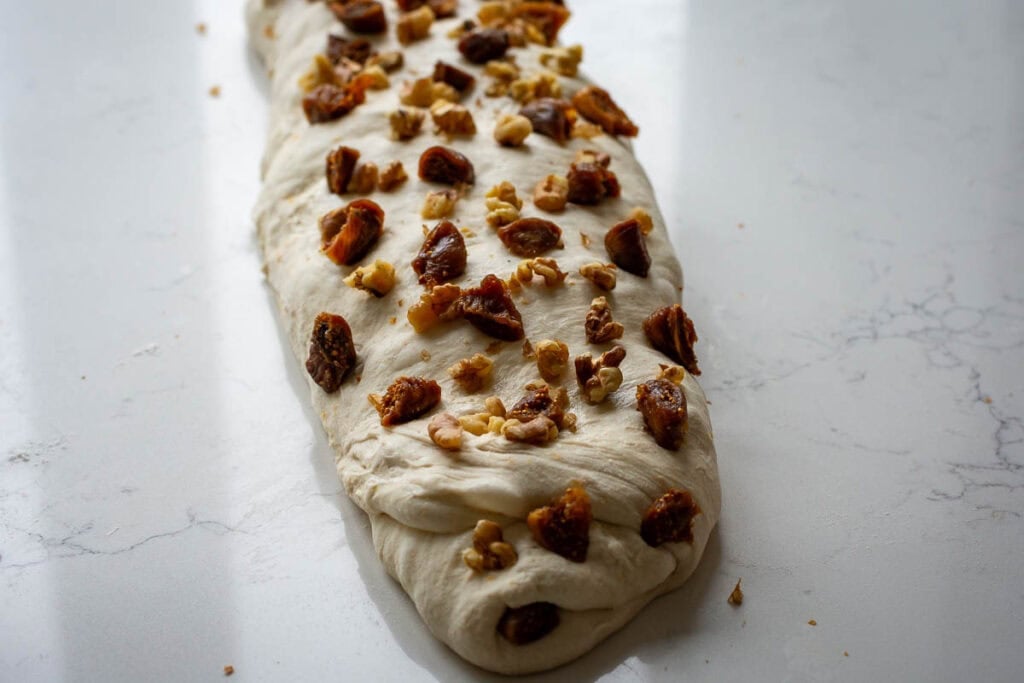
This works because the dough is already fully developed by this point, so it can take the stretch. The fruit goes in as two layers and gets no more folding, so there's nothing to smear or clump it. Rolling it up puts the fruit inside the loaf, so very little is left on the surface to scorch.
If you'd rather add them earlier, you can fold the fruit in during a coil fold, as I do in the walnut and cranberry loaf. I prefer this method here because the figs stay in neat pieces.
Cold Proof, Score And Bake
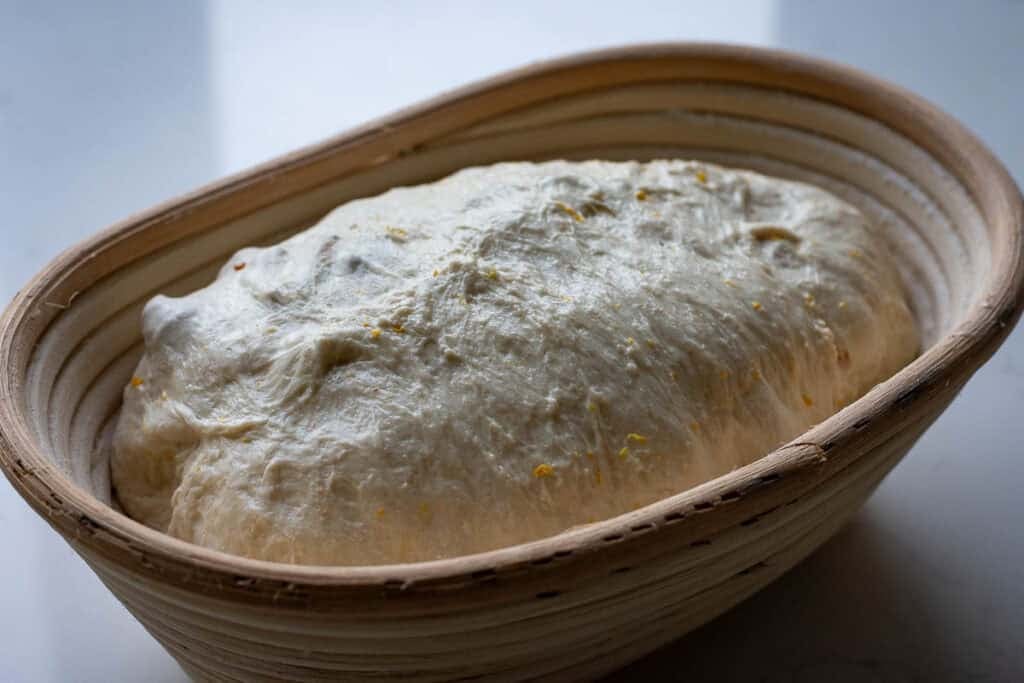
Place the dough seam-side up in a floured batard basket, slide it into a bag and put it in the fridge for 12 to 24 hours, usually overnight.
Turn it out onto parchment straight from the fridge, and press any visible fruit back into the dough. Then one decisive slash.
Bake at 240°C (220°C fan / 465°F) in a preheated Dutch oven with the lid on for 40 minutes, then 10 minutes with the lid off. Check the colour as soon as you lift the lid, because honey and fig sugars brown fast. The loaf is done at 96 to 98°C (205 to 210°F) in the centre.
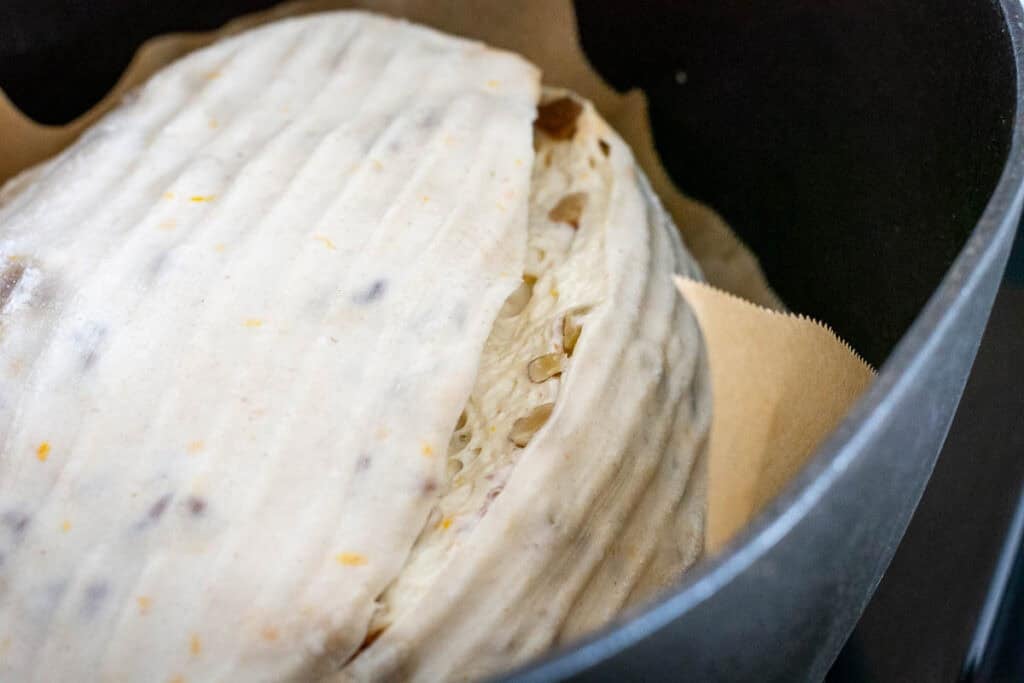
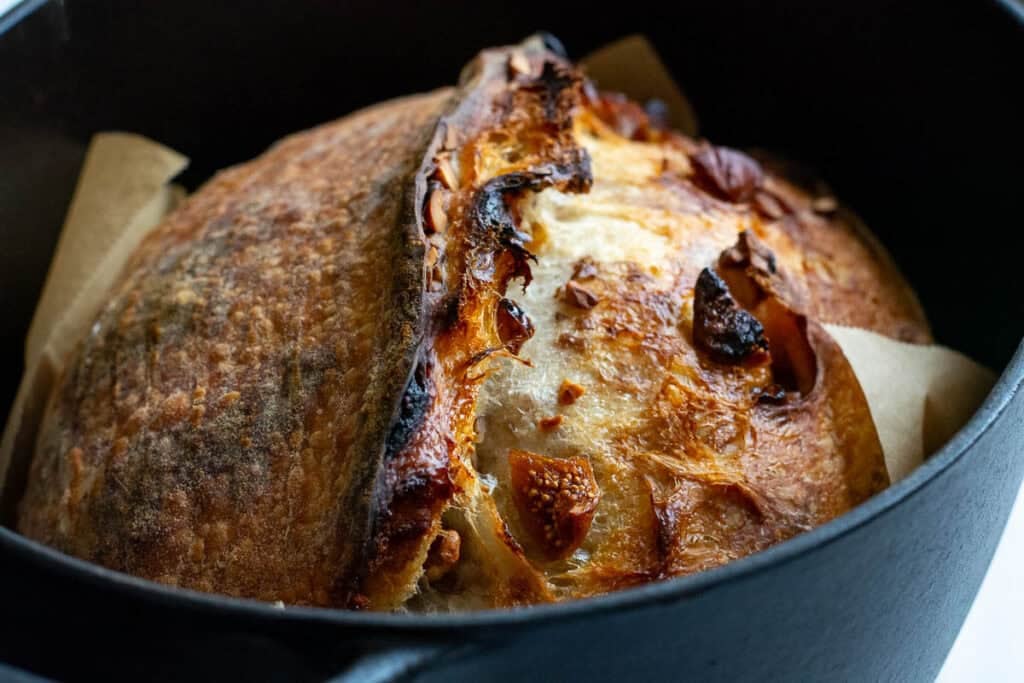
Cool it for at least 1 hour, ideally 2. Cut too soon and the soft fig pockets smear.
Troubleshooting Fig and Walnut Sourdough
| Problem | Likely cause | Fix |
|---|---|---|
| Cold dough feels stiff and tight | Normal. The figs take up water overnight, so it feels stiffer than 67% hydration usually would | Don't add flour or water. Score it straight from the fridge |
| Figs clumped in one spot or sank | Fruit bunched together, or pieces too big | Scatter right to the edges and split it into two layers |
| Spiral gaps or tunnels in the crumb | Rolled too loosely, or fruit pieces too big | Roll firmly and snip the figs to 1cm |
| Figs and walnuts scorched on the crust | Fruit left poking out | Tuck it in when you roll, and press it in again before scoring. Drop to 200°C (180°C fan / 400°F) if the crust darkens early |
| Dense, tight crumb or a flat loaf | Under-fermented bulk, or too much handling at the fruit stage | Trust the bubbles and the jiggle, and stretch and roll gently |
| Dough tears or fruit pokes through | Under-developed dough, or fruit scattered right to the edge of a thin sheet | Leave a small border and accept a few small tears |
| Crumb looks grey or purplish | The walnut skins | Normal. It doesn't affect the flavour |
How To Serve Fig and Walnut Sourdough
Slice it thin, about 1cm, once it has cooled completely. If the crumb is soft, toast the slices lightly so the figs don't tear. Then match it to the cheese:
- Brie, camembert or goat's cheese: The sourdough tang cuts the richness. If you've got goat's cheese going, my Fig and Goat Cheese Crostini uses the same flavour combination.
- Blue cheese, Stilton or gorgonzola dolce: Salt against the honey and fig sweetness. Our Christmas lunch proved this one beyond doubt.
- Sharp aged cheddar or manchego: The nutty walnut echoes the cheese.
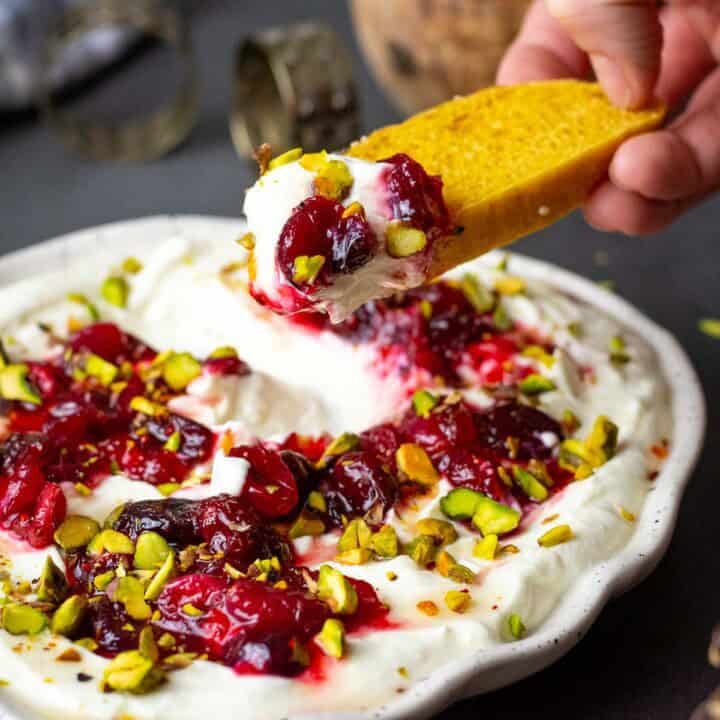
- Whipped ricotta and honey: For a milder board or breakfast.
For breakfast, toast a slice and add salted butter, a drizzle of honey and a pinch of flaky salt. It's the best topping I tried.


Storage and Make-Ahead For Christmas
Keep the loaf cut-side down on a board or in a paper bag at room temperature for up to 3 days. Freeze it sliced for up to 3 months and toast from frozen.
For a Christmas board, bake it a day or two ahead, or freeze the slices and defrost them on the counter while you sort the cheese.
Recipe FAQ
Not in this recipe. Fresh figs are mostly water and would flood the dough. If you have a glut, dry them first, then use them as you would shop-bought dried figs.
Yes. My guide to Sourdough Bread Without Dutch Oven covers the steam and heat tricks (but you need to make sure no figs or nuts are on the surface or they will burn. Baking Sourdough In A Loaf Pan is the easier route if you don't have a banneton either.
I wouldn't. The cold rest firms the dough so the fruit stays put and it scores cleanly, and it deepens the flavour. If you need a same-day loaf, use my Same Day Sourdough Bread method as the base.
Strong white bread flour with at least 12% protein. The fruit and nuts weigh the dough down, and a high-protein flour gives it the structure to rise around them. See my Flour for Sourdough guide for more.
Maple syrup works in the same weight. Or you can use sugar and rub the zest into it with your fingertips. Leaving the sweetener out entirely changes the browning and slows fermentation slightly, so the loaf will bake paler and take a little longer to ferment.
Variations
- Pecans or hazelnuts instead of walnuts: Use the same weight, toasted and cooled the same way.
- Spices: A small pinch of ground cinnamon, cardamom or crushed anise seed goes well with the fig.
- Other fruit: Soft dried dates or apricots work in place of the figs. For dates, see my Date and Coffee Sourdough. For the other festive loaf, try my Cranberry Orange Sourdough Bread.

More Christmas Sourdough Recipes
If you're building a festive table, my Christmas Sourdough Recipes roundup has plenty more, and Sourdough Bread Recipes With Inclusions covers every other fruit, nut and seed combination I've baked.

Christmas Sourdough ebook
Celebrate the holiday season with a unique twist this year with our 24 Christmas Sourdough recipes! Discover the magic of using active sourdough starter, sourdough discard, and leftover baked sourdough bread to create a memorable and flavoursome Christmas feast.
LOVE BAKING SOURDOUGH WITH ME?
You can now add Somebody Feed Seb as a preferred source on Google. It only takes a tick box, and tells Google you'd like to see more of my recipes when relevant.
Fig and Walnut Sourdough Bread
Equipment
- Bench Scraper
- Kitchen scissors (for snipping the figs)
- Dry frying pan (for toasting the walnuts)
- Batard (oval) banneton or lined oval basket
- Razor Blade or Bread Lame
Ingredients
- 500 g strong white bread flour at least 12% protein
- 310-330 g water depending on how much water your flour absorbs
- 160 g active sourdough starter 100% hydration
- 10 g sea salt
- 25 g clear honey approximately 1 tablespoon
- Finely grated zest of 1 large unwaxed orange about 6 to 8g
- 100 g soft dried figs stems removed, snipped into roughly 1cm pieces (no soaking needed, see notes)
- 100 g walnut halves toasted in a dry pan, cooled and roughly chopped
Instructions
DAY 1
- Feed your starter. In the morning, feed your starter 1:1:1 (70g starter, 70g water, 70g strong white flour). Leave it semi-covered somewhere warm, 21-27°C (70-81°F), for 4-5 hours, until it has at least doubled and looks bubbly and domed.
- Prep the walnuts and figs. Toast the walnuts in a dry frying pan over a medium heat, stirring often, until fragrant. Tip them onto a plate and let them cool completely, then roughly chop. Snip the stems off the figs and cut each one into roughly 1cm pieces with kitchen scissors (dip the blades in water if they stick). Cover both and set aside.
Mix The Dough
- Add the orange zest to the honey and crush it into the honey with the back of a spoon, stirring, until fragrant.
- Put the flour, water, active starter, salt and the orange honey into the bowl of a stand mixer fitted with the dough hook. Mix until no dry flour remains and the dough comes together into a smooth, cohesive dough, about 10 minutes.
Coild Folds and Bulk Fermentation
- Transfer the dough to a large bowl, cover and leave in a warm place, 21-27°C (70-81°F), for 30-40 minutes.
- With cold, wet hands, lift the dough from the middle, let the sides tuck under, rotate the bowl a quarter turn and repeat until you have done all four sides.
- Cover and rest for 30-40 minutes. Do 4 sets of coil folds in total, 30-40 minutes apart.
- After the last coil fold, cover and leave the dough undisturbed for 3-4 hours. Judge the dough rather than the clock. It is ready at roughly a 75% rise, with a puffy, slightly domed surface and visible bubbles at the sides and base. Do not wait for it to double.
Add Mix-Ins and Shape
- Turn the dough out and gently stretch it into a large rectangle. Scatter half of the figs and walnuts over the surface and fold the dough like a pamphlet (one third over, then the other third over that). Scatter the rest of the figs and walnuts on top, then roll the dough up into a batard shape. Tuck in any figs or walnuts that are poking out, because exposed fruit and nuts burn in the oven. Pinch the ends and the seam closed.
Cold Ferment
- Place the dough seam-side up in a floured batard banneton or basket.
- Put it inside a large plastic bag so the surface doesn't dry out, and refrigerate for 12-24 hours, generally overnight.
DAY 2
- Place your Dutch oven, with its lid, in the oven and preheat to 240°C (465°F), so it is piping hot all the way through.
Score
- Take the dough straight from the fridge (no resting at room temperature). Turn it out onto a sheet of parchment paper and dust with flour. The dough will feel stiffer than usual for its hydration, because the figs soak up a little water overnight. That is normal.
- Score with a bread lame or razor blade at a 30-45° angle, about 1cm deep, in one confident slash.
Bake and Cool
- Carefully lift the hot Dutch oven out and remove the lid. Lower the dough in using the parchment, keeping the score open, and replace the lid. Bake covered for 40 minutes, then remove the lid and bake for another 10 minutes, until deep golden brown. Honey and fig sugars brown quickly, so if the crust is getting too dark, reduce the oven to 200°C (400°F) for the remaining time. The loaf is done when it sounds hollow underneath and reads 96-98°C (205-210°F) in the centre.
- Lift the loaf out using the parchment and set it on a wire rack, then slide the parchment out from underneath. Cool completely before slicing, at least 1 hour and ideally 2. Cut too early and the soft fig pockets smear and the crumb turns gummy.
Notes
Nutrition


Leave a Reply