
Golden, crispy potatoes on top of pillowy, olive oil-infused dough make this sourdough potato focaccia absolutely irresistible. A twist on Sourdough Focaccia Pugliese, this overnight recipe delivers a wonderful texture-light, airy, and full of flavour. Perfect for sharing, but so good you might want to keep it all to yourself!

Jump to:
As an Amazon Associate I earn from qualifying purchases, at no extra cost for you! Thank you!
Potatoes On Sourdough Bread: Carb Heaven!
Potatoes and bread have been a match made in carb heaven for centuries! In Southern Italy, Focaccia Pugliese is traditionally made with mashed potatoes (or potato flakes) in the dough for an ultra-soft texture. We also make Sourdough Potato Bread with mashed potatoes.
We took a different approach - we placed sliced potatoes on top of the dough for crispy, golden perfection. It's a great recipe for anyone who loves layers of flavour and texture in every bite.

Looking for more focaccia recipes? Other favourites of ours are Fennel & Caper Sourdough Focaccia and Sourdough Cherry Tomato Focaccia With Rosemary.
Or try our Sourdough Discard Focaccia or Overnight Sourdough Focaccia with Olives next!
And we have the most delicious Sourdough Almond Croissant Focaccia and Sweet Sourdough Focaccia With Cherries and Almonds for the sweet tooth! And of course, our best fusion recipe yet - Sourdough Baklava Focaccia!
Ingredient Notes
Here's everything you will need for this Potato, Turmeric and Rosemary Focaccia Bread recipe:
- strong bread flour: with at least 12% protein content. Whilst you can make a good focaccia with all-purpose flour, we find that high protein flour makes a chewier, heartier focaccia with a more open crumb.
- water: you may use slightly warm water to kickstart bulk fermentation if you're short on time. Note that different types of flour absorb a different amount of liquid, so adjust if needed (e.g. all-purpose flour is less thirsty), but don't shy away from high-hydration wet dough - it makes the best focaccia!
- active sourdough starter: 100% hydration. This bread relies solely on wild yeast in your active starter, no commercial yeast is used.
- Salt: you will need salt for the dough and the topping. Flaky sea salt is best for the topping, as it doesn't dissolve when baked.
- olive oil.
- waxy potatoes: Charlotte, Anya, Jersey Royal or New Baby potatoes will all work well. Avoid starchy, floury potatoes.
- ground turmeric. If you love baking with turmeric, try our Turmeric Sourdough Bread too!
- rosemary. We love this herb in focaccia, and use it in our Rosemary Sourdough Focaccia, Cherry Tomato Sourdough Focaccia and even unexpected and bold Tuscan harvest bread-inspired Sourdough Focaccia With Grapes and Rosemary.
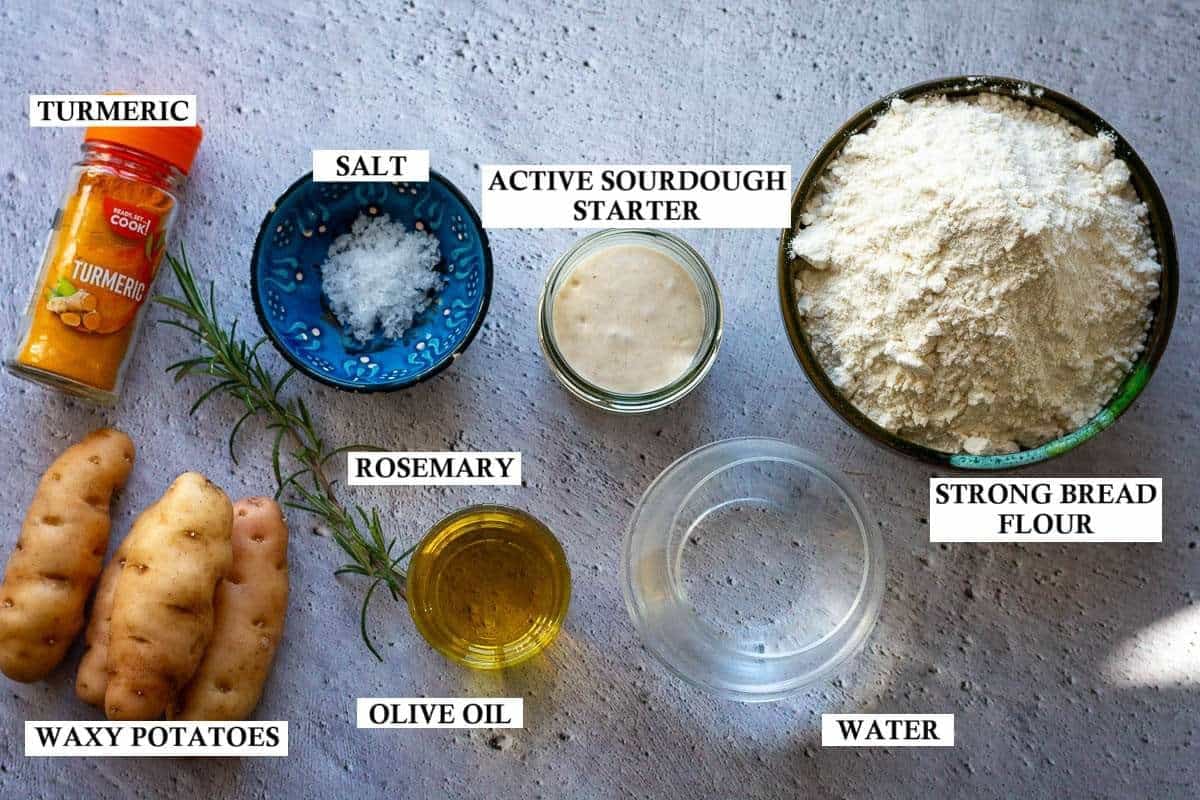
Find the ingredient quantities, detailed instructions and nutritional information in the recipe card at the bottom of the post.
Step-By-Step Method
This overnight sourdough focaccia with potato topping is made over two days.
DAY 1
First thing in the morning, feed your sourdough starter and leave it in a warm spot to at least double in volume. We typically feed our starter in a ratio of 1 part starter: 1 part water: 1 part flour, and it doubles (or even triples) within 4 hours.
Fermentolyse and Mixing The Dough
1. In a bowl of a stand mixer, combine flour, water and ripe sourdough starter. Mix the dough in a stand mixer fitted with a dough hook attachment for a few minutes on low speed, until the flour is hydrated. Cover the bowl with a damp tea towel and leave the dough to fermentolyse (a type of sourdough autolyse where sourdough starter is added too) for an hour.
2. After an hour, scatter the salt on the surface of the dough. Drizzle the olive oil all over, and using your hands, squish the salt and oil into the dough, aiming to distribute it evenly.
TIP: Don't be tempted to just mix the oil in by running the stand mixer - the dough will split, separated by oil layers.
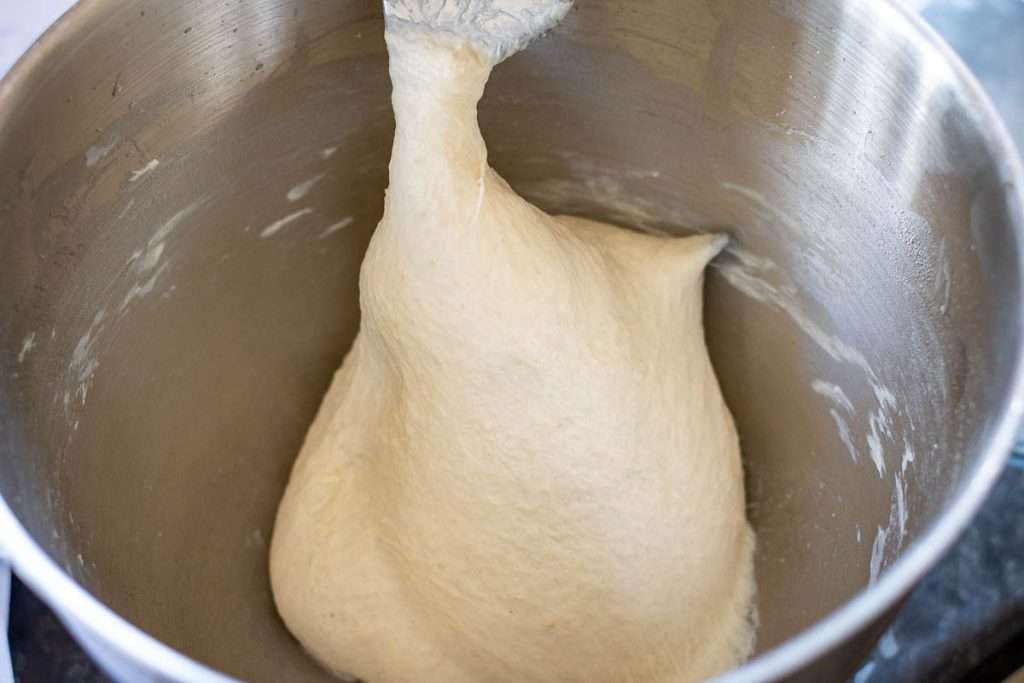
3. Once incorporated, run your mixer on medium speed for 10-12 minutes, until you have a very smooth and elastic dough. It will be wet, but should start gathering around the dough hook attachment.
Coil Folds, Bulk Fermentation, Cold Retardation:
1. Scoop the dough into a lightly oiled bowl (we like to use a heavy shallow dish - it helps to coil fold later). Cover the dough with a damp tea towel or cling film (plastic wrap) and leave it in a warm spot for 30 minutes.
2. Over the next 3 hours, at 30-minute intervals, perform a set of coil folds, using wet hands. See the coil folding video in the recipe card.
3. After all 6 sets of coil folds are completed, cover the dough and let the dough rest undisturbed for 1.5-3 hours, depending on the temperature of your kitchen.
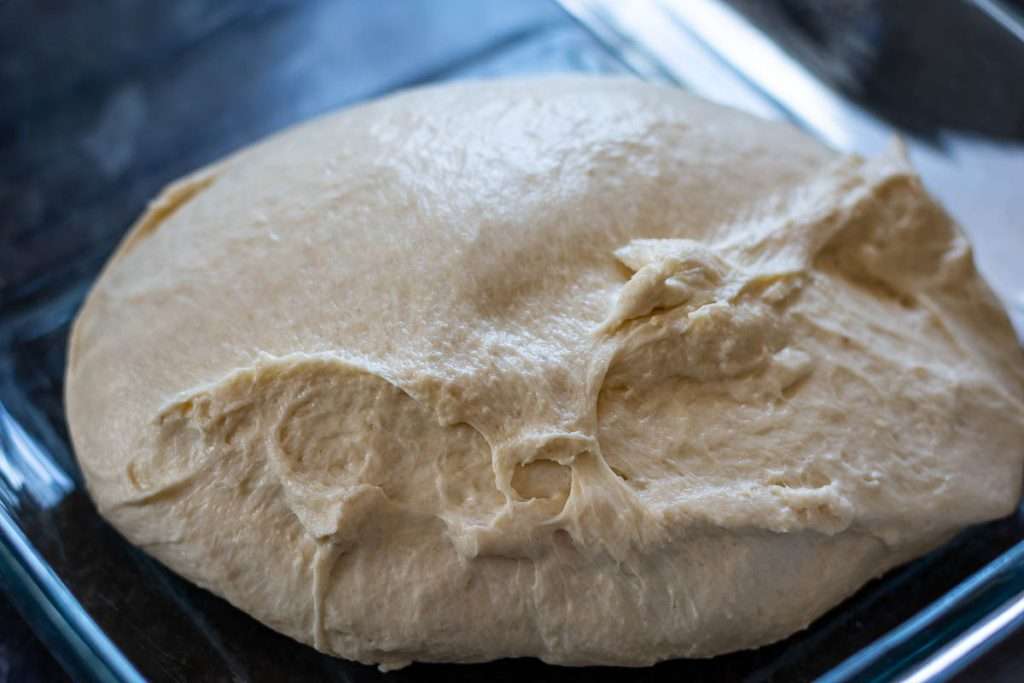
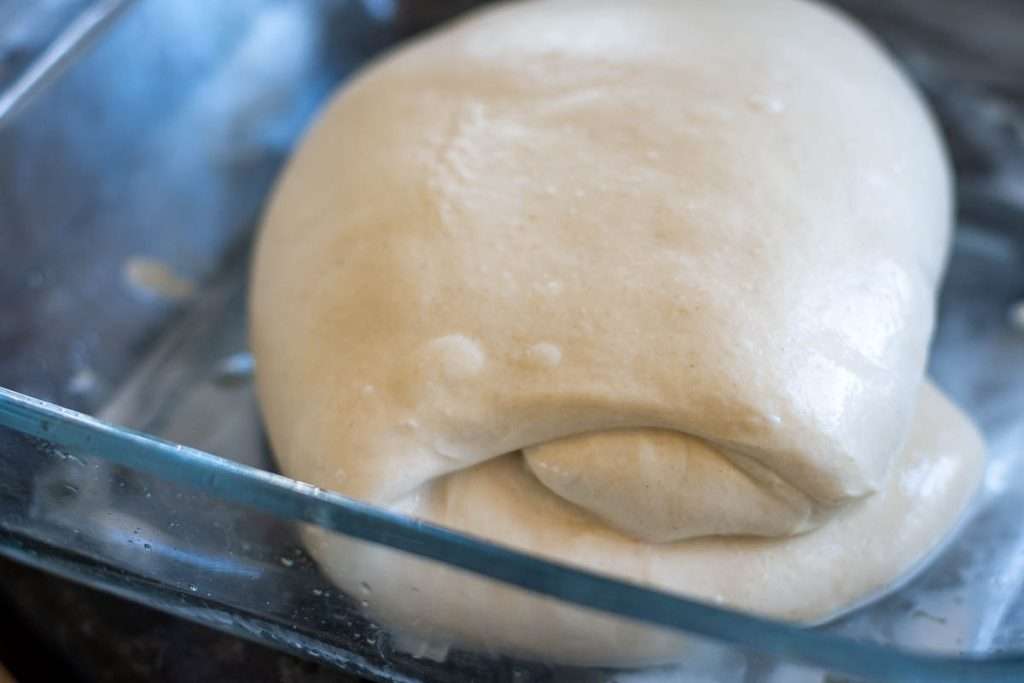
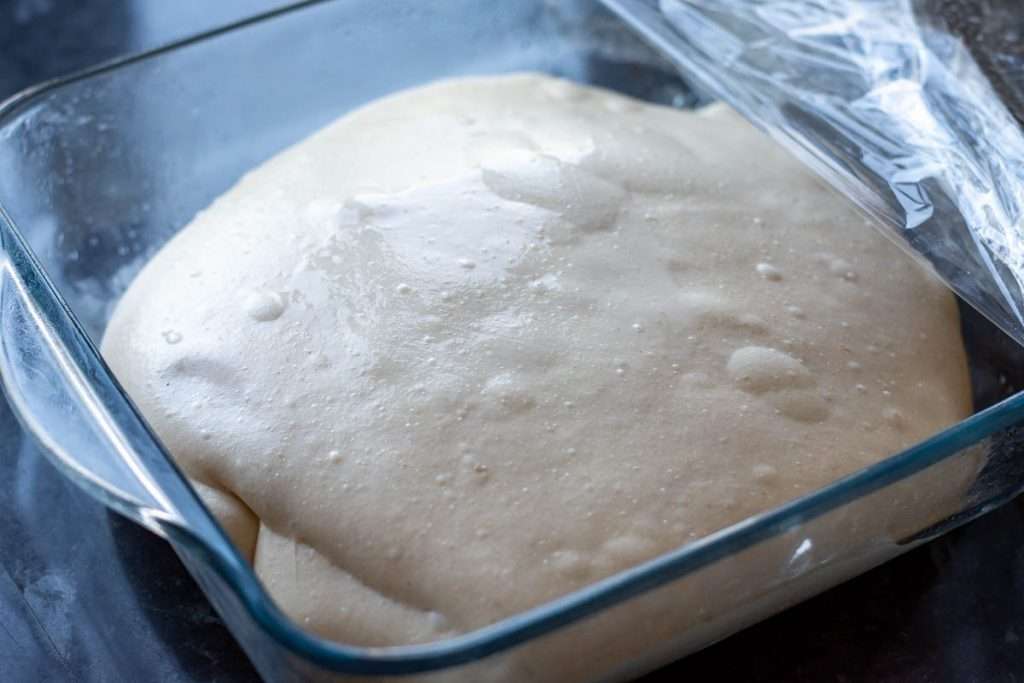
3. At the end of bulk fermentation, place the dough in the refrigerator for 8-24 hours (or simply overnight) to finish its first rise.
DAY 2
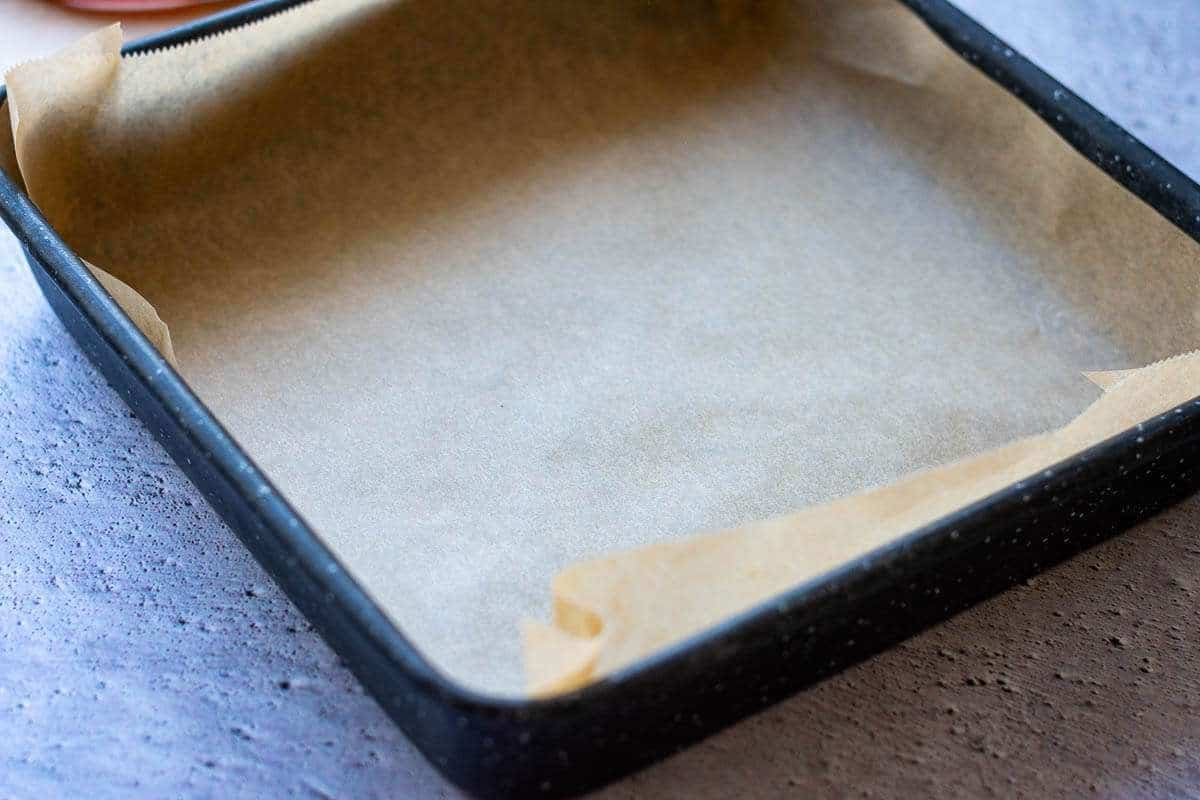
The next day, line a rimmed baking sheet (we use a baking tray approx 24x24cm) with parchment paper.
Second Rise
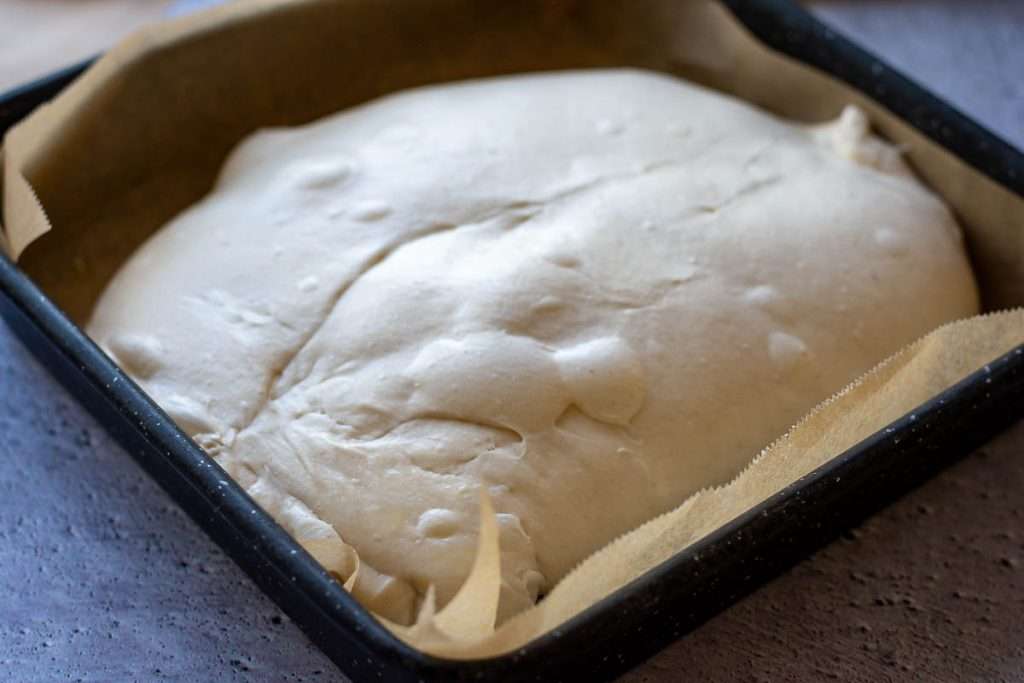
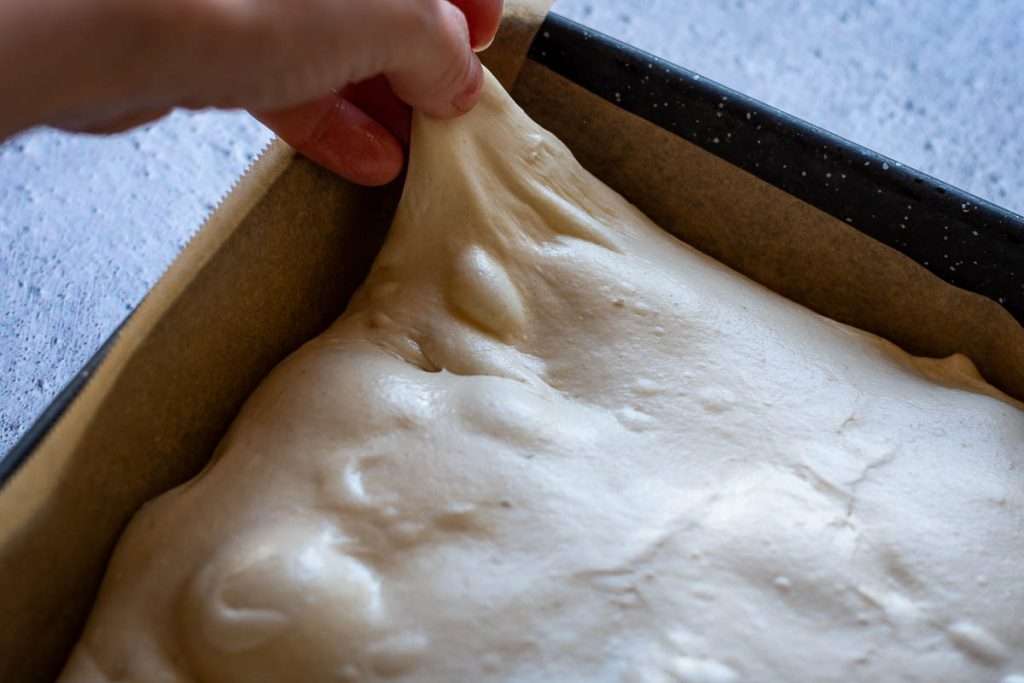
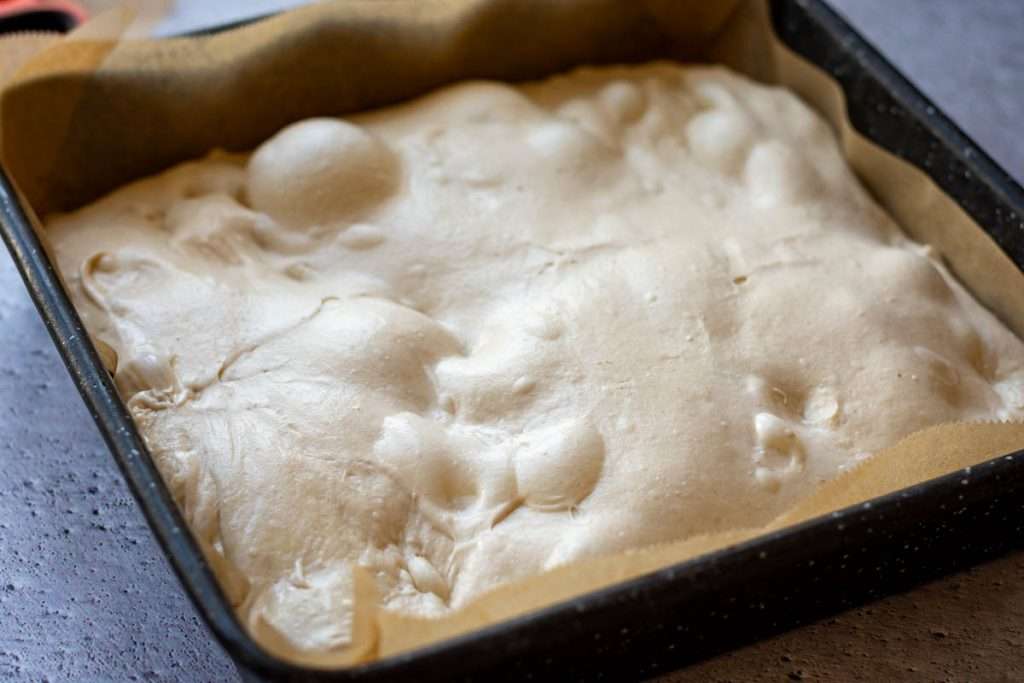
1. Take the dough out of the fridge and very carefully transfer it into the baking dish, trying not to deflate it too much. Stretch it out into the corners of the baking dish.
2. Cover it again and let the focaccia dough rise in a warm place for another 1-2 hours. It will increase in volume, puff up and have very noticeable blisters across the surface.
Topping and Baking
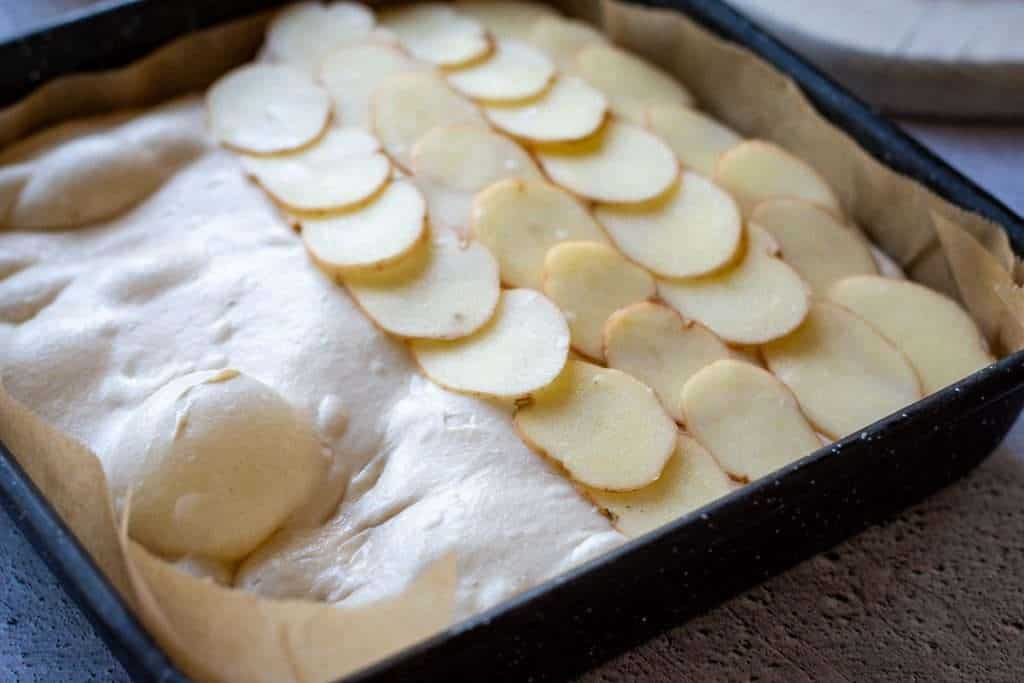
1. When ready to bake, preheat the oven to 220°C. Arrange the thinly sliced potatoes over the dough, overlapping slightly.
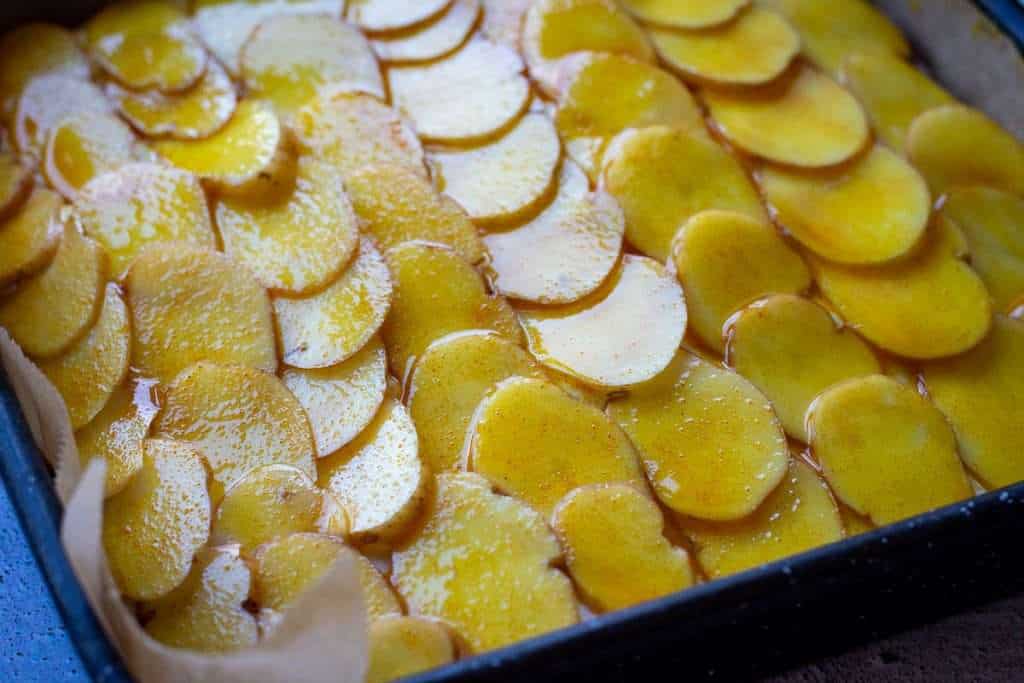
2. In a small bowl, mix the olive oil with turmeric. Brush the top of the potato focaccia gently with the mixture and scatter some coarse sea salt flakes on top.

3. Bake it on the top shelf in the preheated oven for 25-30 minutes.
4. When baked and golden brown, let the bread firm up in the baking tray for 5-10 minutes, then transfer it onto a wire rack. Scatter the finely chopped rosemary on top, and decorate with larger rosemary sprigs.
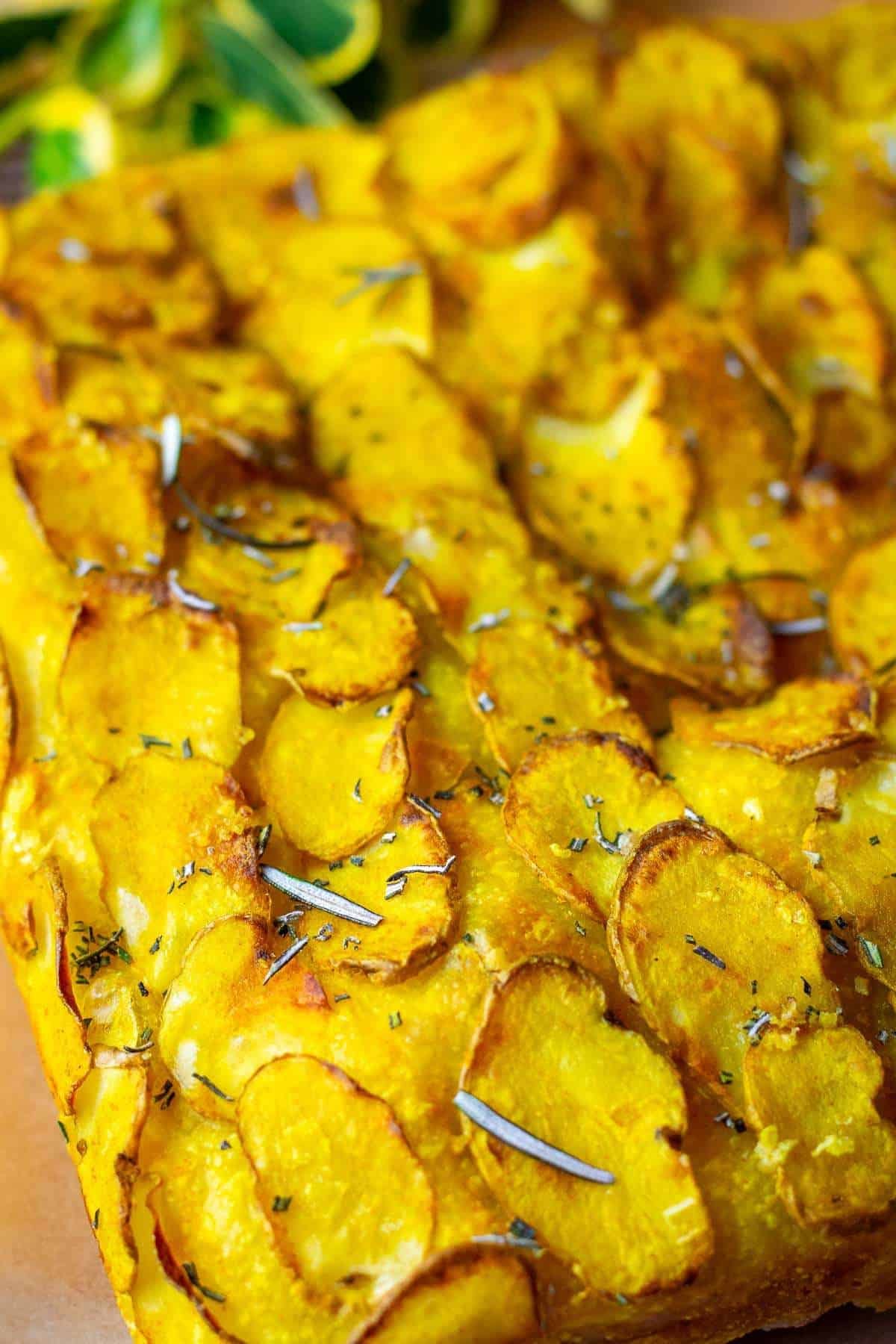
Sourdough Potato Focaccia is best enjoyed slightly warm or at room temperature. Store leftovers in an airtight container in a cool, dark cupboard.
Recipe Tips
1. Ditch the Cups - Use a Kitchen Scale! Measuring with cups and spoons can lead to inconsistencies, especially with flour, which can affect hydration and texture.
2. Embrace the Wet Dough. Resist the urge to add extra flour - wet bread dough creates the best open crumb and light texture once baked.
3. Coil Folds Over Stretch and Folds. Because this is a high hydration sourodugh, handling it with coil folds rather than stretch and folds makes shaping easier and helps build gluten strength without tearing.
4. Does The Dough Contract? When transferring the dough to the baking dish, it may shrink back. Gently stretch it, let it rest for 10 minutes, then stretch it again to fit the shape. This allows the gluten to relax and prevents tearing.
5. Make Potatoes Stick. Brush the turmeric oil over the potatoes, not underneath them.

Serving Suggestions
Sourdough Potato Focaccia is incredibly versatile! Tear off a chunk and dip it into extra virgin olive oil with a splash of balsamic for a simple but delicious bite. It's perfect alongside gambas pil pil or prawn saganaki, soaking up all those rich, garlicky sauces.
Pair it with soups and stews, or slice it across and stuff it with your favourite sandwich fillings for the ultimate focaccia sandwich.
For a lighter option, serve it warm with a fresh salad on the side - simple, satisfying, and absolutely delicious!
More Italian Sourdough Recipes




Sourdough Focaccia With Potatoes and Rosemary
Equipment
- 24x24cm Baking Dish
Ingredients
- 330 g strong bread flour with at least 12% protein content
- 200-210 ml water
- 140 g active sourdough starter 100% hydration
- 5 g salt
- 30 ml olive oil
Topping:
- 4-5 small waxy potatoes thinly sliced
- 1 teaspoon turmeric
- 3 tablespoon olive oil
- 1 rosemary sprig leaves stripped and finely chopped
- flaky sea salt
Instructions
DAY 1:
- First thing in the morning, feed your sourdough starter and leave it in a warm spot to at least double in volume. We typically feed our starter in a ratio of 1 part starter: 1 part water: 1 part flour, and it doubles (or even triples) within 4 hours.
Fermentolyse and Mixing The Dough:
- In a bowl of a stand mixer, combine flour, water and active sourdough starter. Mix the dough in a stand mixer fitted with a dough hook attachment for a few minutes on low speed, until the flour is hydrated. Cover the bowl with a damp tea towel and leave the dough to fermentolyse (a type of sourdough autolyse where sourdough starter is added too) for an hour.
- After an hour, scatter the salt on top of the dough. Drizzle the olive oil all over, and using your hands, squish the salt and oil into the dough, aiming to distribute it evenly.TIP: Don't be tempted to just mix the oil in by running the stand mixer - the dough will split, separated by oil layers.
- Once incorporated, run your mixer on medium speed for 10-12 minutes, until you have a very smooth and elastic dough. It will be wet, but should start gathering around the dough hook attachment.
Coil Folds, Bulk Fermentation, Cold Retardation:
- Scoop the dough into a lightly oiled bowl (we like to use a heavy shallow dish - it helps with coil folds later). Cover the dough with a damp tea towel or cling film (plastic wrap) and leave it in a warm spot for 30 minutes.
- Over the next 3 hours, at 30-minute intervals, perform a set of coil folds, using wet hands. See the coil folding video below.
- After all 6 sets of coil folds are completed, cover the dough and let it finish its bulk fermentation undisturbed for 1.5-3 hours, depending on the temperature of your kitchen.
- Place the dough in the refrigerator for 8-24 hours (or simply overnight).
DAY 2:
- The next day, line a baking tray (approx 24x24cm) with parchment paper.
Second Rise:
- Take the dough out of the fridge and very carefully transfer it into the prepared baking tray, trying not to deflate it too much. Stretch it out into the corners of the baking dish.
- Cover it again and leave it in a warm spot to proof for another 1-2 hours. It will increase in volume, puff up and have very noticeable blisters across the surface.
Topping and Baking:
- When ready to bake, preheat the oven to 220°C (430℉). Arrange the thinly sliced potatoes over the dough, overlapping slightly.
- In a small bowl, mix the olive oil with turmeric. Brush the top of the potato focaccia gently with the mixture and scatter some sea salt flakes on top.
- Bake it on the top shelf for 25-28 minutes.
- When baked, scatter the finely chopped rosemary on top, and enjoy!
Video
Nutrition





Ash says
I am obsessed with this recipe. Two of my favorite things (potatoes and bread) in one dish? Sold!
nicole says
this sourdough focaccia with potatoes and rosemary is amazing! such a delicious recipe.
Ieva Greber says
Thank you, Nicole! Glad you liked it 🙂
Jet says
This focaccia was pillowy perfection! Love the crispy potato topping and hint of turmeric. It's such a flavorful twist on a classic.
Ieva Greber says
Thank you! 🙂
Swathi says
This sourdough focaccia with potato and rosemary is delicious I enjoyed making it.
Lora says
This sourdough potato focaccia is crisp, fluffy, and full of flavor. It’s so good, you’ll have a hard time sharing!