
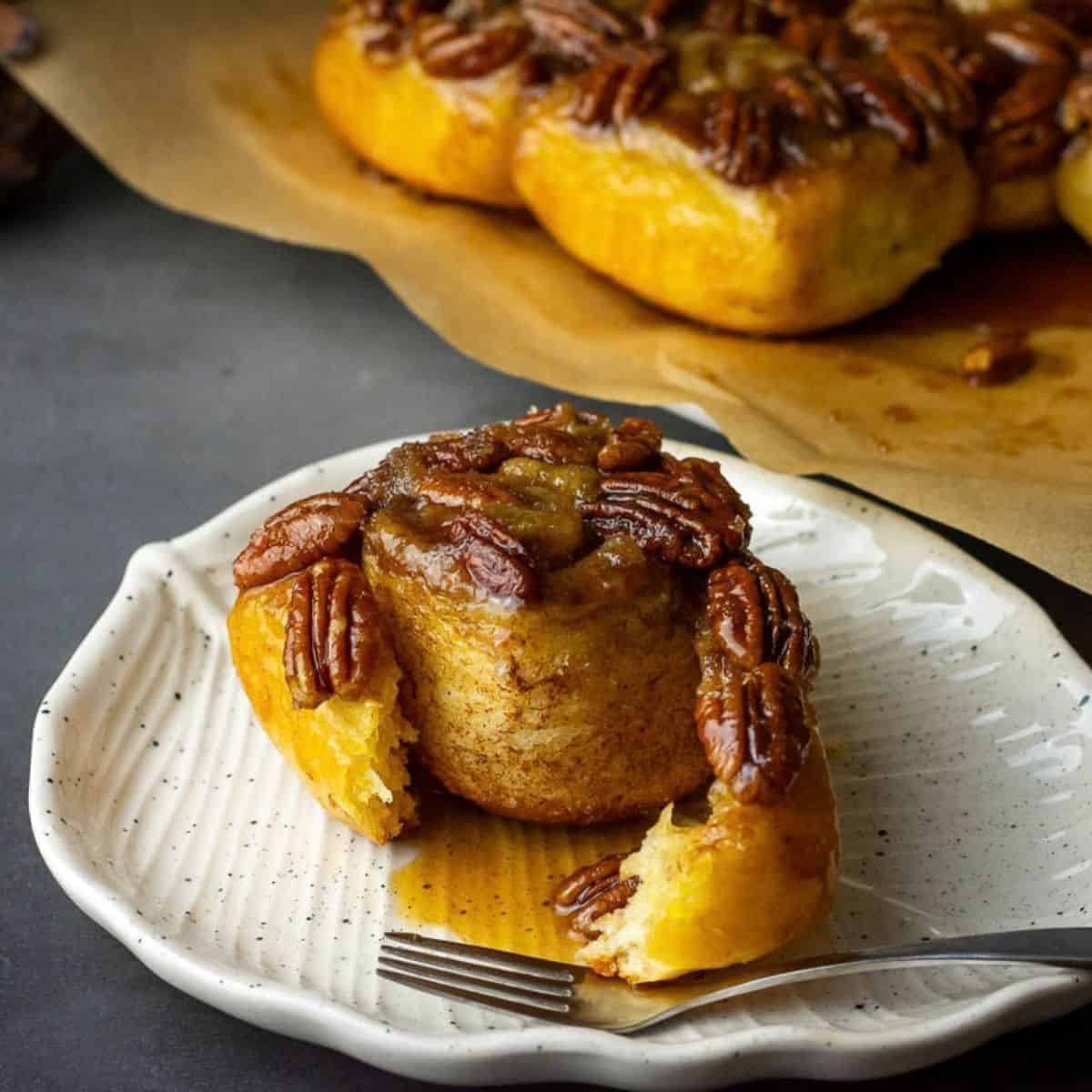
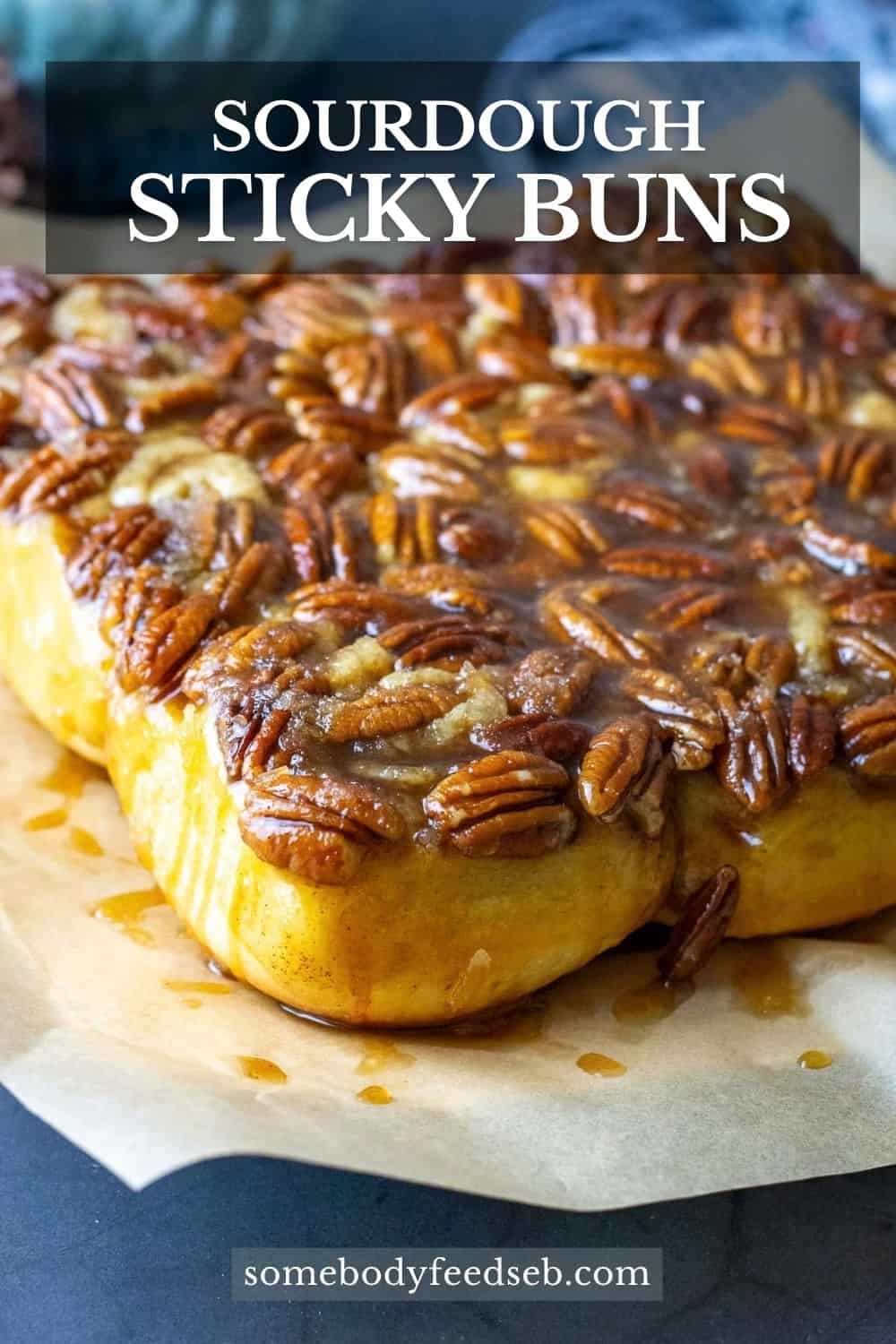
Sourdough sticky buns are the recipe I reach for when a cinnamon roll doesn't feel like enough. Same soft, long-fermented dough as my Sourdough Cinnamon Rolls, but this one gets baked upside down over a maple pecan caramel, so every bun comes out sticky, glossy and studded with toasted pecans the moment you flip the pan. It's a two-day method, most of it unattended in the fridge, and this step-by-step recipe also covers which pan actually works, and how to flip it without losing half the caramel to the tin.
Jump to:
- Recipe Highlights
- Ingredient Notes
- Why a 9x9 Pan (and the Right Kind of Pan) Makes These Better
- How to Make Sourdough Sticky Buns
- How to Flip Sourdough Sticky Buns Without Losing the Caramel
- Tips for the Best Sourdough Sticky Buns
- Recipe FAQs
- Storage
- More Sourdough Rolls & Enriched Bakes To Try
- Sticky Sourdough Buns
As an Amazon Associate I earn from qualifying purchases, at no extra cost for you! Thank you!
Seb goes through my Maple Pecan Sourdough Scones like they're rationed, so pecans turning up in bun form as well was only a matter of time. These take longer than the scones, but they're the better lazy-weekend bake, the kind where the kitchen smells like caramel for a good hour before anyone's allowed to touch any of the buns.

Recipe Highlights
TASTE: Buttery caramel, toasted pecan, a little tang under all that sweetness
MAKES: 9 buns, best eaten warm the day they're baked
SKILL LEVEL: Straightforward if you've handled an enriched dough before, the flip is the only genuinely nervy bit
SEB'S RATING: Could eat the pecan caramel with a spoon

Ingredient Notes
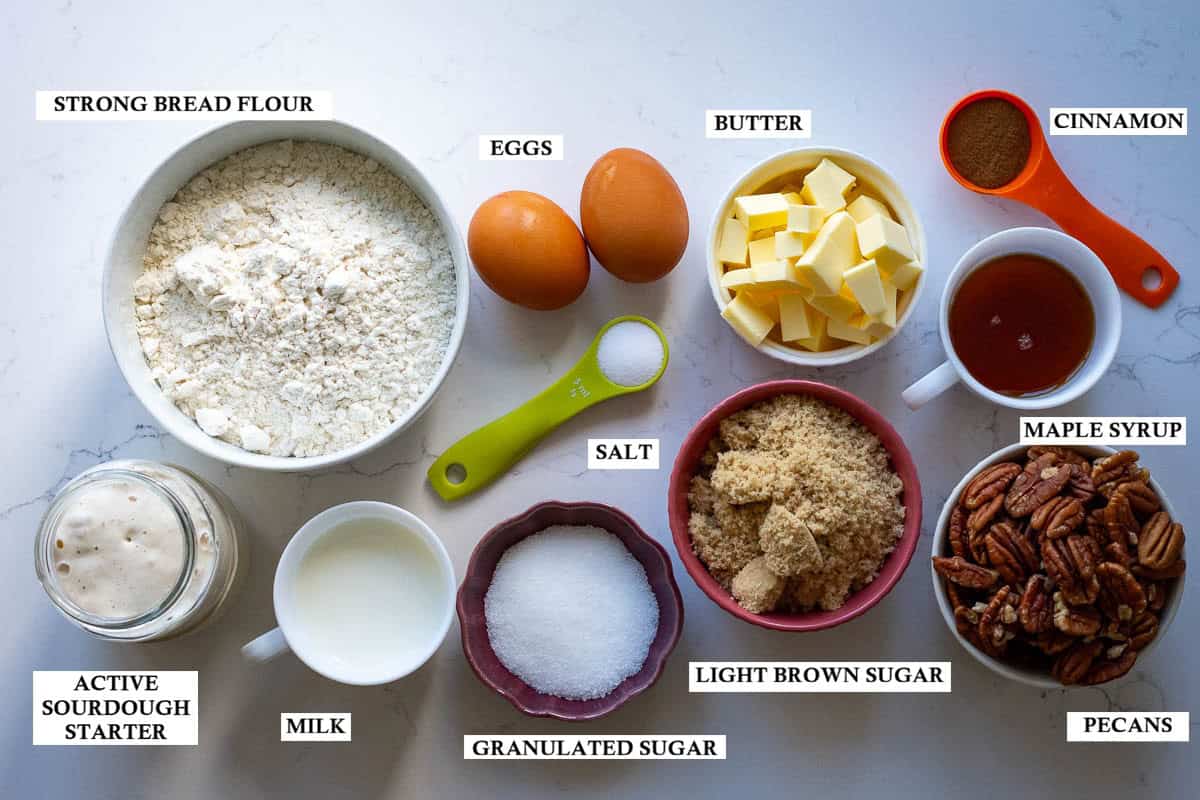
Find the full ingredient quantities and instructions in the recipe card below. The dough itself is the same enriched sourdough base I use for my Sourdough Cinnamon Rolls and S'mores Sourdough Rolls, just built around a caramel instead of a glaze, so if you've made those before, most of Day 1 will feel familiar.
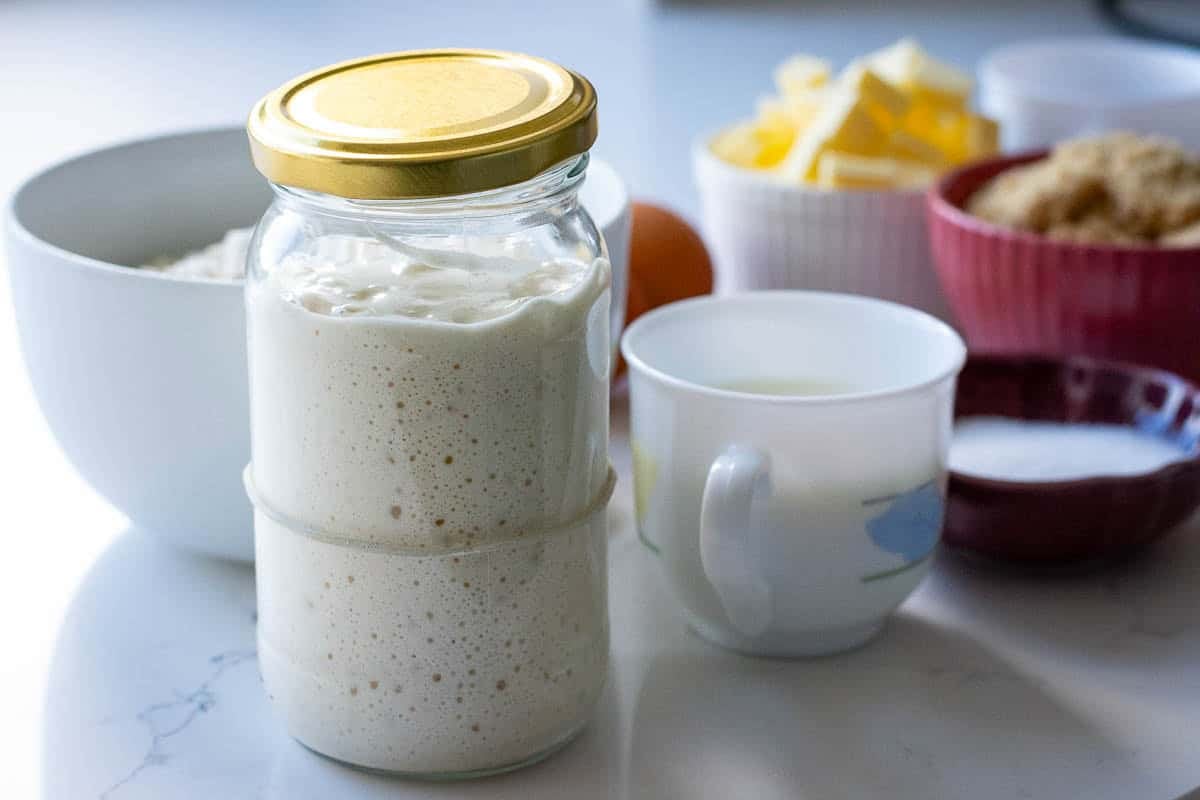
- Active sourdough starter (100% hydration). Feed it four to six hours before mixing, so it's domed and doubled by the time you start.
- Strong white bread flour. Don't swap in plain flour. Once these buns are flipped, the dough is holding up a full layer of caramel and pecans on top, and it needs the extra gluten strength bread flour gives it to keep its structure rather than going soft underneath.
- Maple syrup. Real maple syrup gives the caramel a rounder flavour than sugar alone. If you only have golden syrup, it's a genuine 1:1 swap, not a downgrade, see the recipe notes and FAQ for exactly how it changes the result.
- Soft light brown sugar. Dark brown sugar works too, for a deeper, more molasses-y caramel, in the topping, the filling, or both.
- Pecans. Untoasted pecans go straight into the caramel and turn out fine. Toast them first in a dry pan for a few minutes if you've got the time, it deepens the flavour before they've even hit the oven. Have more pecans? Try our Butter Pecan Sourdough Cookies next time!
- Cinnamon. Nothing unusual here, but freshly ground makes a genuine difference at this small a quantity.
Why a 9x9 Pan (and the Right Kind of Pan) Makes These Better
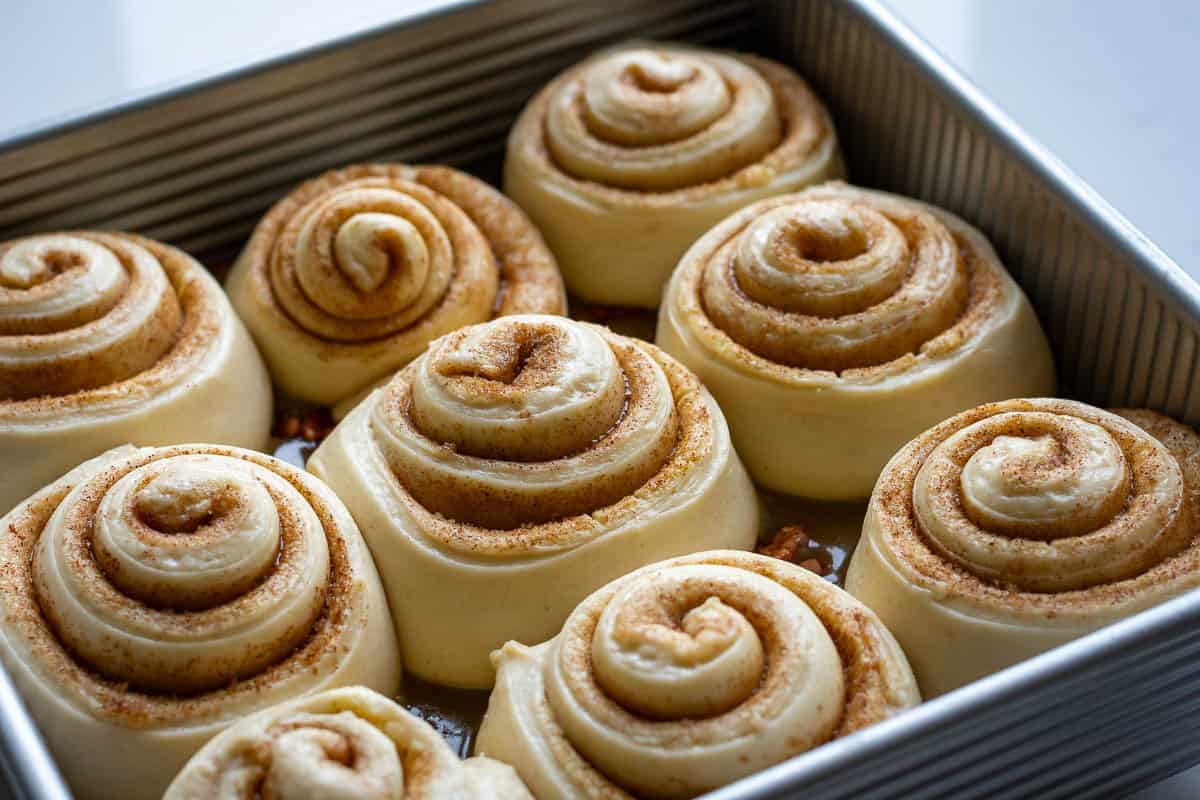
A 9x9 pan gives you taller buns. Every bun also sits closer to the centre of the pan, so you lose the dry, under-caramelled edge pieces a bigger tin tends to produce. Nine buns packed a little tighter also proof more evenly and hold humidity better, which makes for a genuinely more forgiving proof window than a thinner batch rattling around a pan built for twelve.
The pan itself matters almost as much as the size. You want something properly high-sided, at least two inches, so the caramel and pecans stay contained rather than bubbling over the rim as it bakes, and a nonstick surface that actually does its job, since a stubborn pan and a glossy caramel is exactly how you end up with half your topping stuck to the base instead of on top of the buns.
I went through a couple of flimsier square tins before settling on the USA Pan 9-Inch Square Cake Pan, which has 2¼-inch sides and a nonstick coating that earns the name.
The caramel comes away clean almost every time, which matters more than it sounds once you've scraped a stuck one off a cheaper tin.
How to Make Sourdough Sticky Buns
Day 1
Feed your starter four to six hours ahead, so it's active and doubled by the time you mix. If you're struggling to get your starter to double, head to our article: Sourdough Starter Not Doubling Within 4 Hours? How To Fix It? or download our FREE Sourdough Starter Troubleshooting Guide below:
Mix and Ferment the Dough
1. Combine the flour, sugar and salt, then add the milk, eggs and starter and bring it together into a shaggy dough.
2. Rest for ten to fifteen minutes to let the flour hydrate, then work in the softened butter gradually until the dough is smooth and elastic and passes the windowpane test, thin enough to see light through without tearing.
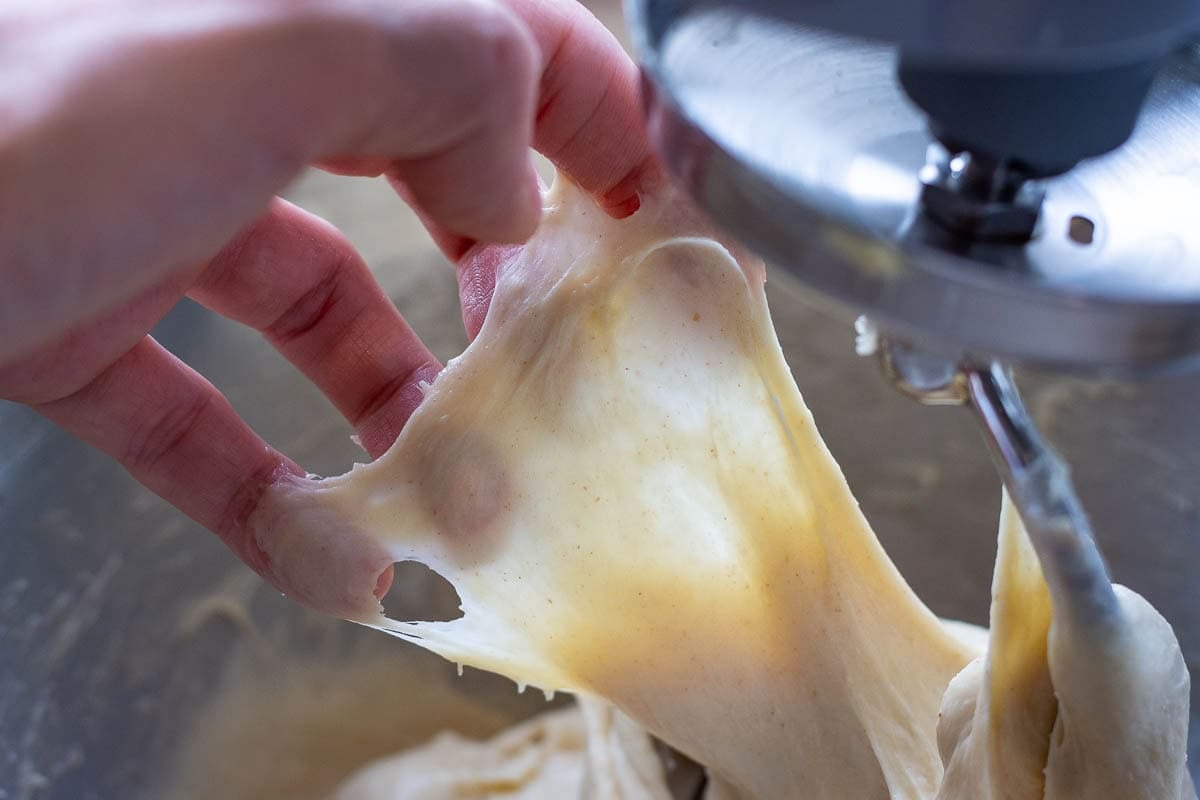
3. There are no coil folds in this method. Mix to full windowpane, then leave the dough to bulk ferment undisturbed for four to six hours at 20-24°C (68-75°F). Enriched dough won't double here, look for a gentle 40-40% rise and a slightly domed, puffy surface instead.
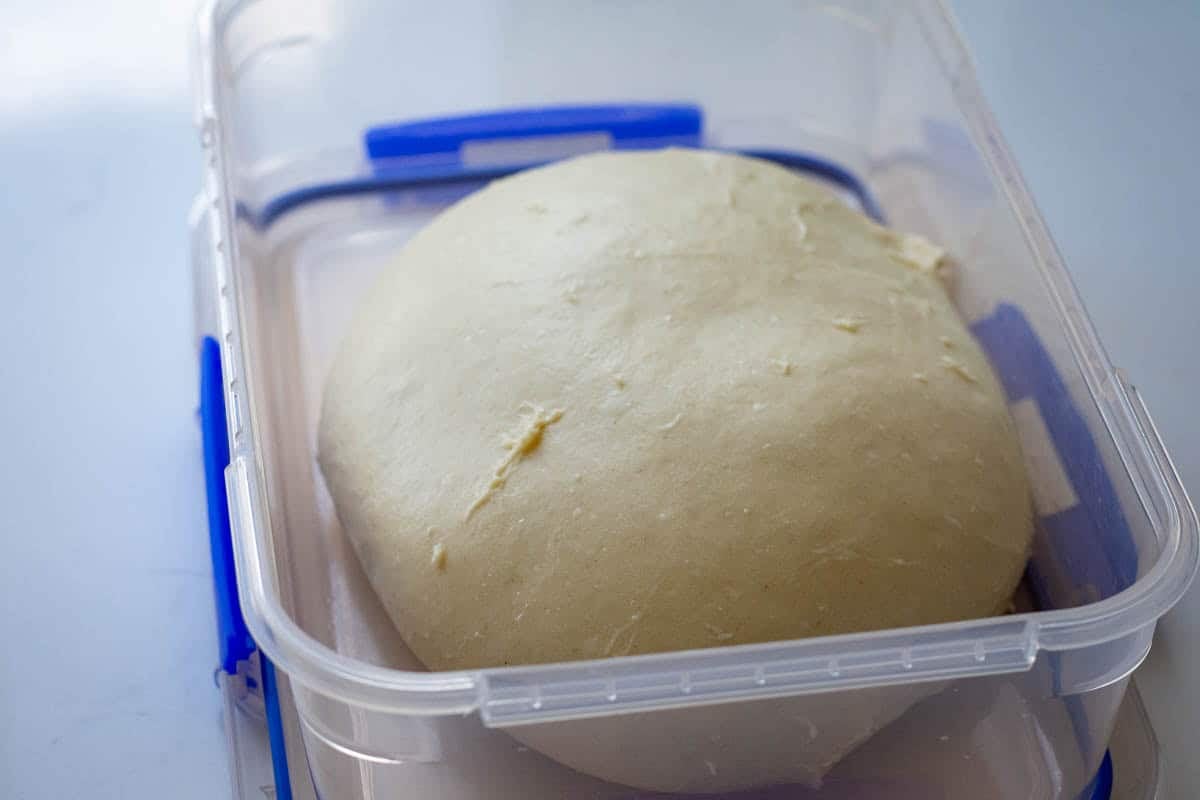
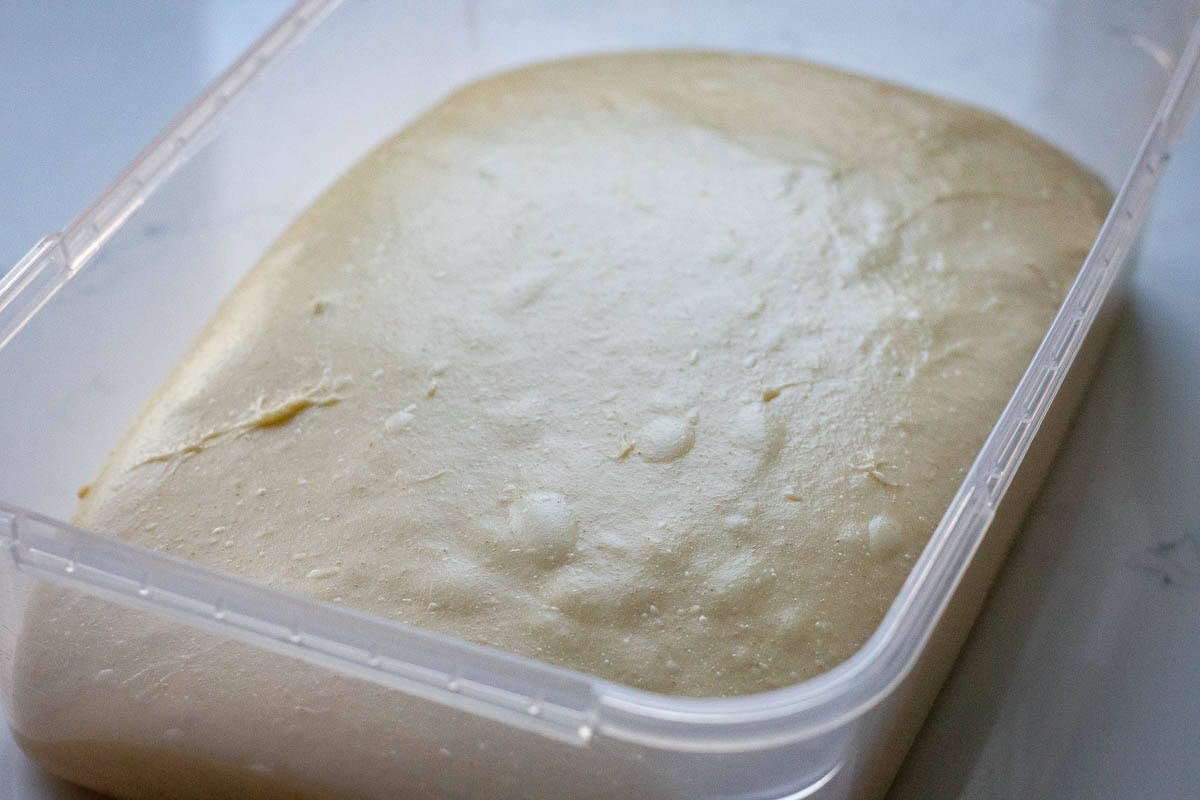
4. Cover tightly and refrigerate for eight to sixteen hours. That's a deliberate simplification, not a shortcut that costs you anything, the cold proof does the rest of the strength-building work overnight and makes the dough far easier to roll out the next day.
Day 2
Make the Caramel
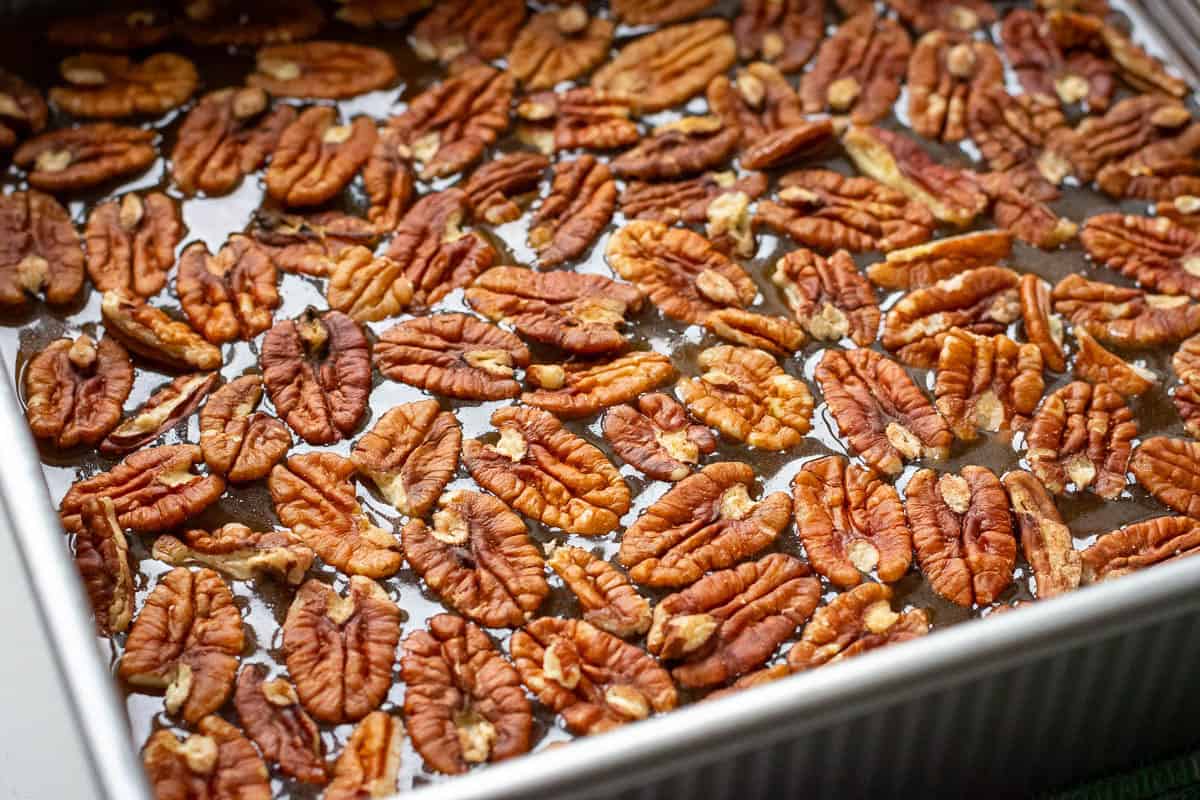
1. Melt the butter, brown sugar, maple syrup and salt together in a small saucepan over medium-low heat until smooth and glossy, about 3-4 minutes. The caramel needs proper heat to loosen enough to pour cleanly, don't rush this or it'll sit in stubborn clumps instead of coating the pan evenly. Ensure the sugar is fully dissolved, or you will get grainy finish later.
2. Pour it into the base of your prepared pan, tilting to cover the bottom, then scatter the pecans over the top in an even layer.
Shape The Rolls
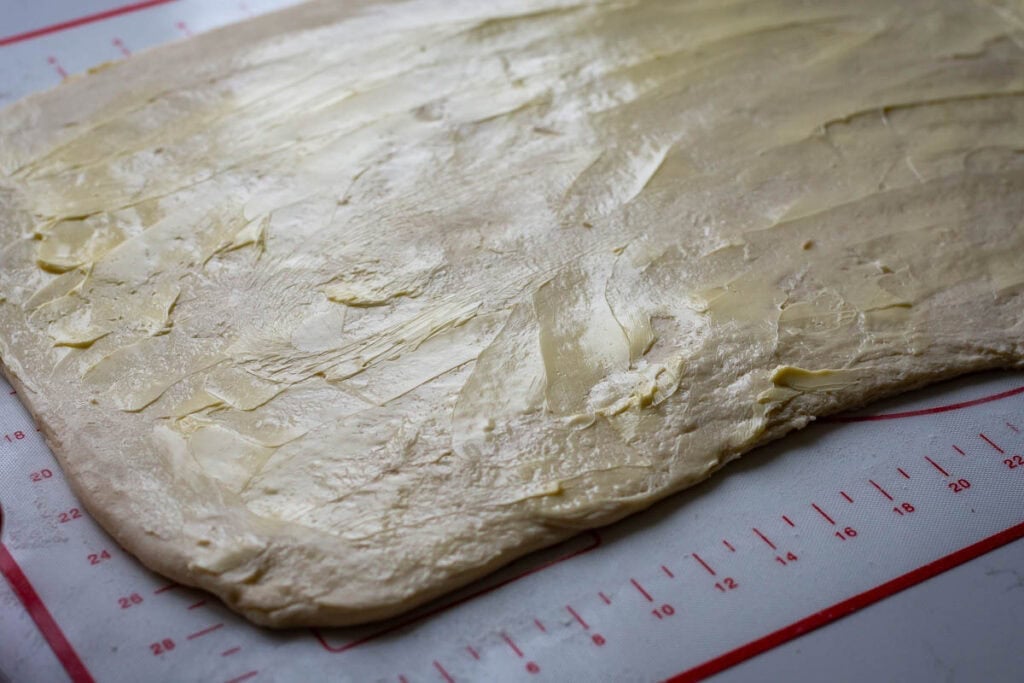
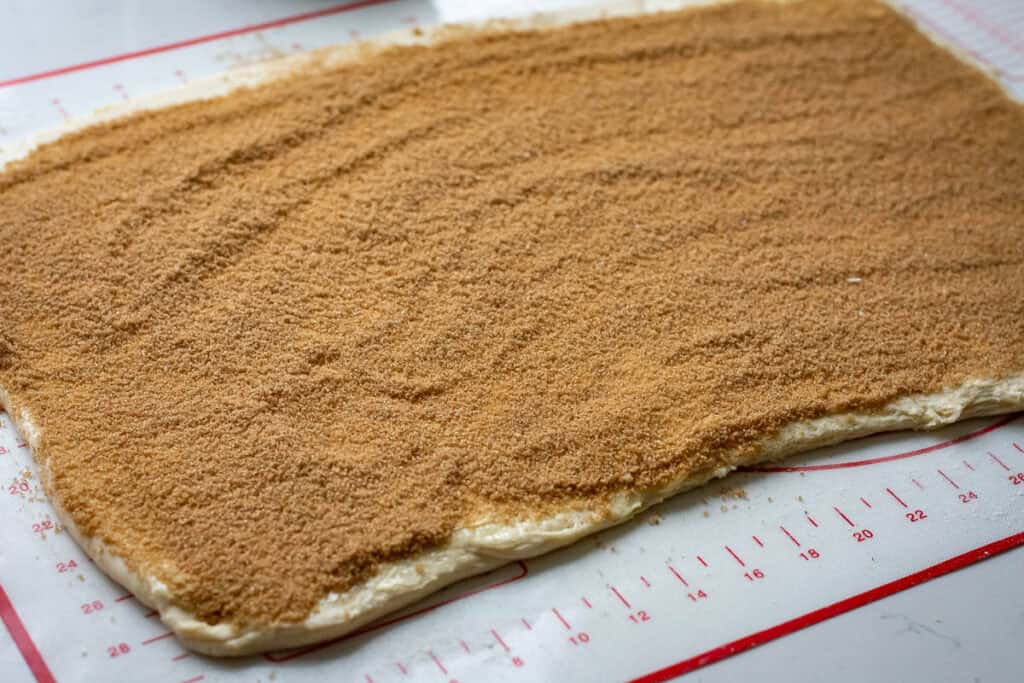
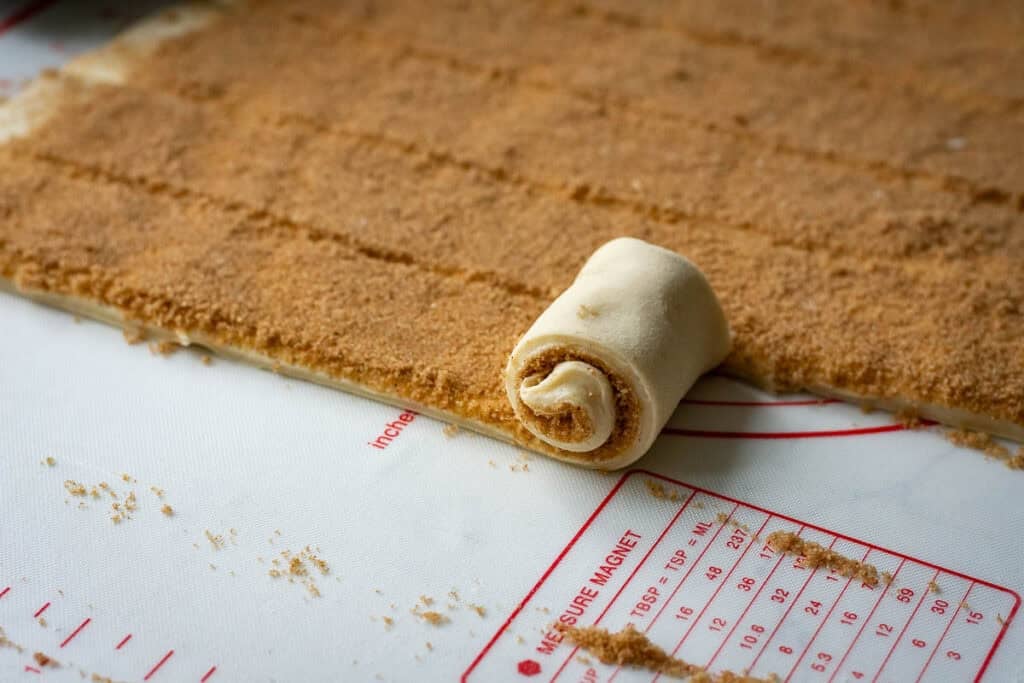
1. Roll the chilled dough into a rectangle roughly 40x30cm, spread with the very soft butter, then scatter over the cinnamon sugar filling. Roll it into a tight log from the long edge, pinch the seam to seal, then cut into nine even buns using a sharp knife or a length of unflavoured dental floss. Alternatively, cut the rolled-out dough, covered in butter and cinnamon sugar, into thin strips, about 4 cm wide, and roll each into a tight roll.
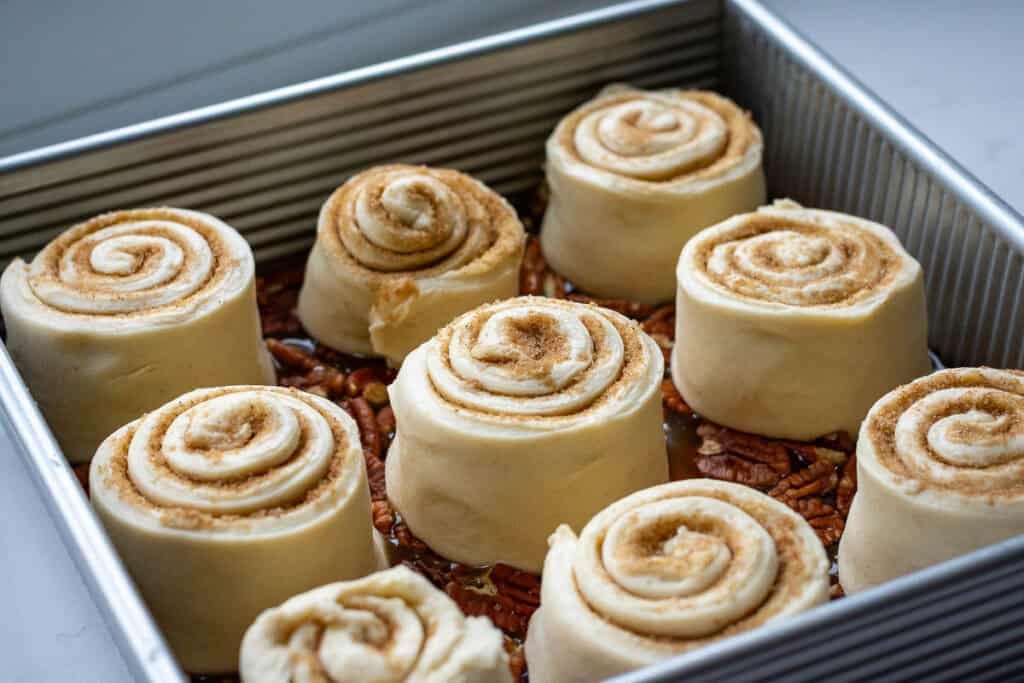
2. Arrange them cut-side up over the pecan caramel in a 3x3 grid, with a little gap between each, they'll expand to meet each other as they proof.
Second Rise
1. Cover loosely and proof at 22-25°C (72-77°F) for four to five hours, until visibly puffy, expanded by around 50-75%, and the buns are touching.
Bake
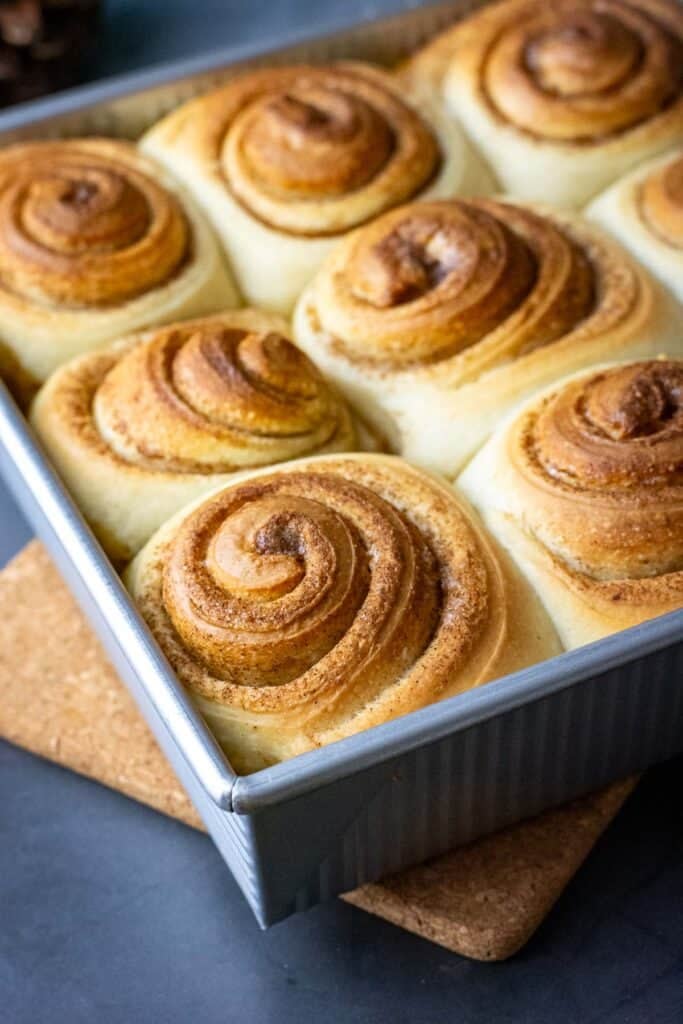
1. Bake at 190°C (375°F) for 28-30 minutes, until golden on top and the caramel is bubbling visibly at the edges of the pan. If the tops are colouring before the caramel's had time to bubble through properly, tent loosely with foil for the last five to ten minutes.
How to Flip Sourdough Sticky Buns Without Losing the Caramel
Cool the buns in the pan for 5-15 minutes, until you have warm, not hot, and syrup-consistency caramel at the base. Any longer and the caramel starts to set and grip the pan instead of releasing cleanly.
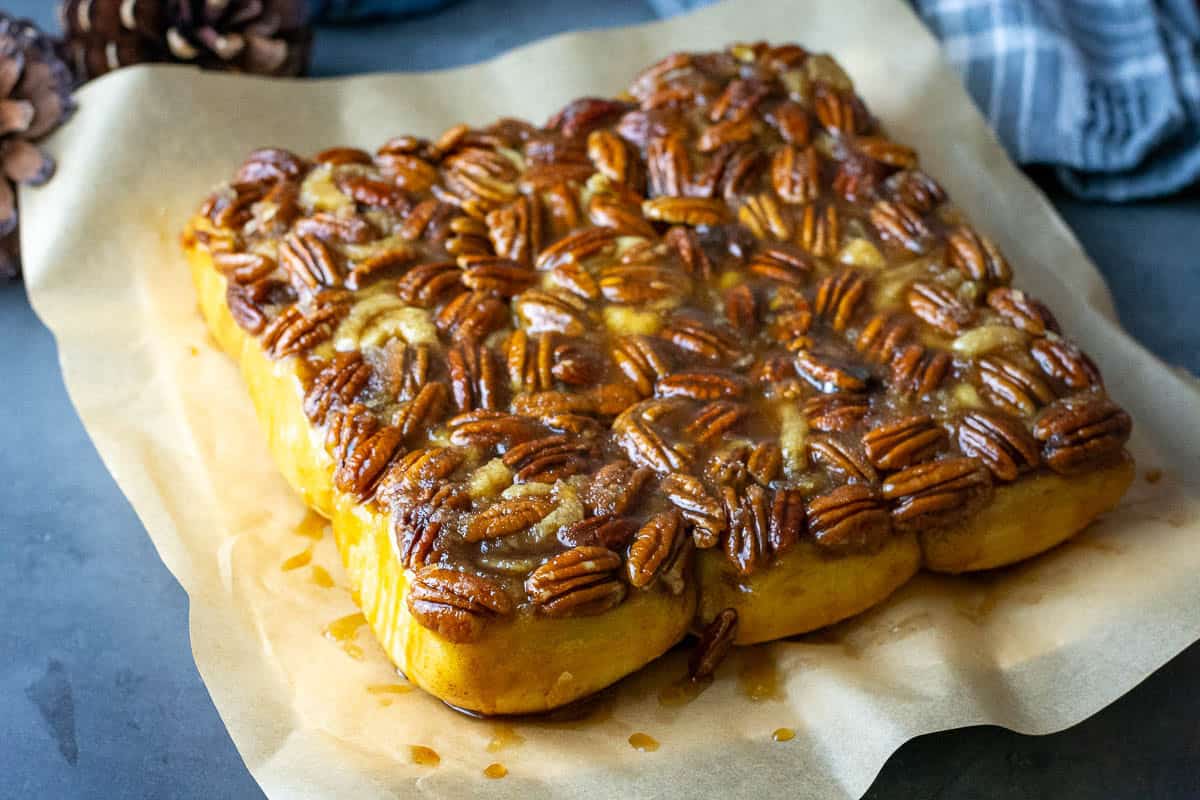
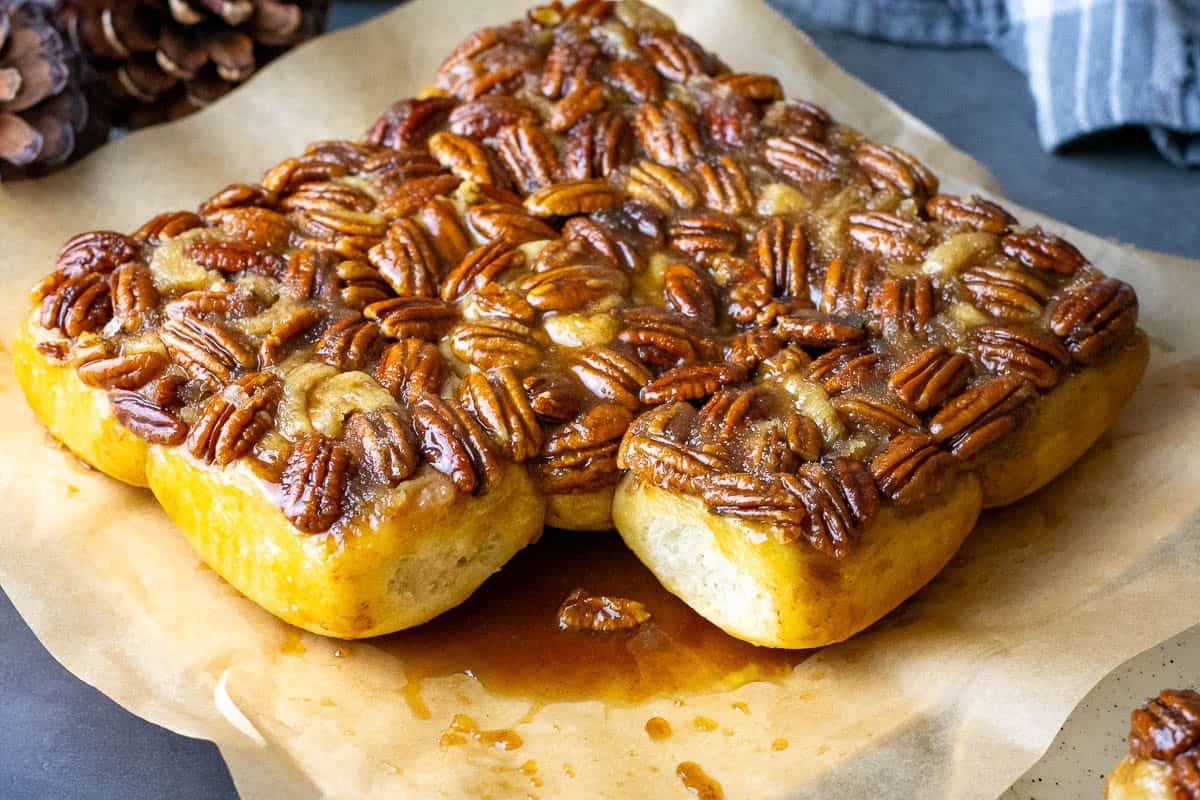
Run a knife around the edge to loosen it, then set a plate or tray upside down over the pan, hold both firmly together, and flip the whole thing over in one confident motion. Don't hesitate halfway through, a slow, tentative flip is far more likely to let caramel run out the side than a quick, committed one.
If a pecan or two stays behind in the pan, that's normal, not a failure. Peel it off and press it back into place on top. If the caramel sets before you've flipped it (you got distracted, it happens to everyone eventually), a short blast back in a low oven, or on the hob under the pan with the heat off, will loosen it enough to try again.
Tips for the Best Sourdough Sticky Buns
🍳 Scaling up to a 9x13 pan? Multiply the dough, caramel and filling by 1.5x rather than spreading this batch thinner across the bigger tin, that's what actually keeps the buns tall instead of flat. You'll get around twelve buns in a 3x4 grid, and the bake time stays close to the original, just check a few minutes either side.
🔥 Watch that the caramel doesn't scorch on the base before the buns are cooked through. If the tops are colouring nicely but the caramel hasn't had time to bubble properly at the edges yet, tent loosely with foil rather than pulling the tray out early.
🧵 Use unflavoured dental floss for clean cuts instead of a knife. Slide it under the log, cross the ends over the top and pull, it slices straight through without squashing the spiral the way a blunt blade can.
🌰 Toast the pecans first if you've got a spare five minutes. They're going into a hot oven either way, but a quick dry-toast beforehand gives you a noticeably deeper, more roasted flavour than pecans that only ever meet the caramel.
⏰ Don't skip the eight to sixteen hour cold proof on Day 1. It's not just a scheduling convenience, chilled dough is dramatically easier to roll out evenly than dough straight from a warm bulk ferment.
Recipe FAQs
Almost always because it cooled too long before you flipped it. Warm caramel releases cleanly, once it drops below warm it starts to set and grip the pan. Cool the buns for 5-15 minutes, checking the caramel consistency by slipping a blunt knife on the side of the pan. When the caramel thickens to a syrupy consistency, flip in one confident motion rather than hesitating halfway through. If it's already set, a short blast back in a low oven, or on the hob under the pan with the heat off, will loosen it enough to try again.
Sticky buns are baked upside down over a caramel and pecan layer, then flipped out so the caramel ends up on top instead of a glaze. Cinnamon rolls, like my Sourdough Cinnamon Rolls, bake right-side up and are usually finished with icing or a cream cheese glaze poured over the top. Both use the same enriched sourdough base and cinnamon filling, the real difference is just what ends up on the outside.
Yes, swap it in at the same 80g quantity. The caramel will set slightly firmer and stickier rather than saucy, since golden syrup holds less water than maple syrup, but it works properly rather than being a compromise. Don't reduce the amount when you swap, the ratio is what keeps the caramel loose enough to pour cleanly over the pecans in the first place.
Storage
These are best the day they're made, while the caramel is still glossy and not fully seeped into the buns. Keep leftovers covered at room temperature for up to two days, warming gently before serving. Expect the buns to turn slightly soggier. We do not recommend freezing these.
More Sourdough Rolls & Enriched Bakes To Try
If you liked the method behind these, it's the same enriched dough I use for my Sourdough Cinnamon Rolls and Sourdough S'mores Rolls, and my Sourdough Apple Cinnamon Rolls, a little less rich if you want something plainer.
For chocolate instead of caramel, my Sourdough Chocolate Babka uses the same long-fermented base, and my Sourdough Babka With Cinnamon is the swirled-loaf version of the same idea. And if pecans are your thing beyond this recipe, that's exactly why the Maple Pecan Sourdough Scones exist in the first place.


LOVE BAKING SOURDOUGH WITH ME?
You can now add Somebody Feed Seb as a preferred source on Google. It only takes a tick box, and tells Google you'd like to see more of my recipes when relevant.
Sticky Sourdough Buns
Equipment
- Stand mixer fitted with a dough hook (or knead by hand)
- 23x23cm (9-inch) square baking pan, high-sided
- Small Saucepan (for the caramel)
Ingredients
For the dough:
- 160 g active sourdough starter 100% hydration
- 320 g strong white bread flour with at least 12% protein
- 30 g granulated sugar
- 6 g (1 tsp) fine sea salt
- 100 g milk
- 2 eggs medium, room temperature
- 100 g unsalted butter softened and cubed
For the pecan caramel:
- 90 g unsalted butter
- 120 g soft light brown sugar dark brown works too, for a deeper, more molasses-y caramel
- 80 g maple syrup (or 80g golden syrup, see Notes)
- a pinch of fine sea salt
- 150 g pecan halves
For the cinnamon filling:
- 60 g unsalted butter very soft
- 100 g soft light brown sugar
- 2 teaspoon ground cinnamon
- a pinch of fine sea salt
Instructions
DAY 1:
- Feed your sourdough starter 4-6 hours before mixing, so it's active, doubled in size and domed on top.
Mixing The Dough
- In the bowl of a stand mixer fitted with the dough hook, combine the flour, sugar and salt. Add the milk, eggs and active starter. Mix on low speed for 5-7 minutes until you have a shaggy, sticky dough.
- Cover and rest for 10-15 minutes. This short rest hydrates the flour and makes the butter easier to work in.
- With the mixer running on medium speed, add the softened butter a few cubes at a time, letting each addition disappear before adding more. Keep mixing for 10-15 minutes until the dough is smooth and elastic and passes the windowpane test (stretch a small piece thin enough to see light through without it tearing).
Bulk Fermentation and Cold Proof
- Transfer to a lightly greased bowl, cover, and leave to bulk ferment at 20-24°C (68-75°F) for 4-6 hours, undisturbed. Enriched dough won't double here, look for a gentle 30-40% rise and a slightly domed, puffy surface.
- Cover tightly and refrigerate for 8-16 hours. The cold proof firms the butter and makes the dough far easier to roll out the next day.
Day 2 :
Caramel Sauce
- Make the caramel: melt the butter, brown sugar, maple syrup and salt in a small saucepan over medium-low heat, stirring until the sugar has dissolved and the mixture is smooth and glossy, about 3-4 minutes. Don't let it boil hard, you just want the sugar to dissolve and the mixture to start gently bubble around the edges of the pan.
- Pour the caramel into the base of a well-greased 23x23cm (9-inch) square pan, tilting so it coats the bottom evenly. Scatter the pecans over the caramel in a single even layer. Don't line the pan with parchment for this layer, you want the caramel to release cleanly when you flip it later.
Shaping
- Turn the chilled dough onto a floured surface and roll into a rectangle roughly 40x30cm.
- Spread the very soft butter over the dough right to the edges. Mix the brown sugar, cinnamon and salt together and scatter evenly over the buttered dough.
- Cut the dough into approx 4 cm wide strips, then roll each into a tight roll and place on the pecan caramel.
- Alternatively, roll up the uncut dough tightly from the long edge into a log. Pinch the seam to seal. Trim the uneven ends, then cut into 9 even buns (about 4cm thick) using a sharp knife or a length of unflavoured dental floss.
- Arrange the buns cut-side up on top of the pecan caramel in a 3x3 grid, with a little gap between each, they'll expand and meet as they proof.
Second Rise
- Cover loosely with oiled cling film and proof at 22-25°C (72-77°F) for 4-5 hours, until visibly puffy, expanded by around 50-75%, and the buns are touching.
- Near the end of proofing, preheat the oven to 190°C (375°F).
- Bake for 28-30 minutes until the buns are golden on top and the caramel is bubbling visibly at the edges of the pan. If the tops are colouring before the caramel's had time to fully bubble through, tent loosely with foil for the last 5-10 minutes.
- Let the buns cool for 5-15 minutes, checking as you go by slipping a blunt knife down the side of the pan to see the caramel at the base, as soon as it looks syrupy rather than liquid, flip straight away, any longer and it'll grab the pan and leave the caramel and pecans stuck to the base instead of on top of your buns.
Finishing
- Run a knife around the edge of the pan to loosen. Place a serving plate or tray upside down over the pan, then, holding both firmly together, flip the whole thing over in one confident motion. Lift the pan away. If a few pecans stay behind, just peel them off and press them back into place.
- Scrape any caramel left in the pan over the top of the buns. Serve warm.
Notes
Nutrition
Leave a Reply