
If you've ever picked up a bag of flour from a local miller and noticed a mysterious number labelled ash content, you're not alone. At first glance, it sounds a bit odd - why on earth would there be ash in flour? Yet the ash content in flour is an important parameter that millers and artisan bakers pay close attention to, because it tells us a lot about the quality of flour, its nutritional value, and even how our sourdough will ferment.

The primary goal of this article is to demystify ash content for the curious home baker. We'll walk through what it means, where it comes from, how it's calculated, and - most importantly - how it affects your sourdough's hydration, fermentation activity, gluten development, crumb, crust and flavour. By the end, you'll have the knowledge to choose the right flour for your style of sourdough baking.
Jump to:
- What is Ash Content in Flour? How It's Calculated?
- Where Does Ash Come From?
- What Determines Ash Content in Flour?
- How is Flour Classified by Ash Content?
- Where to Find Ash Content on Flour Labels
- Ash Content and Other Flour Characteristics
- Ash Content in Sourdough Baking
- Practical Tips for Sourdough Bakers
- More Sourdough Baking Tips
As an Amazon Associate I earn from qualifying purchases, at no extra cost for you! Thank you!
What is Ash Content in Flour? How It's Calculated?
In simple terms, ash content in flour is a measure of the flour's inorganic mineral content. When a sample of flour is heated to a very high temperature (usually 550-600°C) in a lab, all the organic matter - starch, protein, fibre - is burned away. What remains is a tiny pile of inorganic minerals (things like calcium, potassium, magnesium, phosphorus). The amount of ash left behind is weighed and expressed as a percentage of the flour's original weight.
So, if the ash content of the flour is 0.55%, that means for every 100g of flour, about 0.55g of inorganic minerals remain after burning. This is sometimes called flour ash or simply ash.
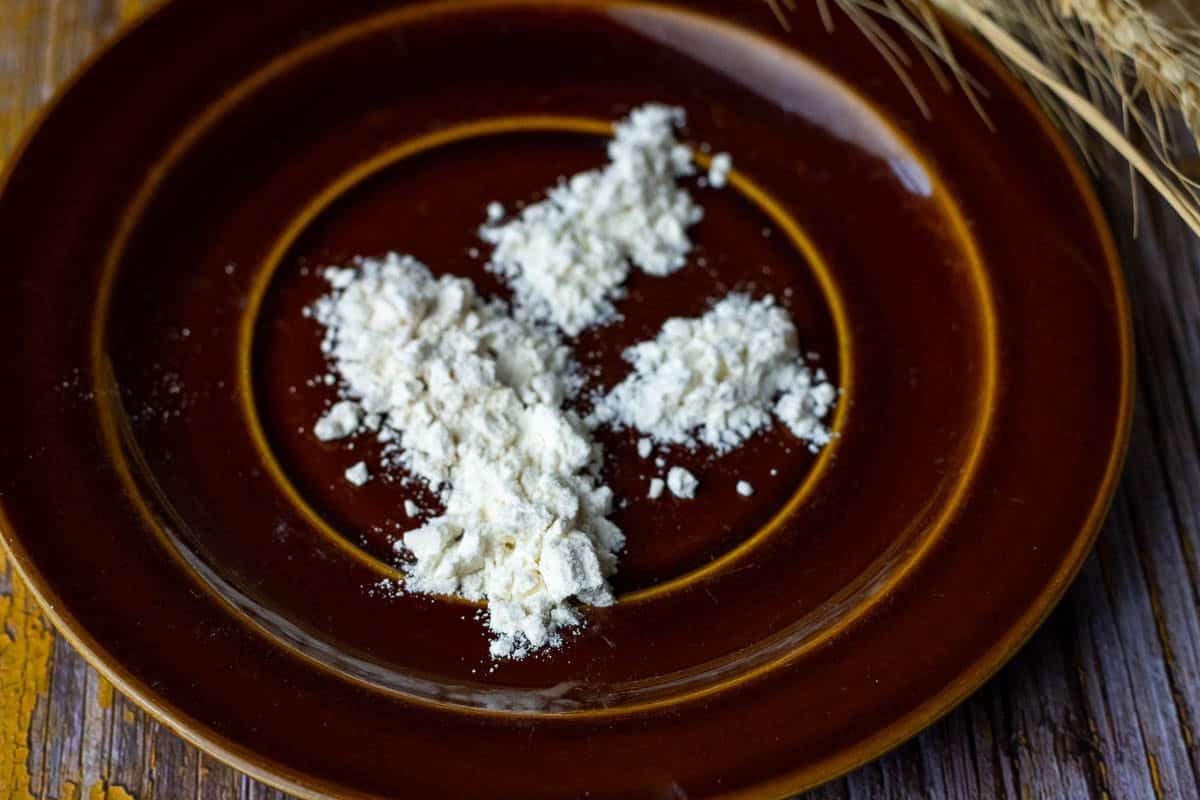
For bakers, this mineral measure is a shortcut: it tells us how much bran and germ made it into the flour during the milling process. More bran and germ = higher mineral content = higher ash content.
Where Does Ash Come From?
To understand ash content, we need to look at the parts of the wheat kernel (also called the wheat berry):
- Bran: the outer layer, packed with fibre and minerals.
- Germ: the embryo of the seed, rich in vitamins, oils, and nutrients.
- Endosperm: the starchy inside, mainly carbohydrates and some protein.

The inorganic minerals are concentrated in the aleurone layer, bran, and germ. The pure endosperm has very little. That's why a wholemeal flour or whole wheat flour (which contains the entire wheat kernel) has the highest ash content, while a refined patent flour made from just the centre of the endosperm has a very low ash content.
Laboratories calculate ash by taking a sample of the flour, carefully controlling moisture content and moisture determination, then burning off the organic materials. Newer techniques like near-infrared spectroscopy or Raman spectra are also used in the milling industry, but the high temperature burn test remains the gold standard.
Does Ash Content Only Apply to Wheat Flour?
Ash content isn't limited to wheat. It applies to all cereal flours (rye, spelt, einkorn, emmer, etc.), since every grain has bran, germ, and endosperm, and therefore a measurable mineral content of the flour.
Different grains naturally have different levels of minerals in their outer layers, so, for example, rye and einkorn often show a higher ash content than modern wheat, even at similar extraction rates.
What Determines Ash Content in Flour?
Several factors influence the final ash content of the flour you buy:
Milling process & extraction rate
- A lower extraction rate (say 70%) removes much bran and germ → resulting in whiter flour with lower ash content.
- A higher extraction rate (85-90%) keeps more of the grain → producing high extraction flours with higher mineral content.
Milling style
- Roller milling (used on an industrial scale) can precisely separate the parts of the wheat kernel, producing flours with very controlled ash levels.
- Stone milling crushes the entire wheat kernel and is harder to sift precisely, so stoneground flours often have higher ash content and a darker colour.

Wheat variety
- Hard wheat flours (e.g., durum wheat, strong bread wheats like Triticum aestivum) often yield higher gluten content and sometimes higher mineral levels in the bran.
- Soft wheat flours (used for cake flour, all-purpose flour or self-rising flour) are usually paler with lower protein content and lower ash content.
Growing conditions
- The soil and climate where the raw wheat grows influence its inorganic minerals. Wheat grown in mineral-rich soils can produce flour with naturally higher ash content.
How is Flour Classified by Ash Content?
Many European flours are classified by their ash content. This is why you'll often see numbers on French flour or Italian flour bags. For example:
- French flour: T45 (very white, pastry flour, ~0.45% ash), T65 (bread flour, ~0.65% ash), T110 (semi-wholemeal, ~1.10%), T150 (wholemeal, ~1.50%).
- Italian flour: Tipo 00 (very white, ~0.55%), Tipo 1 (~0.9%), Tipo 2 (~1.2%), Integrale (wholemeal, ~1.5%+).
- German flour: Type 405, 550, 812, etc. - the number roughly equals the ash in mg per 100g.
In these systems, a higher number = higher ash content = more bran and germ. This is why T65 is ideal for strong bread flour, while T45 works for delicate pastries.
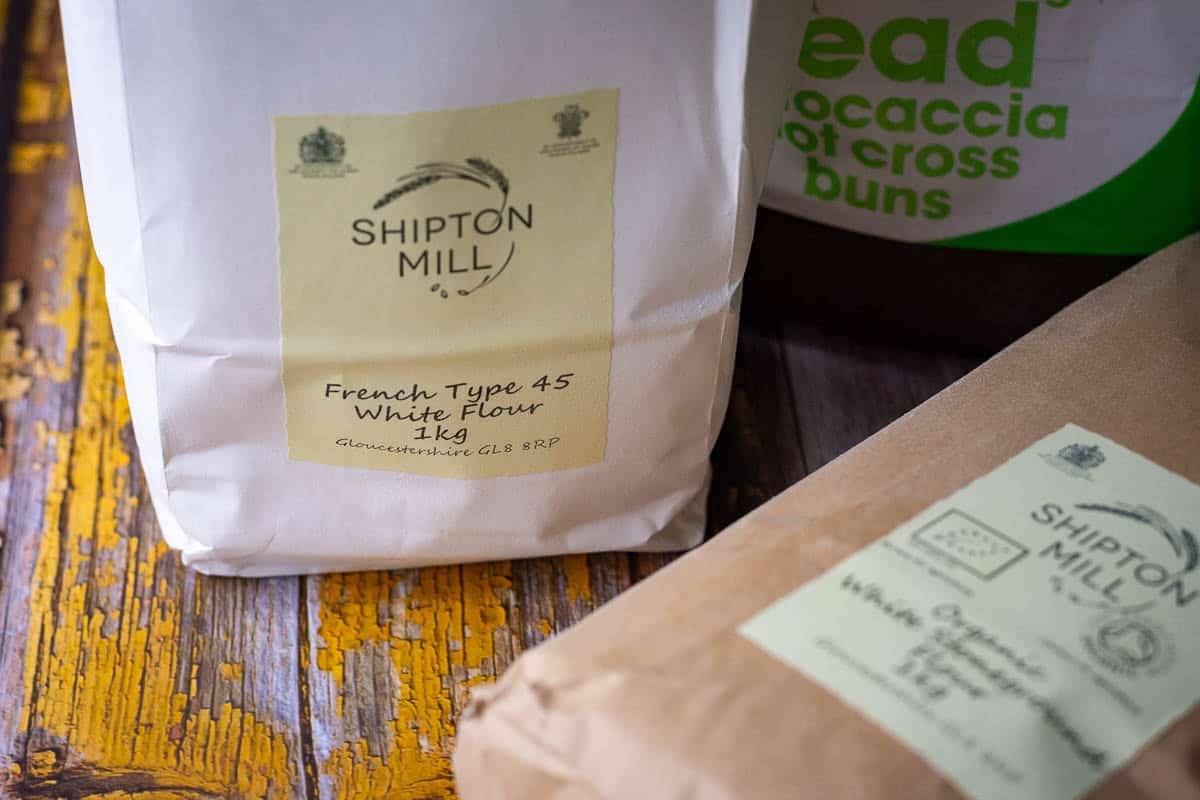
In the UK or US, flours are more often sold simply as all-purpose flour, bread flour, cake flour, etc., and ash content isn't always listed.
Where to Find Ash Content on Flour Labels
Not every bag of flour will list ash, especially in the UK or US, where protein content is the headline spec.
But on European flours or from small artisan mills, you'll often see ash % listed near the nutrition table.
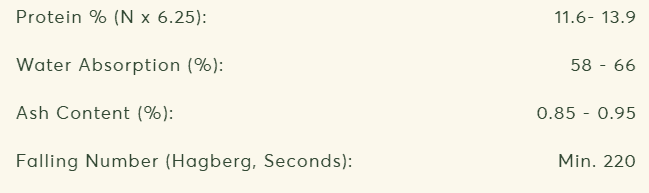
If you can't find it, the flour's classification (Tipo 00, T65 etc) or its description (e.g., "patent flour", "high extraction flour") gives you clues. And if all else fails: the darker the colour of your wheat flour, the higher the ash content.
Ash Content and Other Flour Characteristics
Ash doesn't act alone. It interacts with other qualities of flour:
- Water absorption: higher ash means more bran → flour is thirstier, dough needs more hydration. Learn more about Water Absorption Capacity in Flour.
- Protein content: ash and protein aren't directly linked, but higher ash flours often have slightly higher gluten content. Still, you can have a low ash content flour with strong gluten (like some hard wheat flour), or higher ash content with lower protein content (like some soft wheat flours).
- Nutritional value: more bran and germ means more dietary fibre, vitamins, and minerals → higher ash means higher nutritional value.
- Colour: higher ash = darker, nuttier, rustic look; lower ash = lighter, whiter crumb.

Ash Content in Sourdough Baking
Here's where things get practical for us home bakers.
- Hydration: Higher ash flours absorb more water. That's why, if you switch from a low ash content flour to a wholemeal flour or stoneground flour, you may need to increase your sourdough hydration.
- Fermentation activity: Minerals are yeast and bacteria food! A flour with higher mineral content boosts fermentation activity, so bulk proofing may run faster.
- Gluten development: Bran particles interfere with gluten strands, so higher ash can weaken gluten strength and give a denser crumb.
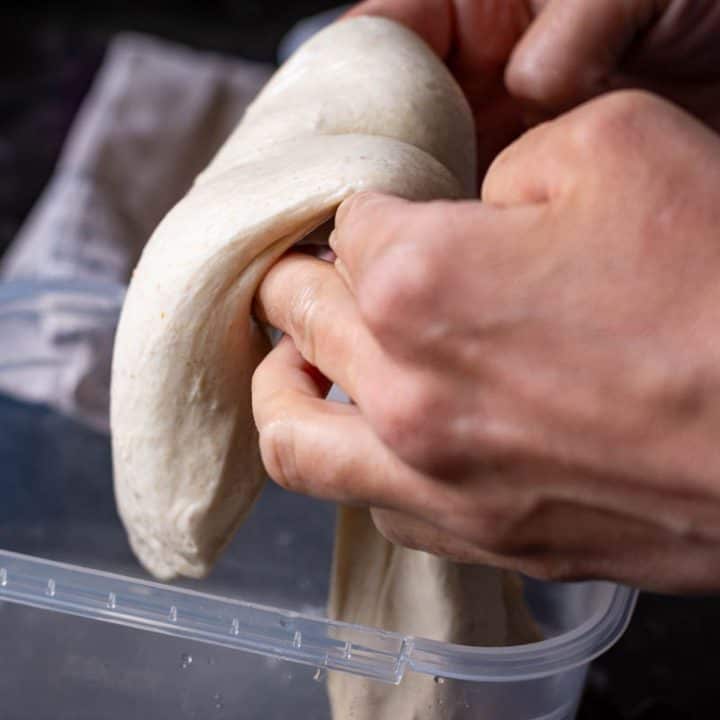
- Dough handling: High ash doughs feel rougher and less stretchy, while low ash white flours feel silky and extensible (more on dough strength and stretchiness can be learned by looking at flour P/L ratio and flour W index).

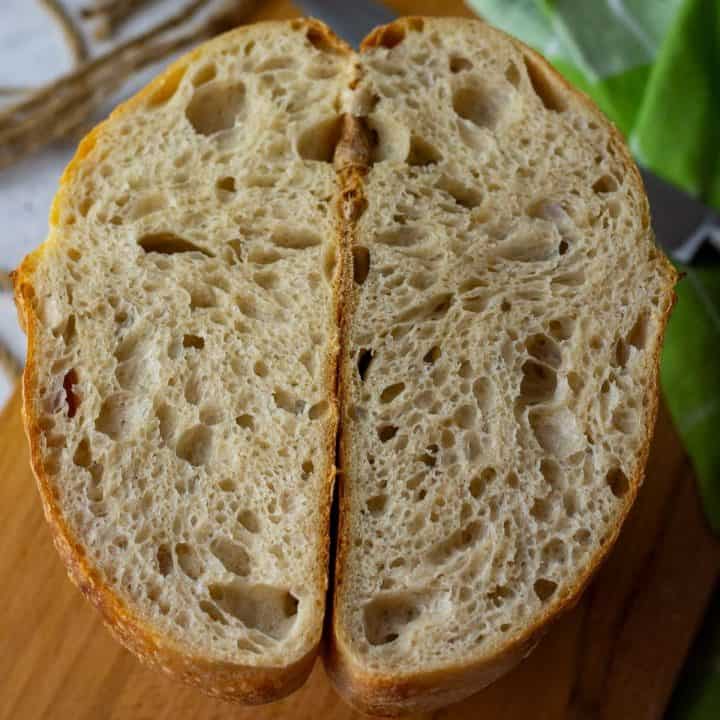
- Crumb: White flour (low ash) = open, airy crumb. Whole grain flour (high ash) = denser, more rustic crumb.
- Crust: Higher ash leads to a thicker, darker, more flavourful crust. Lower ash gives thinner, paler crusts.
- Flavour: Low ash = mild, sweet; medium ash = balanced, nutty; high ash = deep, earthy, complex.
Practical Tips for Sourdough Bakers
There isn't one right type of flour to use for sourdough.
- Start simple: If you're learning, begin with a lower ash content flour (like a strong white bread flour) for predictable results.
- Blend flours: Mix a little wholemeal flour or high extraction flour (up to 25%) into white doughs for more flavour without sacrificing structure. French Sourdough: Pain De Campagne is a great place to start!
- Adjust water: Expect to add more water with higher ash content flours.
- Watch fermentation: Dough with more minerals ferments faster, so don't overferment.
- Experiment: Try different types of flour (spelt, durum wheat, heritage grains) and notice how the ash level changes flavour and texture.
- For sourdough pastries, like sourdough croissants or sourdough pain au chocolat, use low-ash flour types.
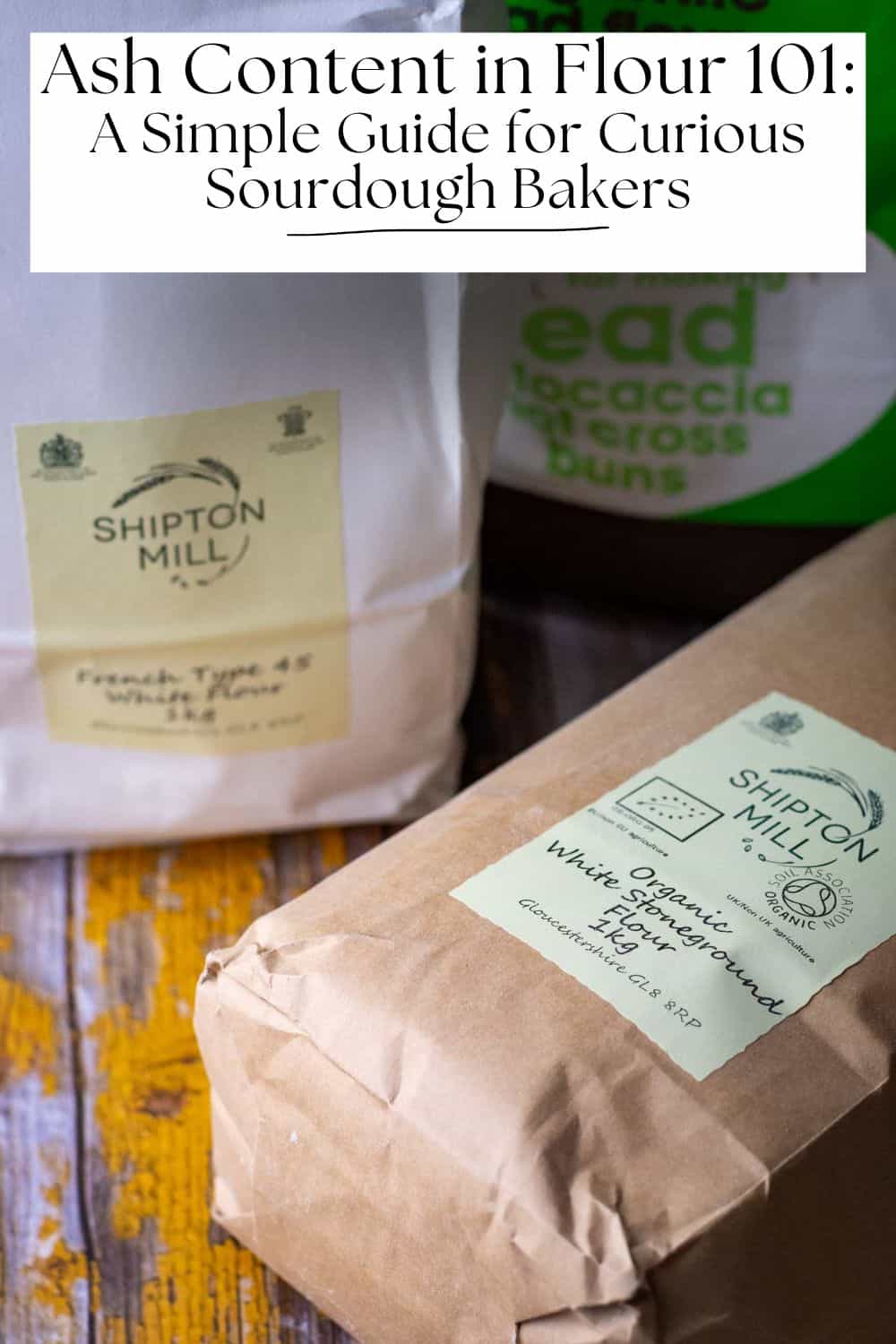
TOP TIP: Stoneground wheat flour with higher ash content does miracles for your sourdough starter. I have been almost exclusively feeding my wheat starter with Organic Shipton Mill Stoneground Flour, and my starter has never been healthier. It hardly formed any hooch after being left in the fridge for 3 weeks whilst I was away! And it only took 2 refreshes to bring it back to its full potential.

More Sourdough Baking Tips
If you enjoyed learning about ash, I've got more guides on protein content in flour, sourdough hydration, fermentation timing and beyond - check out my other sourdough articles below.
- Baking Sourdough With the Lid On the Whole Time (Why It Works)
- Reading Your Sourdough Starter: What Bubbles, Smell and Rise Actually Tell You
- Best Flour For Sourdough Beginners: Starter Feeding & Bread
- How To Know When Sourdough Starter Is Ready And At Its Peak
- Sourdough Glossary For Beginners
- Sourdough Equipment For Beginners: The Tools I Actually Use
- Flour for Sourdough Baking: How to Choose The Right Type
- Why Bake Sourdough? A Great Hobby To Start In The New Year






Leave a Reply