
If you've ever wished your loaf of sourdough came with a little extra attitude, this Three Cheese Sourdough Bread is your sign. It's crusty on the outside, chewy inside, and studded with pockets of melty Gruyere and Cheddar, all wrapped up with the salty backbone of Parmesan. The result? A loaf so flavour-forward that it barely needs butter. (Barely. I still butter it.)

Jump to:
As an Amazon Associate I earn from qualifying purchases, at no extra cost for you! Thank you!
Whether you're building your confidence with sourdough mix-ins or you've been tucking herbs and olives into your sourdough loaves for years, this one is worth every fold, stretch and cube of cheese.
Adding Cheese To Sourdough Bread
Cheese and sourdough are an iconic double-act, but they need a little choreography to perform properly. Add cheese too early, and you risk slowing fermentation or tearing gluten. Add it too late, and you end up with cheddar dotted only around the edges rather than the chewy crumb you were dreaming of.
Here's what's happening - and why this method works:
We split the cheese additions into two stages to preserve both structure and flavour.
1. Midway through bulk fermentation (3rd coil fold):
- We incorporate finely grated Parmesan.
- This gives the bread dough an immediate boost in savouriness without interrupting the gluten development in the early stages.
- Parmesan also draws some moisture from the dough, so you may need slightly more hydration than you'd normally use at this level of protein.
2. End of bulk fermentation (shaping stage):
- Cubed Cheddar and Gruyere are laminated into the dough, just before shaping.
Technically, you can add cubed cheese during the fold process, but I find laminating at the end leads to better distribution, and more control over keeping cubes away from the surface. Surface cubes scorch, turning the top of the loaf bitter. Lamination keeps the best bits inside - where they belong.
The dough needs the first part of bulk fermentation to be uninterrupted so the gluten network can establish strength.
Grated Parmesan blends beautifully into the dough - that's its job here.
Cubed cheeses provide pockets of molten flavour, but too early and they stretch, tear or clump.
Hard cheeses like Parmesan flavour the dough. Softer varieties (Cheddar and Gruyere) melt into ribbons of cheesy goodness, but if grated, they vanish into the crumb.
Cubes = proper flavour pockets.
Grate for taste; cube for impact. We cube cheddar in our Marmite Sourdough Bread recipe too.
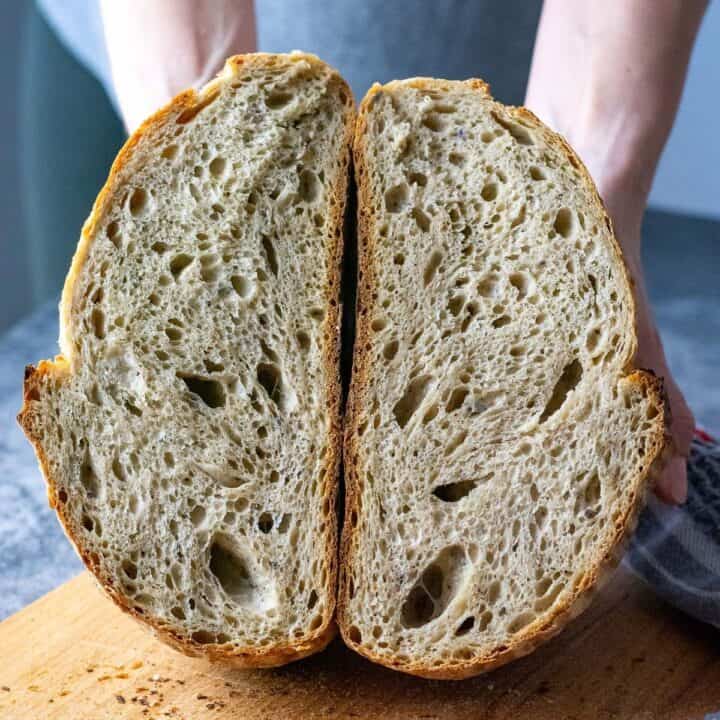
This sourdough loaf gets lots of oven spring, but don't be surprised if it deflates slightly as it cools (cheese hardens and large steam pockets tend to close up).

Ingredient Notes
A few helpful notes before you begin:
- Strong bread flour: Look for 12%+ protein. It gives the gluten strength needed to hold the cheese. You may replace up to 20% of white flour with whole wheat flour or rye flour, but you may need to increase the hydration of the sourdough.
- Salt: Essential - don't reduce. Cheeses are salty, but the dough still needs proper seasoning.
- Active sourdough starter (100% hydration): At its peak.
- Water: Adjust slightly depending on how strong your flour is. Use luke warm water to kickstart bulk fermentation if you're short on time.
- Parmesan cheese (finely grated): Brings rich flavours and seasons the crumb. Pecorino is a bold substitute.
- Sharp Cheddar cheese + Gruyere (cubed): Both melt beautifully, creating layers of flavour. Swap one for Red Leicester or Emmental, but keep at least one with strong character.

Find ingredient quantities, detailed instructions and nutritional information in the recipe card at the bottom of the post.
Cheese To Use and To Avoid For Best Results
Alternative Cheese For Grating: Choose any other hard Italian cheese instead of Parmesan, like Grana Padano, Pecorino Romano.
Alternative Cheese For Cubing: Red Leicester, Emmental, Gouda, Comté, Scamorza.
Best approach: One hard cheese (e.g. Parmesan) for flavouring the dough and two melting cheeses for marbling in the crumb.

Avoid:
- Soft fresh cheese (mozzarella balls, ricotta, cream cheese) - too wet, weakens the dough.
- Blue cheeses - strong ammonia notes can dominate and overpower.
Step-By-Step Method
DAY 1
Feed Your Starter
1. Feed your active starter first thing and leave to rise at warm room temperature until doubled (4-5 hours).
Mix the Dough
1. Add flour + salt to the bowl of a stand mixer.
2. Pour in water + active starter.
3. Mix 10-15 minutes until smooth and elastic - soft, slightly sticky, shaggy dough is fine.
4. Scoop into a large bowl, cover with a damp tea towel / plastic wrap (cling film), and rest 30 minutes.
Bulk Fermentation + Coil Folds
1. Perform 4 sets of coil folds, every 30 minutes.
- On the third fold, sprinkle grated Parmesan in and fold to distribute.
- The dough strengthens and becomes bouncy as it develops.
2. Cover and let the dough rest 2-3 hours until puffy.
Tip: Aim for ~50-75% dough rise; judge by look & feel, not the clock.

Laminate the Cubed Cheese + Shape
1. Dust a clean countertop with rice flour.
2. Tip dough out smooth-side down; stretch into a rectangle.
3. Scatter Gruyere + Cheddar in thirds and fold (laminate) for even distribution.
4. Roll into a smooth ball.
5. Place the shaped dough into a well-floured proofing basket, seam-side up.
Cold Second Rise
1. Cover with a light tea towel or place inside a loose plastic bag.
2. Refrigerate 12-36 hours for its final rise.
DAY 2
Preheat & Score
1. Preheat oven with a preheated Dutch oven to 240°C.
2. Invert dough onto parchment paper.
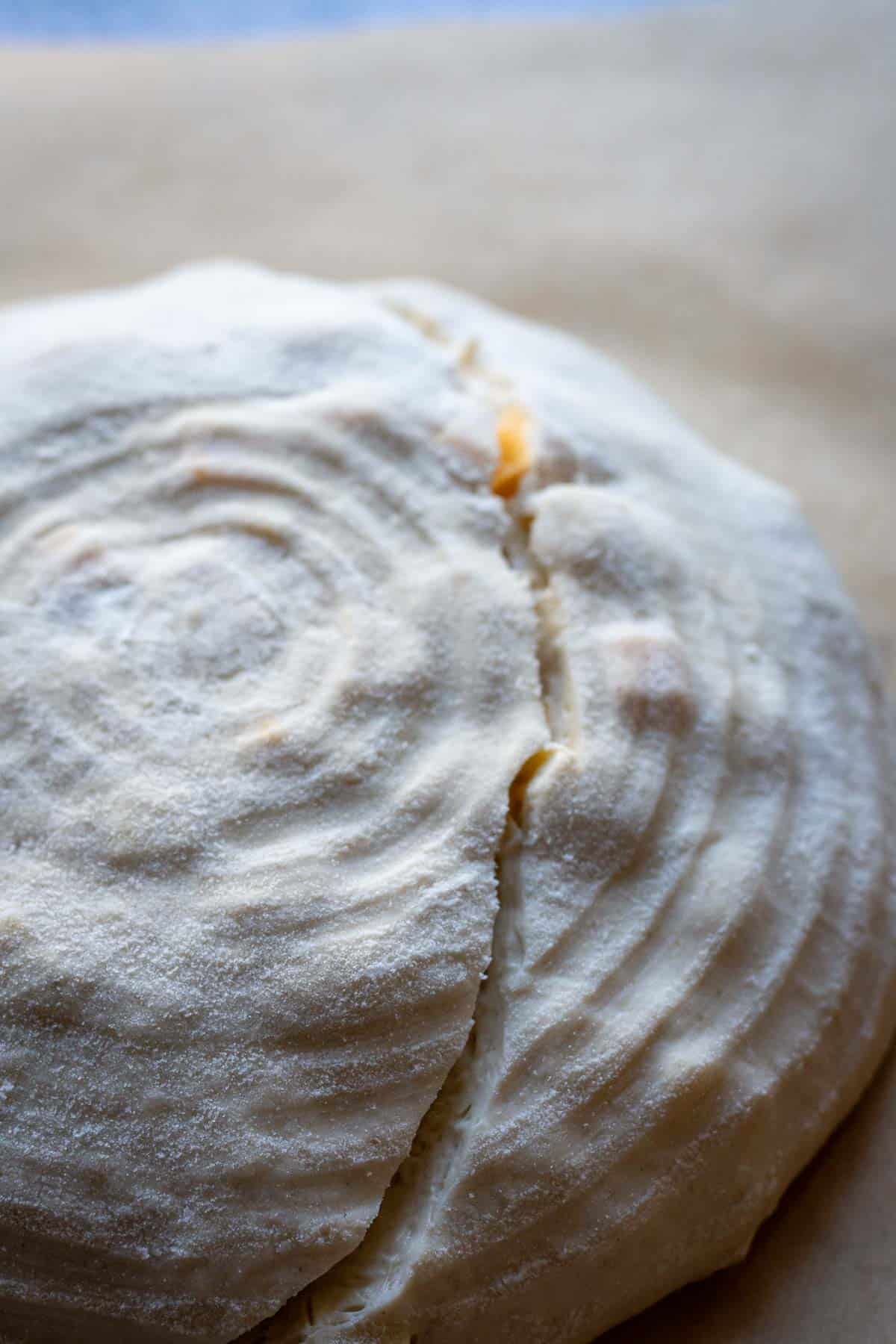
3. Score deeply at a 30-45° angle.
4. You may hit cubes - be confident.
Bake
1. Bake 30 minutes covered.
2. Reduce to 200°C, uncover, and bake another ~20 minutes until golden brown.
Cool
1. Lift onto a wire rack.
2. Cool fully before slicing (the hardest part).

Serving Suggestions
This Three Cheese Sourdough Bread is versatile:
- With softened butter and cracked black pepper
- Toasted with a fried egg and herbs
- Dunked into tomato soup
- Grilled cheese, because we can
- Dipped into olive oil and balsamic vinegar
- Torn into chunks for cheese fondue
- Served with cured meats + olives
Or go minimalist - warm slice, nothing else. That's the good stuff.
Storage
This sourdough cheese bread keeps well because of the cheese's fat content.
Room temperature: Store in a breathable bread bag or wrapped in cloth. Best within 2-3 days.
Freezing whole: Wrap in plastic wrap, then foil. Freeze up to 2 months. Thaw, spritz with water and refresh in a hot oven for 5 minutes before slicing.
Freezing slices: Freeze between pieces of parchment paper. Pop into toaster - instant cheesy heaven.
More Homemade Sourdough Bread Recipes With Inclusions
If you love mix-ins as much as I do, here are more sourdough recipes you'll want on repeat:


Three Cheese Sourdough Bread
Equipment
- Bench Scraper
- Proofing Basket
- Razor Blade or Bread Lame
Ingredients
- 400 g strong bread flour with at least 12% protein content
- 7 g salt
- 160 g active sourdough starter 100% hydration
- 250 g water
- 50 g parmesan finely grated
- 70 g Gruyere cheese cubed
- 70 g Cheddar cheese cubed
Instructions
DAY 1
- First thing in the morning, feed the sourdough starter and leave it in a warm place (ideally between 21-27°C), loosely covered, for 4-5 hours. The starter should double in size by then. If it doesn't, it might need a few more good feedings to be ready. If it doesn't, head to our article Sourdough Starter Not Doubling Within 4 Hours. How To Fix It?
Mixing The Dough
- In a bowl of your stand mixer, combine flour and salt.
- Add the water and active sourdough starter. Run the stand mixer for 10-15 minutes until your dough is smooth and elastic. It does not need to pass the windowpane test just yet (the gluten will continue developing when we fold the dough during the bulk fermentation period).
Bulk Fermentation and Coil Folds
- Scoop the dough into a large bowl, cover with a damp kitchen towel or plastic wrap (a.k.a. cling film) and leave it in a warm place (21-27°C) for 30 minutes.
- After 30 minutes, with cold wet hands, perform the first set of coil folds. Simply lift the bread dough with both hands from the sides and tuck it under to form a coil. Rotate the bowl a quarter turn and coil again. Cover the bowl again, and let the dough rest for 30 minutes again.
- Repeat the coil folds 3 more times. On the third fold, add the grated parmesan, and stretch and fold it into the dough, aiming to distribute it evenly. After the fourth coil fold, your dough should feel a lot less sticky, feel strengthened and elastic.
- Cover the dough and leave it to finish bulk fermentation for 2-3 hours.
Adding Mix-Ins and Shaping
- Once your sourdough has finished bulk fermentation, scoop it out onto a work surface dusted lightly with some rice flour. Stretch the dough out into a rectangle.
- Scatter ⅓ of Gruyere and ⅓ of Cheddar in the centre middle ⅓ of the dough, and fold one side over. Scatter ½ of the remaining mix-ins on the folded-over surface and cover them with the other side of the dough. Finally, scatter the remaining mix-ins across the long strip of dough and roll the dough tightly.
- Place the dough ball into a well-floured banneton basket (or any proofing basket alternatives). We recommend using rice flour for dusting your proofing baskets. The smooth side of the sourdough ball should be at the bottom, with the seam side up.
- Pinch the seam together with your fingers, if the dough starts spreading in the bowl to make sure the dough is tight. Sprinkle with some flour, and cover the dough with a clean fabric napkin or small lightweight tea towel.
- If your fridge tends to dry things out, place the proofing basket in a large plastic bag, but I find it unneccesary. Then place the whole thing in the fridge for its final rise (a.k.a. second rise) in the fridge for 12-36 hours.
DAY 2
- The next day, place the Dutch Oven in the oven, and preheat it to 240°C (typically, it is the highest temperature home ovens will go to) with the Dutch oven in it. It needs to be piping hot!
Scoring The Sourdough
- Once the oven is hot, take the dough out of the fridge.
- Invert the dough gently onto a large sheet of parchment paper. If your dough was properly bulk fermented and shaped correctly, it should not spread once inverted.
- Using a bread lame or a razor blade, score the dough deeply (approximately 1cm deep) at a 30- 45º angle. One single deep slash is all that's needed for that sought-after sourdough "ear". The blade may catch on the cheese cubes, but be assertive.
Baking and Cooling
- Take the hot Dutch Oven out of the oven, take the lid off, and lift the sourdough into it, holding the edges of the parchment paper. Be mindful of how you lift the paper. Sometimes, the scored slash can begin to close up during this process. To prevent this, lift the parchment from the sides that won't push the two edges of the scored dough back together.
- Place the lid back on the Dutch Oven and place the bread into the hot oven for 30 minutes.
- After 30 minutes, reduce the oven temperature to 200℃, take the lid off, and return the sourdough to the oven for another 20 minutes to turn golden brown.
- Once baked, take the Dutch Oven out of the oven. Lift the bread out by holding the corners of the parchment paper. Place the bread onto the wire rack, and slide the parchment paper from underneath the loaf.
- Leave the three cheese sourdough bread to cool down to room temperature before slicing.
Nutrition




Leave a Reply