
Chocolate sourdough bread combines cocoa powder and dark chocolate chips with a naturally leavened, long-fermented dough, giving you a rich, not-too-sweet loaf with all the tang and chew of a proper sourdough boule. When I first started testing this recipe, I assumed it would end up firmly in dessert territory, jam on top, maybe a bit of cream cheese. It's brilliant that way, but it turns out this loaf is just as happy sitting next to a bowl of rich beef stew as it is next to a jar of jam.

Jump to:
As an Amazon Associate I earn from qualifying purchases, at no extra cost for you! Thank you!
Why Chocolate Sourdough Bread Works So Well
Sourdough's natural tang plays off cocoa's bitterness in a way regular yeasted bread can't quite manage. The lactic and acetic acid built up over the long ferment cuts through the richness of the cocoa and dark chocolate, so instead of tasting like chocolate cake, this loaf tastes like bread first and chocolate second, with just enough sweetness to keep it interesting.
It's not trying to be a dessert. It just happens to double as one.

Fancy something chocolatey but simple? Try our Sourdough Chocolate Crinkle Cookies!
Ingredient Notes
- Strong bread flour: you can substitute up to 15% with wholemeal flour, though expect a denser crumb.
- Cocoa powder: we've tested this with both regular unsweetened cocoa and raw cocoa powder. For a darker, more intense colour, use Dutch-processed cocoa.
- Salt: we use sea salt.
- Sugar: brown sugar gives the best flavour here, though white granulated works too.
- Active sourdough starter: needs to be bubbly and active, 100% hydration.
- Water: slightly warm water speeds up bulk fermentation by giving the wild yeast a head start. Cocoa powder absorbs more water than flour alone, so the dough will feel stiffer than you might be used to.
- Chocolate chips: we use dark chocolate chips for the deepest flavour, but milk or white chocolate work just as well. Between the cocoa powder in the dough and the chips folded through it, this is properly double chocolate sourdough bread.

You can find the ingredient quantities, detailed instructions, and nutritional information on the recipe card at the bottom of the post.
What Chocolate to Use
Dark chocolate chips give the deepest, least sweet result and are what we use most often. Milk or white chocolate chips work too if you want a sweeter loaf, and a chopped chocolate bar is fine in a pinch, though it tends to melt into the dough rather than stay in distinct pockets the way chips do.
Variations
This is a brilliant base recipe on its own, but there's plenty of room to play with it:
- Swap 60ml of the water for cooled strong double espresso. Caffeine can slow bulk fermentation slightly, but the coffee flavour it adds is worth the wait. We use coffee in our Coffee and Date Sourdough Bread recipe.
- Fold in a handful of dried cherries, raisins or pecans alongside the chocolate chips, or try our Chocolate Cherry Sourdough Bread for a version with cherries built in.
- A teaspoon of vanilla extract or vanilla bean paste works well here too.
- Cardamom and sourdough are a great pairing. If that sounds good to you, our Sourdough Cardamom Buns are worth a look.
- Fancy something chocolatey but simpler? Try our Sourdough Chocolate Crinkle Cookies or Sourdough Discard Brownies.
Step-By-Step Method
Before you begin, make sure your sourdough starter is fed, and becomes active and bubbly before you use it in the dough. Once it at least doubles in volume, you are ready to mix the dough.
Day 1
1. Once your starter is active and bubbly, combine the flour, cocoa powder, salt and sugar in the bowl of a stand mixer.

2. Add the water and starter, then run the mixer with a dough hook for 10 minutes on medium speed. Scoop the dough into a clean bowl, cover, and leave somewhere warm for 30 minutes.
3. Perform your first set of coil folds: wet your hands, lift the dough from the sides and fold it into the centre to form a coil, then rotate the bowl a quarter turn and repeat. Cover and rest for 30 minutes.
4. Repeat the coil folds twice more at 30-minute intervals, then rest the dough, covered, for 30 minutes.


5. Scatter half the chocolate chips over the dough and fold all four corners into the centre to encase them.
6. Flip the dough, scatter the rest of the chips, and fold again. Flip once more, cover, and leave to rise for 30 minutes.
7. Do two more sets of coil folds, 30 minutes apart, to distribute the chocolate chips evenly.
8. Cover and leave the dough to finish bulk fermentation for 2 to 3 hours. It should grow by about 50%, not double, since cocoa powder weakens the gluten structure slightly compared with a plain dough.


9. Tip the dough onto a floured surface and shape it into a tight ball using a dough scraper. Place it smooth side down into a well-floured banneton (rice flour works well for dusting).
10. Cover with a cloth, then a plastic bag or shower cap to stop it drying out, and refrigerate overnight, or up to 36 hours.

Day 2
1. Preheat the oven to 240°C with your Dutch oven inside.
2. Take the dough out of the fridge and invert it onto a large piece of parchment paper. Brush off any excess flour, then score the top with a sharp razor or bread lame.
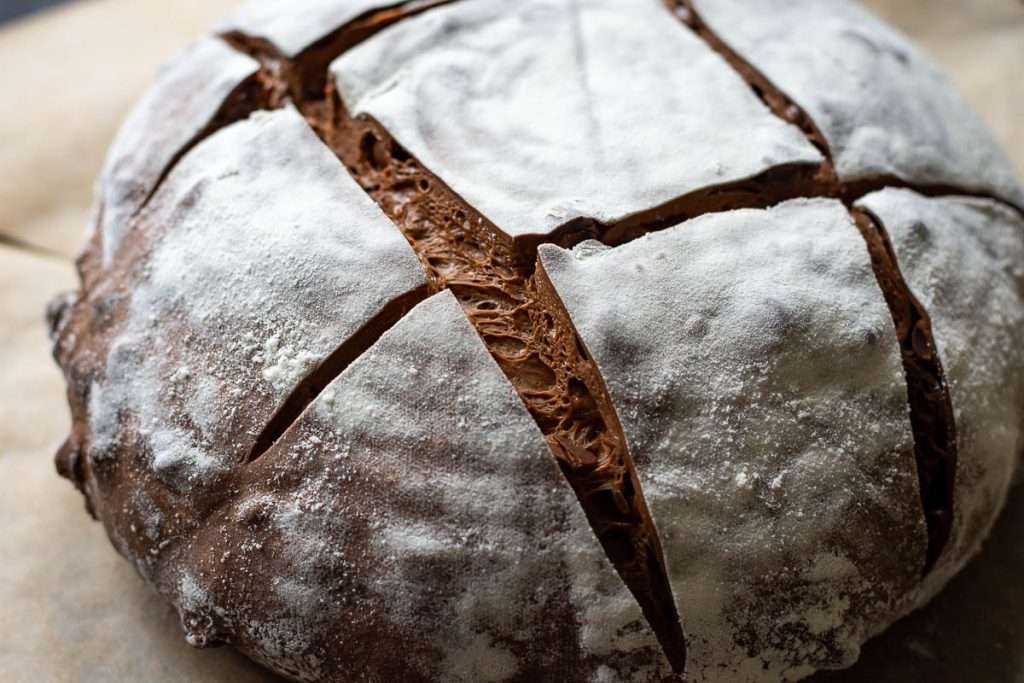
3. Lower the dough into the hot Dutch oven using the parchment as a sling, cover with the lid, and bake for 35 minutes.
4. Remove the lid and bake for a further 20 minutes, until the crust is dark and crisp.
5. Cool completely on a wire rack before dusting with icing sugar and slicing.

Tips For Best Results
🔢 Weigh everything on a kitchen scale. Cups and spoons aren't precise enough for something like active starter, where a small difference in weight throws off the whole dough.
🍫 For a more even spread of chocolate through the loaf, try the sourdough lamination method instead of folding the chips in.
🤲 Cocoa powder reduces the gluten in the dough, so it tears more easily than a plain sourdough. Handle it gently, especially during shaping.
🧹 Brush off excess flour before baking so the crust goes properly dark rather than pale and floury in patches.
🔪 Keep the scoring simple. An intricate pattern gets lost against the dark crust anyway.
🔥 I'll admit it, I like this bread slightly warm, a few degrees above room temperature, and I slice into it before it's fully cooled. Worth trying at least once.
Recipe FAQs
In theory, yes, the caffeine in cocoa powder can slow fermentation slightly. In practice, we haven't noticed much difference, and if anything the added sugar in this recipe speeds things up again.
More like bread. It's rich and chocolatey, but it isn't as sweet as chocolate cake, and it has the tang and chew of a proper sourdough loaf rather than a soft, cake-like crumb.
That's normal here. Cocoa powder weakens the gluten structure slightly, so this dough only needs to grow by about 50% during bulk fermentation, not double, before it's ready to shape.
How To Serve Chocolate Sourdough Bread?
This is best the day it's baked. Slather a slice with salted butter and you're done, though if you want to go further:
- Cherry jam and cream cheese, for a Black Forest cake sort of moment.
- Salted caramel spread.
- Biscoff or another cookie butter.
I genuinely didn't expect this, but this bread is just as good alongside rich, savoury dishes as it is with something sweet. The cocoa's bitterness works well with red meat, which is exactly why we already put cocoa powder into our Slow Cooker Chilli Con Carne. Try it with venison or beef stew, our Beef Giniling or Slow Cooker Braising Steak.
Leftovers make excellent chocolate bread pudding. Just cut off the chewy crusts first.

Flavoured Sourdough: How, When and What Mix-Ins To Add To Your Sourdough?
Discover a variety of mix-ins and learn how they affect hydration and bulk fermentation, master the art of substituting water with coffee and tea, and explore a plethora of creative mix-in ideas. Plus, get 2 exclusive bonuses!
Storage
This bread is at its best the day it's baked, but it keeps well beyond that too.
- Room temperature: wrapped in a tea towel or paper bag, it'll keep for about 2 days. Avoid sealing it in plastic, which softens the crust.
- Freezer: I always slice and freeze mine on the day it's baked rather than waiting. It genuinely tastes better thawed that way than if you freeze the whole loaf later. Double-wrap the slices to protect them from freezer burn, and they'll keep well for a couple of months.
- To thaw: leave slices at room temperature, or toast straight from frozen in the oven or under the grill. Skip the toaster, since melted chocolate chips can make a proper mess of it.
More Flavoured Sourdough Bread Recipes
Loving sourdough beyond plain loaves? Have a look at our full collection of sourdough bread recipes with inclusions.


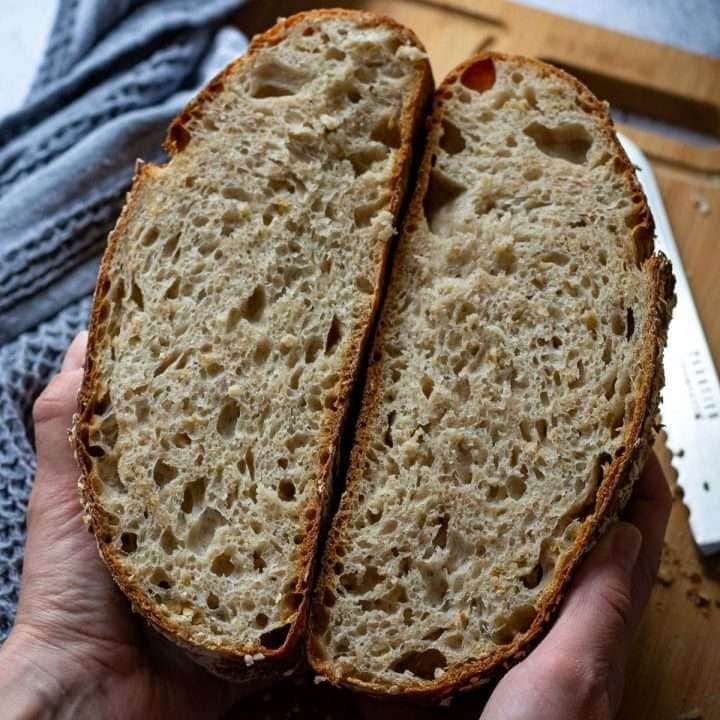


Chocolate Sourdough Bread
Equipment
- Bench Scraper
- Proofing Basket
- Razor Blade or Bread Lame
Ingredients
- 350 g strong bread flour with at least 12% protein content
- 50 g cocoa powder unsweetened
- 5 g salt
- 50 g granulated sugar
- 160 g active sourdough starter 100% hydration
- 250 ml water
- 150 g chocolate chips dark, milk or white
Instructions
DAY 1
- First thing in the morning, feed your sourdough starter and leave it in a warm spot to at least double in volume. We typically feed our starter in a ratio of 1 part starter: 1 part water: 1 part flour, and it doubles (or even triples) within 4 hours. If it doesn't, head to our article - My Sourdough Starter Isn't Doubling Within 4 Hours.
Mix The Dough
- When your sourdough starter is active and bubbly, mix the dough. In a bowl of your stand mixer, combine the flour, cocoa powder, salt and sugar.
- Pour in the water and sourdough starter, and run your stand mixer, fitted with a dough hook attachment, for 10 minutes on medium speed.
Bulk Fermentation and Folds
- Scoop the dough into a clean large bowl, cover and leave it in a warm place for 30 minutes.
- After 30 minutes, perform the first set of coil folds: using wet hands, lift the dough from the sides and fold it inwards to form a coil. Rotate the bowl a quarter turn and coil fold again. Cover the bowl and let the dough rest for 30 minutes.
- Repeat the coil folds twice more at 30-minute intervals. Then leave the covered dough in a warm place for 30 minutes.
- Scatter half of the chocolate chips over the surface of the dough. Lift the corner of the dough and fold it over the chocolate. Do so with all 4 corners of the dough, until the chips are encased. Flip the dough over and scatter the rest of the chocolate chips and stretch and fold the dough over the chips again. Flip the dough again, cover and leave it to rest for 30 minutes.
- Every 30 minutes, perform two more sets of coil folds to distribute the chocolate chips more evenly.
- After the last set of folds, cover the dough and leave it to finish bulk fermenting for 2-3 hours. Your dough should just about double compared to its original state.
Shaping and Cold Ferment
- Tip the dough onto a floured kitchen surface, and using a bench scraper shape it into a very tight ball.
- Place the sourdough ball into a well-floured proofing basket, cover it with a cloth and place it into a plastic bag - it will prevent the dough from drying out in the dry fridge environment. Place your chocolate sourdough in the fridge for its cold proof overnight (or up to 36 hours).
DAY 2
- The next day, preheat the oven to 240°C with your Dutch Oven inside the oven whilst it preheats.
- Take the sourdough out of the fridge, and invert it gently on a large piece of parchment paper. Brush off any excess flour from the surface. Slash the top of the dough with a sharp razor.
- Place your bread into a hot Dutch Oven by holding the sides of the parchment paper sheet, cover it with a lid, and place it in the oven for 35 minutes.
- After 30 minutes, take the lid off, and return it to the oven for another 20 minutes for the crust to caramelise and become crispy.
- Once baked, take your chocolate sourodugh out of the Dutch oven, and place it onto a cooling rack. Slide the sheet of parchment from underneath and leave it to cool down to room temperature before dusting it with some powdered sugar and slicing.
Nutrition


Otto says
Tried baking this chocolate sourdough bread over the weekend and it came out fantastic! The deep chocolate flavor works so well with the subtle sourdough tang, and it made the most incredible afternoon snack toasted with a bit of butter.
Ieva Greber says
Thanks, Otto — toasted with butter is honestly the best way to eat this, and that deep chocolate against the sourdough tang is exactly the balance I'm after. Glad it made for such a good afternoon snack!
Amy Dong says
The tender texture and rich chocolate flavor made every slice irresistible!
Ieva Greber says
Thanks, Amy! Tender crumb, rich chocolate and a slice that’s impossible to stop at is the whole point of this loaf. Glad it made every slice a bit dangerous, and I hope it ends up toasted with butter at some point.