
Baking Honey Oat Sourdough Bread is an adventure worth taking, whether you're an experienced baker or it's your first time adding mix-ins! The final results are so worth the effort, with a wonderful texture that's almost creamy and a signature chewy crust further topped with toasted oats. Plus, the hint of sweetness from the honey makes every slice irresistible.

Jump to:
As an Amazon Associate I earn from qualifying purchases, at no extra cost for you! Thank you!
Honey Oat Sourdough Has A Lot To Offer
The Honey Oat Sourdough recipe has very quickly become our family favourite! It's a softer loaf with earthy flavour from whole wheat flour, milky creaminess from the oats, a subtle sweetness of the honey and a little bit of tang from sourdough starter. It's a type of bread that you cannot stop eating, especially when it is freshly baked!
- Perfect accompaniment for sweet and savoury toppings.
- Perfect for bread bakers who are just starting out on their sourdough baking journey: it doesn't push hydration boundaries and the oat mix-in is easy to incorporate.
- It has a great texture with the oats inside the dough creating a milky creamy quality (seriously, amazing things happen when you add oats to the dough!).
- Great for those who are slightly bored of their regular bread, but need something versatile and uncomplicated!

Ingredients and Substitutes
- strong white flour: also known as bread flour, ideally with no less than 12% gluten content.
- whole wheat flour: see more options in the section below.
- salt.
- water: using lukewarm water if your kitchen is on the cold side may speed up the process.
- clear honey: may be substituted with maple syrup.
- active sourdough starter: at 100% hydration.
- rolled oats: the kind you use for oat porridge (a.k.a. porridge oats). We do not recommend using instant oatmeal or steel-cut oats.

A Note On Flour
In this recipe, we used a mixture of strong white flour and whole wheat flour. Strong four is higher in gluten content which aids in the proper structure of the dough and stronger gluten strands. All-purpose flour will make a tasty loaf of bread, but it may not get as much oven spring and be flatter and slightly denser.
If you wish, you can replace whole-wheat flour with spelt or rye flour, but watch the dough closely during its bulk fermentation, as these extra nutrients in these types of flour mean that yeast activity is increased and your sourdough may finish bulk fermenting quicker.
Alternatively, try adding oats to our Spelt Sourdough Bread or Sourdough Rye Bread recipe!
How Does Honey Affect Sourdough?
Honey affects sourdough by providing additional sugars, which can enhance yeast activity and fermentation, resulting in a slightly faster rise and a more robust flavour. It also adds moisture and a subtle sweetness to the bread, contributing to a softer crumb and a slightly caramelized crust.
Step-By-Step Method
The first thing you need to do is feed your starter and leave it to at least double in size. Once your starter is almost at its peak, let's get mixing!
Day 1
1. When your starter is almost doubled (or tripled in volume), mix strong bread flour and water in a bowl of a stand mixer into a shaggy dough. Cover and leave it to autolyse for 30 min to 1 hour.
2. Add the whole wheat flour, salt, honey and active sourdough starter and run your mixer, fitted with a dough hook attachment for 6-7 minutes, until combined (sourdough doesn't need to pass a windowpane test at this stage).
3. Scrape the bread dough into a clean bowl, cover with a damp bread cloth or plastic wrap and leave in a warm place for 30 minutes.


4. After 30 minutes, with wet hands perform a set of coil folds. Cover and rest for 30 minutes
5. Coil fold the dough twice more every 30 minutes.
6. After the 3rd set of folds, let the dough rest for 30 minutes. Then incorporate the oats. You may simply fold them in as you stretch and fold the dough, or use the sourdough laminating method: stretch the dough to a large square, then scatter ⅔ of the oats across, fold the bottom third of the dough into the centre, then fold the tip third over to create a pamphlet. Scatter the remaining oats across the dough pamphlet, and fold one side over to the centre and the other side on top (you will again have a pamphlet-shaped parcel).


TIP: Incorporate the oats into your dough at a point where your dough has started to strengthen and won't tear easily. For best results, we recommend folding the mix-ins midway through bulk fermentation. The gluten strands are strong enough and you will be able to further distribute the oats during subsequent coil folds.
7. After incorporating the oats, leave the dough to rest for 30 minutes, then perform two sets of coil folds every 30 minutes.
8. After that, leave the dough covered in a warm spot for 2-3 hours (longer if your kitchen is on the cool side) to finish its bulk fermentation at room temperature (watch the dough, as the higher sugar content in it means that it ferments faster - you don't want it to more than double in size).
9. Once the sourdough has finished its first rise, scoop the dough onto a lightly floured work surface and shape it into a tight boule using a bench scraper.
10. Place the shaped dough into a floured banneton basket (or any proofing basket alternatives) and plate it in a plastic bag. Store it in the fridge for up to 36 hours for its overnight cold proof.


Day 2
1. Next morning, when the bread finishes its final proof and when you're ready to bake, preheat the oven with a Dutch Oven inside to 240°C.
2. Take the dough out of the fridge and carefully turn it out of the proofing basket onto a sheet of parchment paper.

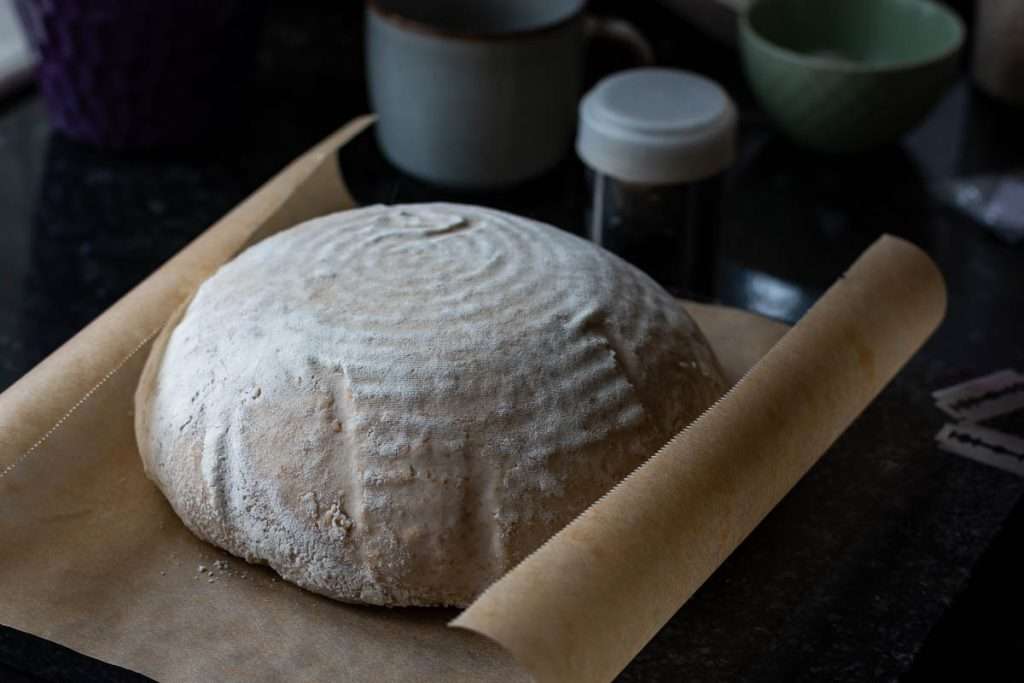
3. Lightly spray the top of your loaf with water and scatter extra outs on top. Press gently so that they stick to the surface.
4. Score the bread using a bread lame or a sharp razor blade, then lift the bread into a pre-heated Dutch Oven holding the bread by the parchment paper edges. Cover the Dutch Oven with its lid and place it in the oven for 25 minutes.

5. After 25 minutes, take the lid off, and cook uncovered for another 20-25 minutes until deep golden brown and cooked through.
6. Once baked, lift the Honey Oat Sourdough out of the Dutch Oven and onto a wire rack. Slide the parchment paper out from underneath and leave the bread to cool down completely before slicing.

Serving Suggestions
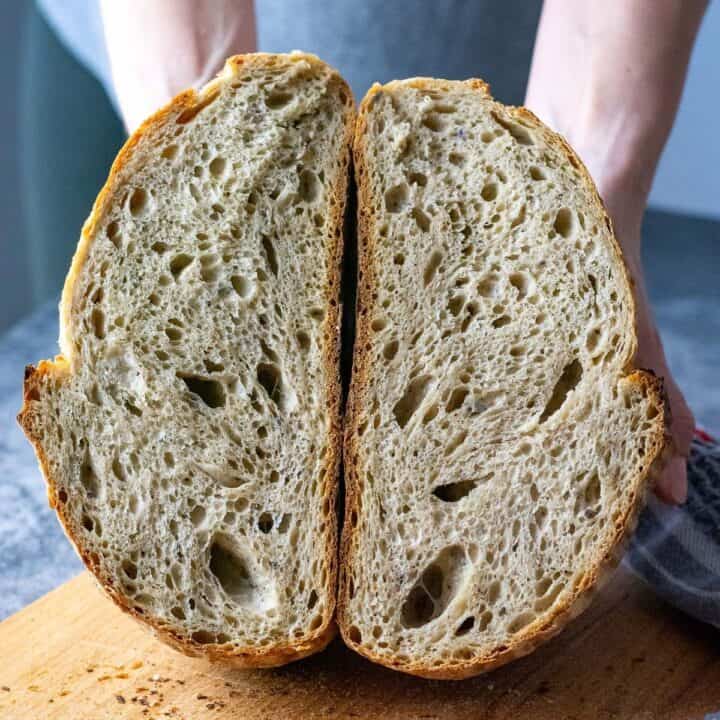
Sourdough Honey Oat Bread is best served on the day it is baked. It has a beautiful milky quality to its crumb, and lovely chewy crust. It is perfect simply slathered with butter, or turned into your favourite open sandwiches, but it also goes particularly well with soups and stews.
The next day, when your bread starts going a little stale, you can easily turn it into French toast or Bread Pudding.
Storage
Honey Oat Sourdough can be stored much the same as your regular sourdough bread. Store it wrapped in a tea towel or ziplock bag in a cool dark cupboard (not fridge) for up to 3 days. For longer storage, cut it into individual slices using a sharp knife and freeze them in an airtight bag for up to 3 months.
Visit our article about How To Store Sourdough Bread For Maximum Freshness for more tips.
More Sourdough Bread Recipes To Try
If sourdough is your love language, why not put that wild yeast to work and make more delicious bread for your loved ones?
- Sourdough Sandwich Bread
- Sourdough Potato Bread
- Jalapeño Cheddar Sourdough Bread
- Feta and Sundried Tomato Sourdough Bread
- Sourdough Beer Bread
- Plain Sourdough Loaf Without Dutch Oven
- Walnut & Cranberry Sourdough Loaf

Flavoured Sourdough: How, When and What Mix-Ins To Add To Your Sourdough?
Discover a variety of mix-ins and learn how they affect hydration and bulk fermentation, master the art of substituting water with coffee and tea, and explore a plethora of creative mix-in ideas.

Honey Oat Sourdough Bread
Equipment
- Bench Scraper
- Razor Blade or Bread Lame
Ingredients
- 350 g strong white flour bread flour
- 50 g whole wheat flour
- 8 g salt
- 240 ml water
- 1.5 tablespoon clear honey
- 160 g active sourdough starter 100% hydration
- 50 g oats plus extra for topping
Instructions
DAY 1:
- When your starter is almost doubled (or tripeld in volume), mix strong bread flour and water in a stand mixer bowl into a shaggy dough. Cover and leave it to autolyse for 30 min to 1 hour.
- Add the whole wheat flour, salt, honey and active sourdough stareter and run your mixer, fitted with a dough hook attchment for 6-7 minutes, until combined (you don't need a windowpane effect at this stage).
- Scrape the dough into a clean bowl, cover and leave in a warm spot for 30 minutes.
- After 30 minutes, with wet hands perform a set of coil folds. Cover and rest for 30 minutes
- Coil fold the dough twice more every 30 minutes.
- After the 3rd set of folds, leave the dough to rest to 30 minutes. Then incorporate the oats. You may simply fold them in as you strethc and fold the dough, or use laminating method, as show in the text above.
- After incorporating the oats, leave the dough to rest for 30 minutes, then perform two sets of coil folds every 30 minutes.
- After that, leave the dough covered in a warm spot for 2-4 hours to finish bulk fermenting (watch the dough, as higher sugar content in it means that it ferments faster - you don't want it it to more than double in size).
- Scoop the dough onto a lightly floured surface and shape it into a tight boule.
- Place it into a floured banetton basket (or nay proofing basket alternatives) and plate it in a plastic bag. Store it in the fridge overnight (or up to 36 hours) for its cold final proof.
Day 2:
- When ready to bake, preheat the oven with a Dutch Oven inside to 240C.
- Take the dough out of the fridge and carefully turn it out of the proofing basket onto a sheet of parchment paper.
- Lightly spray the surface with water and scatter extra outs on top. Press gently so that they stick to the surface.
- Score the bread suing a bread lame or a sharp razor blade, then lift the bread into a pre-heated Dutch Oven holding the bread by the parchment paper edges. Cover the Dutch Over with its lid and place it in the oven for 25 minutes.
- After 25 minutes, take the lid off, and cook uncovered for another 20-25 minutes.
- Once baked, lift the Honey Oat Sourdough out of the Dutch Oven and onto a wire rack. Slide the parchment paper out from underneath and leave the bread to cool down completely before slicing.
Nutrition




Leave a Reply