
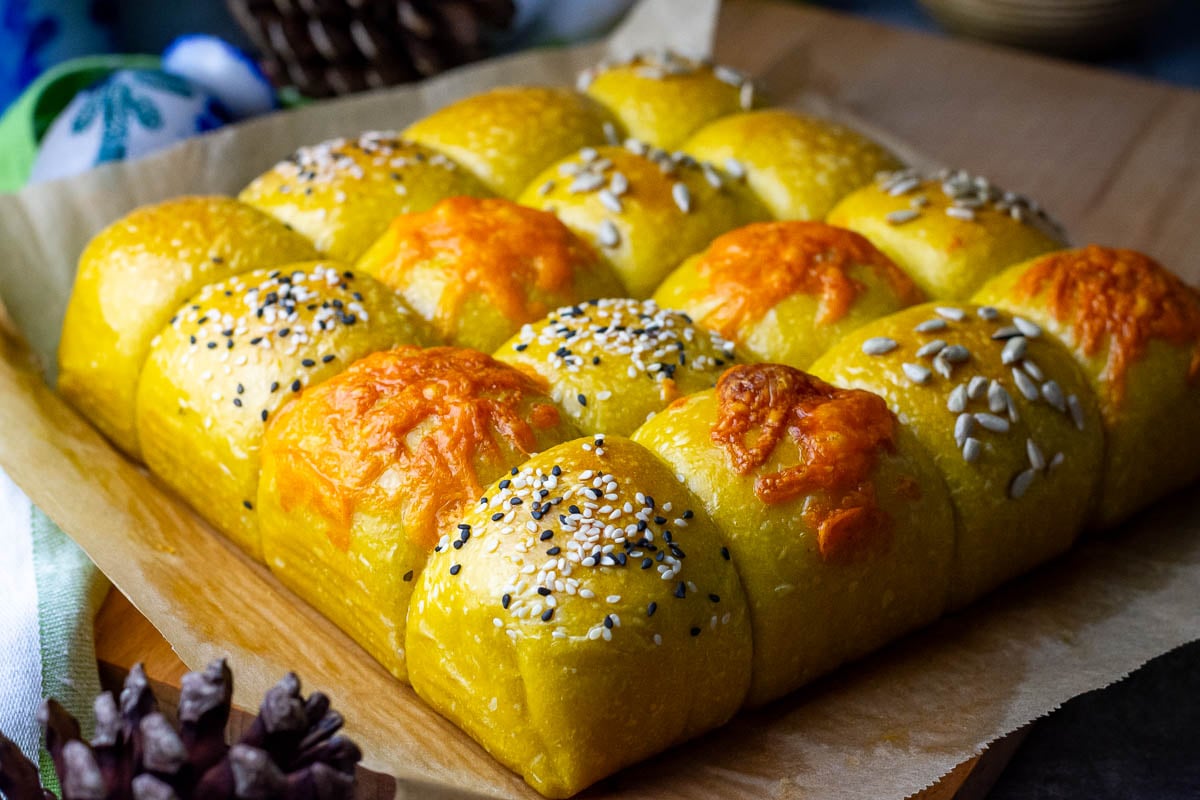
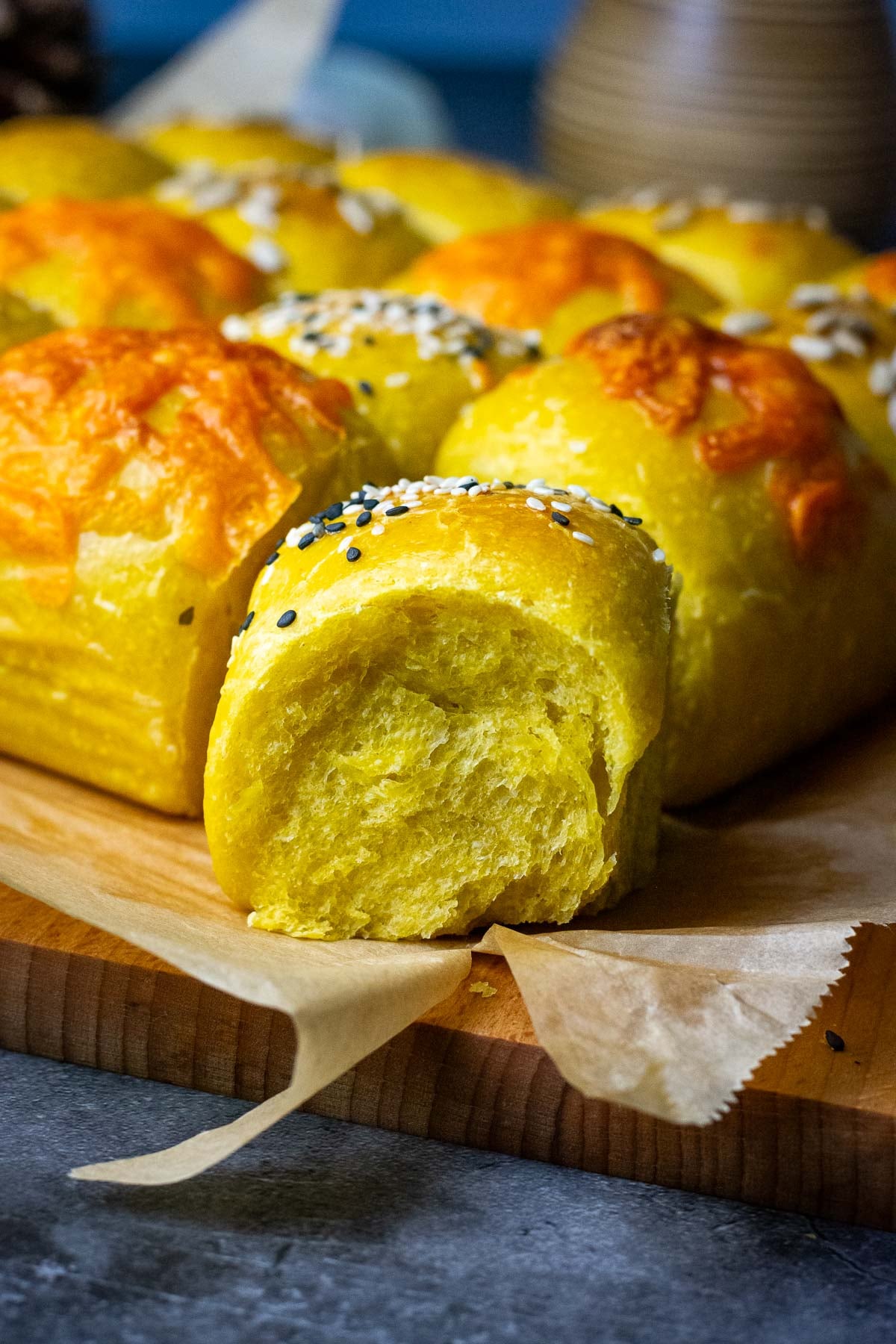
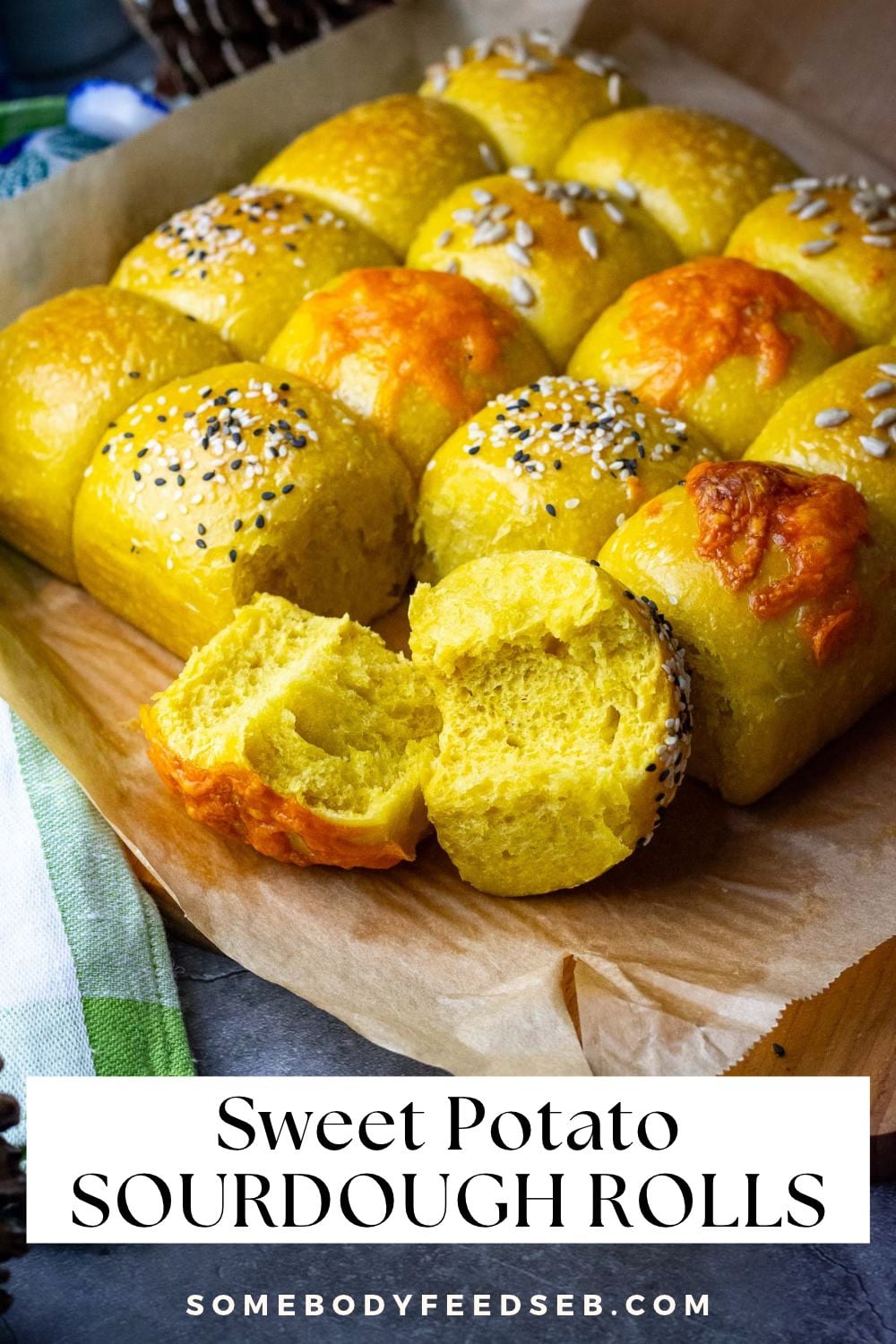
Soft, golden and gently sweet, these sourdough sweet potato dinner rolls pull apart into pillowy, orange-tinged pieces that are still soft the next day. You make the dough the day before with one roasted sweet potato and your sourdough starter, and all 16 rolls bake together in a single 23cm (9 inch) square pan. Top them three ways (or sixteen) and nobody at the table has to agree on a flavour.

Jump to:
- Recipe Highlights
- Why These Rolls Stay So Soft
- Ingredient Notes
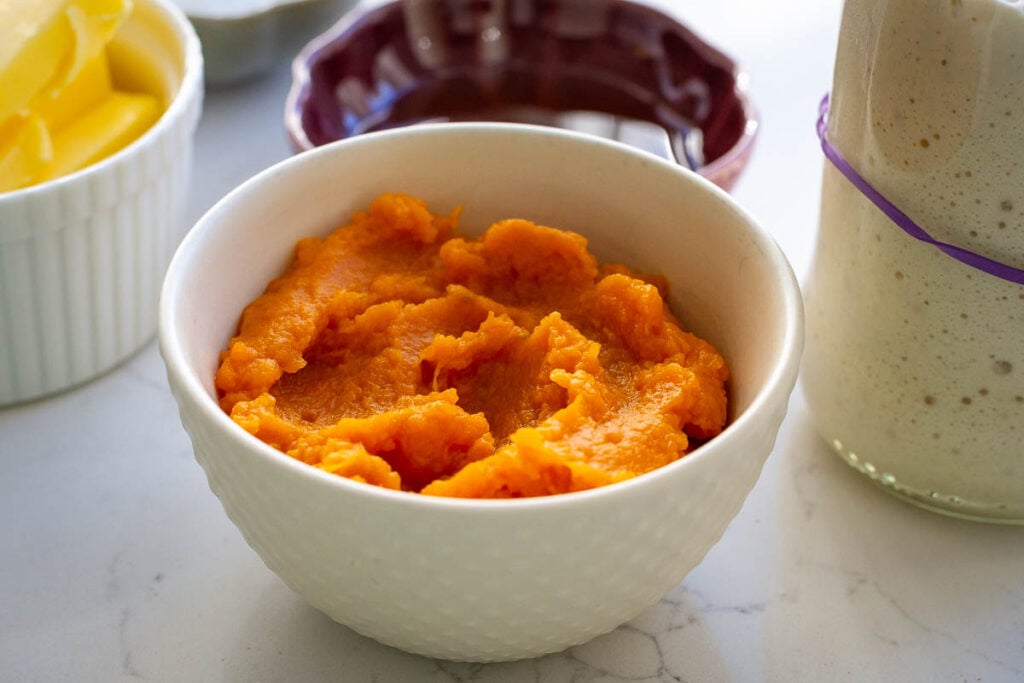
- How To Prepare The Sweet Potato
- Baking Schedule (Including A Make-Ahead Plan For A Holiday Dinner)
- How To Make Sourdough Sweet Potato Rolls
- Different toppings, One Pan
- Troubleshooting
- Tips For Success
- Recipe FAQs
- What To Serve With Sweet Potato Dinner Rolls
- How To Store, Freeze And Reheat
- More Soft Sourdough Rolls
- Sourdough Sweet Potato Dinner Rolls
As an Amazon Associate I earn from qualifying purchases, at no extra cost for you! Thank you!
They're the follow-up to my Sourdough Pumpkin Dinner Rolls, built on the same soft dough. The difference is that sweet potatoes are in every supermarket all year. One large of them gives you exactly the mash you need, with no half-used tin of pumpkin lurking at the back of the fridge.

Recipe Highlights
TASTE: Buttery, gently sweet, slightly tangy
THREE WAYS: Sesame, sunflower and cheese rolls from one pan
NO EGGS IN THE DOUGH: Egg only for the glaze (replace with cream or milk, if needed)
SEB'S RATING: Thought they're just as good if not better than Sourdough Pumpkin Dinner Rolls.

Why These Rolls Stay So Soft
These rolls stay soft for days because the sweet potato, milk and butter all help the crumb hold on to moisture. The long, cold rest before shaping takes care of the flavour and makes the dough much easier to handle.
- Sweet potato starch holds water. Cooked starch traps moisture in the crumb, so the rolls don't dry out overnight. It does a similar job to tangzhong without the extra step.
- Milk and butter make it tender. The fat coats the gluten strands, giving a soft, pillowy crumb rather than a chewy, crusty one.
- No eggs in the dough. The egg only goes on top as a glaze, so the rolls are lighter and softer and don't turn cakey.
- The overnight cold ferment adds flavour and makes shaping easier. A slow night in the fridge gives a deeper, gently tangy flavour. Cold, firm dough is also far easier to shape into tight balls than soft, warm dough.
Ingredient Notes
- Strong white bread flour: look for at least 12% protein. The dough has to carry a lot of butter and sweet potato, and weaker flour struggles to hold its shape. (Plain flour is covered in the FAQ.)
- Active sourdough starter: it needs to be at its peak, doubled and bubbly, before it goes in. Here's How To Know When Sourdough Starter Is Ready And At Its Peak if you're not sure what that looks like.
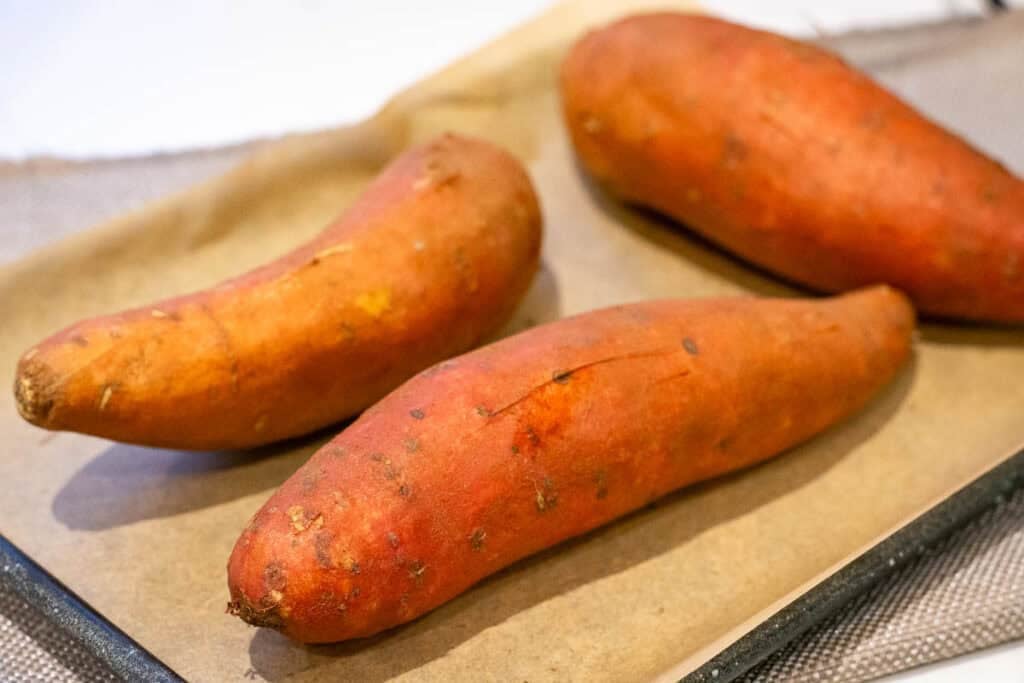
- Sweet potato: use orange-fleshed sweet potatoes only. How to cook it is in the next section.
- Whole milk: the fat keeps the rolls soft for longer than semi-skimmed would.
- Honey: adds gentle sweetness and helps the tops brown. Maple syrup works as a straight swap.
- Unsalted butter: soft enough to press a finger into, but not melted. Soft butter works into the dough, while melted butter just makes it greasy.
- Toppings: anything your heart desires, really!
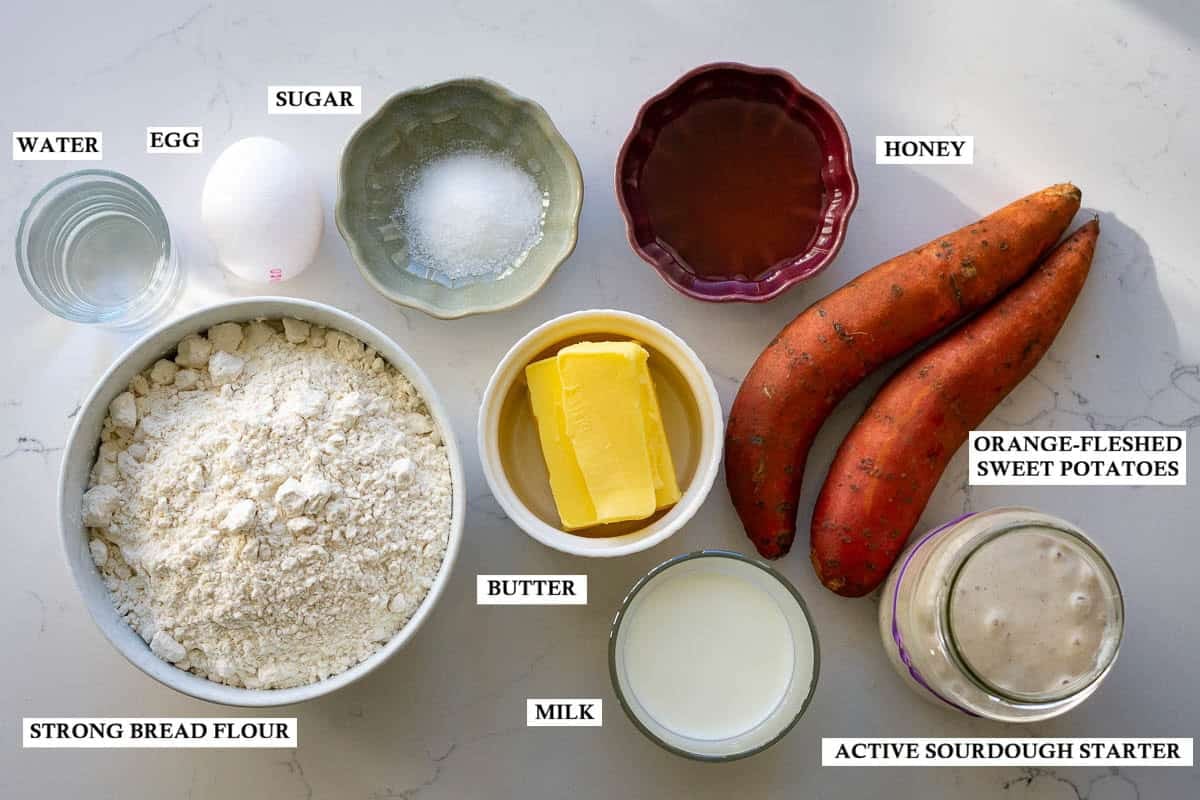
Find the full ingredient quantities and instructions in the recipe card below.
How To Prepare The Sweet Potato
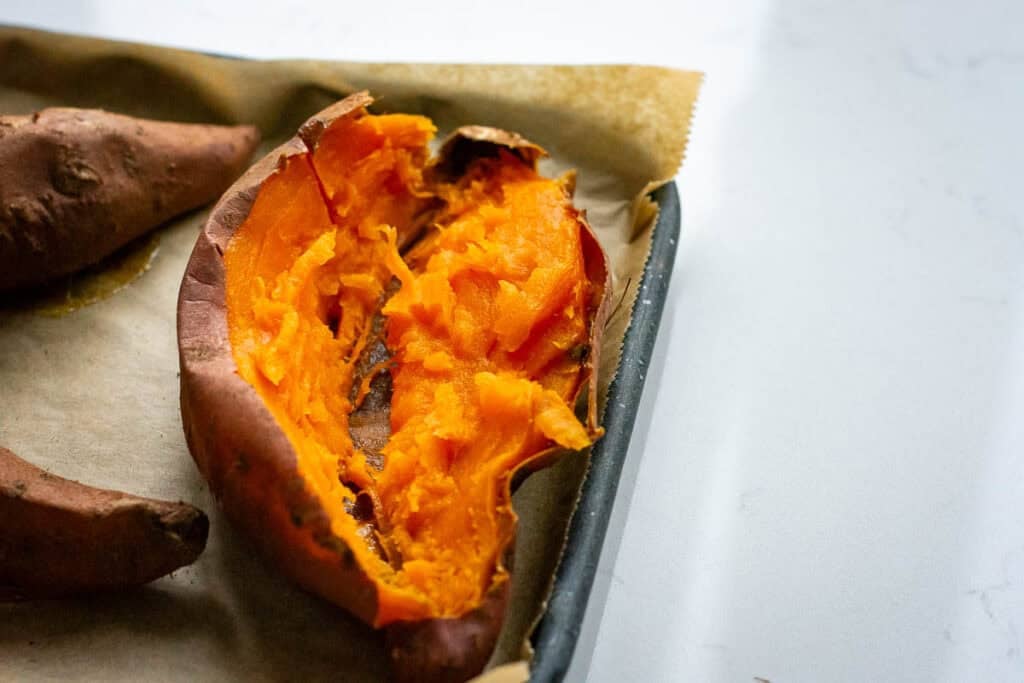
Roast it if you can. Roasting drives off water and caramelises the natural sugars, so you get a deeper flavour and a dough that's easier to handle. Every method below works, but the wetter ones need a little less water in the dough.
| Method | How | Weight to use | Liquid adjustment |
|---|---|---|---|
| Roasted (recommended) | Whole and pricked, 200°C (180°C fan) / 400°F, 45–60 min | 150g mash (from about 250g raw, 1 medium) | None |
| Microwaved | Pricked, 8–10 min, turning halfway | 150g mash | None |
| Boiled or steamed | Peeled chunks, 15–20 min, drained very well | 150g mash (from about 200g peeled raw) | Hold back the full 20g reserved water |
| Tinned purée | Straight from the tin | 150g | Hold back the full 20g reserved water |
- Mash it completely smooth. Any lumps stay in the baked rolls as orange flecks.
- Let it cool fully. Warm mash melts the butter as soon as it goes in, and you end up with a greasy dough.
- Tinned sweet potato purée is harder to find in UK supermarkets than in the US, but it's worth grabbing if you see it. Avoid tinned candied yams, though. The syrup makes the dough far too sweet and sticky.
- Make it ahead. The mash keeps in the fridge for up to 3 days, so you can roast the sweet potato alongside something else earlier in the week.
Baking Schedule (Including A Make-Ahead Plan For A Holiday Dinner)
This is a two-day recipe, but most of that time is hands-off. The dough does its slow work in the fridge overnight, and you only need to be around for short bursts.
Sample schedule
- Day 1, 8am: feed your starter (How To Feed Sourdough Starter) and roast the sweet potato (details above).
- Day 1, 12:30pm: mix the dough
- Day 1, 1pm-6pm: bulk ferment
- Day 1, 6pm: into the fridge overnight
- Day 2, 10am: divide and shape
- Day 2, 1:30-2pm: bake
Working back from dinner time
If dinner is at 5pm, shape the rolls at about 11am on the day. They'll be proofed and ready to bake at around 2:30pm and out of the oven well before the turkey needs the space. Give them 5 minutes in a low oven just before serving and they'll taste freshly baked.
Proofing time depends on how warm your kitchen is, so plan a little slack and go by the proofing cues in the method below rather than the clock. The dough is happy in the fridge for up to 24 hours, which gives you room to shape a bit later if the morning gets away from you.
How To Make Sourdough Sweet Potato Rolls
The recipe card has the full steps. This section covers what the dough should look and feel like at each stage, and why.
Mix the dough, then add the butter slowly
Before the butter goes in, the dough will look shaggy and feel quite stiff. This is the moment to add the reserved water, a little at a time, if it feels tight.
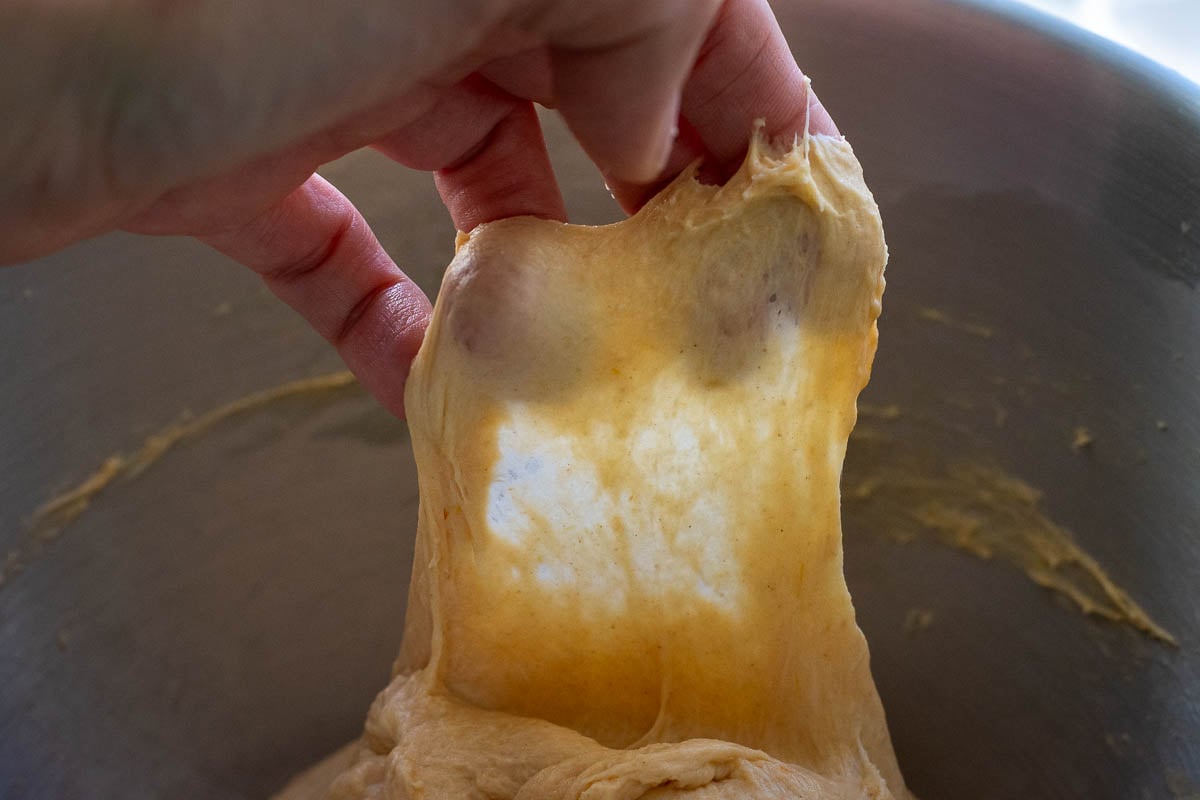
Add the butter one piece at a time and let each piece disappear before adding the next. Too much at once and the butter smears around the bowl instead of working into the dough. After 10 minutes on medium, the dough should be smooth, elastic and slightly tacky, and clear the sides of the bowl.
If you want to double-check, the Windowpane Test For Sourdough Baking is a useful optional check.
bulk fermentation
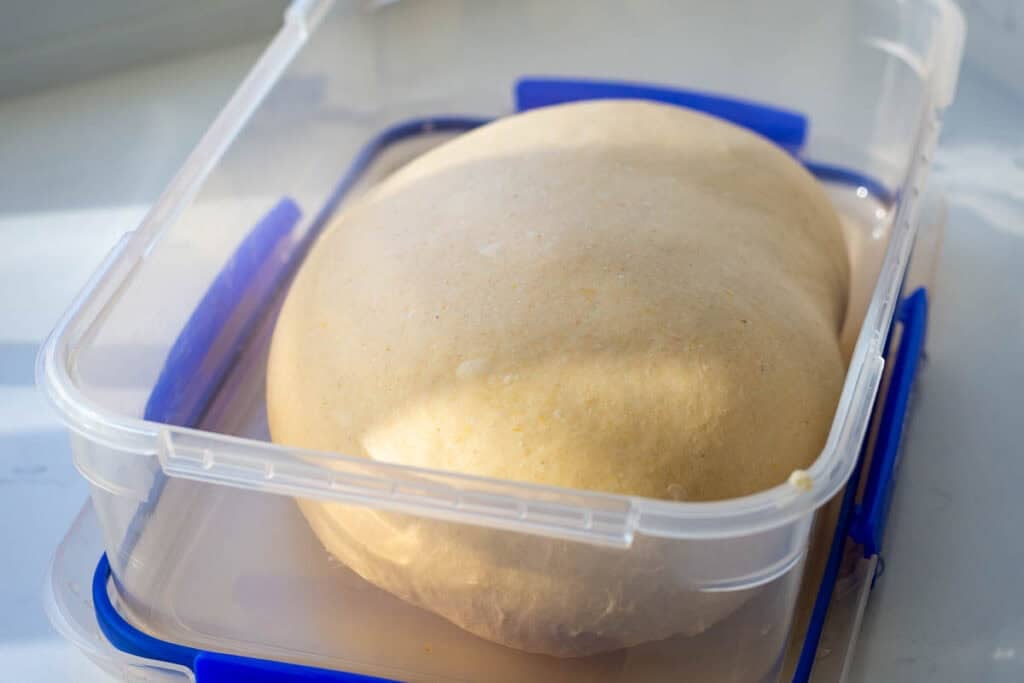
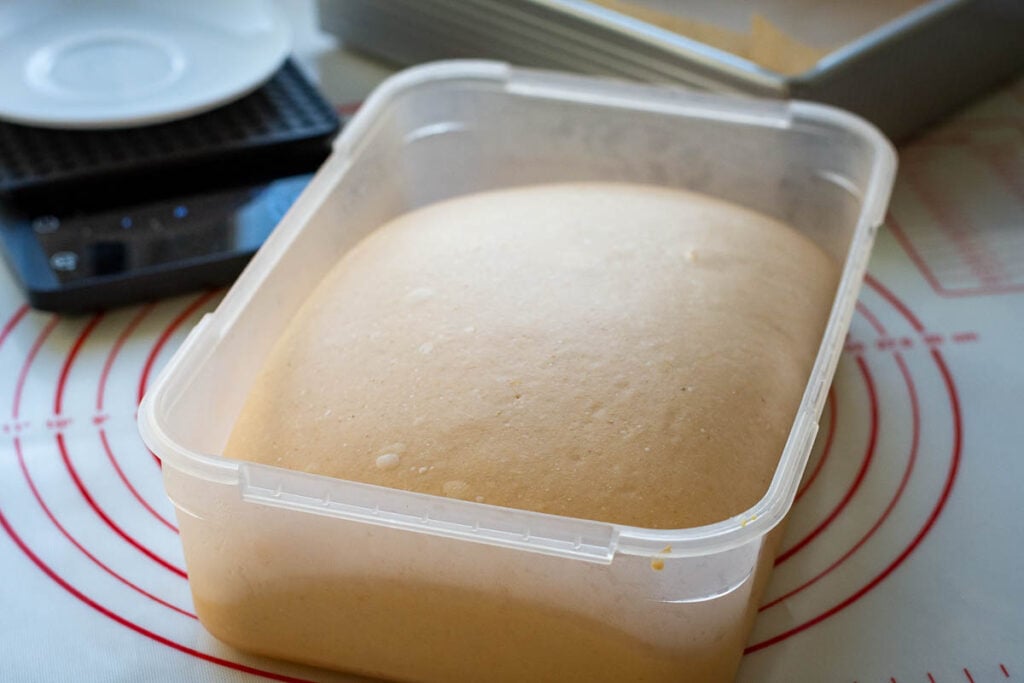
You're looking for a rise of about 50%. The dough should look domed and puffy, with bubbles at the sides of the bowl, and it should jiggle when you move the bowl. Mark the level with a piece of tape, or use a straight-sided container, so you're not guessing.
Below 22°C (72°F), bulk takes noticeably longer, so be patient. There's more on reading the dough in my Sourdough Bulk Fermentation guide.
Cold ferment overnight
Cover the bowl tightly and put it in the fridge for 10-16 hours. Don't let it come to room temperature before shaping. You want it cold.
Divide and shape tight balls
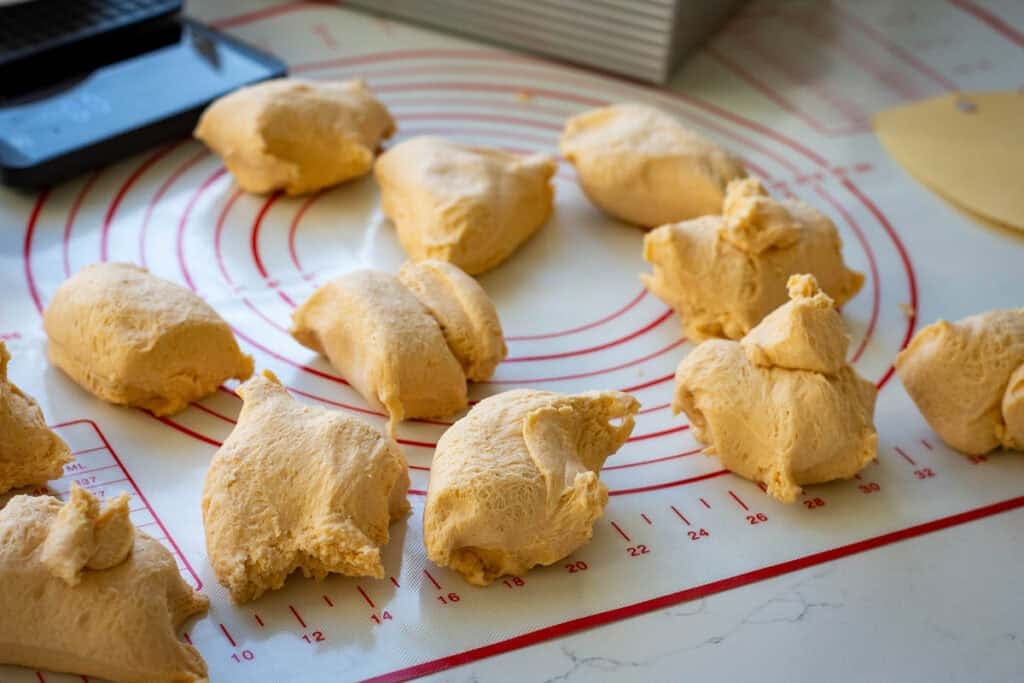
Tip the cold dough onto your work surface and weigh it into 16 pieces of about 60-64g each.
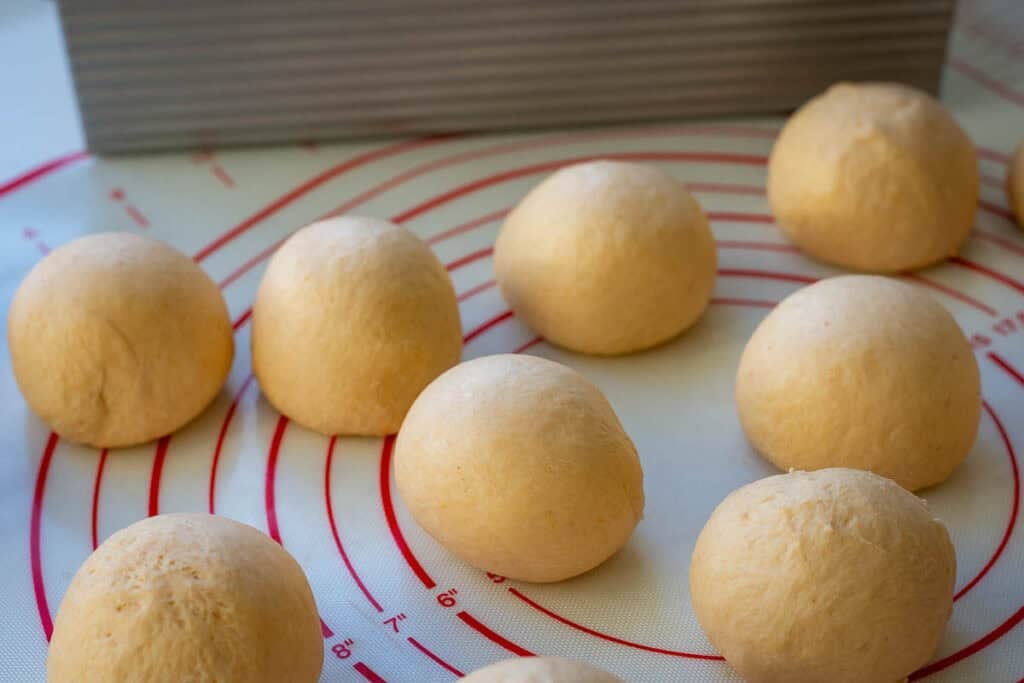
To shape, put a piece on a clean, unfloured patch of work surface, cup your hand over it and move it in small, firm circles. The slight stickiness grips the surface and pulls the dough into a tight ball with a smooth, taut top. If the dough skates around, the surface is too floury. Wipe it clean and try again.
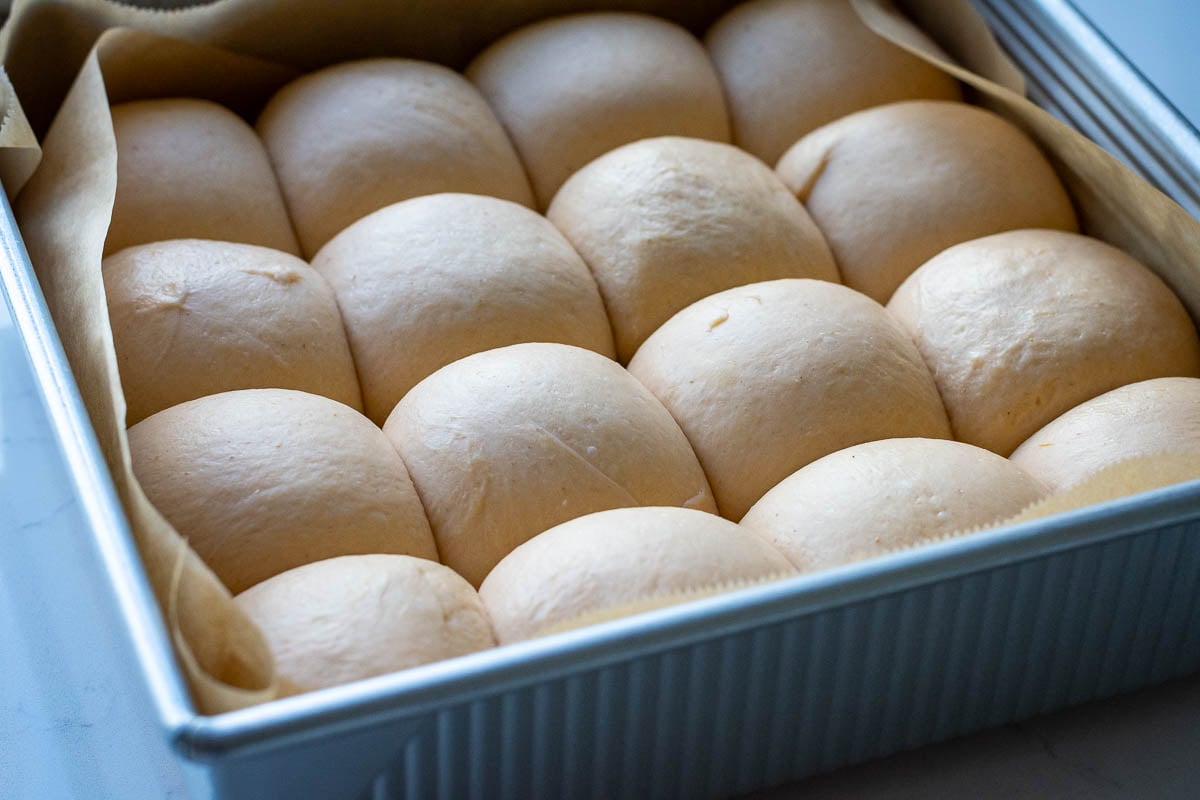
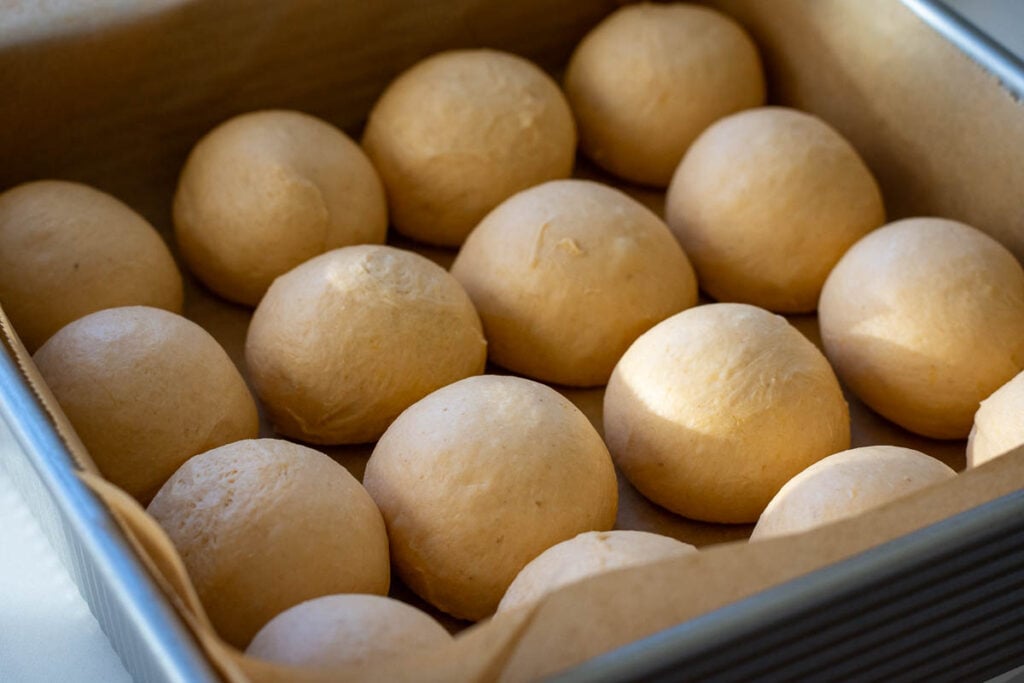
Arrange the balls in a 4 × 4 grid in the lined pan, leaving small gaps between them. They'll grow into each other as they proof, which gives you those soft, tear-apart sides.
Final proof
The rolls are ready when they've roughly doubled and are touching each other. Press one gently with a floured finger. It should spring back slowly and leave a faint dent. If it springs straight back, give them longer. My guide to When Is Sourdough Bread Done Proofing goes into more detail.
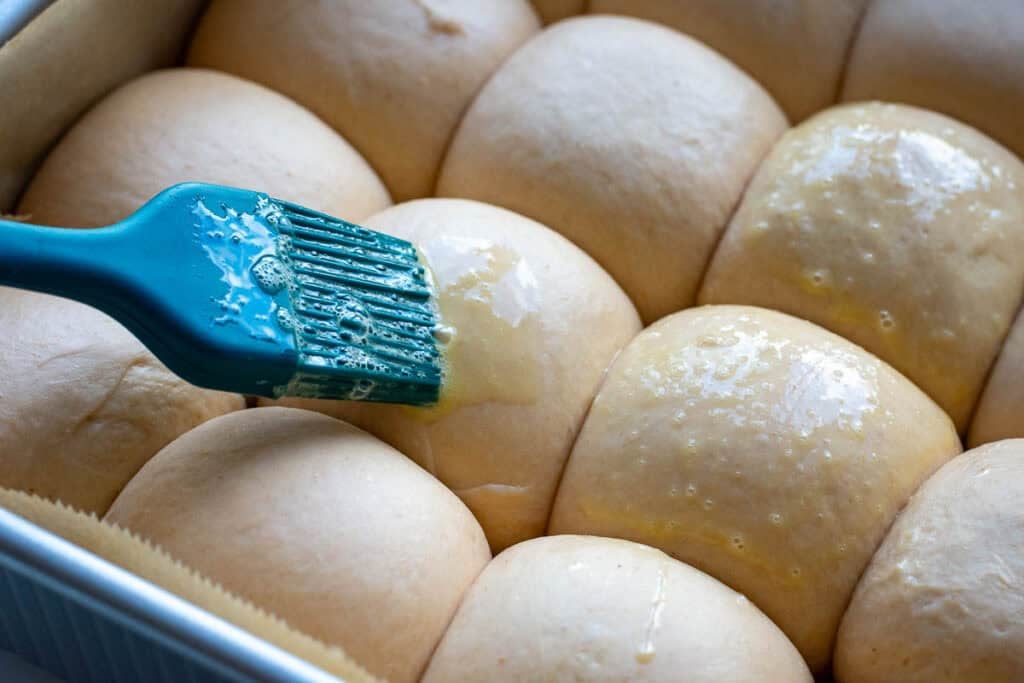
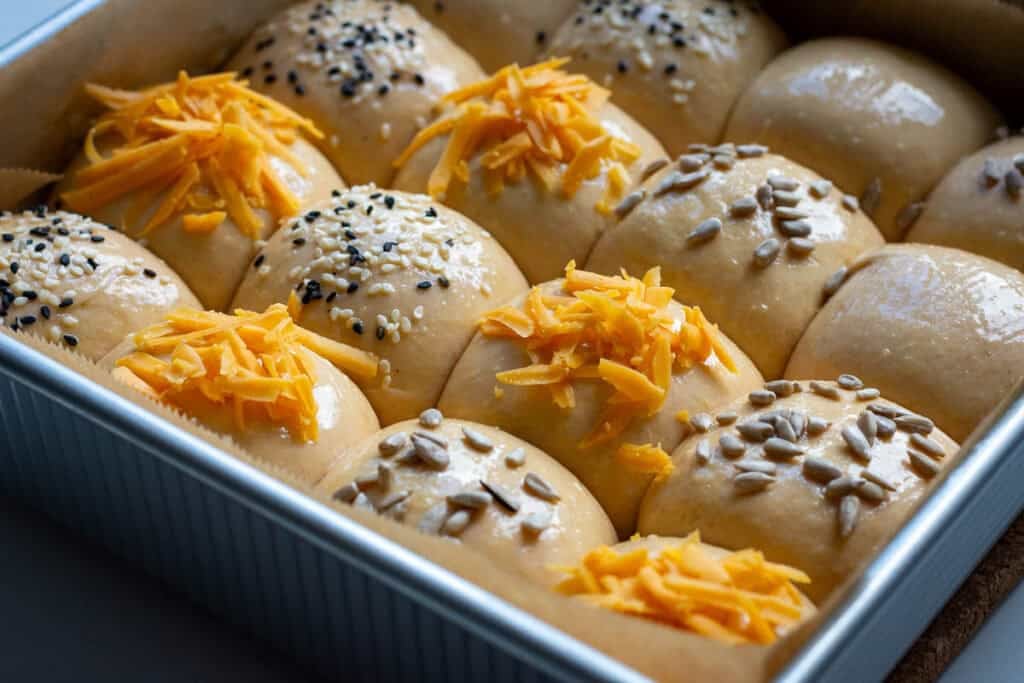
Egg wash and top with whatever you wish just before baking!
Bake until 90°C (194°F) in the centre
Check the tops at 18 minutes. The sugars in the sweet potato and honey colour faster than a plain dough does, so this is when you might need a loose sheet of foil over the pan.
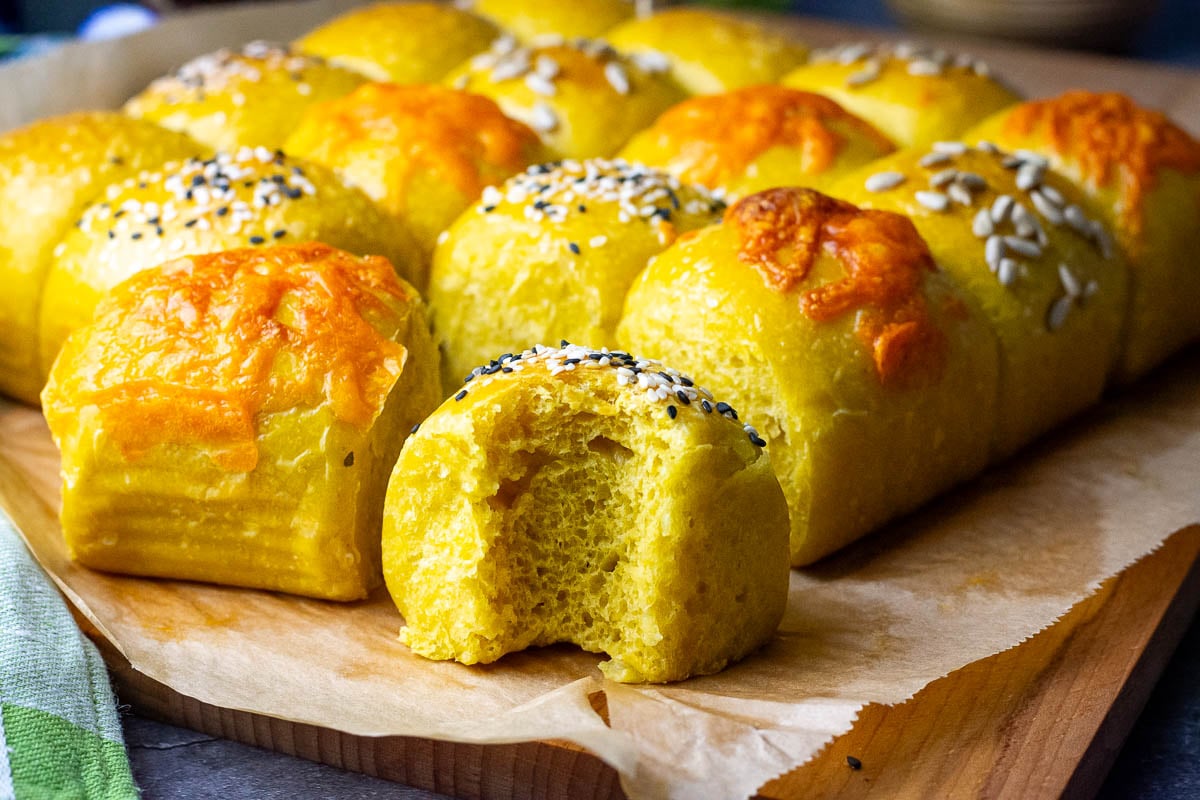
The rolls are done when they're deep golden and read 90°C (194°F) in the centre of a middle roll. At that point, the enriched crumb is set but still soft, and it stays softer for longer than if you take it further. Brush them with melted butter straight out of the oven and let them cool in the pan for 15 minutes.
Different toppings, One Pan
Topping one pan three ways looks fancy, but it's really just a bit of organising. Brush every roll with egg wash first, because it's the glue that holds the toppings in place. We like to top ours with:
- Sesame seeds: white or black, or a mixture.
- Sunflower seeds: they toast nicely on top.
- Cheese. We like using mature sharp cheddar for flavour or Red Leicester for colour.
Everything bagel seasoning and poppy seeds also work, or brush the plain rolls with garlic butter after baking.
Mix It Up: Turn Your Sourdough into a Flavour Adventure.
Troubleshooting
| Problem | Likely cause | Fix next time |
|---|---|---|
| Dough too sticky to handle | Wet sweet potato (boiled or tinned), or the butter went in too fast | Mix for longer before adding flour, and add 1 tablespoon at most. Shape the dough cold, straight from the fridge |
| Dense, heavy rolls | Underproofed, or the starter wasn't at its peak | Go by the poke test, not the clock. Use your starter at its peak |
| Tops dark before the middle is done | Sugars in the sweet potato and honey, or an oven that runs hot | Lay foil over the pan at 18 minutes. Check your oven with an oven thermometer |
| Rolls spread or flattened | Overproofed, or not enough tension when shaping. Or the baking pan may be too big | Shape the balls tighter. Shorten the proof if your kitchen is warm |
| Pale, not very orange | White-fleshed sweet potato or a pale tinned purée. However, they are not meant to be as orange as my sourdough pumpkin dinner rolls. | Use orange-fleshed sweet potatoes (see Ingredient Notes) |
Tips For Success
- 🍳 Use a metal pan if you have one. Metal gives a golden base. Glass or ceramic pans need 3-5 minutes longer, and the base stays paler.
- ⚖️ Weigh every roll for uniformity and even bake. Even rolls bake evenly, so the corner ones don't dry out while the middle ones finish.
- 🌡️ Find a warm spot for the final proof. The oven with just the light on, or next to (not on) a radiator, both work. The target is 24-26°C (75-79°F). In a cold kitchen the proof can easily stretch past 4 hours.
- 🧺 Keep the dough covered while you shape. Sixteen balls take a while, and uncovered pieces form a dry skin that stops the rolls rising evenly.
Recipe FAQs
Yes. Plain flour has less protein, so the dough will be softer and stickier and the rolls a little less springy. Hold back the reserved 20g water, give the dough a longer mix before adding the butter, and shape it straight from the fridge while it's firm.
No. Sourdough discard doesn't have the rising power to lift a dough this rich in butter and sweet potato, so the rolls would come out dense and flat. Save your discard for one of my Sourdough Discard Recipes and use an active starter here. Alternatively, add 7g of commercial yeast and follow timings suitable for yeasted bread rolls.
Yes. Start early or feed your sourdough starter the night before in a higher flour and water to starter ration. Reduce the overnight cold ferment to hours. The dough is softer and stickier to shape and they will have less sourdough tang.
Yes. Make 1.5 times the recipe and you'll get 24 rolls of the same size in a 6 × 4 grid. Allow a few extra minutes in the oven, and go by colour and the 90°C (194°F) internal temperature rather than the timer.
What To Serve With Sweet Potato Dinner Rolls
These belong on the Thanksgiving or Christmas table, next to roast turkey or chicken and plenty of gravy for mopping. They go especially well with Brown Butter Sage Mashed Potatoes and Roasted Balsamic Sweet Potatoes. Browse our Thanksgiving sourdough recipes for more ideas!
They're just as good with autumnal soups like squash or roasted tomato. Split any leftovers for next-day turkey sandwiches with Cranberry Grapefruit Sauce. Or just eat them warm with salted butter and a drizzle of honey.
How To Store, Freeze And Reheat
Keep the rolls in an airtight container at room temperature for up to 3 days. The cheese-topped ones are fine out of the fridge for that time too. To bring day-old rolls back to soft, warm them at 150°C (130°C fan) / 300°F for 5 minutes.
Baked rolls freeze well for up to 3 months. Thaw them at room temperature, then reheat at 150°C (130°C fan) / 300°F for 8-10 minutes.
More Soft Sourdough Rolls
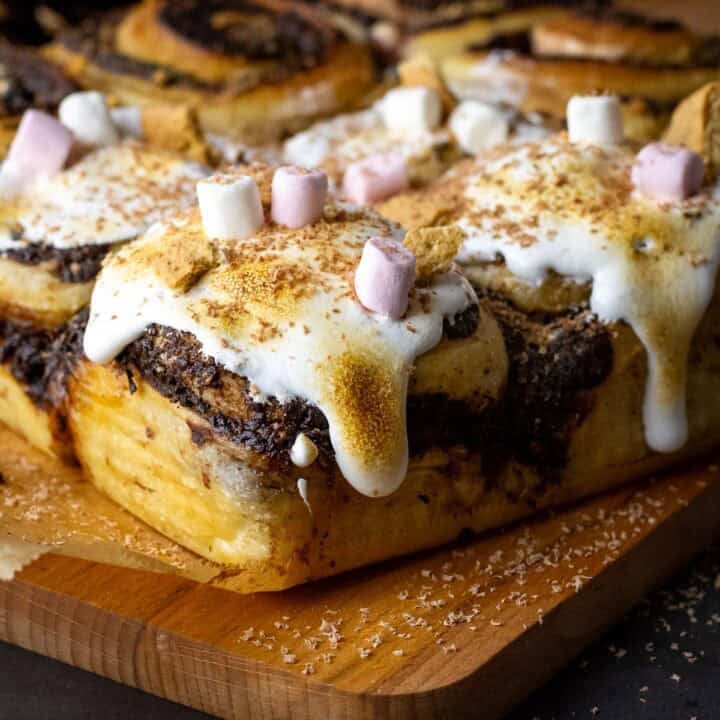
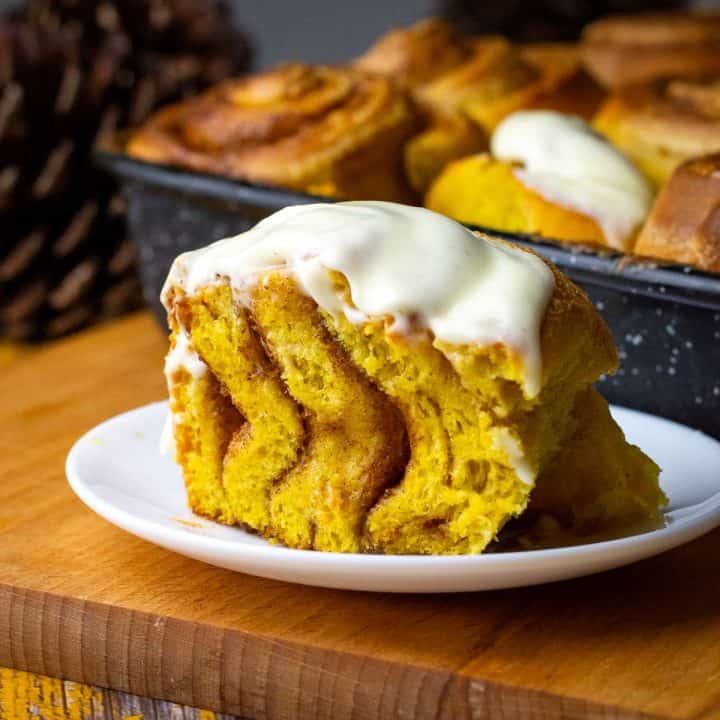
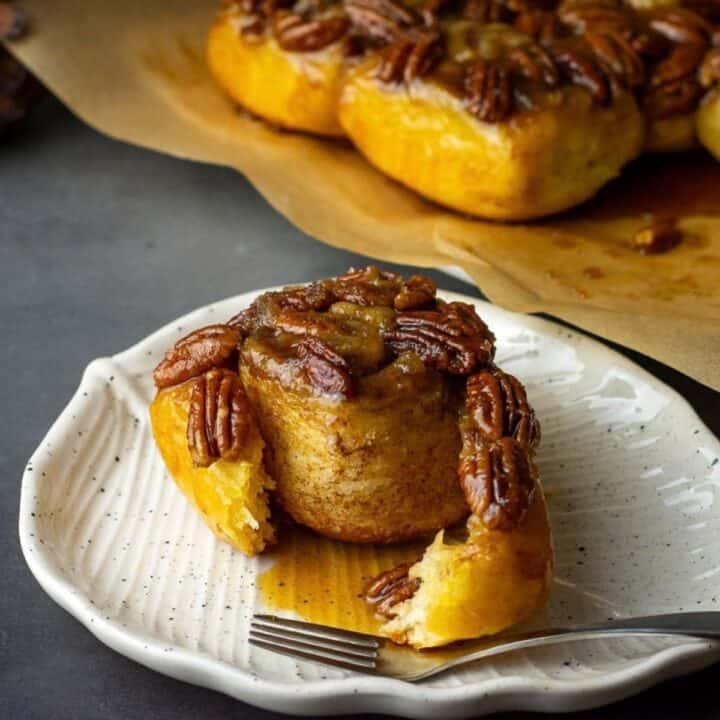
If these go down well, try the Sourdough Pumpkin Dinner Rolls for the classic autumn version. The Cheesy Sourdough Garlic Rolls are for when the cheese rolls in this batch are the first to go. And if you have a sweet tooth, have a look at some options below:

LOVE BAKING SOURDOUGH WITH ME?
You can now add Somebody Feed Seb as a preferred source on Google. It only takes a tick box, and tells Google you'd like to see more of my recipes when relevant.

Sourdough Sweet Potato Dinner Rolls
Equipment
- 23cm (9 inch) square baking pan with high sides, lined with baking paper
- Digital kitchen scale
- Instant-read thermometer
Ingredients
- 150 g roasted sweet potato mash cooled (from 1 medium sweet potato, about 250g raw)
For The Sourdough:
- 430 g strong white bread flour
- 10 g fine sea salt
- 80 g water hold back 20g and add it only if the dough feels stiff
- 75 g whole milk
- 25 g honey
- 160 g active sourdough starter 100% hydration
- 100 g unsalted butter softened
Egg Wash:
- 1 egg
- 1 teaspoon milk
Toppings:
- 5 g sesame seeds
- 5 g poppy seeds
- 25 g mature cheddar finely grated
- Flaky sea salt
Instructions
DAY 1:
- Feed your starter 1:1:1 and leave it somewhere warm, ideally 24-26°C (75-79°F), for 4-5 hours until it has doubled and is full of bubbles.
- While the starter rises, roast the sweet potato. Prick it all over and roast it whole at 200°C (400°F) for 45-60 minutes, until it's collapsing and sticky at the ends. Scoop out the flesh, mash it until smooth and weigh out 150g. Let it cool completely, because warm mash will melt the butter and make the dough greasy.
Fixing The Dough
- Put the flour and salt in the stand mixer bowl. Add 60g of the water, then the milk, honey, sweet potato mash and starter.
- Mix on low for 5-6 minutes until a shaggy dough forms. If it feels stiff, add the remaining 20g water a little at a time.
- With the mixer running, add the softened butter a piece at a time. Let each piece disappear before adding the next. Then mix on medium for 10 minutes, until the dough is smooth, elastic and slightly tacky. It should pull away from the sides of the bowl but still stick a little to your finger. The dough should pass the windowpane test at this point.
Bulk Fermentation
- Shape the dough into a ball and place it in a large container.
- Cover and leave the dough alone for 4-6 hours at 24-26°C (75-79°F), until it has risen by about 50%. It should look domed and puffy, with a few bubbles at the sides of the bowl.
- Cover tightly and refrigerate overnight (10-16 hours).
DAY 2:
Shaping and Second Rise
- Tip the cold dough onto a clean worktop and divide it into 16 equal pieces, each about 60-64g. Cold dough is much easier to shape, so work straight from the fridge.
- Shape each piece into a tight ball with good surface tension. Arrange them in a 4 × 4 grid in the lined 9-inch pan.
- Cover and proof for 3-4 hours at 24-26°C (75-79°F), until the rolls have roughly doubled and are touching. When you poke one gently, the dent should spring back slowly.
Bake
- Preheat the oven to 180°C (355°F).
- Whisk the egg with the milk and brush it over every roll. Top them with your choice of toppings.
- Bake for 25-30 minutes. The rolls are done when they're deep golden and read 90°C (194°F) in the centre.
- Brush straight away with the melted butter. Cool in the pan for 15 minutes, then lift them out onto a wire rack. Serve warm.
Video
Notes
Nutrition

Leave a Reply