
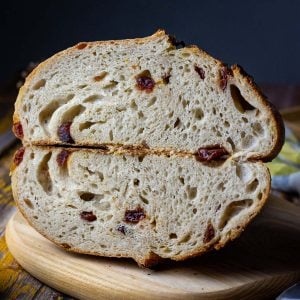
Nothing smells more like winter than a loaf of Cranberry Orange Sourdough Bread cooling on the counter. Think tangy cranberries, bursts of fresh orange zest, and a beautifully golden crust that feels right at home on a Christmas morning table. This orange cranberry sourdough bread brings together sweet, sharp and fragrant flavours - perfect for the holiday season, gifting, or just brightening a cold day.

Jump to:
As an Amazon Associate I earn from qualifying purchases, at no extra cost for you! Thank you!
Love orange and cranberry combo in sourdough? Try our Sourdough Cranberry Orange Muffins, which taste just like a cosy Christmas morning!
How Do Mix-Ins Affect Sourdough?
Cranberries and orange are the perfect flavour combination - but adding fruit and juice to bread dough needs a little science-backed finesse. Here's what's happening:
🍊 Why you shouldn't add orange juice directly to dough
Fresh orange juice is acidic and high in natural sugars. Both affect the fermentation process:
- Acidity slows or weakens gluten development, leading to a stickier dough that struggles to hold shape.
- Sugars feed yeast too fast, causing unpredictable bulk fermentation.
- Extra liquid shifts your water content, leaving you with a wet dough that's prone to spreading.
I tried adding the juice straight in more than once - trust me - it's not worth the chaos.
🍒 Why soak cranberries instead
Dried cranberries like to pull moisture from dough, which can leave you with a tight crumb. Soaking them in fresh orange juice solves two problems at once:
- They absorb liquid so they don't steal hydration from the dough
- They take on orange flavour without changing dough consistency
- Plus, we're adding orange zest to boost the flavour

When you squeeze out excess juice before adding them, the hydration of your sourdough stays almost unchanged - great for predictable results.
For more information on Flavoured Sourdough: What, When and How To Add Mix-Ins To Your Sourdough Bread, have a look at my eBook below:

Mix It Up: Turn Your Sourdough into a Flavour Adventure.
Ingredient Notes
Here are all the basic ingredients you will need for this cranberry orange sourdough loaf:
- Strong bread flour. At least 12% protein. Helps support the dough and all those cranberries. A little whole wheat flour is fine, but keep most of it bread flour for the best results.
- Active sourdough starter. Very bubbly, at peak, 100% hydration.
- Water. Warm water speeds things up; cooler water slows fermentation.
- Sugar. A small amount aids browning and balances tart cranberries. Coconut sugar works too. You can add brown sugar, but it will affect the colour of the bread slightly.
- Salt. Don't skip it - flavour and structure rely on it.
- Zest of an orange. Fresh zest only. Gives the best orange flavour.
- Dried cranberries. We use unsweetened dried cranberries and soak them in fresh orange juice. Fresh cranberries aren't ideal here, as the tartness of the cranberries will overpower the orange flavour and their high moisture can throw off fermentation and make the dough wet.
- Orange juice. For soaking only. Do not add directly to dough.
- Optional extra. Add a handful of white chocolate chips to the mix - super festive!

As always, find ingredient quantities, detailed instructions and nutritional information in the recipe card at the bottom of the post.
Step-By-Step Method
Day 1
Feed your starter
Feed your sourdough starter and leave it in a warm place (21-27°C) until doubled. If your starter is giving you a hard time, download our FREE Sourdough Starter Troubleshooting Guide below.
Mix the dough
1. In the bowl of a stand mixer, combine bread flour, sugar and salt.
2. Add water and active starter to the dry ingredients.
3. Mix for 10-15 minutes until elastic.
4. The dough will be smooth, not yet stretchy windowpane - that's fine.
Prepare mix-ins
1. Place zest in a small bowl, cover to prevent drying.
2. Cover dried cranberries with fresh orange juice and set aside.
Bulk fermentation + coil folds
1. Transfer dough to a large bowl, cover with a tea towel or plastic wrap.
2. Rest 30 mins.
3. Wet hands and complete a coil fold.
4. Repeat 3-4 times, every 30 mins.
5. Final dough rest 2-3 hours until aerated and puffy.
TOP TIP: Watch the dough, not the clock - room temperature affects bulk fermentation timing.
CAN I FOLD THE MIX-INS DURING BULK FERMENTATION? Yes - you can add the mix-ins during bulk fermentation. If you prefer this method, scatter them over the dough during the last set of stretch and folds, then leave the dough to finish bulk fermentation. You'll still get a good result, but I've found the mix-ins are distributed far more evenly when you laminate them in during shaping, giving every slice a better balance of flavour and texture.

Lamination & Shaping
1. Drain cranberries and press out excess juice.
2. Lightly dust your work surface with rice flour.
3. Stretch the dough into a rectangle.
4. Add zest + infused cranberries in layers and fold.
5. Roll into a tight log; place into a proofing basket, seam up.


6. Refrigerate 12-36 hours.
TOP TIP: Bake this sourdough bread in a loaf pan if you wish!
Day 2
Scoring & Baking
1. The next morning, preheat the Dutch oven to 240°C.
2. Invert dough onto a piece of parchment paper.
3. Score with a razor blade at 30-45°.
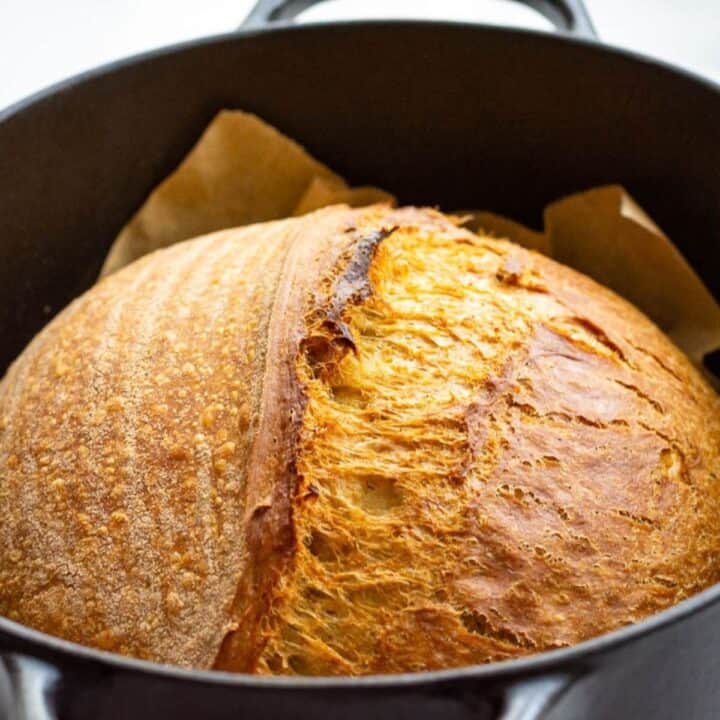
4. Bake: 30 mins covered, then reduce the oven temperature to 200°C and bake for 20 mins uncovered until deep golden brown.


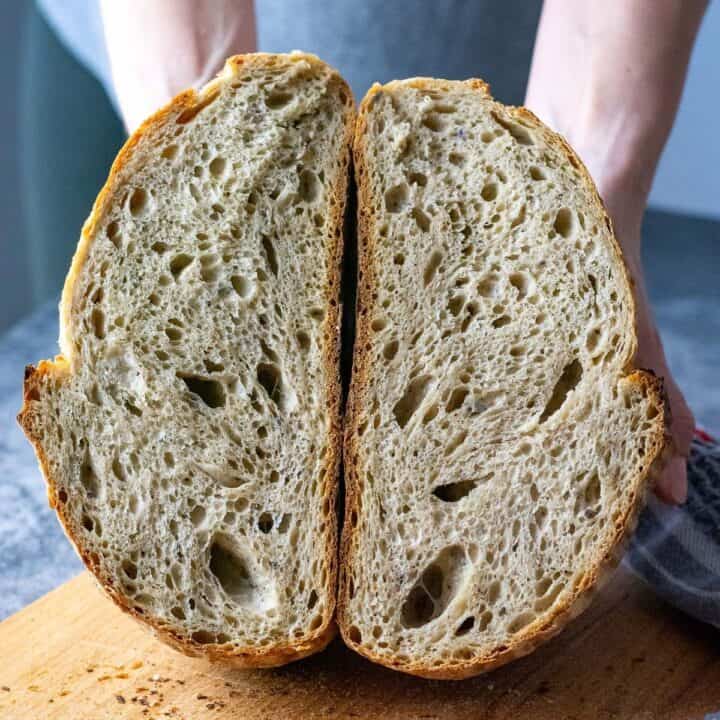
5. Transfer to a cooling rack and cool to room temperature. If you slice early, you'll squash your crumb and allow the moisture to escape - stay strong!
Serving Suggestions
- Lightly toasted with butter and marmalade
- Spread with cream cheese and honey on Christmas morning
- With a festive cheese or charcuterie board. Or dip it into Baked Camembert!
- Cut off the crusts and turn leftovers into French toast or bread pudding

Christmas Sourdough ebook
Celebrate the holiday season with a unique twist this year with our 24 Christmas Sourdough recipes! Discover the magic of using active sourdough starter, sourdough discard, and leftover baked sourdough bread to create a memorable and flavoursome Christmas feast.
Storage
Once your cranberry orange sourdough bread has cooled completely, store it in an airtight container or bread bag at room temperature. It will stay fresh for two to three days, though the crust will naturally soften over time.
For longer storage, slice the cranberry orange bread and pop the pieces into a freezer-friendly bag (such as a ziploc bag) and freeze for up to three months.
When you're ready to enjoy it again, toasting directly from frozen works especially well and is a great way to refresh the crumb after freezing.

More Sourdough Recipes With Mix-Ins
If you love flavour-packed loaves like this cranberry orange sourdough bread, you'll enjoy these sourdough recipes with inclusions too - I'll link some favourites below.


Cranberry Orange Sourdough Bread
Equipment
- Bench Scraper
- Proofing Basket
- Razor Blade or Bread Lame
Ingredients
- 400 g strong bread flour with at least 12% protein
- 15 g (1 heaped tbsp) granulated sugar, or caster sugar
- 7 g salt
- 240 g water
- 160 g active sourdough starter 100% hydration
- 1 large orange or 2 small ones, zest and juice
- 100 g dried cranberries
Instructions
DAY 1
- First thing in the morning, feed the sourdough starter and leave it in a warm place (ideally between 21-27°C), loosely covered, for 4-5 hours. The starter should double in size by then. If it doesn't, it might need a few more good feedings to be ready. If it doesn't, head to our article Sourdough Starter Not Doubling Within 4 Hours. How To Fix It?
Mixing The Dough
- In a bowl of your stand mixer, combine flour, salt and sugar.
- Add the water and active sourdough starter. Run the stand mixer for 10-15 minutes until your dough is smooth and elastic. It does not need to pass the windowpane test just yet (the gluten will continue developing when we fold the dough during the bulk fermentation period).
Prepare Mix-Ins
- Zest your orange and keep the zest covered in a small bowl.
- Place the dried cranberries in a small bowl with the juice of an orange. You need enough juice just to submerge the cranberries. Cover and set aside until the lamination and shaping stage (at least 6 hours).
Bulk Fermentation and Coil Folds
- Scoop the dough into a large bowl, cover with a damp kitchen towel or plastic wrap (a.k.a. cling film) and leave it in a warm place (21-27°C) for 30 minutes.
- After 30 minutes, with cold wet hands, perform the first set of coil folds. Simply lift the bread dough with both hands from the sides and tuck it under to form a coil. Rotate the bowl a quarter turn and coil again. Cover the bowl again, and let the dough rest for 30 minutes again.
- Repeat the coil folds 3 more times. After the fourth coil fold, your dough should feel a lot less sticky and feel strengthened and elastic.
- Cover the dough and leave it to finish bulk fermentation for 2-3 hours.
Lamination and Shaping
- Drain the cranberries in a sieve pressing them down to squeeze out excess moisture.
- Once your sourdough has finished bulk fermentation, scoop it out onto a work surface dusted lightly with some rice flour. Stretch the dough out into a rectangle.
- Scatter ⅓ of the orange zest and ⅓ of orange-infused cranberries in the centre middle ⅓ of the dough, and fold one side over. Scatter ½ of the remaining mix-ins on the folded-over surface and cover them with the other side of the dough. Finally, scatter the remaining mix-ins across the long strip of dough and roll the dough tightly.
- Place the dough ball into a well-floured banneton basket (or any proofing basket alternatives). We recommend using rice flour for dusting your proofing baskets. The smooth side of the sourdough ball should be at the bottom, with the seam side up.
- Pinch the seam together with your fingers, if the dough starts spreading in the bowl to make sure the dough is tight. Sprinkle with some flour, and cover the dough with a clean fabric napkin or small lightweight tea towel.
- If your fridge tends to dry things out, place the proofing basket in a large plastic bag, but I find it unneccesary. Then place the whole thing in the fridge for its final rise (a.k.a. second rise) in the fridge for 12-36 hours.
DAY 2
- The next day, place the Dutch Oven in the oven, and preheat it to 240°C (typically, it is the highest temperature home ovens will go to) with the Dutch oven in it. It needs to be piping hot!
Scoring The Sourdough
- Once the oven is hot, take the dough out of the fridge and out of the bag.
- Invert the dough gently onto a large sheet of parchment paper. If your dough was properly bulk fermented and shaped correctly, it should not spread once inverted.
- Using a bread lame or a razor blade, score the dough deeply (approximately 1cm deep) at a 30- 45º angle. One single deep slash is all that's needed for that sought-after sourdough "ear".
Baking and Cooling
- Take the hot Dutch Oven out of the oven, take the lid off, and lift the sourdough into it, holding the edges of the parchment paper. Be mindful of how you lift the paper. Sometimes, the scored slash can begin to close up during this process. To prevent this, lift the parchment from the sides that won't push the two edges of the scored dough back together.
- Place the lid back on the Dutch Oven and place the bread into the hot oven for 30 minutes.
- After 30 minutes, reduce the oven temperature to 200℃, take the lid off, and return the sourdough to the oven for another 20 minutes to turn golden brown.
- Once baked, take the Dutch Oven out of the oven. Lift the bread out by holding the corners of the parchment paper. Place the bread onto the wire rack, and slide the parchment paper from underneath the loaf.
- Leave the sourdough to cool down to room temperature before slicing.
Nutrition



Leave a Reply