
Nothing beats the smell of fresh bread baking in your kitchen, and with this great recipe, you can have a beautiful sourdough loaf ready in a single day. By feeding sourdough starter the night before and tweaking fermentation and cold retardation times, we've accelerated the whole process while keeping that perfect chewy texture and oven spring that only wild yeast can create. This Same Day Sourdough Bread is baked in the late afternoon - no waiting overnight required!

Jump to:
As an Amazon Associate I earn from qualifying purchases, at no extra cost for you! Thank you!
Things To Note About Same-Day Sourdough Bread
This same-day sourdough bread recipe is all about speed, but a few key factors will ensure success:
- Sourdough Starter: Feed your starter the night before using x2-3 times more water and flour than starter to ensure a bubbly mature starter the next morning.
- Temperature Matters Even More: Since we're relying on natural yeasts and not commercial yeast, fermentation needs to happen quickly. Don't reduce the amount of starter, use lukewarm water, and place your dough in a warm spot (ideally 24-26°C) to keep things moving.
- Cold Retardation Is Still Important: Although short, the 1-2 hours of cold proofing helps firm up the dough for easier scoring and better oven spring. If you skip it, your dough might be too slack to hold its shape.
- Flavour Considerations: With a minimal cold retard, there's less time for bacteria to develop that classic sourdough tang. This loaf will have a milder flavour compared to one that's been fermented overnight, but it's still packed with that delicious, fresh sourdough taste!

Ingredient Notes
My same-day sourdough recipe uses the same ingredients as my Everyday Sourdough Bread that I cold ferment overnight:
- strong bread flour: with at least 12% protein content.
- salt: we use sea salt.
- active sourdough starter: 100% hydration.
- lukewarm water: warm water will help jumpstart fermentation.

Find the ingredient quantities, detailed instructions and nutritional information in the recipe card at the bottom of the post.
Step-By-Step Method
Whilst this recipe is made in a single day, you need to do some prep the night before - that is - feed your sourdough starter just before you go to bed.

Sourdough Starter
Just before going to sleep, feed your sourdough starter in the ratio of 1:2:2, 1:3:3 or even 1:4:4 (starter:water:flour) depending on the temperature of your kitchen. You are aiming to have a sourdough starter that's at least doubled (but not deflated) the next morning, ready to bake with.
For example, I feed 30g of sourdough starter with 90g of water and 90g of flour. This gives me 210g of active sourdough starter the next morning. I use 160g of it in this recipe and feed the remaining 50g for next time.
Mix The Dough
1. Combine flour and salt in a bowl of your stand mixer.
2. Add active starter and water, and run the mixer, fitted with a dough hook attachment, for 10-12 minutes, until soft and elastic, and doesn't tear easily when stretched (read more about the windowpane test for sourdough here).
Folds and Bulk Fermentation
1. Scoop the bread dough into a clean large bowl, cover it with a damp kitchen towel or cling film (plastic wrap) and leave in a warm spot (ideally 23-26°C) for 30 minutes.
2. After 30 minutes, perform a set of coil folds (or a set of stretch and folds) with wet hands, cover and let the dough rest for another 30 minutes.
3. Fold the sourdough once more, then cover and let the dough bulk ferment for approximately 4 hours in a warm place, or until it just about doubles in volume. Your dough should have visible bubbles on the surface and not be overly sticky to touch.


Shaping and Quick Cold Retardation
1. At the end of the bulk fermentation, shape the dough into a boule. It is important not to knock all the air out of the dough for the same-day sourdough bread. Scoop the dough onto a lightly floured surface, making sure that the smooth top of the dough (the side that is not intact with the bowl) is placed on the floured work surface. Then swiftly fold the four corners of the dough into the centre and flip the dough over.
2. Cupping the dough with both hands, drag it gently across the kitchen worktop to create surface tension (you should see some air bubbles come to the surface of the dough ball).


3. Swifty move the ball of sourdough into a well-floured banneton basket (or any proofing basket alternatives). We recommend using rice flour for dusting your proofing baskets. The smooth side of the sourdough ball should be at the bottom, with the seam at the top.
4. Pinch the seam together with your fingers, if the dough starts spreading in the bowl to make sure the dough is tight. Sprinkle with some flour, and cover the dough with a clean fabric napkin, a small lightweight tea towel or a shower cap. I do not place it in a plastic bag for short cold retardation, and I find that the dough actually benefits from drying out a little, as it makes it easier to score.

5. Place it in the fridge for 2 hours. If you do not have 2 hours, chill it for an hour, then move it to the freezer for the last 20 minutes, whilst you preheat the oven.
Scoring and Baking
1. Place the Dutch Oven in the oven, and preheat it to 240°C (typically, it is the highest temperature home ovens will go to) with the Dutch oven in it. It needs to be piping hot!
2. Once the oven is hot, take the dough out of the fridge and invert it gently onto a large piece of parchment paper.
3. Dust the surface of the dough with flour. Using a bread lame or a razor blade, score the dough deeply (approximately 1cm deep) at a 30- 45º angle.


4. Take the hot Dutch Oven out of the oven, take the lid off, and lift the sourdough into it, holding the edges of the parchment paper. Be mindful of how you lift the paper. Sometimes, the scored slash can begin to close up during this process. To prevent this, lift the parchment from the sides so that the two edges of the scored dough don't come back together.
5. Place the lid back on the Dutch Oven and place the bread into the hot oven for 25 minutes.
6. After 25 minutes, take the lid off, and return the sourdough to the oven for another 25 minutes. If you don't want your loaf of bread too dark in colour, you can reduce the oven temperature to 200°C.
Cooling
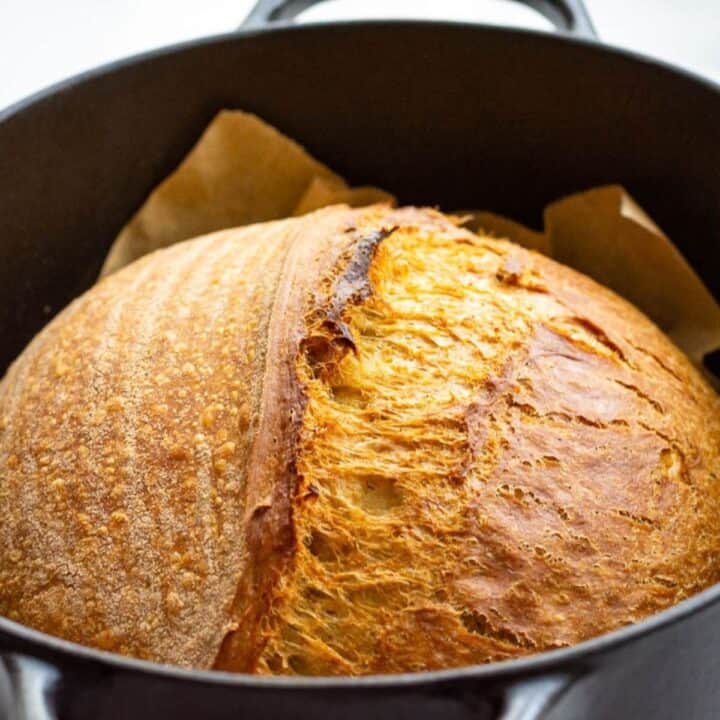
1. Once baked, take the Dutch Oven out of the oven. Lift the golden brown bread out by holding the corners of the parchment paper. Place the bread onto the cooling rack, and slide the parchment paper from underneath the loaf.
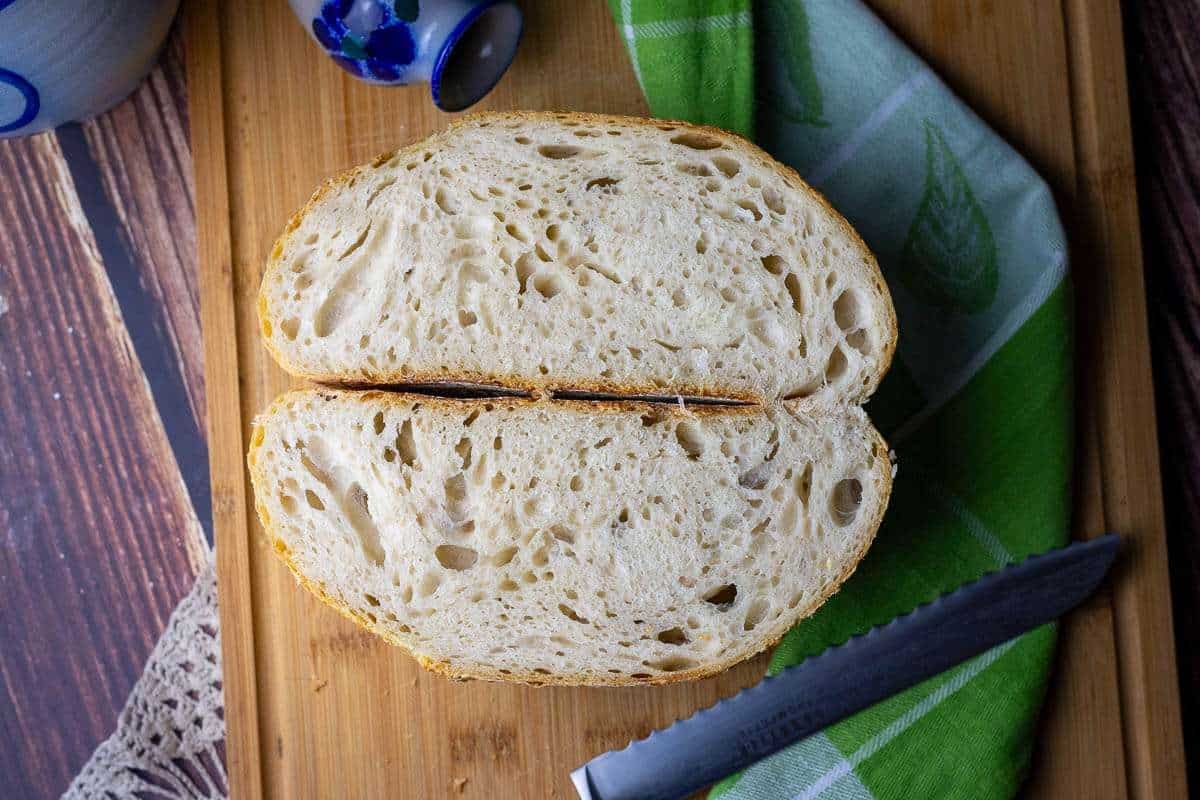
2. Leave the sourdough to cool down to room temperature before slicing.
Baker's Schedule
As an example, here's my schedule for making same-day sourdough bread:
The Night Before: Feed sourdough starter - it is left overnight for approximately 10 hours.
8 AM: Mix The Dough
9:00 AM: First Fold
9:30 AM: Second Fold & Bulk Fermentation
1:45 PM: Shape and Chill
3:45 PM: Preheat the Oven, Score & Bake
5:00 PM: Cool
6:30-7:00 PM: Slice and enjoy.
Tips for Best Results
Want to nail this same day sourdough bread? Here's how to get the best rise, texture, and flavour:
- Use Warm Water: This helps jumpstart bulk fermentation, giving your natural yeast a head start. Cold water will slow everything down, and we don't have time for that in a same-day bake!
- Choose the Right Flour: Skip all-purpose flour-it doesn't have enough strength for this short cold retardation. Instead, opt for white bread flour with at least 12% protein content to ensure a strong gluten network.
- Boost Fermentation With Whole Grain Flour: Want to speed things up even more? Replace up to 10% of white bread flour with whole wheat flour or rye flour for extra fermentation power and depth of flavour.
- Keep Scoring Simple: Since the dough won't be as firm as one that's been cold retarded overnight, don't go overboard with intricate designs. A single slash will give the best oven spring with minimal fuss.
More Sourdough Recipes



Same Day Sourdough Bread
Equipment
- Bench Scraper
- Proofing Basket
- Razor Blade or Bread Lame
Ingredients
- 400 g strong bread flour with at least 12% protein content
- 7 g salt
- 160 g active sourdough starter 100% hydration
- 230-240 ml lukewarm water
Instructions
Feed Your Starter The Night Before:
- Just before going to sleep, feed your sourdough starter in the ratio of 1:2:2, 1:3:3 or even 1:4:4 (starter:water:flour) depending on the temperature of your kitchen. You are aiming to have a sourdough starter that's at least doubled (but not deflated) the next morning, ready to bake with.
- For example, I feed 30g of sourdough starter with 90g of water and 90g of flour. This gives me 210g of active sourdough starter the next morning. I use 160g of it in this recipe and feed the remaining 50g for next time.
Mix The Dough:
- Combine flour and salt in a bowl of your stand mixer.
- Add active sourdough starter and water, and run the mixer, fitted with a dough hook attachment, for 10-12 minutes, until soft and elastic, and doesn't tear easily when stretched (read more about the windowpane test for sourdough here).
Folds and Bulk Fermentation:
- Scoop the dough into a clean large bowl, cover it with a damp kitchen towel or cling film (plastic wrap) and leave in a warm spot (ideally 23-26 C) for 30 minutes.
- After 30 minutes, perform a set of coil folds (or stretch and folds), cover and let the dough rest for another 30 minutes.
- Fold the sourdough once more, then cover and let the dough rise for approximately 4 hours in a warm place, or until it just about doubles in volume.
Shaping and Quick Cold Retardation:
- At the end of the bulk fermentation, shape the dough into a boule. It is important not to knock all the air out of the dough for the same-day sourdough bread. Scoop the dough onto a lightly floured surface, making sure that the smooth top of the dough (the side that is not intact with the bowl) is placed on the floured work surface. Then swiftly fold the four corners of the dough into the centre and flip the dough over.
- Cupping the dough with both hands, drag it gently across the work surface to create tension (you should see some air bubbles come to the surface of the dough ball).
- Swifty move the ball of sourdough into a well-floured banneton basket (or any proofing basket alternatives). We recommend using rice flour for dusting your proofing baskets. The smooth side of the sourdough ball should be at the bottom, with the seam at the top. See shaping video below.
- Pinch the seam together with your fingers, if the dough starts spreading in the bowl to make sure the dough is tight. Sprinkle with some flour, and cover the dough with a clean fabric napkin or small lightweight tea towel.
- Place it in the fridge for 2 hours. If you do not, have 2 hours, chill it for an hour, then move it to the freezer for the last 20 minutes, whilst you preheat the oven.
Scoring and Baking:
- Place the Dutch Oven in the oven, and preheat it to 240°C (typically, it is the highest temperature home ovens will go to) with the Dutch oven in it. It needs to be piping hot!
- Once the oven is hot, take the dough out of the fridge and invert it gently onto a large piece of parchment paper.
- Dust the surface of the dough with flour. Using a bread lame or a razor blade, score the dough deeply (approximately 1cm deep) at a 30- 45º angle.
- Take the hot Dutch Oven out of the oven, take the lid off, and lift the sourdough into it, holding the edges of the parchment paper. Be mindful of how you lift the paper. Sometimes, the scored slash can begin to close up during this process. To prevent this, lift the parchment from the sides that won't push the two edges of the scored dough back together.
- Place the lid back on the Dutch Oven and place the bread into the hot oven for 25 minutes.
- After 25 minutes, take the lid off, and return the sourdough to the oven for another 25 minutes. If you don't want your loaf of bread too dark in colour, you can reduce the oven temperature to 200°C.
Cooling
- Once baked, take the Dutch Oven out of the oven. Lift the bread out by holding the corners of the parchment paper. Place the bread onto the wire rack, and slide the parchment paper from underneath the loaf.
- Leave the sourdough to cool down to room temperature before slicing (at least 1.5 hours).
Video
Nutrition




Nicole Kendrick says
This is so good! I love that it's faster than regular sourdough bread, too.
Ieva Greber says
Thank you! 🙂